Educational content only — not medical advice. See our full Medical Disclaimer and Affiliate Disclosure below.
Key Takeaways
- Zhan Zhuang — “standing like a post” — is the foundation of the Yiquan/Dachengquan tradition created by Wang Xiangzhai (1890–1963); its core health posture is the Posture of Roundness, Hunyuanzhuang [1].
- The frame is simple: dropped shoulders, a lifted crown, softly bent joints, rounded arms in front of the body, and nasal breathing that is never forced [1][3][4].
- The source literature reports an even pulse response, deepening abdominal breathing, and hospital measurements taken after forty minutes of standing; beginners start small and build toward fifteen minutes twice a day [1][2].
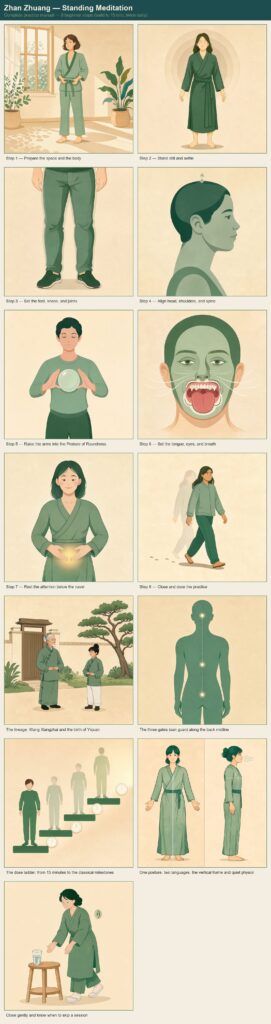
Zhan Zhuang — “standing like a post” — is a Chinese standing meditation in which you hold one carefully shaped, quietly rounded posture and let the body, breath, and attention settle. In its modern form it comes from the internal martial art teacher Wang Xiangzhai (1890–1963), and today it is practiced as a daily health routine that needs no equipment and almost no space. This manual collects what the classic instructional literature actually says: where Zhan Zhuang comes from, the classical frame, an eight-step beginner protocol, what the source books report about the body’s response, and the safety notes that go with it. You can find companion routines in our library of practice manuals.
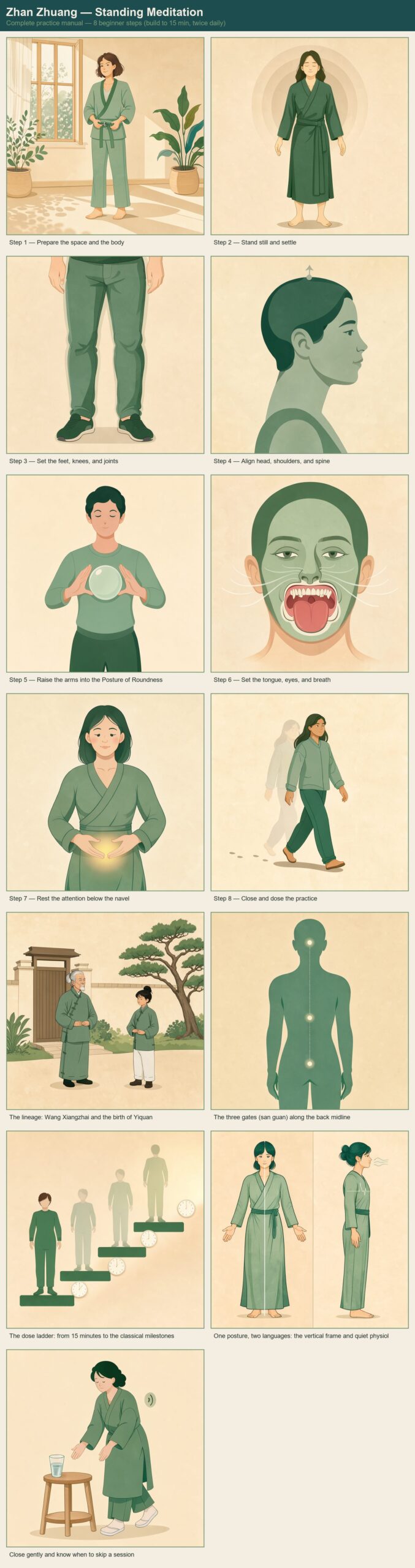
Zhan Zhuang step by step: the eight-step beginner protocol
Prepare the space and the body
Choose a spacious, well-ventilated, quiet room with pleasant light — about 72°F (22°C) suits calm practice — or level outdoor ground sheltered from wind, noise, and strong sun. Loosen the belt and collar, empty the bladder beforehand, and do not stand very hungry or on a full stomach. A brief light warm-up or a little stretching is useful; nothing strenuous (Wang & Moffett, 2006; Fen Tjon Li, Qigong).Stand still and settle
Before shaping the posture, stand quietly for a few moments and let the breath and the mind calm down — the classical instruction is to enter practice already settled (Wang & Moffett, 2006).Set the feet, knees, and joints
Let the feet rest at a comfortable, natural width and keep all joints softly bent. Bend the knees only to the degree that stays comfortable: the more relaxed they are, the longer you can hold the posture. There is no need to sink lower for extra load — the common idea that standing exercises are only endurance work and "the lower, the better" contradicts the theory of the practice (Wang & Moffett, 2006).Align head, shoulders, and spine
Let the shoulders drop — the rule beginners break most often. Hold the head straight and level, as if suspended by the crown with the Baihui point on top of the head drawn upward, the chin gently drawn in without neck tension, and the torso upright, not tilted to either side. Keep the lower back and the base of the skull soft (Maslov, 1992; Razhev, 2013).Raise the arms into the Posture of Roundness
Raise the hands and elbows to a comfortable level in front of the body so the arms form a rounded frame — Hunyuanzhuang, the "Posture of Roundness," the standard posture recommended for people in normal health. The shoulder, back, and upper-chest muscles quietly support the arms while the abdomen stays relaxed (Wang & Moffett, 2006).Set the tongue, eyes, and breath
Touch the tip of the tongue lightly to the upper palate — the classical texts say this closes the circuit between the front and back midline channels — and swallow the saliva as it gathers. Let the eyelids lower softly, not clamped shut, the gaze resting forward through the lashes. Breathe naturally through the nose: never forced, never held. Early in training the breath may quicken considerably; as relaxation deepens it slows and deepens by itself (Wang & Moffett, 2006; Razhev, 2013; Yang, 1998).Rest the attention below the navel
Let attention settle gently on the lower abdomen just below the navel — the lower Dan Tian, the concentration point considered most suitable for beginners. With regular practice a sense of warmth may develop there. Women during their periods — or whose menstrual flow intensifies in the first months of practice — should rest the attention at the center of the chest instead (Yang, 1998; Lao Min, 2012).Close and dose the practice
End with a slow, short walk so the body returns to its normal state; avoid stopping abruptly or doing anything strenuous right away. Warmth, tingling, mild numbness, or heat drifting toward the soles is listed in the source literature among the normal sensations of practice. Start with a few comfortable minutes and extend gradually: the clinical reports cited in the source literature place the stable practice dose at fifteen minutes twice a day, and the single principle recommendation is constancy (Wang & Moffett, 2006; Khorev & Vilchinsky; Razhev, 2013).
The classical Zhan Zhuang frame at a glance
| Element | Classical instruction |
|---|---|
| Shoulders | Dropped and relaxed — the rule beginners break most often [3] |
| Head and neck | Straight and level, crown (Baihui) drawn upward, chin softly in, neck free of tension [3][4] |
| Torso | Upright, not tilted to either side; lower back and skull base kept soft [3] |
| Knees and joints | All joints softly bent; knees bent only as far as comfortable [1] |
| Arms | Hands and elbows raised comfortably in front, rounded frame (Hunyuanzhuang) [1] |
| Tongue | Tip lightly touching the upper palate; saliva swallowed as it gathers [4] |
| Eyes | Lids lowered but not shut; gaze resting forward through the lashes [4] |
| Breath | Natural, nasal, never forced, never held [1][6] |
Where Zhan Zhuang comes from
Wang Xiangzhai was born on October 29, 1890, in Shenxian county, Hebei province. As a boy he learned Xingyiquan under the master Guo Yunshen, who passed on his complete knowledge shortly before his death, when Wang was fourteen or fifteen; Wang then trained the standing postures intensively on his own and spent years traveling China in search of known masters, including several months of study at the Shaolin monastery in Henan [1]. In the 1920s he began teaching his own style in Shanghai under the name Yiquan — “Boxing of Thought” — to restore the original meaning and quality of Xingyiquan; after moving to Beijing he renamed it Dachengquan, “Boxing of Great Completeness.” He died in July 1963 in Tianjin, described by the source book as unmatched in his generation [1].
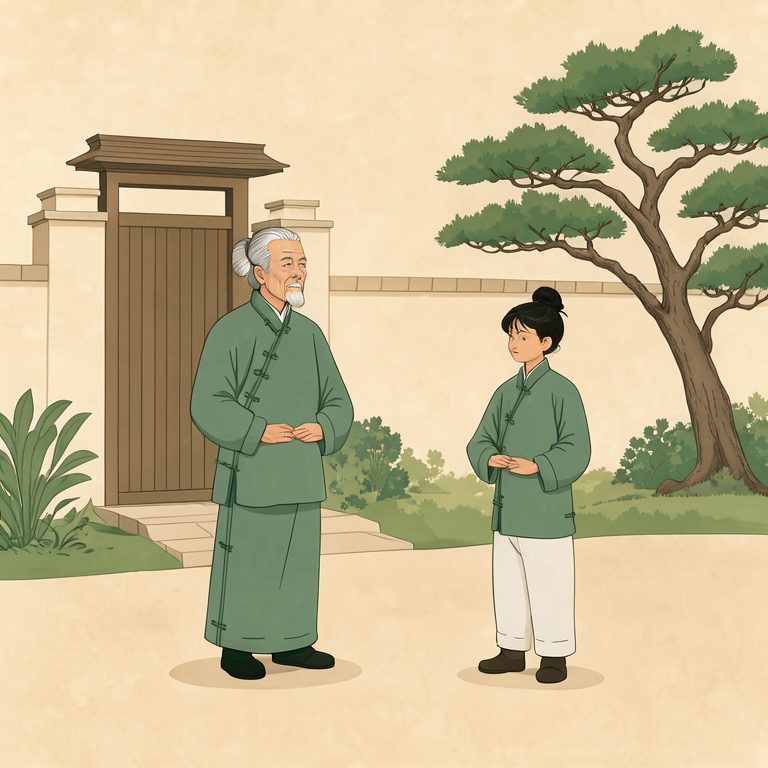
The foundation of Dachengquan is the Zhan Zhuang exercise system, shaped to coordinate mind and body and to develop strength, concentration, and spirit; in his later years Wang adapted the postures into a gentle health practice for students in poor health [1]. The chief posture of the style is Hunyuanzhuang, the “Posture of Roundness,” which serves both health restoration and martial application depending on the student’s level [1]. The book also traces possible roots to an older Buddhist tradition of standing Chan meditation called “Li chan,” though it notes no exact description of that form survives [1]. The stillness the frame points to echoes the classical idea of wuji — “no extremities,” the original natural state before yin and yang divide, described in the source literature as peaceful and calm [10].
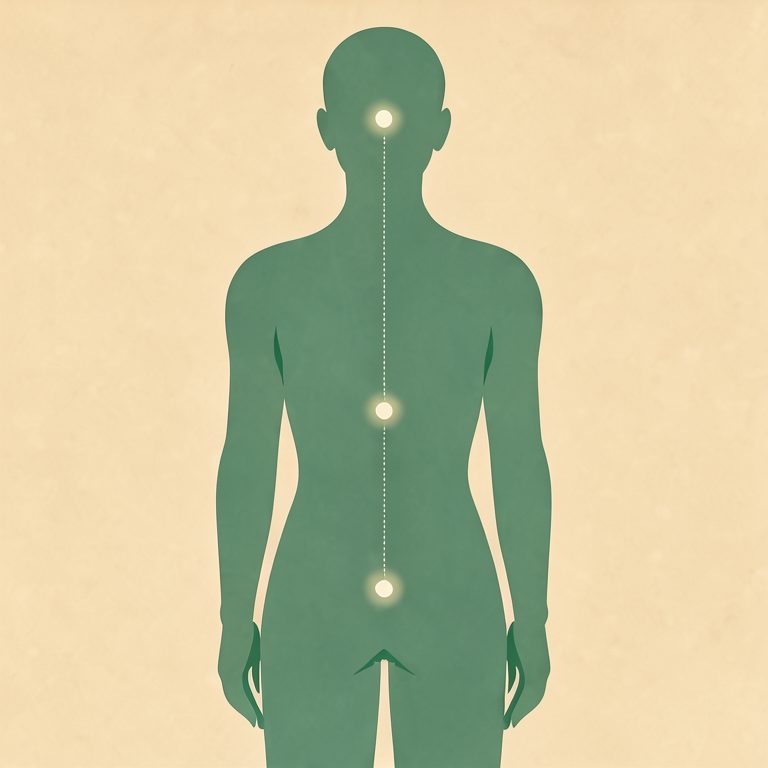
The three gates (san guan)
The classical texts warn that a misaligned frame lets qi stagnate at three “gates,” so the areas around them stay soft and relaxed [3]:
| Gate | Classical location |
|---|---|
| Weilü | At the base of the coccyx |
| Jiaji | In the area of Mingmen, between the first and third lumbar vertebrae |
| Yuzhen | At the base of the skull |
How long to stand: the traditional dose ladder
The beginner literature grades standing time explicitly [2]:
| Standing time | Traditional milestone |
|---|---|
| 30 minutes | A small achievement |
| 1 hour | A middle achievement |
| 2 hours | An achievement |
| 3 hours | A great achievement |

The same source cites clinical research from the PRC indicating that a stable health-supporting effect appears only from fifteen minutes of standing twice a day, while thirty minutes twice a day is considered the optimal regimen for maintaining robust health — and it adds that the only recommendation of principle is constancy: regular practice with a gradual increase of standing time [2]. The standing manual itself tells beginners the same thing from the other direction: master the exercises at your own pace, never push into exhaustion, but do not quit at the first difficulty or discomfort [1].
Traditional view vs modern physiology
What the tradition says. Zhan Zhuang coordinates mind and body in one static shape: a vertical frame with soft joints, the crown lifted, qi allowed to circulate without blockage at the three gates, and attention resting quietly below the navel [1][3]. The deep rationale is written in the classical language of qi and stillness — the potential-filled calm the old texts call wuji [10]. Its founder’s one-line summary of the method is quoted in the source book: “If the muscles are tense, strength is exhausted” — relaxation is the foundation of the whole practice [1].
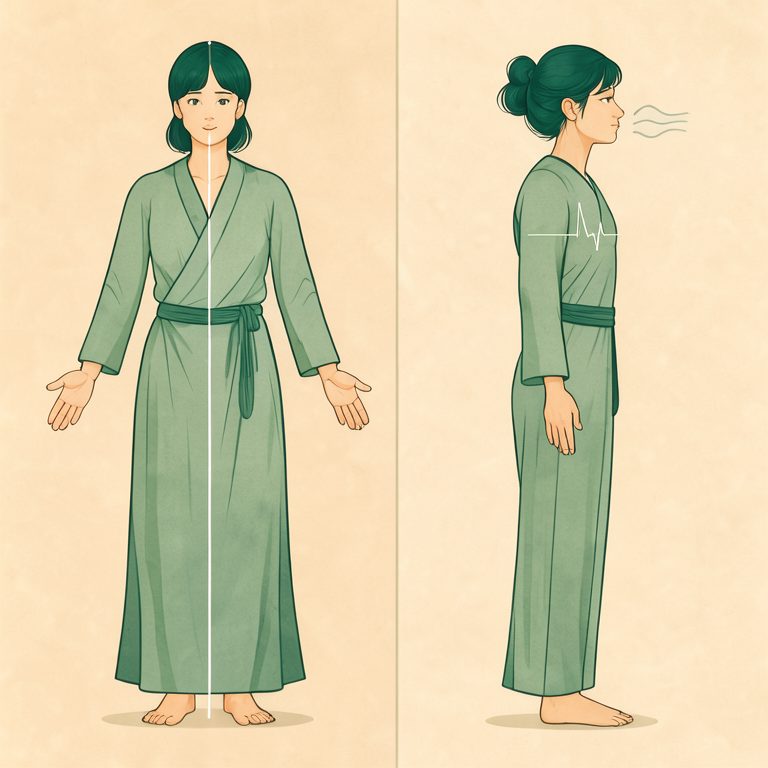
What the source literature reports as measurement. The Zhuangong book devotes whole sections to research findings on the standing postures. In standing postures, it reports, the pulse rises evenly and settles at a stable level, while oxygen consumption and metabolism rise gradually and then stabilize; immediately after a session the pulse does not crash but returns to normal gradually across the first minute [1]. Raising the hands loads the shoulder, back, and upper-chest muscles while the abdomen relaxes — which, the authors observe, nudges breathing into the abdominal pattern without conscious forcing; as the chest muscles learn to release, breathing grows deep and natural, and deliberately slowing the breath is called harmful [1]. Electroencephalographic studies described in the book characterize the standing-meditation state as distinct from both sleep and hypnosis — beta waves appear at the front of both hemispheres and grow with progress — and research attributed to Dr. Xu Indou of the Beijing United Hospital found the calming changes steadier in standing postures than in lying or sitting [1]. With all joints slightly bent and muscles under only mild, constant contraction, small capillaries in the muscles dilate; the book links the familiar itching, mild numbness, crawling skin sensations, warmth, and light sweat to this [1]. It also reports measurements from the Beijing Railway Hospital and the First Auxiliary Clinic, in which after forty minutes of standing in the Posture of Roundness red blood cell counts rose by 21,000–590,000, white blood cells by 400–6,000, and hemoglobin by 1.5–2.3 g [1]. We pass these on as reports of the source literature, not as claims of our own.
A calm, low-load standing posture with unhurried nasal breathing is, in modern physiology terms, quiet endurance work with a strong relaxation component; where the tradition speaks of qi, physiology speaks of respiration, circulation, and muscle tone. The vocabulary differs — the choreography both describe, stand still, stay soft, breathe naturally, is the same.
Safety and contraindications
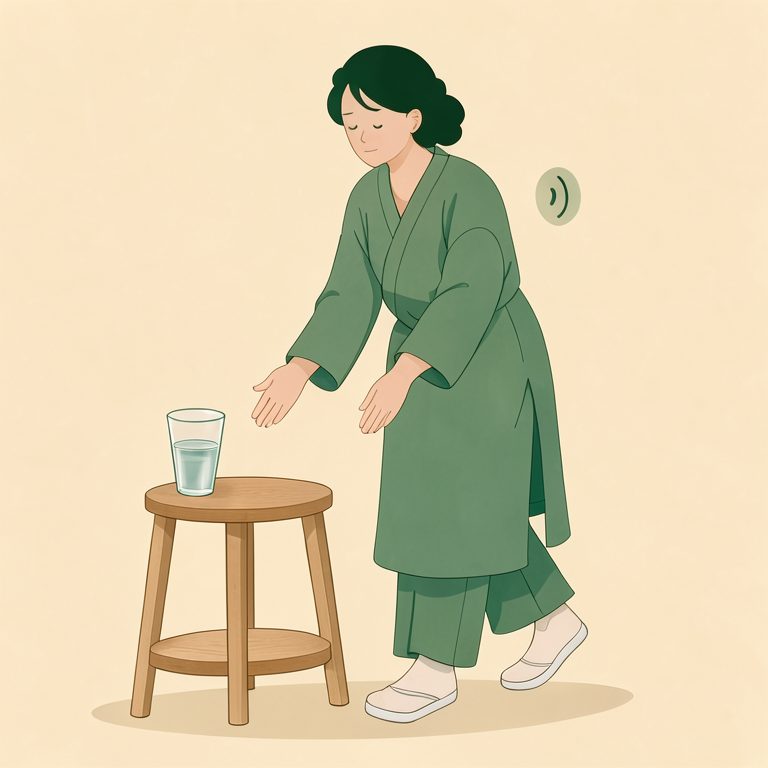
Practice at your own pace: never train to exhaustion, never hold the breath, and never deliberately slow it in standing postures — the source book calls that harmful [1][6]. Do not practice when very hungry or on a full stomach (wait at least thirty minutes after eating, preferably an hour or two), when so tired that attention wanders, when very worried, or during illness with fever or diarrhea — pause until you have recovered [5][6]. If you repeatedly feel bad or get strongly unpleasant reactions during standing, stop, and do not continue without the guidance of a qualified and experienced teacher [6]. Standing training belongs under a teacher’s supervision; a student managing any illness should have suitable postures assigned and monitored by the instructor rather than self-selecting them [1]. People with psychiatric conditions should abstain from qigong practice until a professional evaluation clears them [7]. Women during their periods should rest attention on the solar plexus or the center of the chest rather than the lower Dan Tian [6][8]. If the legs go numb to the point of breaking concentration, stop, stretch the legs out, and massage the arches of the feet [6]. This manual is educational and is not intended to cure, treat, or prevent any disease; if you are pregnant, managing a chronic condition, or recovering from injury, talk with your physician before starting any new practice.
Frequently Asked Questions
How long should a beginner stand?
Start with whatever feels comfortable — even a few minutes — and extend gradually. The clinical reports cited in the source literature place the stable practice dose at fifteen minutes of standing twice a day, with thirty minutes twice a day considered the optimal regimen for maintaining robust health; the only recommendation of principle is constancy.[1][2]
What sensations are normal during standing?
Warmth, tingling, mild numbness, crawling-skin sensations, light sweat, and heat drifting toward the soles are all listed in the source literature among the normal sensations of practice.[1][9] Early in training the breath may quicken considerably; as relaxation deepens it slows and deepens on its own.[1][6]
When should I skip a session?
Do not stand when very hungry or on a full stomach (wait at least thirty minutes after eating, preferably an hour or two), when so tired that attention wanders, when very worried, or during illness with fever or diarrhea — pause until you have recovered.[5][6] Women during their periods should rest the attention at the center of the chest or the solar plexus rather than the lower Dan Tian.[6][8]
Sources
- [1] Wang Xuanjie, John Moffett — Zhuangong (Traditional Practices of China) (2006)
- [2] V.N. Khorev, A.S. Vilchinsky — Qigong for Beginners (Tsigung dlya nachinayushchikh; Russian edition)
- [3] A.A. Maslov — Qigong Gymnastics (Gimnastika Tsigung; 1992, Russian edition)
- [4] Yu.A. Razhev — Qigong: The Military Eight Pieces of Brocade (Tsigun. Voennye Vosem Otrezov Parmi; 2013, Russian edition)
- [5] Fen Tjon Li — Qigong (Tsigung; Russian edition)
- [6] Jwing-Ming Yang — Qigong for Health and Martial Arts: Exercises and Meditation (1998)
- [7] Jiao Guorui — Fundamentals of Health Qigong (Osnovy Ozdorovitelnogo Tsigun; 2013, Russian edition)
- [8] Lao Min — 244 Chinese Exercises for Those Over 40 (2012, Russian edition)
- [9] Yu.A. Razhev — Nine Rotations for Longevity (Devyat Vrashcheniy dlya Prodleniya Zhizni; 2013, Russian edition)
- [10] Jwing-Ming Yang — Tai Chi Qigong: The Internal Foundation of Tai Chi Chuan (2013)
How we researched this
This manual is based entirely on our local research library of 1,137 books on traditional wellness practices, consulted offline with no internet sources. Every factual statement above was checked against the cited passages of the source books before publication.
Related reading from our review desk: a movement companion for tight, desk-bound hips — Unlock Your Hip Flexors — and a look at a joint-support formula in Joint Genesis. More step-by-step guides live in the manuals library.
Sources & References
[1] Wang Xuanjie, John Moffett - Zhuangong (Traditional Practices of China) (2006); [2] V.N. Khorev, A.S. Vilchinsky - Qigong for Beginners (Tsigung dlya nachinayushchikh; Russian edition); [3] A.A. Maslov - Qigong Gymnastics (Gimnastika Tsigung; 1992, Russian edition); [4] Yu.A. Razhev - Qigong: The Military Eight Pieces of Brocade (2013, Russian edition); [5] Fen Tjon Li - Qigong (Tsigung; Russian edition); [6] Jwing-Ming Yang - Qigong for Health and Martial Arts: Exercises and Meditation (1998); [7] Jiao Guorui - Fundamentals of Health Qigong (2013, Russian edition); [8] Lao Min - 244 Chinese Exercises for Those Over 40 (2012, Russian edition); [9] Yu.A. Razhev - Nine Rotations for Longevity (2013, Russian edition); [10] Jwing-Ming Yang - Tai Chi Qigong: The Internal Foundation of Tai Chi Chuan (2013)