Educational content only — not medical advice. See our full Medical Disclaimer and Affiliate Disclosure below.
Key Takeaways
- Ba Duan Jin (Eight Pieces of Brocade) is a gentle standing qigong set credited to Marshal Yue Fei in the twelfth century; the original twelve forms were edited down to eight[1][2].
- Classical rules are simple: natural nasal breathing, a vertical back, slow relaxed movement, and a small daily dose that grows over months[1][5].
- Beginners start at about six repetitions per piece in a 15-minute session — and the safety rules around food, fatigue, and illness are part of the practice, not fine print[1][5][7].
- Many versions of the set exist; whichever you learn, the principles and the goals of the practice remain the same[1].
Ba Duan Jin — the Eight Pieces of Brocade — is widely practiced all over China[1] and one of the friendliest places for a beginner to start. This complete practice manual collects what the classic instructional literature actually says: where the set came from, how its theory works, the rules for performing it, an eight-step beginner protocol, and the safety notes that go with it. Want one complementary practice to pair with the set? See our Zusanli (ST36) acupressure manual.
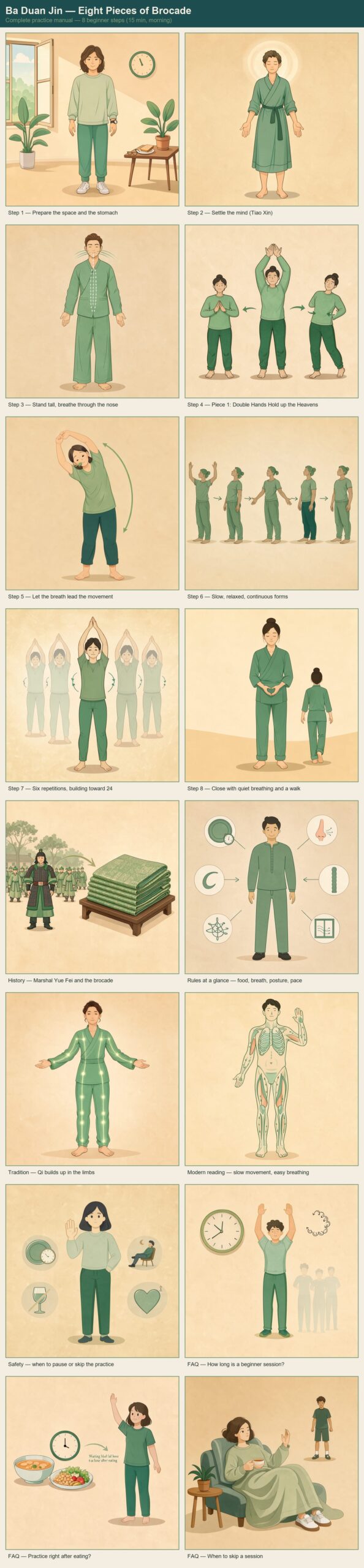
Step-by-Step Ba Duan Jin Beginner Protocol
Prepare the space and the stomach
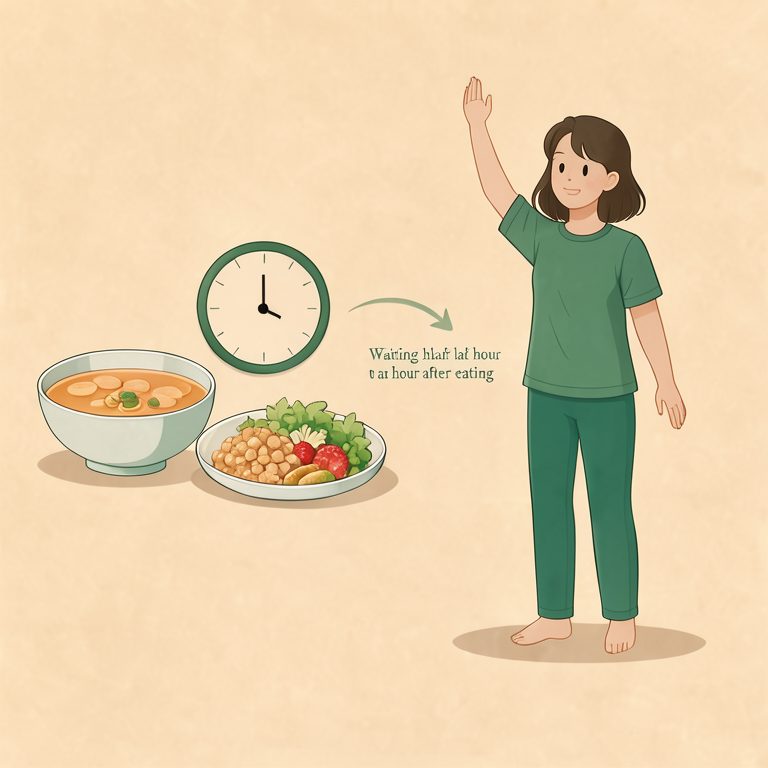
Practice in a spacious, well-ventilated room with fresh air, or outdoors on level ground sheltered from wind and strong sun. Wear loose clothing and take off glasses and watches. Do not practice very hungry or too full: after eating, wait at least 30 minutes, preferably an hour (Yang, 1998; Fen Tian Li, Qigong; Fen Shao I, Rotter M., 2012).Settle the mind (Tiao Xin)
Stand or sit quietly and let the mind become calm and emotionally neutral. Classical teaching calls this “regulating the mind” (Tiao Xin): when thoughts slow and the body relaxes, the tradition says, Qi regulates itself (Yang, 1997).Set the standing posture and breathe through the nose
Feet parallel and shoulder-width apart, hands at your sides, back vertical except where a form calls for leaning. Breathe naturally through your nose (Yang, 1998).Piece 1 — Double Hands Hold up the Heavens
Close your eyes, calm the mind, breathe regularly; open the eyes and look forward. Interlock your fingers and raise your hands above your head without bending the arms, lifting the heels at the same time. Drop the heels, then tilt the body left and right (Yang, 1998).Let the breath lead the movement
The classical breathing rule for the set is simple: exhale while stretching, inhale while changing sides. Keep the breath smooth and natural — never forced (Yang, 1998).Move slowly, stay relaxed
Perform the exercises slowly and stay relaxed, one form after another. Many versions of the set exist; whichever you learn, the principles and the goals of the practice remain the same (Yang, 1998).Keep the dose small: six repetitions, building toward 24
Beginners repeat each piece at least six times. As your health and strength improve, increase the number of repetitions gradually until you can do each piece twenty-four times (Yang, 1998).Close and relax
Relax after exercising — a short walk is the classical suggestion. Note how you feel; regularity, not intensity, is what the set asks of you (Yang, 1998).
Where the Set Came From
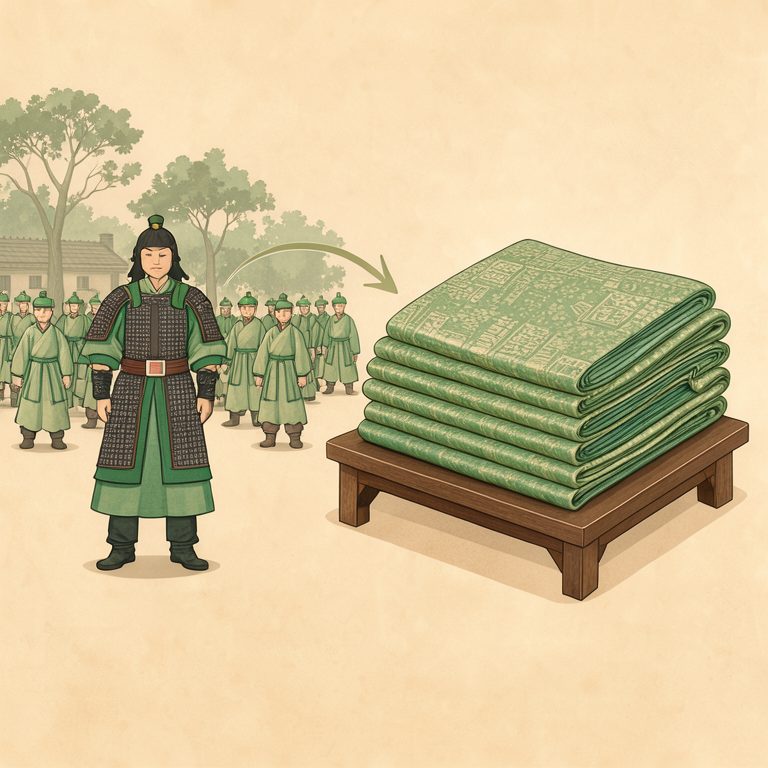
Marshal Yue Fei is credited with creating the Eight Pieces of Brocade in the twelfth century, during the Song dynasty (960–1280 A.D.), to improve the health of his soldiers[1][2]. The original set consisted of twelve forms; after being passed down from generation to generation for more than eight hundred years they were edited down to eight[1][2]. Modern glossaries in the same lineage classify the set as wai dan (“external elixir”) qigong and date it to the Southern Song dynasty (1127–1280 CE; the Pain-Free Joints glossary gives 1127–1279)[3][4]. The name comes from brocade — cloth, usually of silk, woven into complex and colorful patterns — which is highly prized, the classic text notes, just as the good health produced by these simple exercises is prized[1]. Many versions of the set exist today; the principles and the goals of the practice remain the same whichever version you learn[1].
The Classical Practice Rules at a Glance
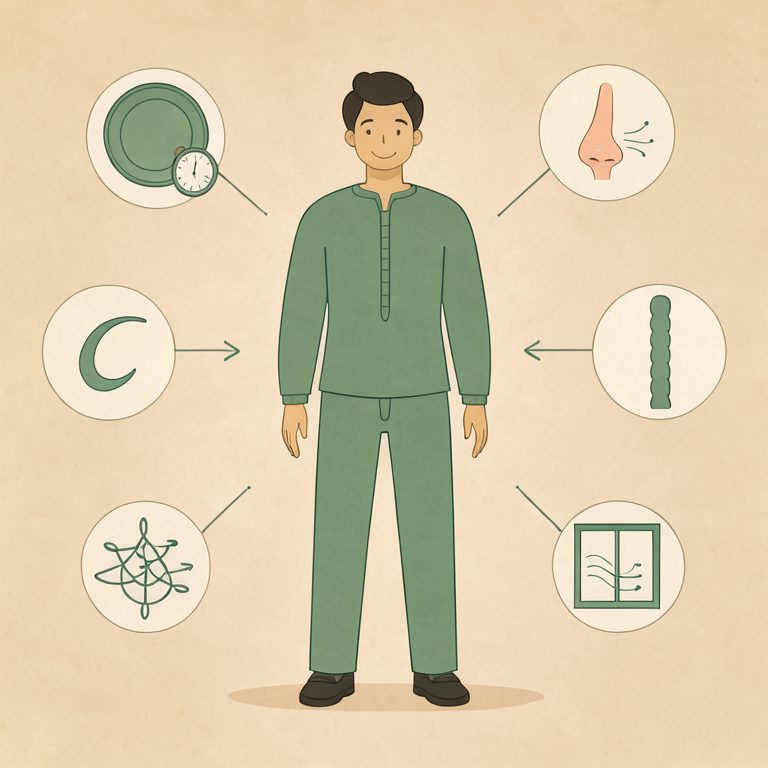
Instruction for the standing set comes down to a short, checkable list[1][5][7]:
| Rule | Classical instruction |
|---|---|
| Stomach | Not very hungry, not too full — after eating, wait at least 30 minutes, preferably an hour[1][5][7] |
| Breathing | Natural, through the nose; exhale while stretching, inhale while changing sides[1] |
| Posture | Back vertical, except where leaning is part of the exercise[1] |
| Pace | Slow and relaxed, forms flowing one into the next[1] |
| Dose | Beginners: at least 6 repetitions per piece, building toward 24 as strength improves[1] |
| Setting | Good ventilation, fresh air; outdoors: level ground sheltered from wind and strong sun[1][5][7] |
| Room temperature | About 72°F (22°C) for calm exercises, about 68°F (20°C) for moving ones[5] |
Traditional View vs Modern Physiology
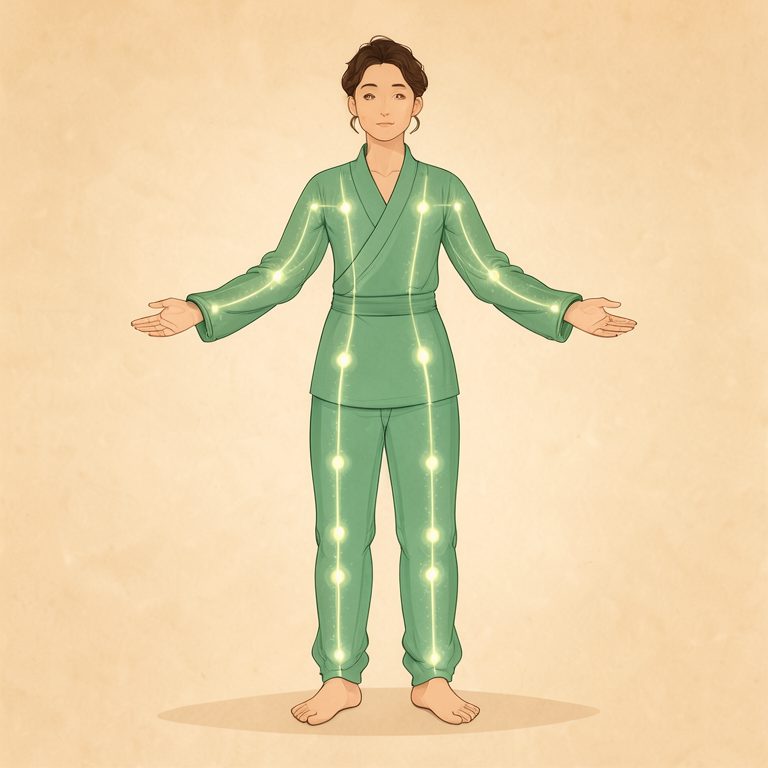
What the tradition says. Ba Duan Jin belongs to wai dan (“external elixir”) qigong: you concentrate attention on the limbs, Qi builds up in the arms and legs, and when the potential is high enough it flows through the channel system, clearing obstructions and nourishing the body[2]. The sitting set focuses on the upper limbs and, in the same theory, the six organs related to the six Qi channels; the standing set is the one most commonly practiced today[2]. Classical teaching puts the mind first: in “regulating the mind” (Tiao Xin), a calm, emotionally neutral mind lets Qi regulate itself[2].
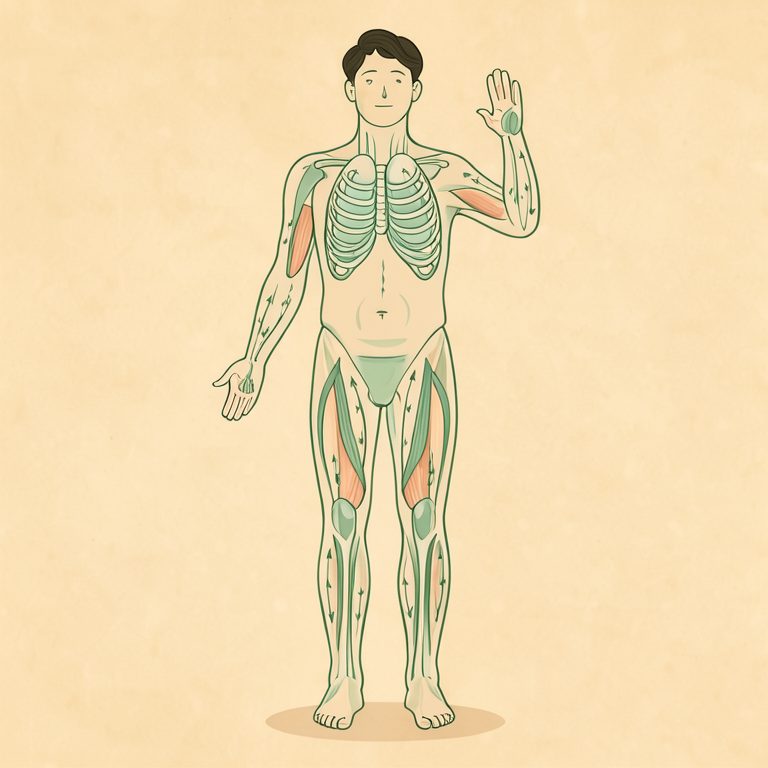
What a modern reader should know. The source literature behind this manual is instructional and traditional; it does not report clinical trials of Ba Duan Jin, and we will not invent any. What can be said plainly is mechanical: the set is slow, full-range, low-load movement paired with paced nasal breathing and relaxed attention — everyday mobility work that fits a morning routine. Where the tradition speaks of Qi and channels, modern physiology speaks of respiration, circulation, and muscle tone; the vocabulary differs, while the choreography both describe — gentle repeated motion, an upright spine, unhurried breath — is the same.
Safety and Contraindications
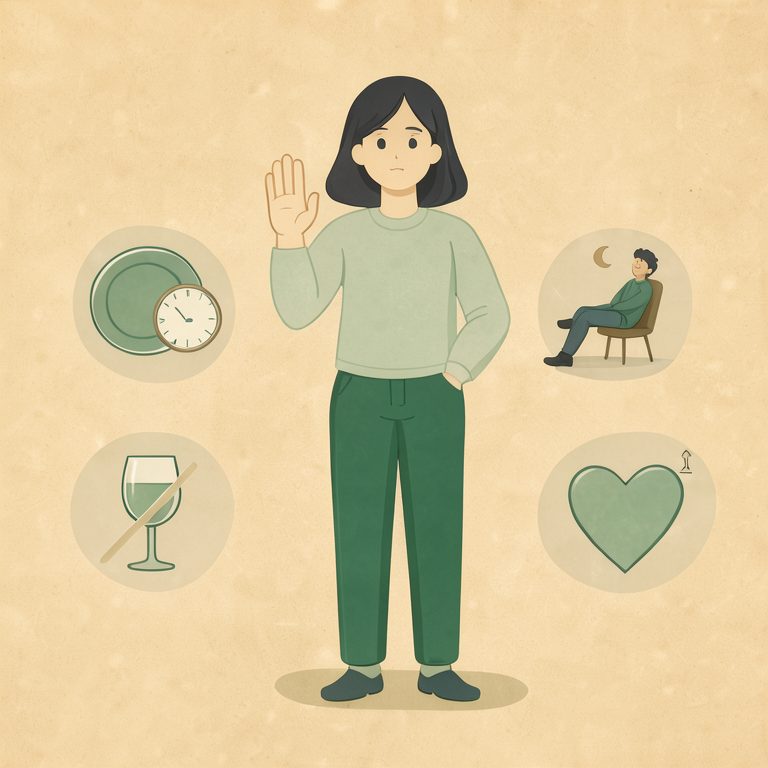
Ba Duan Jin is a gentle set, but the classical texts are explicit about when not to practice. Do not practice when you are very hungry or too full; skip the session when you are so tired that your attention wanders, after drinking alcohol, or when you are very worried — concentration is the key to the work, and these states take it away[1]. General qigong instruction adds: pause training during illness — fever or diarrhea, for example — until you have recovered[5]. From the wider internal-arts literature come three more cautions: during pregnancy keep to gentle stretching and breathing only, with no Dan-Tian concentration; chronic mental illness is a reason to avoid intensive qigong training; and serious heart conditions call for guidance from a qualified practitioner before starting[6]. Stay in a pain-free range and stop if you feel dizzy or unwell. This manual is not intended to cure, treat, or prevent any disease; if you are pregnant, managing a chronic condition, or recovering from injury, talk with your physician before starting any new practice.
Frequently Asked Questions
How long is a beginner’s Ba Duan Jin session?
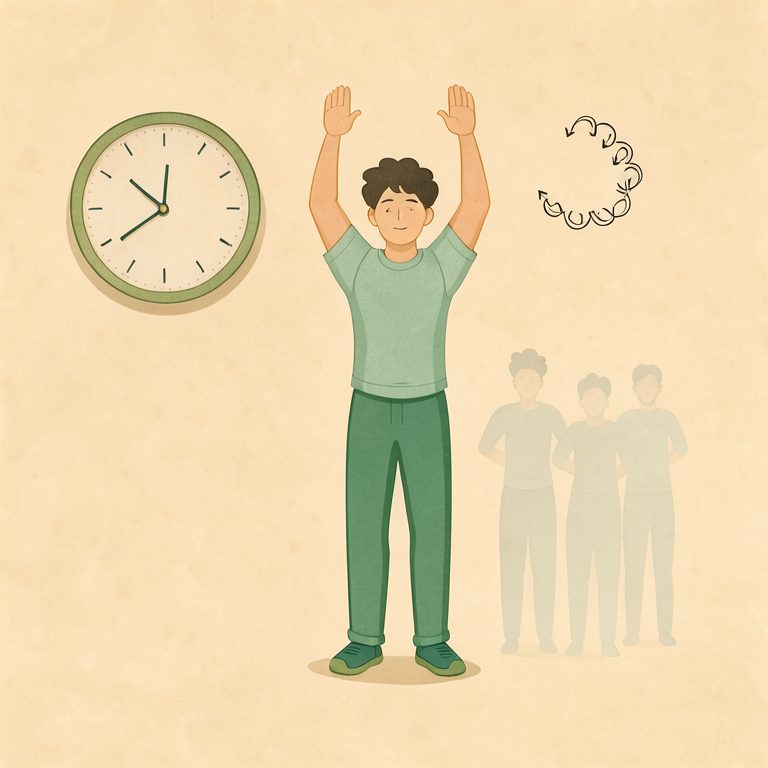
About 15 minutes. Beginners repeat each piece at least six times and, as health and strength improve, gradually build toward twenty-four repetitions per piece[1]; regularity, not intensity, is what the set asks of you[1].
Can I practice Ba Duan Jin right after eating?
No. Practice neither very hungry nor too full: after eating, wait at least 30 minutes, preferably an hour[1][5][7].
When should I skip a Ba Duan Jin session?
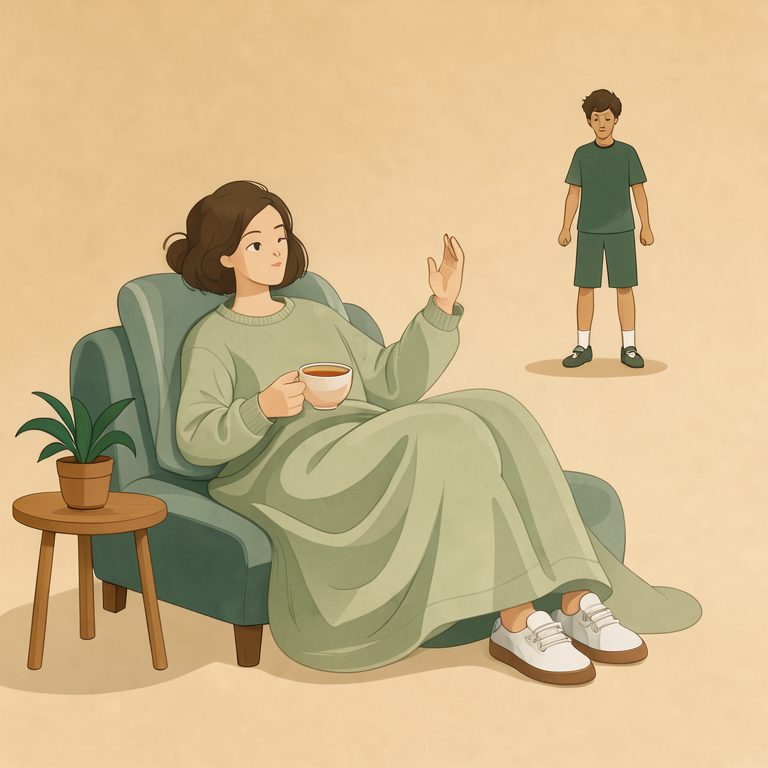
Skip practice when you are very hungry or too full, so tired that your attention wanders, after drinking alcohol, or when you are very worried[1]; pause training during illness with fever or diarrhea until you recover[5]. In pregnancy keep to gentle stretching and breathing only, with no Dan-Tian concentration; chronic mental illness and serious heart conditions call for guidance from a qualified practitioner first[6].
Related reading from our review desk: a movement companion for desk-bound days — Unlock Your Hip Flexors — and a look at a joint-support formula in Joint Genesis.
Sources
- [1] Yang, Jwing-Ming — Qigong for health and martial arts exercises and meditation (1998)
- [2] Yang, Jwing-Ming — Eight Simple Qigong Exercises for Health – The Eight Pieces of Brocade (1997)
- [3] Yang, Jwing-Ming — Pain-Free Joints. 46 Simple Qigong Movements for Arthritis Healing and Prevention (2017)
- [4] Lao Tzu, Jwing Ming Yang — The Dao de Jing A Qigong Interpretation (2018)
- [5] Fen Tian Li — Qigong
- [6] Damo Mitchell — A Comprehensive Guide to Daoist Nei Gong (2018)
- [7] Fen Shao I, Rotter M. — Chan Mi Gong Qigong (2012)
How we researched this
This article is based entirely on our local library of 1,137 books on traditional wellness practices, consulted offline with no internet sources. Every claim in the text was checked against the cited source passages before publication.
Sources & References
Yang, Jwing-Ming — Qigong for health and martial arts exercises and meditation (1998); Yang, Jwing-Ming — Eight Simple Qigong Exercises for Health - The Eight Pieces of Brocade (1997); Yang, Jwing-Ming — Pain-Free Joints. 46 Simple Qigong Movements for Arthritis Healing and Prevention (2017); Lao Tzu, Jwing Ming Yang — The Dao de Jing A Qigong Interpretation (2018); Fen Tian Li — Qigong; Damo Mitchell — A Comprehensive Guide to Daoist Nei Gong (2018); Fen Shao I, Rotter M. — Chan Mi Gong Qigong (2012)