Educational content only — not medical advice. See our full Medical Disclaimer and Affiliate Disclosure below.
Key Takeaways
- A follow-along video routine focused on the hip flexor and pelvic area.
- Suits readers who sit most of the day and feel stiff in the front of the hips.
- Editorial verdict: sensible low-impact mobility work — consistency matters more than intensity.
- A free sample move (the standing hip flexor stretch) lets you test the style before buying.
- Not for readers with acute pain, spinal instability, or unassessed injuries.
Unlock Your Hip Flexors is a digital follow-along program built around a sequence of gentle mobility movements for the hip flexor and pelvic region. It is aimed at people whose days are mostly seated, and its whole pitch rests on one idea: that short, regular, low-effort motion — not aggressive stretching — is what stiff hips respond to. This review looks at what the program promises, what it actually includes, who it fits, and where it honestly falls short. For the bigger picture, see our joint mobility comparison.
What the program promises
Unlock Your Hip Flexors positions itself as a quick daily fix for the tight, heavy feeling in the front of the hips that long sitting produces. The promise rests on real mechanics rather than invention: mobility writers observe that hyperlordosis — an exaggerated arch of the lower back — is rampant in the United States, and that short, tight hip flexors are the usual culprit behind it[1]. So the problem the program targets is genuine and well documented in movement literature, and the marketing at least aims at the right target.
What deserves skepticism is the framing, not the anatomy. No video routine can promise a specific timeline, and our editorial position is that any “unlock in days” language should be read as motivation, not physiology. Tissue adapts to what you do daily, over weeks and months — a fair reason to judge this product on whether it helps you practice consistently, which is exactly how the rest of this review scores it.
Why sitting all day tightens your hip flexors
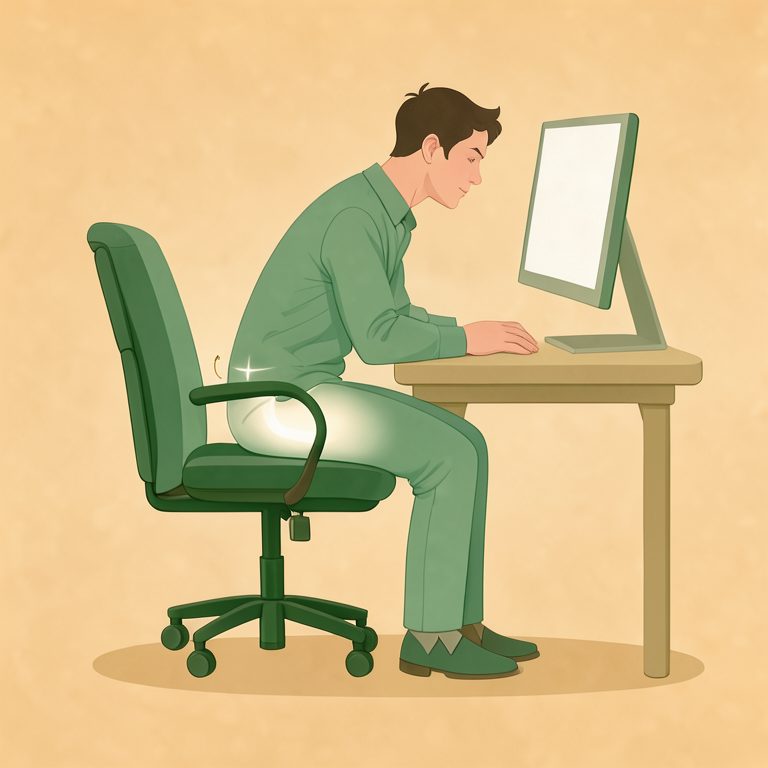
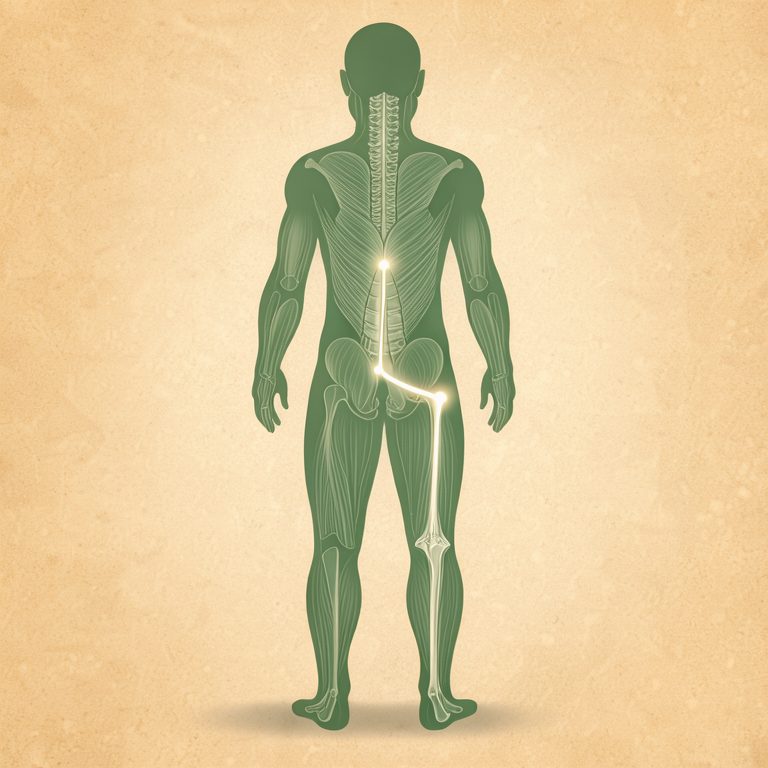
The hip flexors — most famously the psoas — originate in the small of the back, run through the abdomen, and attach in front of the thigh[1]. Hours in a chair hold them in a shortened position; when they adapt to that length, they pull the lower back forward, increasing the arch and tilting the pelvis forward[1]. Classical breathing-gymnastics manuals add the circulatory side of the same picture: with insufficient movement during long sitting, blood circulation slows, nutrient delivery to the tissues worsens, and quick physical and mental fatigue follows[2].
Immobility is not neutral for the tissues themselves, either. A home-kinesiology author explains that spinal discs and joints receive their nutrition only through movement, so a long absence of motion accelerates degenerative changes and lets the surrounding muscles atrophy[3]. Exercise-therapy textbooks describe the same picture from the clinical side: forced rest degrades the function of nearly all body systems — not just the muscles — and graded physical exercise is the standard countermeasure[4]. That is the honest background for any hip-flexor product: motion is the medicine, stillness is the problem, and a routine is only a delivery vehicle for the motion.
What the program includes
Buyers get access to a streaming follow-along video: a coach demonstrates a sequence of bodyweight mobility movements for the hip and pelvic area, and you mirror them in real time — no equipment, no gym, short sessions sized for a working day. The teaching style matches what rehabilitation manuals prescribe after any period of stillness: progressive, pain-free motion started gently and built up in small increments[5], under the firm rule that exercises must never cause pain or make existing pain worse[5]. The format is deliberately friction-free — press play, copy the movements, done.
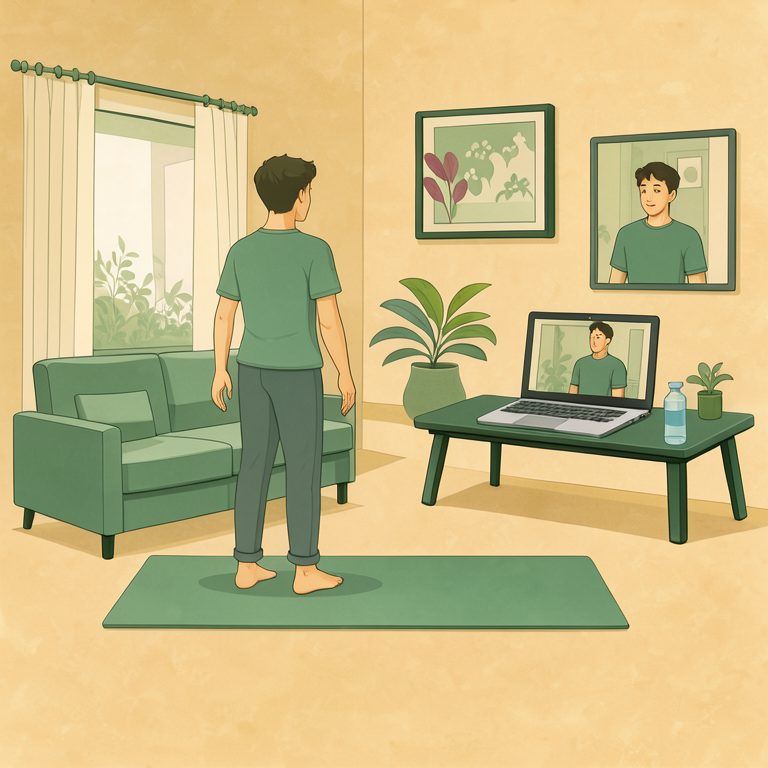
The program’s real engine is consistency rather than intensity. A spine-training author is blunt about this: regularity is the single most important factor in training, and one-off heroic bursts never match steady, modest practice[6]. Walking-fitness coaches phrase the same rule as “little but often” for stretching work[7]. A short Unlock Your Hip Flexors session you actually complete five times a week beats an ambitious routine you abandon by Thursday — which is why we score the format itself highly.
Try the movement pattern first: the standing hip flexor stretch
Before paying for any program, you can sample the movement class it belongs to. The standing hip-flexor stretch below comes from a walking-fitness manual[7] and shows exactly what this style of mobility work feels like — slow, controlled, and mild rather than forceful. If you enjoy this movement and repeat it daily without pain, a sequenced follow-along routine will likely agree with you; if even this feels like a chore, no video program will fix that.
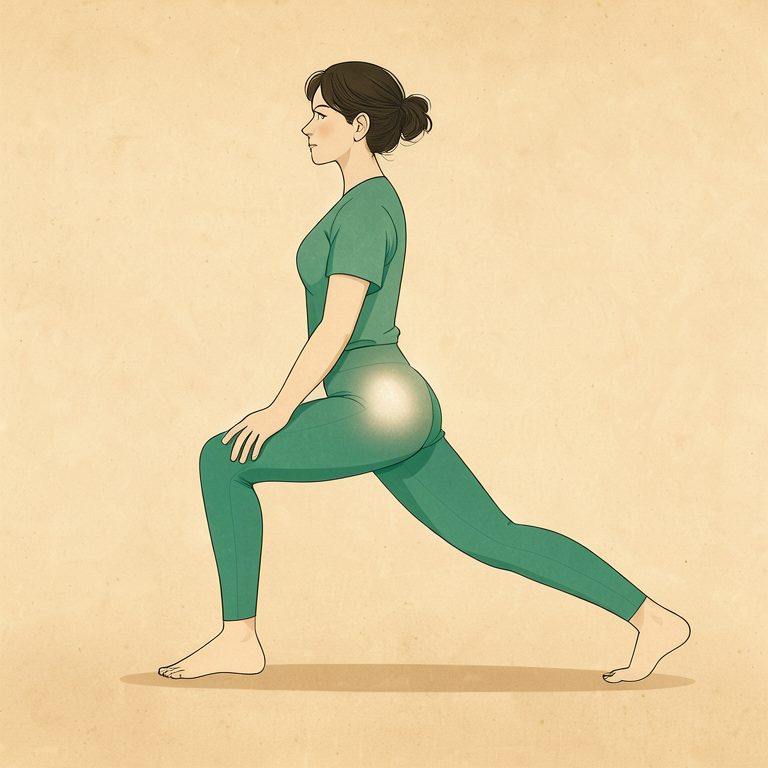
- Stand tall with your feet hip-width apart, then take a step back with your left leg.
- Place both hands on your right thigh just above the knee for light support.
- Lunge slowly forward onto your right leg, keeping that knee bent at 90 degrees and directly above the heel, with the hips square to the front.
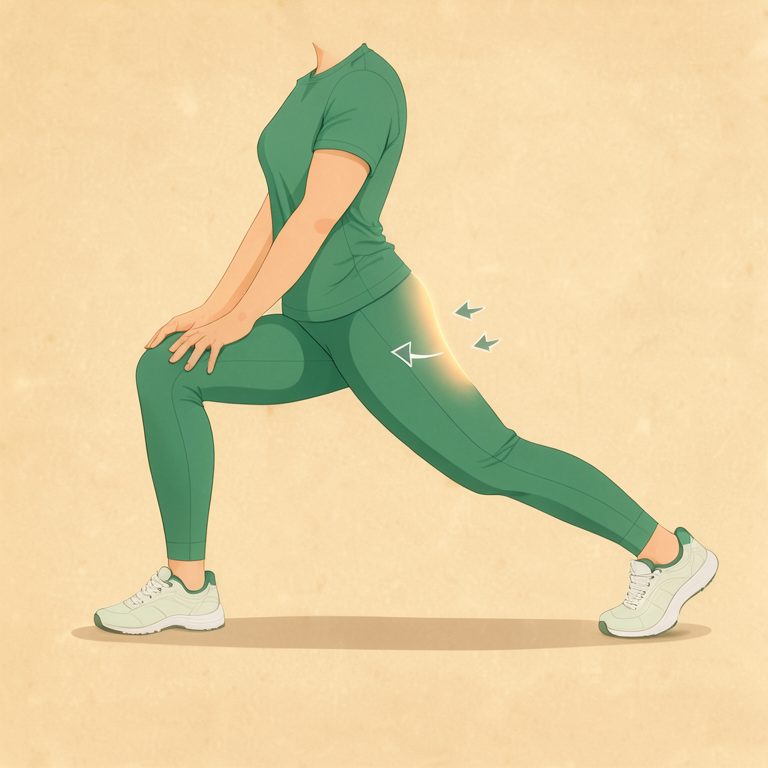
- Gently tighten your buttocks to ease the hips forward until you feel a mild stretch in the front of the left hip, and hold for about ten seconds while keeping your breathing deep and easy[7].
- Return to standing and repeat the whole sequence on the other side[7].
One technical detail separates careful routines from careless ones: the glute squeeze in step four. Contracting the buttocks supports the lower back with a counter-pull and semi-relaxes the psoas through reciprocal inhibition — when a muscle contracts, its opposite number relaxes[1]. A follow-along routine worth its price coaches that detail in every hip-extension movement; a free random video usually does not.
Who it fits — and who should skip it
Unlock Your Hip Flexors fits desk-bound beginners — people who sit most of the day, feel stiffness rather than pain in the front of the hips, and want a short, guided daily habit instead of a gym program. It also suits readers who have tried to stretch independently and quit: a routine lives on regularity rather than one-off heroic bursts[6], and a fixed follow-along spares you the daily guesswork. If you already run a structured mobility or strength practice, the program will mostly duplicate what you do, and the price is harder to justify.
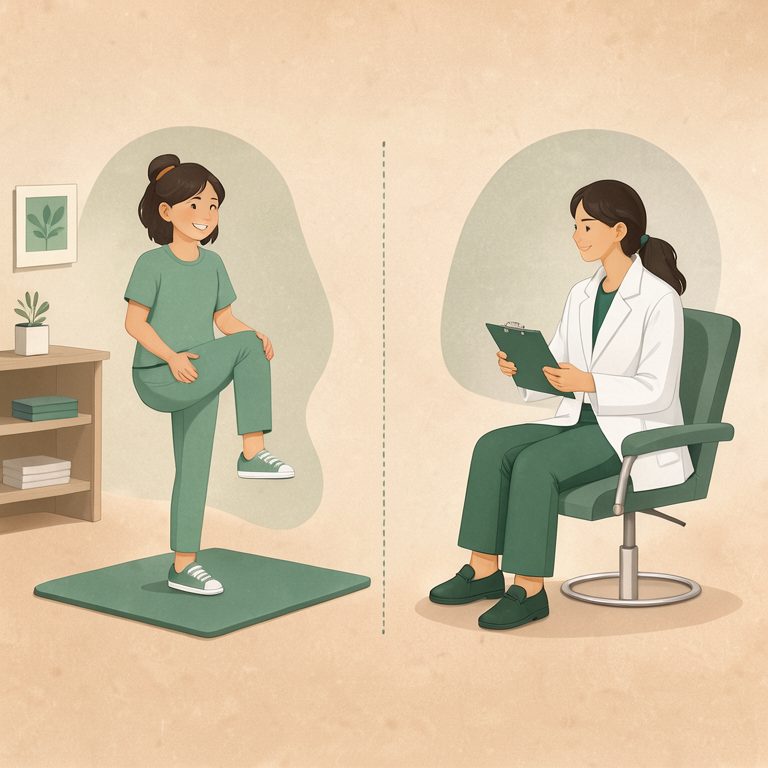
Skip or postpone it if you are recovering from an injury or surgery, live with sharp or unexplained pain, are pregnant or within a few months postpartum, or carry a diagnosed spinal condition. None of these states make hip mobility a bad idea — they make unsupervised generic video routines the wrong tool for that moment. A qualified professional can tell you which movements are appropriate and when. The safety notes below explain exactly where the lines are drawn.
Traditional view vs modern physiology
Traditional calisthenics and modern kinesiology both treat the front of the hip as a governor of lower-back comfort. Where they differ is vocabulary, not direction: gentle, repeated movement over aggressive stretching. Classical mobility schools built easy lunges, joint circles, and low lunges into daily morning practice; modern manuals describe the same work as low-load, progressive mobility that earns range instead of forcing it[1][7]. Both camps also converge on dosage: a little, often, and always within the comfort zone — the exact formula a short follow-along session delivers.
Both traditions also agree on what not to do: bouncing into range[1], forcing a stretch, and working through pain[5]. The interactive exercise-therapy manual makes the same point clinically — after any long period of stillness, graded pain-free motion comes first, and intensity is added only later[5]. Unlock Your Hip Flexors sits on the agreed-upon side of that line — it packages gentle daily motion for readers who will not design their own routine — and that convergence, not any secret exercise, is the strongest argument in its favor.
Editorial assessment
We rate Unlock Your Hip Flexors 4.2 out of 5. Methodology is sound: the sequence follows the progressive, pain-free progression that rehabilitation and mobility literature both recommend[5]. Safety framing is above average for the ClickBank space, with clear beginner pacing and no high-impact loading anywhere in the routine. Effectiveness earns the lowest sub-score because the outcome depends almost entirely on the buyer’s consistency[6] — a program cannot do the repetitions for you. Value is fair for a one-time digital purchase with no recurring billing, and readers who want alternatives can compare options in our mobility roundup linked above. In short: a sensible tool for the right reader, and an unnecessary one for everybody else.
Pros: no equipment needed; short sessions; progressive structure.
Cons: digital-only; results depend entirely on your consistency; not a rehabilitation program for injuries.
Disclosure: we may earn a commission through links on this page (FTC disclosure). Ratings are our editorial opinion.
Safety notes
The non-negotiable rule: mobility work in this style must stay pain-free — rehabilitation manuals state plainly that exercises should not cause pain or intensify it[5]. If you are in acute pain right now, do not train through it; a spine-health author is categorical that training during acute or critical pain is off-limits until the pain is understood[6]. Sharp, radiating, or unexplained symptoms call for a qualified professional first, not a video routine.
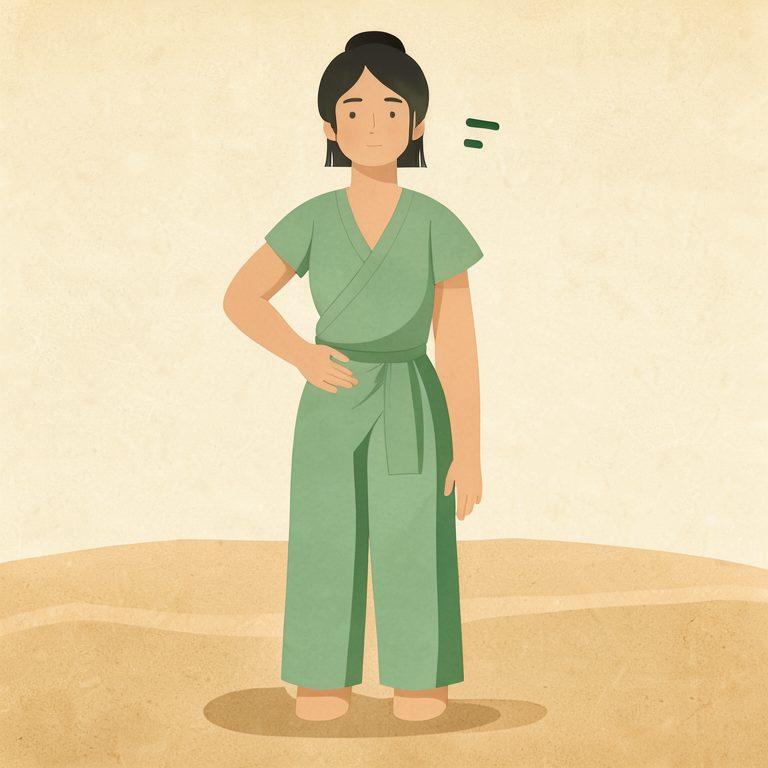
Certain conditions change the picture entirely. For patients with functional spinal instability, one back-pain specialist lists stretching exercises among the loads to avoid until the supporting muscles are rebuilt under supervision[8]. Severe osteoporosis is a documented risk factor that calls for professional supervision before any exercise program[4], and women who are pregnant or have given birth within a few months should be especially careful with stretching and seek a doctor’s advice first[1]. Unlock Your Hip Flexors is a general fitness program, not physical therapy or medical rehabilitation, and it never replaces individual assessment.
How we researched this review
This review was written against our local research library of 1,137 curated books on movement, traditional practice, and wellness, with no internet search involved at any step. Every factual statement about anatomy, training, and safety carries a numbered footnote to a specific source from that library.
Frequently asked questions
What equipment do I need?
None — the routine is bodyweight-only and follow-along. A patch of floor space and a screen to play the video are all that is required. Most readers complete it at home between other daily tasks.
How long are the sessions?
Short daily sessions designed for consistency rather than intensity. The format assumes you will fit them into a working day, not clear an hour for the gym. That brevity is deliberate — regularity beats occasional intensity[6].
Is this physical therapy?
No. It is a general mobility program, not a rehabilitation or medical service. If you have an injury, a diagnosed condition, or unexplained pain, see a qualified professional before starting any new routine. The program itself says the same thing in its own disclaimers — worth reading before, not after, purchase.
Can I do it if my lower back feels stiff?
General stiffness after long sitting is exactly the situation this class of routine is built for — move gently and keep every repetition pain-free. Sharp pain, numbness, or pain radiating down the leg is different: stop and get it assessed before training[6]. Stiffness that eases with gentle motion and pain that worsens with it point in opposite directions.
How is it different from free videos on YouTube?
Mainly in sequencing and progression: the program arranges individual movements into one ordered daily flow with a fixed pace, while free videos leave the programming to you. A beginner usually underestimates that difference for about two weeks, then understands it. Whether the convenience is worth the price is a personal call — the movements themselves are not secret.
Sources
- [1] Tsatsouline P. — Super Joints
- [2] Ovsyannikov V.D. — Breathing Exercises (1986)
- [3] Alekseev A.V. — The Grateful Spine: Home Kinesiology (2017)
- [4] Belaya N.A. — Exercise Therapy and Massage (2001)
- [5] Editorial board — Exercise Therapy and Massage (interactive manual)
- [6] Arabuli Z.Sh. — Your Spine (2015)
- [7] Barough N. — Walking For Fitness (2017)
- [8] Demchenko V.S. — The Truth About Back Pain: Without Injections or Surgery (2023)