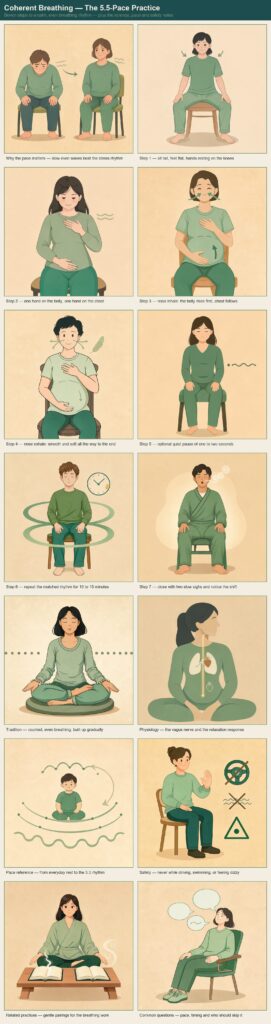
Educational content only — not medical advice. See our full Medical Disclaimer and Affiliate Disclosure below.
Key Takeaways
- Coherent breathing means a slow, even rhythm — in this manual a 5.5-second inhale and a 5.5-second exhale, about 5.5 breaths per minute.
- Traditional teaching describes a close norm: roughly 6 seconds in and 6 seconds out with a short pause[2][3].
- Slow diaphragmatic breathing is traditionally used for calm; modern physiology describes it as engaging the vagus nerve and the relaxation response[8][4].
- The full protocol takes 10–15 minutes, needs no equipment, and suits complete beginners.
Coherent breathing is the practice of breathing at a slow, even pace in which the inhale and the exhale are about the same length. This manual teaches one concrete version of it: a 5.5-second inhale and a 5.5-second exhale, repeated for ten to fifteen minutes. It can be done anywhere — as a wind-down before sleep, a reset after work, or a quiet opening before gentle movement practices such as the Baduanjin qigong set or Zusanli (ST36) acupressure.
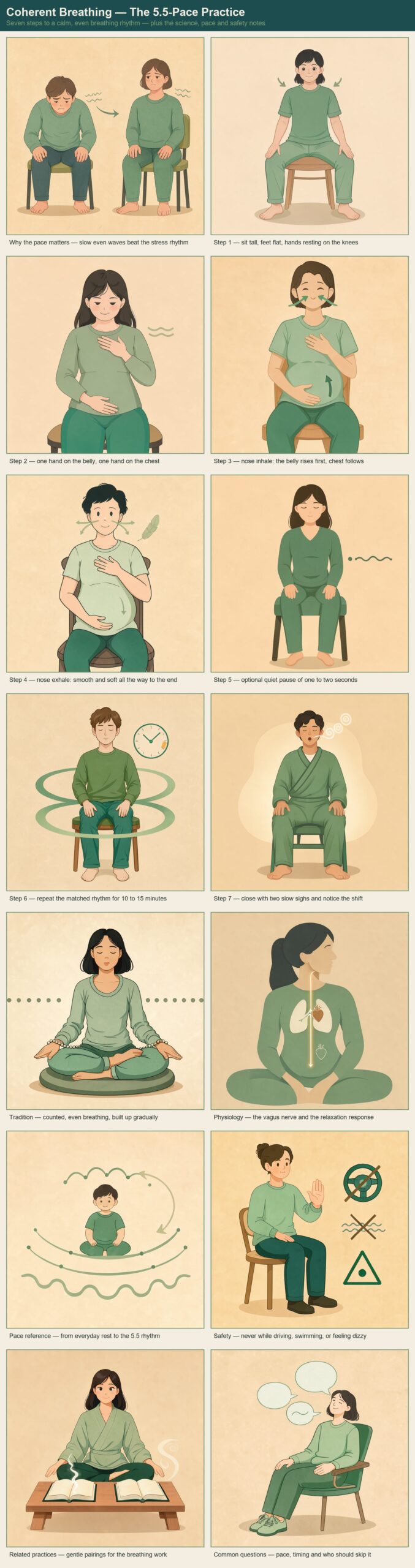
Why the pace matters
At rest, breathing commonly runs at 15 to 30 breaths per minute[1], and one breathing manual in our source library describes trained, quiet breathing as low as 6 to 10 minimal breaths per minute, with a natural pause of 4 to 5 seconds between breaths[1]. A traditional wellness school describes the working norm as about 6 seconds for the inhale and 6 seconds for the exhale, with a two-second pause — and observes that when the breath settles, the heartbeat settles too, reflexively rather than by force[2][3]. A 5.5-second rhythm sits inside that window: slow enough to matter, short enough to sustain without strain.
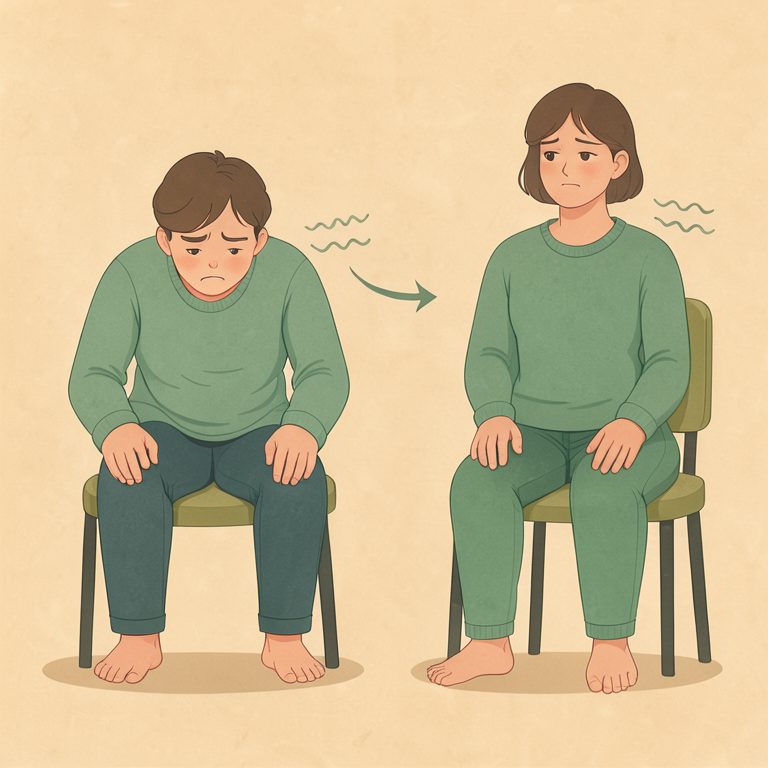
How to practice coherent breathing: the 5.5-pace protocol
Settle your posture
Sit on a chair or cushion, feet flat, spine easy and upright, hands on your knees. Let the shoulders drop.Feel your natural breath
One hand on the belly, one on the chest. For about a minute just observe the unforced breath — no changing it yet.Begin the 5.5-second inhale
Breathe in through the nose on a slow, silent count of about five and a half seconds; the belly rises first, the chest follows.Match the 5.5-second exhale
Breathe out for the same count, softly and without pushing. The exhale stays smooth to the end — never forced.Add the gentle pause (optional)
Rest for one to two seconds after the exhale before the next inhale if it feels comfortable. Skip it at any sign of air hunger.Repeat for 10 to 15 minutes
Cycle the matched rhythm unhurried. If counting distracts, feel coolness at the nostrils on the inhale and warmth on the exhale.Close with two slow sighs
Finish with two easy sighs, then sit half a minute noticing what changed — heartbeat, shoulders, mood.
- Settle your posture. Sit on a chair or a cushion, feet flat on the floor, spine easy and upright, hands resting on your knees or thighs. Let the shoulders drop away from the ears.
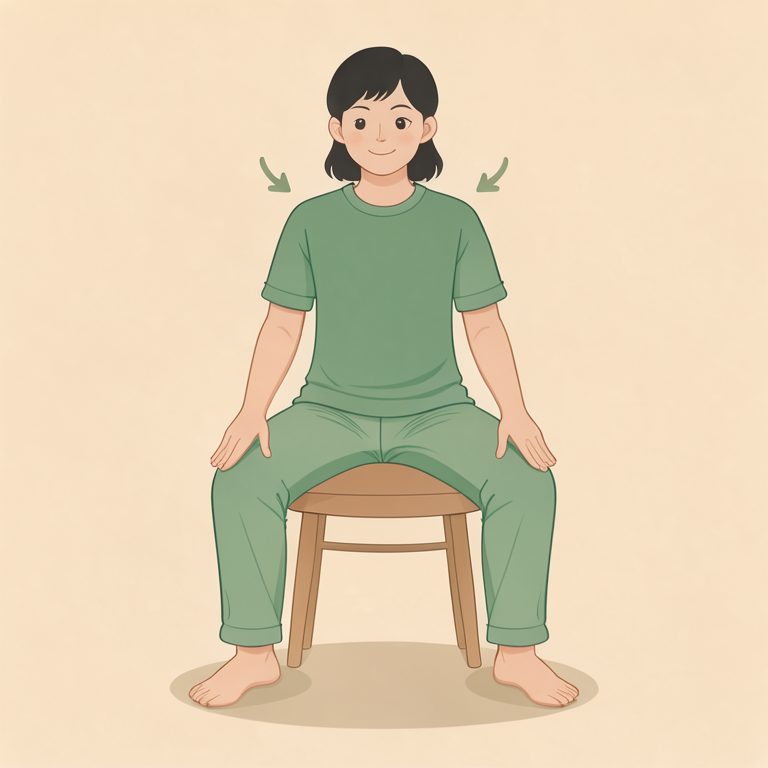
Step 1 — sit tall, feet flat, hands resting on the knees - Feel your natural breath. Place one hand on the belly and one on the chest. For about a minute, simply observe your unforced breathing — do not change it yet.
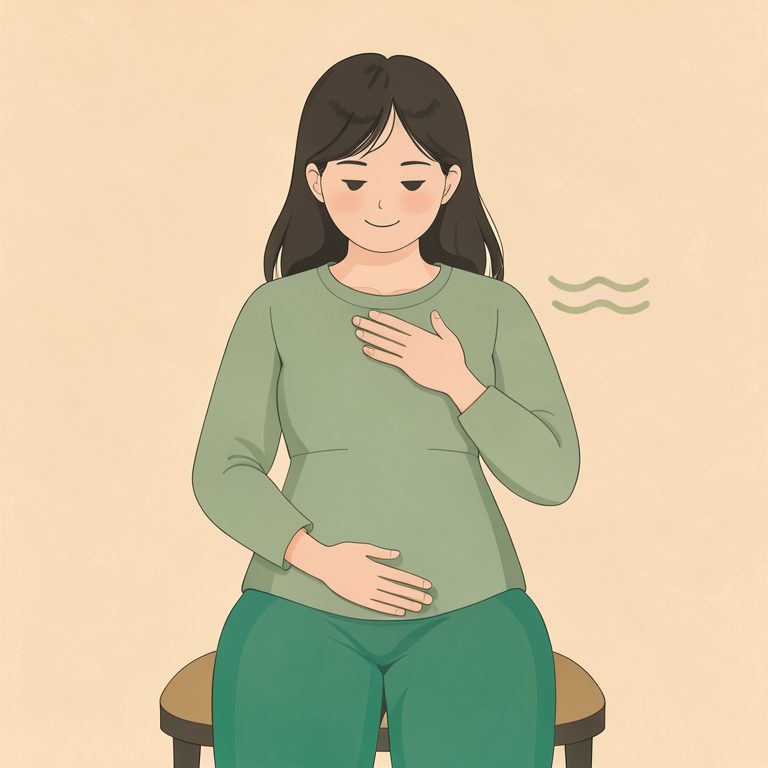
Step 2 — one hand on the belly, one hand on the chest - Begin the 5.5-second inhale. Breathe in through the nose on a slow, silent count of about five and a half seconds, letting the belly rise first and the chest follow.
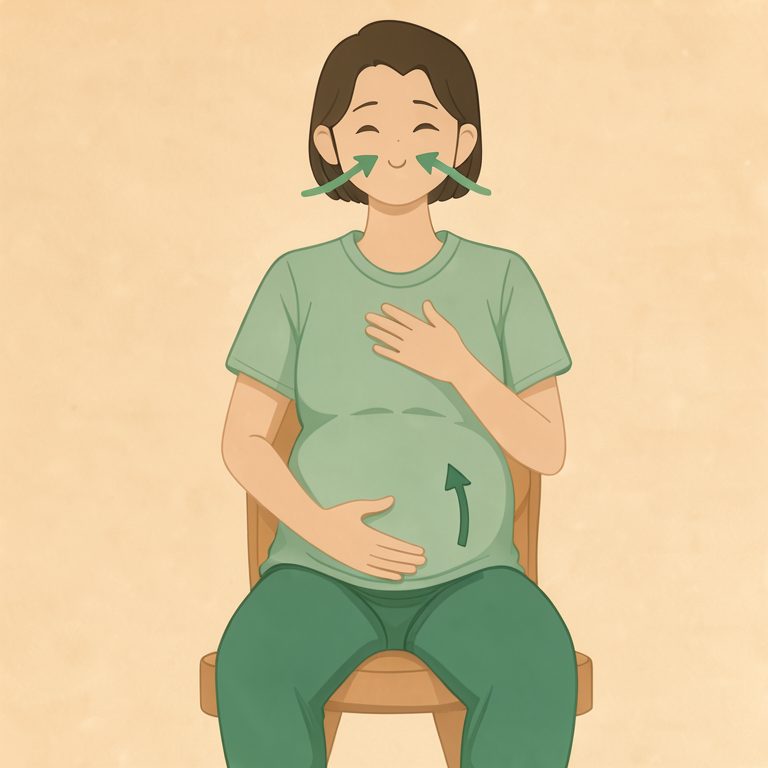
Step 3 — nose inhale: the belly rises first, chest follows - Match the 5.5-second exhale. Breathe out for the same count, softly and without pushing. The exhale stays smooth all the way to the end — never forced.
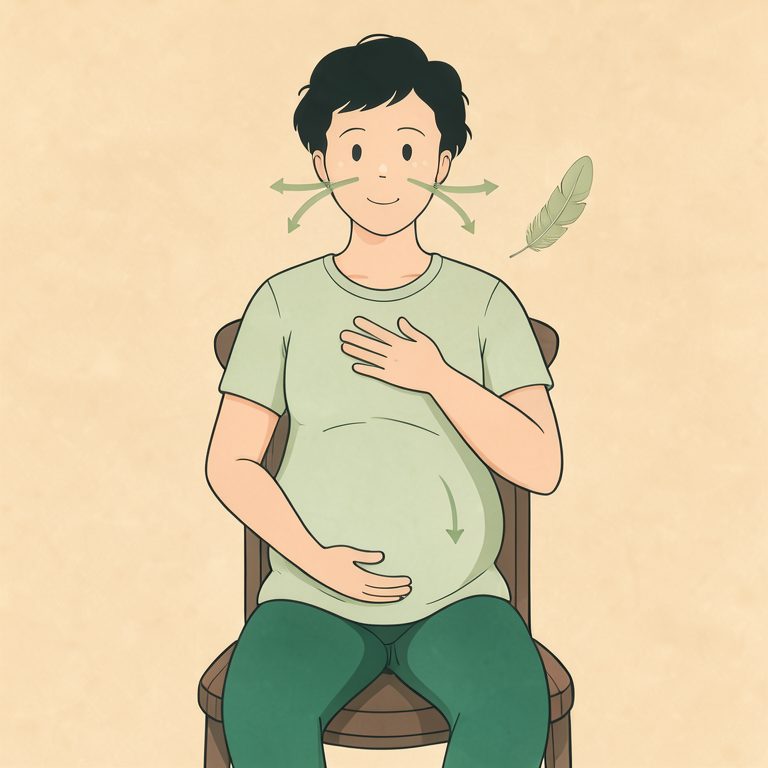
Step 4 — nose exhale: smooth and soft all the way to the end - Add the gentle pause (optional). If it feels comfortable, rest for one to two seconds after the exhale before the next inhale. Skip the pause entirely if you notice any air hunger.
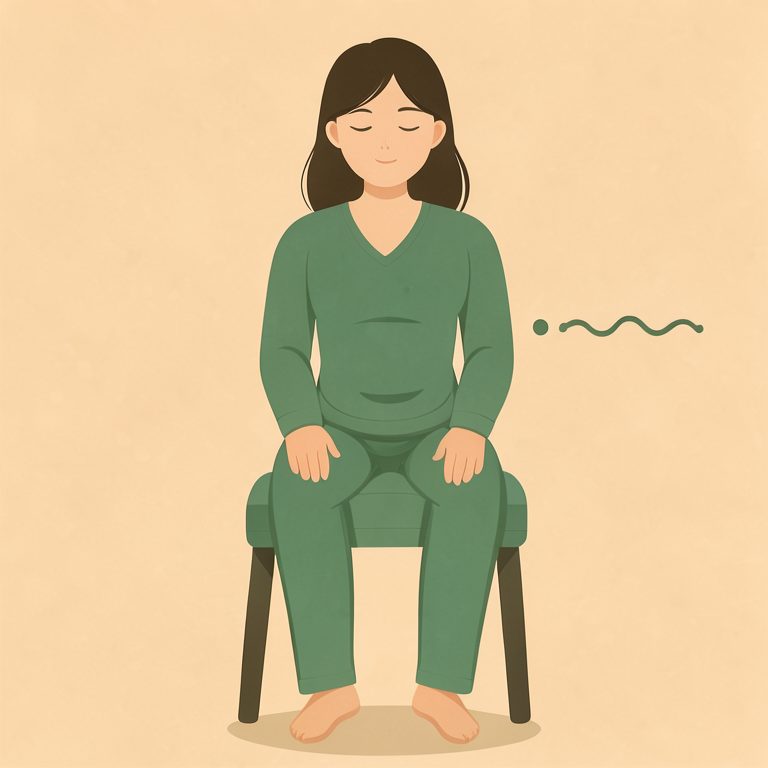
Step 5 — optional quiet pause of one to two seconds - Repeat for 10 to 15 minutes. Keep cycling the matched rhythm at an unhurried pace. If counting feels like work, switch to feeling the coolness at the nostrils on the inhale and the warmth on the exhale.
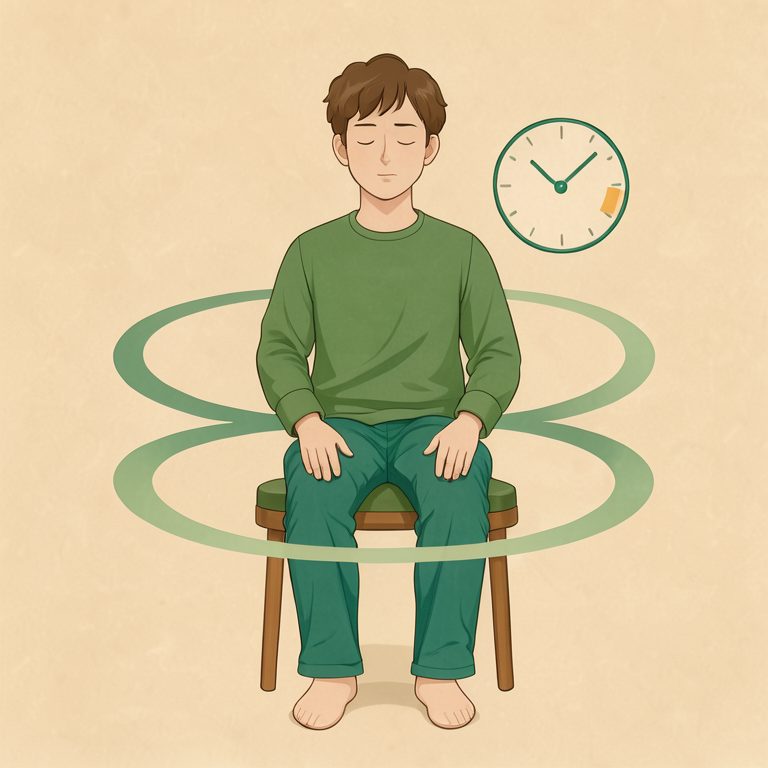
Step 6 — repeat the matched rhythm for 10 to 15 minutes - Close with two slow sighs. Finish with two easy sighs, then sit quietly for half a minute and notice what changed — the heartbeat, the shoulders, the mood.
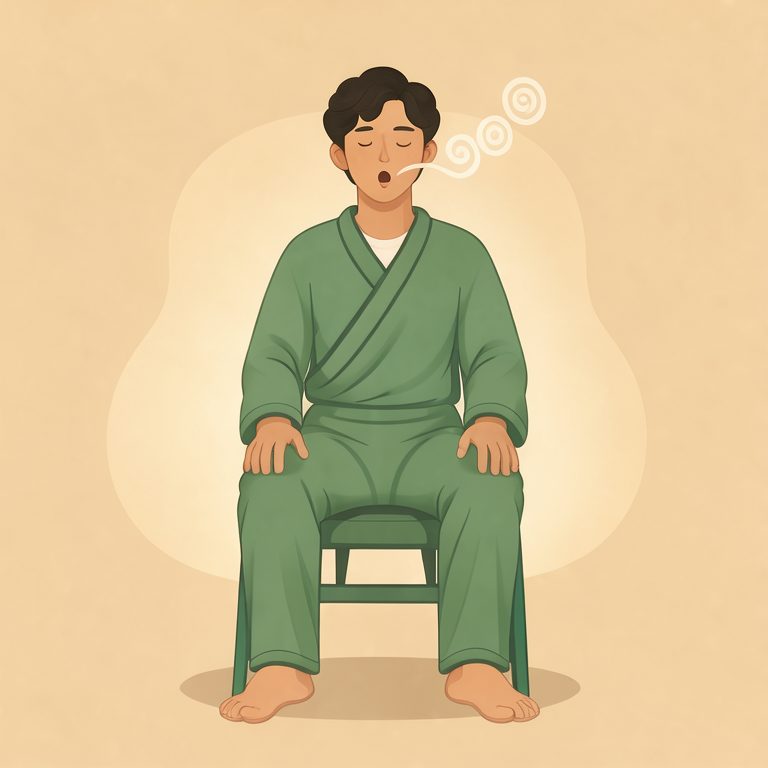
Step 7 — close with two slow sighs and notice the shift
Science and tradition, side by side
What the traditional sources say
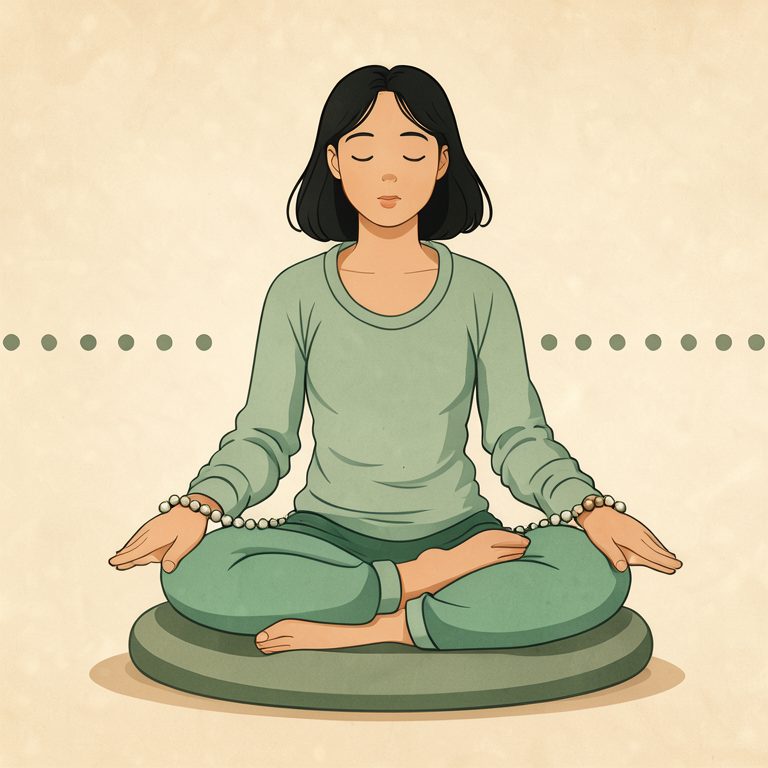
Measured, even breathing is old technology. Yogic pranayama works in counted cycles and carries clear classical cautions: practice is not to be rushed, the capacity for breath retention is individual, and a hold that is too long creates strain — so cycles are built up gradually and kept comfortable[8]. Russian wellness traditions describe a norm of about 6 seconds in and 6 seconds out with a short pause — a norm one arrives at gradually, not one to force on day one[2][3]. A simple meditative method from the same library counts the exhales and repeats a calm phrase matched to the length of each exhale, a low-tech way to slow the rhythm without clocks or apps[9].
What modern physiology describes
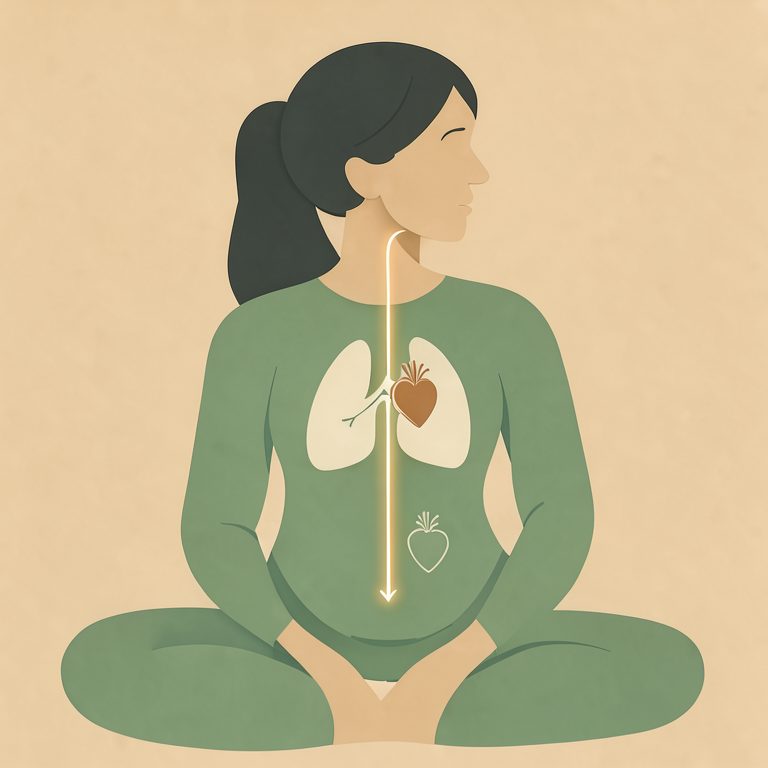
Modern stress literature describes breathing as sitting on the boundary between the autonomic (involuntary) nervous system and voluntary control: you can pause it deliberately, yet it continues on its own when you stop paying attention — which makes it a practical lever[5]. Slower, deeper, more regular breathing is described as producing a distinct relaxation felt across the body while the mind settles, and a few minutes of daily practice, used again in stressful moments, noticeably lowers overall stress[5]. The vagus nerve senses lung stretch along with oxygen and carbon dioxide levels; slow, deep, diaphragmatic breathing is described as activating the vagus nerve and stimulating the relaxation reflex as the body shifts from “fight or flight” toward “rest and digest”[4]. Heart-coherence research from a California institute (HeartMath) describes a method that begins with two slow, deep breaths to stimulate the parasympathetic system, then adds attention to the heart area together with a feeling of gratitude; with practice, the coherence state can be held for half an hour or more[7]. Practitioners of rhythmic breathing report that sessions of 20 to 30 minutes noticeably lower pulse and breathing rate[6].
Pace reference table
| Reference point | Breathing pace | Notes |
|---|---|---|
| Everyday rest, untrained | 15–30 breaths per minute | Common range reported at rest[1] |
| Quiet trained rest (BOLT scale; breathing manual, 2022) | 6–10 breaths per minute | Natural pause of 4–5 seconds between breaths[1] |
| Healthy rhythm proposed by K. P. Buteyko | About 8 breaths per minute | Quoted in a rhythmic-breathing practice diary[6] |
| Traditional balanced norm (Norbekov school) | About 6 s in / 6 s out + 2 s pause | Described as a norm one arrives at with practice; the sources give durations only, not a per-minute rate[2][3] |
| This manual — the coherent 5.5 pace | 5.5 s in / 5.5 s out (about 5.5 per minute) | Matched inhale and exhale; pause optional |
Safety and contraindications
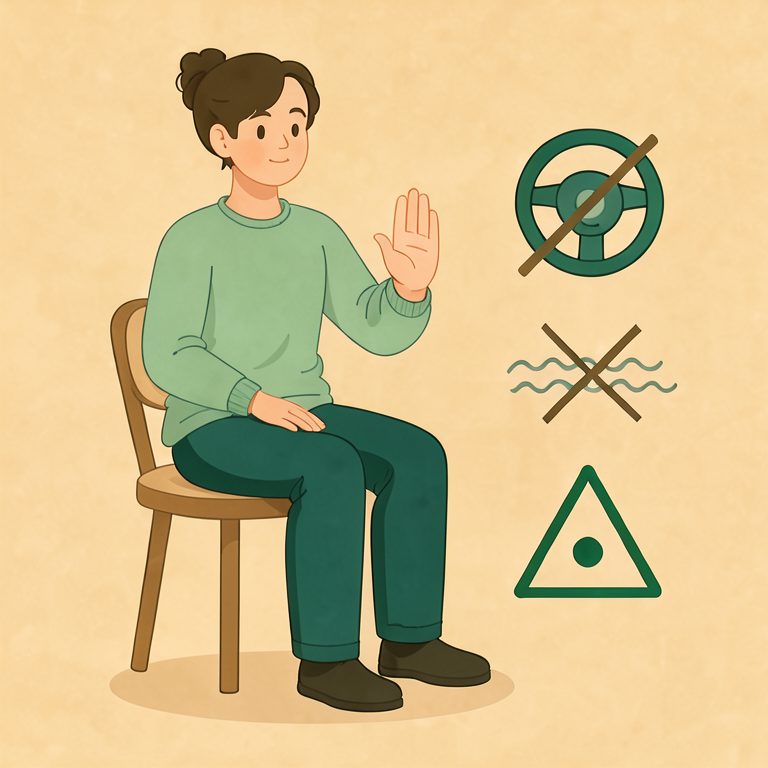
Slow paced breathing is gentle, but it is not for everyone at all times. Do not practice while driving, operating machinery, swimming, or in any situation where dizziness would be dangerous. Stop immediately if you feel dizzy, faint, panicked, or short of breath. If you are pregnant, or live with uncontrolled hypertension, a heart arrhythmia, a respiratory condition, or you are recovering from surgery, ask your clinician before starting. Skip the optional pause entirely if you have ever felt air hunger: pranayama teachers caution that breath retention is highly individual and that holds which are too long create strain[8]. This manual is for general education and is not intended to cure, treat, or prevent any disease.
Related reading
- Baduanjin — Eight Pieces of Brocade: Full Manual — a gentle moving practice that pairs well with paced breathing.
- Zusanli (ST36) Acupressure Manual — a complementary self-care routine.
- Joint Genesis editorial review — how we evaluate commercial wellness products.
Frequently asked questions
How many breaths per minute is coherent breathing?
In this manual’s protocol, one slow cycle — a 5.5-second inhale with a matched 5.5-second exhale — runs at about 5.5 breaths per minute. Traditional teaching describes a close norm of roughly six seconds in and six seconds out with a short pause[2][3], and trained quiet breathing has been described as low as 6 to 10 minimal breaths per minute[1].
How long should a coherent breathing session last?
Plan on ten to fifteen minutes a day for the protocol in this manual. Practitioners of rhythmic breathing report that longer sessions of 20 to 30 minutes noticeably lower pulse and breathing rate[6].
Is coherent breathing safe for everyone?
Slow paced breathing is gentle, but skip the optional pause if you have ever felt air hunger, and do not practice while driving, operating machinery, or swimming. If you are pregnant, or live with uncontrolled hypertension, a heart arrhythmia, a respiratory condition, or you are recovering from surgery, ask your clinician first.
Sources
- [1] Patrick McKeown — Therapeutic Breathing (2022)
- [2] Mirzakarim Norbekov — Norbekov’s Lessons: The Road to Youth and Health
- [3] Mirzakarim Norbekov — Effective Methodology “I Am Healthy at Any Age” (2016)
- [4] Navaz Habib — The Vagus Nerve (2021)
- [5] Claire Michaels Wheeler — Stress (2021)
- [6] A. A. Stepanov — Breathing According to Frolov
- [7] David Servan-Schreiber — Antistress (2012)
- [8] B. K. S. Iyengar — Pranayama: The Art of Breathing (1995)
- [9] Andrei Levshinov — The Inner Narcotic, or Healing Meditation
How we researched this
This article is based entirely on our local library of 1,137 books on traditional wellness practices, consulted offline with no internet sources. Every claim in the text was checked against the cited source passages before publication.
Sources & References
Patrick McKeown — Therapeutic Breathing (2022); Mirzakarim Norbekov — Norbekov’s Lessons: The Road to Youth and Health; Mirzakarim Norbekov — Effective Methodology “I Am Healthy at Any Age” (2016); Navaz Habib — The Vagus Nerve (2021); Claire Michaels Wheeler — Stress (2021); A. A. Stepanov — Breathing According to Frolov; David Servan-Schreiber — Antistress (2012); B. K. S. Iyengar — Pranayama: The Art of Breathing (1995); Andrei Levshinov — The Inner Narcotic, or Healing Meditation