Educational content only — not medical advice. See our full Medical Disclaimer and Affiliate Disclosure below.
Key Takeaways
- Dry brushing is a traditional morning skin ritual – a natural-bristle brush swept over dry skin before the shower, in short upward strokes; the source literature places it before bathing and starts it at the feet[1].
- Pressure stays light: the lymphatic system lies fairly close to the skin surface, and periodic dry peeling with a natural-bristle brush is described as enough to stimulate lymph flow[1] – after a correct session the skin shows no bruises or contusions[1].
- The lymphatic system is the body’s tissue-drainage and cleansing pathway[2]. The volumes are modest – about 1.5-2 L of lymph circulates in the whole body[3], and only about 2-3 L returns to the veins per day[1] – so brushing is a gentle stimulation of drainage, never a “flush.”
- In cosmetology, manual lymphatic techniques are used preventively, including as a measure that may help slow the formation of cellulite[1].
- Skip the ritual with thrombophlebitis or thrombosis, severe cardiovascular disease, skin diseases or purulent inflammation, active herpes, burns or other skin damage, lymphadenitis or lymphadenopathy, neuralgia, acute inflammatory flare-ups, oncological conditions, or during pregnancy[1].
Why Dry Brushing Belongs in a Lymphatic-Flow Routine
Dry brushing is a traditional skin ritual: a brush with firm natural bristles is swept over dry skin, usually before a morning shower, in short strokes that travel up the body. Its traditional appeal is simple – a fresher, smoother feel and a waking sense of circulation – but the reason it sits in our lymphatic-flow pillar is more specific. The lymphatic-care literature describes the lymphatic vessels as lying fairly close to the skin surface
, which is why activating lymph flow does not require strong pressure: periodic dry peeling of the skin with a natural-bristle brush is described as sufficient[1].
This manual pairs the dry brushing ritual with what our source library actually says – how the lymphatic system is built[2][3], how light strokes along the lines of lymph flow are practiced[1], and where the hard safety limits sit[1]. It is a traditional wellness ritual; it is not intended to cure, treat, or diagnose any disease.
Science and Tradition: What the Ritual Claims vs. What the Books Say
Dry brushing content online loves the word detox. Modern physiology gives that word a narrower meaning, and the source books let us keep the two registers honestly apart.
| Angle | Popular claim | What the source literature describes |
|---|---|---|
| Skin texture | Brushing “polishes” the skin | The exfoliation of dry brushing frees the skin of dead surface cells[1] |
| “Detox” | Brushing “flushes toxins out of the body” | The lymphatic system is the body’s tissue-drainage and cleansing pathway: lymph carries cell debris, breakdown products, and microorganisms away from inflamed tissue[2] to the lymph nodes, where foreign particles, bacteria, and destroyed-cell debris are filtered out and neutralized[1]. The volumes are modest – about 1.5-2 L of lymph circulates in the whole body[3], and only about 2-3 L returns to the veins per day[1] – so brushing is a gentle stimulation of that drainage, never a “flush” |
| Fluid return | Rarely mentioned at all | Information most routines skip: tissue fluid delivers nutrients to the cells and carries waste away, and the proteins that leak from blood into the tissue space return to the bloodstream only through the lymphatic vessels[3] |
| Circulation and energy | A morning brush “wakes the body up” | Contrast hydrotherapy after brushing – alternating warm and cool streams – is described as invigorating, leaving the skin fresher and firmer-looking[1] |
| Cellulite | Brushing “erases cellulite” | Manual lymphatic techniques are used preventively in cosmetology as a measure that may help slow the formation of cellulite – a preventive framing, never an erasing one[1] |
| Pressure | “Scrub hard for results” | The opposite: because the lymphatic vessels lie close to the skin, light periodic strokes with natural bristle are described as enough[1], and after a correct session the skin shows no bruises or contusions[1] |
The 7-Step Dry Brushing Protocol
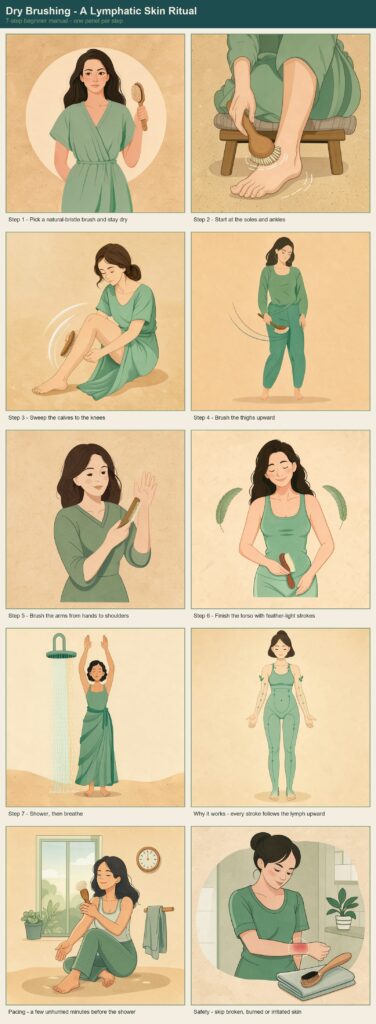
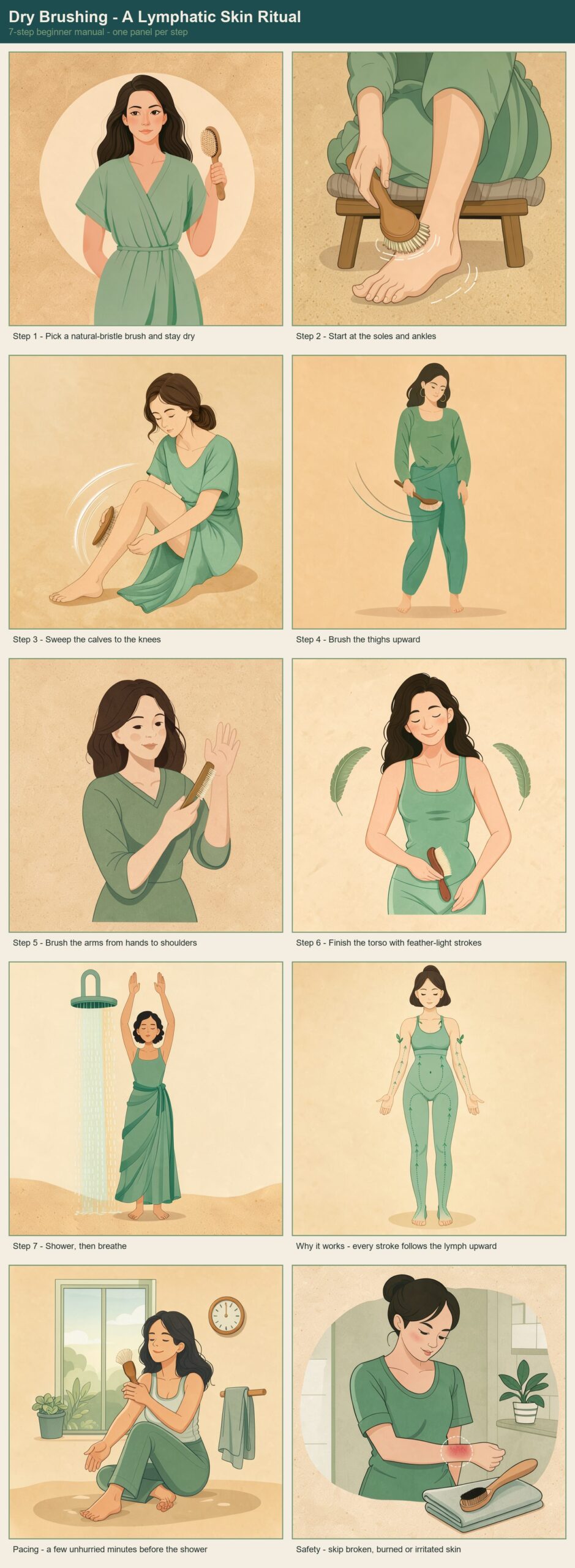
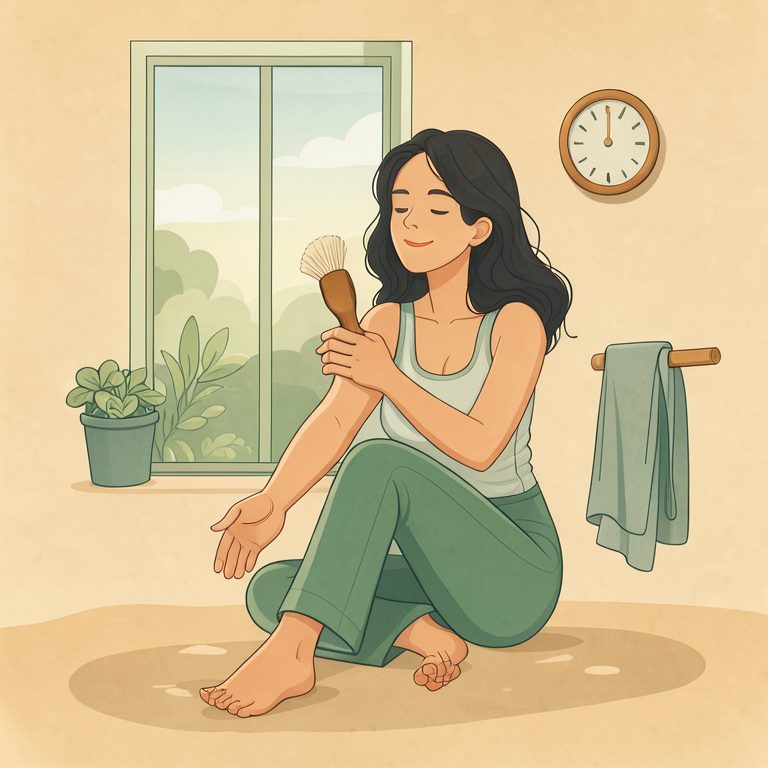
All you need is a natural-bristle brush and a few minutes before your shower – the source literature places dry brushing before bathing, starting at the feet[1]. Every stroke below is light, slow, and travels upward, because manual lymphatic work is defined by light, smooth gliding along the lines of lymph flow[1]. Bruises and contusions are not part of a correct session – that is the no-bruise benchmark of drainage work[1].
Pick a natural-bristle brush and stay dry
The source literature names the tool precisely: a brush with natural bristle, worked over dry skin before your shower [1]. A long handle helps you reach the back without twisting. Keep the face out of this protocol - for facial work the same book describes manual drainage with oiled hands and much lighter touch, not a coarse body brush [1].Start at the soles and ankles
Begin at the lower limbs, as the literature directs [1]. Short circular strokes on one sole, then around the ankle - several passes over each spot before shifting a little higher, the pacing of manual lymphatic work [1]. Light pressure is the whole point: the lymphatic vessels sit close to the skin surface [1].Sweep the calves to the knees
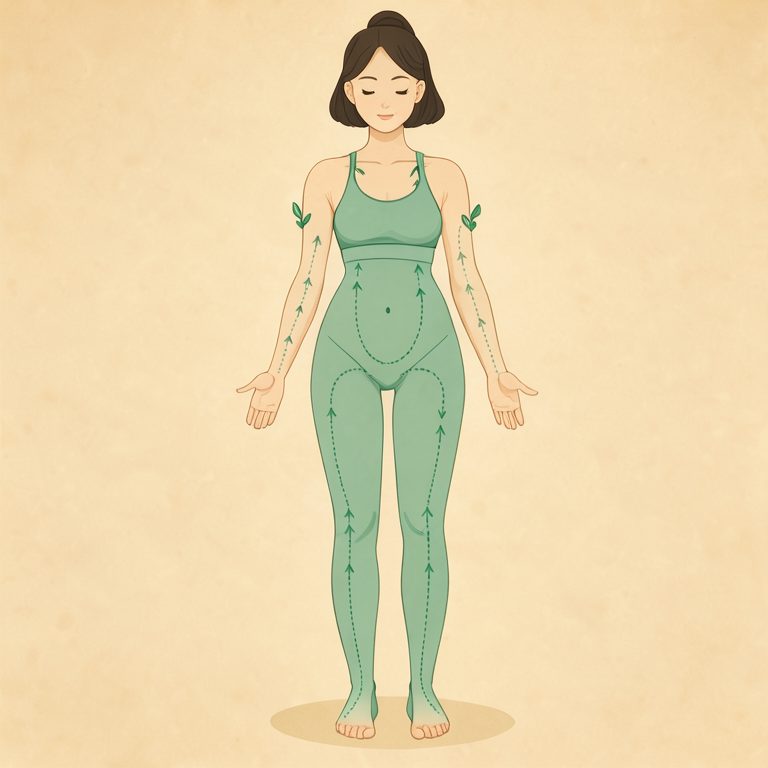
Continue with circular brush movements directed upward - ankle to calf to knee [1]. Every stroke glides along the lines of lymph flow toward the torso [1], the same direction the vessels take as they carry fluid to the lymph nodes [2].Brush the thighs upward
Work the front, outer, and back of the thigh with the same upward circles, moving toward the hip line [1]. Movements stay smooth and careful - after a correct drainage session the skin shows no bruises or contusions [1].Brush the arms from hands to shoulders
Repeat the pattern on the arms: circular strokes from the back of the hand, up the forearm, over the elbow, along the upper arm toward the shoulder [1]. The direction follows the same rule as the legs - toward the torso and its lymph nodes - the filters that detain viruses, microorganisms, and large particles traveling in the lymph [1].Finish the torso with feather-light strokes
Sweep the lower back, sides, and abdomen upward with noticeably lighter pressure, along the lines of lymph flow toward the lymph nodes - unhurried strokes along the lines of lymph flow [1]. Skip any wound or irritated patch: damaged, burned, or inflamed skin is a stop signal, not a zone to work through [1].Shower, then breathe
Step into the shower and rinse the exfoliated cells away [1]. If you enjoy contrast, alternate warm and cool streams - the narrowing and widening of vessels this creates is described as stimulating to lymph flow [1]. Close with a few slow, deep breaths - a deep inhale that expands the chest, a brief pause, then a slow exhale - the pattern the same source calls a mini-meditation that relaxes tense muscles [1], and one the lymphatic literature counts among the forces that move lymph, since abdominal pressure rises with every inhale [2].
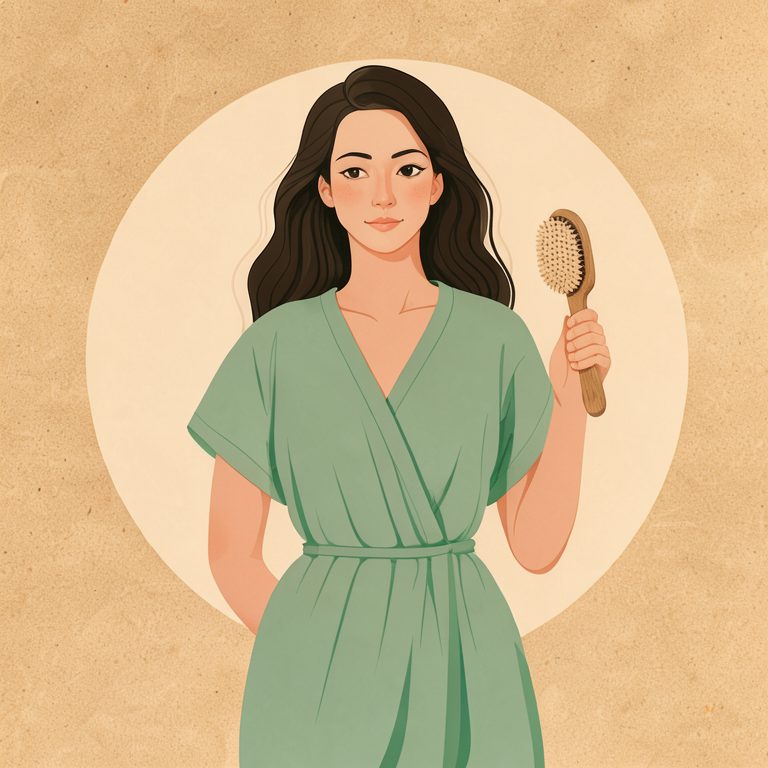
Step 1 — Pick a natural-bristle brush and stay dry
The source names the tool precisely: a brush with natural bristle, worked over dry skin before your shower[1]. Keep the face out of this protocol – for facial work the same book describes manual drainage with massage mixtures and a far lighter touch, not a coarse body brush[1].
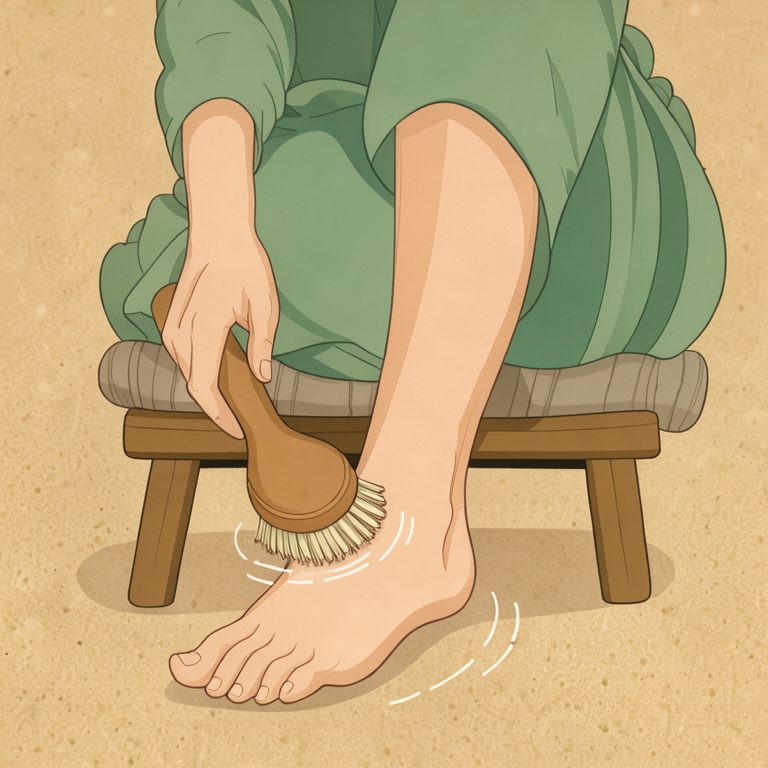
Step 2 — Start at the soles and ankles
Begin at the lower limbs as the literature directs[1]: short circular strokes on one sole, then around the ankle – several passes over each spot before shifting a little higher, the classic pacing of manual lymphatic work[1]. Light pressure is the whole point, because the lymphatic vessels sit close to the skin surface[1].
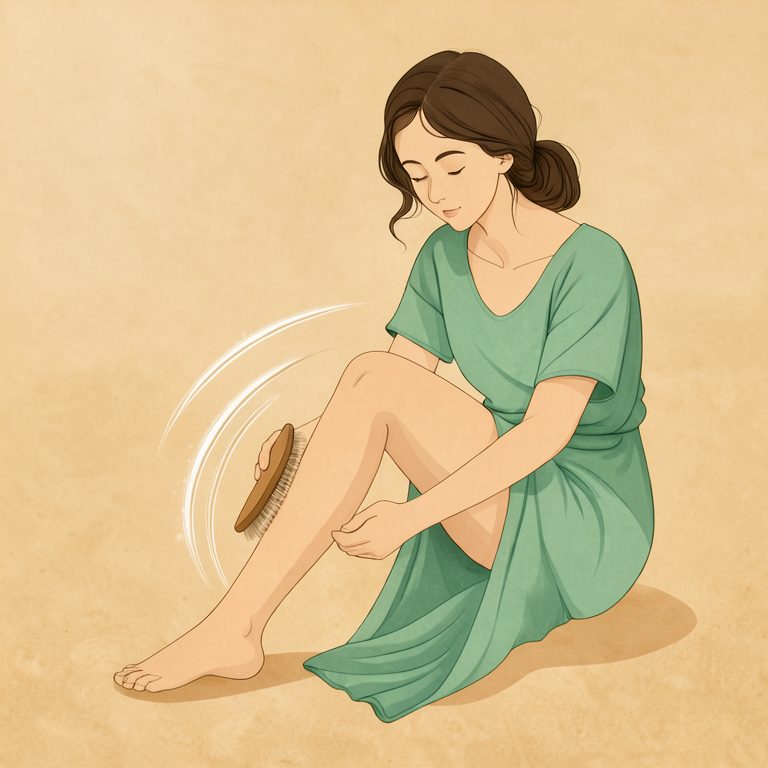
Step 3 — Sweep the calves to the knees
Continue with circular brush movements directed upward – ankle to calf to knee[1]. Every stroke glides along the lines of lymph flow toward the torso[1], the same route the vessels take as they carry fluid toward the lymph nodes[2].
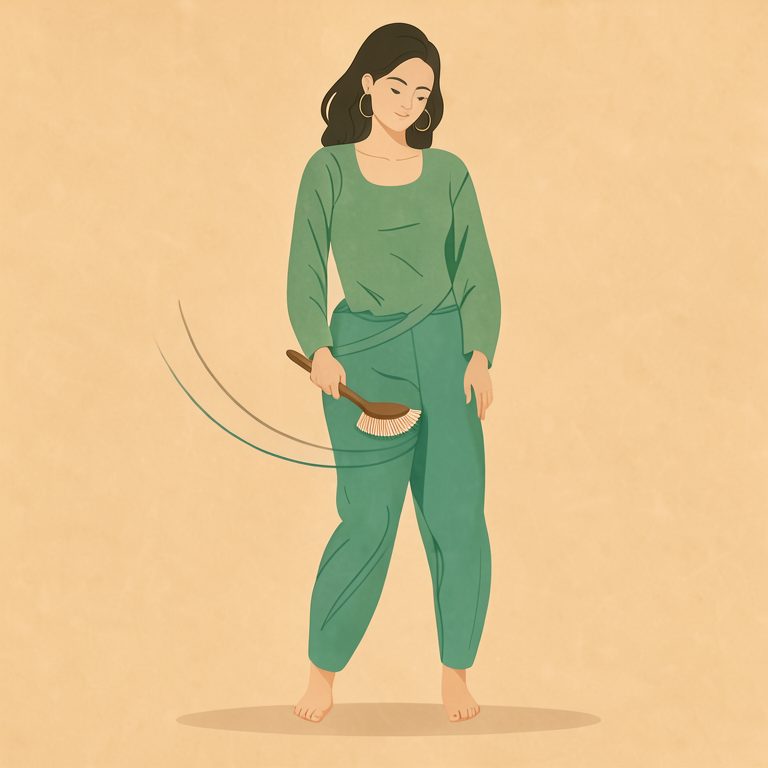
Step 4 — Brush the thighs upward
Work the front, outer, and back of the thigh with the same upward circles, moving toward the hip line[1]. Movements stay smooth and careful – after a correct session the skin shows no bruises or contusions[1].
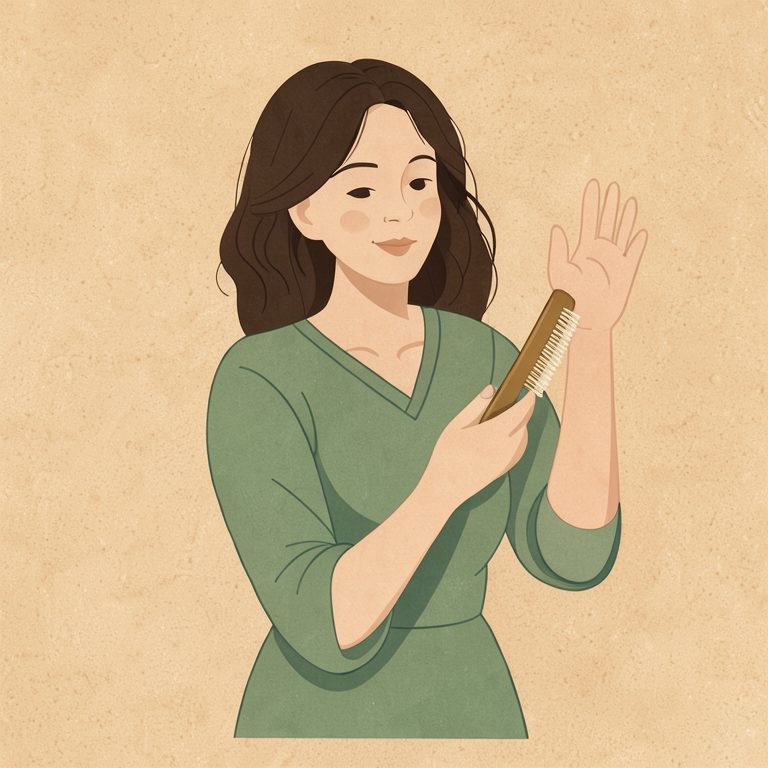
Step 5 — Brush the arms from hands to shoulders
Repeat the pattern on the arms: circular strokes from the back of the hand, up the forearm, over the elbow, along the upper arm toward the shoulder[1]. The direction follows the same rule as the legs – toward the torso and the lymph nodes, the filters that detain viruses, microorganisms, and large particles traveling in the lymph[1].
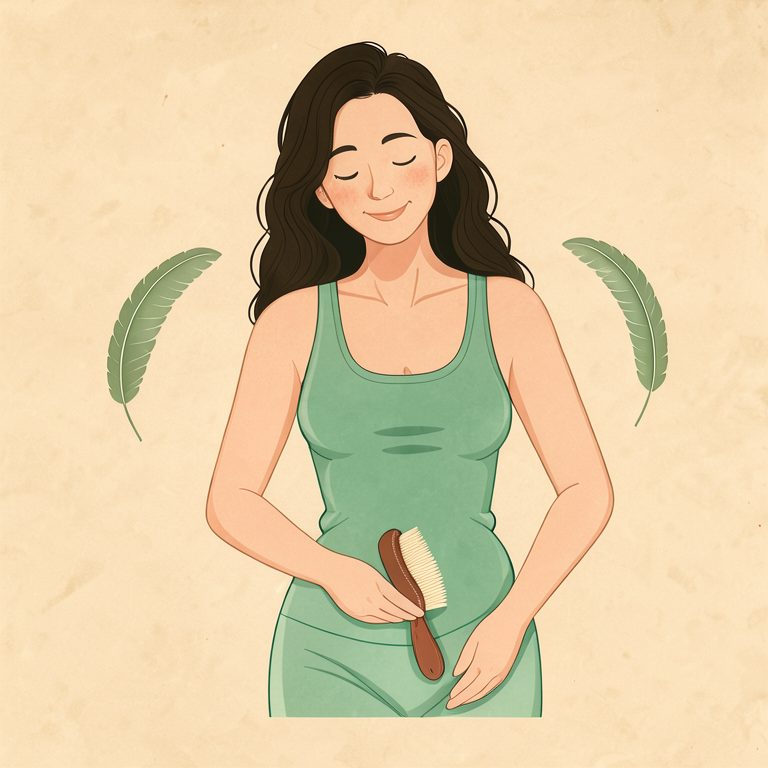
Step 6 — Finish the torso with feather-light strokes
Sweep the lower back, sides, and abdomen upward with noticeably lighter pressure – unhurried strokes along the lines of lymph flow toward the lymph nodes[1]. Skip any wound or irritated patch: damaged, burned, or inflamed skin is a stop signal, not a zone to work through[1].
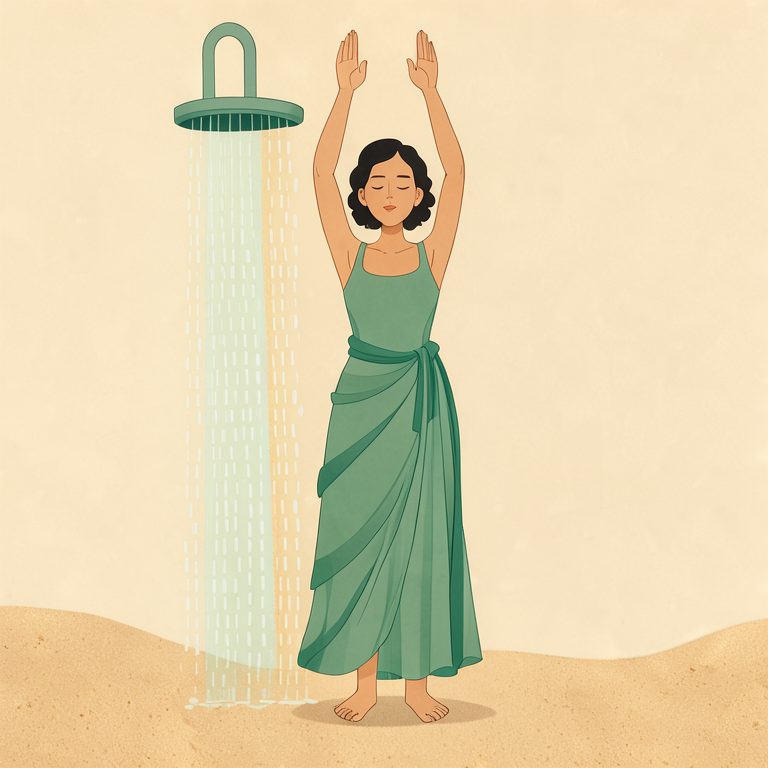
Step 7 — Shower, then breathe
Step into the shower and rinse the exfoliated cells away[1]. If you enjoy contrast, alternate warm and cool streams – the narrowing and widening of vessels this creates is described as stimulating to lymph flow[1]. Close with a few slow, deep breaths: a deep inhale that expands the chest, a brief pause, then a slow exhale – the pattern the same source calls a mini-meditation that relaxes tense muscles[1], and one the lymphatic literature counts among the forces that move lymph, since the pressure in the abdominal cavity rises with every inhale[2].
Pacing: How Often and How Long
The literature describes dry brushing as a periodic habit before bathing rather than a numbered course, and fixes no session length[1] – a practical 10-15 unhurried minutes over the whole body is our pacing suggestion, not a prescription from the books. What the source does fix is the quality of the stroke: light, smooth, and upward[1]. And if your days are mostly sitting, remember why movement matters too – the circulatory system needs activity: it is movement that drives venous blood back to the heart and lymph toward its nodes and ducts[1], so brushing is a companion habit, not a replacement for walking and breathing[1].
Safety and Contraindications
Any tactile body practice carries limits, and the lymphatic-care literature lists them plainly. Do not dry brush with:
- thrombophlebitis or thrombosis;
- severe cardiovascular disease;
- skin diseases, purulent inflammation, or active herpes;
- burns or other damage to the skin;
- lymphadenitis or lymphadenopathy;
- neuralgia;
- acute inflammatory flare-ups;
- oncological conditions;
- pregnancy[1].
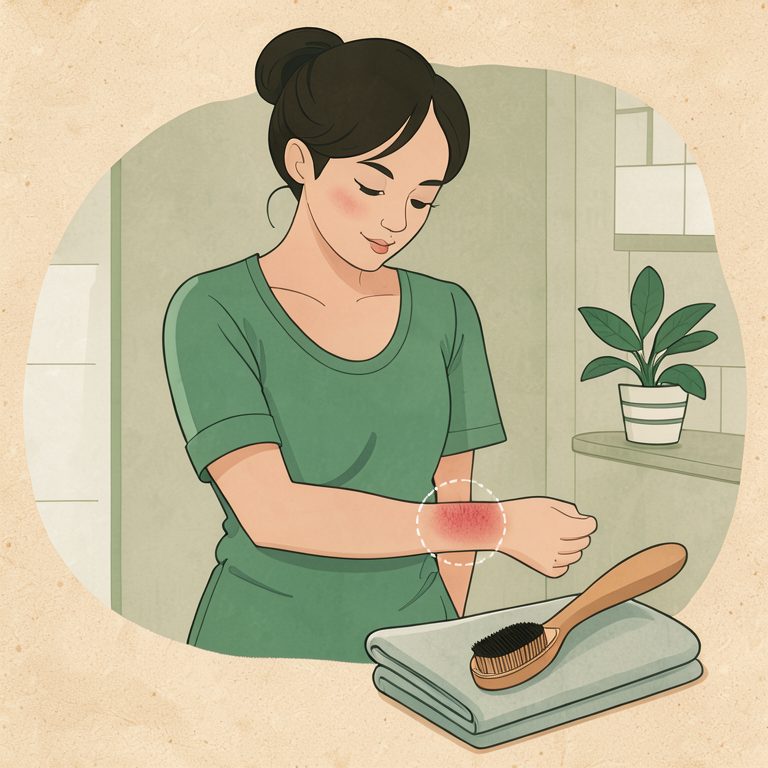
Two rules the same source underlines: do not attempt lymphatic techniques on yourself or others without first learning the correct method, and check whether any contraindication applies to you before you start[1]. After a session the skin should show no bruises or contusions – that is your safety benchmark[1]. This is a traditional wellness practice, not a medical treatment; it is not intended to cure, treat, or diagnose any disease.
Frequently asked questions
How hard should I press when dry brushing?
More lightly than most tutorials suggest. The lymphatic system lies fairly close to the skin surface, and the source literature describes periodic dry peeling with a natural-bristle brush – not strong pressure – as enough to stimulate lymph flow[1]. Your benchmark after a correct session: no bruises or contusions on the skin[1].
How long should a dry brushing session last, and how often?
The source books describe dry brushing as a periodic habit before bathing and fix no session length or course schedule[1]. The 10-15 unhurried minutes suggested in this manual is our practical pacing, not a prescription from the sources; what they do fix is the quality of the stroke – light, smooth, and upward[1].
Can I dry brush over irritated or broken skin?
No. Burns and other skin damage, skin diseases, purulent inflammation, and active herpes are all listed contraindications[1] – damaged, burned, or inflamed skin is a stop signal, not a zone to work through. Check the full contraindication list above before your first session[1].
Sources
- [1] Shelest O. N. — Pomogi Sebe Sam. Ochishchaem Krov i Limfu (Help Yourself: Cleansing the Blood and Lymph) (2019).
- [2] Bogdanova A. V. — Zhivaya Voda Organizma. Ochishchenie Limfy (The Body’s Living Water: Cleansing the Lymph) (2010).
- [3] Shchadilov V. E. — Chistka Krovi v Domashnikh Usloviyakh (Blood Cleansing at Home) (n.d.).
How we researched this
This manual was researched in our local library of 1,137 traditional wellness books; no internet sources were used. Every factual statement above was checked claim-by-claim against the cited book passages.
Keep Exploring
Browse all of our practice manuals for the full ritual library. If joint comfort is part of your goal, read our honest Joint Genesis review and Unlock Your Hip Flexors review before considering any program.
Sources & References
Shelest O. N. — Pomogi Sebe Sam. Ochishchaem Krov i Limfu (Help Yourself: Cleansing the Blood and Lymph) (2019); Bogdanova A. V. — Zhivaya Voda Organizma. Ochishchenie Limfy (The Body's Living Water: Cleansing the Lymph) (2010); Shchadilov V. E. — Chistka Krovi v Domashnikh Usloviyakh (Blood Cleansing at Home) (n.d.)