Educational content only — not medical advice. See our full Medical Disclaimer and Affiliate Disclosure below.
The ritual is small: three dried fruits, ground to a powder, steeped in a cup of boiling water an hour after dinner. Triphala — literally “the three fruits” — is classical Ayurveda’s famous compound formula, a blend of amalaki, bibhitaki and haritaki that the tradition ranks among its great rejuvenatives[1]. This manual takes the formula from label to cup: what each fruit does, which canonical text prescribes the evening ritual, and five concrete kitchen steps — timing, teaspoon, brewing, taste, vehicle — built strictly from the documented protocol.
The honesty frame comes first, because this herb is heavily over-promised online. Everything below comes from a tradition-based book base: Vasant Lad’s home-remedies reference[1], Vagbhata’s Ashtanga Hridaya Samhita[2], and supporting Ayurvedic, Tibetan and evening-routine sources. Dosing in this manual stays in teaspoons — no gram or milligram triphala dosing exists anywhere in the base, and none will be invented here. Where the sources go silent — pregnancy, blood thinners, clinical trials — the Safety section says so in plain words.
Key Takeaways
- Triphala means “the three fruits”: amalaki, bibhitaki and haritaki — a compound formula, not a single herb[1].
- The tradition assigns one fruit per dosha — amalaki to pitta, bibhitaki to kapha, haritaki to vata — and calls the whole formula rejuvenative for all three doshas and all seven dhatus[1].
- The canon anchor is Vagbhata’s Ashtanga Hridaya Samhita, sutra 44: triphala daily before sleep, together with honey and ghee, to improve vision[2].
- Lad’s protocol: an evening dose at least 1 hour after the meal; 1/2 to 1 teaspoon of powder per cup of boiling water, steeped 10 minutes[1].
- Dosing is teaspoons, never grams — and the base holds no triphala-specific pregnancy caution and no blood-thinner interaction data; those are gaps, not all-clears[1].
What Is Triphala? The Three-Fruit Formula
Triphala means “the three fruits”, and the formula is exactly that: a compound of three dried fruits — amalaki, bibhitaki and haritaki[1]. It is not a single herb but a designed combination, the way a recipe is not an ingredient. In the Ayurvedic tradition — a system the sources frame as five thousand years old[1] — that design earned a headline profile: triphala is “rejuvenative and strengthening for all three doshas and all seven dhatus”, it “balances ojas, tejas, and prana”, and it is “an excellent, mild laxative”[1].
Each term carries weight. The three doshas are Ayurveda’s constitutional forces; the seven dhatus are its tissue layers; ojas, tejas and prana are its vitality factors. A formula said to serve all of them at once is what the tradition calls tridoshic — and a family reference on Ayurveda lists bibhitaki among its tonifying herbs, confirming the same rejuvenative family membership from a second shelf[5].
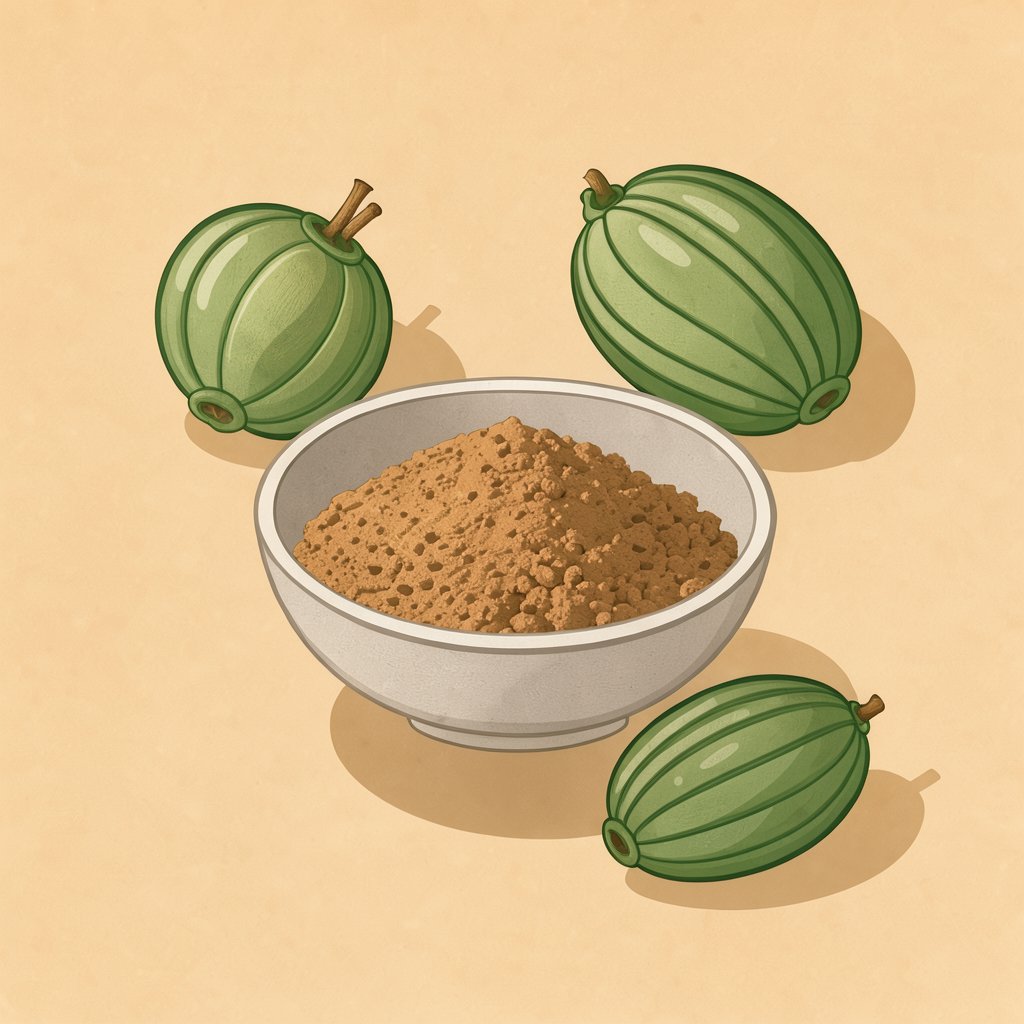
One boundary before the map: the sources retrieved for this manual state no mixing ratio for the three fruits. The famous “equal parts” claim appears nowhere in the base — Lad’s retrieved formulas are written in generic “parts” only — so this manual repeats no ratio at all. What the base does document is each fruit’s individual job, which is the real answer to “why three fruits?”
The Formula Map: One Fruit for Each Dosha
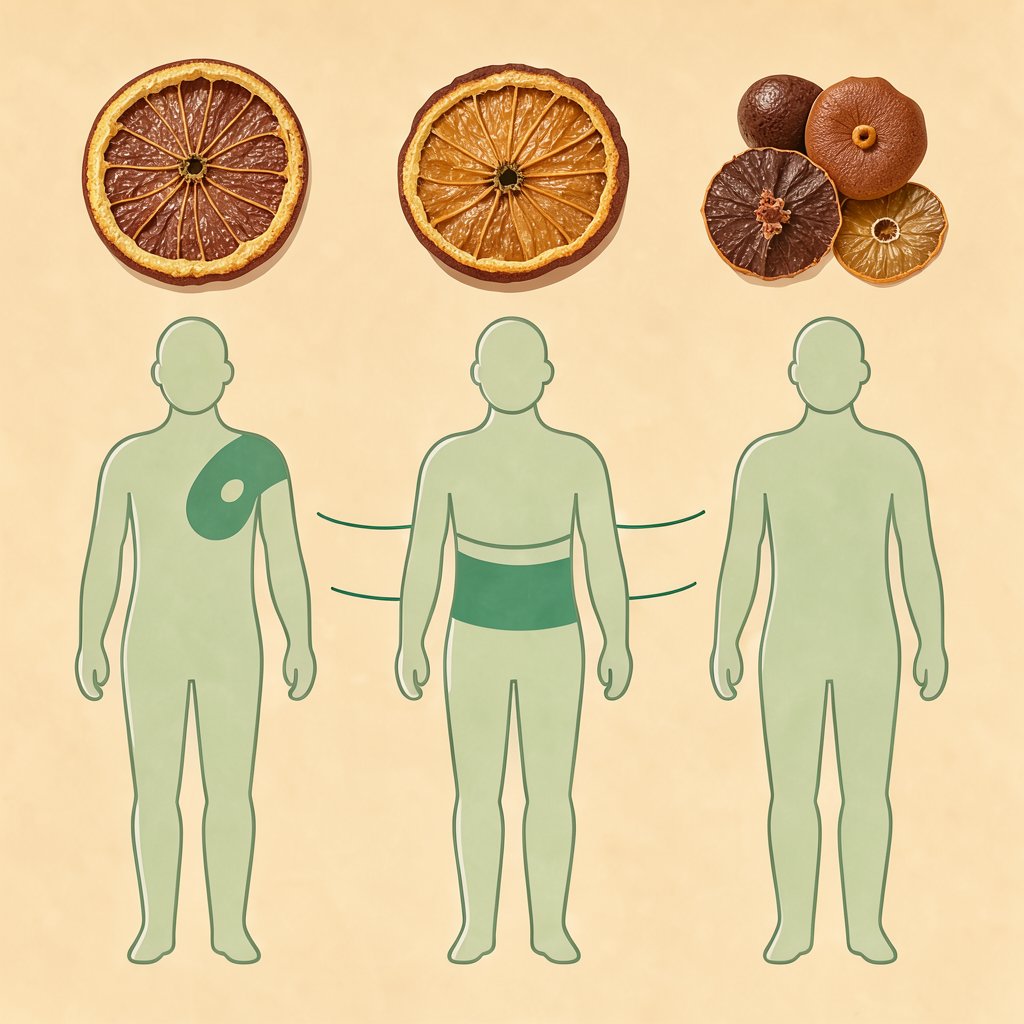
Lad’s dosha map is the clearest sentence in the base: amalaki works on pitta, bibhitaki on kapha, and haritaki on vata[1]. One fruit per constitutional force — which is exactly how the formula earns its tridoshic reputation. Behind the map, the classical canon fills in each fruit’s character.
- Amalaki (Emblica officinalis) has cold virya — cooling potency — and balances pitta and kapha[2]. The canon’s taste doctrine adds a precise caution: as a sour substance, amalaki especially increases pitta, with “especially emblica officinalis and pomegranate” the named examples[2].
- Bibhitaki (Terminalia bellirica; the canon’s synonyms include aksha and babhitaki) is sharp after digestion — the vipaka — has cold virya, is good for the hair, and acts like haritaki but weaker[2].
- Haritaki is called “the best among rejuvenating means” and is listed for eye diseases, wounds and skin diseases, edema, obesity, diabetes, and kapha and blood imbalances[2].
A Tibetan-medicine line adds an outside witness: in Vostokov’s Slavic-Tibetan compendium, “only emblica remedies diseases of bile, blood, heat” — amalaki again, carrying the same bile-and-blood territory the Ayurvedic canon gives it[6]. The framework behind all of it, as Johari’s kitchen text frames it: the five elements combine into three doshas, and a balanced meal should include all the tastes[3].
Two gaps stay on the record: the base contains no equal-parts ratio statement, and no explicit “triphala contains five of the six tastes” claim — neither will be printed here as fact. The map itself, though, is not modern invention: it sits inside a canonical text that also prescribes the ritual.
Roots in the Ashtanga Hridaya Samhita
The formula’s paper trail leads to Vagbhata’s Ashtanga Hridaya Samhita, one of the great classical compendiums of Ayurveda. Its Sutrasthana, sutra 44, preserves the one-line protocol: “Triphala should be taken daily before sleep together with honey and ghee to improve vision”[2]. Daily, before sleep, with two vehicle substances, for the eyes — the entire evening ritual of this manual is already present in that single canonical line.
The neighboring sutras add a safety context the tradition itself recorded: sutras 42-43 list Terminalia chebula (haritaki) and Emblica officinalis (amalaki) among the substances safe for regular, habitual intake[2] — two of the three fruits individually pre-cleared for daily use by the canon. The record names those two fruits and stops there; the clearance is per fruit and habitual, not blanket approval for any preparation[2]. For the formula as a whole, the documented frame remains the evening protocol already mapped: kitchen amounts, regular intake, and the labeled safety boundary at the end of this manual[1].
The same text supplies the taste theory the formula lives in. In its Rasabhediya chapter, the six tastes form from paired combinations of the five elements; sweet balances vata and pitta, while sour stimulates agni — the digestive fire — and increases pitta and kapha[2]. That is the doctrine behind the map above: a sour amalaki that nonetheless cools, a sharp-acting bibhitaki, a haritaki crowned the best of rejuvenators.
And the honest margins of the canon: the retrieved passages state no mixing ratio — the equal-parts legend has no home in this base — and no “five tastes of triphala” sentence exists. The canon’s instruction is a one-line ritual. The rest of this manual turns that line into kitchen steps.
Step 1 – When to Take Triphala: The Evening Window
The first decision is the clock, and the sources give one threshold: take triphala in the evening, at least 1 hour after the evening meal[1]. Lad’s timing is the modern, concrete reading of Vagbhata’s “daily before sleep”[2] — dinner first, then a full hour’s gap, then the cup. The one-hour gap is the only timing number the base gives, and it arrives together with the dose rather than as a rule of its own[1]. What Vagbhata’s phrase leaves open — the exact hour — the modern reading closes with the meal clock: the cup belongs to the evening, after the gap, before sleep[2].
The sequence matters more than the hour on the wall. The base names no clock times and no other timing rules of any kind — no morning-versus-evening debate, no seasonal calendar — and this manual adds none. Dinner, gap, dose: that is the entire documented protocol for when. With the hour chosen, the remaining question is the amount on the spoon.
Step 2 – How Much: Teaspoon Dosing, Not Grams
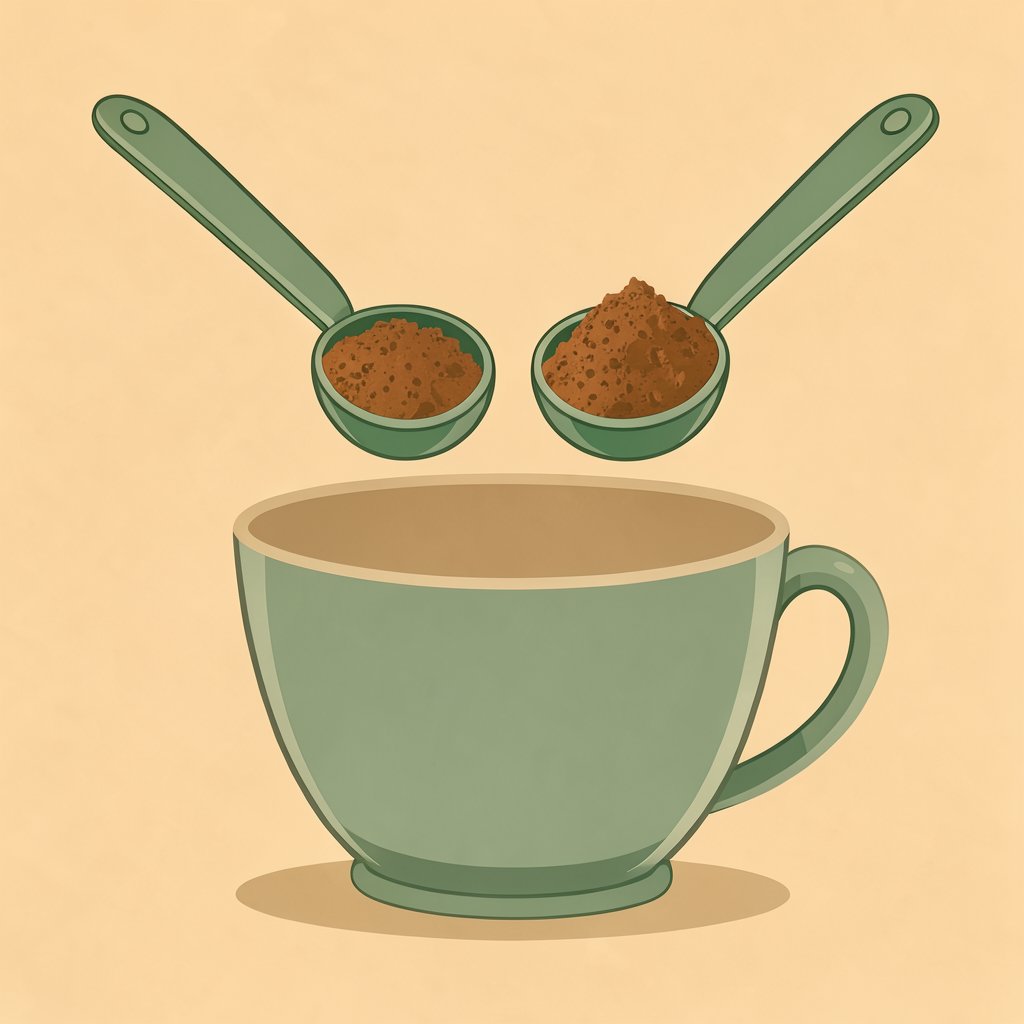
Ayurvedic home dosing here is kitchen measurement: 1/2 to 1 teaspoon of triphala powder per evening cup[1]. That is the only triphala-specific dose in the base, and it is worth reading exactly as written — a range on a kitchen spoon, not a laboratory scale.
The surrounding frame comes from Lad’s general herbal-preparation rules: a typical herbal mixture uses 1/4 to 1/2 teaspoon per dose, formulas are written in “parts”, and a 1-2 month supply of herbs weighs about 2.5-5.0 oz[1]. Duration has one documented rule: use until the symptoms disappear, which Lad frames as “a few days to a few months”[1].
One numeric trap deserves a flag. The nearest gram-scale numbers in the retrieved base belong to a different herb entirely — a turmeric reference that gives 1-1.5 g of dried root in 150 ml of water up to twice daily, and 2-2.5 g per day in culinary use[7]. Those are turmeric’s numbers, never a triphala dose, and printing them beside a triphala cup would be an error this manual refuses to commit. No gram or milligram triphala dosing and no clinical-study numbers exist in the base.
Step 3 – How to Brew the Evening Tea
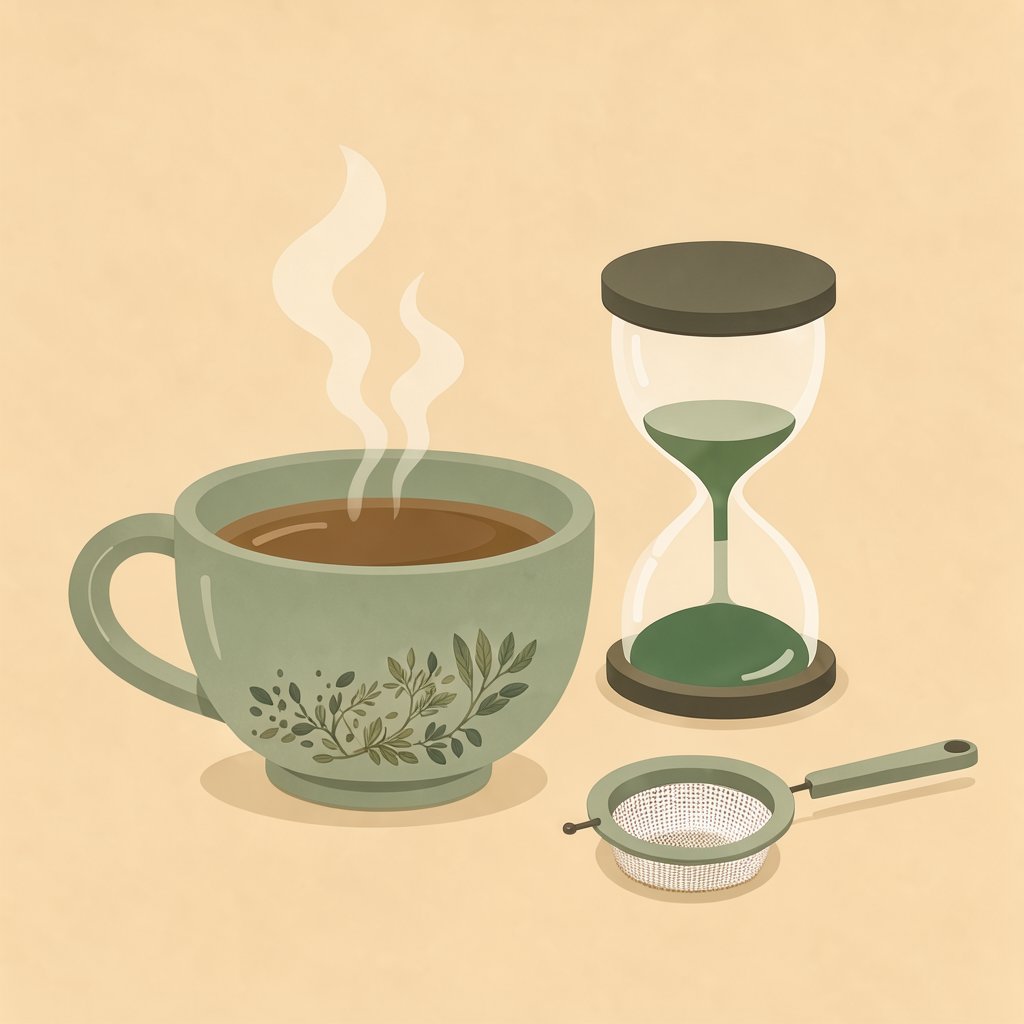
The brewing protocol is three beats long. Add 1/2 to 1 teaspoon of triphala powder to about 1 cup of boiling water[1]. Steep for 10 minutes — or until the tea is cool enough to drink[1]. Then finish your way: strain the tea, or simply leave the herbs settled at the bottom of the cup[1].
That is the whole documented method — no decocting times, no water temperatures beyond “boiling”, no second steep. The ten-minute wait is also the practical throttle of the ritual: the cup enforces a pause, which is precisely the register the evening window wants. What the pause produces is a taste that surprises every newcomer — and the taste is the next step’s subject. The four parameters stay fixed: about 1 cup of boiling water, 1/2 to 1 teaspoon of powder, a ten-minute steep, and the strain-or-settle choice at the end[1]. Anyone adjusting the ritual is adjusting the only numbers the base gives, so the documented move is to hold them steady and let the repetition build the habit.
Step 4 – The Taste and Three Ways to Take It
Honesty first: the tea “may taste quite bitter” at first[1]. The same source adds the encouraging half — with regular use, the taste becomes less unpleasant[1]. No numbers attach to that adaptation; it is a qualitative arc, bitter-then-milder, not a threshold to time.
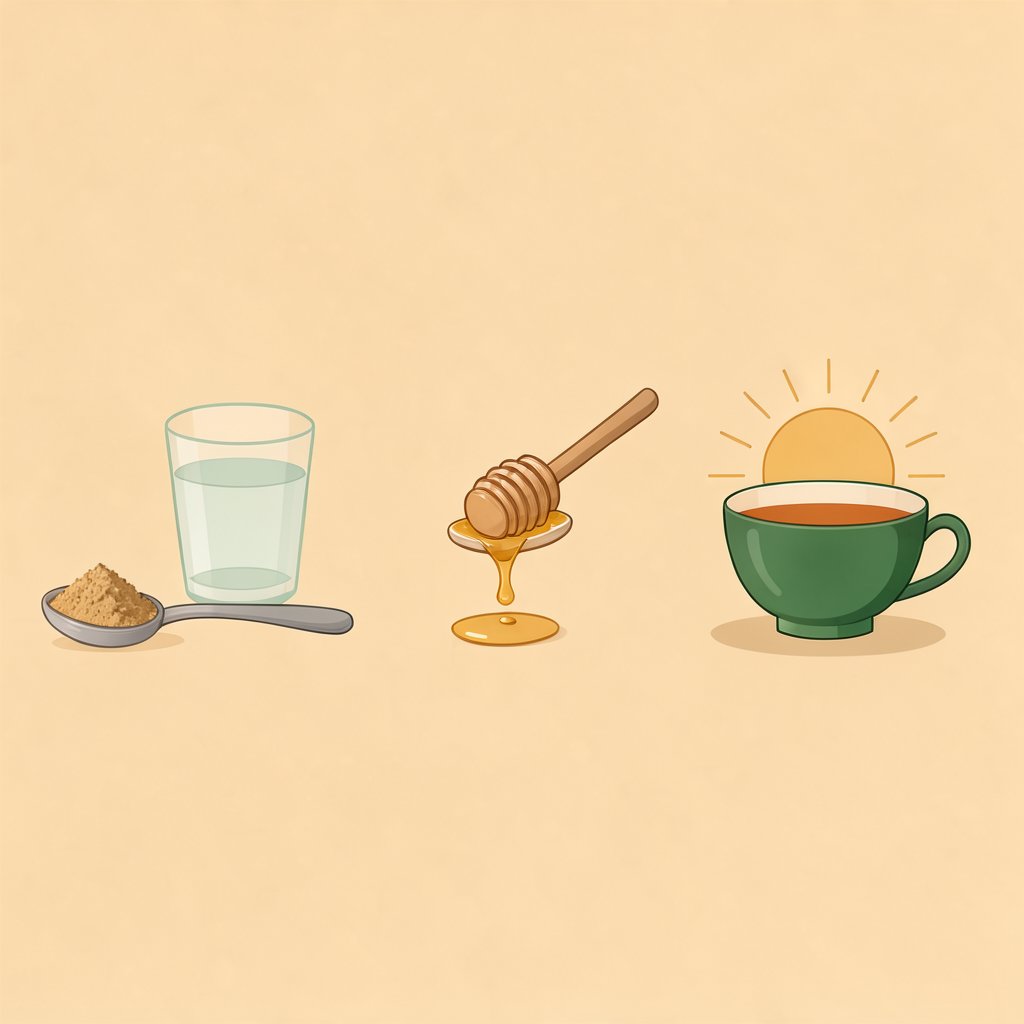
Because the first sip decides whether the habit survives, the tradition documents three intake variants[1]. The tradition itself marks the third as special: it carries the only triphala-specific safety note in the entire base[1]. Here are the three, in the order the books record them:
- Variant 1 — dry powder and warm water: place 1/2 to 1 teaspoon of the dry powder directly on the tongue and wash it down with warm water[1].
- Variant 2 — with honey: if the taste is genuinely hated, mix the triphala powder with honey and take it that way[1] — the same vehicle the canonical sutra names[2].
- Variant 3 — the morning switch: for people in whom triphala’s mild diuretic effect disturbs sleep at night, drink the tea in the morning instead — it then acts in about one hour[1].
Variant 3 is not a footnote; it is the only triphala-specific safety note in the entire base, and it returns in the Safety section. However the powder goes down, Ayurveda pairs every dose with a vehicle — which is the final step.
Step 5 – Anupana Vehicles and the No-Capsules Rule
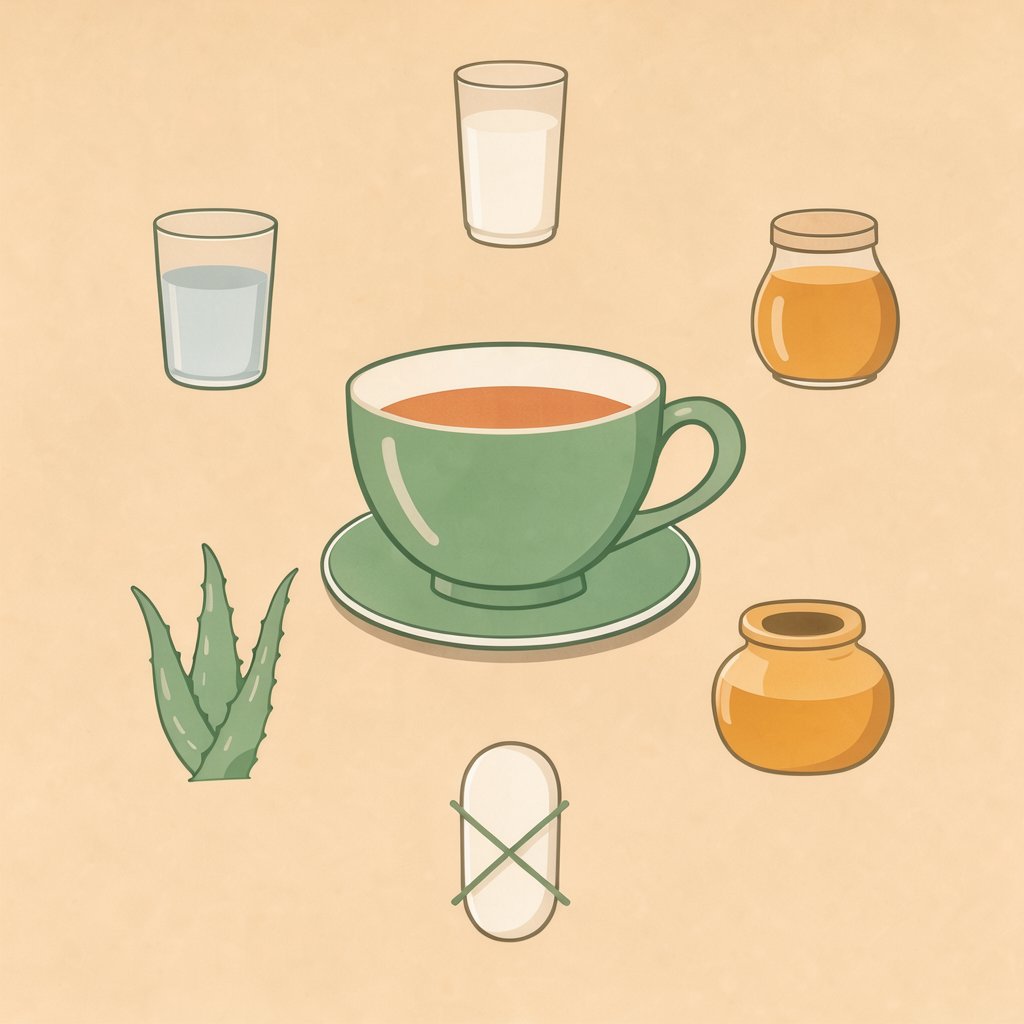
In Ayurveda a dose never travels alone: it rides on an anupana, a carrier vehicle. Lad’s list of vehicles is five long — water, milk, honey, aloe vera and ghee — and carries a default rule: if no vehicle is suggested, use warm water[1]. The warm-water default is exactly what the evening tea already provides.
The capsule question gets an unusually firm answer: capsules are not recommended, because taste is important[1]. Taste, in this tradition, is part of the herb’s action — the bitter opening is the formula announcing itself, and swallowing a capsule skips the announcement. If capsules are truly unavoidable, the documented fallback is an empty 00-size vege-capsule[1].
The ghee on the vehicle list opens one door and marks one caution. The medicated-ghee variant called triphala ghee exists in the base[1] — and ghee itself carries Lad’s caution for people with high cholesterol or obesity[1], a thread the Safety section picks up. The cup now has its place inside a wider evening rhythm.
Triphala in a Calm Evening Routine
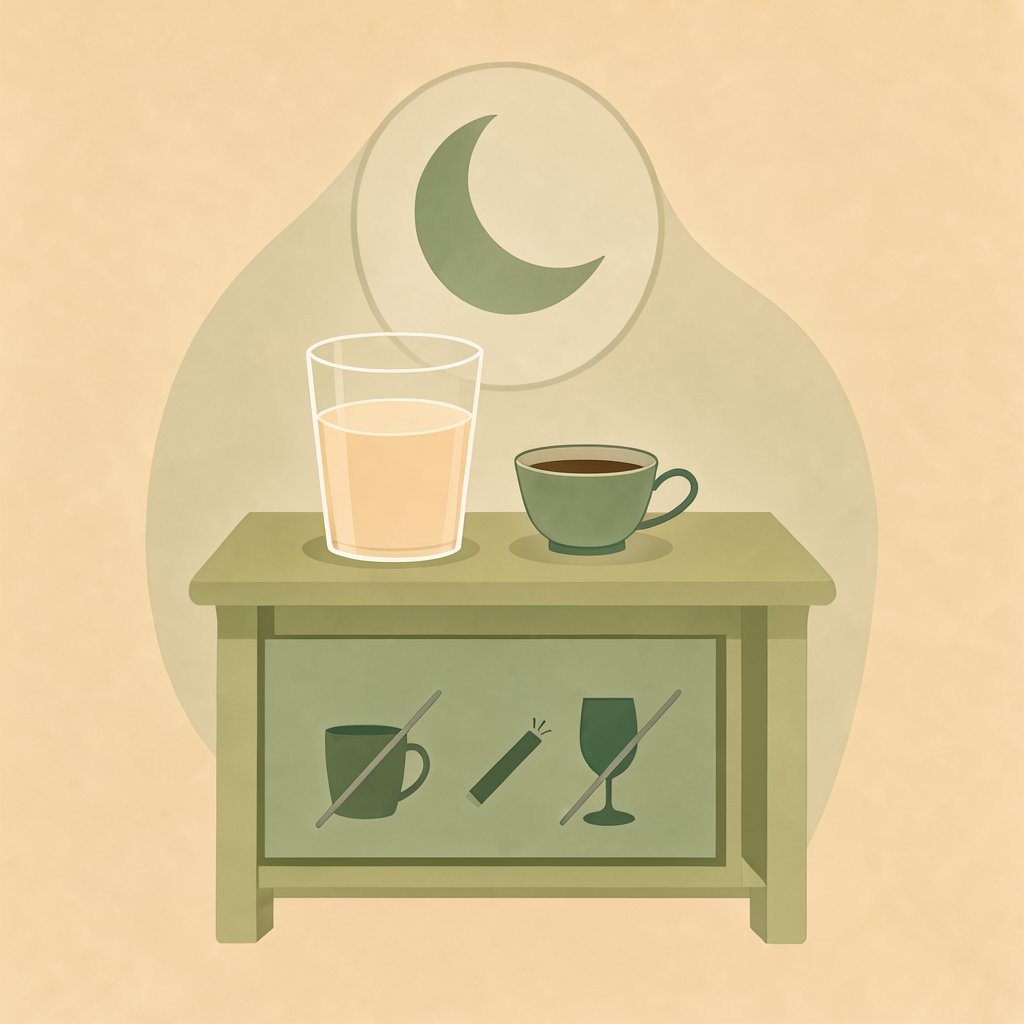
One cup is easier to keep when it lives inside a rhythm, and the base’s routine sources supply the surrounding evening. From Deepak Chopra’s sleep work: a cup of warm milk before bed — boiled milk, per Ayurveda — and an evening free of caffeine, nicotine and alcohol[8]. From his daily-routine work: lemon water in the morning and periodic liquid-only days as digestive housekeeping[9].
The triphala cup slots in cleanly: after dinner, at least an hour behind the meal; before the wind-down — the warm milk, the dimming lights; and before sleep, exactly as the canonical sutra orders[1][2]. No triphala-specific facts hide in this section; it is context only, fixing the ritual’s address in the evening. A ritual with a fixed address also deserves a labeled map of its boundaries — which is the Safety section’s job.
Safety: What Tradition Covers and Where It Goes Silent
A health topic owes the reader a labeled boundary, so this section has two halves: what the tradition-based sources actually state, and where they go silent.
Covered by the base. The only triphala-specific caution is the sleep note from Step 4: for some people the formula acts as a mild diuretic and may disturb sleep at night — the documented fix is moving the cup to the morning[1]. Adjacent cautions from the same shelf: ghee — the canonical vehicle — is flagged for high cholesterol and obesity[1]; an Ayurvedic encyclopedia forbids purgatives in debilitated tuberculosis patients[4]; and the turmeric reference contributes two templates that are explicitly not triphala — consult a doctor in pregnancy before any supplement, and avoid turmeric with bile-duct dysfunction or gallstones[7]. On the reassuring side, the canon itself lists haritaki and amalaki among the substances safe for habitual intake[2].
Not covered — read as gaps, not as all-clears. The base holds no triphala-specific pregnancy caution; the nearest sentence is the general supplement-in-pregnancy rule from the turmeric book[7]. Blood-thinner and anticoagulant interactions return zero mentions across the forty retrieved passages of this base. No gram-scale dosing, no standardized extracts and no modern clinical evidence exist in it. If any of these questions is yours — pregnancy, anticoagulants, a diagnosed condition — the honest answer of this manual is: the retrieved tradition-based sources do not cover it; check with your healthcare provider before the first cup.

FAQ: Triphala Questions the Books Actually Answer
What is triphala made of?
Three dried fruits — amalaki, bibhitaki and haritaki — and the name literally means “the three fruits”[1]. The tradition maps one fruit per dosha: amalaki to pitta, bibhitaki to kapha, haritaki to vata, with the whole formula serving all three doshas and all seven dhatus[1]. No mixing ratio appears in the source base. Start with the Ayurveda and Tibetan traditions category for sibling guides.
When should I take it, and how long after dinner?
In the evening, at least 1 hour after the evening meal — Lad’s concrete reading of the canon’s “daily before sleep” from sutra 44[1][2]. No other timing rules exist in the base: no clock hours, no seasonal calendar. The sequence is dinner, a full hour’s gap, then the cup.
How much powder goes in a cup?
1/2 to 1 teaspoon of triphala powder per cup of boiling water, steeped 10 minutes[1]. Dosing in this tradition is kitchen-scale — teaspoons, never grams; no gram or milligram figures exist in the base, and the nearest gram numbers in it belong to turmeric, a different herb[7].
Why is it bitter — and does that change?
The tea “may taste quite bitter” at first, and with regular use the taste becomes less unpleasant[1]. The adaptation is qualitative — no thresholds are documented. If the taste is the obstacle, the tradition offers the honey mix or the dry-powder-and-warm-water variant[1].
What if triphala disturbs my sleep?
That is the one documented triphala-specific caution: for some people the formula acts as a mild diuretic and disturbs night sleep[1]. The documented fix is to drink the tea in the morning instead, where it acts in about one hour[1]. Persisting sleep disturbance is a question for your healthcare provider.
Can I take it in capsules — and what should I mix it with?
Capsules are not recommended, because taste is important; the fallback is an empty 00-size vege-capsule only if capsules are unavoidable[1]. The documented vehicles — anupana — are water, milk, honey, aloe vera and ghee, with warm water as the default[1]. The manuals library holds the neighboring practice guides.
Is triphala safe in pregnancy or with blood thinners?
The honest answer is a gap: the retrieved tradition-based sources do not cover either question — no triphala-specific pregnancy caution, and zero anticoagulant mentions in the retrieved base[7]. The nearest general rule is a turmeric book’s advice to consult a doctor in pregnancy before any supplement[7]. Read the medical disclaimer and ask your provider before the first cup.
Triphala is the three-fruit Ayurvedic formula at its most concrete: one fruit per dosha, a canonical one-line ritual — daily before sleep with honey and ghee[2] — and a five-step evening protocol measured in teaspoons and minutes rather than grams and claims[1]. Brew it an hour after dinner, expect the bitter opening, respect the morning switch if sleep suffers, and let the gaps in the base — pregnancy, blood thinners, clinical dosing — send you to a professional rather than to a guess.
Sources
- [1] Vasant Lad — The Complete Book of Ayurvedic Home Remedies (2012) — source of the three-fruit definition, the dosha map, the full evening protocol (timing, teaspoon dose, brewing, taste variants, anupana and capsule rules) and the sleep caution.
- [2] Vagbhata — Ashtanga Hridaya Samhita (classical Ayurvedic canon) — sutra 44 evening ritual with honey and ghee; sutras 42-43 habitual-intake listing; the per-fruit properties and the six-tastes doctrine.
- [3] Harish Johari — Ayurvedic Healing Cuisine (2000) — the five-elements-to-three-doshas framework and all-tastes meals.
- [4] Swami Sadashiva Tirtha — The Ayurveda Encyclopedia (2007) — purgatives forbidden in debilitated tuberculosis patients.
- [5] L. Miller — Ayurveda for the Whole Family (2005) — bibhitaki among the tonifying herbs.
- [6] V.F. Vostokov — Slavic-Tibetan Medicine — “only emblica remedies diseases of bile, blood, heat”.
- [7] Anton Sidorov — Golden Turmeric (2020) — turmeric-specific templates (gram dosing, pregnancy consult, gallstone caution), flagged throughout this manual as non-triphala.
- [8] Deepak Chopra — Restful Sleep — warm boiled milk before bed; no caffeine, nicotine or alcohol in the evening.
- [9] Deepak Chopra — Perfect Health — lemon water and periodic liquid-only days.
Where to go next: the sibling ashwagandha stress and immunity guide profiles Ayurveda’s most famed adaptogen with the same evidence discipline, and the dinacharya daily-routine manual builds the full Ayurvedic day around an evening like this one. The manuals library collects the complete practice series.
How we researched this: this manual was built from a local library of Ayurvedic and Tibetan-tradition books, indexed and searched offline with no internet sources. Every protocol detail — the teaspoon range, the ten-minute steep, the one-hour gap, the 00-size capsule fallback — was verified against the cited passages before publication, and the dosing convention of the base (teaspoons only) was preserved exactly.
Sources & References
Vasant Lad — The Complete Book of Ayurvedic Home Remedies (2012); Vagbhata — Ashtanga Hridaya Samhita (classical Ayurvedic canon); Harish Johari — Ayurvedic Healing Cuisine (2000); Swami Sadashiva Tirtha — The Ayurveda Encyclopedia (2007); L. Miller — Ayurveda for the Whole Family (2005); V.F. Vostokov — Slavic-Tibetan Medicine; Anton Sidorov — Golden Turmeric (2020); Deepak Chopra — Restful Sleep; Deepak Chopra — Perfect Health