
Educational content only — not medical advice. See our full Medical Disclaimer and Affiliate Disclosure below.
Key Takeaways
- Oil pulling in the classical sources is a graded practice: gandusha fills the mouth completely so the liquid cannot move, while kavala fills it halfway for a gentle gargle — and the chapter treats either grade as valid[1][2].
- The classical endpoint is a body signal, not a clock: hold until the liquid becomes saturated with Kapha or until the eyes water and the nose begins to run — no minute figure appears in the classical text[1].
- Sesame oil is the daily default in the sources; ghee or milk are reserved for irritated tissue, and a triphala decoction ranks among the best all-purpose oral remedies[1][2].
- The modern doorway dose from Practical Ayurveda: 1–2 teaspoons of plain sesame oil, moved gently for up to 5 minutes, then spat out — the only numeric protocol in the source base[3].
- One hard safety line exists in the classical chapter: mouth rinsing is contraindicated for children under 5 years[1].
Oil pulling has become one of those practices people learn from short videos: a spoon of oil, vigorous swishing, and a list of promised benefits that grows with every repost. The classical record is narrower and more interesting. In Vagbhata’s Ashtanga Hridaya Samhita — one of the three classical canons of Ayurveda — the practice has a dedicated chapter, Sutrasthana chapter 22, “Gandushadi vidhi,” on the care of the oral cavity[1]. This guide stays inside that record: what the texts prescribe, which liquids they name, and what they do not claim.
The ayurvedic oil pulling method described here comes from books held in our local library: Vagbhata’s chapter, Swami Sadashiva Tirtha’s Ayurveda Encyclopedia restating it in modern English, and the morning-routine pages of Practical Ayurveda (2018)[1][2][3]. Where the viral internet protocol — one tablespoon, fifteen to twenty minutes, coconut oil — appears in this article, it appears only as an absence, because none of those details exist in these books. Honest expectations are part of the method, not an apology for it.
In this guide:
- What is oil pulling in Ayurveda?
- Gandusha vs. kavala: the two classical grades
- How the classical method works
- Choosing your liquid: sesame, ghee, milk, the four dosha types
- The classical procedure, step by step
- The 5-minute sesame oil protocol
- Where oil pulling fits in the morning routine
- What the texts claim — and what they don’t
- Safety: the one hard age rule
- Frequently asked questions
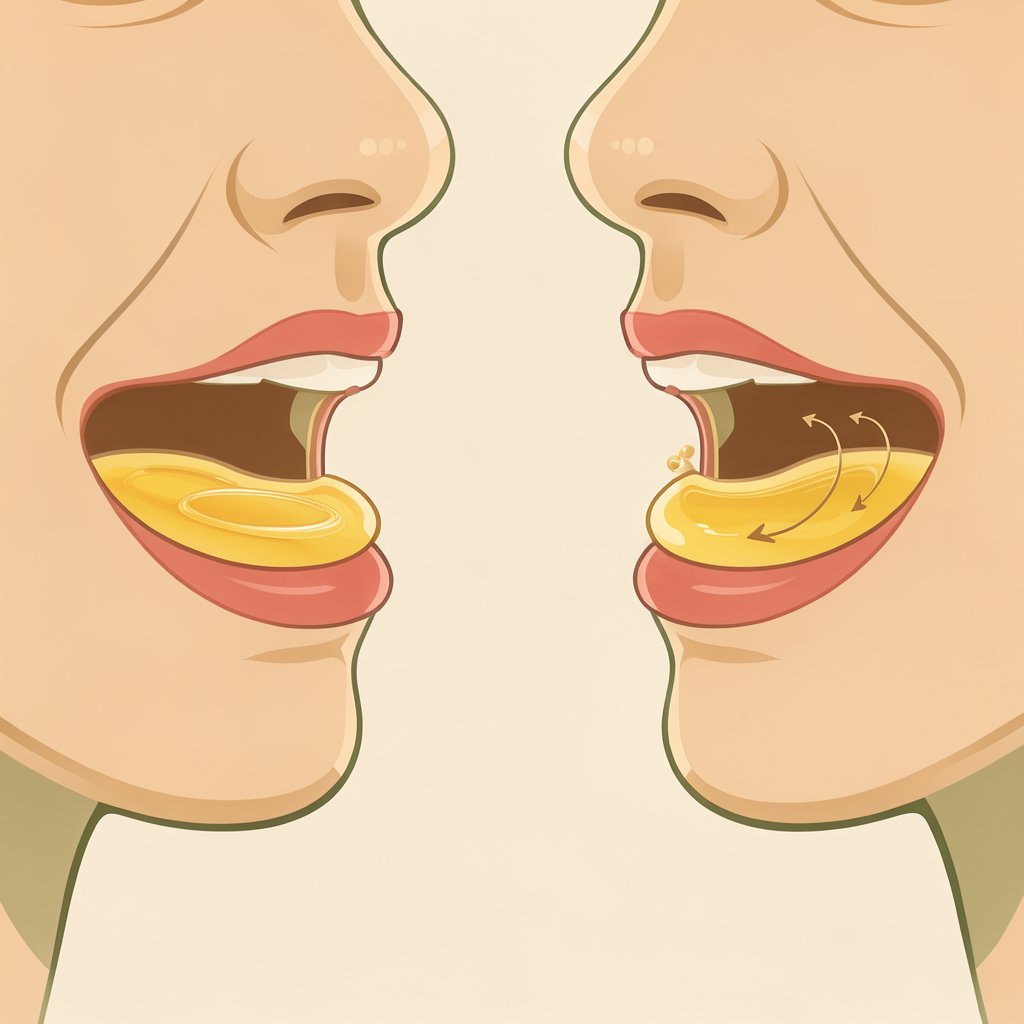
What Is Oil Pulling in Ayurveda?
Oil pulling is the practice of holding or moving liquid in the mouth as a regular part of daily hygiene — an oral-care step, not a therapy. It is not a modern invention attached to an old name. The classical source devotes a full chapter to it: Sutrasthana chapter 22, “Gandushadi vidhi” (Oral cavity care), in Vagbhata’s Ashtanga Hridaya Samhita[1].
The modern gloss on the same practice is almost plain. Practical Ayurveda (2018) defines oil pulling simply as “the practice of rinsing the mouth with oil as part of the daily hygiene routine”[3]. There is no mystique in the definition and no minute count — just one step among the morning actions, seated between tongue-scraping and the nasal drops. The elaboration, the grading, and the choice of liquid all come from the older chapter.
The tradition behind that chapter is old enough that its chronology is written in approximations. Robert E. Svoboda’s Ayurveda (2015) traces the lineage past the Harappa civilization, dated to around 3000 BC, and records Gautama Buddha’s dates as 563–483 BC — a frame for how long this medical culture has been transmitting, not a claim about oil pulling itself[4]. Vasant Lad’s home-remedy compendium places editions of Vagbhata’s Ashtanga Hridayam in its reading list alongside the Caraka Samhita and the Sushruta Samhita as the classical canons[5]. Those other two canons are not part of our source library, so nothing in this guide is attributed to them.
What the Ashtanga Hridaya’s chapter actually contains is a quiet surprise for anyone who knows the practice only from videos. It defines not one practice but two distinct grades, separated by nothing more than how full the mouth is[1]. Before the oils and the timing, that distinction comes first.
Gandusha vs. Kavala: The Two Classical Grades
The chapter’s first distinction is volume. Gandusha, the full grade, fills the mouth so completely that the liquid cannot move at all — it is held, not swished[1]. Kavala, the lesser grade, is an ordinary rinse: the mouth is only half-filled, leaving room to move the liquid, gargle it, and work it around the cavity[1]. The chapter files both under one title, Gandushadi vidhi — “gandusha and the rest.”
Swami Sadashiva Tirtha’s Ayurveda Encyclopedia restates both grades with the same directions attached. For gandusha: “the mouth is filled with liquid and held, until there is no room for movement, or until the nose and eyes begin to tear”[2]. For kavala, “only half the mouth is filled with the liquids, so there is room to gargle” — and his verdict on choosing between them is refreshingly short: all the same herbs are used in either, and “either approach can be used”[2].
Notice what the definitions do not contain. Neither grade is defined by minutes, by force of swishing, or by a count of passes. The gandusha definition is completed by the body’s own signal — the watering of eyes and nose — and the kavala grade inherits the same frame[1][2]. That signal, not a stopwatch, is the classical logic of the whole practice, and it deserves a section of its own.
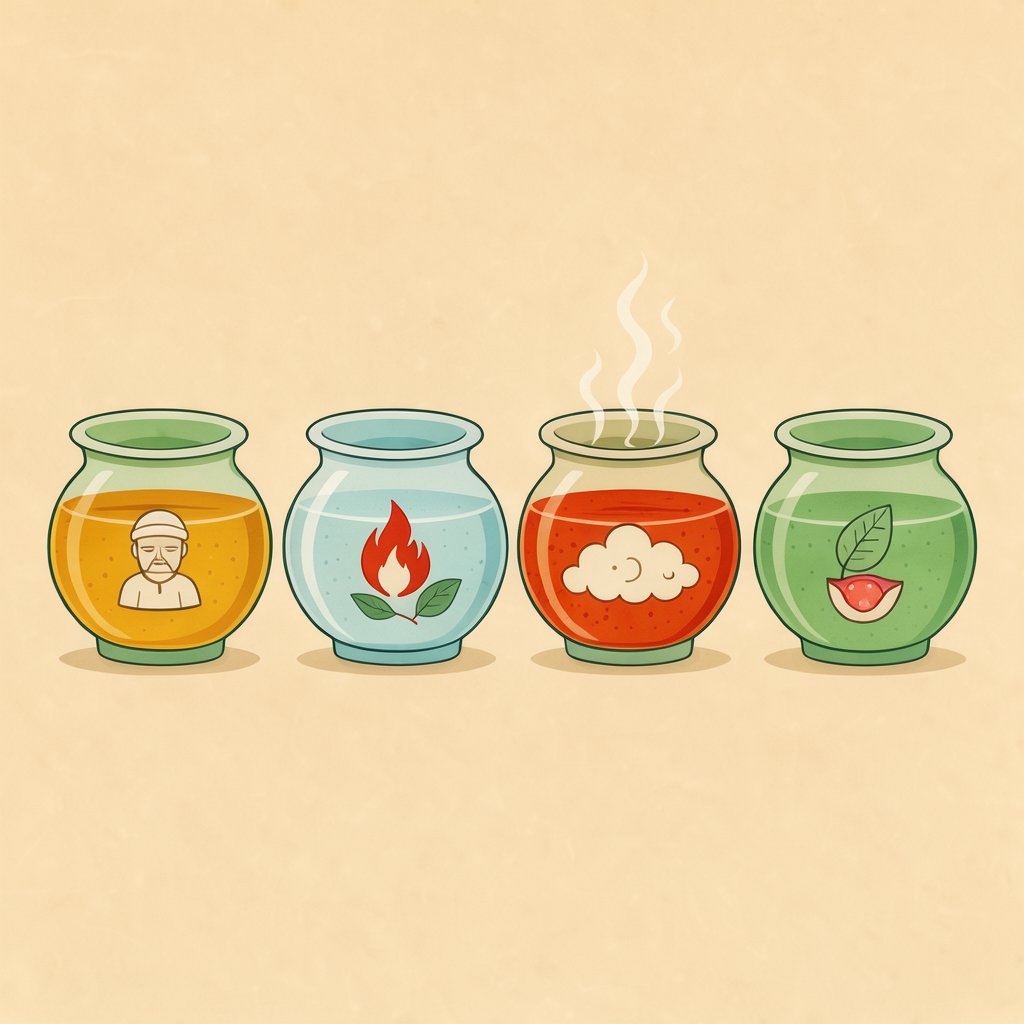
How the Classical Method Works: Kapha Saturation, Not a Timer
The endpoint of the hold, in Vagbhata’s wording, is saturation. The liquid is kept in the mouth until it becomes saturated with Kapha — the dosha that governs mucus and lubrication in Ayurveda — or until tears and nasal discharge begin[1]. The watering eyes and running nose are not a side effect to be endured; they are the classical stop signal. A practice graded by the fullness of the mouth is completed by a signal from the head, and no minute figure appears anywhere in the classical text[1].
The chapter also tells you where the practice sits in the system. Vagbhata’s text on oleation lists mouth rinsing among the official routes through which oils are administered to the body — alongside oils taken with food, enemas, nose drops, rubs, and instillations into the head, eyes, and ears[1]. Oil pulling, in other words, is not a folk oddity bolted onto Ayurveda; it is one of the standard doors through which the tradition says oils enter the regimen.
One boundary should be drawn plainly. Our source library contains no modern physiology for this practice — nothing on saponification, plaque studies, or clinical trials, and no position statements from dental bodies[1][2][3]. This section therefore describes the classical logic as the texts present it, not a laboratory mechanism. What the texts do specify, precisely, is what should be held in the mouth — and that question comes next.
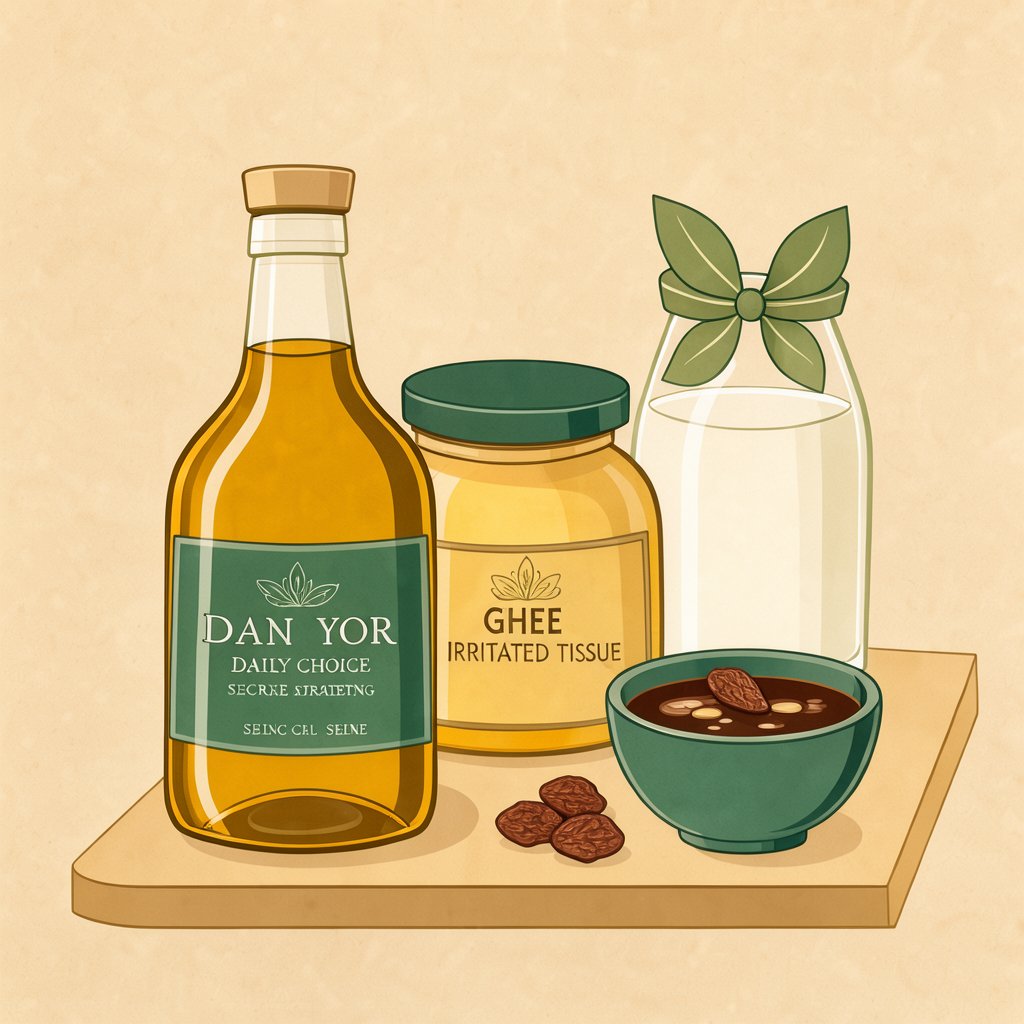
Choosing Your Liquid: Sesame, Ghee, Milk, and the Four Dosha Types
The same chapter grades the liquids as carefully as the grades of the hold. It defines four types of gandusha by purpose, each mapped to a dosha or a condition and each with its own taste base[1]. The four types are:
- Unctuous — the lubricating type for Vata, built on sweet, sour, and salty substances[1].
- Alleviating — the type for Pitta, built on bitter, astringent, and sweet substances[1].
- Cleansing — the type for Kapha, built on bitter, pungent, sour, and salty liquids of hot potency[1].
- Healing — the type for ulcers and damaged tissue, built on bitter and astringent bases[1].
The range of allowed liquids is wider than any modern post suggests: oils, milk, honey water, fermented gruel, wine, meat broth, and the water of overnight-soaked seeds, each used alone or mixed with herb paste, cooked or raw, at a temperature “comfortable to the touch”[1]. For everyday use the chapter is blunt — “for daily use, oil or meat broth are suitable” — and since meat broth has faded from the modern morning, plain oil is the practical default the tradition leaves us[1]. When the tissue is already unhappy — burning sensations, ulcers, scratches, wounds, or chemical and alkali burns — the chapter switches to ghee or milk, the gentlest vehicles[1].
Two condition-specific entries round out the list. For Vata-type toothache and loose teeth, the chapter prescribes hot or cold water mixed with sesame paste[1]. Tirtha’s Encyclopedia seconds sesame oil for Vata-type tooth tingling and adds a modern-sounding aside: perhaps the calcium naturally present in sesame oil is what accounts for its traditional reputation for tooth and gum care[2]. His stronger general recommendation is a triphala decoction, which he ranks among the best general remedies for oral diseases, usable in either kavala or gandusha form[2].
And one honest absence: coconut, sunflower, and olive oil — the stars of internet oil-pulling posts — are not mentioned anywhere in these sources. The sesame-and-ghee story is the only oil story this library supports[1][2][3].

The Classical Gandusha Procedure, Step by Step
The chapter’s procedure reads like a staged ritual, not a casual rinse. Vagbhata seats the practitioner in a specific place, prepares the body first, and only then administers the liquid[1]. Tirtha’s restatement adds one variation — a darkened room rather than an open veranda — while keeping the same sequence of preparation and hold[2]. Rendered as steps, the classical instruction reads:
- Step 1 — Set the seat. Sit comfortably on a veranda that is protected from drafts but open to sunlight; Tirtha’s alternative is a darkened room without draft, the constant being shelter from moving air[1][2].
- Step 2 — Warm the neck and shoulders. Have the neck and shoulders kneaded and massaged, then warmed with sudating compresses — Tirtha specifies sweat-inducing fomentation — so the tissues of the head and neck are prepared before any liquid enters the mouth[1][2].
- Step 3 — Tilt the head. With the body seated and warmed, tilt the head slightly back; this is the chapter’s only stated body position for administering the hold[1].
- Step 4 — Hold to the signal. Take the liquid in — a full fill for gandusha, a half fill for kavala — and hold it until it becomes saturated with Kapha or until the eyes water and the nose begins to run[1].
- Step 5 — Spit, and repeat daily. Spit the liquid out once the signal arrives; the practice returns as part of the daily routine, and Practical Ayurveda adds the modern counsel to build any new practice into the routine gradually rather than in one decisive morning[1][3].
The same chapter continues past the hold into hand-applied herbal pastes and powders for the mouth and herbal face masks — oral care in the classical frame was a whole morning department, not an isolated swish[1]. The modern reader will not reconstruct the veranda and the compresses. The honest modern compression of the ritual does exist, and it fits inside five minutes.
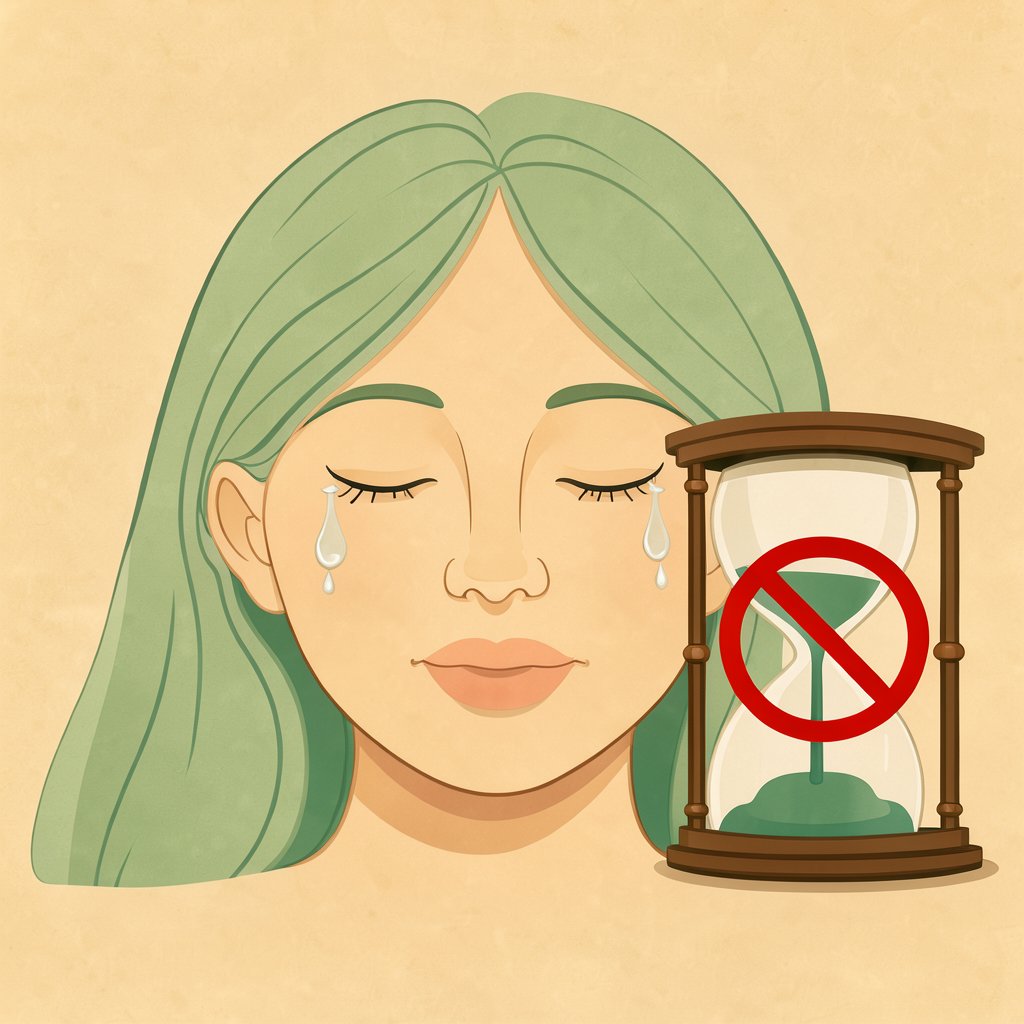
How to Do Oil Pulling Today: The 5-Minute Sesame Oil Protocol
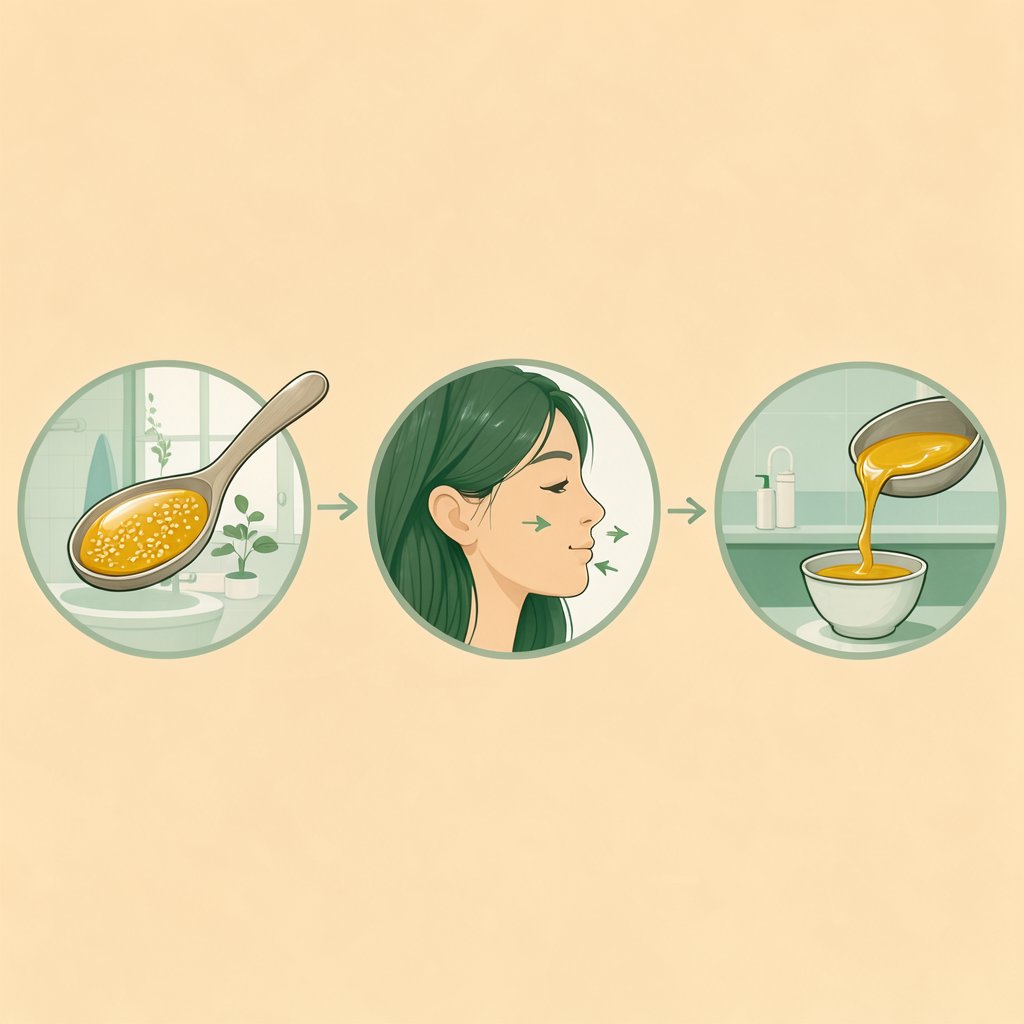
The doorway version lives in Practical Ayurveda (2018), in the book’s morning-routine panel. After brushing and tongue-scraping, “place 1–2 teaspoons of plain sesame oil or warm water in your mouth, gently move the liquid back and forth for up to 5 minutes, then spit it out”[3]. The claim the book attaches to the step is measured: “this practice strengthens your gums and reduces bacteria in your mouth”[3]. That is the tradition’s modern voice — gums and mouth bacteria, and nothing further.
It is worth stating exactly what this protocol is and is not. It is the only numeric protocol in the source library: one to two teaspoons, up to five minutes, plain sesame oil or warm water. The viral variant — one tablespoon, fifteen to twenty minutes, coconut oil — appears nowhere in these books, and presenting it as the traditional dose would put words in their mouths[3]. Five minutes is a doorway dose for a beginner, not a ceiling the texts impose.
Placement matters as much as dose. Practical Ayurveda slots the five minutes between tongue-scraping and nasya — a drop of sesame oil in each nostril — inside a morning that begins around 6 a.m.[3] The habit is meant to be daily, ideally, and the book’s own counsel is to build new practices into the routine gradually rather than all at once.
Where Oil Pulling Fits in the Ayurvedic Morning Routine
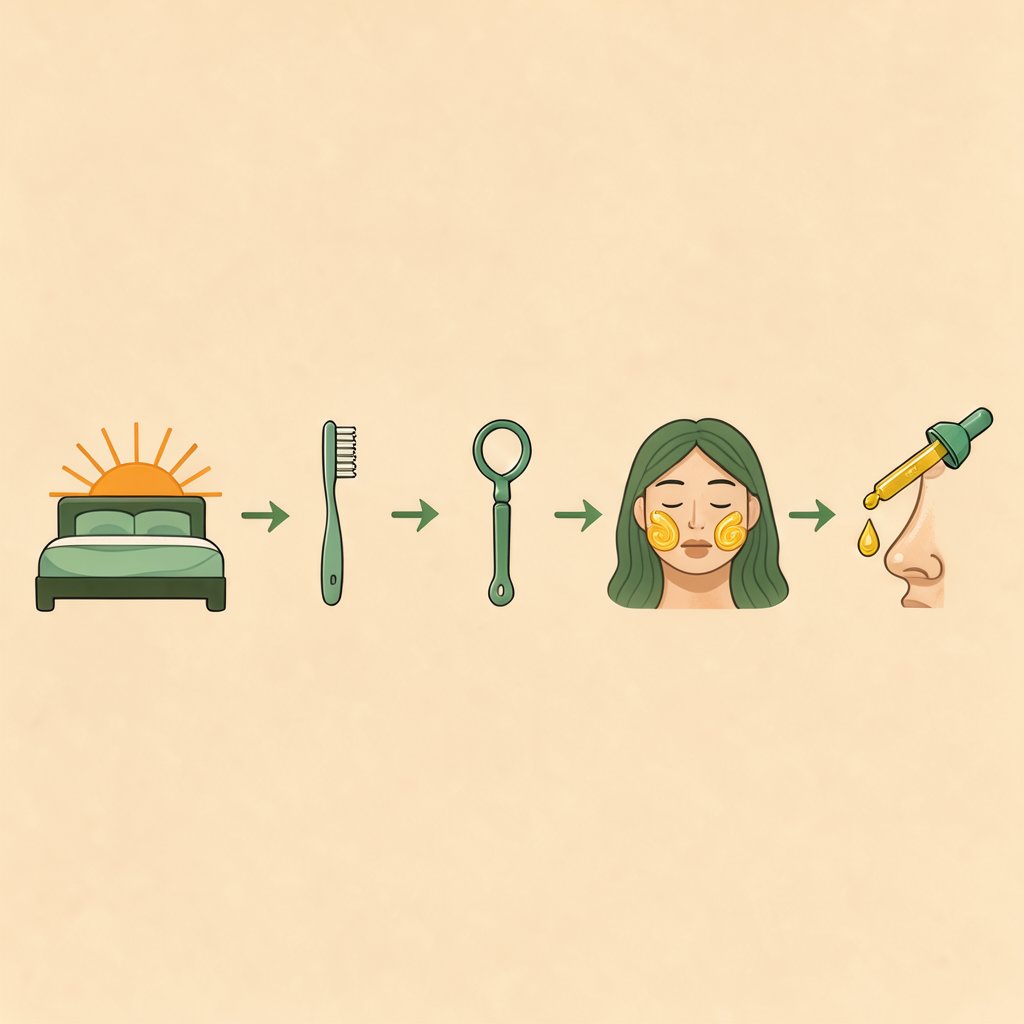
Practical Ayurveda’s morning chain gives oil pulling its exact neighbors. The sequence runs: wake around 6 a.m.; brush the teeth; scrape the tongue with a silver, copper, or steel scraper drawn back-to-front in three to four passes; then hold the oil for up to five minutes and spit it out; then nasya, a drop of sesame oil in each nostril[3]. Each step conditions the next — the scraping clears the tongue before the oil meets the mouth, and the oil precedes the nasal drops.
The book’s wider daily dental list, from its oral self-care pages, shows the ecosystem the practice lives in[3]. The standing items are:
- Oil pulling daily, as the list’s permanent resident[3].
- Chewing neem leaves, which the book calls antiseptic, or using neem sticks as a traditional toothbrush[3].
- A salt-water rinse every morning[3].
- Rinsing the mouth after anything sweet[3].
- Ending a meal with a sour taste[3].
- For Vata and Kapha types only, a daily gum massage with mustard oil mixed with salt[3].
Read together, the chain explains something the isolated swishing video cannot: the practice was never meant to stand alone. It sits inside an ordered morning that begins around six — and our guide to the dinacharya, the Ayurvedic daily routine, walks the whole sequence from waking to work. The book’s advice for adopting any piece of it is unheroic: build gradually. A new practitioner who adds tongue-scraping this month and the five-minute oil hold next month is following the letter of the instruction.
What the Texts Actually Claim — and What They Don’t
Read the classical claim list exactly as the chapter writes it. Kavala is indicated, the text says, for diseases of the neck, head, ears, mouth, and eyes; for hypersalivation; for throat diseases; for dry mouth; for nausea; for stupor; for anorexia; and for rhinitis[1]. Every item on that list is local or regional — the mouth, the throat, the nose, the senses of the head. There is no whole-body claim in the chapter, and no language of drawing toxins out of the body.
The scale of the tradition’s oral concern is easier to see in Tirtha’s taxonomy: 65 diseases of the mouth cavity, distributed as eight of the lips, fifteen of the gums, eight of the teeth, five of the tongue, nine of the palate, seventeen of the throat, and three of the entire cavity — a count that includes gingivitis, tartar, tooth abscess, and laryngitis[2]. That is the world the practice was written for: a pre-dentistry catalogue of everything that could go wrong in a mouth.
The modern voice in the library is Practical Ayurveda’s: stronger gums and reduced mouth bacteria, phrased as a hygiene claim[3]. Beyond that, the boundaries are absences worth naming. The source base holds no clinical trials, no plaque studies, and no position from any dental body on oil pulling; it holds no whole-body “detox” claims; and it holds no trace of the tablespoon-and-twenty-minutes internet protocol[1][2][3]. What remains is a traditional oral-care practice with a defined local scope — which is enough, and is all the sources will support.

Safety: The One Hard Age Rule and Sensible Cautions
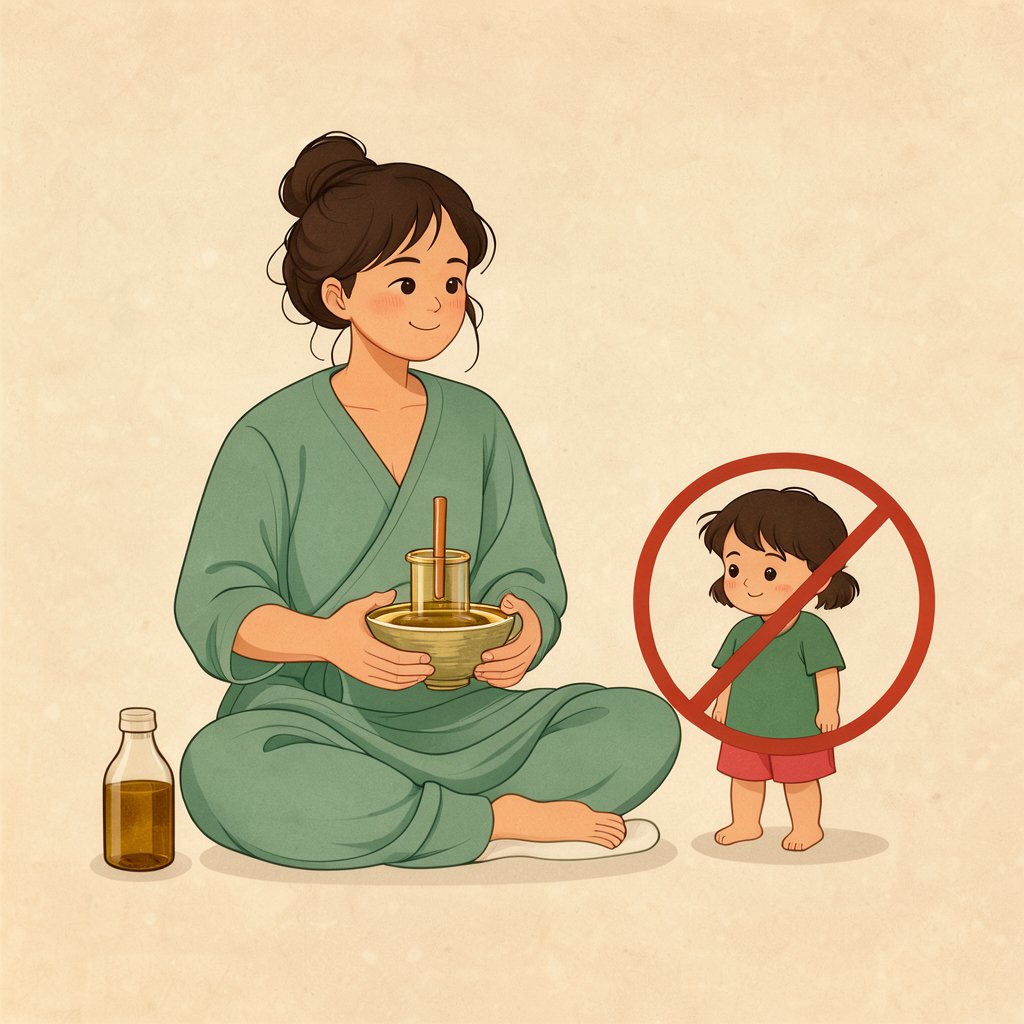
The classical chapter contains exactly one hard prohibition for this practice, and it deserves the weight of a rule: mouth rinsing is contraindicated for children under 5 years[1]. The same pages set neighboring age thresholds for related practices — nasya, the nasal drops that follow oil pulling in the modern morning, is not given under 7 or over 80, and medicinal smoke inhalation is not given under 18[1]. Age, in this tradition, is a gate on the whole oral-and-nasal department, not an afterthought.
The chapter also carries one emergency line: if poison touches the mouth, rinse with a decoction of vetiver (Vetiveria zizanioides) and other antitoxins[1] — a reminder that the text was written as a physician’s manual, with poison management in scope. Practical Ayurveda’s safety counsel is gentler and more modern: new practices are best built into the routine gradually[3]. Neither source reads like a viral post, and that is precisely the point.
Two honest gaps close this section. First, our source library contains no cautions about oil pulling during pregnancy, with dental work, with jaw problems, or about swallowing the oil — those questions are simply absent from the base, and inventing answers would betray the honesty this guide runs on. Second, nothing in the base addresses any medical condition you might manage, so treat everything here as general traditional practice, not personal medical advice — this article is educational and is not intended to diagnose or treat any condition, and a qualified clinician is the right audience for individual questions.
Frequently Asked Questions
What is the difference between gandusha and kavala?
Gandusha fills the mouth completely so the liquid cannot move — it is held still. Kavala fills the mouth halfway, leaving room to gargle and swish[1]. Swami Sadashiva Tirtha’s restatement applies the same herbs and directions to both and concludes that either approach can be used[2]. The two grades live side by side in our Ayurveda and Tibetan traditions library.
How long should oil pulling take?
The classical endpoint is a signal, not a clock: hold until the liquid becomes saturated with Kapha or until the eyes and nose water[1]. The only numeric protocol in the source base is Practical Ayurveda’s one to two teaspoons moved gently for up to five minutes[3]. No longer protocol exists in these books. Our dinacharya guide places those five minutes inside the day.
Which oil should you use for oil pulling?
Plain sesame oil is the daily default in the classical chapter, which states that for daily use, oil is suitable[1]. Ghee or milk replace it when the tissue is irritated — burning, ulcerated, or wounded[1]. Tirtha ranks a triphala decoction among the best general remedies for oral diseases[2]. For the body’s other oil route, see our abhyanga self-massage manual.
Does oil pulling detox the whole body?
No such claim exists in the source library. The classical indication list is local — mouth, throat, nose, ears, eyes, and conditions such as dry mouth and rhinitis[1] — and the modern source claims only stronger gums and reduced mouth bacteria[3]. Whole-body detox language belongs to internet posts, not to the texts. Our overview of Tibetan longevity practices keeps the same discipline.
Is oil pulling safe for children?
The one hard rule in the classical chapter says no for the youngest: mouth rinsing is contraindicated for children under 5 years[1]. Neighboring thresholds — nasya not under 7 or over 80, medicinal smoke not under 18 — show the tradition gates oral practices by age[1]. Nothing in the base addresses older children specifically; ask a pediatrician first. More context lives in the traditions category.
When should oil pulling happen in the morning routine?
After mouth cleaning and before the nasal drops. Practical Ayurveda orders the morning: brush, scrape the tongue back-to-front in three to four passes, hold one to two teaspoons of sesame oil for up to five minutes and spit, then place a drop of sesame oil in each nostril[3]. The same chain anchors our Ayurvedic daily routine guide.
Oil pulling, read honestly, is smaller and sturdier than its internet reputation: a graded oral-hygiene practice from a named chapter of the Ashtanga Hridaya, timed by the body’s own watering-eyes signal, run on a spoonful of sesame oil, and bounded by one hard age rule. That is a practice a beginner can actually start tomorrow morning — one to two teaspoons, up to five gentle minutes, spat into a cup — inside a tradition that wrote its instructions down a very long time ago[1][3].
Sources
- [1] Vagbhata — Ashtanga Hridaya Samhita (classical Ayurvedic canon)
- [2] Swami Sadashiva Tirtha — The Ayurveda Encyclopedia (2007)
- [3] Dorling Kindersley — Practical Ayurveda (2018)
- [4] Robert E. Svoboda — Ayurveda (2015)
- [5] Vasant Lad — The Complete Book of Ayurvedic Home Remedies (2012)
Where to go next: the practice belongs to a morning, and our guide to the Ayurvedic daily routine walks the full chain around it. If the oleation logic interests you, the abhyanga self-massage manual covers the body’s other oil route, and the Tibetan longevity practices overview widens the lens on the whole tradition.
How we researched this: built from a local library of 1,137 wellness books, indexed and searched offline — no internet sources were used. Every factual claim above was checked against the cited book passages before publication.
