Educational content only — not medical advice. See our full Medical Disclaimer and Affiliate Disclosure below.
Tummo breathing is the Tibetan inner-heat practice whose masters, tradition says, can dry a wet sheet with nothing but body heat while meditating in freezing Himalayan air. What most people actually practice under that name today is something else and something nearer: an adapted protocol of breathing rounds and gradual cold exposure, built not in a Himalayan retreat but over twenty-five years of trial and error by Wim Hof in Amsterdam, and described in his book The Wim Hof Method, written with Elissa Epel. This manual teaches that adapted version — with its exact numbers, its four-week cold ladder, and the full safety frame the publisher prints in a warning block.
The honest limits are stated up front, because they shape everything below. The source base behind this guide contains no classical tummo instruction text — no Vajrayana anatomy, no vase-breathing or visualization sequence — so nothing here pretends to teach the traditional practice. And the spectacular benchmarks attached to Hof’s name (climbing Kilimanjaro in shorts, running a half-marathon above the Arctic Circle, sitting 110 minutes in ice water, hanging 23 seconds from one middle finger) are publisher-blurb motivation, never instructions. The value of this manual is the ordinary, numbered ladder and the warning block that bounds it.
Key Takeaways
- Tummo-style breathwork is an adapted inner-heat practice: a five-step breathing session of 30-40 deep breaths, an urge-based retention and a 10-15 second recovery breath, repeated for three to four rounds.
- The cold ladder is exact: start at 15-30 seconds of cold at the end of a warm shower and build to two minutes over four weeks, at least five days a week — and benefits begin at about 60 F, roughly 15.5 C, so plain tap water qualifies.
- Every session is done sitting or lying down: the breathing can exert a strong physiological effect, and it is never practiced before or during driving, diving, swimming or bathing.
- Hard exclusions: no practice during pregnancy or with epilepsy; cardiovascular, respiratory or any other condition requires a doctor first; cold must be increased gradually or hypothermia risk follows.
- Forceful breathing is a session tool, not a baseline — habitual overbreathing is a different, harmful habit per the breathing-reduction literature.
On This Page: the sections of this manual in protocol order. Each link below jumps to its own step, the cold ladder, the safety rules, or the closer. The five steps carry the counts; the safety block carries the hard limits.
- What Is Tummo-Style Breathwork?
- What the Ice Studies Measured
- Step 1: Sit or Lie Down in a Safe Place
- Step 2: Take 30 to 40 Deep Breaths
- Step 3: The Final Inhale and the Retention
- Step 4: The Recovery Breath, Held 10 to 15 Seconds
- Step 5: Repeat for Three to Four Rounds
- The Cold Ladder: 15 Seconds to Two Minutes in Four Weeks
- The Gentle Inner-Heat Option for No-Cold Days
- Safety First: Hard Rules and Overbreathing Cautions
- FAQ: Tummo-Style Breathwork
What Is Tummo-Style Breathwork?
Tummo-style breathwork is a modern, adapted inner-heat practice built on the Wim Hof Method’s breathing and cold-exposure protocol: rounds of deep breathing with retention, plus gradual cold showers, practiced sitting or lying down. It is associated with tummo — the “inner heat” of Tibetan tradition, also called the yoga of inner heat — but it is a simplified cousin of that discipline, not the discipline itself.
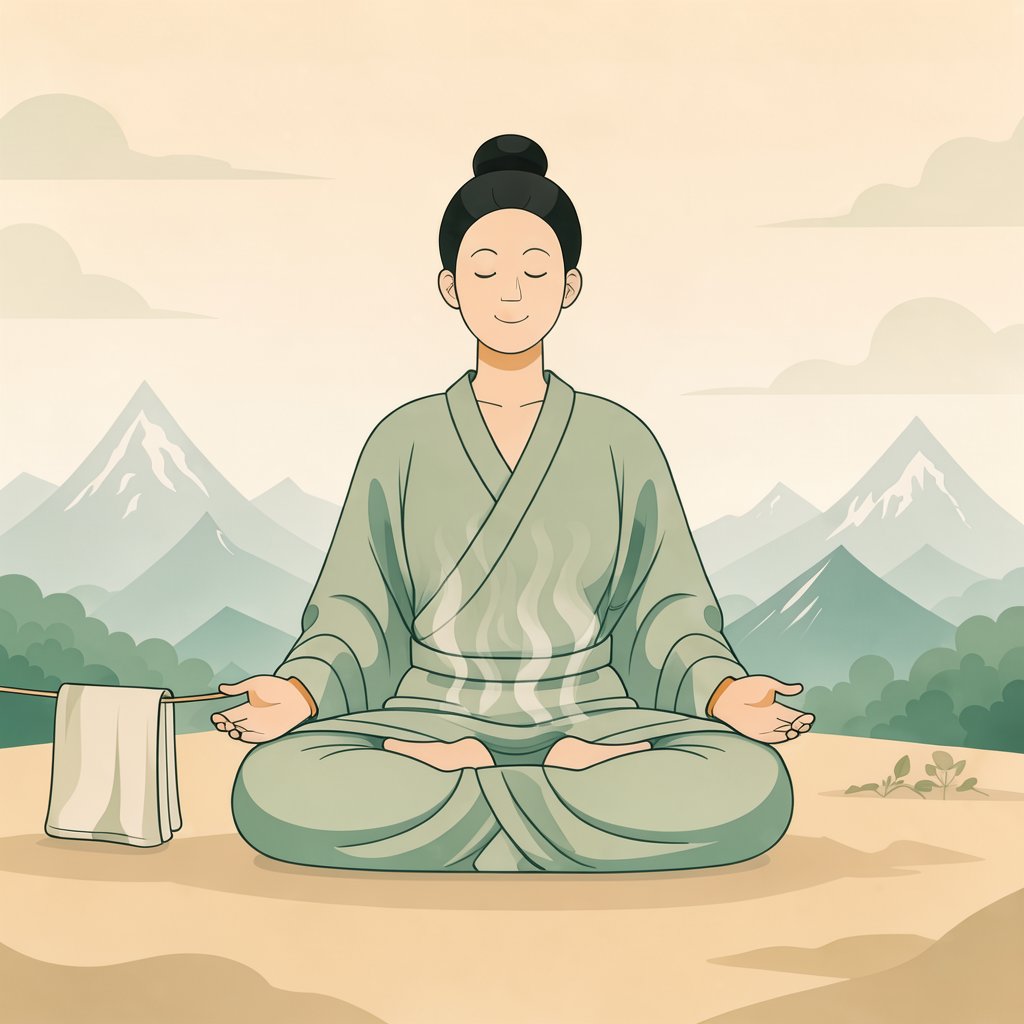
The link is frank about being second-hand. When Hof’s ice-endurance demonstration opened the Himalayan-art series at the Rubin Museum of Himalayan Art in New York in January 2008, the museum staff, as the book recounts, “understood it to be based loosely on the ancient Tibetan practice of tummo, or inner heat.” The book’s lineage description of the tradition itself is vivid: lamas train in tummo over a lengthy solitary retreat, and to prove mastery a lama must dry out a wet sheet with only their body heat while sitting in meditation in the freezing cold Himalayan air. Hof’s own path to similar territory ran nowhere near a monastery: “My teachers were the canals and parks of Amsterdam,” he writes of twenty-five years of trial and error that began with a first icy entry in Beatrixpark at about 36 F (+2 C) and led to the 2008 demonstration. At that museum event he also met Dr. Ken Kamler, lead doctor on Everest and K2 expeditions and author of Surviving the Extremes — a measure of the world his demonstrations moved in.
That world supplies the motivation, and it must stay motivation. The publisher’s benchmarks — Kilimanjaro in shorts, the Arctic half-marathon, 110 minutes in ice water, 23 seconds hanging on one middle finger — describe one man’s lifetime of adaptation, not a training target. And the honest gap belongs here, once, plainly: this manual’s source base contains no classical tummo instruction — no Vajrayana anatomy, no vase-breathing sequence, no visualization curriculum. What follows is the adapted protocol as documented in the Method’s own pages, and it is offered exactly as that.
What the Ice Studies Measured
The numbers that made the adapted method famous come from the measurement session around the January 2008 demonstration, as described in the book. Hof spent 80 minutes in ice with one arm kept out of the water for repeated blood draws; he swallowed an ingestible core-temperature sensor; 36 blood tubes went to six laboratories. Through all 80 minutes his core body temperature stayed constant at 37 C, his heart rate stayed low and his blood pressure stayed normal. Professor Maria Hopman, a physiologist at Radboud University Medical Center in Nijmegen, measured a 300 percent increase in metabolic rate during the exposure, and Dr. Mihai Netea, who studies immune-system evolution, observed the session.
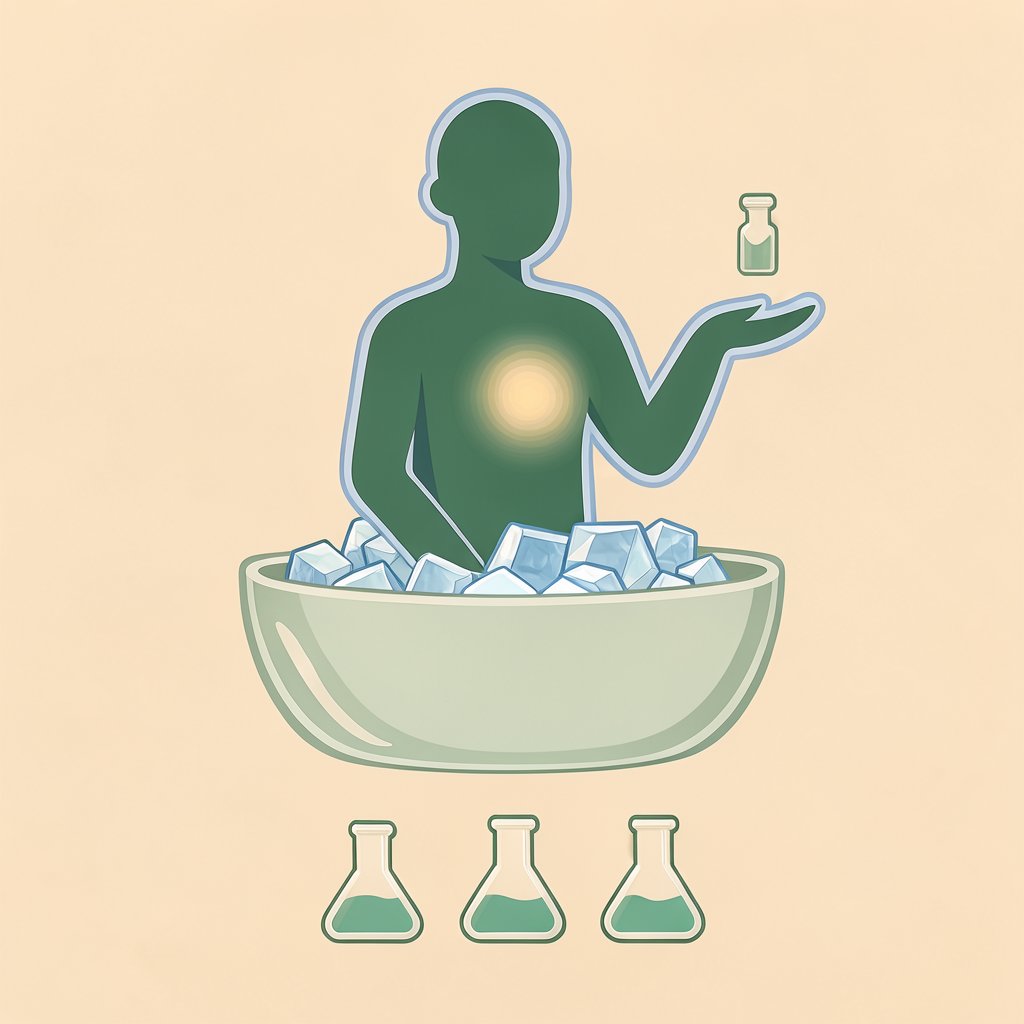
One claim in this territory deserves explicit labeling. The publisher’s blurb says the Method’s effectiveness is confirmed by eight university studies — but the retrieved source material contains no citation-grade list behind that sentence, and this manual does not promote it from blurb to evidence. What the book does explain, in the author’s own physiological framing, is the mechanism ordinary practice works through: repeated warm-to-cold alternation makes the small vascular muscles close and open, over time establishing what he calls vascular muscle tone, while core temperature “remains just fine.” The first cold exposure triggers a cold-shock gasp reflex with some transient hyperventilation — a reaction the book says fades with regular practice, and a reason the first rounds are kept short and calm.
Framed honestly, these sessions are demonstrations and measurements around one practitioner, not a clinical license for extremes. The adapted protocol that follows trades the ice bath for a shower dial and the records for a ladder — and it begins, as the book’s own instructions begin, with the least dramatic step of all.
Step 1: Sit or Lie Down in a Safe Place
The Method’s basic breathing protocol opens with a setup instruction, not a breath: sit or lie down in a quiet, safe environment, with the lungs free — no tight clothing, no cramped posture, no strain anywhere. The position is not a comfort suggestion; it is the safety foundation the whole session stands on, and it comes straight from the publisher’s warning block: the breathing exercises “can exert a strong physiological effect” and must always be done in a safe setting, sitting or lying down.
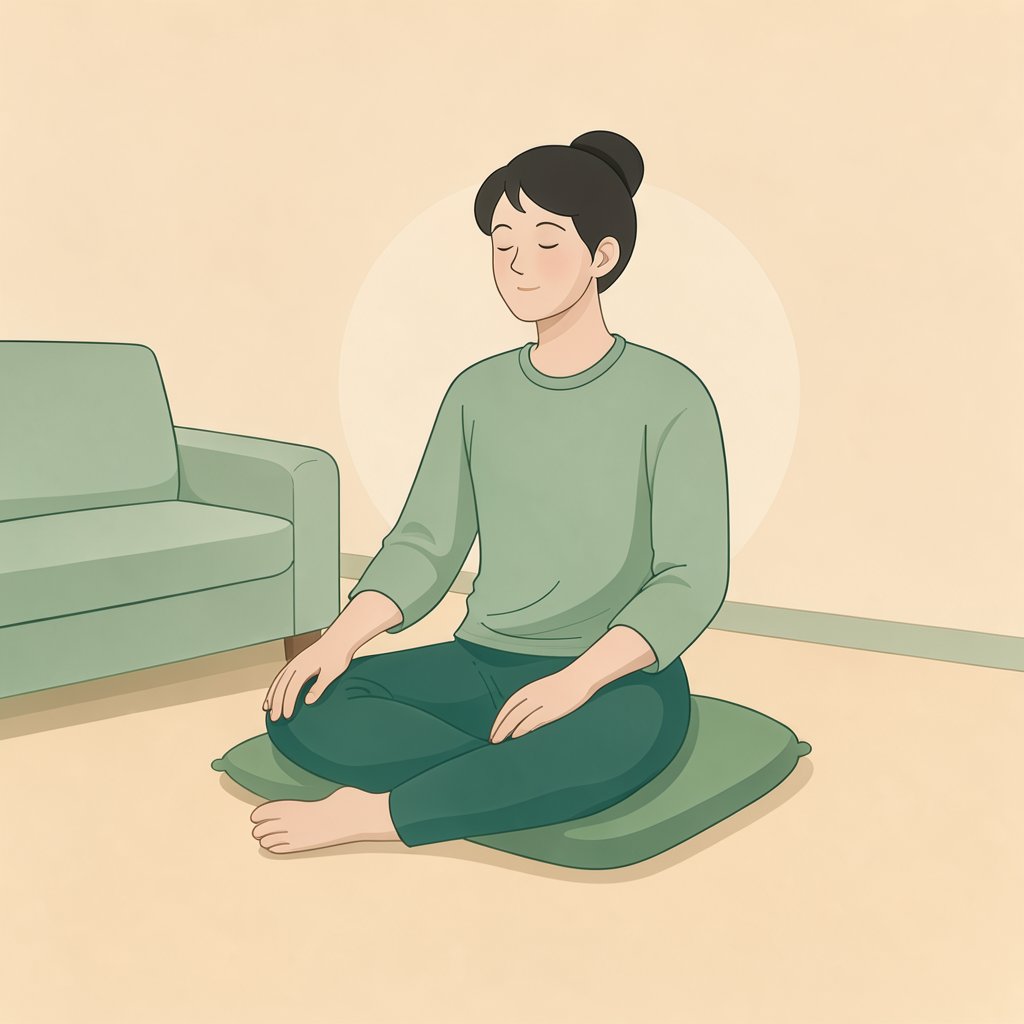
Made concrete for a beginner: no practice standing up in the first weeks, no practice at the edge of anything, no practice anywhere a faint could injure you — not on a stair, not in a tub, not near water of any depth. Choose a chair or a floor you could fall asleep on safely, loosen the belt and collar, and close the door on distractions. That is the entire step, and it is the step that makes every later step safe to attempt. When the seat is settled and the lungs are free, the first active move can begin.
Step 2: Take 30 to 40 Deep Breaths
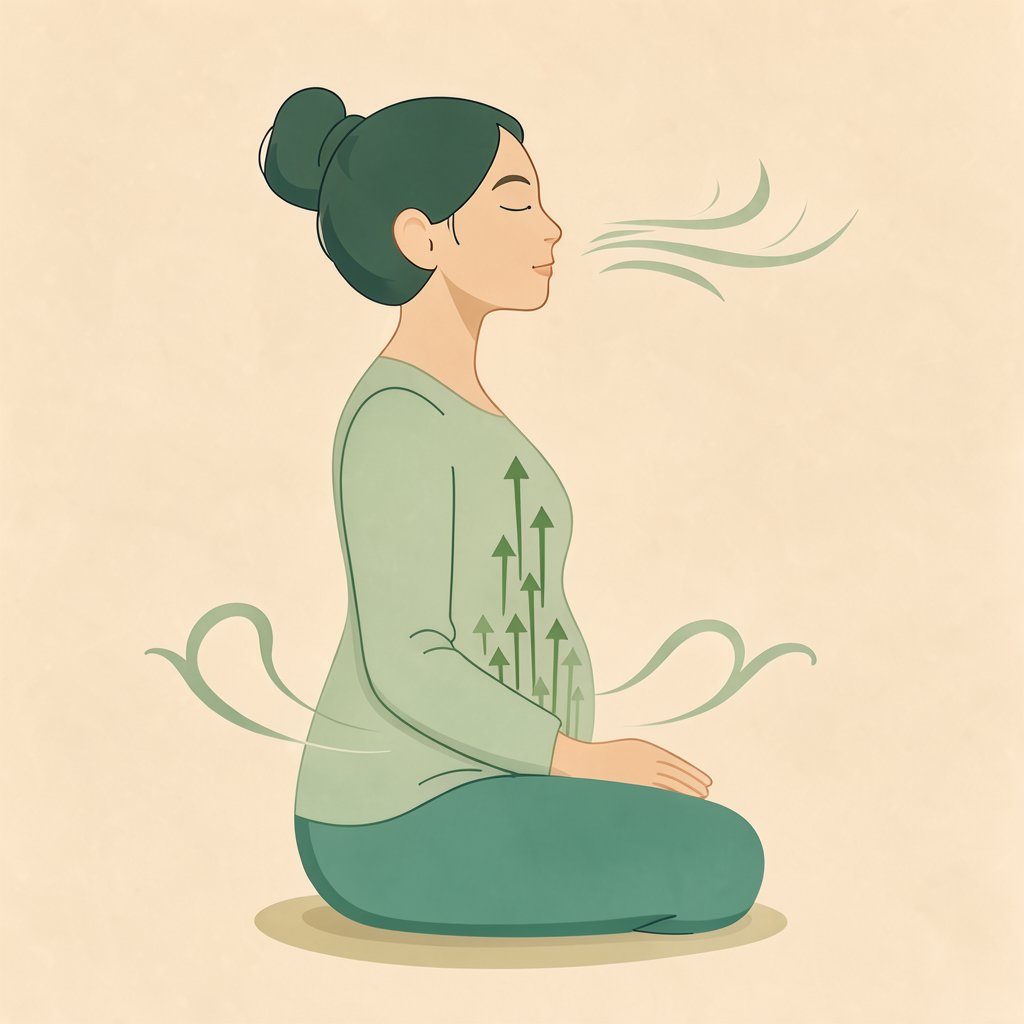
With the eyes closed, take 30 to 40 deep breaths, in through the nose or mouth. Each inhale fills the body in a wave — the belly first, then the chest, then up into the head — and the exhale is unforced: fully in, letting go. The book’s phrasing is worth keeping verbatim in mind, because the exhale is where beginners add force the protocol never asks for; the release is passive, like a balloon emptying itself, never a pushed-out breath.
One scope note keeps this step honest. This is forceful breathing used as a session tool, inside numbered rounds — and that boundary matters, because the breathing-reduction literature treats habitual overbreathing as an entirely different and harmful thing. Patrick McKeown’s Healing Breath and the Buteyko method’s core doctrine both hold that chronic deep breathing is a burden, not a training tool; the full treatment of that caution lives in the safety section at the end of this manual. For now the rule is simple: the 30 to 40 breaths happen inside the session, and nowhere else in your day. As the set nears its end, let the last breath draw in fully and stay — the retention has begun.
Step 3: The Final Inhale and the Retention
At the end of the last breath of the set, take one more full inhale — to maximum capacity, but without force — then let the air relax out of the lungs, and hold. This is the retention phase: empty, quiet, and ended not by a stopwatch but by the body’s own urge to breathe. When the urge arrives, the hold is over; that is the protocol’s own dosing rule, and honoring it is what keeps an adapted practice adapted.
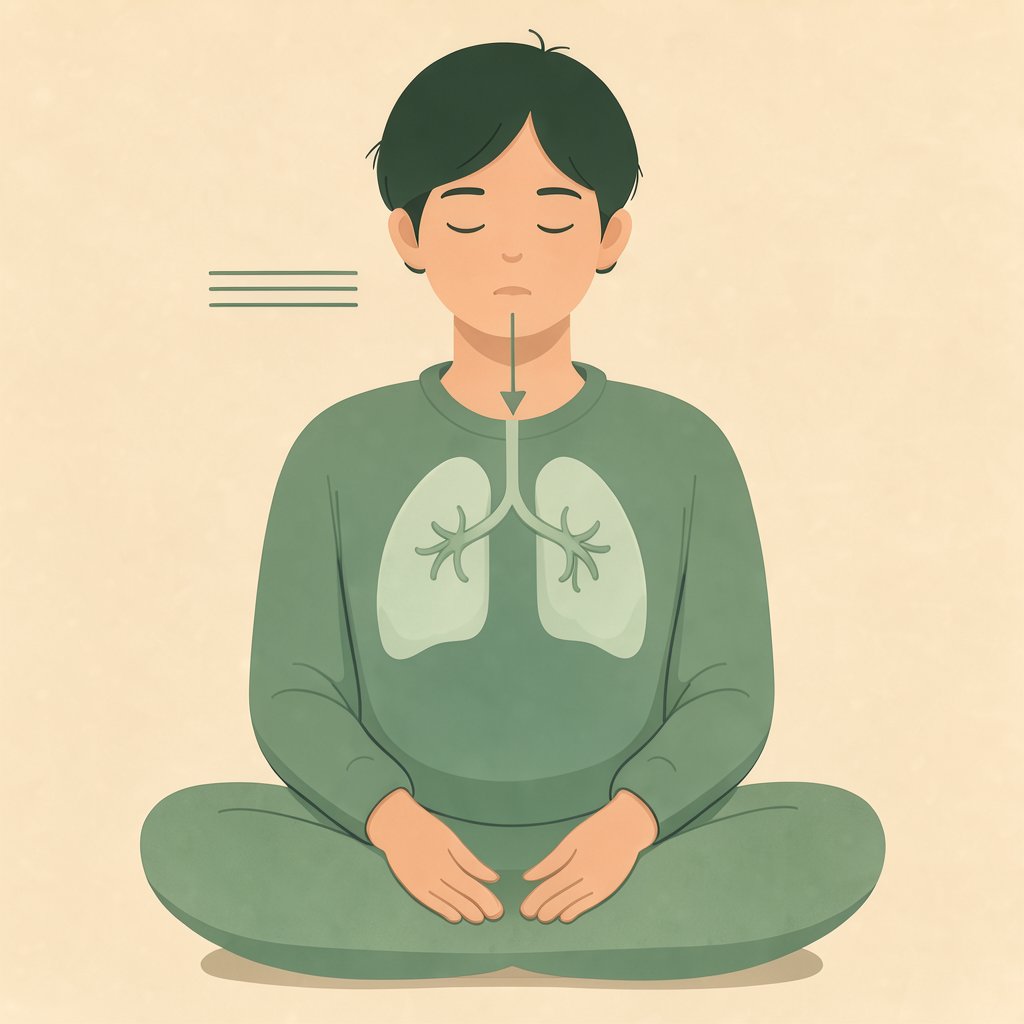
Two calibration notes from the book’s own pages belong here. First, tingling, ringing in the ears and dizziness are listed as normal reactions to the breathing — but losing consciousness is the publisher’s own signal that the practice is too intense, and the correct response is to soften the next round, not to push through. Second, the author notes that with a lot of inflammation, retention may end sooner: “breath is like a mirror” of your current state, and a shorter hold on a tired day is information, not failure.
One add-on exists at this stage, and it is flagged in the book itself as belonging to a later round: in round two, at this retention point, advanced practitioners may “squeeze” the breath toward the head — tensing the pelvic floor and directing the tension into the core and up toward the head while the rest of the body stays relaxed, feeling pressure in the head, then relaxing everything on the exhale. This is the advanced variant; a beginner’s path skips it entirely and loses nothing of the protocol’s documented structure.
Step 4: The Recovery Breath, Held 10 to 15 Seconds
When the urge to breathe arrives, take one deep breath in — and hold it for 10 to 15 seconds. Then let it go, and the round is complete. That is the whole step, and it deserves its full weight as the protocol’s most quoted number: the recovery breath’s 10-15 second hold is the only counted duration in the entire breathing sequence. The retention before it was urge-based; this one is timed, and it is the number to actually count.
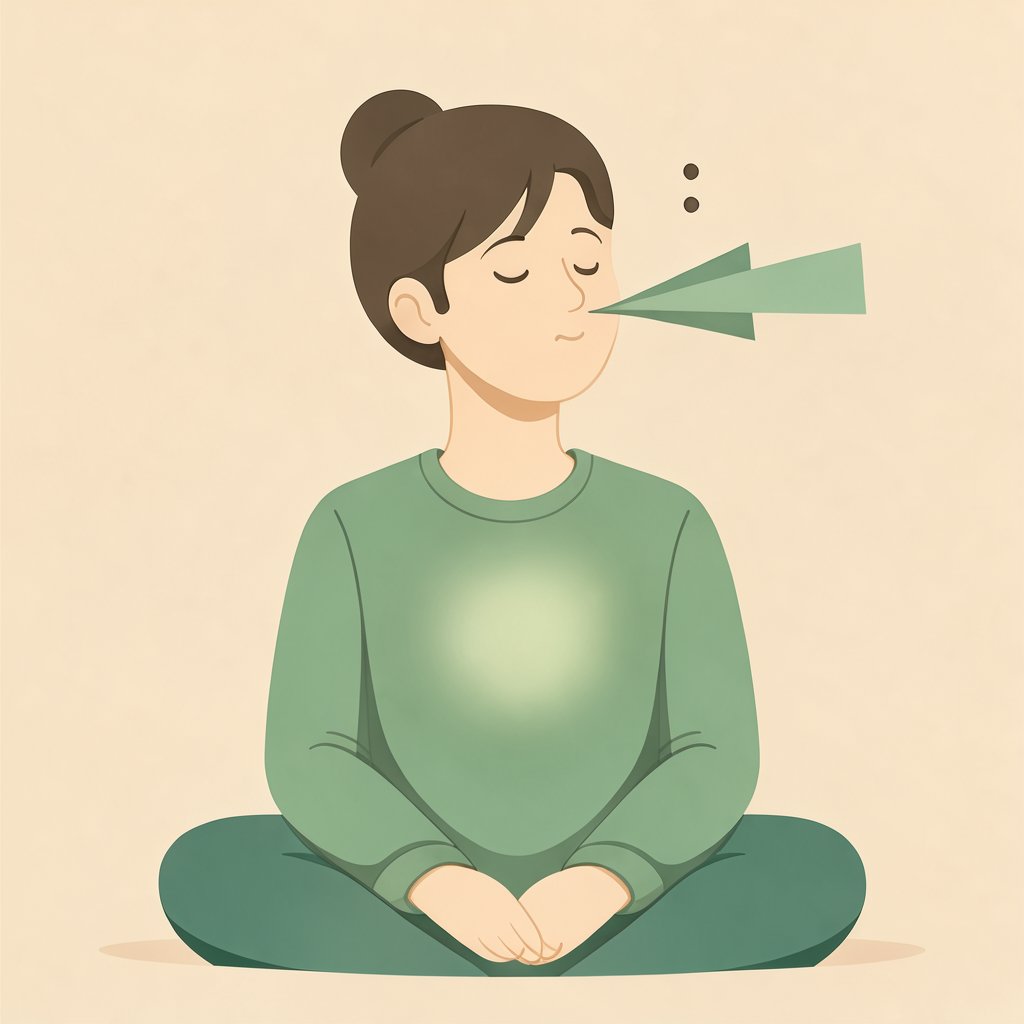
In the sequence’s own logic this is the deliberate re-pressurizing pause between rounds — the bridge from the emptied stillness of retention back to the rhythm of breathing. The source material offers no deeper physiology for the hold beyond the protocol description itself, and this manual does not invent mechanism where the book gives instruction. Practically: count the ten to fifteen calmly, feel the chest full, and release without drama. The round is closed; the only question left is how many rounds make a session.
Step 5: Repeat for Three to Four Rounds
The full cycle — 30 to 40 deep breaths, the retention, the 10-15 second recovery breath — repeats for three to four rounds per session. That is the author’s standard, stated in both editions of the book, and the honest way to hold it as a beginner is to start with three rounds and let the fourth arrive when the first three feel unremarkable.
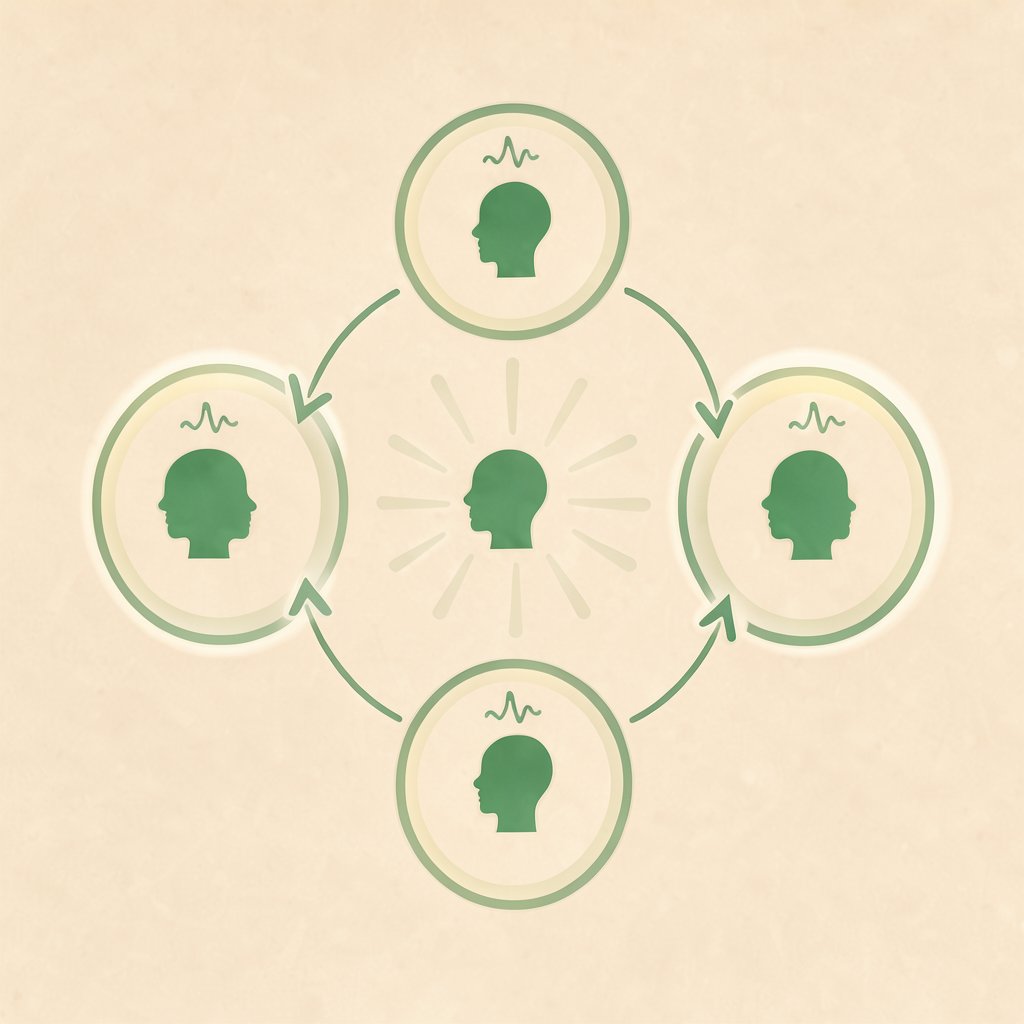
Why more than one round? The author’s own framing, offered in his voice and not as an independent trial result, is that each successive round sends more blood and electricity into the brain and reactivates the adrenal axis, and that four rounds ensure the blood sits within the optimum pH range while rebalancing parasympathetic and sympathetic tone. Attribution discipline matters exactly here: these are the book’s physiological explanations of its own protocol, and this manual reports them as such — the numbered structure is the documented part, the mechanism prose is the author’s interpretation. Practiced sitting or lying per Step 1, three to four rounds complete the breathing half of the method. The second pillar waits in the bathroom.
The Cold Ladder: 15 Seconds to Two Minutes in Four Weeks
Cold exposure enters not through an ice bath but through the last seconds of an ordinary warm shower. The book’s hard-numbered ladder: week one, 30 seconds of cold water at the end of a warm shower; week two, 60 seconds; week three, 90; week four, 120 — two minutes. The cadence is at least five days a week, and the rule above the numbers is one word: gradually. A slower start is explicitly acceptable — the book’s 20-Day Cold Shower Challenge tells beginners to start “with just fifteen seconds at the end of your shower every day,” promising that within a week thirty seconds will feel possible, or more. Fifteen seconds a day is a legitimate entry, and it builds on its own.
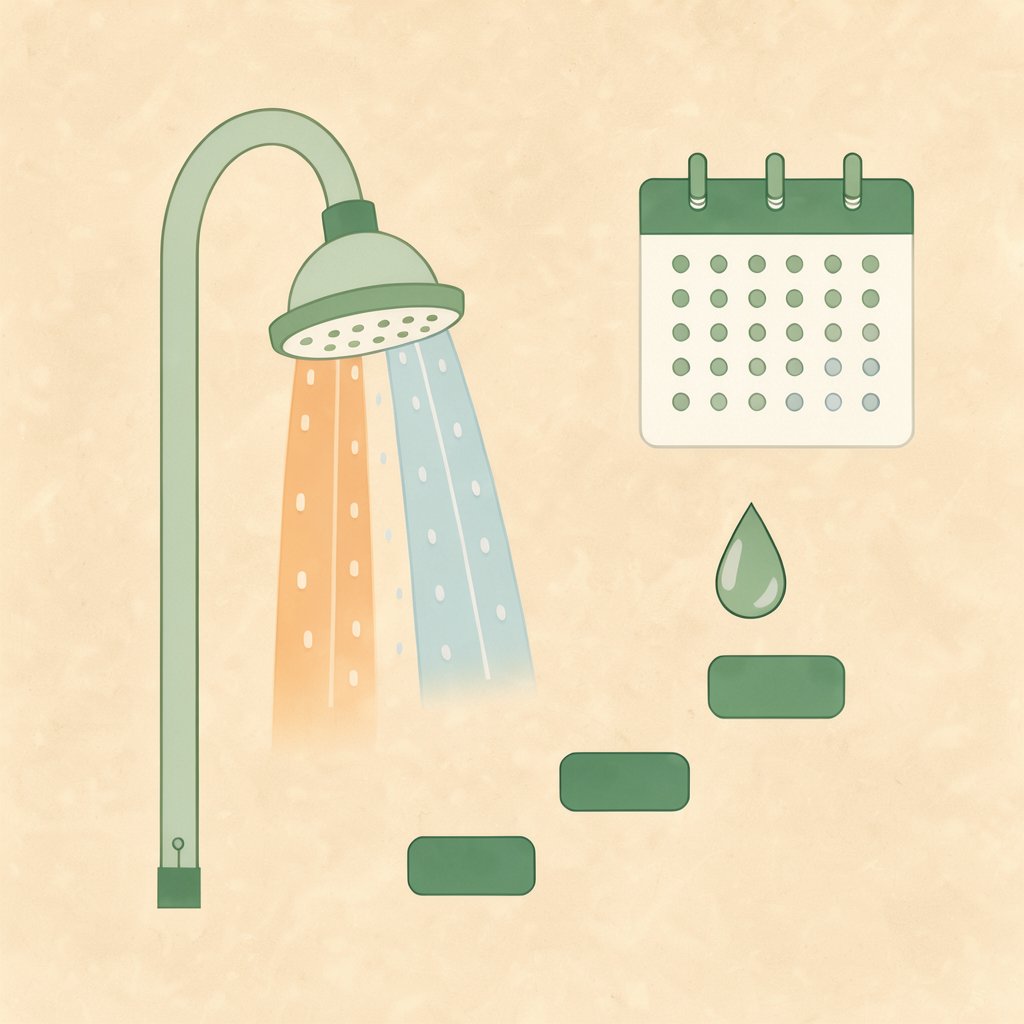
The temperature floor is the ladder’s quiet gift: “some benefits of cold exposure begin at 60 degrees Fahrenheit” — about 15.5 C — which means most household tap water is already cold enough to matter. No chiller, no ice, no equipment. The mechanism is the vascular one from the ice-study section — warm-to-cold alternation training the small vascular muscles — and the book adds a practical reassurance: anyone can handle 30 seconds of cold after accumulating warmth under a warm shower first, and the initial gasp reflex fades with regular practice.
For readers without a shower, or drawn to an older tradition, the source base offers one optional side path, clearly labeled as coming from a different lineage: contrast baths after N.G. Vasilytsov’s Treatment with Bioenergy (1992) — hot bath at 41-43 C and cold at 14-15 C, one minute in each, alternating, always ending cold, in a series of 11 cycles extendable up to 61; where no bath exists, pour cold tap water over the body starting from the feet upward. Its listed indications (neuralgia, rheumatism, headaches, hypertension, heart and kidney disease, colds, circulatory disorders, fatigue) are that tradition’s own claims, and a physician’s input belongs before them. One boundary closes the section honestly: the base contains no ice-bath or cold-water-immersion ladder beyond showers — no immersion temperatures, no durations table — so this manual stays with the shower dial and does not follow anyone into a tub of ice.
The Gentle Inner-Heat Option for No-Cold Days
For days when no cold is available — travel, broken water heater, plain reluctance — the method keeps a gentler door: heat built from inside. The book’s inner-heat exercise, which the author links to brown fat and the intercostal muscles, runs as follows. Sit down. Inhale slowly and deeply five to six times, releasing each breath naturally. Inhale fully; relax into the exhale; inhale fully again. Now hold the breath for no more than five seconds — the hard safety cap of this variant — while tensing the upper-back muscles and the chest; the head and jaw stay relaxed. Then let everything go.
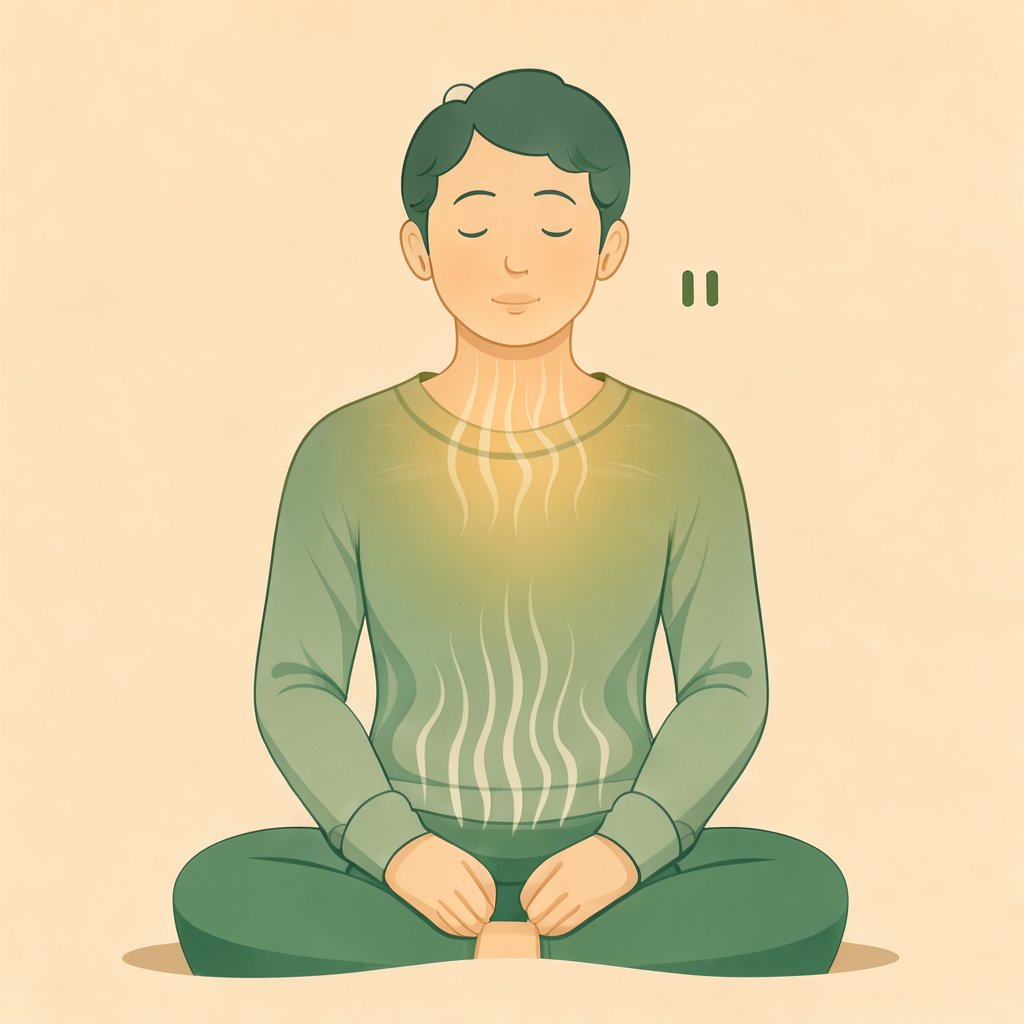
With practice, the book says, heat flows from the neck through the whole body — and there is a measured pedigree behind the feeling: Hof used this exercise to keep his core temperature up in the Wayne State experiments, while adding his own warning, “please do not try such experiments at home.” The warning travels with the fact. The five-second cap is the version scaled for ordinary practice, and it does not negotiate upward.
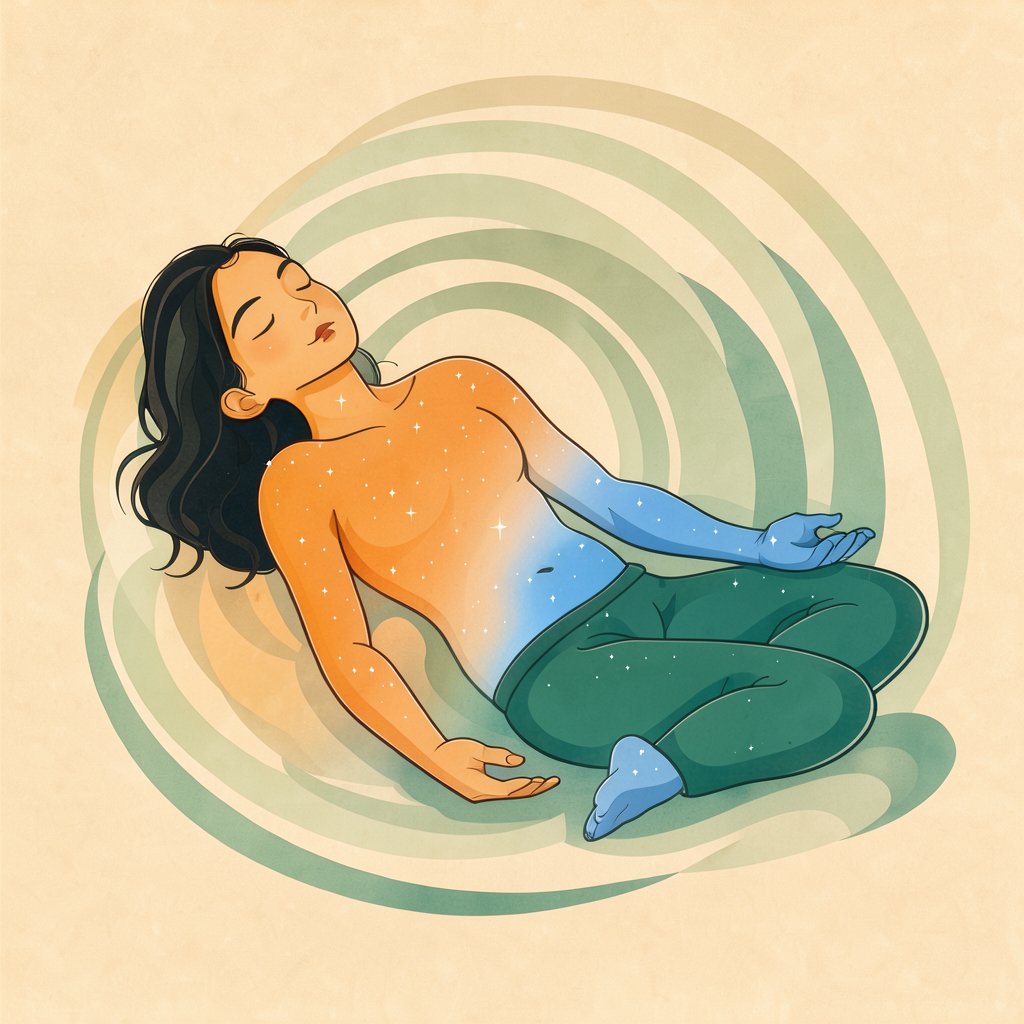
A second no-cold variant comes from the Russian self-help tradition and must be labeled as what it is — technique texture from esoteric literature, not evidence-based medicine. In Mirzakarim Norbekov’s Training of Body and Spirit (2005), directed sensations of warmth and cold train the vessels — the image of heat dilates them, the image of cold narrows them — while tingling activates nerve endings; key sensations are directed to chosen body areas in a meditative state, an approach Norbekov calls internal contactless meditative self-massage. The same shelf adds N.I. Sherstennikov’s “warmth of breathing” (combining hand energy, imagination and breath to warm an ailing organ, from Health Reserve), Norbekov’s “little sun” inner-glow visualization (Energetic Health), and Vadim Ufimtsev’s heel-sitting practice — three to five minutes of passive breath observation, then exhaling warmth into the lower-abdomen center, the “digestive fire” (Practical Bioenergetics, 2008). As background only: V. Dombrovsky-Shalagin’s Breathing for Life (2010) notes that about 80 percent of carbon dioxide travels as bicarbonate salts inside red blood cells. Use these as calm imagery options; the documented ladder of this manual remains the shower one.
Safety First: Hard Rules and Overbreathing Cautions
The publisher prints a warning block in both editions of the book, and this manual treats it not as boilerplate but as the core of the protocol. The book is not a substitute for medical advice. Do not practice the Method during pregnancy or if you suffer from epilepsy — those are the two named absolute exclusions. People with cardiovascular, respiratory or any other conditions must consult a doctor first. Cold is a powerful force: extreme cold can shock the body, so cold exposure starts slowly and increases gradually, because irresponsible practice carries a risk of hypothermia.
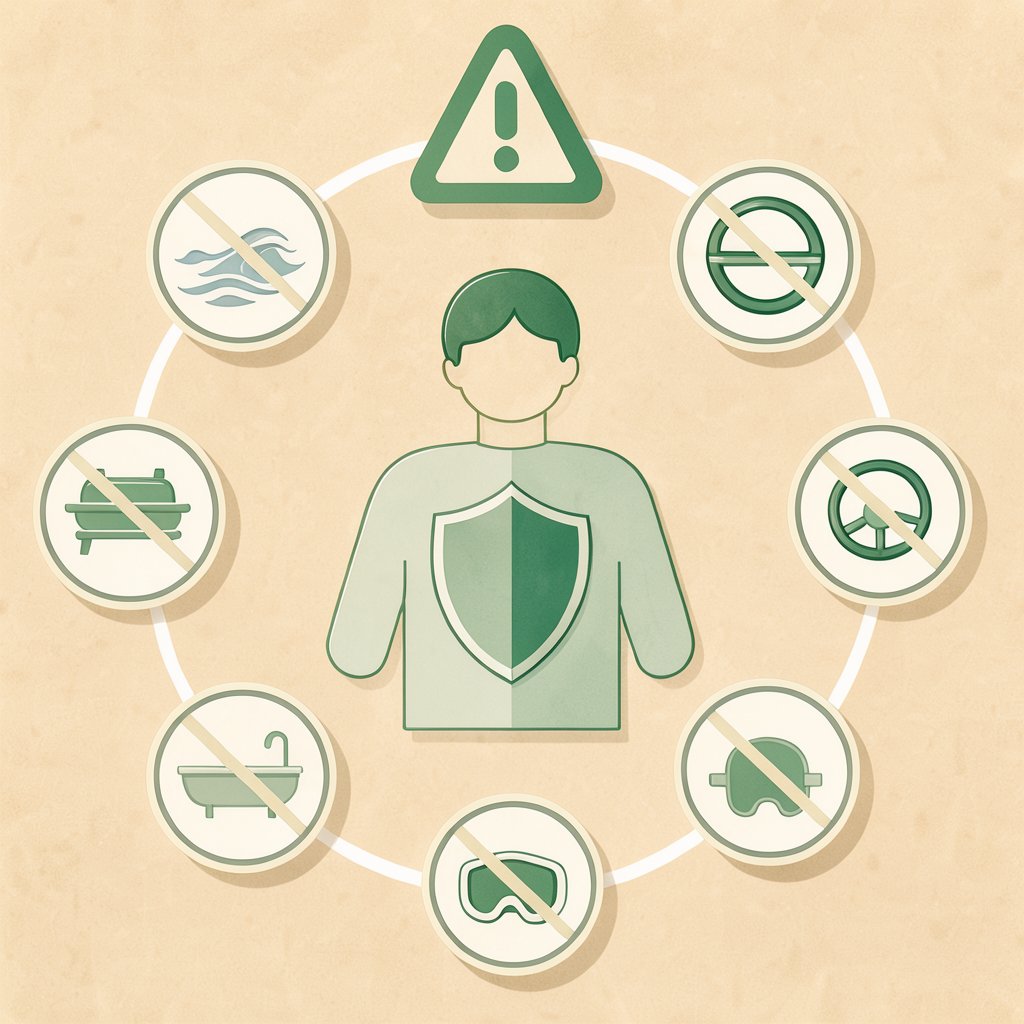
The near-water rule deserves its own paragraph because it is quote-level and non-negotiable: never do the breathing before or during diving, driving, swimming, taking a bath — or any situation where loss of consciousness could cause bodily harm. The breathing exercises must always be done in a safe setting, sitting or lying down. Within a session, tingling, ringing in the ears and dizziness are normal reactions; losing consciousness means the practice is too intense, and the publisher’s own counsel is that there is no need to take the Method to extremes. The extreme benchmarks from the opening of this manual stay there — as motivation, never as a goal.
The overbreathing caution completes the frame, from the breathing-reduction literature. In Healing Breath (2022), Patrick McKeown writes that chronic hyperventilation narrows the airways and constricts blood vessels, reducing oxygenation and blood flow to the heart and other organs, and that habitual overbreathing is linked to nervousness, asthma, fatigue, insomnia, heart problems and obesity. K.P. Buteyko’s doctrine of the “disease of deep respiration,” with its control-pause and pulse scale, goes further and treats deep over-breathing as a root of civilization-induced illnesses — a theory offered here as that school’s position, not as settled medicine. The safety implication both converge on is the one this manual repeats: forceful breathing is a session tool inside the numbered rounds, never a baseline way of breathing. Honest gaps close the section: the source base names no pregnancy-safe breathing alternative, no pediatric dosing, and no psychiatric-screening guidance — epilepsy and the cardiovascular/respiratory doctor-first rule are its only named exclusions, and missing answers are questions for your physician, not for improvisation.
FAQ: Tummo-Style Breathwork
What is tummo breathing?
An adapted inner-heat practice: the Wim Hof Method’s breathing rounds and gradual cold exposure, associated — loosely, per Rubin Museum staff quoted in the book — with the Tibetan practice of tummo. The source base contains no classical tummo instruction (no Vajrayana anatomy, no vase breathing), so this manual documents the adapted protocol only, never the traditional one.
How many breaths and rounds are in a session?
Per the book: 30 to 40 deep breaths (belly, chest, head, exhale unforced), a retention held until the urge to breathe, a recovery breath held 10 to 15 seconds — repeated for three to four rounds, always sitting or lying down. Start with three rounds; the fourth is earned, not forced. The whole session fits into minutes, not hours.
How cold does the water need to be?
Colder than about 60 F (roughly 15.5 C), where the book says some benefits of cold exposure begin — which ordinary tap water already is in most homes. The ladder runs 30, 60, 90, then 120 seconds at the end of a warm shower, at least five days a week; a 15-second start is the documented slow entry. No ice bath is required or documented in the base.
How long should I hold my breath?
Until the urge to breathe — no stopwatch. The retention is deliberately urge-based; the only counted duration in the whole sequence is the recovery breath’s 10 to 15 seconds. On days with more inflammation the hold may end sooner; the author’s phrase is that breath is like a mirror of your state. Losing consciousness is the signal that practice is too intense.
Who should not practice?
Anyone pregnant or with epilepsy — the two absolute exclusions in the publisher’s warning block — and anyone with cardiovascular, respiratory or other conditions without a doctor’s clearance first. The breathing is never done before or during diving, driving, swimming or bathing. No pregnancy-safe variant or pediatric dosing exists in the source material; ask your physician.
Is sitting in ice for 110 minutes the goal?
No. The 110 minutes in ice water, like Kilimanjaro in shorts and the Arctic half-marathon, is publisher-blurb motivation describing one adapted lifetime — and the blurb’s “eight university studies” is a claim, not a citation list this manual could verify. The documented deliverables are the numbered ladder and the warning block; the extremes are stories, not steps.
Tummo breathing, adapted honestly, asks for a chair or a floor, thirty to forty breaths, a hold ended by the body’s own urge, ten to fifteen counted seconds, three to four rounds, and fifteen cold seconds at the end of a shower that grows to two minutes over a month. Every number above comes from the Method’s own documented pages; every limit comes from its own warning block. That pairing — the ladder and the warnings, together — is what makes inner fire a practice for ordinary people rather than a story about extraordinary ones. Practice it seated, practice it gradually, and let the safety rules be the part you memorize first.
Where to go next: the manuals library collects our complete step-by-step practices, including the gentler dantian abdominal breathing guide and the bhramari bee breath guide for wind-down evenings. The full breath collection lives in the breathwork and vagus nerve category, and our morning breathwork ritual slots an adapted round into a complete morning. Read the medical disclaimer before your first session.
Sources & References
Wim Hof, Elissa Epel - The Wim Hof Method: Activate Your Full Human Potential (2020); Wim Hof - The Wim Hof Method (Russian edition, 2021); Patrick McKeown - Healing Breath (2022); K.P. Buteyko - Theory and Method of Volitional Elimination of Deep Breathing; Mirzakarim Norbekov - Training of Body and Spirit (2005); M. Norbekov - Energetic Health; N.I. Sherstennikov - Health Reserve; Vadim Ufimtsev - Practical Bioenergetics (2008); N.G. Vasilytsov - Treatment with Bioenergy (1992); V. Dombrovsky-Shalagin - Breathing for Life (2010)