
Educational content only — not medical advice. See our full Medical Disclaimer and Affiliate Disclosure below.
Morning breathwork is the practice of spending your first minutes awake with deliberate breathing – before the phone, before coffee refills, before breakfast. Meditation manuals describe the early hours as the natural home of practice: the day “should begin on a positive note,” and after a night of sleep the body has accumulated heaviness that tradition calls tamas and asks to be cleared toward the alert lightness of sattva[1]. Modern breath manuals converge on the same slot for a more mechanical reason: the strongest breathing routines are best done on an empty stomach, before digestion competes for the body’s resources[2][3].
This guide walks through what slow breathing actually signals to the vagus nerve, then assembles the source material into a 10-minute morning protocol, a comparison table of five classic routines, and the safety rules the tradition itself insists on.
Key Takeaways
- The best-documented window for strong breathing practice is before breakfast: with a full stomach, metabolic activity and oxygen are directed to digestion and blunt the breathing effect[2].
- The vagus nerve’s pulmonary branch feeds the brain continuous reports on lung expansion and oxygen/carbon-dioxide levels; slow, deep breathing activates the vagus nerve and stimulates the relaxation response[4].
- True belly breathing uses the diaphragm – the primary breathing muscle, wired by the phrenic nerve from the neck (C3-C5) – rather than the auxiliary chest muscles[4].
- A complete morning session can be as short as 7 minutes: routine, daily, unhurried practice is the rule the sources repeat[3][9].
- Breath-hold and rapid-breathing work has hard safety rules: never in or near water[2], never rushed[3], stop at head tension or facial flushing[3].
Why the First Minutes of the Day Belong to Morning Breathwork
Every lineage in the source literature treats the early morning as prime practice time, and each gives a reason. The meditation manual quoted above recommends rising early precisely to give the “precious hours of the morning” to inner work, and pairs it with a practical detail: after sleeping, wash first – water procedures are described as the first step that clears the night’s heaviness and brings a brisk sense of freshness[1].
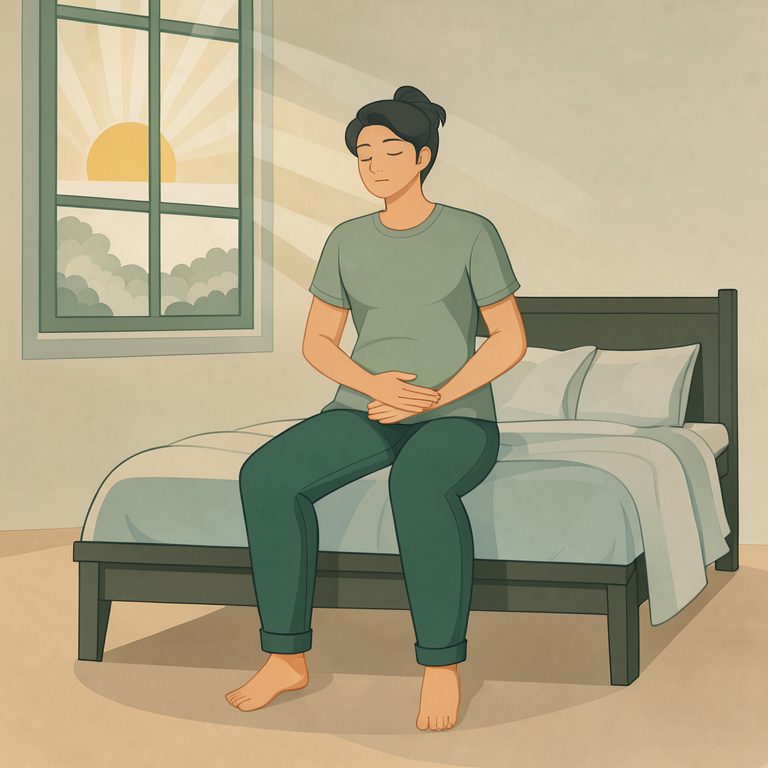
Hof is blunt about timing: the best time for his breathing exercises is before breakfast, because “when your stomach is full, all the metabolic activity and all the oxygen are directed to the stomach and block the way.” Digestion belongs to the parasympathetic nervous system, he notes, while his power breathing deliberately moves the body toward a sympathetic, alert state – and eating beforehand blunts exactly that reaction[2]. The classical yoga rule agrees from the other side: Iyengar’s pranayama manual instructs practitioners not to practice right after a meal or on a truly hungry stomach, to keep four to six hours between a meal and breathing practice, and to wait half an hour after practice before eating[3].
In other words, the morning is not an arbitrary slot. It is the one moment of the day when the stomach is reliably empty, the nervous system is resetting from sleep, and nothing has yet claimed your attention – which is why every routine below is calibrated for that window.
What Slow Breathing Signals Through the Vagus Nerve
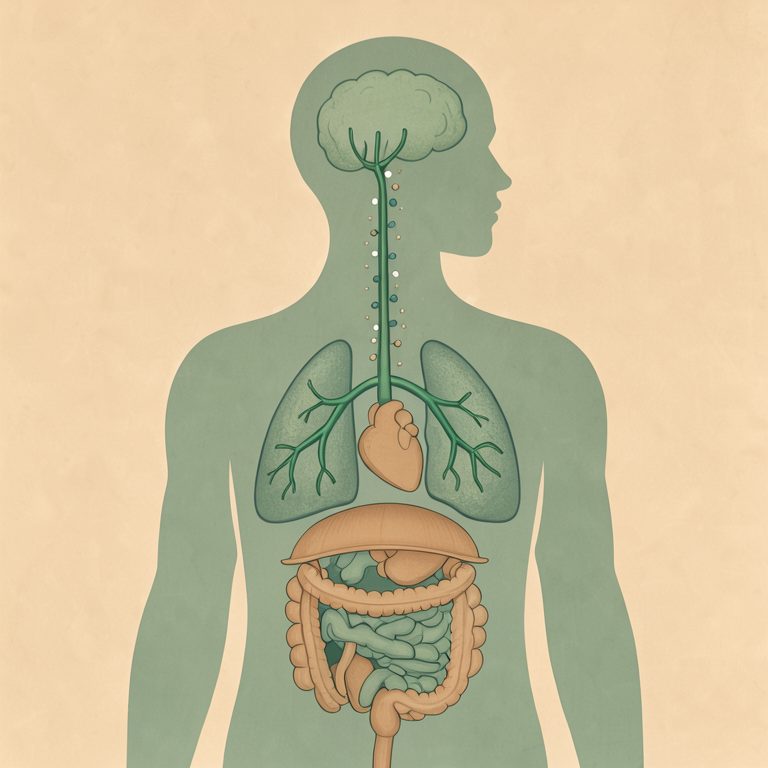
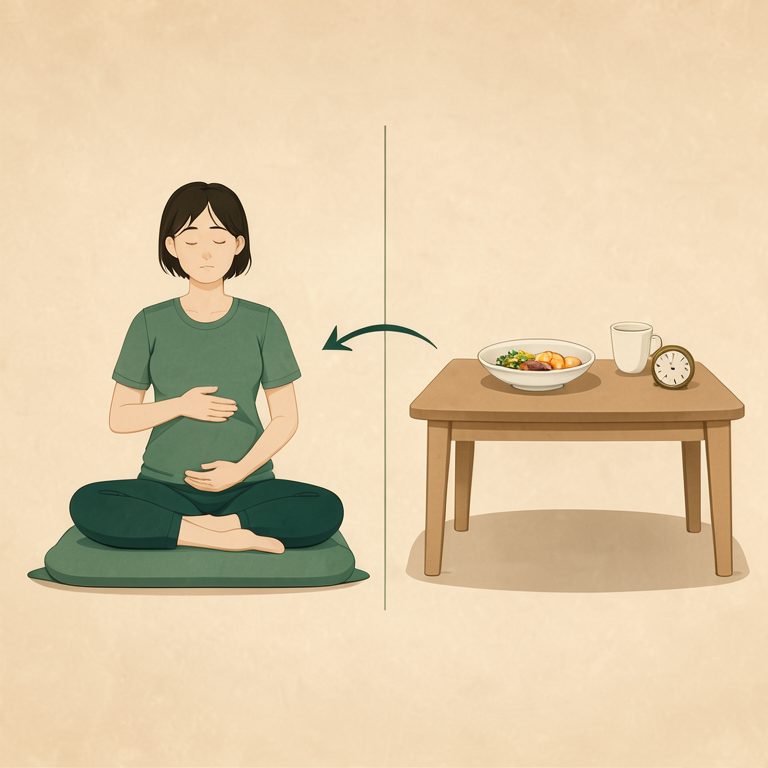
The vagus nerve is the great communication cable of the parasympathetic – “rest and digest” – side of the autonomic nervous system. Dr. N. Habib’s guide to the vagus nerve describes how its pulmonary branch runs to the lung plexus and innervates the trachea and bronchi of both lungs, carrying sensory fibers that report to the brain on how much the lungs are stretched and on the levels of oxygen and carbon dioxide in the blood[4]. It is a two-way line: in the lungs, vagal activation slows the breathing rhythm and deepens it[4].
That is the physiology behind the oldest instruction in breathwork – slow down. During the rest-and-digest phase, Habib writes, breathing naturally becomes deeper, is carried more by the diaphragm than by the auxiliary muscles of inhalation, and the rhythm slows. And the signal runs both directions: slow, deep breathing activates the vagus nerve and stimulates the relaxation response[4]. A Russian physician-author on autonomic dysfunction, Andrey Kurpatov, describes the same double wiring from the clinic side: the work of the internal organs is served by the autonomic nervous system’s two departments, sympathetic and parasympathetic – when nothing threatens you, the parasympathetic side helps you relax, quiet the heart, and calmly surrender to digestion[7]. Morning breathwork is deliberate practice at tipping that balance.
One anatomical correction the modern manual adds is worth memorizing, because it cleans up most popular descriptions: the diaphragm itself is not wired by the vagus nerve. It is controlled by the phrenic nerve, which leaves the spinal cord in the neck (C3-C5) and travels down alongside the vagus nerve into the chest, all the way to the most important muscle used in breathing[4]. Diaphragmatic breathing is the use of this primary breathing muscle rather than the auxiliary chest muscles – and it is, as Habib points out, exactly how a healthy infant breathes: watch a newborn and you will see the belly do the work[4]. Hof gives the same picture from the inside: on a deep inhale the moving diaphragm massages the intestines – something chest-only breathers never do – and the belly rises because the expanding lungs need the space[2].
A 10-Minute Morning Breathwork Protocol (Step by Step)
Assembled from the source routines, this protocol runs about ten minutes; if you want a shorter classic dose, one source recommends its daily training as seven minutes on an empty stomach[9]. Do it seated upright on the bed’s edge or on a cushion, in a quiet place where you can breathe freely – or, for the breathing-hold steps only, lying down[2].
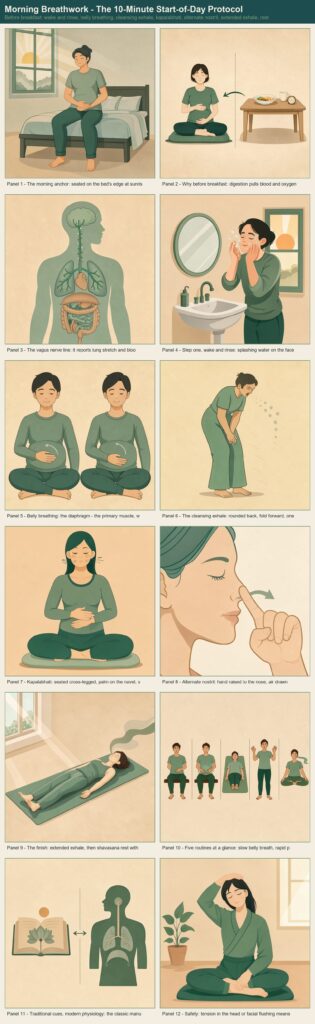
- Wake, rinse, sit. After rising, splash water on the face – the meditation manual’s first clearing step after a night of sleep[1]. The stomach is still empty at this hour, which is exactly what the timing rules ask for[2][3]. Sit upright with the spine tall and take two settling breaths through the nose – Hof’s recommended route for beginners, because it gives more control over body and mind[2].
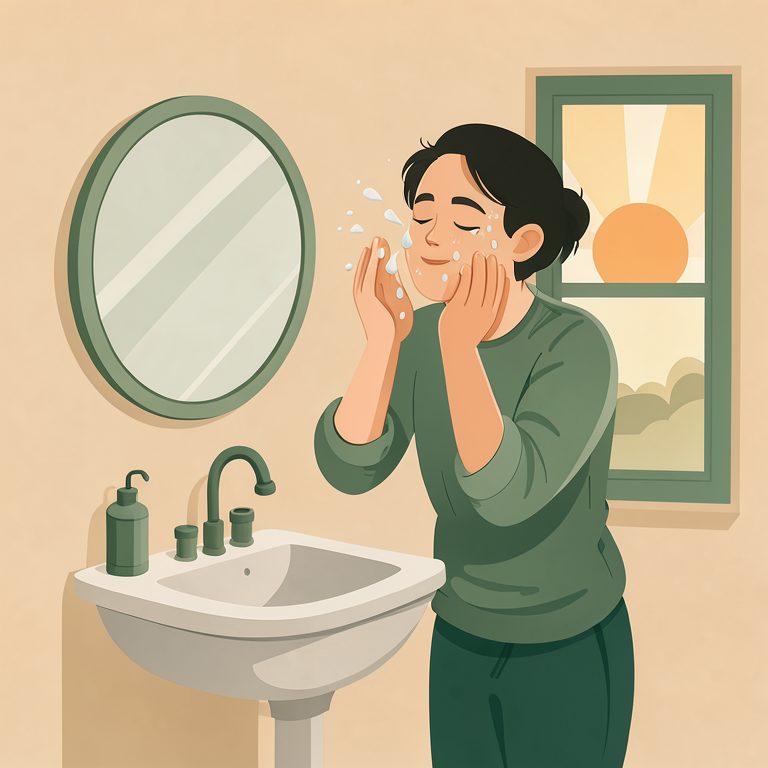
Step one: rise and rinse – splashing water on the face clears the night’s heaviness before you sit down - Three belly breaths, hand on the abdomen. Place one palm on the belly and let it rise on each inhale and fall on each exhale – deliberately using the diaphragm, the primary breathing muscle, the way infants do[4]. The belly rises because the expanding lungs need the space, and the moving diaphragm massages the intestines on the way[2].
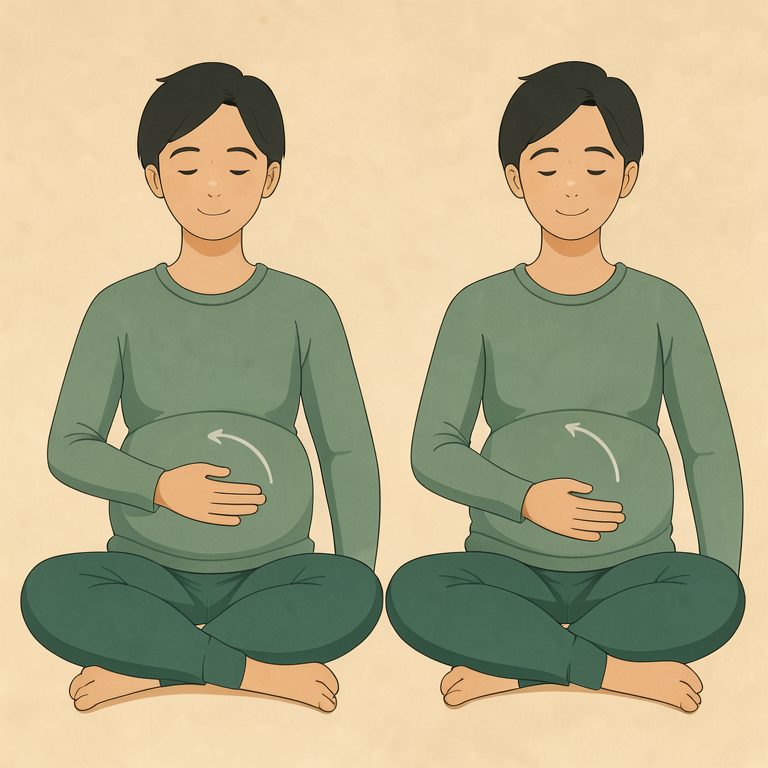
Belly breathing: the diaphragm – the primary breathing muscle, wired from the neck – makes the belly rise on the inhale and fall on the exhale - Cleansing exhale. On the last belly breath, hold the air briefly in the chest, then bend forward with a rounded back and push the remaining air out in one firm, audible exhale through the mouth. A Russian health manual prescribes exactly this “cleansing exhale” – completed by a light squat, a fold of the torso and a rounding of the back to squeeze the air fully from the lungs – and notes the loud exhale itself discharges emotional tension; the same manual’s rule of thumb is to start the day with breathing and build from five cycles, adding three to five cycles per week up to a ceiling of sixty a day[6].
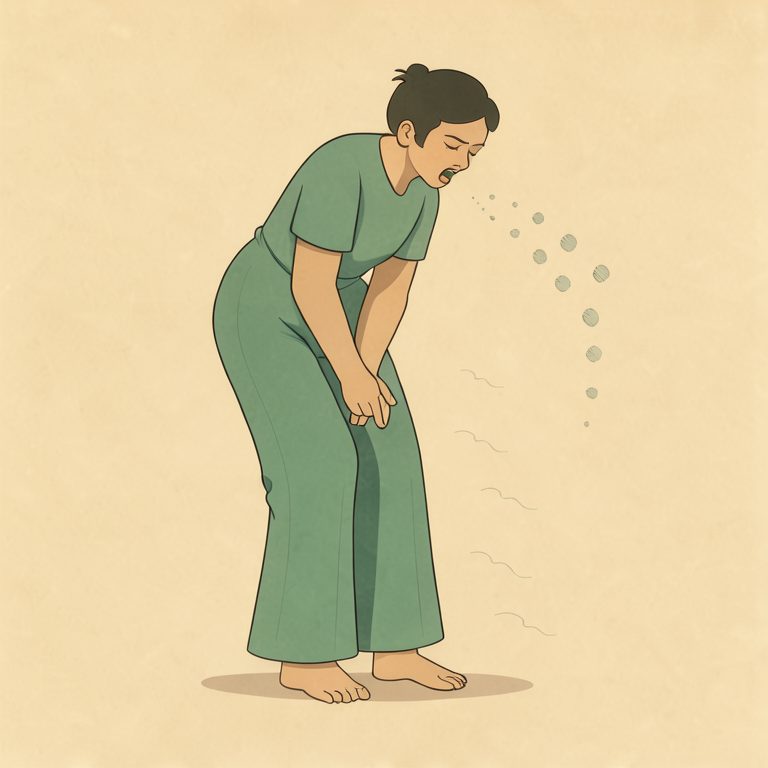
The cleansing exhale: rounded back, fold forward, one firm audible exhale to empty the lungs - Kapalabhati, the skull-shining breath. Take two deep breaths through the nose, then switch to quick pumping: belly out as air comes in, sharp pull of the belly inward on each quick exhale, attention on the exhale only – the inhale happens by itself, drawn in by the vacuum[1]. One round is thirty to forty pumps, finished with two deep breaths and a short comfortable hold (the manual allows building up to one minute; never force it)[1]. If tension builds in the head or trunk, or blood rushes to the face, stop – Iyengar lists exactly these as signs you have exceeded your capacity and risk disturbing the nervous system[3].
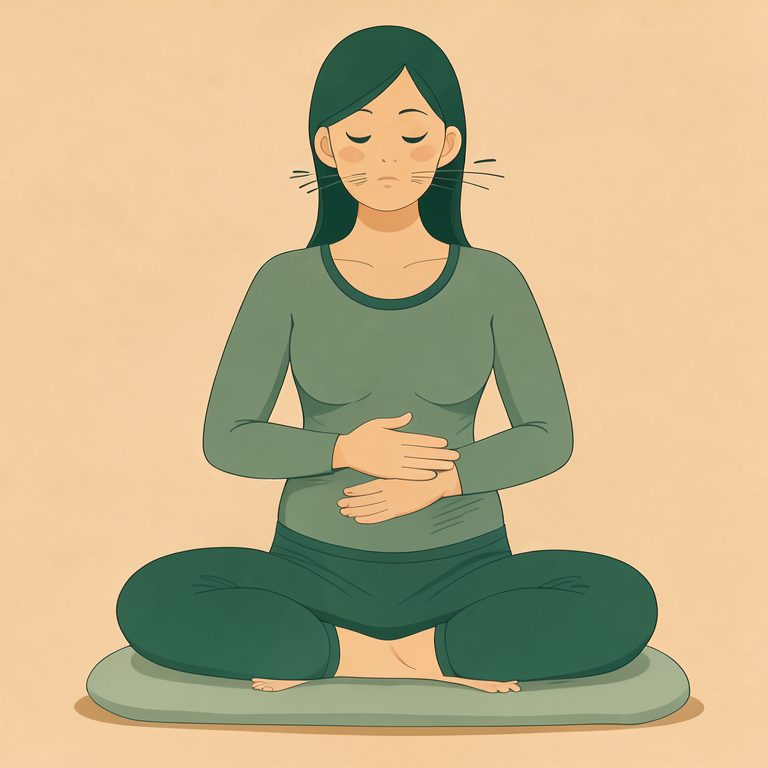
Kapalabhati: palm on the navel, a sharp pull of the belly inward on every quick exhale - Alternate-nostril rounds (anuloma-viloma). Left hand resting on the left knee, right hand to the nose: thumb closes the right nostril, ring finger closes the left, index and middle fingers folded toward the palm[1]. Inhale through the left nostril for four counts, close both nostrils and hold for sixteen, exhale through the right for eight; then mirror – right side in, hold, left side out. That is one round[1]. The manual starts practitioners at two rounds a day and builds to ten[1]. New to holds? Keep the 4-16-8 shape but let the middle number stay comfortable rather than forcing the full sixteen – Iyengar’s warning against practicing pranayama in a hurry applies to everyone[3].
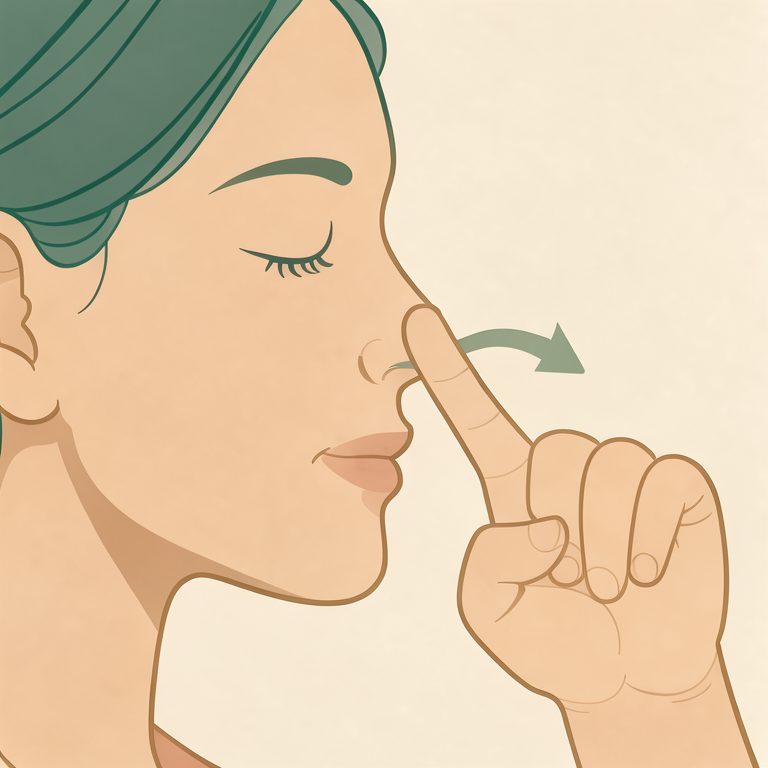
Alternate nostril: hand to the nose, air drawn in one nostril and released through the other – thumb on the right nostril wing, ring finger on the left, index and middle fingers folded down - Extended-exhale finish, then rest. Finish with a minute of long-exhale breathing – in for two to four seconds, out for five to eight, the first of the two basic breathing patterns in a Russian breathing manual[8]. Then lie down or sit quietly: Iyengar’s rule is not to talk or walk straight into activity right after pranayama, but to relax in shavasana for a while before returning to the day[3].
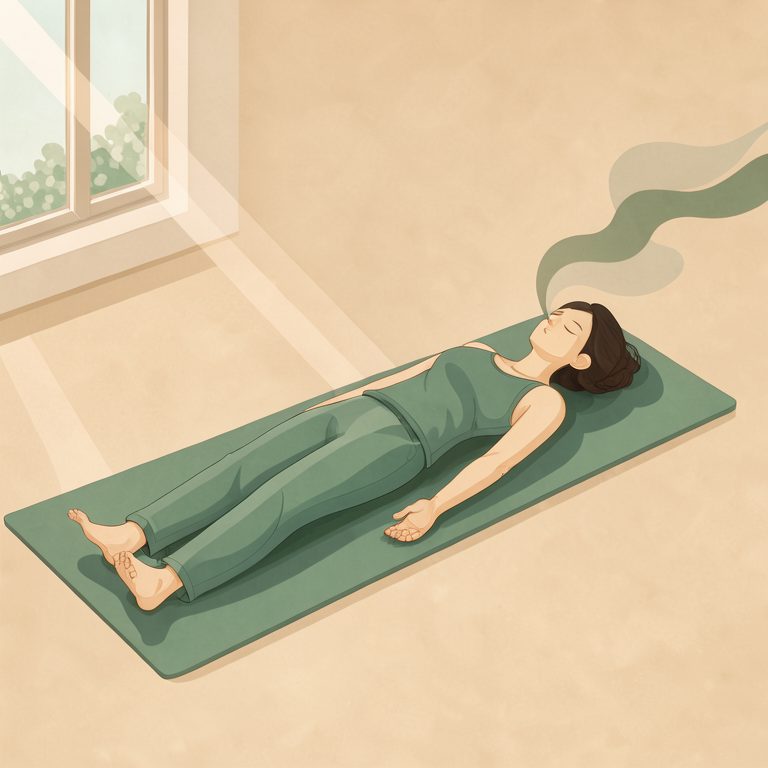
The finish: an extended exhale, then shavasana rest with arms alongside, palms up
Five Morning Routines at a Glance
The sources describe several distinct morning routines with different characters – from downshifting to power-activation. Here they are side by side, with the cautions the original authors attach to each.
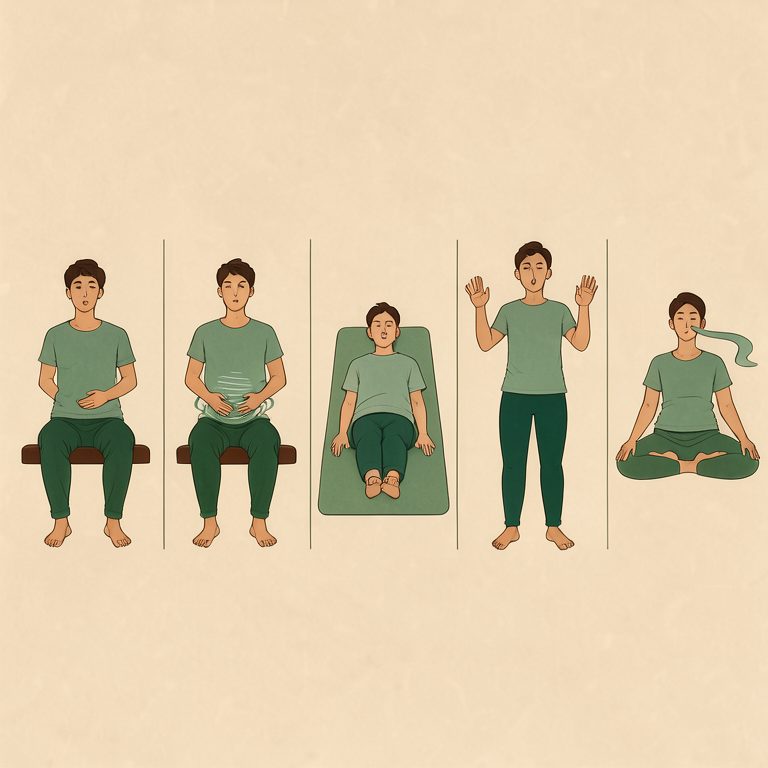
| Routine | Traditional aim (as described) | Shape of the practice | Time | Watch-outs from the sources |
|---|---|---|---|---|
| Anuloma-viloma (alternate nostril)[1] | Clearing the channels, settling consciousness | Inhale 4 counts – hold 16 – exhale 8, alternating nostrils; start at 2 rounds, build to 10 | ~5 min | Shorten the hold if new to retention; never practice in a hurry[3] |
| Kapalabhati[1] | Cleansing the respiratory system, sharpening focus | 30-40 quick belly pumps, then 2 deep breaths and a short hold (up to 1 minute) | ~2 min | Stop at head tension, trunk tension, or facial flushing[3] |
| Power rounds (Wim Hof style)[2] | Igniting an alert, awake state before performance | 30-40 deep breaths, exhale and hold to the urge to breathe, recovery breath held 10-15 s; 3-4 rounds | ~20 min | Lying down or seated, in a safe environment – never in or near water, where fainting is dangerous[2] |
| Strelnikova-style sharp inhales[5] | Quick full-body activation via short noisy nose inhales | 4 sharp inhales with 3-5 s rest, building from 8-16 toward 32 in a row; a full “hundred” is 96 breath-movements | ~10 min | With serious heart conditions (ischemic disease, congenital defects, a past heart attack), take the vigorous drills with real caution[10] |
| Extended-exhale breathing[8] | Gentle downshift toward rest-and-digest | Inhale 2-4 s, exhale 5-8 s | 1-7 min | The mildest pattern – a safe starting point[8]; end at any unpleasant sensation[9] |
Traditional Cues, Modern Physiology
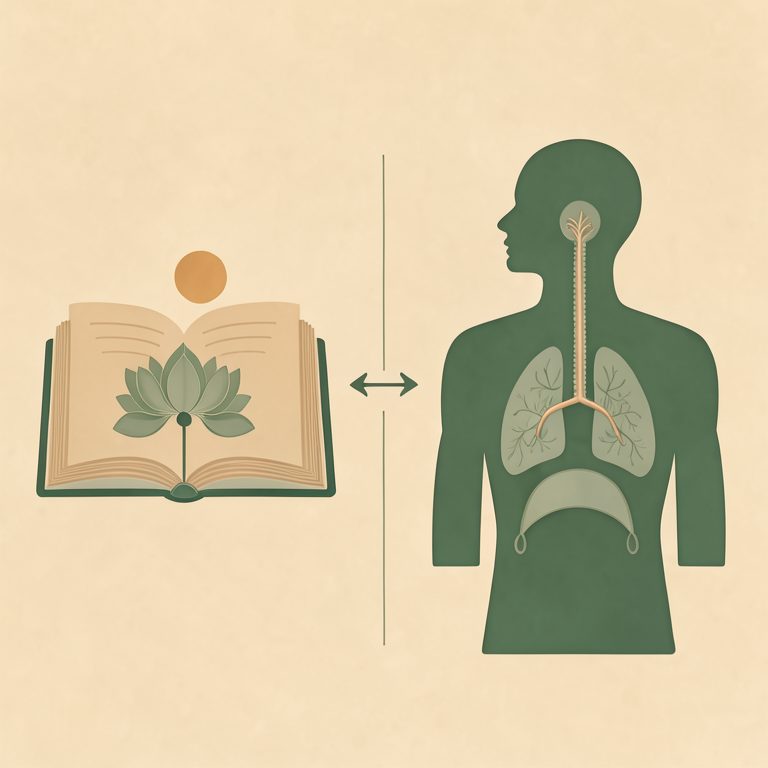
It is worth noticing how cleanly the traditional language maps onto modern physiology. Where the old manuals speak of clearing night-time tamas with water and breath[1], the modern guide describes deepening, slowing breath as the signature of the parasympathetic phase[4], and the Russian clinic manual describes handing the body from sympathetic alertness over to parasympathetic rest[7]. Where pranayama manuals speak of channeling prana – the vital force carried, in their terms, by air, water, food and sunlight[1] – the physiology manual describes a sensory line reporting lung stretch and blood gases to the brain[4]. The instructions land in the same place: sit tall, breathe low and slow, lengthen the exhale, and rest afterwards. The tradition supplies the imagery that makes the practice memorable; the physiology explains why the exhale deserves the extra seconds.
Breath is also the natural first domino of a fuller morning routine. Once the ten minutes above feel automatic, the next layer is simple mobility work for the joints you are about to ask to carry you all day – our Unlock Your Hip Flexors review covers what a structured morning mobility program looks like. If stiff joints are already part of your morning picture, our Joint Genesis review walks through what to look for in joint-support programs. And for more step-by-step guides built the same way – traditional source material, modern framing, safety notes included – browse the free manuals library.
Safety Notes and When to Skip Practice
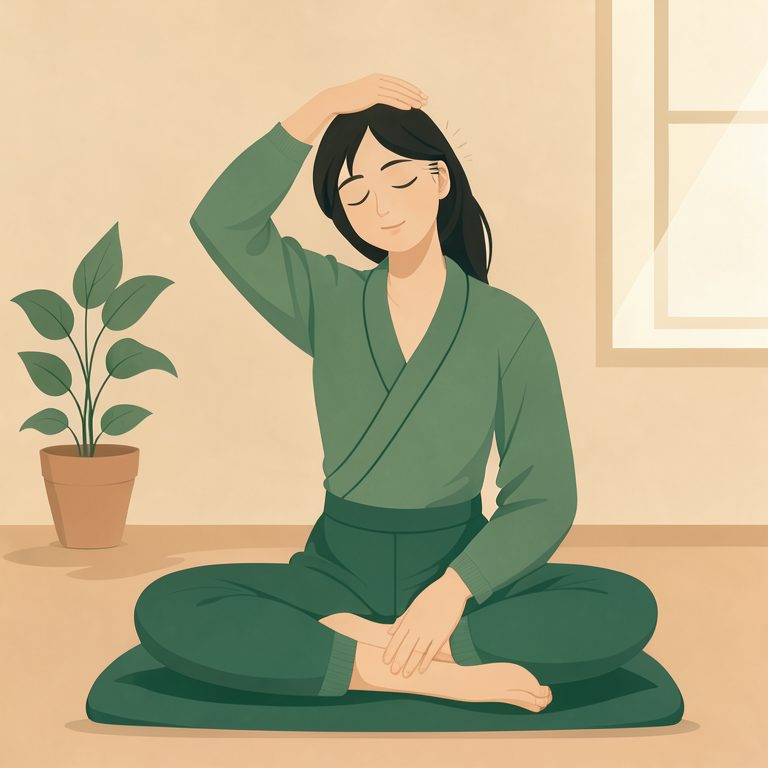
- Location first. Strong breathing with breath holds can cause light-headedness, especially in newcomers. Practice sitting or lying down in a safe environment – never in or near water, and never anywhere a faint would be dangerous[2].
- Never rushed, never forced. Iyengar’s manual forbids practicing pranayama in a hurry, and instructs resting in shavasana afterwards rather than talking or walking straight into activity[3].
- Food timing. Do not practice right after a meal or on a truly empty, hungry stomach; keep roughly four to six hours between food and formal breathing practice (a cup of tea or milk is the manual’s allowed exception), and wait about half an hour after practice before eating[3].
- Warning signs. Persistent tension in the head or trunk, or blood rushing to the face, mean you have overreached – stop rather than push through, since forced practice can disturb the nervous system[3]. At any unpleasant sensation during energetic practice, end the session[9].
- Heart and health conditions. The Strelnikova school’s instructor-authored course material attaches explicit restrictions to its vigorous drills for people with serious heart disease – ischemic disease, congenital defects, a past heart attack[10]; anyone managing cardiovascular or respiratory conditions should clear breath-hold and rapid-breathing practice with a qualified professional first. This article is an educational overview of published practice manuals, not individual health guidance.
- Keep it regular and modest. One source’s rule for its daily training is seven minutes, on an empty stomach, with no breaks in the sequence[9]; the Russian morning-breath rule builds gradually from five cycles to a ceiling of sixty per day[6]. Consistency beats duration.
Frequently Asked Questions
How long should a morning breathwork session be?
Shorter than most people assume. One manual recommends its daily training as seven minutes, on an empty stomach, with no breaks[9]; the meditation manual starts alternate-nostril practice at just two rounds a day[1]; and the full Wim Hof breathing protocol – three to four rounds of thirty to forty breaths with retention – takes about twenty minutes and is at the top end of the range[2]. The protocol on this page runs about ten minutes. The recurring rule in the sources is regularity over length: never practice in a rush[3].
Should I practice before or after breakfast?
Before. Hof recommends the breathing exercises on an empty stomach because a full stomach directs metabolic activity and oxygen toward digestion and blunts the activating effect[2]; Iyengar’s rule is four to six hours between a meal and practice, with about half an hour after practice before eating[3]. Water, splashed on the face before sitting down, is part of the traditional wake-up sequence[1].
Is morning breathwork safe for beginners?
The gentle layers – belly breathing and the extended exhale – are the natural entry point, and beginners are specifically advised to breathe through the nose for better control[2]. The stronger layers (kapalabhati pumping, breath retention, power rounds) carry real cautions in the source manuals themselves: stop at head tension or facial flushing[3], practice holds seated or lying down and never near water[2], and take the vigorous Strelnikova drills with real caution if you manage heart conditions[10]. Bedridden? The Strelnikova manual adapts: its exercise list includes a lying-down version of the opening palms exercise, built on the same short series of four sharp nose inhales[5].
Sources
- [1] Unknown Author — Novaya Kniga po Meditatsii (The New Book of Meditation)
- [2] Wim Hof, Elke Epel — The Wim Hof Method: Activate Your Full Human Potential (2020)
- [3] B. K. S. Iyengar — Pranayama: The Art of Breathing (1995)
- [4] N. Habib — Bluzhdayushchiy Nerv (The Vagus Nerve) (2021)
- [5] M. Shchetinin — Dykhatelnaya Gimnastika A. N. Strelnikovoy (Breathing Gymnastics by A. N. Strelnikova) (2010)
- [6] N. I. Sherstennikov — Zapovednik Zdorovya (The Health Sanctuary)
- [7] A. Kurpatov — Sredstvo ot Vegeto-Sosudistoy Distonii (A Remedy for Vegetative-Vascular Dystonia)
- [8] V. Dombrovsky-Shalagin — Dykhanie dlya Zhizni (Breathing for Life) (2010)
- [9] N. G. Vasiltsov — Lechenie Bioenergiey (Bioenergy Healing) (1992)
- [10] M. N. Shchetinin — Polny Kurs Dykhatelnoy Gimnastiki Strelnikovoy (The Complete Course of Strelnikova Breathing Gymnastics) (2019)
How we researched this
This guide is drawn from our local research library of 1,137 traditional wellness books – no internet sources were used. Every factual claim above was checked against the cited book passages during editing.
