
Educational content only — not medical advice. See our full Medical Disclaimer and Affiliate Disclosure below.
Key Takeaways
- Dinacharya — the classical Ayurvedic daily routine — works through regularity: the same wake time, the same meal times, the same bedtime, day after day.[2]
- The morning core is small and concrete: scrape the tongue, pull oil, massage warm oil into the skin, then breathe before breakfast — about 15 minutes before the workday starts.[2][6]
- The 24-hour clock sets the anchors: the largest meal between 10:00 a.m. and 2:00 p.m., dinner around 6:00 p.m., and bedtime at 10:00 p.m.[2][4]
- Build it gradually — the source texts themselves advise adding new practices to the routine step by step, not all at once.[2]
- Safety first: the classical text carves out its own exceptions — with fever, cough, or heart complaints, pause even the routine morning dental care until you recover.[1]
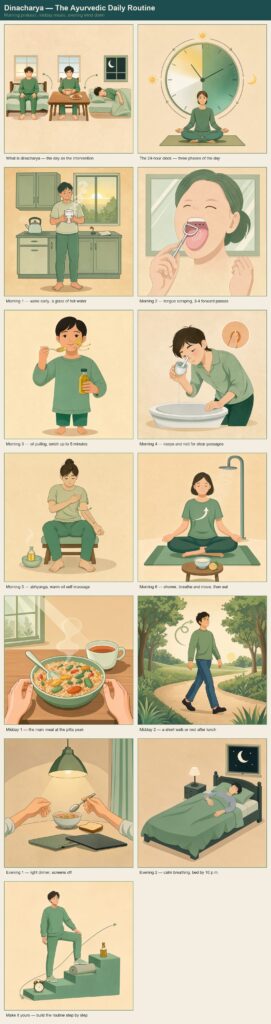
Dinacharya — the Ayurvedic daily routine — treats the day itself as the intervention. The classical Ashtanga Hridaya Samhita devotes its second chapter — the Dinacharya Adhyaya, “the chapter on the daily regimen” — to exactly this: when to rise, how to cleanse the senses, when to eat, and when to sleep.[1] The full daily arc of meals and sleep is laid out across the Ayurvedic lifestyle literature cited below. What follows is that routine translated into a schedule that survives commutes, screens, and late meetings — with the traditional reasoning kept visible, so you know what you are practicing and why.
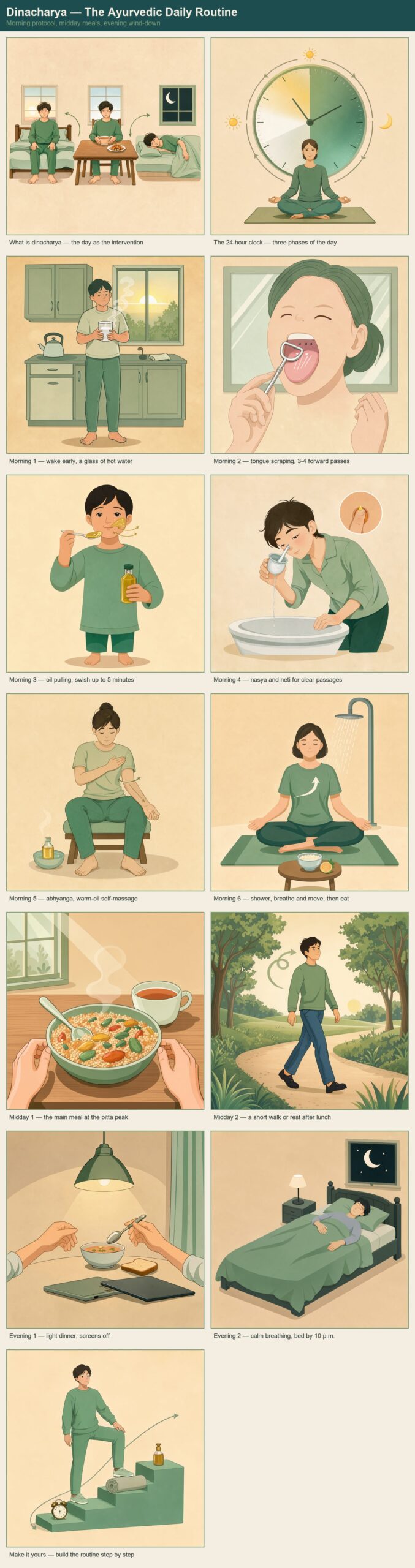
What Is Dinacharya? Traditional Rationale vs. Modern Life
Dinacharya literally means “daily routine.” In the traditional framework its value is not any single remedy but the regimen itself: as Vasant Lad puts it in his chapter on lifestyle and the daily routine, the regimen plays a very important role in health, and the best plan is a daily routine that governs ordinary actions — wake-up time, cleansing, meditation.[3] A modern Ayurvedic nutrition text states it even more directly: following the regimen — dinacharya — is in itself regarded as a strong health-supporting practice.[8]
The traditional mechanism is agni, the digestive and metabolic fire, which is said to “know” when to become active when meals come at the same times each day.[2] The modern obstacle is well known to every reader with a commute: artificial light, late screens, and irregular meals. Deepak Chopra describes bustling city activity as an artifact of the modern lifestyle that puts us in direct collision with nature’s rhythms.[4] The practical fix is not a retreat schedule but three anchor points — a fixed wake time, meals in the same windows, and a hard bedtime — “an ideal framework for a healthy life and a day full of energy” in the words of the Practical Ayurveda manual.[2]
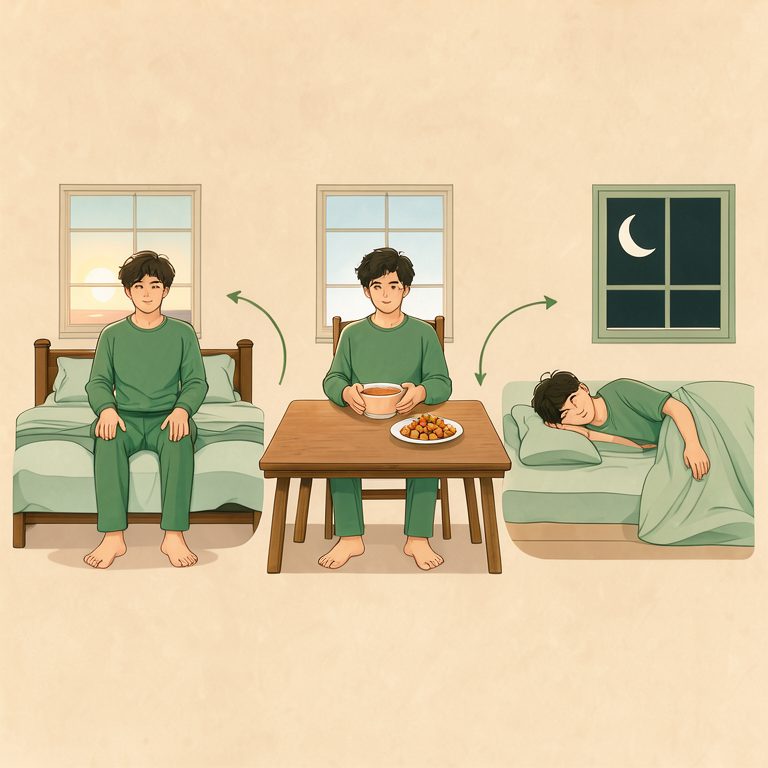
The 24-Hour Dosha Clock: What to Do When
Traditional Ayurveda divides the day into three long phases in which vata, kapha, and pitta take turns dominating body and mind.[3][8] The table pairs each phase (as described in the classical and modern texts we checked) with a realistic modern-day translation.
| Clock time | Traditional phase | What the tradition recommends | Modern-day fit |
|---|---|---|---|
| 4:00–6:00 a.m. | Brahma muhurta, vata rising | Rise before 6 a.m.; the pre-dawn window is considered the best time for meditation and yoga.[2] | One quiet, screen-free hour before the household wakes |
| 6:00–10:00 a.m. | kapha | Cleansing routines, warm-oil self-massage, exercise; breakfast light or skipped entirely for kapha constitutions.[2] | The realistic slot for self-massage and a shower before work |
| 10:00 a.m.–2:00 p.m. | pitta (agni strongest) | The largest meal of the day, properly digested by the daytime pitta peak.[2] | Lunch as the main meal — before 2 p.m., not at 4 p.m. |
| 2:00–6:00 p.m. | vata | Active, focused work; movement, study, and exercise.[3] | Workouts and deep-work blocks land naturally here |
| 6:00–10:00 p.m. | kapha | Light dinner around 6 p.m.; calming activities; avoid bright screens.[2] | Dim the lights, prep tomorrow, wind down |
| 10:00 p.m.–2:00 a.m. | pitta | Be asleep — this is when the day’s food finishes digesting.[4] | Anything past 10 p.m. comes out of deep sleep |
A Morning Protocol You Can Keep on Workdays
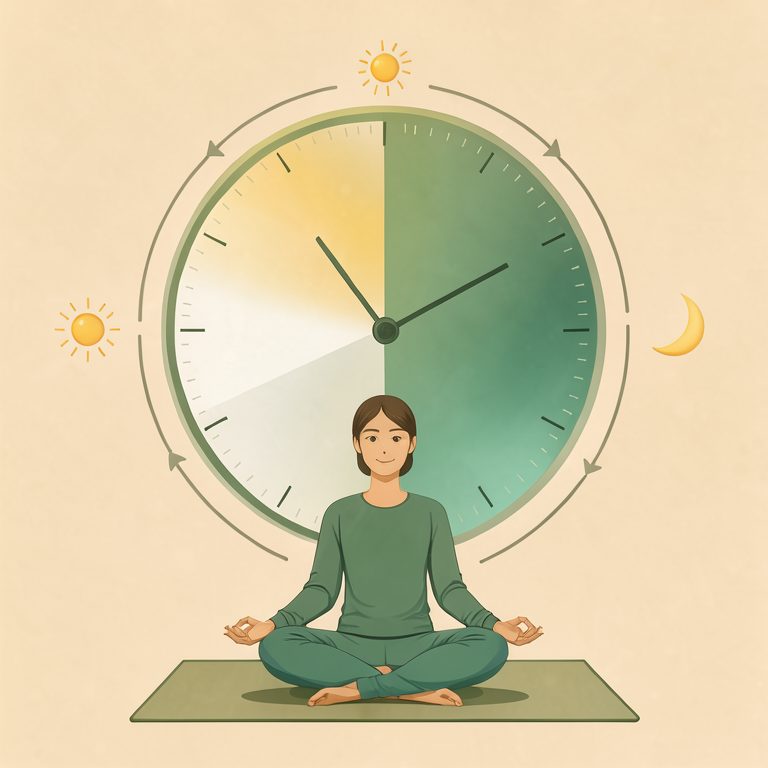
The classical chapter opens with rising in brahma muhurta — given in its own footnote as roughly 3:00–6:00 a.m., depending on sunrise[1] (the Practical Ayurveda manual renders the window as 4:00–6:00 a.m.[2]) — followed by elimination, bathing, and cleaning of the teeth, eyes, nose, and throat;[1] Vasant Lad’s routine chapter adds inspecting and clearing the tongue to that list.[3] Here is the same sequence in modern dress; the whole cleansing half takes about 15 minutes.
- Wake before 6:00 a.m., at the same time every day. The texts place the ideal rising at the end of the early-morning vata phase, around sunrise;[2] one sleep manual we checked recommends shifting your schedule gradually — 15 to 30 minutes earlier per week — and calls a consistent wake time the single most effective practice for steadying vata.[5]
- Clear the bowels, then drink a glass of hot water. Morning elimination is treated as the first hygiene step; the hot-water glass is traditionally used to “ignite agni,” lubricate the body, and support bowel movements.[2]
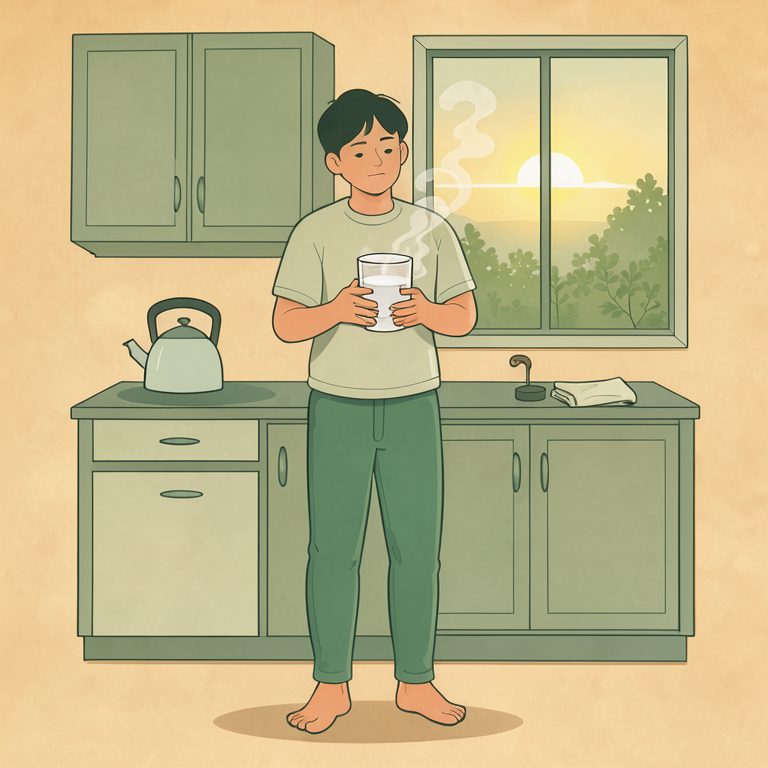
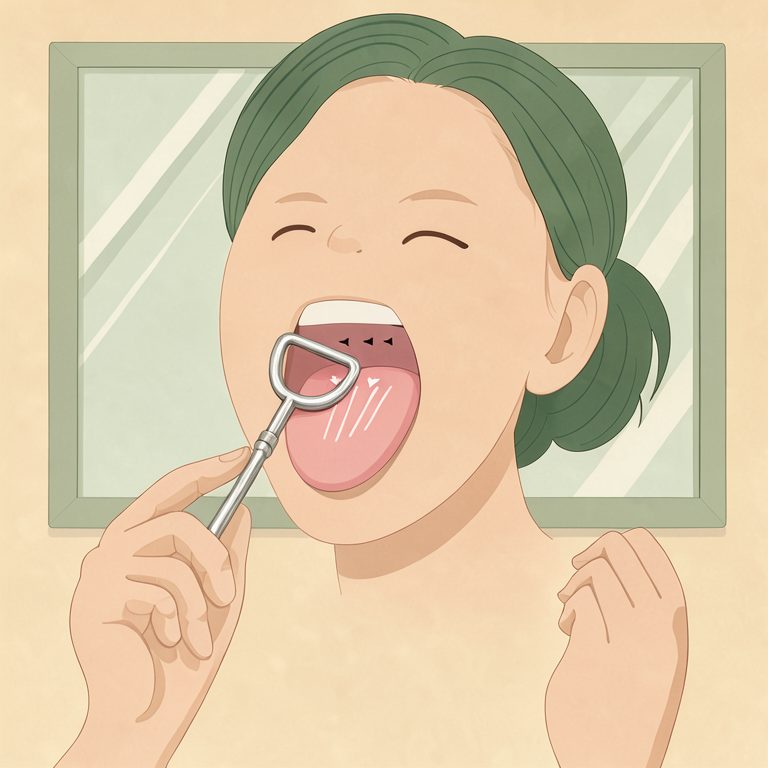
Morning 1 — wake early, a glass of hot water - Scrape the tongue. Use a silver, copper, or steel tongue cleaner (not plastic): start at the back and gently work forward, three to four passes — or 10–12 strokes root to tip, as the morning-hygiene chapter of one Ayurveda textbook describes.[2][6] This removes the overnight coating and freshens the breath; traditionally it is also viewed as reflex stimulation of the digestive tract.[6]
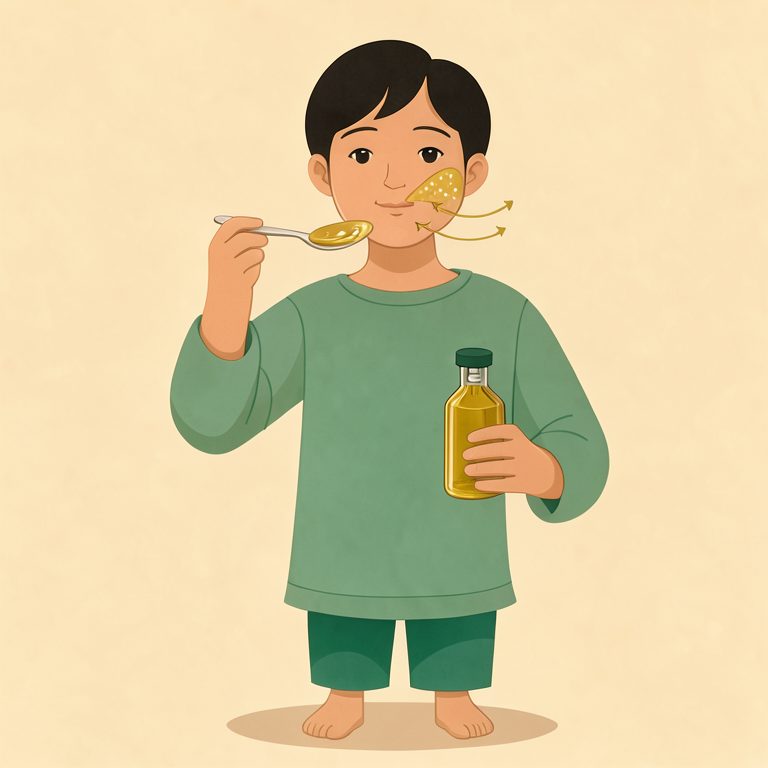
Morning 2 — tongue scraping, 3–4 forward passes - Swish oil (gandusha-style pulling). Place 1–2 teaspoons (5–10 ml) of plain sesame oil — or warm water — in the mouth, move it back and forth for up to 5 minutes, then spit it out. The practice is recommended for gum strength and oral cleanliness.[6]
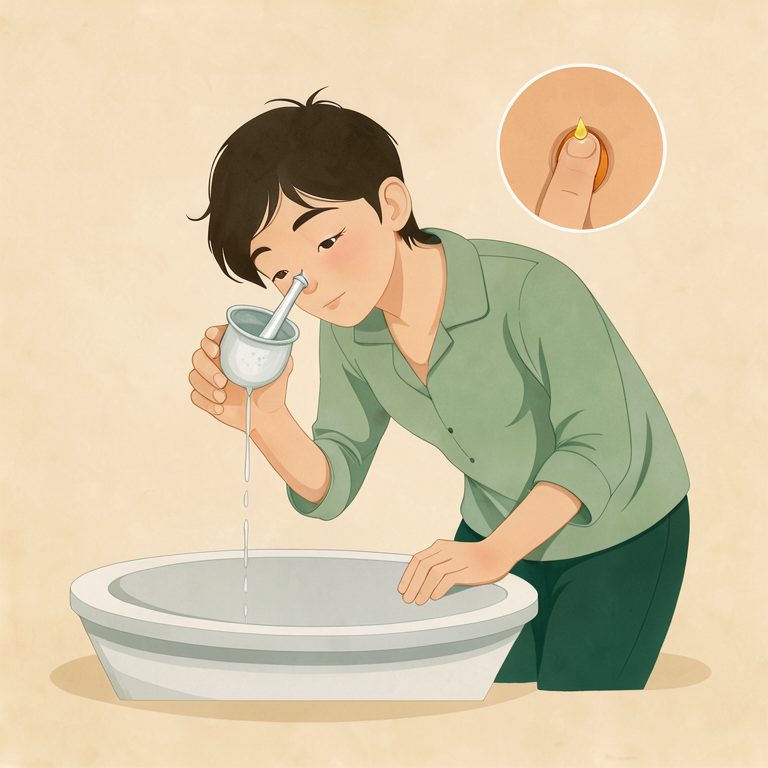
Morning 3 — oil pulling, swish up to 5 minutes - Optional: nasya and neti. Dab a drop of plain sesame oil on a finger and massage the inside of each nostril (nasya), traditionally used to keep the nasal passages clear. For a neti pot, mix 1/2 teaspoon (about 3 g) salt with 1 cup (240 ml) warm water, pour through one nostril, then blow the remainder out gently.[2]
Morning 4 — nasya and neti for clear passages - Abhyanga — warm-oil self-massage, 5–10 minutes, before the shower. Massage the whole body with the open palm: circular strokes over joints, long strokes along the limbs, light pressure over the abdomen, and extra time on the scalp.[2] Traditional guidance matches oil to constitution: sesame for vata and kapha, cooling coconut for pitta.[2] Even 2–3 minutes counts on busy mornings — and the tradition treats the practice as ordinary upkeep rather than a luxury: one classic Ayurvedic massage manual describes weekly oil massage as a family custom in Indian village life.[7]
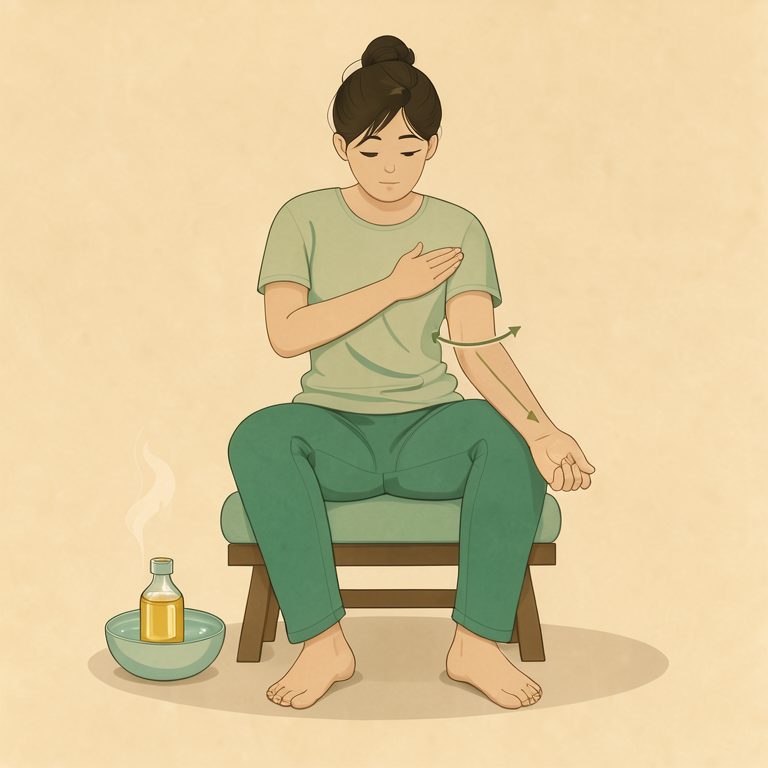
Morning 5 — abhyanga, warm-oil self-massage - Shower or bathe — and avoid very hot water on the head, to protect hair and eyes.[2]
- Breathe, move, then eat. Thirty minutes of yoga and meditation — including breathing and relaxation exercises — is the standing recommendation;[2] breakfast comes after practice.[3] If you can keep only one practice, the texts we checked single out meditation.[2]
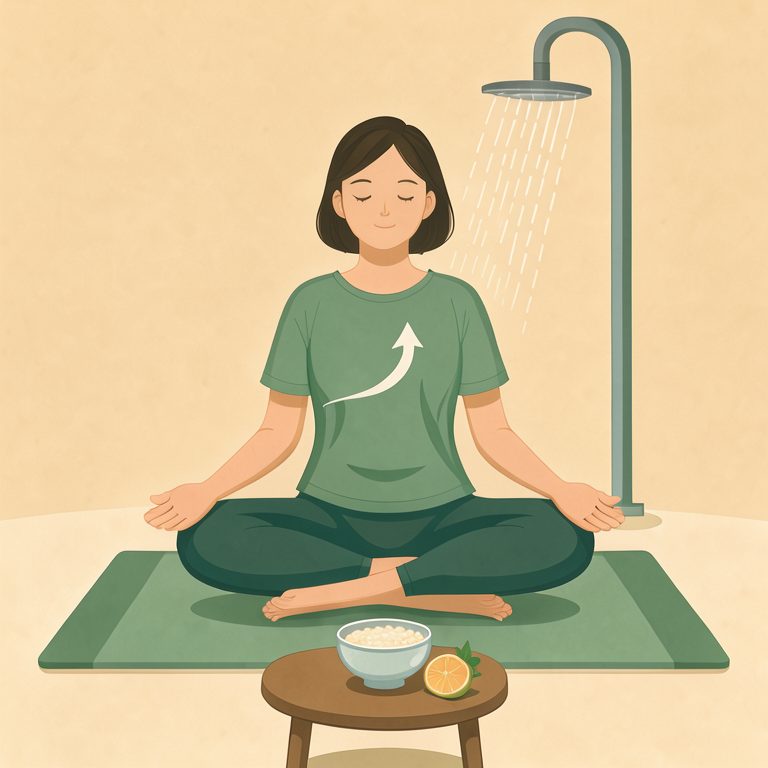
Morning 6 — shower, breathe and move, then eat
Midday: Meals and Movement Around Your Work
Timing matters more than perfection. Agni is described as most active from 10 a.m. to 2 p.m., so the largest meal belongs there;[2] one Ayurvedic nutrition text gives an even tighter window — the main meal around 11:00 a.m.–2:00 p.m.[8] Breakfast, if you eat it, is optional and constitution-dependent: the nutrition text’s timetable places it around 8:30–9:30 a.m. — most needed for vata types, least for kapha[8] — while Vasant Lad’s routine chapter puts it early, around 7:00–8:00 a.m. for pitta and vata constitutions and not at all for kapha at that hour.[3] After the main meal the nutrition text recommends a short rest or an easy walk (about 2:00–3:00 p.m. in its timetable), then a second wave of focused work or exercise from roughly 3:00 to 7:00 p.m. The evening meal — 5:00–7:00 p.m. in that timetable — should be lighter than lunch.[8]
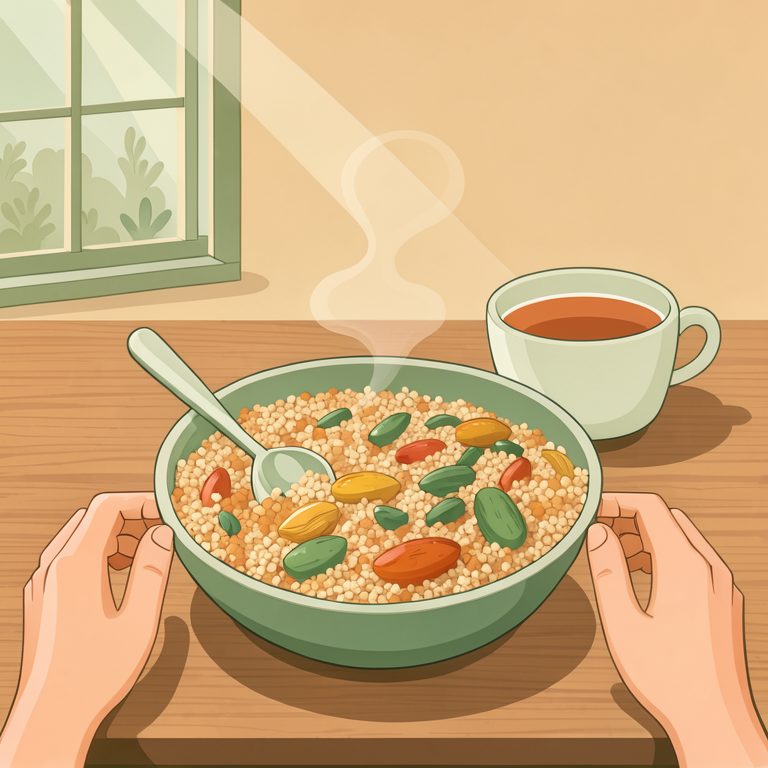
For movement, the traditional texts are pragmatic rather than athletic: the Practical Ayurveda maintenance plan is one hour of yoga and meditation a day split into two half-hour sessions, with weekly self-massage on top.[2] A gentle morning set is a natural companion to the cleansing routine — readers following this series often pair it with our Eight Pieces of Brocade guide or the short Zusanli (ST36) acupressure routine.

Evening Wind-Down and Sleep
The evening has one job: hand the body to sleep on time. Dinner around 6:00 p.m. leaves ample digestion before bed — as one teacher memorably puts it, dine at six and the stomach is empty by nine, and sleep is deep.[3] After 6 p.m. the day’s kapha phase is meant for calm: avoid bright screens and use the time for meditation or yogic breathing.[2] The ideal bedtime is 10:00 p.m., the junction of the kapha and pitta phases;[4] sleep beginning after 11:00 p.m. tends to be shallower and more restless.[4]

Traditional sleep targets by constitution: about 8–9 hours for vata, 7–8 hours for pitta (screens off an hour before bed), and roughly 7 hours for kapha, with a before-6:00 a.m. rise.[4] Vata types do well with a hot bath or evening oil massage — the texts note that for vata constitutions the self-massage can move to the evening[6] — and the self-massage tradition considers dawn and dusk especially effective times for it.[6]
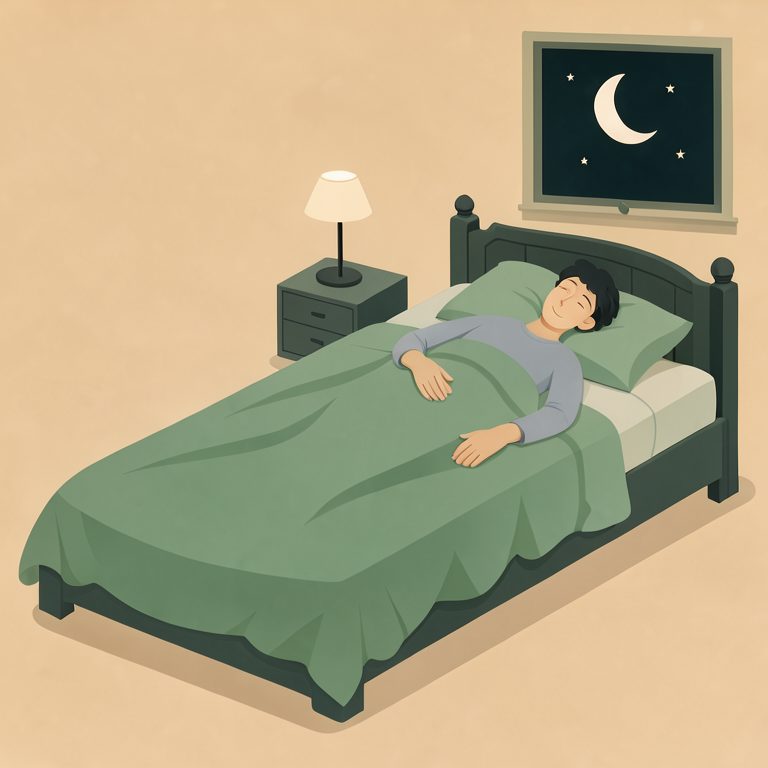
Make It Yours: Start Small, Adjust by Constitution
None of this is meant to arrive at once. “Practices that are new to you are best built into your routine gradually,” advises Practical Ayurveda,[2] whose own step-by-step plan starts with a single commitment — getting up around 5:30 a.m. — and only then layers on 30 minutes of morning yoga and meditation, at least one self-massage a week, fixed meal times, and seasonal adjustments to the diet.[2] The constitution notes are equally simple: kapha-dominant readers benefit most from rising before 6:00 a.m.;[2] vata-dominant readers lean on warmth, oil, and evening massage;[6] pitta-dominant readers favor cooling coconut oil and screens-off evenings.[2]

If stiffness or desk hours are what keep breaking your routine, our related reading is deliberately practical: the movement-based Unlock Your Hip Flexors review and the joint-nutrition Joint Genesis review each set out what a program or a formula can and cannot do — useful context before you decide where to spend effort, not medical advice about your joints.
Frequently Asked Questions
What is dinacharya in Ayurveda?
Dinacharya is Ayurveda’s daily routine — the classical schedule for rising, cleansing, eating, and sleeping. The Ashtanga Hridaya Samhita devotes its second chapter, the Dinacharya Adhyaya, to exactly this regimen,[1] and its value lies in regularity: the same wake time, the same meal times, and the same bedtime, day after day.[2]
What does an Ayurvedic morning routine include?
The morning core takes about 15 minutes: wake before 6:00 a.m., clear the bowels and drink a glass of hot water, scrape the tongue, swish sesame oil in the mouth, optionally use nasya and neti, then massage warm oil into the skin before the shower.[2][6] Yoga and breakfast come after the cleansing sequence, not before.[2][3]
When should I eat and sleep on the Ayurvedic schedule?
Three anchors: the largest meal between 10:00 a.m. and 2:00 p.m., when agni is strongest; dinner around 6:00 p.m.; and bedtime at 10:00 p.m.[2][4] Keeping those anchors at the same clock times is the tradition’s “ideal framework for a healthy life and a day full of energy.”[2]
Safety and Disclaimer
- This article describes traditional wellness routines for general information only. It is not intended to diagnose, treat, cure, or prevent any disease and does not replace professional medical care.
- Build new habits gradually; the source texts themselves recommend easing practices into the routine one at a time rather than starting everything at once.[2]
- The classical texts carve out their own exceptions: the Ashtanga Hridaya advises people with acute conditions — including fever, cough, or heart complaints — to skip even the routine chewing-stick dental care.[1] If you are acutely ill, pause the routine and resume when recovered.
- Use only plain, food-grade oils externally, and skip very hot water on the head.[2] If you are pregnant, recovering from surgery, or under treatment for a chronic condition, ask your clinician before starting self-massage or nasal cleansing practices.
Sources
- [1] Vagbhata — Ashtanga Hridaya Samhita
- [2] Dorling Kindersley — Practical Ayurveda (2018)
- [3] Vasant Lad — Ayurveda for Beginners
- [4] Deepak Chopra — Perfect Health
- [5] Deepak Chopra — Restful Sleep
- [6] Morningstar — Ayurveda and Polarity Therapy (2007)
- [7] Harish Johari — Ayurvedic Massage (2008)
- [8] Mikhail Baranov — Yogic Nutrition for the Middle Belt (2014)
How we researched this
This article is based entirely on our local library of 1,137 books, queried through an offline retrieval system — the open internet was not used at any point. Every factual statement above was checked against the source excerpts and carries a numbered citation to the book it was taken from.
