
Educational content only — not medical advice. See our full Medical Disclaimer and Affiliate Disclosure below.
Key Takeaways
- Hegu (LI4) sits in the hollow between the first and second metacarpal (hand) bones, closer to the middle of the second — classical texts agree on this landmark.[1][3]
- Two classical ways to find it: work with the hand straightened and the thumb moved aside, or use the pinch method — the point tops the ridge that forms when thumb and index finger come together.[1][2][3]
- Classical self-massage works the point with light, rhythmic pressure for up to five minutes; beginners should keep early sessions short.[5][6]
- Safety first: one classical reference explicitly contraindicates this point during pregnancy — skip it and ask a qualified professional.[3]
Hegu (LI4) — the “joining valley” point in the web of the hand — is described in classical acupressure literature as an “assistant point” of broad, harmonizing action.[3] This guide covers how traditional sources locate the point on your own hand, a gentle five-minute pressing routine, and the cautions they insist on. Pair it with leg work in our Zusanli (ST36) acupressure guide.
What is Hegu (LI4)?
Hegu — translated as “joining valley” — is the fourth point on the large intestine (LI, also written GI) channel. Classical texts trace that channel from the corner of the index fingernail, between the first and second metacarpal bones and between the tendons of the short and long extensors of the thumb, up the thumb side (radial side) of the forearm, through the elbow and the outer shoulder, to where it meets the other yang channels at the base of the neck; twenty points are listed along it.[3] English-language acupuncture manuals name the point “Hegu L.I.-4” and list it in a classical combination with Fengmen BL-12 and Lieque LU-7 for releasing exterior conditions.[4]
Classical function labels matter when you read older guides: some texts call Hegu a “calming” point, others an “assistant point” of broad, harmonizing action.[5][3] In practical terms, classical self-massage guides reach for it when people want to settle everyday tension — the kind that shows up as a tense head, a tight jaw, or a stiff hand after long days.[1][3]
Traditional view vs modern physiology
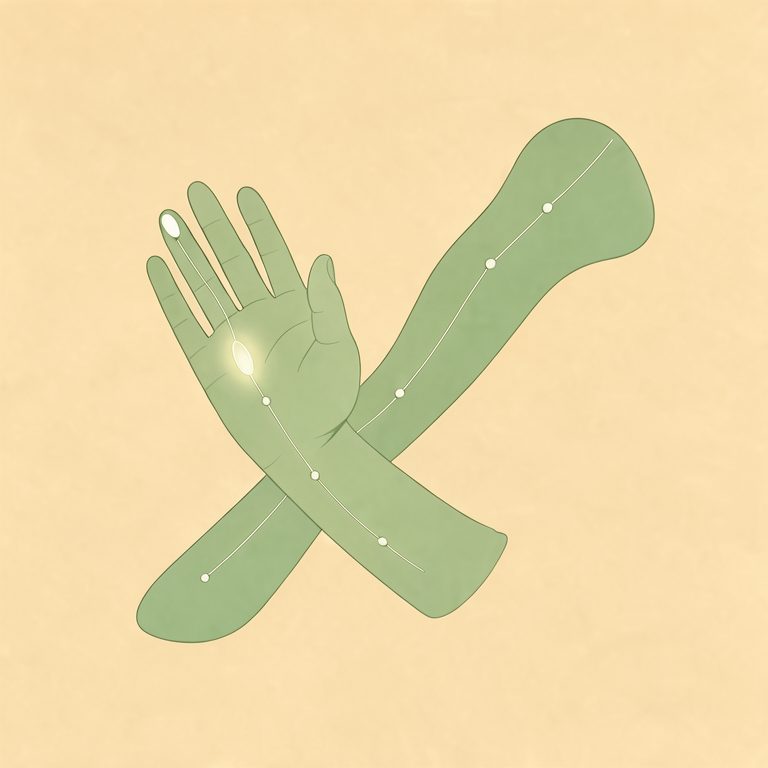
Traditional meridian maps and modern anatomy describe the same landmarks from two angles. The classical channel pathway “passes between the 1st and 2nd metacarpal bones and between the tendons of the short and long extensors of the thumb”[3] — in modern terms, the soft hollow in the hand web where those tendons run. Traditional practice locates points partly by palpation: classical guides note that a responding point feels different under steady pressure — a distinctive “numb” sensation, goosebumps on the skin, warmth, lightness and relaxation, and the palpating finger may detect a rougher texture[2] — and modern self-care can treat the point as an anatomically defined site and use that same pressure response as feedback. The traditional and the modern descriptions point to one spot on your hand.
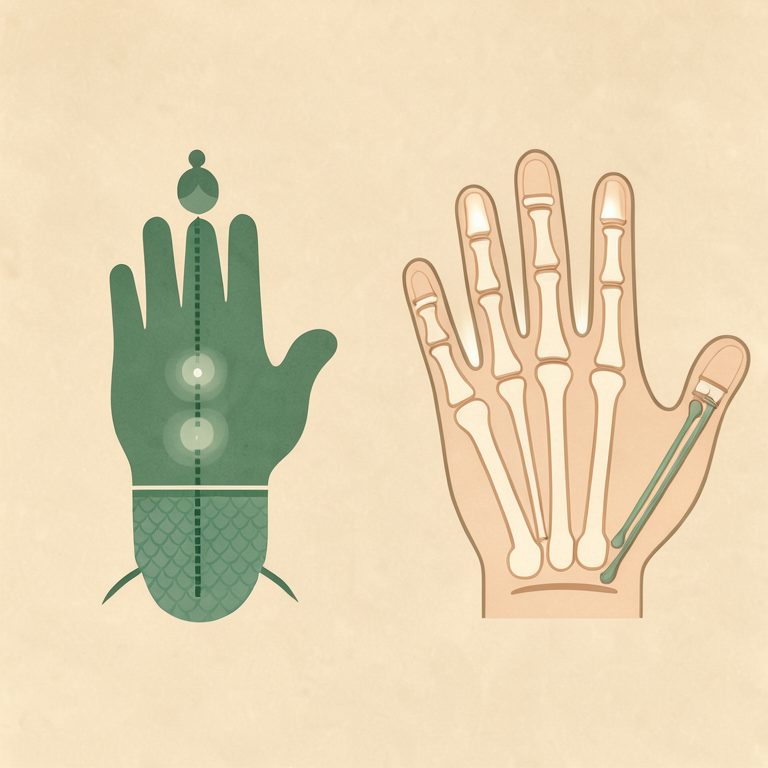
Classical references list Hegu among the points traditionally used for head-area comfort — headaches, dizziness, darkening of vision, colds, nervousness, and sleeplessness from weakness[1] — and their point tables add toothache, jaw tension (trismus), ringing in the ears, nosebleed, sore throat, finger contracture, and outer-forearm discomfort to the same list.[3] These are historical traditional uses, not medical claims; the table below summarizes them as the sources describe them.
| Traditionally described for | How the source frames it | Source |
|---|---|---|
| Headaches, dizziness, darkening of vision | Harmonizing work on Hegu | Medvedev & Medvedeva, 2008[1] |
| Colds, nervousness, sleeplessness from weakness | Harmonizing work on Hegu | Medvedev & Medvedeva, 2008[1] |
| Toothache, jaw tension (trismus), headache | Listed among GI4 indications | Luvsan, 1991[3] |
| Finger contracture, outer-forearm discomfort | Listed among GI4 indications | Luvsan, 1991[3] |
| Ringing in the ears, nosebleed, sore throat | Listed among GI4 indications | Luvsan, 1991[3] |
| Headache (migraine) | Calming point worked between thumb and index finger | Practical Guide to Acupressure Self-Massage[5] |

How to find Hegu on your hand
How to work it: the everyday pressing protocol
Self-acupressure here means fingers only — light, steady manual pressure. Classical clinical descriptions of GI4 include needling and heat techniques performed by trained practitioners[3]; none of that belongs in a home routine. A simple everyday session, built from the classical self-massage instructions:
- Get comfortable. Classical instructions describe light acupressure as best done lying down, in complete quiet.[5]
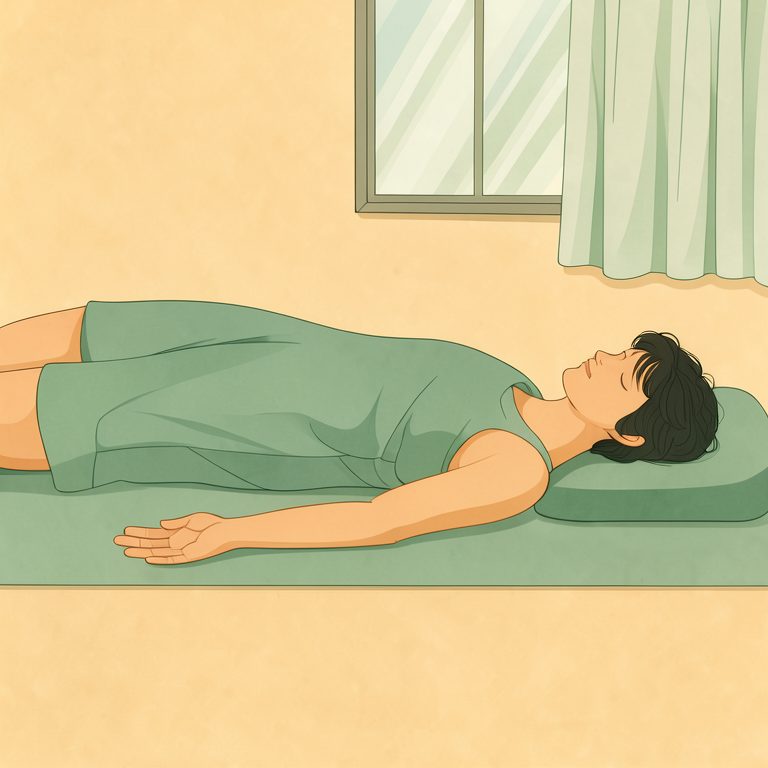
Get comfortable – lie down, quiet room - Locate the point using the four steps above (straightened hand, hollow, pinch method, tenderness check).
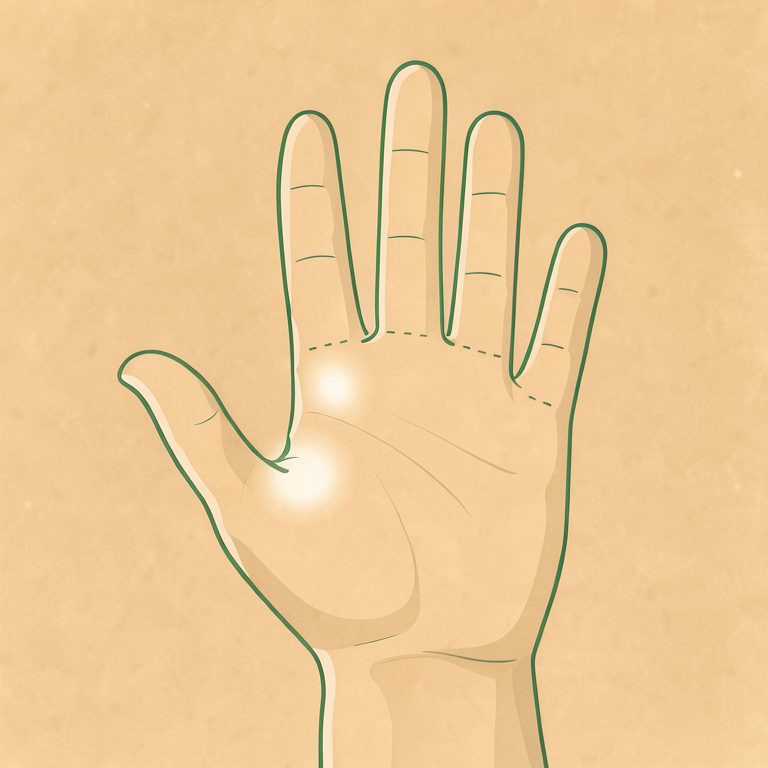
Locate – the web hollow on your hand - Take the web between your thumb and index finger — the massaging hand pinches the point — and apply light, rhythmic pressure with the index finger for up to five minutes.[5]
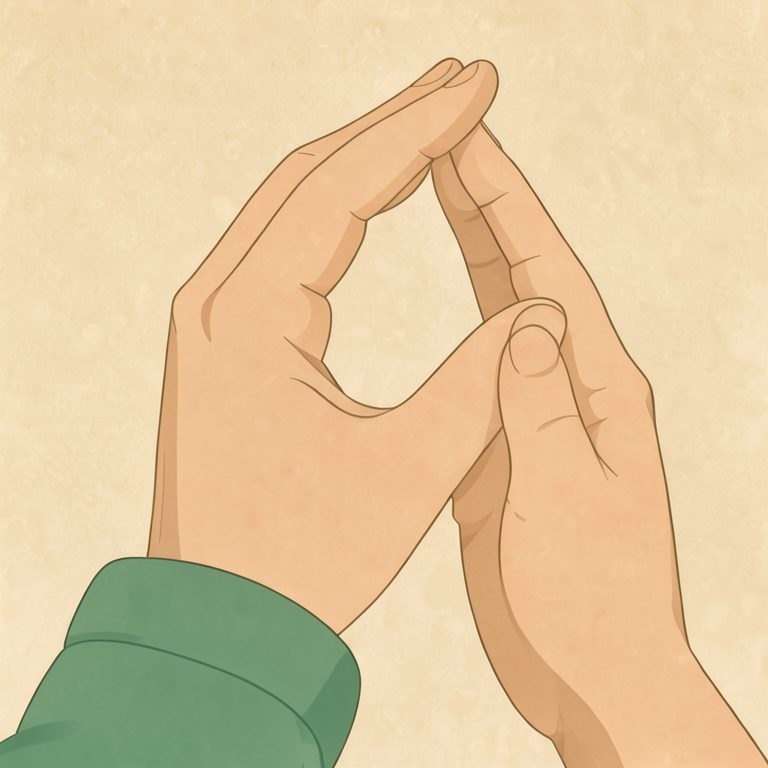
Take the web in a gentle pinch - Keep intensity comfortable. In the classical scheme, calming and harmonizing points get only light, sustained pressure; strong, intensive rhythm is reserved for special points — the guide’s example is a special point for acute toothache worked in an intensive 10-second rhythm.[5] For an everyday-tension session, stay light.
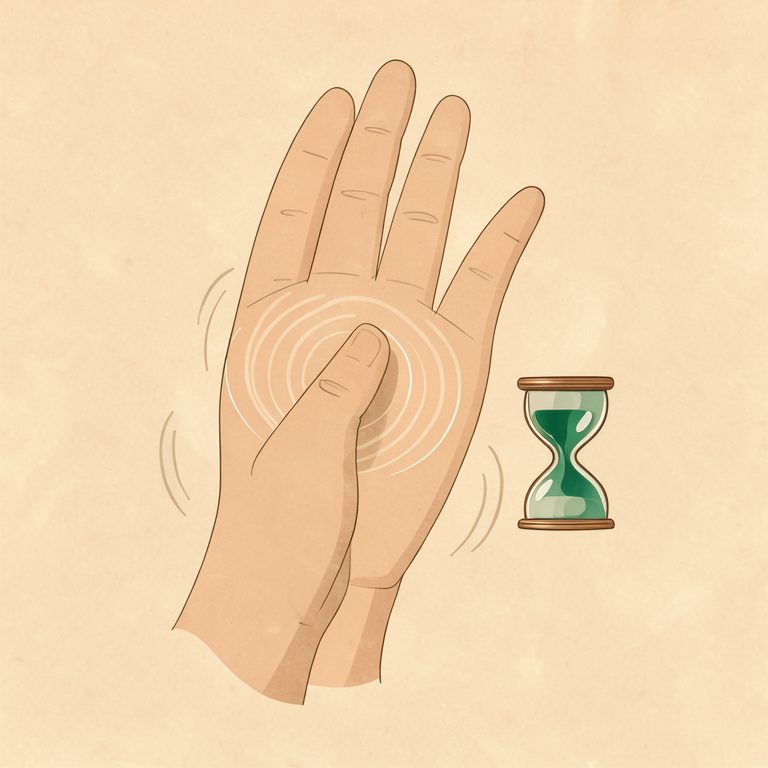
Light, rhythmic pressure – up to five minutes - Start small. Chinese self-massage guidance tells beginners to limit how many points they work and how long they work them at first, then expand both with experience.[6]
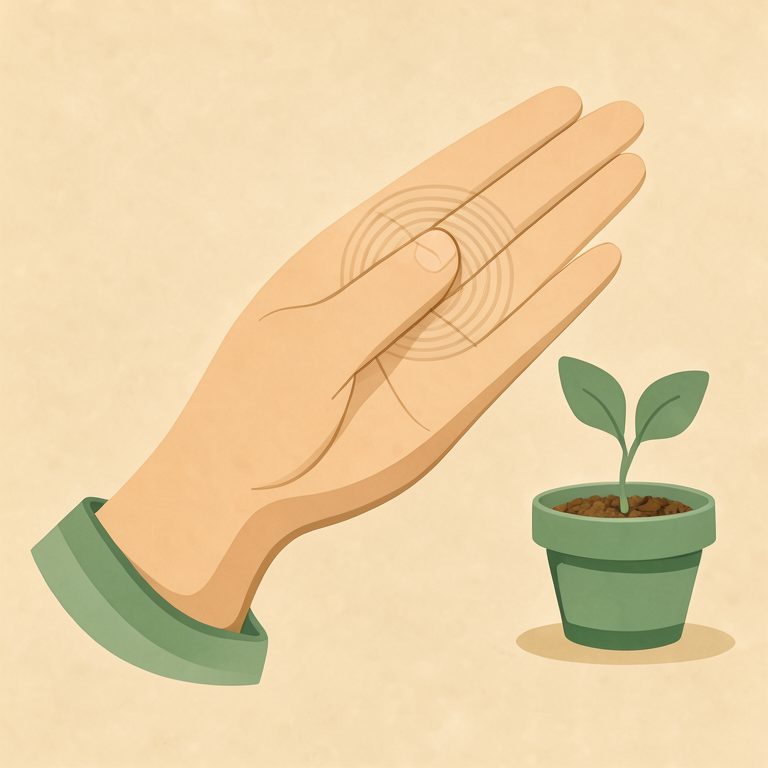
Start small, expand with experience
Pair the hand routine with gentle whole-body movement — the Baduanjin (Eight Pieces of Brocade) manual is our step-by-step companion practice.
Safety: when to skip this point
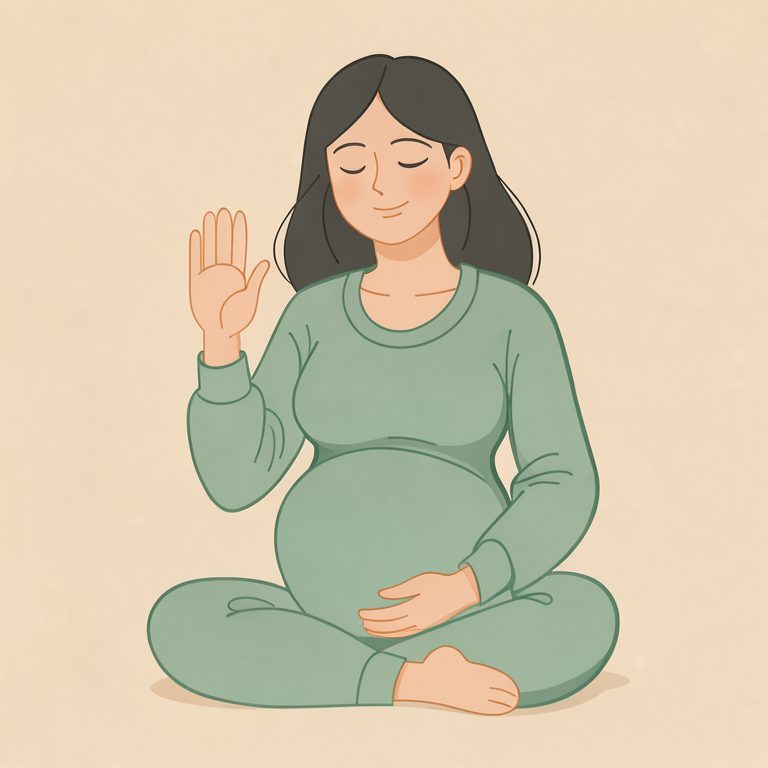
Pregnancy — the classical red line. One classical reference is explicit: “stimulating this point is contraindicated in pregnant women!”[3] Obstetric reflexotherapy literature is more nuanced — it notes that the lack of evidence long restrained reflexotherapy in pregnant women because of possible miscarriage risk, while recent special manuals still keep contraindications for the second half of pregnancy[7] — but for self-care the conservative rule wins: if you are pregnant or trying to conceive, skip Hegu and ask a qualified professional.
Fingers only. The classical description of the point includes needle depth and moxibustion timing[3] — practitioner techniques that are not part of a home routine. Work the point with gentle manual pressure only.
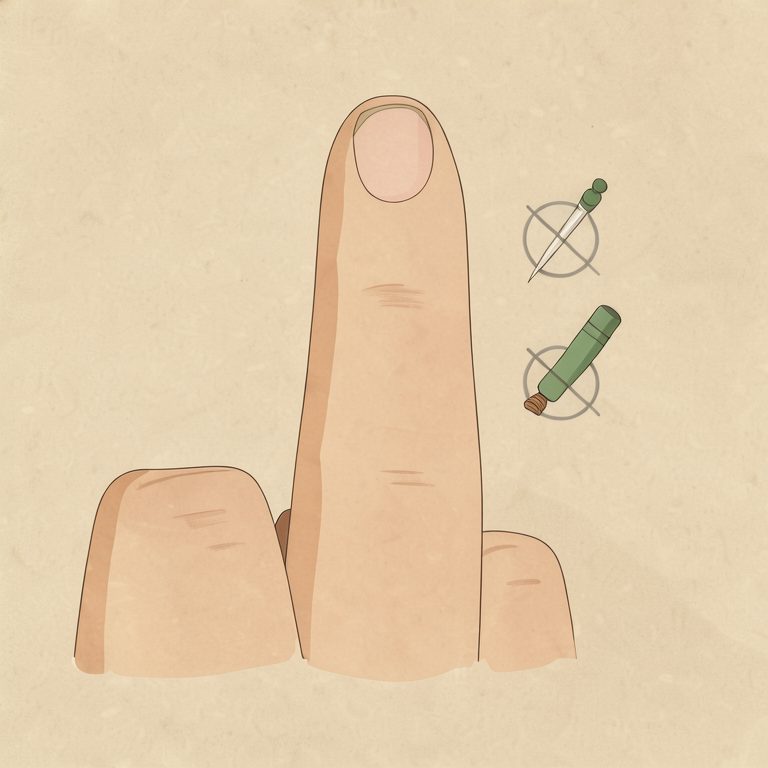
Keep sessions modest. Limit the number of points and the duration at the beginning; expand with experience.[6] If anything feels sharp or unpleasant, stop — comfortable intensity is the classical standard.[5]
This guide is educational content based on traditional wellness literature; it is not intended to cure, treat, or prevent any disease.
Frequently asked questions
Where exactly is Hegu (LI4) on the hand?
It sits in the hollow between the first and second metacarpal (hand) bones, closer to the middle of the second one.[1][3] Two classical checks agree: work with the hand straightened and the thumb moved aside, or pinch thumb and index finger together — the point tops the ridge that forms.[1][2][3]

How long should a Hegu (LI4) session last?
Classical self-massage instructions describe light, rhythmic pressure for up to five minutes at a time.[5] Beginners should keep early sessions short — limit how many points you work and for how long — and expand with experience.[6]
Can I use Hegu (LI4) during pregnancy?
One classical reference is explicit that stimulating this point is contraindicated in pregnant women.[3] The conservative rule for self-care: if you are pregnant or trying to conceive, skip the point and ask a qualified professional.
Sources
- [1] Medvedev A., Medvedeva I. — 25 Magic Points (2008)
- [2] Vasichkin V. — Healing Points: Illustrated Atlas (2020)
- [3] Gavaa Luvsan — Outlines of Eastern Reflexotherapy Methods (1991)
- [4] Deadman Peter — A Manual of Acupuncture (2007)
- [5] Practical Guide to Acupressure Self-Massage
- [6] Chinese Self-Massage
- [7] Reflexotherapy in Obstetrics and Gynecology
Where to go next: build out your routine with the Zusanli (ST36) acupressure guide for the leg point. If everyday tension pairs with stiff joints or hips, our editorial reviews take an honest look at two popular movement programs — the Joint Genesis review and the Unlock Your Hip Flexors review — with no medical promises, just what each program contains and who it fits.
How we researched this: This article was built from a local library of 1,137 wellness books, indexed and searched offline — no internet sources were used. Every statement above was checked against the cited book passages before publication.
