
Educational content only — not medical advice. See our full Medical Disclaimer and Affiliate Disclosure below.
Key Takeaways
- Tibetan longevity practices are a family of daily habits — movement, breathing, food, and seasonal routine — developed inside Sowa Rigpa, the traditional medicine of Tibet[3].
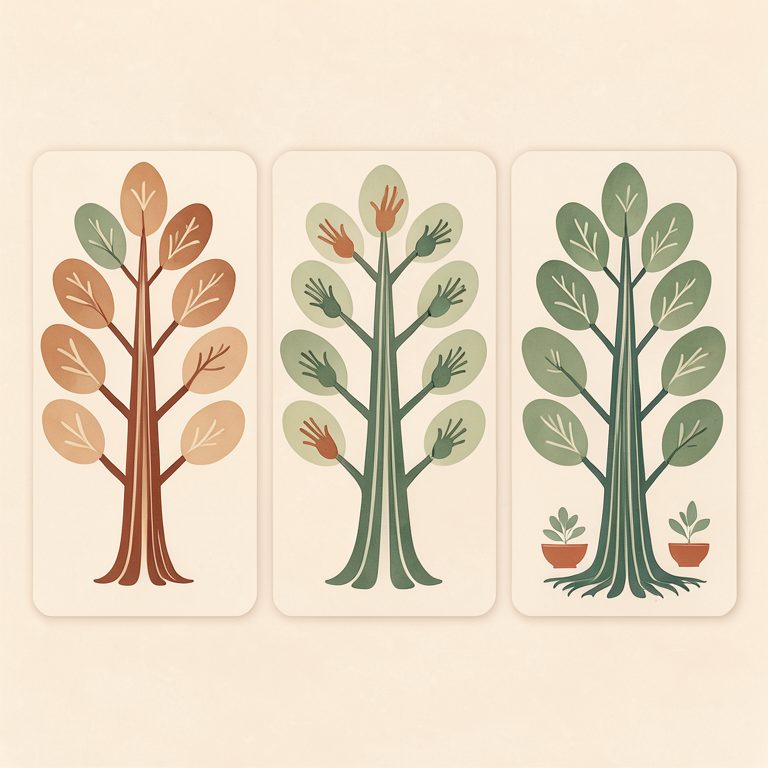
- The best-known entry point is the Five Tibetan Rites, first published in Peter Kelder’s classic book; the source tradition builds them up gradually to 21 repetitions per rite, in one short daily series[1].
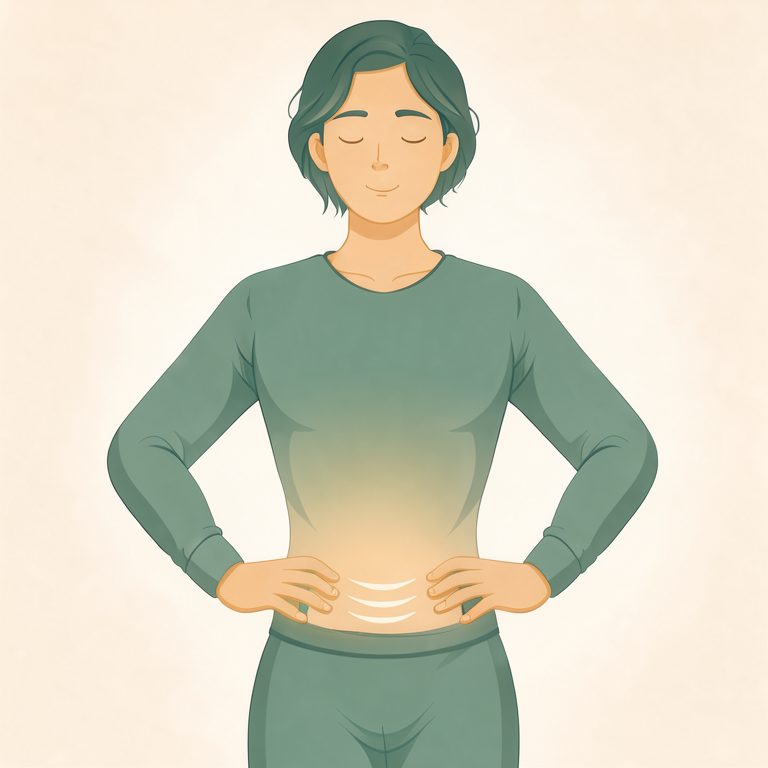
- Beginners start with a single morning series and just three spins in Rite One, pausing between rites with hands on the waist and full breaths focused on the lower abdomen[1][2].
- Safety rules come from the sources themselves: skip the spinning rite if it makes you dizzy, never practice to exhaustion, and leave the sixth rite alone as a beginner[1].
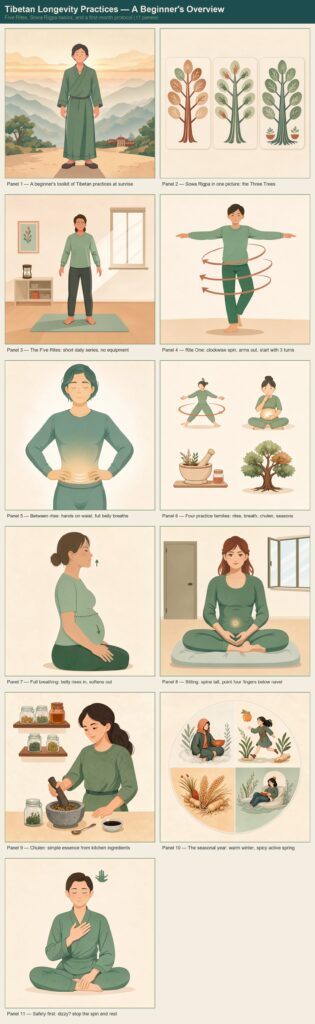
Tibetan longevity practices are not a single exercise but a toolkit of small daily routines — a movement sequence, a way of breathing, a seasonal way of eating, and simple sitting practice — that the Tibetan medical tradition connected with long-term vitality[1][3][5][6][7]. This beginner’s overview gathers what the source literature actually says, from Peter Kelder’s classic account of the Five Rites to modern Sowa Rigpa teachers[1][3], and turns it into a realistic first-month protocol. For more guided routines, browse our free practice manuals.
What Tibetan Longevity Practices Are: The Sowa Rigpa Frame
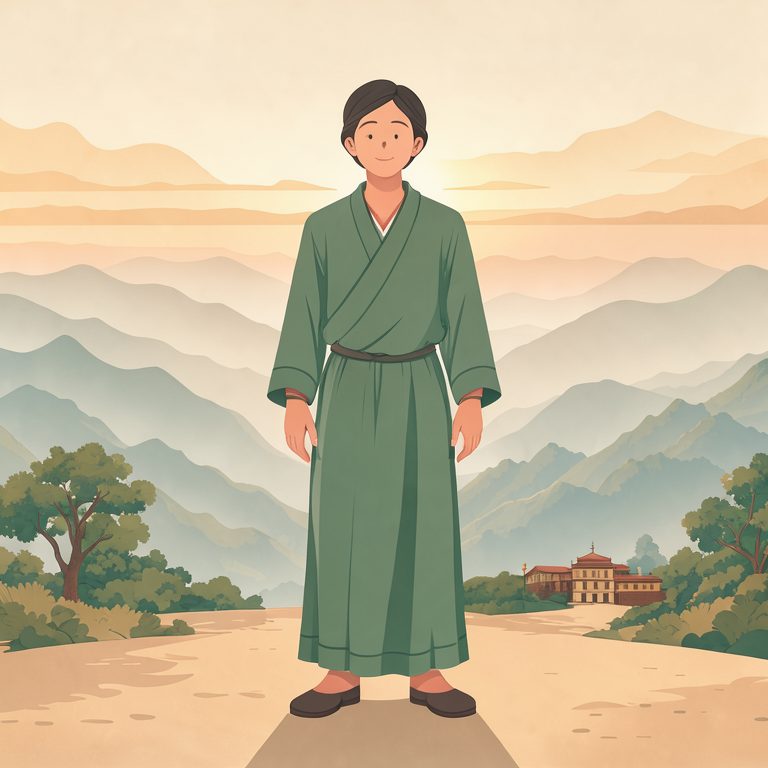
Sowa Rigpa, the traditional medical system of Tibet, is described by contemporary teachers of the tradition as one of the oldest healing systems still in active use[3]. Its classic teaching aid is the “Three Trees”: the tree of the patient (health and illness), the tree of the doctor (diagnosis through inspection, pulse reading, and questioning), and the tree of healing (methods of restoring balance)[3].
Illness, in this frame, is a matter of excess, deficiency, or disturbance — and its root causes are traced to the “three poisons” of the mind: dullness, anger, and attachment. Diet and lifestyle are named as the main causes of chronic conditions, which is why most Tibetan longevity practices are daily habits rather than one-time interventions[3]. Dr. Yeshi Donden, who served as personal physician to the Dalai Lama, describes the system’s approach as restoring balance between the body’s three main factors with diet, correct lifestyle, medicines, and supporting therapies — refined by Tibetan physicians over more than a thousand years and adjusted to the individual’s constitution, the season, age, climate, and environment[4].
The Five Tibetan Rites: Where Most Beginners Start
The most famous Tibetan longevity practice in the West is a set of five short daily movements, first published in Peter Kelder’s book on the practices of a remote Himalayan monastery[1]. The book presents the Five Rites as ritual actions that restore health and vitality and, in its own telling, make a practiced person look younger — these are the tradition’s claims, recorded here as history, not medical promises[1].
Traditional accounts describe the rites as acting on the body’s energy “vortexes”; from a modern physiology standpoint, they are simply a compact daily sequence of spinning, lifting, and rocking movements — mobility, balance, and gentle strength work that takes minutes and no equipment[1].
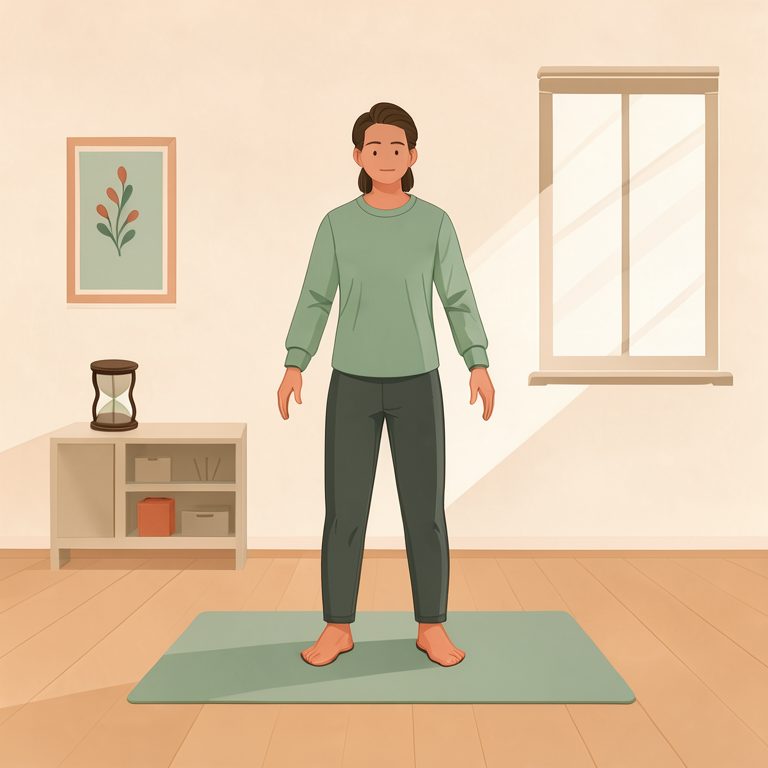
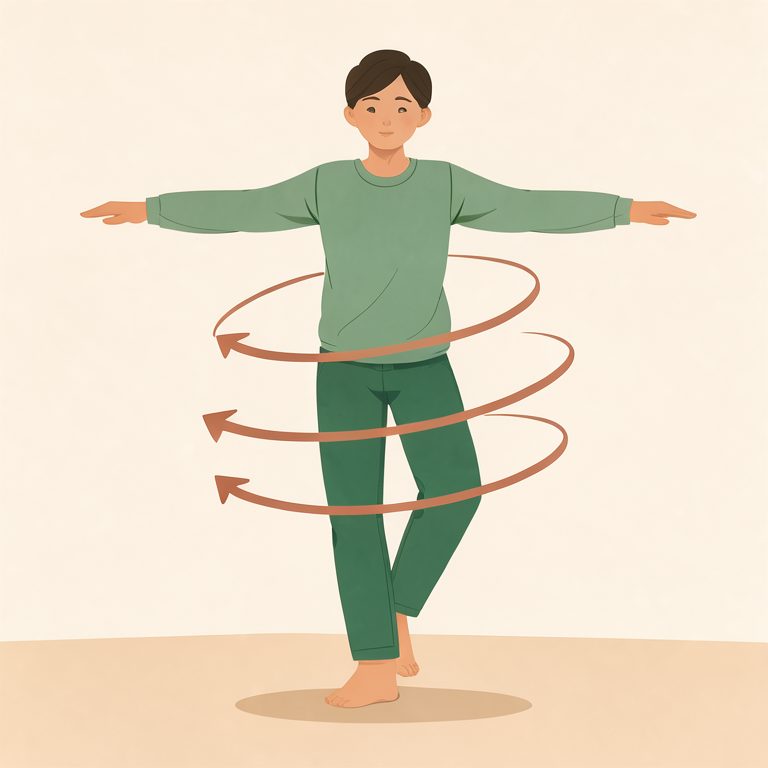
The first rite is the spin: stand in the center of a clear space, extend your arms out to the sides parallel to the floor, and turn slowly clockwise, a full 360 degrees per turn — and on day one you attempt only three turns[2]. A sixth rite exists in the source tradition, but Kelder’s text itself steers beginners away: it is described as pointless without first mastering the five, it demands strict lifestyle restrictions maintained for life, and the author delays teaching it on purpose[1]. If tight hips or stiff joints make floor-based movement uncomfortable, our Unlock Your Hip Flexors review covers a complementary mobility program.
A Beginner’s First Month: Step-by-Step Protocol
If joint discomfort limits your movement options, see also our Joint Genesis review for a joint-focused program.
Four Practice Families at a Glance
| Practice family | Described in | What it involves | Beginner entry point |
|---|---|---|---|
| The Five Rites | Kelder[1] | One short daily series of five movements; 21 repetitions per rite is the traditional target | One morning series, starting with 3 spins in Rite One |
| Full breathing & sitting practice | Vostokov’s Tibetan white lama advice[6][7] | Lower-belly breathing used all day; upright seated posture with attention four fingers below the navel | One chosen method, 21 days in a row, same time daily |
| Chulen essence practice | Nida Chenagtsang (2022)[3] | Sowa Rigpa rejuvenation preparations; simple versions exist, classical recipes need a teacher | Read the accessible “kitchen” versions before touching anything complex |
| Seasonal routine | Pupyshev (1992)[5] | Taste-based seasonal eating, warm clothing in winter, spring pungent/bitter/astringent foods | Match tastes and activity to the current season |
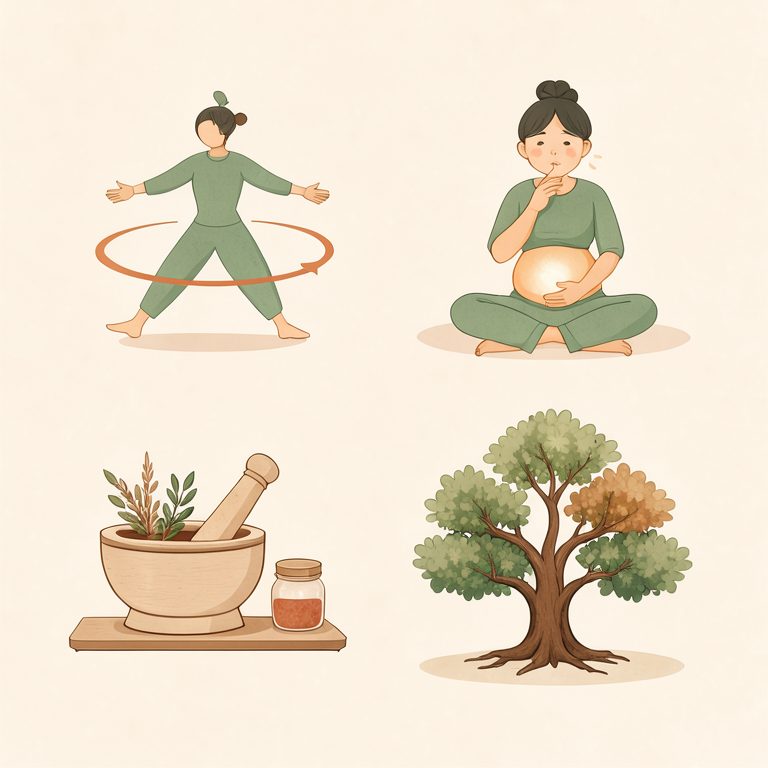
Beyond the Rites: Breathing, Chulen, and the Seasonal Year
Full breathing, all day long
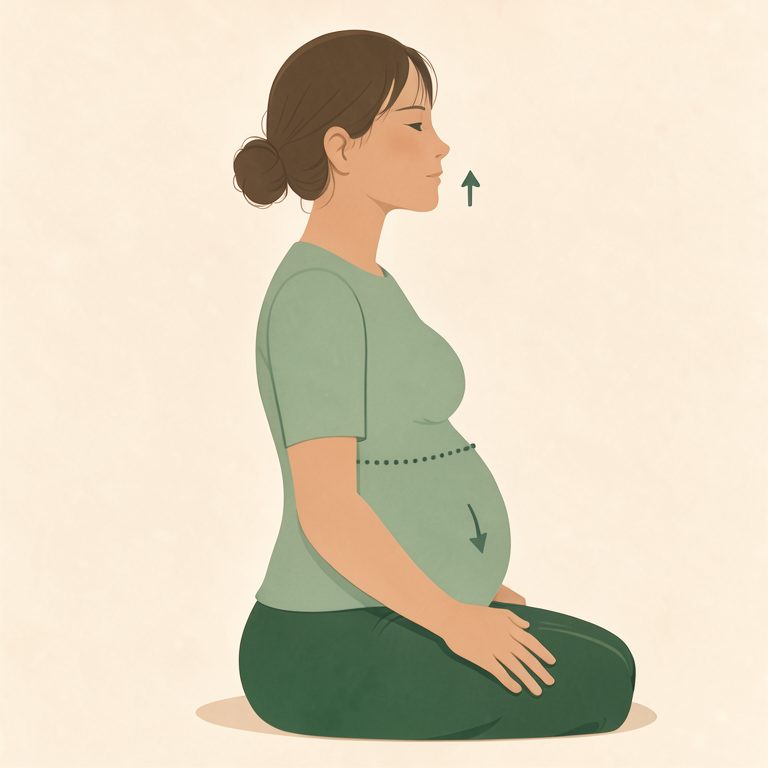
The Tibetan white lama tradition teaches “natural” breathing: the inhale reaches the lower lungs and presses the diaphragm down so the lower belly expands; the exhale starts from the lower lungs as the abdominal muscles gently contract. The instruction is to breathe this way not only in sitting practice but always — walking, standing, sitting, and lying down — with breaths slow, deep, and continuous. Beginners are explicitly told not to hold the breath; only experienced practitioners pause for a few seconds[6].
Sitting practice, simplified
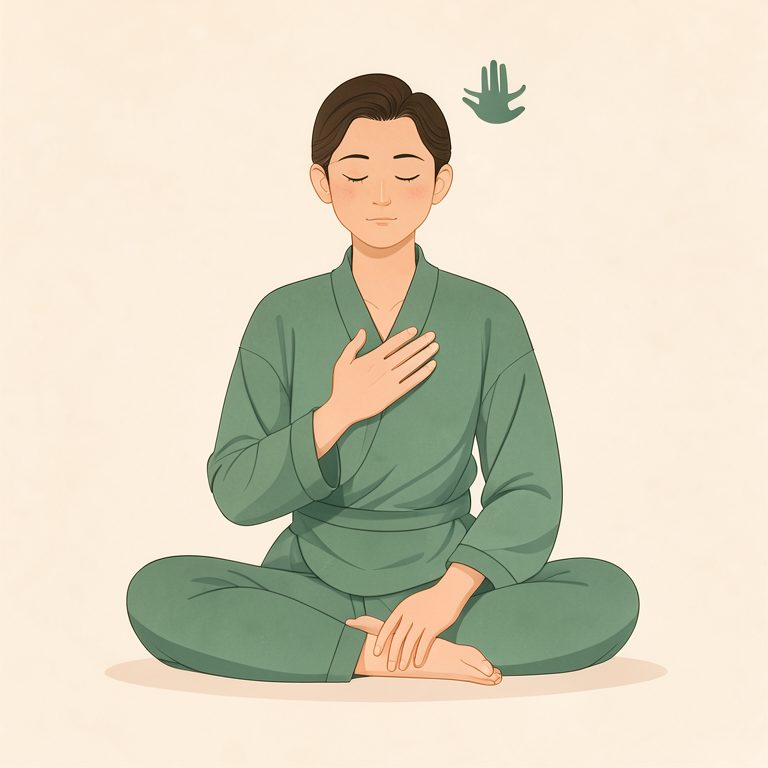
The same source keeps the setup modest: a quiet room with the door closed but the windows open, a soft thick cushion, and an upright spine. The full lotus is called best but hard for beginners and older people, so half lotus is acceptable. Attention rests on a point about four fingers below the navel, hands relaxed one upon the other near the lower abdomen, head and neck straight. Numbness in the legs at first is normal and passes[7]. And the consistency rule mirrors the Rites: pick one suitable method and practice it 21 days — or three months — daily at the same time[6].

Chulen: the rejuvenation “essence” practice
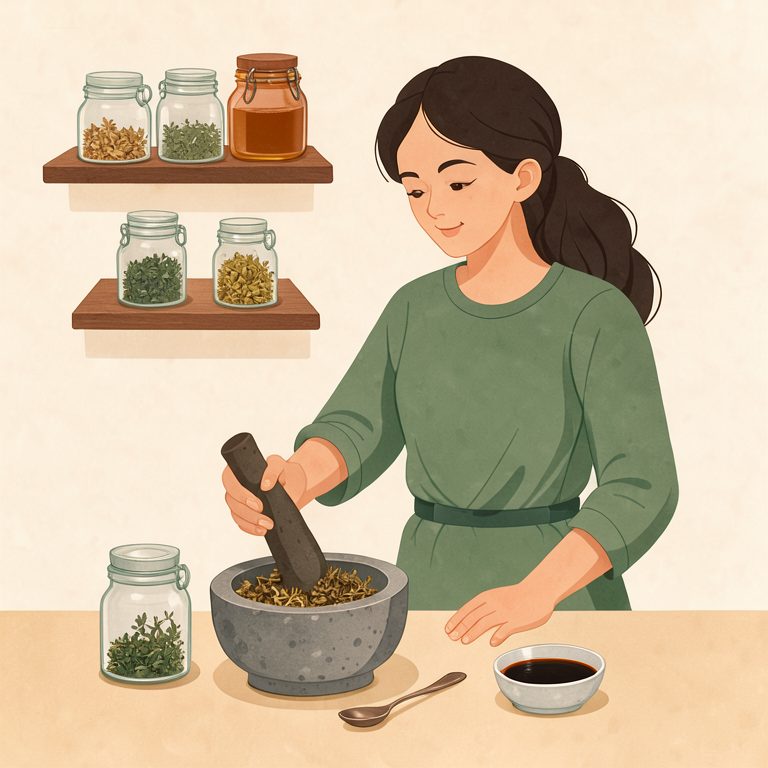
Chulen is Sowa Rigpa’s classical rejuvenation and life-extension practice. Contemporary teacher Nida Chenagtsang presents its theory and practice in an intentionally simple, accessible form — unlike the chulen of the spiritual (Buddhist) tradition, which is reserved for experienced specialists. Many classical recipes require components that are hard to find and a teacher’s oral explanations, but the accessible versions in the source book can be assembled from natural or common ingredients and prepared at home[3]. The motivation frame matters too: a long life, in this tradition, is sought not only for oneself but to be of use to others[3].
Living by the season
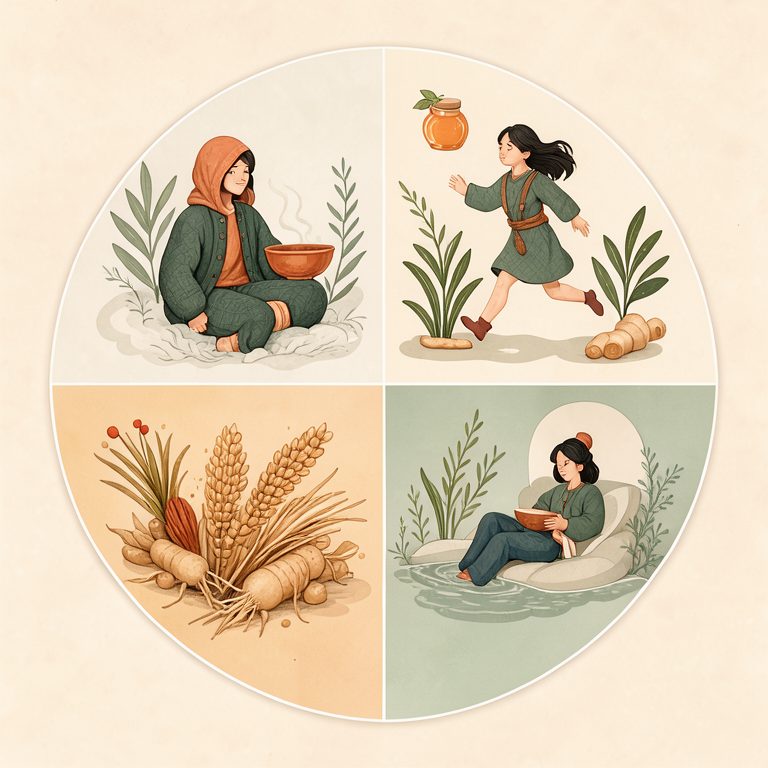
Classical Tibetan medicine prescribes behavior that follows the seasons. In the first half of winter, food should be varied and dominated by sweet, sour, and salty tastes, and the instruction to dress in genuinely warm clothing is emphatic. In spring, when phlegm-type disturbances traditionally rise, the recommendations shift to pungent, bitter, and astringent tastes — hot spiced dishes, ginger decoction, honey — plus physical activity such as running. People of a phlegm-dominant constitution are advised active movement in general, and lentil flour is used instead of soap to clean and mobilize[5].
Safety Notes for Beginners
- If spinning causes dizziness or your balance is unreliable, skip Rite One for four to six months and practice the remaining rites starting from the second[1].
- Never practice to exhaustion; do the maximum that is available to you on a given day[1].
- Imperfect form is expected — persistence and regularity, not ideal execution, are what the source text emphasizes[1].
- Do not hold the breath in breathing practice as a beginner[6].
- The sixth rite is not a beginner practice: the source tradition links it to strict, lifelong lifestyle restrictions[1].
- Stop any exercise that causes pain or sharp dizziness, and resume only when you feel well again.
This article shares traditional practices for general information only and does not replace care from a qualified healthcare provider. If you have spine injuries, heart conditions, are pregnant, or manage a chronic condition, talk to your provider before starting a new movement routine.
Frequently Asked Questions
Do I have to do all five Tibetan rites?
No. The source book states plainly that even a single rite practiced consistently can be beneficial, and that everyone should simply do the maximum available to them — including people with injuries or limitations, who can adapt or skip movements[1].
How many repetitions should I do, and when?
Start with one series a day — morning (before noon) or evening — with a low repetition count; build gradually toward the traditional target of 21 per rite. Only after at least four months at 21 repetitions once daily does the source suggest adding a second daily series, starting from just three repetitions and adding two per week[1].
What is chulen in Tibetan medicine?
Chulen is the Sowa Rigpa tradition of rejuvenation and life-extension through “essence-extract” preparations. Classical recipes often require rare components and a teacher’s guidance, but contemporary teacher Nida Chenagtsang publishes simple versions intended for home preparation[3].
Sources
- [1] Peter Kelder — The Eye of Rejuvenation: Ancient Secret of the Tibetan Lamas (Oko Vozrozhdeniya)
- [2] Pavel Levin — The Eye of True Rejuvenation: All Seven Tibetan Pearls in One Book (Oko Nastoyashchego Vozrozhdeniya, 2010)
- [3] Nida Chenagtsang — The Tibetan Art of Rejuvenation (Tibetskoe Iskusstvo Omolozheniya, 2022)
- [4] Yeshi Donden — Introduction to Tibetan Medicine: Health and Balance (Vvedenie v Tibetskuyu Meditsinu)
- [5] V. N. Pupyshev — Foundations of Tibetan Medicine (Osnovy Tibetskoy Meditsiny, 1992)
- [6] V. F. Vostokov — Advice from the Tibetan White Lama (Sovety Tibetskogo Belogo Lamy)
- [7] V. F. Vostokov — Secrets of Eastern Healers (Tayny Vostochnykh Tseliteley)
How we researched this
This article is based entirely on our local library of 1,137 books on traditional wellness practices, consulted offline with no internet sources. Every practice rule, repetition count, and safety note above was checked against the cited source passages before publication.
