
Educational content only — not medical advice. See our full Medical Disclaimer and Affiliate Disclosure below.
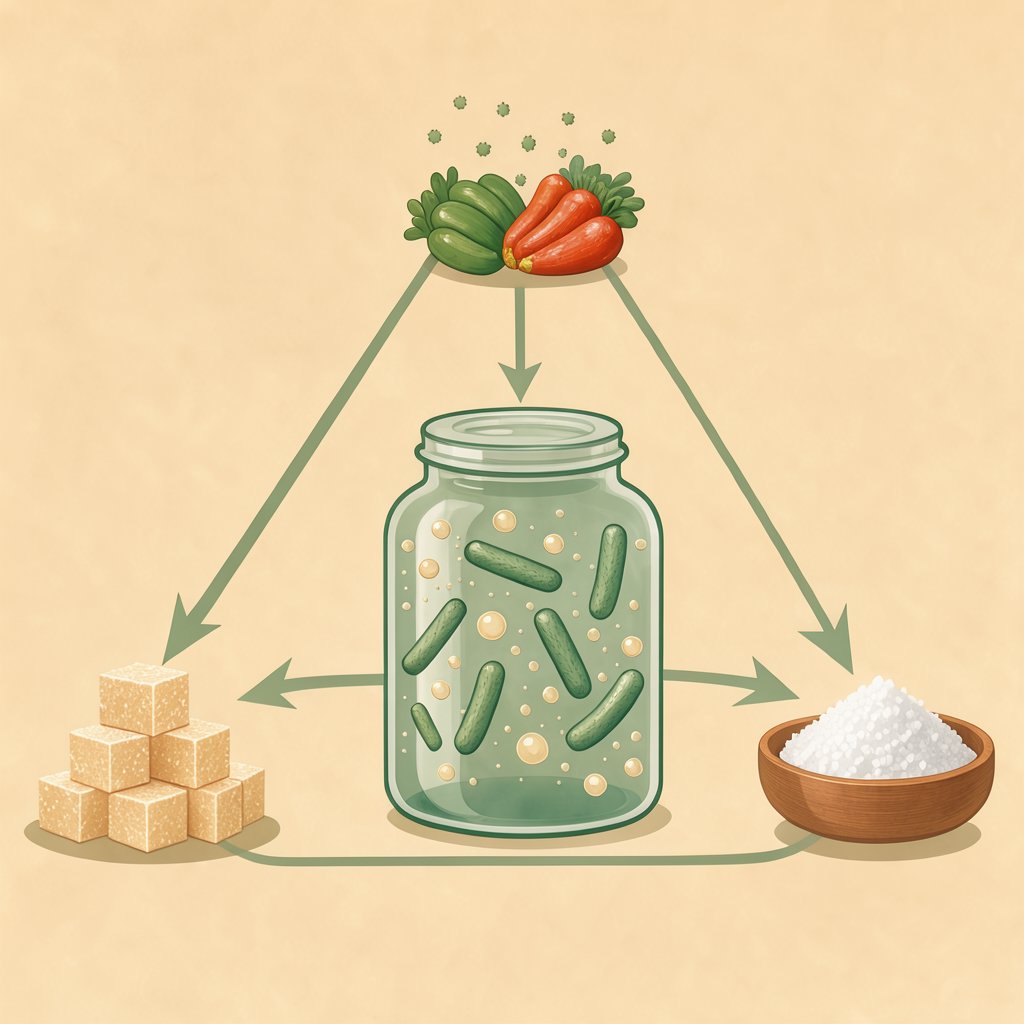
A tub of miso from a Japanese pantry, a jar of radish kimchi from a Scandinavian cellar, a bottle of apple-cider vinegar working quietly in a Russian kitchen: fermented foods look nothing alike, yet the same three-part process stands behind every one of them. Ambient microbes settle on the food, sugar feeds them, and salt keeps their growth under control[1]. That single triangle built the preserved, tangy, live-culture corner of nearly every traditional cuisine on earth, and it is where every honest question about fermented foods and immunity begins.
This guide walks the whole shelf in order. First, what the source books actually say about fermented foods and immunity — how live cultures interact with the gut’s immune network, and where the honest limits of that research sit. Then three working kitchen protocols with exact ratios: a three-ingredient miso, a 14-day radish kimchi, and a vinegar mother that bridges the kombucha question without inventing a recipe. Finally, safety notes, daily eating patterns from Japan and China, and a realistic first-week plan.
Key Takeaways
- One triangle explains every ferment: microbes arrive from the environment and food surfaces, sugar feeds them, and salt sets the boundaries — the base stage is Lactobacillus producing lactic and organic acids alongside sugar-fed yeasts[1].
- Fermented foods naturally carry live bacteria that interact with your own microbes and train the intestinal immune system[3] — but effects are strictly individual, and probiotic products are food, not medicine[3].
- A beginner miso needs three ingredients: 3.5 oz (100 g) dried soybeans or chickpeas, 1.2 oz (35 g) salt, and 7 oz (200 g) dried rice koji — about 1 lb 4 oz (550 g) of miso after one to three weeks at room temperature[6].
- Scandinavian radish kimchi runs on a 1.5% brine: about 14 days at room temperature, one more week of ripening in the fridge, and unopened jars keep at least six months[7].
- In acute gastrointestinal conditions, therapeutic diets exclude pickles and marinades outright and cap fermented milk at low acidity[11] — individual response, not tradition, decides what stays on your table[3].
Why Traditional Kitchens Everywhere Ferment: Microbes, Sugar, and Salt
Step back from any individual jar and the pattern repeats. In Koji Alchemy, Jeremy Umansky reduces fermentation to its working parts: the microbes arrive from the surrounding environment and from the surfaces of the food itself, sugars feed them, and salt sets the boundaries of what can grow[1]. The base stage of that process is Lactobacillus — bacteria that produce lactic and other organic acids — working next to sugar-fed yeasts[1]. Acid plus salt is what kept food edible through a summer before refrigeration, and it is also what makes it tangy, complex, and full of live cultures today.
Sandor Ellix Katz, whose Wild Fermentation became the modern reference for live-culture cooking, adds the cultural half of the story: taste for ferments is trained early. Fermented tofu with worms is a delicacy in parts of Japan; sorghum beer is drunk by the liter in parts of Africa; and cheese — sacred to a European pantry — reads as spoiled milk to many Africans and Asians[2]. Nobody is born craving sour. Every tradition teaches its own version of that taste, usually starting in childhood[2].
Katz also names the pressure working against all of this: artisanal fermentation is steadily displaced by a centralized, industrial food supply[2]. Home ferments survived as everyday kitchen work precisely because they solved storage, flavor, and digestion in one jar. The rest of this guide follows that thread — first what the live cultures actually do once swallowed, then how to run one small batch yourself, with numbers you can weigh on a kitchen scale.
How Fermented Foods Train Gut Immunity
The reason fermented foods keep coming up in immunity conversations is a documented one, stated plainly by E. V. Motova in My Best Friend the Stomach: Food for Smart People: fermented foods naturally carry live probiotic bacteria, and in the gut those bacteria interact with your own microbes and train the intestinal immune system[3]. This is the mechanism every fermenting tradition was quietly recruiting for centuries — a daily stream of live cultures meeting the largest immune surface in the body. Motova pairs it with prebiotics, the fiber that feeds those bacteria: inulin in Jerusalem artichoke is her working example, and breast milk carries both sides of the partnership[3].
The same author supplies this guide’s recurring caution, worth hearing early. The effect of any probiotic product is strictly individual — if one disagrees with you, do not force it[3]. Not every product works at all: some carry too few bacteria, and in others the cultures do not survive the trip to the gut[3]. Specific probiotics are used clinically for traveler’s diarrhea, diarrhea associated with antibiotics, and lactase deficiency, with dose and indication set by a doctor — a different category from seasoning your soup[3].
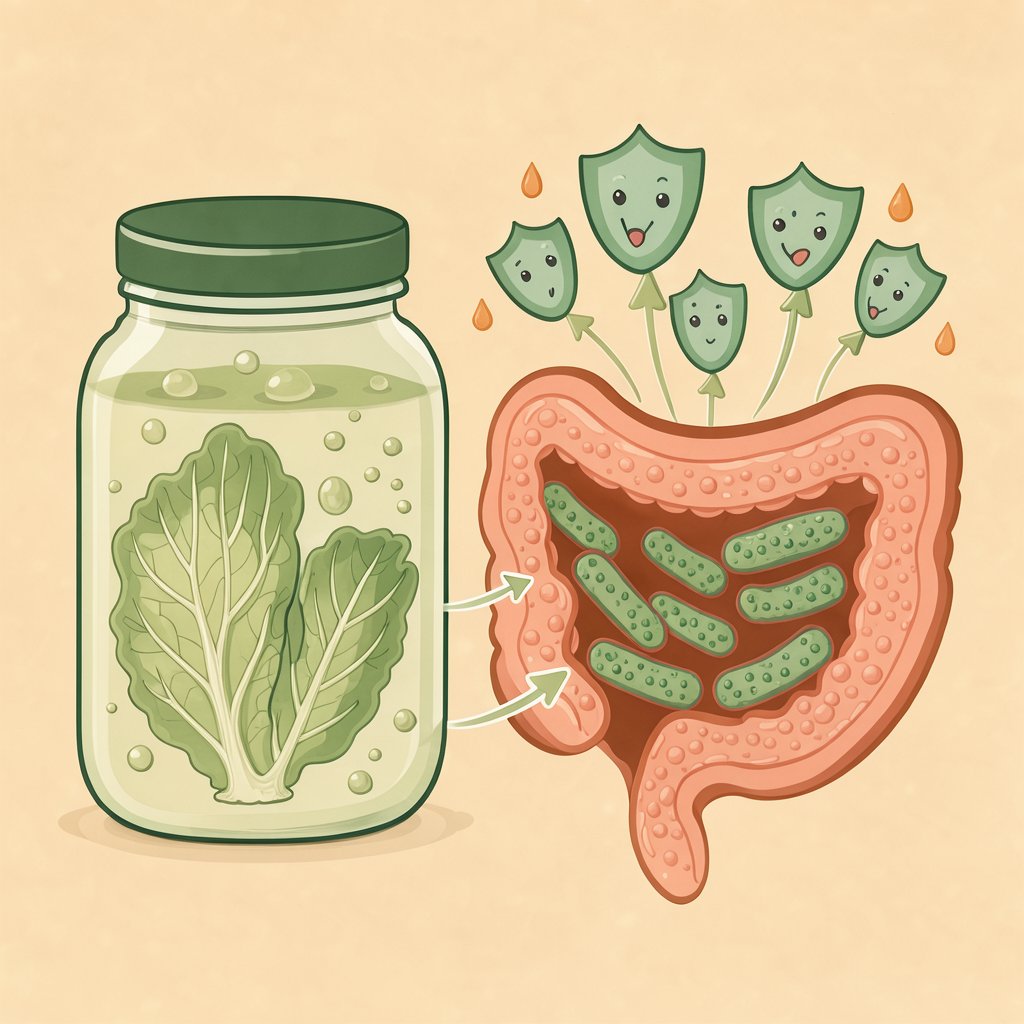
A second track runs through fiber. N. A. Zubareva’s The Gut Rules Everything sorts dietary fibers by how fully gut bacteria can ferment them: pectin, gums, mucilages, and hemicelluloses are fully fermentable and effectively form the microbiome’s diet, and their colonic fermentation yields short-chain fatty acids and other valuable metabolites[4]. Higher fiber intake also tracks with lower metabolic-syndrome risk markers — blood pressure, insulin, triglycerides, and abdominal fat — while fiber binds estrogen-like endocrine disruptors on its way through[4]. A jar of fermented vegetables carries both halves of the exchange: the live cultures and the fiber they feed on.
Why this matters for immunity is spelled out by Natasha Campbell-McBride in Gut and Psychology Syndrome: damaged gut flora drags down not only local immunity — IgA, lymphocytes, macrophages, interferons, and cytokines in the digestive system — but destabilizes the body’s whole immune balance[5]. That is the honest frame for the fermented foods and immunity idea: the gut wall is an immune organ, live cultures and fiber interact with it daily, and the effect in any one person is individual[3]. No source in this guide treats ferments as medicine; they are food with a live-culture tradition behind them. The question that follows is which culture turned that biology into a daily pantry — Japan’s koji.
Koji: The 9,000-Year-Old Engine of Japanese Fermentation
Japan industrialized the triangle. Its engine is koji, the mold Aspergillus oryzae grown on rice, which Jeremy Umansky traces through roughly 9,000 years of use[1]. The striking part is how little is settled: the microbiology of koji inside traditional ferments is barely researched — a point Umansky drives home by quoting Dr. Gibbons — even as proposals circulate to use koji mold itself as a human prebiotic, and alpha-amylase derived from A. oryzae already sees use as a supplement in livestock feed[1]. A nine-millennia head start, and the science is still catching up to the kitchen.

Koji’s working power is enzymatic. Its protein-cleaving enzymes tenderize meat and deepen umami in a marinade, and koji grown directly on vegetables creates amino acids that transform their flavor[1]. Soy sauce — shoyu in Japan, ganjang in Korea — is a koji-based amino sauce built on a soy-and-wheat mash in brine[1]. Umansky draws the contrast inside Japan itself: sake brewing is strict and sterile, while barrel miso and soy sauce environments are village-style, with ambient microbes welcomed into long ferments[1]. One mold, two temperaments — the brewery’s cleanroom and the farmhouse’s open door.
The home-cooking layer comes from Hiroko Shirasaki’s A Beginner’s Guide to Japanese Fermentation. Shio koji — nothing more than koji and sea salt — works as an all-purpose fermented seasoning that replaces added sugar in cooking, while amazake delivers natural sweetness for sugar-conscious diets[6]. Natto, fermented soybeans rich in Bacillus subtilis var. natto, breaks soy protein down and raises its amino acid content; the sticky consistency is an acquired taste, and Shirasaki recommends traditional Japanese-soybean natto[6]. Japan adopted these foods for preservation in the pre-refrigeration era because koji, natto, and lactic-acid bacteria have sterilizing effects, and the foods keep maturing and getting tastier over time[6]. You do not need a brewery to use any of this — the next section is a three-ingredient miso you can run in one jar.
Beginner Miso: Three Ingredients, One Jar
Shirasaki’s beginner miso is hard to beat as a first koji project, because everything is weighed rather than guessed. The full batch is 1/2 cup (3.5 oz / 100 g) dried soybeans or chickpeas, 2 tbsp (1.2 oz / 35 g) salt, and 1 cup (7 oz / 200 g) dried white rice koji — enough for 1 lb 4 oz (550 g) of finished miso[6]. Chickpeas stand in for soybeans cleanly, which matters if soy is off your table.
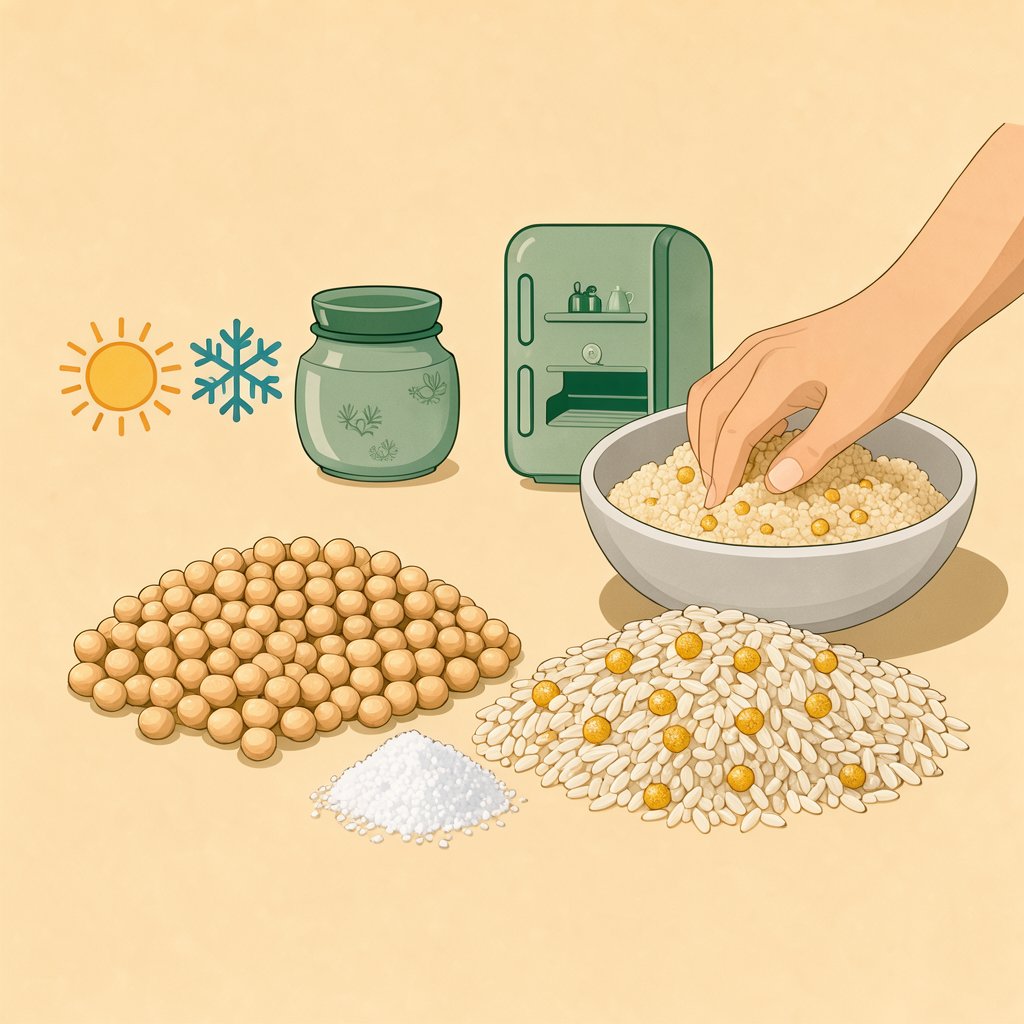
The bean work comes first. Soak the beans for a full day, then boil them until tender and reserve the cooking liquid before peeling off the skins[6]. Mash the warm beans to a mashed-potato consistency — warm matters, because the paste has to accept the koji evenly. Mix the rice koji and salt together in a bag first, then combine that mixture with the mash, adding warm cooking liquid until the whole batch reaches 550 g[6].
Knead the paste thoroughly, working out every air pocket, and seal it into its container[6]. Fermentation runs one week at room temperature in spring or summer, three weeks in winter, and the jar wants occasional opening and kneading[6]. Refrigerate when the taste is right to you; the finished miso keeps three months refrigerated[6]. On flavor, Umansky’s aging split is a useful map: zero to three months of aging gives a short-term miso that is sweet and koji-sugar forward, while longer aging means more protein breakdown, deeper umami, and more complexity[1].
One adjustment note from Shirasaki applies to every recipe in this section: commercial miso and shio koji vary in salt content, so taste and adapt rather than trusting the label[6]. Miso asks for patience and a kneading schedule. If that is more commitment than your week allows, the next ferment is the opposite temperament — assemble it, submerge everything, and simply wait.
Scandinavian Radish Kimchi: A 14-Day Vegetable Ferment
Johan Bjorkman’s Preserving the Scandinavian Way holds the most forgiving live-culture vegetable protocol in this guide’s sources. Build it from 1.1 lb (500 g) of radishes, 2 sliced shallots, and 0.5 oz (15 g) of ginger, with garlic and chili to taste, layered into a sterilized jar fitted with a tight lid or an airlock[7]. Cover everything with brine, then weight it all down with a sealed bag of 1.5% salt solution so no vegetable surface ever touches air[7]. Submerged vegetables ferment; exposed ones spoil — the bag is the whole trick.
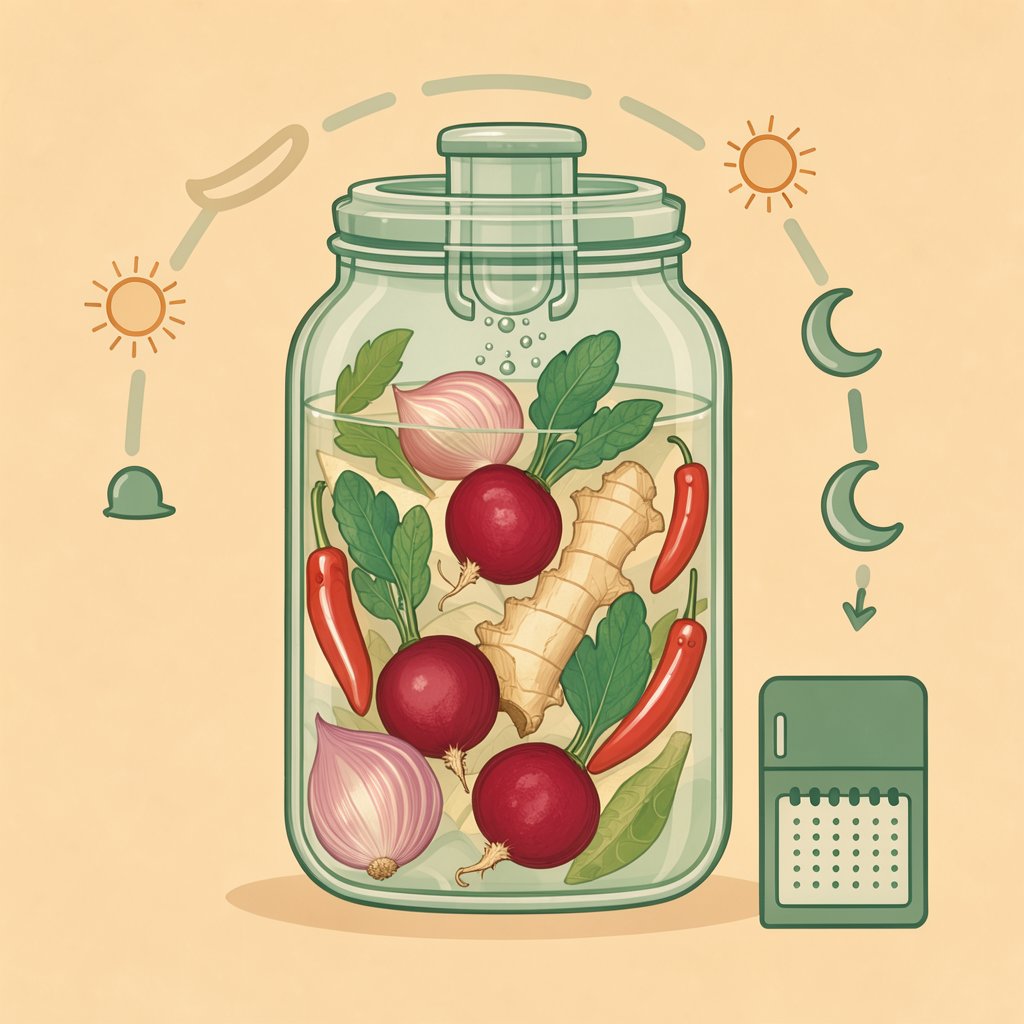
The calendar is nearly empty. The jar sits about 14 days at room temperature — burp the gas if the lid is tight — then ripens one more week in the refrigerator before it is ready[7]. Unopened jars keep at least six months[7]. The same method carries a sibling recipe: fermented beet with anise, built from 1.1 lb (500 g) peeled beet, 1 tbsp anise seeds, 17 fl oz (500 ml) water, and 1 tbsp (0.5 oz / 15 g) non-iodized sea salt, fermented about 14 days at room temperature and then ripened a full month in the fridge; Bjorkman serves it with tartare, carpaccio, or pan-seared fish[7].
An honest sourcing note belongs here. This is a Scandinavian radish kimchi, not Korean napa-cabbage kimchi — the library behind this guide surfaced no Korean kimchi history or cabbage protocol, and Korea enters these sources only through the ganjang naming of soy sauce[1]. The flavor logic is universal, though, and Umansky explains why: culturing vegetables creates amino acids that transform their flavor from plain to savory[1]. If your jar tastes flat at day seven, that is the calendar talking, not a failed batch. The same salt-brine logic built Russia’s cellars next.
Kvashenie, Brine Tonics, and the Vinegar Mother: Russia’s Answer to Kombucha
Russia’s branch of the same tree is kvashenie — the sauerkrauting of vegetables — plus mochenie, fruit and vegetables soaked and lightly fermented; Motova describes both as lactic-acid fermentation and notes that such fermented products naturally host probiotic bacteria[3]. Katz adds a zero-waste habit from the same shelf: once the pickled vegetables are eaten, keep the garlic in its brine in the fridge, drink that brine in small portions as a digestive tonic, and use it as a salad dressing — the brine is rich in lactic acid bacteria[2]. In a traditional kitchen nothing in the jar was waste.
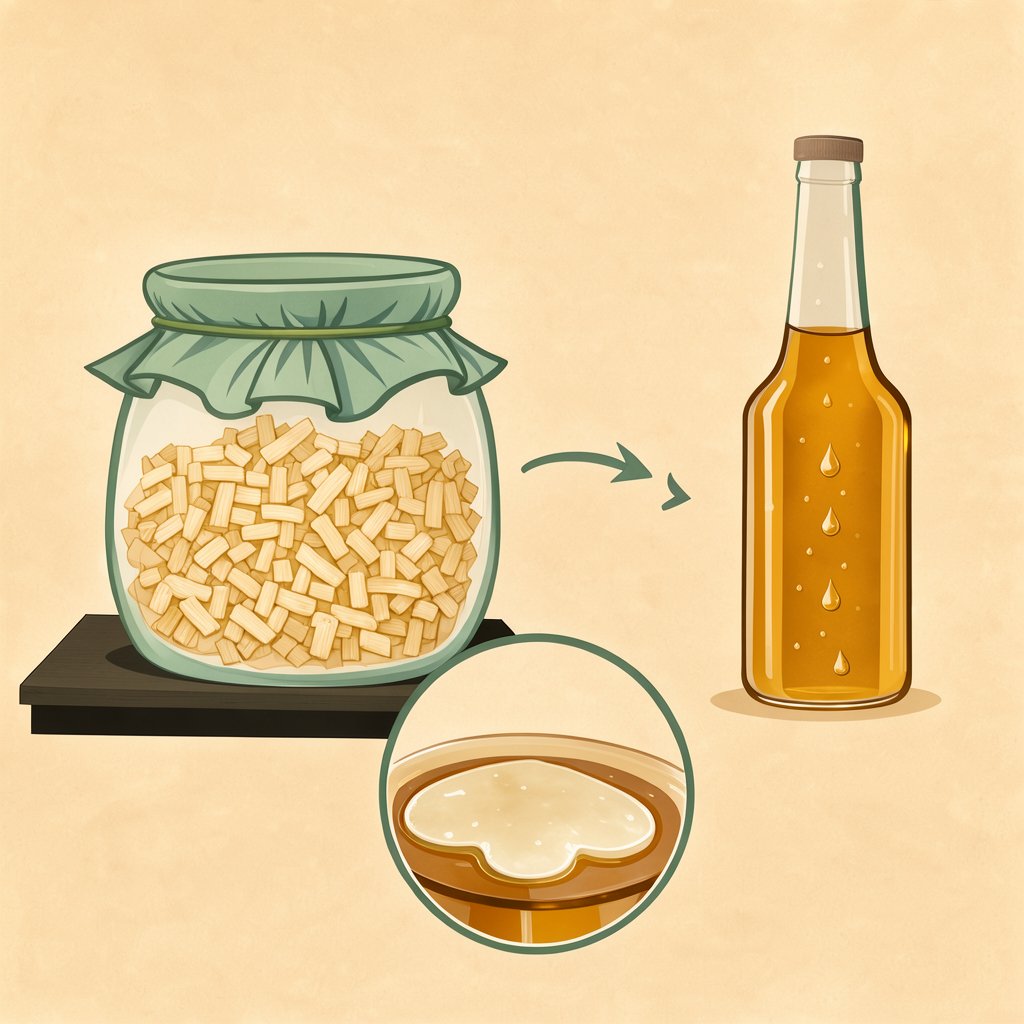
The long-horizon project in this block is V. Gez’s apple-cider vinegar. Grate 2.2 lb (1 kg) of sour-sweet apples; after 10 days strain the liquid into a clean jar, cover it with cloth, and let it mature three to five months in a dark place, untouched[8]. It is ready from three months on, signaled by a vinegar mother forming on the surface — Gez notes it looks like a kombucha tea mushroom — together with a pleasant smell; bottle and refrigerate from there[8]. Months of silence, then a living film on top of your vinegar.
That mother is this guide’s honest bridge to kombucha, and the transparency matters. The book base behind this article returned no kombucha SCOBY care, sugar-tea ratios, or kombucha safety protocol across two targeted searches — only passing mentions, from Katz’s first successful batch of kombucha[2] to Gez’s tea-mushroom comparison[8]. What the sources do support is the underlying theory: sugar-fed yeasts form one half of the base fermentation stage alongside Lactobacillus[1], which is why a sweet liquid left to its own microbes grows a mother at all. For kombucha specifics, this guide deliberately offers no invented recipe. Jars, after all, only support immunity if they reach the table daily — which is a habits question, and Japan and China answer it.
How Japan and China Eat Ferments Every Day
Protocols only matter if the jar reaches the plate, and the daily-eating record here is qualitative — an honesty worth stating plainly: none of these sources gives numeric gram-per-day or CFU-per-day doses for fermented foods. What they document instead is pantry structure. In Shirasaki’s portrait of Japan, miso is one of the basic seasonings found in every home, and soy-milk yogurt is recommended as a basic fermented food you will want to eat every day[6]. The fermented pantry she inventories runs wide: miso, shio koji, amazake, natto, katsuobushi, kombu, ume vinegar, mirin, and cooking sake[6].
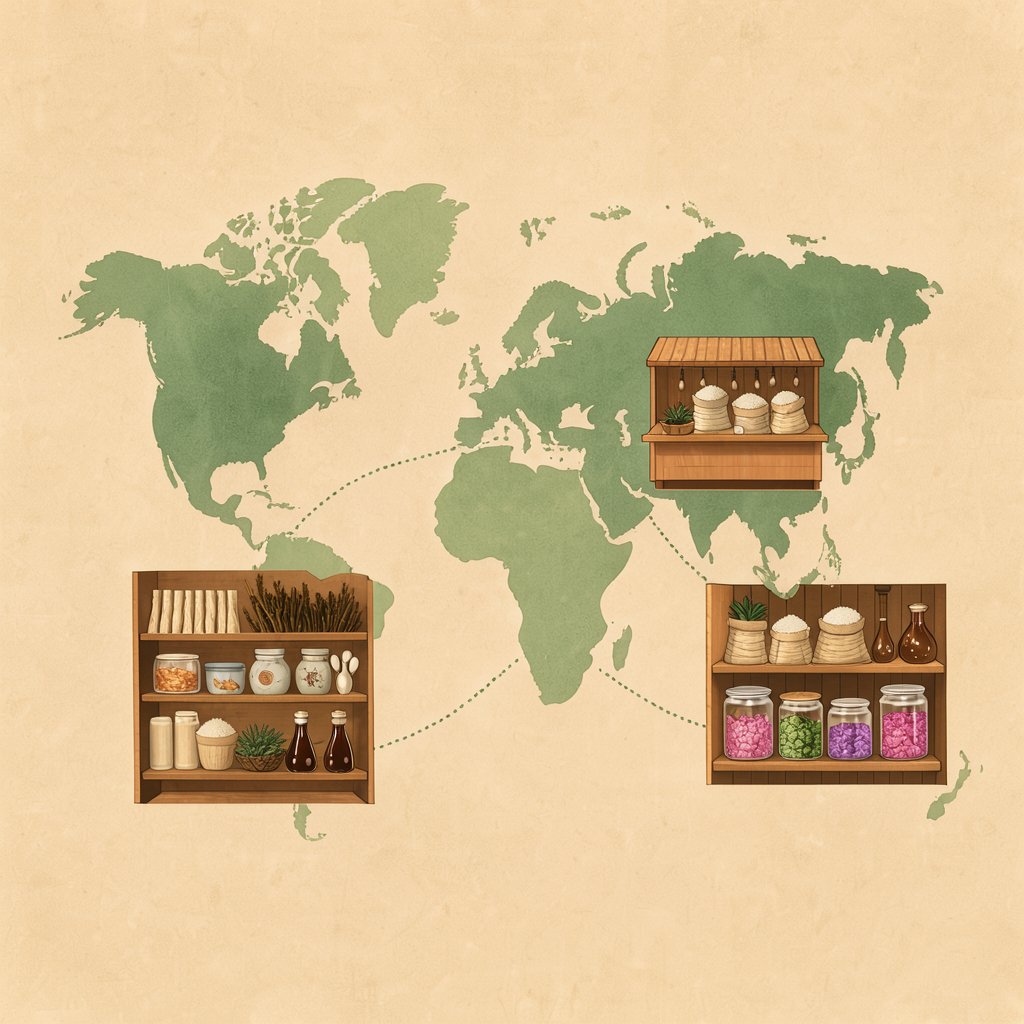
China anchors the same habit from the condiment side. I. P. Neumyvakin and V. Lad record that tea belongs to China’s traditional seven daily necessities — alongside firewood, rice, oil, salt, soy sauce, and vinegar — and two of those seven, soy sauce and vinegar, are fermented condiments[9]. A cuisine that counts ferments among its seven daily things is not eating them as a health trend; it is eating them as infrastructure. That is the deepest lesson in this guide for anyone tempted to turn a jar of kimchi into a regimen.
One adjacent daily pattern from the Nishi health system, recorded by Maya Gogulan, rounds out the picture: combine raw food with cooked at a 3:1 raw-to-cooked ratio, chew each mouthful to a liquid, and confine eating to the window between 12:00 and 20:00[10]. Live-culture foods sit naturally on the raw side of that ratio. The practical takeaway across all three traditions is rotation in small daily portions — a spoon of miso here, a fork of radish kimchi there — rather than chasing a dose nobody measured. Daily habits still need individual guardrails, though, and those come next.
Safety and Individual Response: When Ferments Need Caution
Traditional does not automatically mean right for every gut, and the clinical record is direct about it. I. I. Zinets’s compendium of 100 therapeutic diets, writing for peptic-type indications, allows fermented milk products only at low acidity — no more than 90 degrees Turner, covering prostokvasha, kefir, ryazhenka, and acidophilin — while pickles, marinades, and mushrooms are excluded outright, along with raw alliums, radish, and rough-fiber vegetables[11]. That is hard evidence that salt- and acid-heavy ferments are restricted in acute gastrointestinal conditions, not a stylistic preference of one diet author.
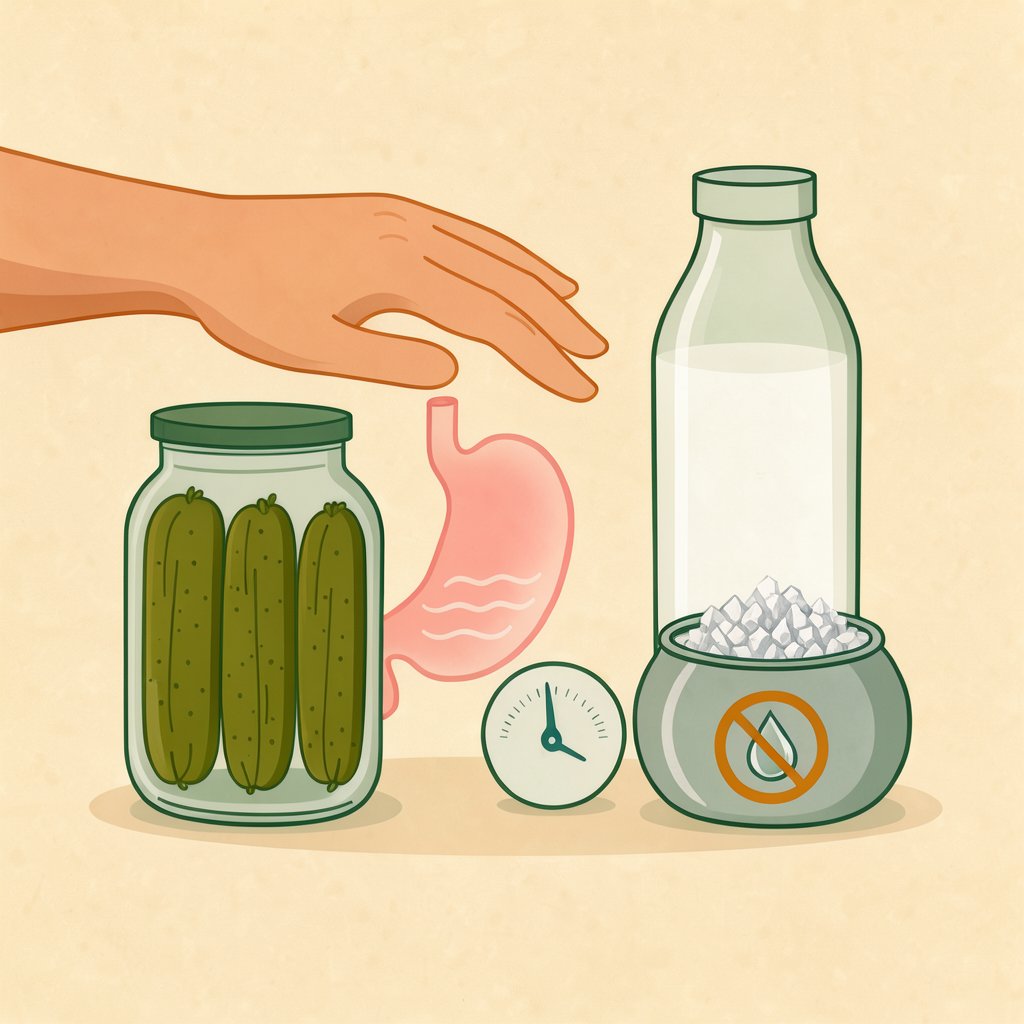
Motova’s cautions apply to everyone else. Individual response varies; a product’s efficacy is never guaranteed, since bacteria counts and survival to the gut differ; and in serious illness the answer is a doctor, not a self-prescribed ferment regimen[3]. Two kitchen-level rules round it out: Bjorkman specifies non-iodized sea salt for brines — iodized salt is simply not used in this work[7] — and Shirasaki’s warning that commercial miso and shio koji vary in salt content matters most for salt-sensitive readers[6].
One limit of this guide’s sources must be stated rather than papered over: the library returned no histamine-intolerance, SIBO, or immunocompromised cautions, no kombucha alcohol-and-caffeine notes, and no botulinum-safety guidance for oily garlic ferments. Readers managing those conditions need individual medical guidance before adding live-culture foods, and this article will not invent rules the sources do not carry. What the sources do support is the simplest test of all: introduce one ferment at a time, watch your own response, and keep what agrees with you[3]. With guardrails in place, the final section assembles a gentle, fully sourced first week.
Your First Week With Fermented Foods: A Simple Start Plan
Pick one project, not three. The radish kimchi jar is the set-and-wait choice — you layer the vegetables once and then simply wait, ready in roughly two weeks, forgiving of a busy schedule[7]. The three-ingredient miso is the deeper commitment with the bigger payoff in flavor[6]. Both teach the same core skill: trusting salt and time to run the process while you do almost nothing. One jar, one week, one habit — that is the whole plan.
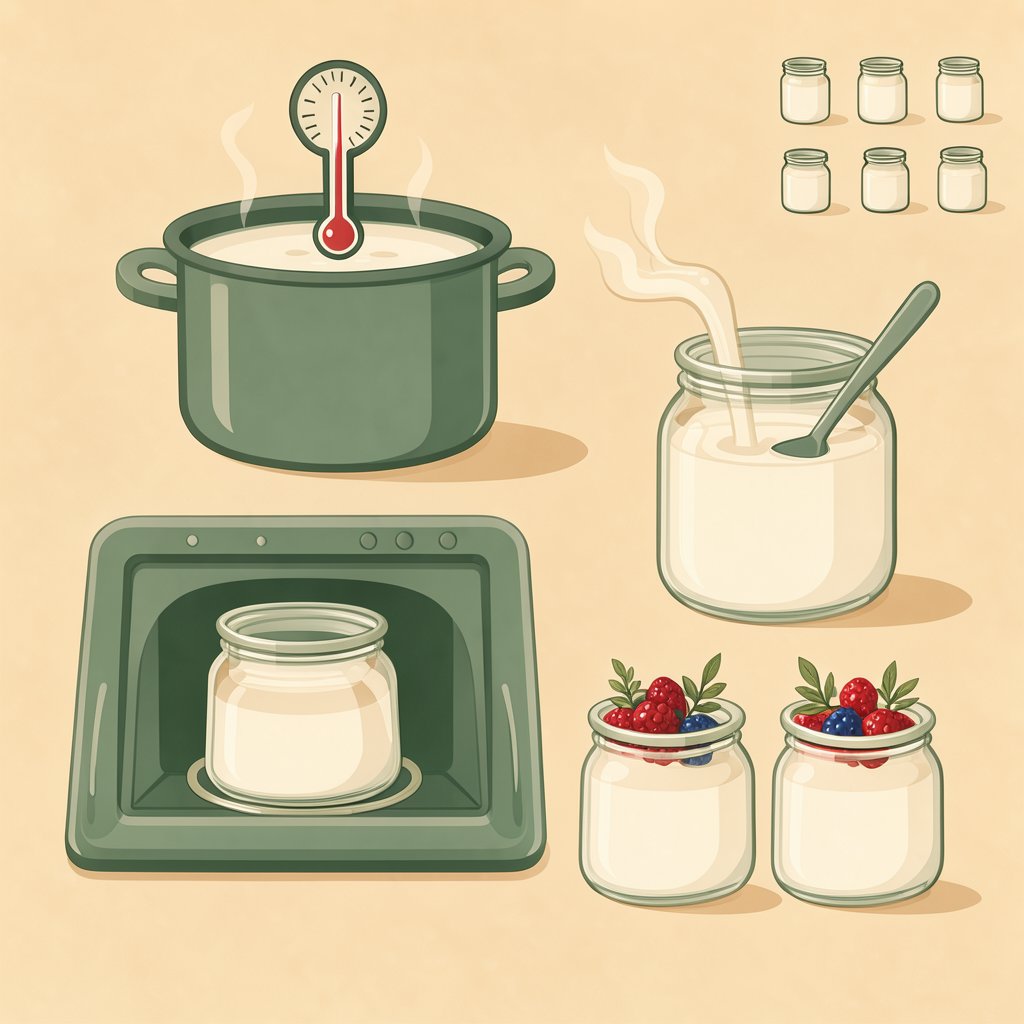
For a same-week win, Katz’s plant-yogurt protocol fits in a single evening. Heat coconut or soy milk to 180°F (82°C), cool it to 115°F (46°C), stir in starter at 1 tsp per liter, and hold the jar at 109°F (43°C) for eight hours; coconut and soy milks set almost firm[2]. His sunflower version produces a tangy kefir-like drink: blend 5.3 oz (150 g) raw sunflower seeds, 2 tbsp flax seed, 1.8 oz (50 g) cooked grain, 3 tbsp olive oil, and 1 tsp honey per 21 fl oz (625 ml), then culture with kefir grains[2].
Reward uses keep the habit alive, and both traditions supply them. Shirasaki marinates tofu in shio koji until it tastes like feta, and her kabocha soy-milk soup with shio koji keeps for a week in the refrigerator[6]. Katz’s garlic brine doubles as a salad dressing the moment the pickles are gone[2]. Close the loop with Motova’s rule — the individual response decides what stays in your rotation[3] — and the whole shelf returns to the opening triangle: salt, live cultures, and time quietly turning simple food into the fermented foods that anchor daily immunity traditions from Japan and China to Scandinavia and Russia[1].
Frequently Asked Questions
What are fermented foods, in plain kitchen terms?
Foods whose preservation and flavor come from live microbes rather than heat or chemicals. Ambient bacteria and yeasts settle on the food, sugar feeds them, and salt controls what grows; the base stage is Lactobacillus producing lactic and organic acids alongside sugar-fed yeasts[1]. Miso, kimchi, sauerkraut, brine pickles, and vinegar are all branches of that one process.
Do fermented foods really support immunity?
The documented mechanism is that live bacteria in ferments interact with your own gut microbes and train the intestinal immune system[3], while fermentable fiber feeds the microbiome and yields short-chain fatty acids[4]. Effects are strictly individual, and no probiotic product is a medicine. In serious illness, see a doctor rather than self-treating with ferments[3].
Is there a kombucha recipe in this guide?
No — and that is deliberate. Two targeted searches of the 1,137-book library behind this article returned no kombucha SCOBY care, sugar-tea ratios, or safety protocol, only passing mentions[2][8]. Rather than invent one, this guide bridges kombucha through the apple-cider vinegar mother, which Gez notes looks like a kombucha tea mushroom[8].
How much fermented food should I eat per day?
The sources behind this guide give no numeric gram-per-day or CFU-per-day doses; their daily-use patterns are qualitative only. Japan’s structure is the model: miso as an everyday seasoning in every home, with small rotated portions from a fermented pantry[6]. Start small, one ferment at a time, and let your own response set the amount[3].
Who should be careful with fermented foods?
Anyone managing an acute gastrointestinal condition: therapeutic diets cap fermented milk at 90 degrees Turner acidity and exclude pickles, marinades, and mushrooms outright[11]. Salt-sensitive readers should remember that commercial miso and shio koji vary in salt content[6]. This guide’s sources carry no histamine-intolerance or SIBO rules, so those readers need individual medical guidance[3].
Which ferment is best for an absolute beginner?
Katz’s plant yogurt finishes in a single evening — heat to 180°F (82°C), cool, culture, and hold eight hours[2]. The radish kimchi jar is the easiest live-culture vegetable start: layer the vegetables once, then salt and time run the next two weeks[7]. The three-ingredient miso suits readers ready for a longer horizon[6].
Sources
- [1] Jeremy Umansky — Koji Alchemy (2020) — the fermentation triangle of ambient microbes, sugar, and salt; koji’s 9,000-year history and barely researched microbiology; soy sauce naming across Japan and Korea; short-term versus long-term miso aging; and the village-style, ambient-microbe environments of barrel miso and soy sauce.
- [2] Sandor Ellix Katz — Wild Fermentation: The Flavor, Nutrition, and Craft of Live-Culture Foods (2016) — childhood-acquired fermented tastes across cultures; the displacement of artisanal fermentation by centralized industrial food supply; the garlic-brine digestive tonic; and both the plant-yogurt and sunflower kefir-like drink protocols used in the first-week plan.
- [3] E. V. Motova — My Best Friend the Stomach: Food for Smart People (2017) — live probiotic bacteria in ferments training the intestinal immune system; individual-response cautions and product-efficacy limits; clinical probiotic uses and their doctor-set boundaries; prebiotics; and the kvashenie and mochenie traditions of Russia.
- [4] N. A. Zubareva — The Gut Rules Everything (2019) — fully fermentable fibers as the microbiome’s diet; colonic fermentation yielding short-chain fatty acids and other metabolites; fiber binding estrogen-like endocrine disruptors; and the metabolic-syndrome risk markers associated with higher fiber intake.
- [5] Natasha Campbell-McBride — Gut and Psychology Syndrome (GAPS) (2016 ed.) — the description of damaged gut flora lowering local gastrointestinal immunity across IgA, lymphocytes, macrophages, interferons, and cytokines, and destabilizing whole-body immune balance.
- [6] Hiroko Shirasaki — A Beginner’s Guide to Japanese Fermentation (2023) — the three-ingredient miso recipe with its full protocol and shelf life; shio koji and amazake; natto and its natto bacillus; the everyday Japanese fermented pantry; salt-content variation in commercial products; and the shio-koji tofu and kabocha soup reward recipes.
- [7] Johan Bjorkman — Preserving the Scandinavian Way (2021) — the radish kimchi build with its 1.5% brine weight and 14-day timeline; the fermented beet with anise sibling recipe; the six-month storage windows; and the non-iodized sea salt rule for brines.
- [8] V. Gez — Salads, Fermentation, Marinades (2024) — the apple-cider vinegar protocol from grated apples to the matured mother, including the 10-day strain, the three-to-five-month dark maturation, and the kombucha tea-mushroom comparison that anchors this guide’s honest kombucha bridge.
- [9] I. P. Neumyvakin, V. Lad — Your Guide to the Sea of Tea (2018) — tea’s place among China’s traditional seven daily necessities alongside firewood, rice, oil, salt, soy sauce, and vinegar, two of which are fermented condiments.
- [10] Maya Gogulan — You Don’t Have to Get Sick — the Nishi-system daily pattern quoted as an adjacent eating structure: the 3:1 raw-to-cooked ratio, chewing each mouthful to a liquid, and the eating window between 12:00 and 20:00.
- [11] I. I. Zinets — Health and Nutrition: 100 Therapeutic Diets (1991) — the therapeutic gentle gastrointestinal diet that restricts fermented milk to 90 degrees Turner acidity and excludes pickles, marinades, mushrooms, raw alliums, radish, and rough-fiber vegetables in peptic-type indications.
Where to go next: this guide lives in our gut-health and Eastern nutrition hub, where the food-tradition shelf keeps growing. If the jars convinced you, the natural follow-up is our fermented foods versus probiotic capsules comparison, built from the same library. For the theory side of food as tradition, read the Chinese herbal bone broths manual, and before spending money on any plan, start with the best gut health programs of 2026.
How we researched this: built from a local library of 1,137 wellness books, queried through an offline retrieval system with no internet sources. Six retrieval passes targeted mechanisms, protocols, dosages, contraindications, history, and kombucha specifics; every factual claim above was checked against the cited source passage before publication, and gaps — kombucha brewing, histamine and SIBO cautions, numeric doses — are stated as gaps rather than filled.
