
Educational content only — not medical advice. See our full Medical Disclaimer and Affiliate Disclosure below.
Key Takeaways
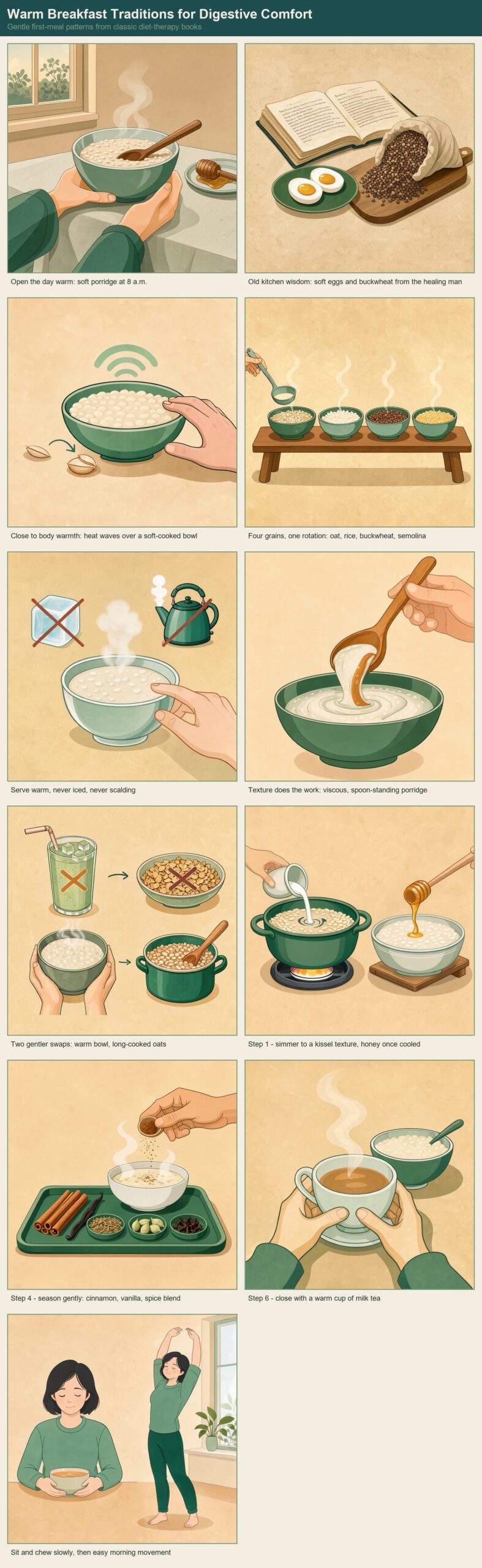
- The recorded warm-breakfast tradition opens the day with soft grain porridge — oatmeal, rice, buckwheat, or semolina — scheduled at 8 a.m. in portions around 300 g (about 1¼ cups) [1].
- Two quiet rules repeat across the rations: no very cold and no very hot food, and pureed or viscous textures instead of raw coarse fiber [1].
- Gentle seasoning belongs to the tradition: cinnamon, vanilla, bay leaf, and clove are on the allowed list, and butter is stirred into the finished bowl rather than used for frying [1].
- The six-step morning protocol below turns these patterns into a weekday routine — food-tradition education, not a treatment plan.
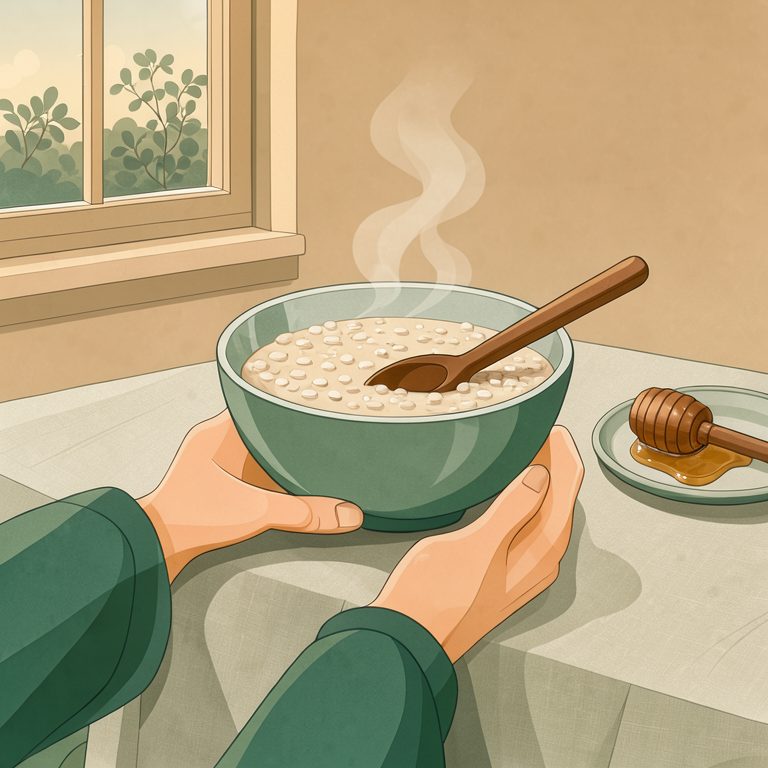
Ask a classic diet-therapy book what to eat for a settled stomach and the answer rarely starts with a cold smoothie. It starts with steam. Across decades of recorded therapeutic menus — and the far older healing manuals those books cite — the warm breakfast is the constant first meal: a bowl of soft porridge, taken warm, at the very start of the day [1][2]. This guide maps those warm-breakfast traditions grain by grain, then turns them into a six-step morning protocol you can actually follow. For the wider daily-routine picture, browse our practice manuals.
Why a Warm Breakfast? The Traditional View vs Modern Physiology
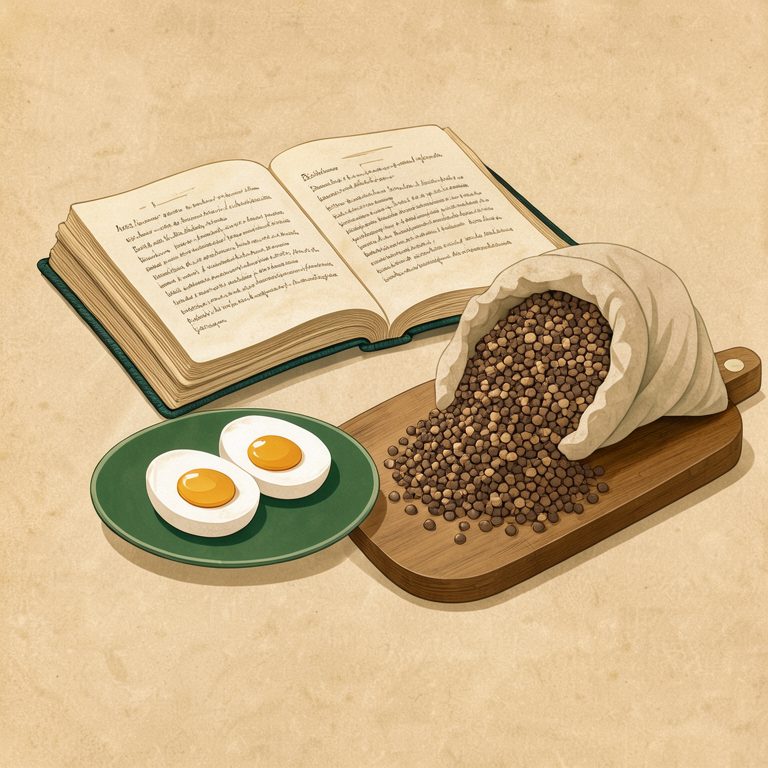
The traditional view of the first meal starts with effect, not macros. Hippocrates sorted familiar foods by what they did — lentils, barley, beet, cabbage, honey, and plum among the loosening foods; quince, unripe pear, and flaxseed among the binding ones [2]. Centuries later, Avicenna listed meat juice, syrups, soft-boiled eggs, and egg yolk as mildly acting, nourishing foods, and warned specifically against overeating and pickled dishes [2]. A sixteenth-century Russian healing manual already recommended buckwheat porridge [2]. The warm breakfast, in other words, is not a trend — it is one of the longest-running recommendations in recorded diet writing.
Modern physiology gives the pattern a plain reading: a warm bowl arrives close to body temperature, and long cooking pre-softens starch into a texture that asks little mechanical work of the stomach. That is why the recorded rations pair two rules — temperature and texture — rather than relying on either one alone [1].
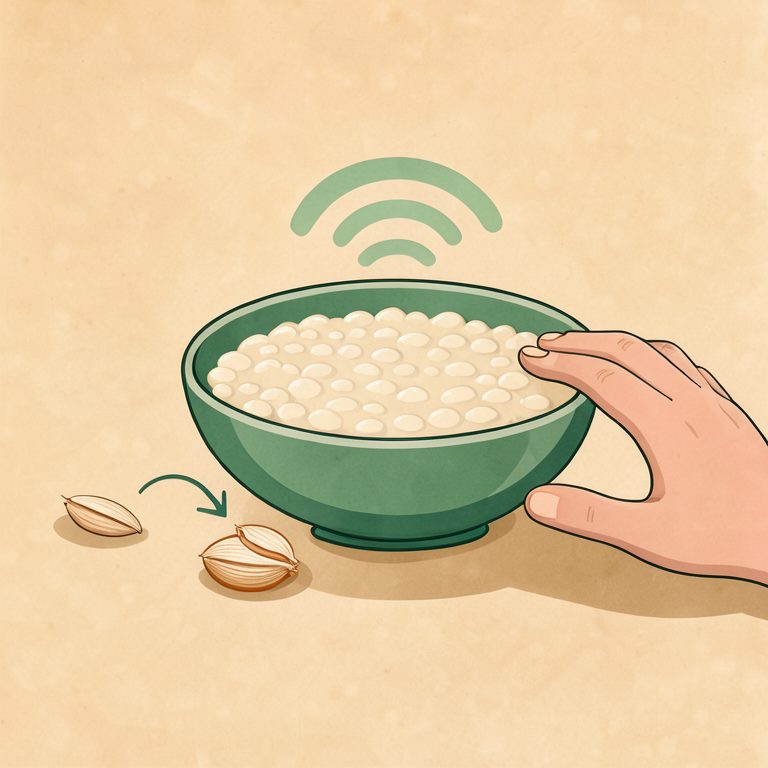
The Warm Breakfast Table: What the Diet Books Serve
Across the seven-day therapeutic menus, the 8 a.m. slot is a warm bowl plus a warm cup, with soft protein on the side [1]. The table below shows the rotation exactly as the rations record it.
| Bowl at 8 a.m. | How the menus serve it | Side dishes in the same slot |
|---|---|---|
| Pureed milk oatmeal | 300 g, pureed texture, day one of a seven-day menu [1] | Steamed curd pudding, milk tea 200 g [1] |
| Rice porridge on milk | 300 g, day one of a second ration [1] | Steamed protein omelet, milk tea [1] |
| Buckwheat porridge | 300 g, loose-cooked, with 10 g butter stirred in [1] | Tea; on another morning, a steamed omelet [1] |
| Semolina milk porridge | 300 g, rotating through the day’s later slots in the weekly menus [1] | Soft baked dishes and compote later in the day [1] |
| Warm oat drink | Oats simmered down to a liquid-kissel consistency, milk stirred in and briefly boiled, honey added once cooled — taken warm, one cup two to three times a day [3] | A gentle grain-therapy cup between meals [3] |
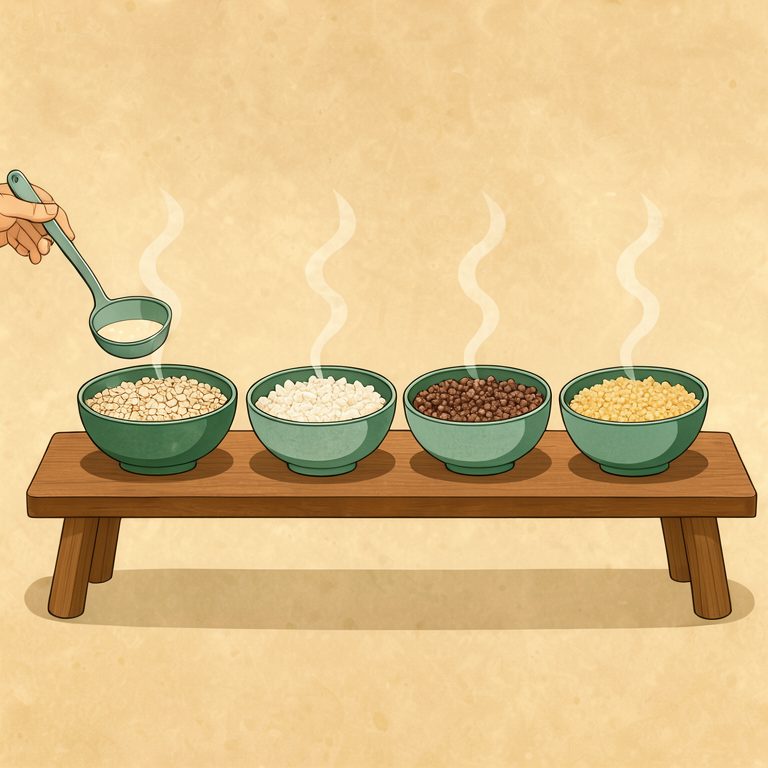
Two Quiet Rules: Temperature and Texture
Rule one: keep the bowl in the middle band. The gentle rations state it outright — very cold and very hot dishes sit on the forbidden list, right alongside fried food and rich broths [1]. Butter is treated the same way: it is added to the finished dish, never used for frying [1].
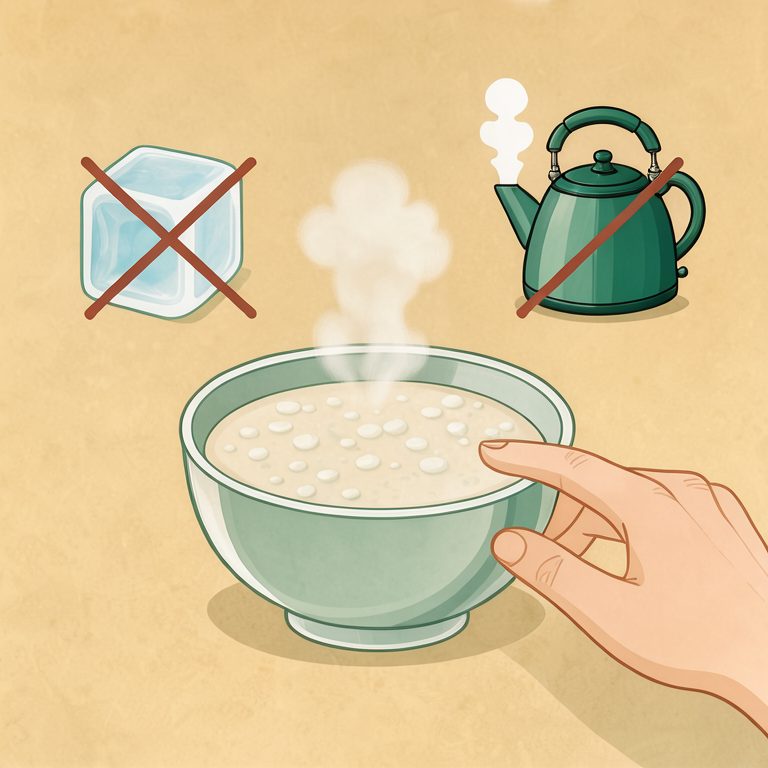
Rule two: let texture do the work. The same books sort grains by how they are served — pureed, viscous, and semi-viscous porridges are in; millet and pearl-barley porridges, peas, beans, and raw coarse-fiber vegetables are out [1]. Cooking is held to boiling and steaming, to a liquid, pureed, or soft consistency [1].
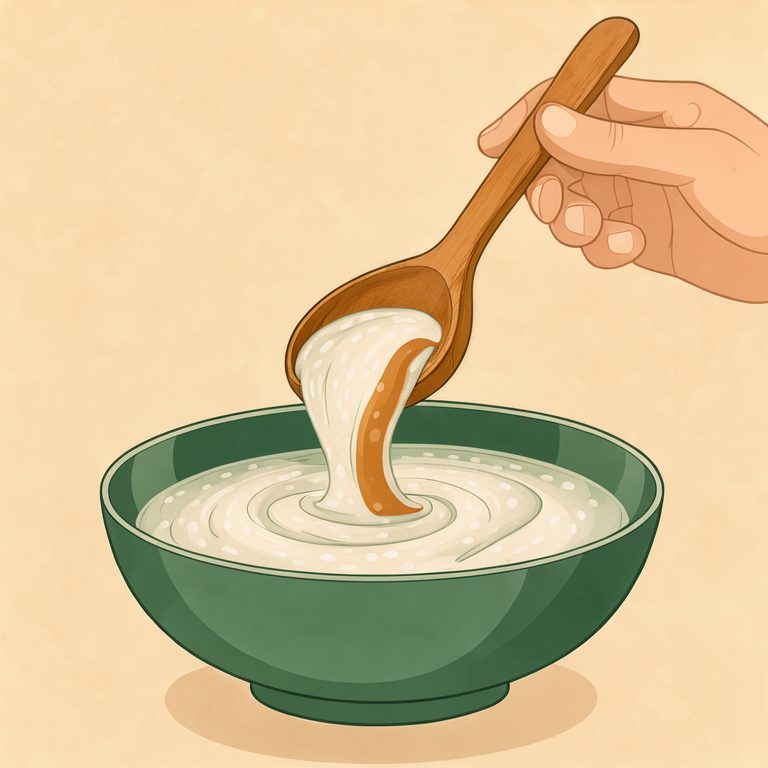
Common morning missteps — and the gentler swap
- An icy smoothie on an empty stomach. Swap to a warm bowl for a week: the rations exclude very cold food entirely [1].
- A raw-fiber load-up first thing. Swap long-cooked oats for raw bran heaps — the rations exclude raw coarse-fiber vegetables and the coarser grains in favor of soft textures [1].
- A scalding cup gulped on the run. The ban covers both ends of the thermometer; let the cup drop to warm before you drink [1].
- Eating fast. The Nishi health system advises chewing food thoroughly — to a gel-like state — so that a small amount satisfies [5].
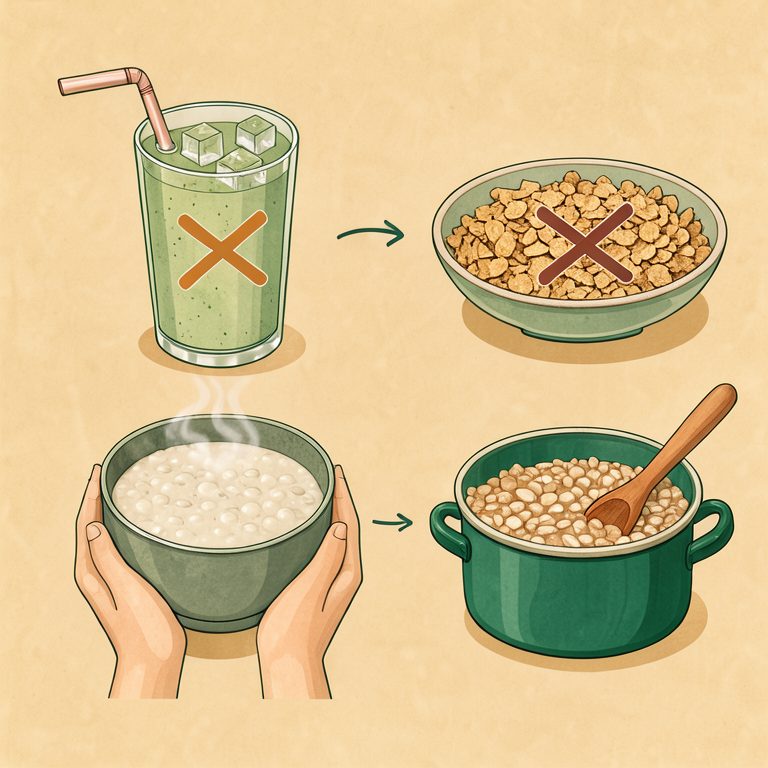
The Warm Breakfast Protocol: Six Steps to a Gentler Morning
- Simmer, don’t rush. Combine oats and water and simmer until the pot turns to a liquid-kissel consistency; stir in milk, bring it back to a brief boil, and sweeten with honey once it has cooled a little [3].
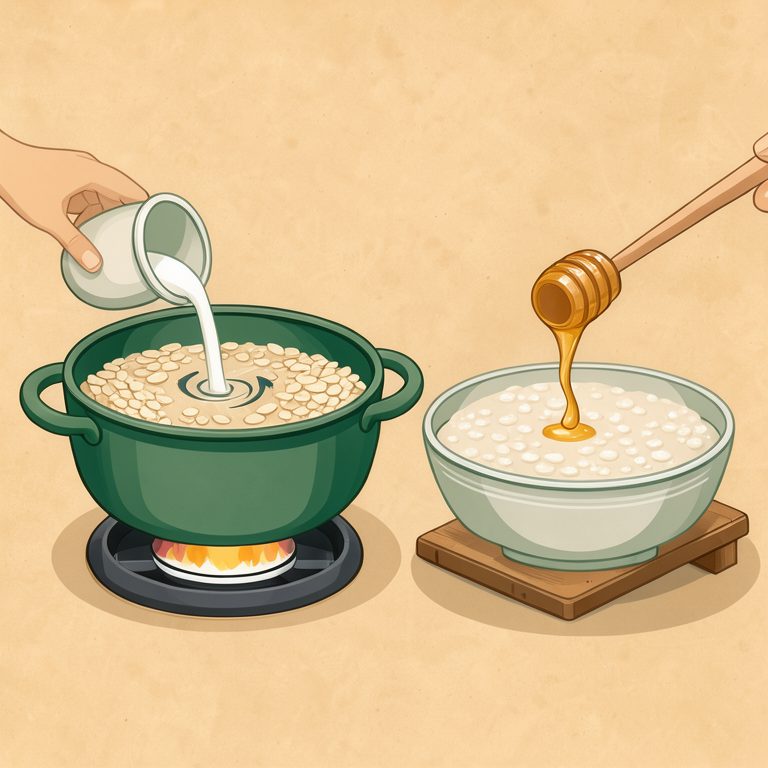
Step 1 — simmer oats to a kissel texture, stir in milk, add honey once cooled. - Pick one grain and cook it soft. Oat, rice, buckwheat, or semolina — aim for a viscous, spoon-standing bowl rather than a loose one [1].
- Serve warm, not testing. Warm to the touch is the target: the rations forbid both icy and scalding food [1].
- Season gently. Cinnamon and vanilla are on the gentle rations’ allowed list [1]; traditional spice guides also describe a digestion blend — costus root, cumin, black cardamom, and clove — used to help the digestion of starchy, flour-based meals [4].
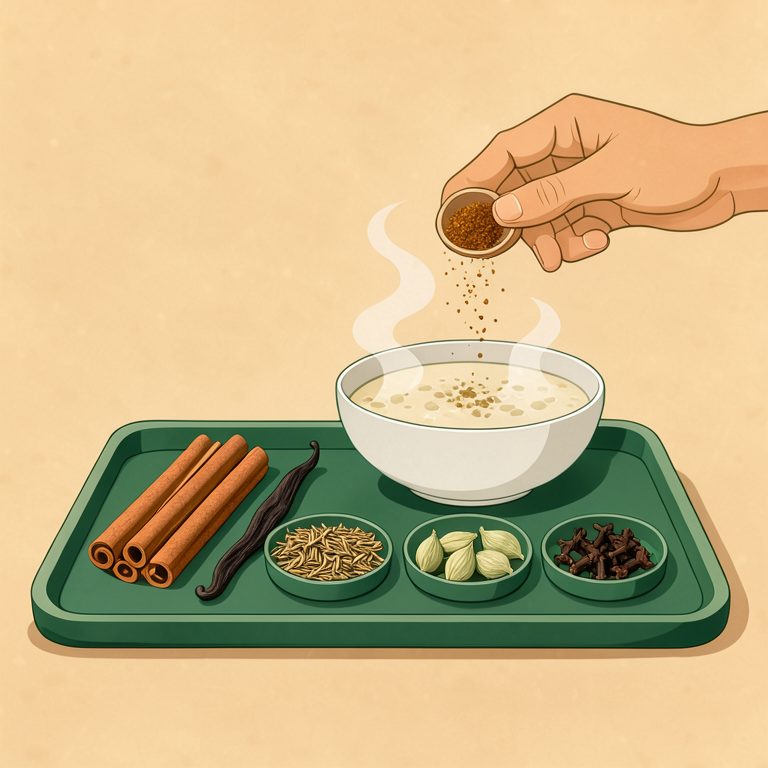
Step 4 — season gently: cinnamon, vanilla, and the traditional digestion spice blend. - Sit and chew. Take the bowl seated and chew each spoonful toward that gel-like state; the recorded portions are modest — around 300 g — meant to satisfy, not stuff [1][5].
- Close with a warm cup. The menus end the breakfast slot with milk tea, not something iced [1].
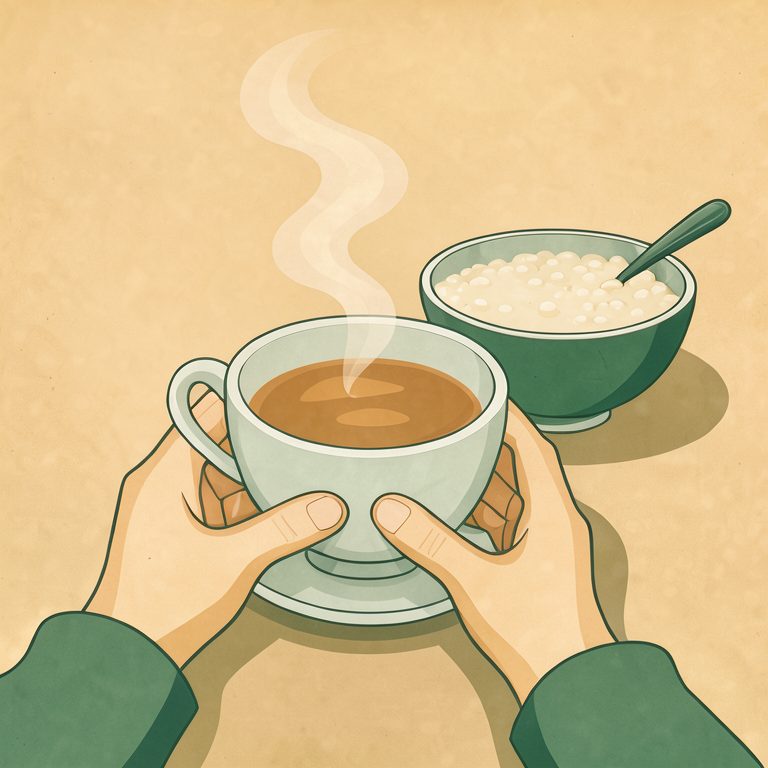
Step 6 — close the meal with a warm cup of milk tea, not something iced.
Morning Pairings: Warm Bowl, Gentle Movement
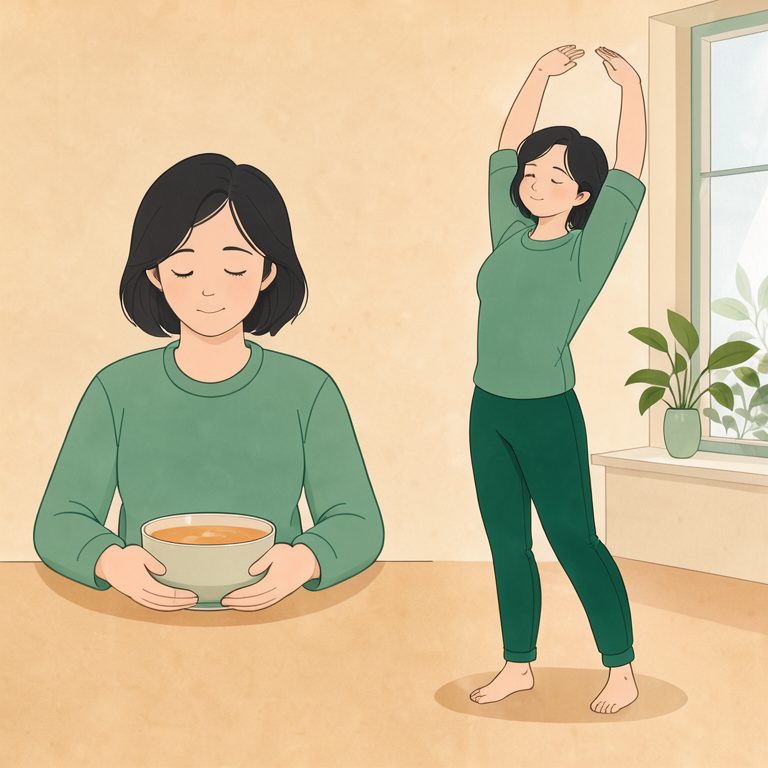
Traditional routines treat the morning as one sequence — food, then movement — rather than separate chores. A short practice after a warm bowl is the natural next step: browse our step-by-step manuals for gentle routines that fit in ten minutes. If stiff joints are what slow your mornings, our Joint Genesis review walks through what the program covers and who it fits; if it is tight hips from desk days, the Unlock Your Hip Flexors review lays out the criteria we use when evaluating it.
Safety
Everything above describes food patterns recorded in traditional diet-therapy literature. It is not intended to cure, treat, diagnose, or prevent any disease, and it is not a substitute for care from a qualified clinician. Spices are not for everyone: the spice guide cited here pairs its remedies with contraindication notes — its milk-thistle section, for example, lists hypermotor biliary dyskinesia, pregnancy, Gilbert’s syndrome, a removed gallbladder, and acute inflammatory processes [4]. If you are pregnant, managing a chronic condition, recovering from illness, or taking medication, talk with your clinician before changing how you eat.
Frequently Asked Questions
Is oatmeal the only “right” warm breakfast?
No — the recorded menus rotate four grains through the same 8 a.m. slot: oatmeal, rice, buckwheat, and semolina, all in 300 g portions [1]. Temperature and texture are the constants; the grain is the variable.
What about cold yogurt or kefir in the morning?
The rations keep fermented dairy for the day’s later slots — kefir is served at 9 p.m. — and hold the breakfast slot for warm dishes [1]. If you tolerate cold fermented dairy well there is no ban here, but the recorded pattern warms the first meal.
How quickly will I notice a difference?
The source books promise no timelines, and neither do we. Comfort responses vary from person to person; treat this as a two-week experiment in tradition, and bring persistent digestive complaints to a clinician rather than to a menu.
Sources
- [1] Zinets I.I. — Zdorovye i Pitanie: 100 Lechebnykh Ratsionov (Health and Nutrition: 100 Therapeutic Rations) (1991)
- [2] Menshikov F.K. — Dietoterapiya (Diet Therapy) (1972)
- [3] Shelest O. — Krupy Lechat. Ukreplyaem i Ochishchaem Organizm (Grains for Health: Strengthen and Cleanse the Body) (2019)
- [4] Shutova A. — Gaid Kak Lechit Spetsiyami (A Guide to Treating with Spices) (2022)
- [5] Gogulan Maya — Mozhno Ne Bolet (You Don’t Have to Be Ill) (n.d.)
How we researched this
This guide is based on our local library of 1,137 traditional wellness books; no internet sources were used. Every statement above was checked against the cited source passages.
