
Educational content only — not medical advice. See our full Medical Disclaimer and Affiliate Disclosure below.
Key Takeaways
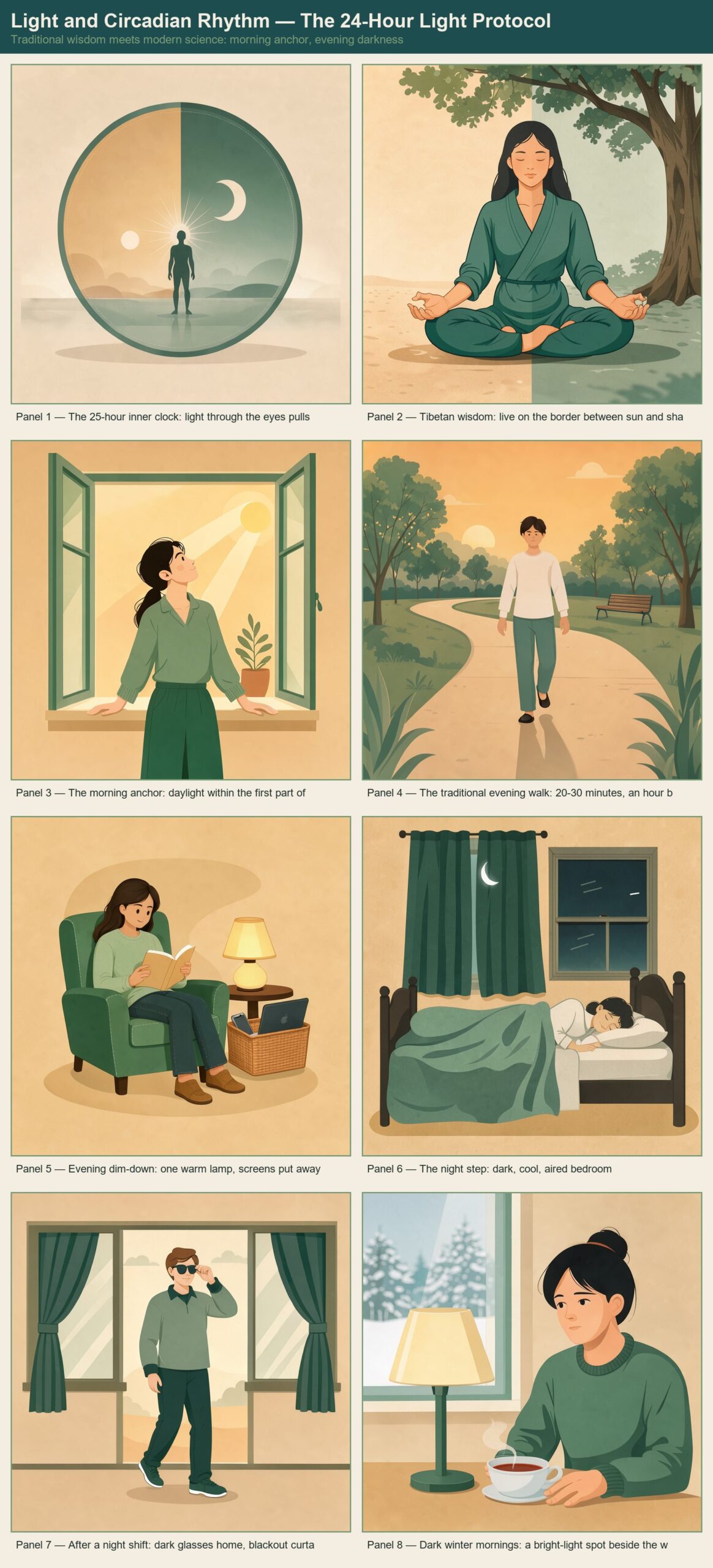
- Your body clock runs slightly long — about 25 hours — and morning light through the eyes is the signal that pulls it into step with the 24-hour day [1].
- Melatonin, the sleep hormone made by the pineal gland, starts rising in darkness and stops when light returns — so morning light and evening darkness are two ends of one lever [2].
- Traditional systems taught the same geometry from the other side: rising at a fixed early hour, an evening walk about an hour before bed, and a dark, cool, well-aired sleeping place [4][5][6].
Of all the levers that shape sleep, light and circadian rhythm are the pair nothing else replaces. Every tradition represented in this site’s library — Tibetan medicine, Soviet hardening manuals, Vedic lifestyle teaching — hangs its daily routine on the day-night cycle. Modern sleep medicine arrives at the same anchor from the other direction, with bright-light sessions and evening darkness. This guide sets the two side by side and turns them into one workable schedule: a light-timing table, a seven-step protocol for a normal day, and fixes for night shifts, jet lag, and dark winters.
Why Light Is the Master Switch of Your Circadian Rhythm
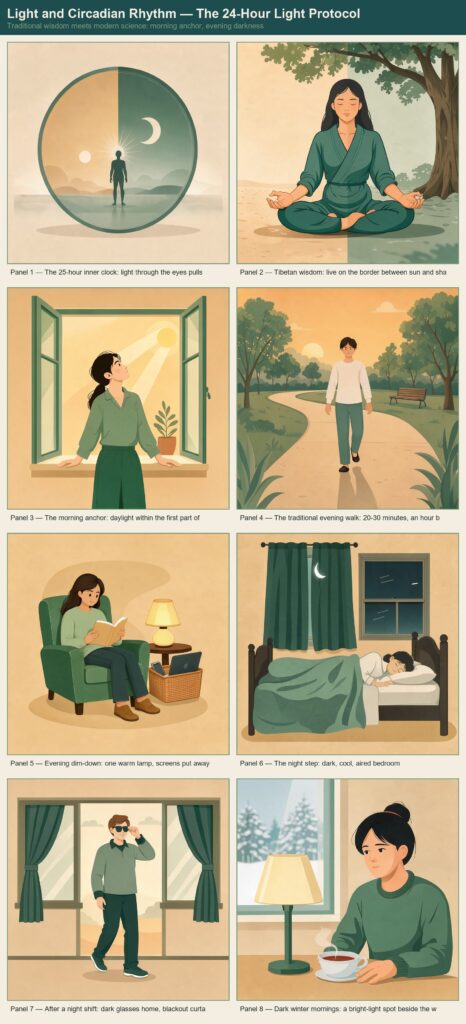
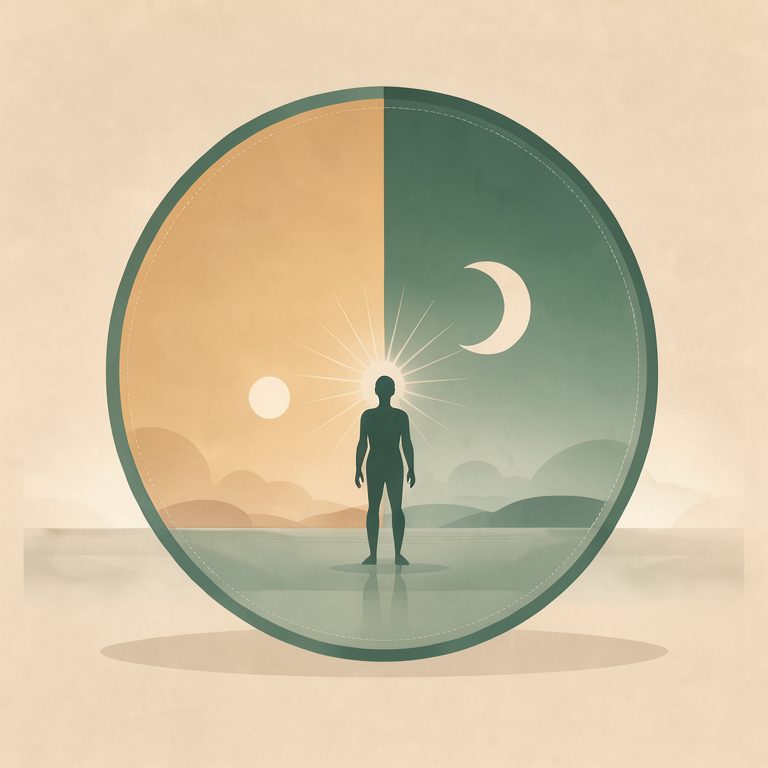
The starting fact is a little strange: left alone, the human clock runs long. Sleep-research literature describes an inborn cycle of about 25 hours that has to be shortened by roughly an hour every day to match the solar day — and the agent that does it is light falling on the eyes. Morning sunlight, in the words of one insomnia manual, acts as the time-marker for our biological clocks at the moment of waking; the synchronization itself is called phase shifting, and bright light applied at different parts of the day can push the rhythm earlier or later [1]. The same source cites a classic demonstration: a person isolated from external cues whose clock is shifted one hour per day ends up, within two weeks, fully awake at night and asleep by day — proof of how tightly the sleep-wake rhythm follows the light-dark environment [1].
The hormone that translates darkness into sleepiness is melatonin, produced by the pineal gland. Its synthesis depends on illumination: it begins as darkness falls and stops as light returns — an elegant switch that, as one popular sleep guide puts it, governs the circadian rhythms linking day and night [2]. The same guide adds an uncomfortable observation: humans are the only species that fights the instinct to sleep and cuts sleep short with an alarm clock. We feel sleepy when the sun sets and wake when it rises — and then ignore both signals. Its conclusion is modest and practical: arrange your life so it interferes as little as possible with the organism’s natural rhythms, rather than retreating to a sunset bedtime nobody can keep [2].
How much the timing of sleep matters shows up in a population-scale observation reported in the same guide: on the day after the spring switch to daylight saving time — when an hour of sleep is lost — the number of heart attacks rises by almost a quarter, while on the day after the fall switch back, when an hour is gained, it drops by 21 percent [2]. That is a society-level statistic, not a personal forecast, but it illustrates why sleep specialists insist that the waking hour sets the biorhythm for the whole day and for the following night [8].
What Traditional Systems Said About Light, Rest, and Rising
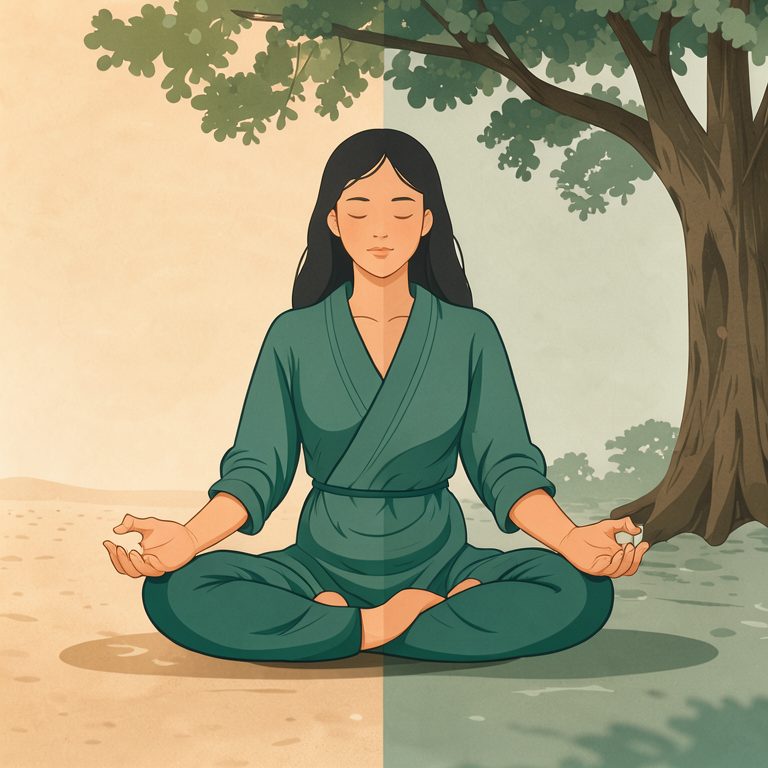
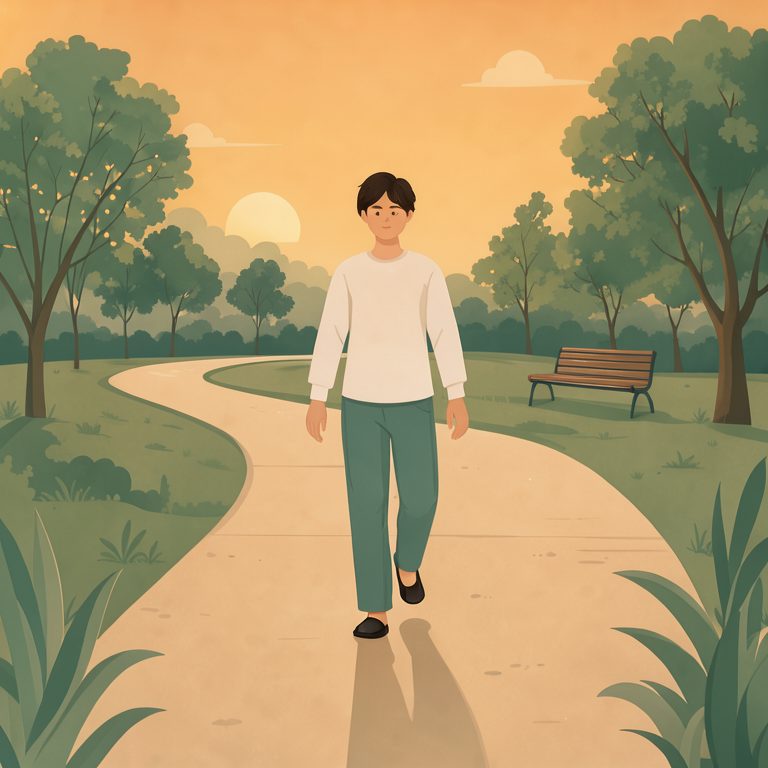
Long before phase-shift experiments, traditional systems built their regimens on the same sun-to-sun frame. Tibetan medicine, as quoted in a folk-medicine encyclopedia, teaches that to stay healthy one should “live on the border between sun and shadow” — moderation in everything — and explicitly tells the reader to align the daily regimen with the seasons and to sleep in a cool place in summer and a warm one in winter [4]. A Soviet hardening manual from the 1980s translates the same idea into habits: sleep with the window open in every season, take a daily evening walk of 20–30 minutes about an hour before bed, and walk at least part of the commute on foot [5].
Early rising is the third strand. Vedic lifestyle teaching advises waking before six o’clock in the morning, before the sun — a prescription the tradition ties to clarity and tone for the whole day [6]. A Russian restorative manual goes further still, scheduling its health practice for 4 a.m. — the hour its author ties to the body’s active self-cleansing [9]. Read together, the traditional advice amounts to a light protocol avant la lettre: rise while the light is still low, spend the day at the border of sun and shadow, walk as the sun goes down, and sleep in the dark and the cool.
Morning Light: The Anchor Habit
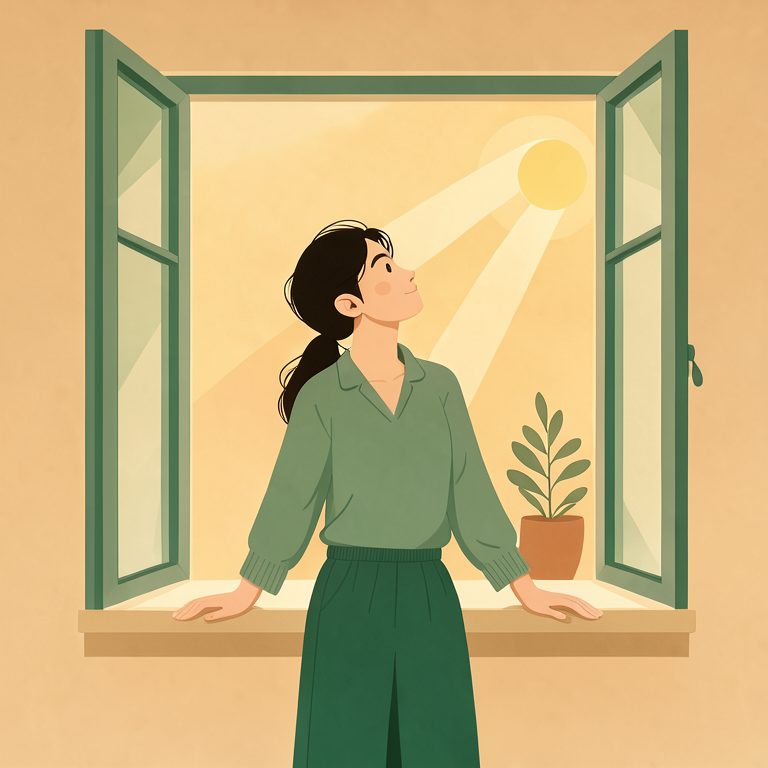
Modern clinics turned morning light into a procedure. A family-doctor compendium of American physicians describes researchers at the National Institute of Mental Health using bright morning light to help people with chronic short sleep and delayed sleep phase: patients are seated for about two hours in front of high-intensity, full-spectrum lamps — light resembling a summer morning — which gives the body the signal that it is morning and time to act. In the evenings the same patients wear dark glasses, so the body gets the opposite signal: it is time to wind down. After several weeks of this pairing, the report notes, patients were more energetic in the mornings and slept better at night [3].
The same source is refreshingly practical about the home version: an equivalent effect can be had by walking around the neighborhood after waking, sitting in the sun, or working in the yard; in winter, it suggests asking a clinician which type of artificial lighting to use [3]. Consistency matters as much as intensity. Sleep physicians quoted in the same compendium urge going to bed and waking at the same times daily to establish the circadian system — the “internal clocks” that regulate most body functions — and warn that sleeping late on weekends sets up trouble falling asleep on Sunday night and a wrecked Monday morning [3]. One more traditional bonus of daylight is worth naming: a natural-health classic points out that without sunlight the body cannot produce vitamin D, and links the shortage of winter light to seasonal low spirits that usually lift in spring [7].
Evening Darkness: Protecting the Melatonin Window
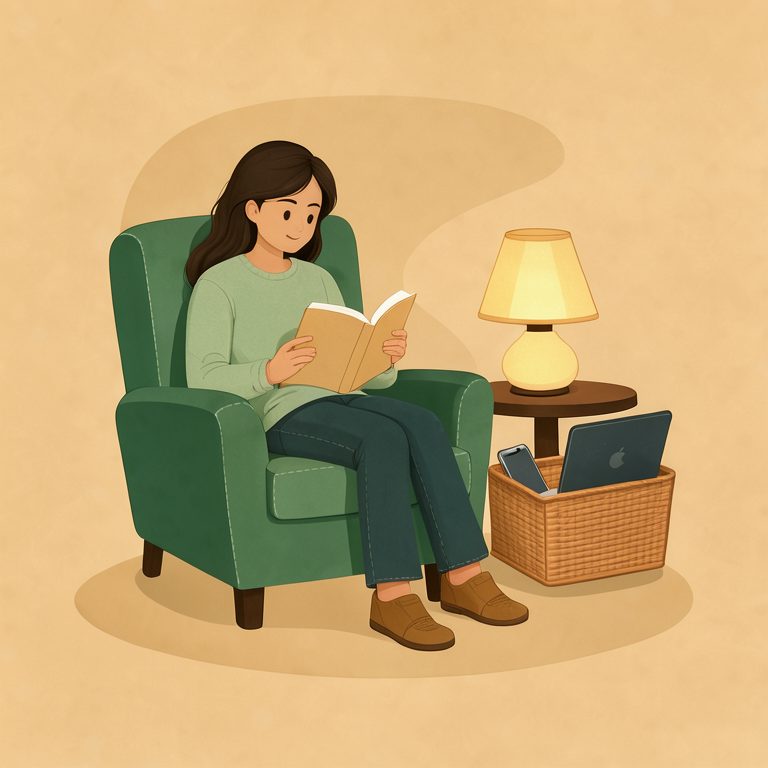
Everything that makes morning light work has a mirror image after sunset. Because melatonin rises only in dimness, the evening’s job is to darken the day early. The clinic protocol above does it with dark glasses after dusk [3]; at home, the softer equivalents are obvious: lamps turned low, bright rooms avoided late, and stimulating activities put aside. The physician compendium adds a behavioral layer to the optical one. It recommends spending ten minutes, an hour or two before bed, reviewing the day and planning tomorrow — a “clearing of the mind” so problems do not follow you under the blanket — and keeping the bed for sleeping only, not for work or arguments [3]. It sets a caffeine cutoff after 4 p.m. (coffee, cola, and chocolate all count) and warns against the seductive nightcap: alcohol presses the nervous system down for a few hours, then wears off — usually in the middle of the night — and wakes you [3]. And if you are not asleep within 15–20 minutes, get up and do something pleasantly monotonous rather than lying there; computer games are explicitly on the “not that” list, because they arouse rather than settle [3]. The hardening manual’s evening walk fits here as the hinge between day and night: gentle movement in fading light, finishing about an hour before bed [5].
The 24-Hour Light Protocol: Seven Steps and a Timing Table
Here is the whole day compressed into one sequence. Steps 1 and 7 are the anchors; the middle steps keep the clock from drifting between them.
| Point of day | Light action | What it does | Basis |
|---|---|---|---|
| First hour after waking | Bright outdoor light: walk, sit in the sun, yard work | Sets the clock; phase-shifts the rhythm into the 24-hour day | [1][3] |
| Daytime | Stay in daylight where the day allows; keep windows and curtains open | Steady daytime signal; supports vitamin D production | [7] |
| Hour before bed | 20–30 minute easy walk outdoors in fading light | Natural wind-down; the traditional evening transition | [5] |
| After sunset | Dim warm light at home; dark glasses if out late under bright lights | Protects the melatonin rise that begins with darkness | [2][3] |
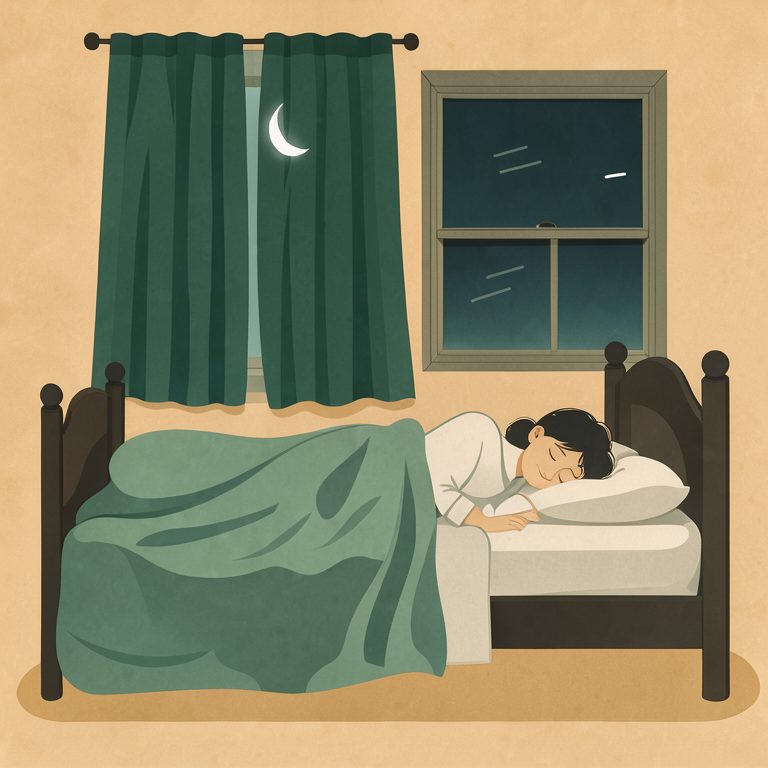
| Night | Fully dark bedroom, window ajar, cool in summer / warm in winter | Uninterrupted sleep in the environment the traditions prescribe | [4][5] |
- Fix the wake time first — including weekends. The waking hour, not the bedtime, is the handle sleep physicians say steadies the circadian system; late weekend lie-ins are traded away on Monday morning [3].
- Get light on your eyes within the first part of the morning. A walk around the block, a sunny balcony, or yard work — the home equivalents the clinic itself names. In the dark months, ask a clinician about artificial morning lighting before buying anything [3].
- Keep the day in daylight. Work near a window, take breaks outside, and let daylight carry the “it is daytime” signal [3][7].
- Walk as the light fades. Twenty to thirty minutes, about an hour before bed — the hardening manual’s evening prescription [5].
- Dim down after dark. Low warm light indoors; dark glasses if the evening runs long under bright lights; put arousing games and work out of the last hours [3].
- Set the chemical curfew. No caffeine after 4 p.m., no nightcap — it pays the loan back at 3 a.m. — and ten quiet minutes to review the day and plan tomorrow before bed [3].
- Sleep dark, cool, and aired. Blackout where needed, the window open year-round, cool in summer and warm in winter, as the Tibetan instruction frames it [4][5].
Night Shifts, Jet Lag, and Dark Winters
Irregular schedules do not break the mechanism; they just demand more deliberate use of it. For shift work, the insomnia manual prescribes exactly the two levers above: bright light at the workplace during the night shift, then dark sunglasses on the way home in the morning so the rising sun does not hit the eyes, and blackout curtains at home so daytime sleep happens in real darkness [1]. For jet lag, the same source calls bright light the strongest regulator of the daily rhythm: after crossing time zones, seek daylight in the new local morning — lit rooms, walks without sunglasses — and defend darkness at the new local night, darkening the room or wearing very dark glasses at the wrong hours. Used this way, it reports adaptation in roughly three days of paired light and darkness, rather than the days-to-weeks an unaided shift can take [1]. A related clinical note: the lever works in both directions — bright light falling at different periods of the day can push the rhythms faster (a phase advance) or slower (a phase delay) [1]. In winter, when morning light is thin, the physician compendium’s advice stands: ask a clinician what type of artificial lighting fits your situation rather than guessing [3].
If your days are more desk-bound than shift-bound, movement still belongs in this picture — light sets the schedule, and gentle practice fills it. Our library of free practice manuals collects short daily routines, and the Unlock Your Hip Flexors review and Joint Genesis review set out plainly what those programs can and cannot do — context worth having before you spend money, not a substitute for care.
Safety and Disclaimer
- This article describes traditional wellness routines and light-related habits for general education only. It is not intended to diagnose, treat, cure, or prevent any disease and does not replace professional medical care.
- Bright-light sessions: the two-hour clinical protocol described was supervised by physicians. If you live with an eye condition, take light-sensitizing medication, or manage a mood condition, ask your clinician before using bright lamps — the source itself directs readers to professional guidance on artificial lighting in winter [3].
- Dark glasses: never wear very dark glasses while driving or in situations where you need full vision; use them, as the sources do, on the commute home after a night shift or under late bright lights [1][3].
- Persistently poor sleep, excessive daytime sleepiness, or suspected sleep disorders are reasons to see a doctor, not to self-treat with light alone. The sources themselves pair light therapy with medical care and sleep hygiene [1].
- Seasonal advice is general: a cool room in summer and a warm one in winter refers to comfort, not exposure to cold; do not sleep in conditions that leave you shivering or overheated [4][5].
Frequently Asked Questions
How long do I need to stay in morning light?
The clinical protocol described in the sources seated people for about two hours in front of high-intensity full-spectrum lamps [3] — but the same physicians say that at home, a walk around the neighborhood, sitting in the sun, or yard work after waking does the equivalent job [3]. The fixed elements are timing (early day) and consistency (daily); start with whatever your schedule allows and hold it.
Do evening dark glasses actually do anything?
In the sources they are used deliberately: patients wear them in the evening so that bright light does not deliver a false “it is still day” signal, and shift workers wear them on the way home in the morning for the mirror-image reason [1][3]. They are a tool for timing, not a fashion statement — and never while driving [1][3].
What if I cannot fall asleep 15–20 minutes after going to bed?
The physician compendium is specific: get up, do something pleasantly monotonous — a magazine article, knitting, a balance sheet — and return to bed when sleepy; avoid arousing activities such as computer games, and keep the morning wake time fixed no matter how the night went [3].
Sources
- [1] Lyudmila Berezhkova — Kak Izbavitsya ot Bessonnitsy (How to Get Rid of Insomnia)
- [2] Allen Carr, John Dicey — Legkiy Sposob Uluchshit Son (The Easy Way to Better Sleep) (2024)
- [3] Unknown Author — Domashny Doktor. Sovety Amerikanskikh Vrachey (Home Doctor: Advice from American Physicians) (2007)
- [4] A. Kalinina — Kratkaya Entsiklopediya Narodnykh Metodov Samolecheniya (A Concise Encyclopedia of Folk Self-Care Methods) (2007)
- [5] V. Ya. Kramskikh — Vozdukh Zakalyvaet i Lechit (Air Hardening: How Fresh Air Strengthens the Body) (1986)
- [6] Oleg Torsunov — Rezhim Dnya (The Daily Regimen)
- [7] Adam Jackson — 10 Sekretov Zdorovya (Ten Secrets of Health)
- [8] I. Ye. Reif — Tekhnologiya Otdykha (Technology of Rest) (2014)
- [9] I. A. Shimansky — Prigovor Otmenyaetsya (The Verdict Is Rescinded)
How we researched this
This article is based on our local library of 1,137 traditional wellness books; no internet sources were used. Every statement above was checked against the cited source passages.
