
Educational content only — not medical advice. See our full Medical Disclaimer and Affiliate Disclosure below.
Key Takeaways
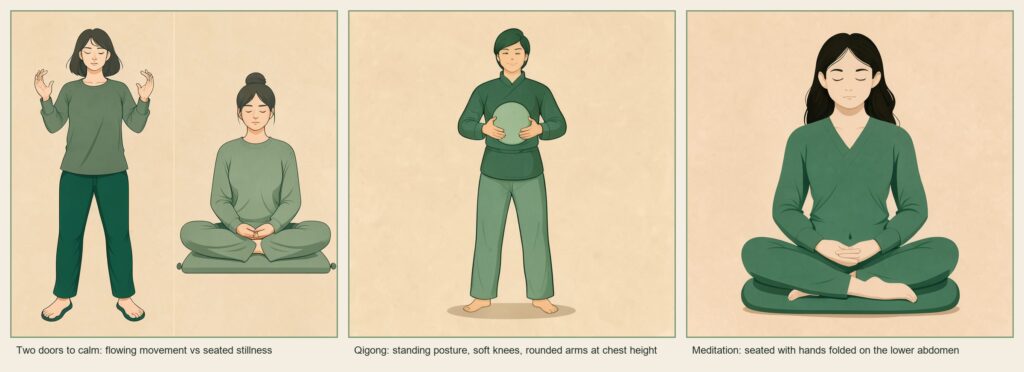
- Qigong and meditation reach calm by different doors: qigong works with the body first — posture, breath, and slow movement — while meditation, in most cases, works directly with consciousness itself [1].
- Classical qigong manuals treat meditation as one category of qigong, alongside dynamic movement and static breathing — not as a rival practice [3].
- One school’s traditional rule: beginners practice roughly 90 percent moving exercises and 10 percent static work; the ratio inverts only with experience [1].
- The classical day has natural slots: morning is the main session for several authors [9][12], and one lineage sums it up as morning cultivating Yang, evening cultivating Yin [15].
- Beginner doses are small: 10–15 minutes of seated stillness is enough at first [6], while newcomers to qigong are advised to build toward about thirty minutes daily [1].
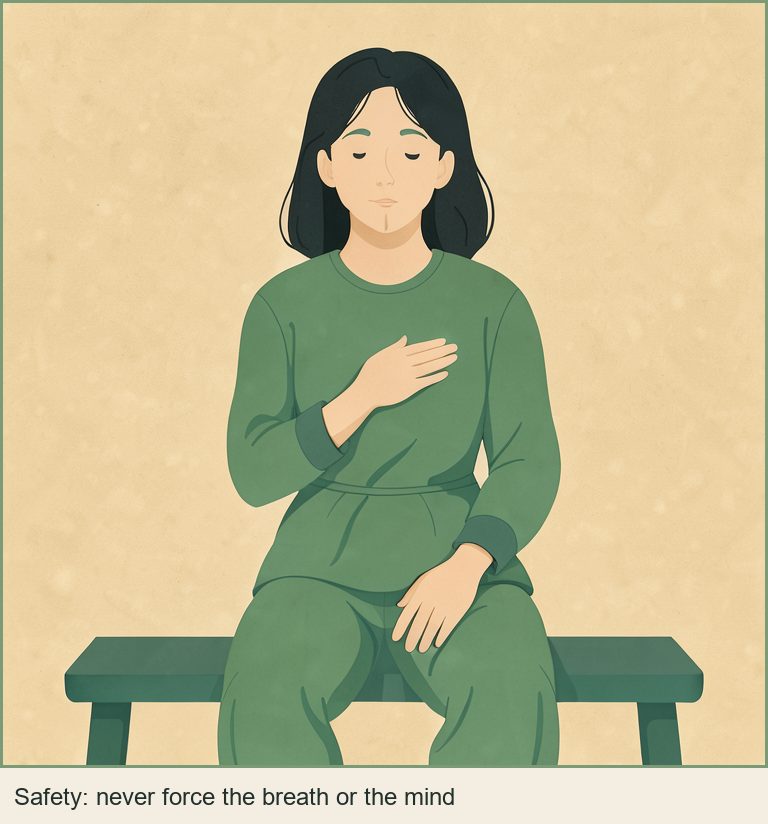
- Never force the breath or the mind: forced breathing classically produces dizziness and chest pain, and forcing the mind creates the very stress you sat down to settle [3].
Ask a room of stressed people why they started a practice, and the two answers repeat: to relax, or to improve their health — and one contemporary teacher names exactly these as the two largest groups the internal arts attract [1]. Qigong and meditation both serve that goal, which is why the real qigong vs meditation for stress question is rarely “which is better?” and almost always “which fits my day?” This guide compares the two strictly from classical instructional literature: what each practice is, how the tradition explains the calming effect, five decision points for matching a practice to your schedule, a ten-minute starter protocol, and the safety rules the source manuals insist on. For more step-by-step guides in the same spirit, browse our practice manuals.
Qigong vs Meditation for Stress: The Comparison at a Glance
| Qigong | Seated meditation | |
|---|---|---|
| What you actually do | Moving and stationary exercises that combine posture, breath, and mental intention [2] | Sit still and work with consciousness itself — classically by watching the breath or resting attention in the lower abdomen [1][6] |
| Where the work starts | The body: the tradition works with “the tangibility of the body” first, then progresses into the subtler realms of the mind [1] | The mind: in most cases meditation is “aimed at working solely with the practitioner’s consciousness” [1] |
| Posture options | Standing, seated, walking, or lying sets; static qigong exists in lying, sitting, and standing forms [4], and one famous seated set even suits people who are bedridden [8] | Most often seated: the classic zuochan posture is cross-legged sitting with the hands folded on the abdomen [5] |
| Place in the day | Morning is the traditional main slot, evening the secondary one [12]; one schedule lists three half-hour sessions — before sunrise, after lunch, before sleep [9] | The same rhythm: brief evening stillness before sleep is a classical recommendation [9][12] |
| Beginner dose | About thirty minutes daily for newcomers, expanded only once the habit holds [1]; repetition counts are a guide, not a rule [8] | Ten to fifteen minutes is enough at first, never forced [6] |
| Shared core | Both begin by regulating the body, then the breath, then the mind [1][10] — and both define success as a settled, quiet mind: stillness inside movement, movement inside stillness [4][11] | |
What Each Practice Actually Is
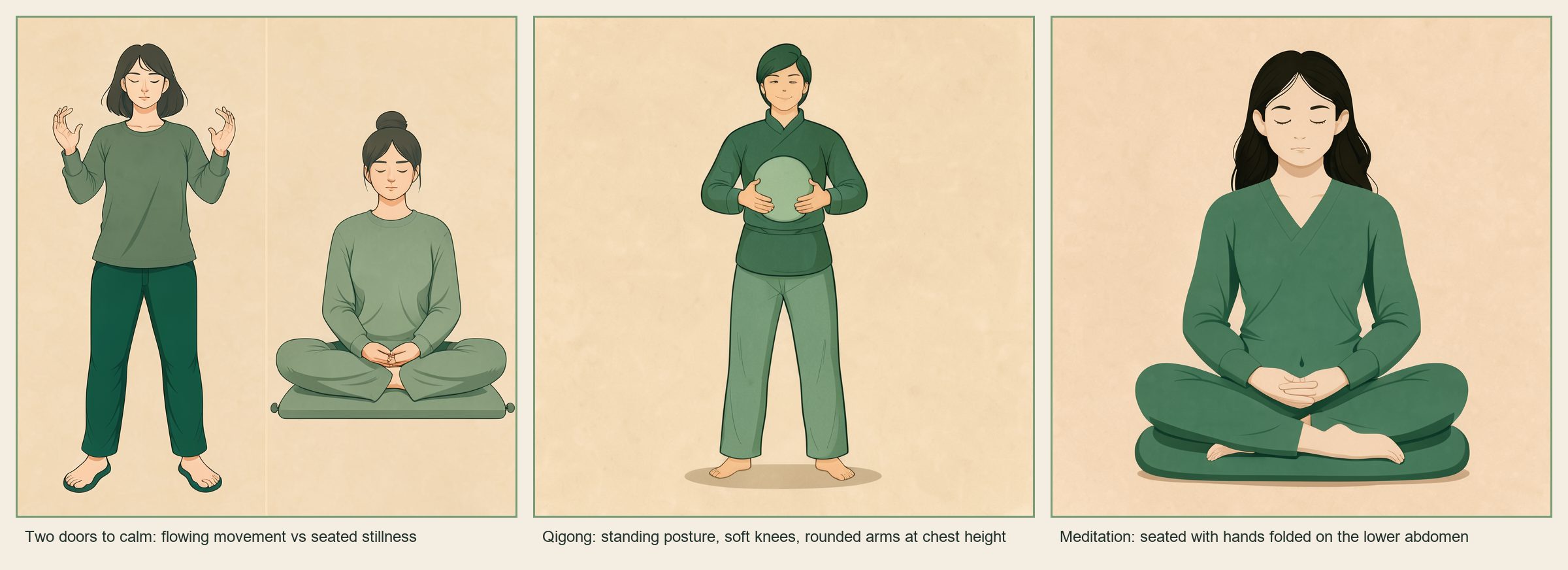
Qigong: regulate the body, then the breath, then the mind
Qigong is an umbrella, not a single exercise: moving and stationary sets — usually combining posture, breath, and mental intention — divided into categories by aim, with medical qigong the most common today [2]. Traditionally, whatever the system, a practitioner begins the same way: regulate the body’s condition, then the breath, and finally the mind — the “three regulations” of qigong [1]. Regulating the body means bringing it into a very relaxed, centered, and balanced state; only then, the manuals say, can the mind be calm and comfortable [10].
The repertoire splits into static sets (Jinggong), in which no movement of the body or limbs is allowed, and dynamic sets (Donggong), which move the trunk or limbs; the dividing line is simply whether the body moves, and static forms can be practiced lying, sitting, or standing [4]. A combined static-dynamic style also exists, entering stillness first and then blending the two [4].
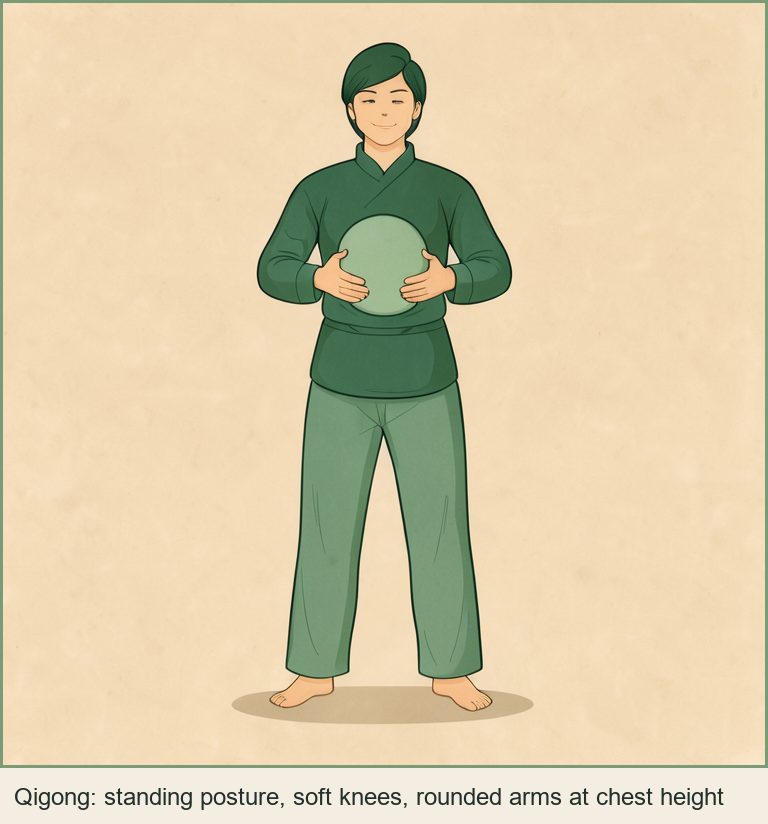
Meditation: working with consciousness
The seated contemplation called zuochan is described as the classic exercise of China’s entire system of psychopractice and meditation: performed cross-legged, hands folded on the abdomen, attention gathered at the Dantian while the mind empties of thoughts [5]. A modern beginner’s manual strips it further: take a seated posture, close your eyes, isolate yourself from the world — and do not try to control anything; simply observe [6]. The classical signpost of depth is physiological rather than mystical: when the breath is truly regulated, “your heartbeat slows down, and your mind is very clear — you have entered the sphere of real meditation” [8].
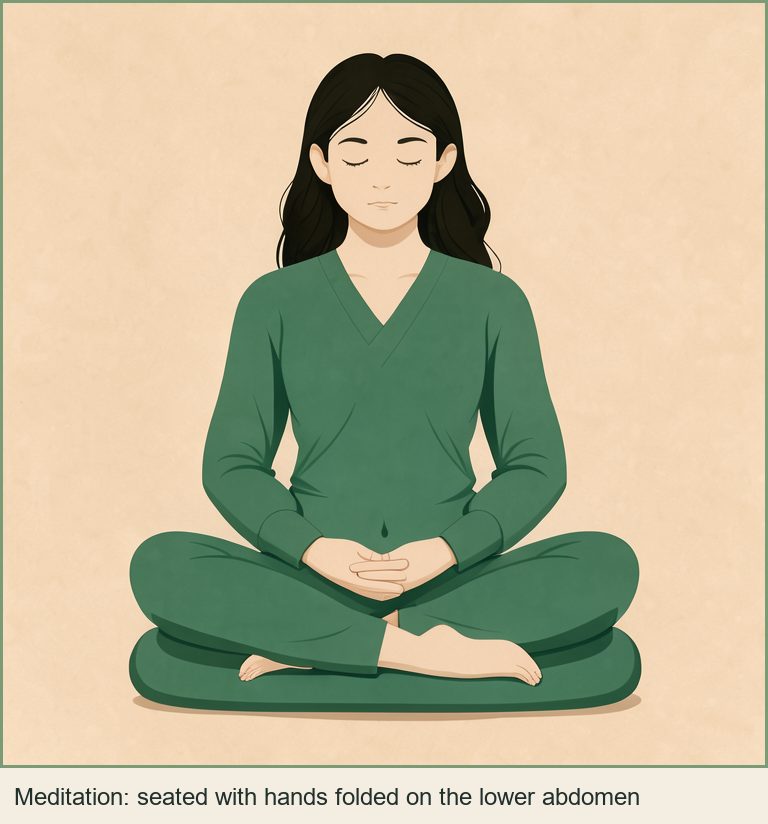
The overlap: meditation sits inside the qigong family
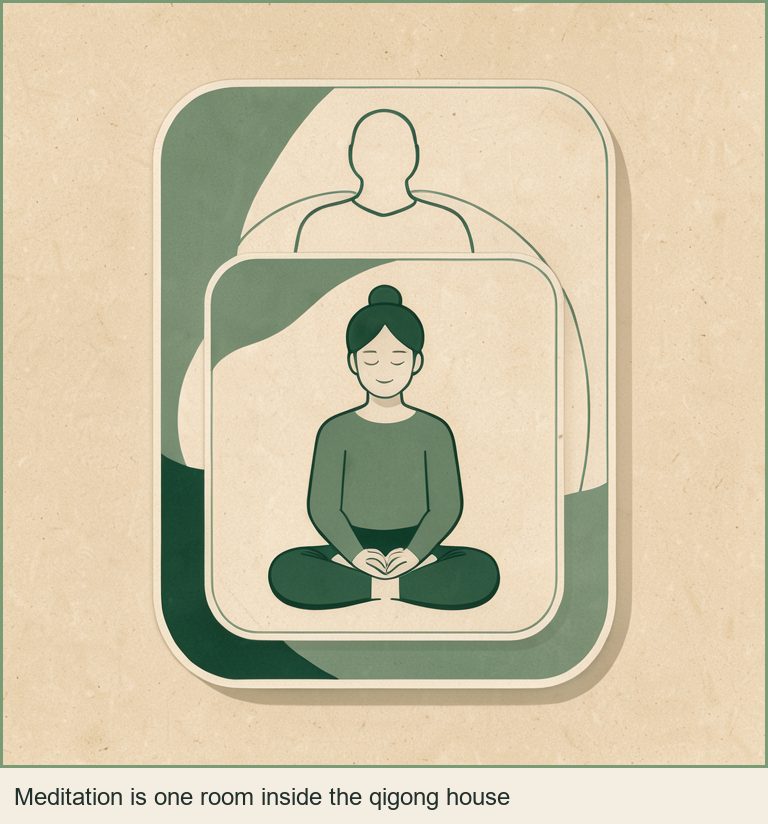
This is the twist most comparison articles miss: in the classical literature the two are not rivals. One widely read manual sorts qigong into four categories — dynamic exercise, spontaneous movement, static breathing, and meditation — and recommends that a well-rounded student sample each [3]. The same point is made from the other side: in qigong, movement coexists with stillness, “in stillness there is movement, in movement there is stillness” [11] — static practice is outward stillness with movement of qi inside, while dynamic practice is outer movement over a completely calm mind [4]. Seen this way, seated meditation is one room inside the qigong house.
Traditional View vs Modern Physiology
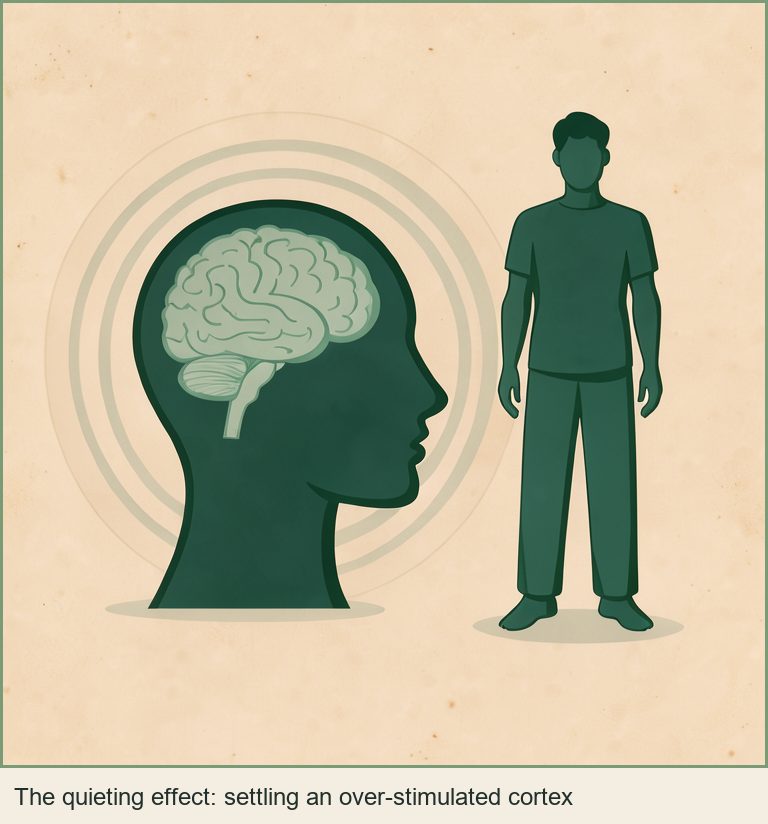
Traditional teaching speaks the language of qi: regulating the qi from an imbalanced condition to a balanced one is the root concept from which qigong grew [10]. But the source literature itself offers a modern translation. A book on standing practice, surveying research of its era, explains the main aim of qigong meditation as interrupting the cycle of an over-excited or exhausted cerebral cortex — supplying it with calming stimuli so it can settle into what the authors call protective inhibition and recover [7]. That quiet state, the same survey notes, rests on factors such as relaxation combined with maintained concentration — and it warns that for health purposes the concentration must stay soft, pleasant, and relaxed, since too strong a focus overloads the very system it is meant to settle [7].
Studies in relaxed sitting and lying postures cited there reported decreased reflex, muscular, vascular, and skin electrical responses — a general quieting of the central nervous system, especially the sympathetic nervous system — an effect attributed largely to directing attention away from external stimuli; electroencephalogram findings are described as distinct from sleep and hypnosis [7]. Interestingly for the qigong-vs-meditation question, the same survey reports the author’s observation that these changes were more stable in standing postures than in lying or sitting positions [7]. None of this is presented as our medical claim; it is how the source tradition explains, in modern vocabulary, why both practices are valued for settling stress.
Which Fits Your Day? Five Decision Points
BOFU answer: match the practice to your calendar, energy, and body — not to an ideal. The manuals themselves are surprisingly practical about this.
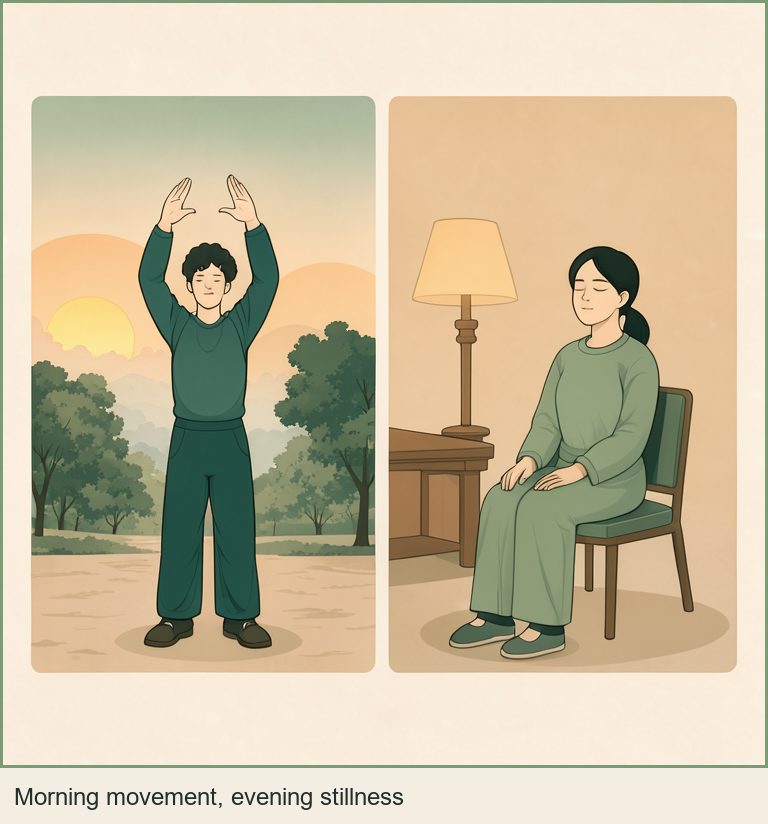
- Morning person or evening person? One classical schedule sets three half-hour sessions — before sunrise, one to two hours after lunch, and before sleep — and says that if you meditate only once a day, morning or evening both work [9]. Another source is more decisive: morning and evening are the most favorable times, but if you can sit only once, make it the morning, with a brief twenty-five-minute session before sleep as the secondary practice [12]. A modern lineage frames the same rhythm as morning cultivating Yang and evening cultivating Yin [15], while one Daoist author openly reports that there is no single traditional opinion on the best time — test the slots yourself and keep what helps [14]. Fixing one time and keeping it daily is itself recommended as a habit [13].
- Where does the stress live — body or mind? If your day leaves you with a stiff, restless body, qigong’s body-first route is the traditional match: it works with the tangibility of the body before the subtler realms of the mind [1]. If the problem is a racing mind, the seated path goes straight to consciousness [1][6] — and the old rule of thumb still applies: beginners lean 90 percent moving, 10 percent static [1].
- What is your energy and mobility today? A famous sitting set of the Eight Pieces of Brocade is described as good for waking up in the morning and for people who are bedridden or cannot stand easily [8], and standing postures are reported as more stable for the quieting effect than lying or sitting [7]. On a depleted day, the tradition says skip the session rather than push: do not practice when very tired, upset, hungry, right after a heavy meal, or after alcohol [13].
- How much time do you actually have? The most repeated instruction in the time-of-day literature is disarmingly simple: practice every day, a minimum of fifteen minutes [14]. Qigong newcomers are advised to start with a short daily session of about thirty minutes and expand only once the routine holds [1]; for stillness, ten to fifteen minutes is enough at first [6]. Short on repetitions? Use smaller numbers — just do not omit exercises from a set [8].
- How much movement, how much stillness? The classical strategy is to combine rather than choose: alternate both styles [4], because the different aspects of qigong reinforce one another [3]. The ratio shifts with experience — 90 percent moving for beginners, 90 percent static for advanced practitioners [1].
And if desk-day tightness is part of your stress picture, movement-based self-care pairs well with structured mobility programs — see our reviews of Joint Genesis and Unlock Your Hip Flexors. Ready-to-buy readers can jump to the current offers: Joint Genesis or Unlock Your Hip Flexors (we may earn a commission).
A Ten-Minute Starter Protocol: Morning Movement, Evening Stillness
This protocol compiles the beginner instructions from the sources above into one day-shaped loop. It is a sample, not a prescription — and never a substitute for learning with a qualified teacher.
Safety Notes
The source tradition is firm on three points. First, never force the breath: forced control of breathing classically leads to dizziness and chest pain, and the breath must stay slow, deep, and smooth [3]. Second, never force the mind: any forcible attempt to control the mind produces stress — the opposite of the practice’s purpose — so stay in a relaxed, calm, natural state [3]. Third, keep concentration soft and pleasant: too strong a level of mental focus is listed among the factors that can disturb heart rhythm, alongside practicing while extremely stressed or chronically exhausted or drinking too much coffee [1][7].
Skip the session rather than push through: do not practice when very tired, in a bad mood, badly upset, hungry, right after a heavy meal, or after alcohol, and avoid thunderstorms, dark damp rooms, drafts, and wet clothes [13]. If you are unwell, avoid anything that fatigues you — gentle breathing remains available [14]. Wherever possible, learn with a genuine teacher: one manual warns that practicing without real guidance can produce unwanted deviations [13], and another notes that the arts were always passed on as an apprenticeship between teacher and student [1]. This guide is educational; it is not intended to diagnose, manage, or treat any condition, and it is no substitute for professional care — if you are pregnant, managing a chronic condition, or recovering from injury, consult your physician before starting any new practice.
Frequently Asked Questions
Can I practice qigong and meditation on the same day?
Yes — the tradition more or less assumes it. One author recommends sampling every category of qigong, meditation included, because the different aspects reinforce one another [3]; another advises alternating the static and dynamic styles rather than choosing between them [4]. The classic ratio for beginners is about 90 percent moving practice and 10 percent static work, inverting as you mature [1].
How long until I feel calmer?
No honest source promises a deadline. What the manuals do say: within a single session, the classical marker of settled practice is that the heartbeat slows and the mind becomes clear [8], and across weeks the deciding factor is consistency — these arts rely on regular daily practice rather than heroic sessions [1], and success is said to depend above all on regularity [11].
Is seated meditation alone enough?
For settling the mind at the end of the day, seated stillness is a complete practice in its own right — meditation is a recognized category of qigong [3]. But one classical author warns that practicing meditation alone, without the other elements, can leave a practitioner short of energy, which is why the recommended progression runs from dynamic exercise toward static breathing and meditation rather than starting there [3].
Sources
- [1] Damo Mitchell — A Comprehensive Guide to Daoist Nei Gong (2018)
- [2] Damo Mitchell — White Moon on the Mountain Peak (2016)
- [3] Wong Kiew Kit — Qigong and Health (2006)
- [4] Jiao Guorui — Basics of Health Qigong (2013)
- [5] A. A. Maslov — Qigong Gymnastics (1992)
- [6] Scott Shaw — Qigong for Beginners (2006)
- [7] Wang Xuanjie & John Moffett — Zhuangong (Traditional Practices of China) (2006)
- [8] Yang, Jwing-Ming — Eight Simple Qigong Exercises for Health: The Eight Pieces of Brocade (1997)
- [9] Yang, Jwing-Ming — Qigong for Health and Martial Arts: Exercises and Meditation (1998)
- [10] Yang, Jwing-Ming — The Pain-Free Back: 54 Simple Qigong Movements for Healing and Prevention (2017)
- [11] Li Ding — Chinese Qigong (2003)
- [12] Secrets of Eastern Healers — anthology, author not stated in edition
- [13] Feng Shao I & M. Rotter — Chan Mi Gong Qigong (2012)
- [14] E. Yudlav — 100 Days for Health and Longevity: A Practical Guide to Daoist Yoga and Qigong (2005)
- [15] Nathan Brine — Daoist Alchemy of Wang Liping, Volume 2, Part 3 (2023)
How We Researched This
This comparison was assembled exclusively from our local research library of 1,137 digitized books on qigong, meditation, and traditional wellness, indexed for claim-by-claim retrieval. No internet sources, outside databases, or model memory were used — every statement above traces to the numbered books in the Sources list.
