
Educational content only — not medical advice. See our full Medical Disclaimer and Affiliate Disclosure below.
The fermented foods vs probiotic capsules question usually starts in the same aisle: a refrigerated jar of kimchi on one shelf, a bottle promising billions of colony-forming units on the next, and no honest way to compare the two from the packaging alone. This article does the comparison differently. Instead of repeating marketing numbers from either side, it audits what a research library of 1,137 wellness books actually documents about fermented foods, supplement claims, and the evidence standards both should meet[1]. The short version: food first, claims checked — and every gap in the evidence admitted out loud rather than filled.
One disclosure before anything else, because it shapes the whole probiotic comparison. Our book base holds detailed material on how fermentation works, what human and animal studies found, and how to judge supplement claims — but it contains no probiotic-capsule product data at all: no CFU counts, no strain lists, no shelf-life or price comparisons. So capsule-side specifics appear below only as openly labeled evidence gaps, never as invented specifications. Where a claim can be traced to a book, it carries a footnote; where it cannot, it is marked as a gap.
Key Takeaways
- Fermentation is pre-digestion: bacteria break raw food down into ready-to-absorb substances, and the beneficial microbes arrive together with the food matrix[1].
- The documented evidence is specific: one human volunteer study found more iron absorbed from a mix of pickled vegetables than from fresh, and kefir raised Lactobacillus and Bifidobacterium while cutting pathogens — in mice[1].
- Capsule product data is absent from our research base: CFU counts, strains, shelf-life, and prices appear here only as labeled evidence gaps, never as invented specs.
- Run every claim — food or capsule — through the six-check rubric: petri dish vs humans, your own microflora, preparation, form, forever-pills, and dose ceilings[1][2][3].
What Are Fermented Foods and Probiotic Capsules?
Fermented foods are foods whose raw material has been partially broken down by living bacteria before it reaches the table. Kimchi, the pickled cabbage that is a national dish of Korea, and kefir, a fermented milk drink spread through the Caucasus and Eastern Europe, anchor a family of fermented milk and vegetable foods that have sat on the menus of various peoples for centuries[1].
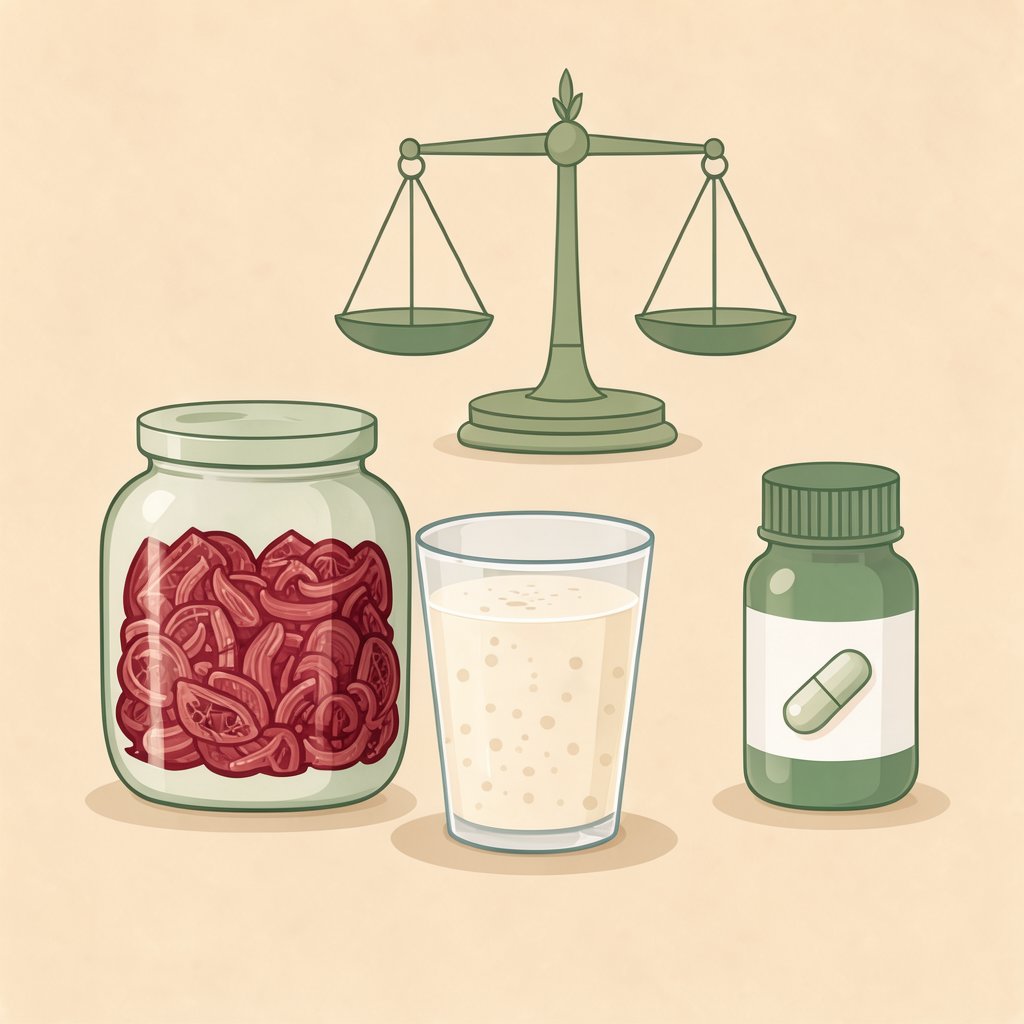
A probiotic capsule is the shelf-stable counterpart: a concentrated dose of live microorganisms, standardized by the manufacturer and swallowed without food. That sentence is generic product-category information rather than a finding from our books, and the distinction matters for everything that follows. The research library behind this site contains no capsule-specific data of any kind: no CFU counts, no strain-name labeling discussion, no storage or shelf-life notes, no brand or price comparisons. We flag that gap wherever it appears instead of papering over it.
The method of this comparison follows the same rule. On the food side we report what the books document — mechanisms, one human iron study, animal data, centuries of traditional use — each with a footnote to its source[1]. On the capsule side we apply the evidence standards the books teach: how to read a label claim, which questions to ask, and when a number on a bottle deserves trust[1][2]. Food first, claims checked — that is the whole framework of this guide.
How Fermentation Works: The Pre-Digestion Advantage
Inside a jar of kimchi or a bottle of kefir, bacteria are not waiting passengers — they are workers. In fermentation, the microorganisms partly do the work of digestion for you, breaking the raw material of the food down into simpler substances the body can absorb more readily[1]. Cabbage softens and turns acidic; milk sugars become the familiar tang of kefir. What arrives at your table is a matrix that has already been partially taken apart.
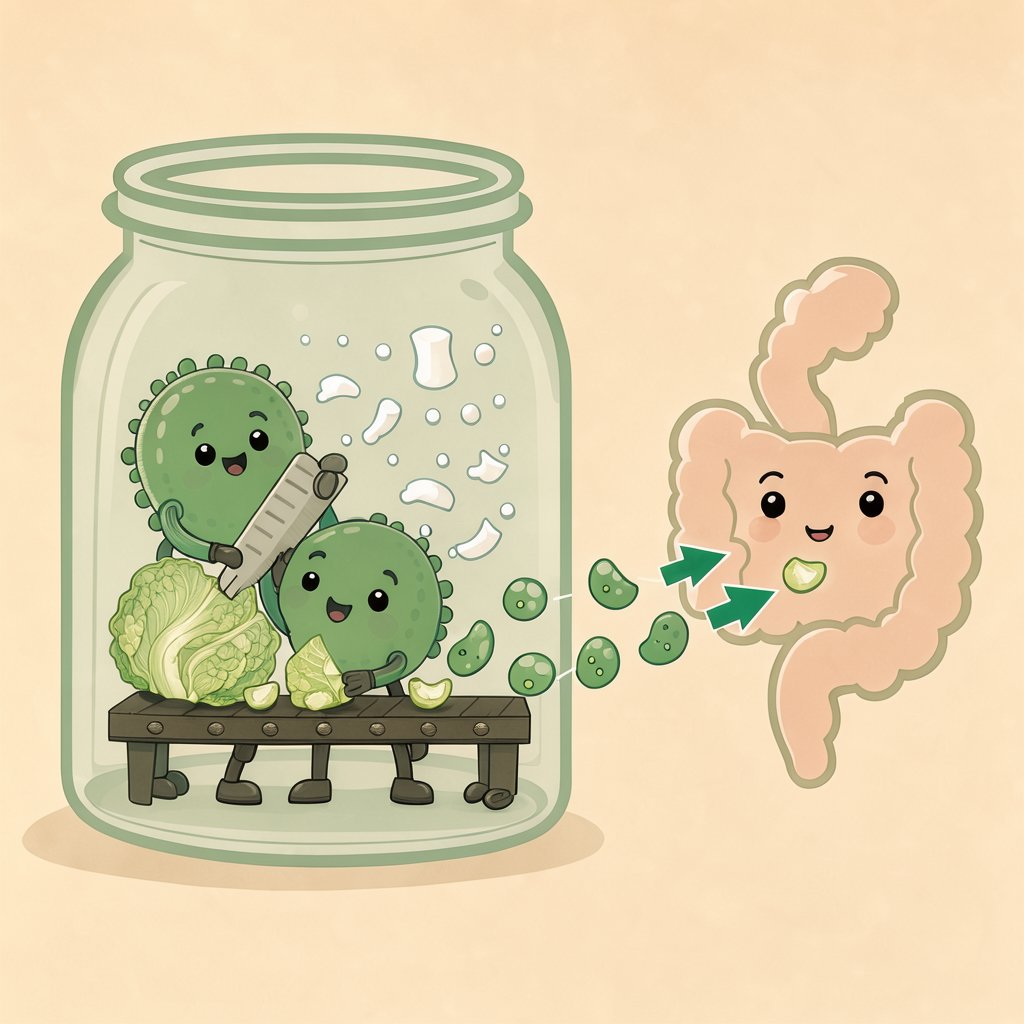
The same process grows the population you are about to eat. During fermentation, the count of beneficial bacteria in the product rises; when the food is eaten, those bacteria enter the body and can enrich the bacterial population of the gut[1]. This is the core probiotic logic in its original, food-borne form: the live cultures and their pre-digested payload arrive together, in the same spoonful. A capsule, by definition, separates the microbes from any food matrix — and our base holds no data on what that separation does.
One honesty note before the evidence section. Everything above is mechanism — a description of what happens inside the jar — not a promise about what happens inside you. Whether pre-digested, bacteria-rich food changes human health measurably is a separate question, and the next section shows exactly how far the documented evidence goes and where it stops[1].
What the Evidence Actually Shows: Iron, Kefir in Mice, and an Honest Verdict
The human evidence in our base is one nutrition outcome, and it is worth reading precisely. Fermentation appears to release iron ions from food: in a recent volunteer study, iron from a mix of pickled vegetables was absorbed in larger amounts than iron from the same vegetables fresh[1]. That is a real, human-level finding — and it is specific to iron and to pickled vegetables. It does not automatically extend to every nutrient or every fermented product.
The microbiome evidence is animal-level, and it stays labeled that way. Mice given kefir in their diet showed increased Lactobacillus and Bifidobacterium populations and a decrease in pathogenic bacteria[1]. Promising, directionally consistent with the traditional use of kefir — and still mice. No study in our base transfers this result to humans, so neither does this article.
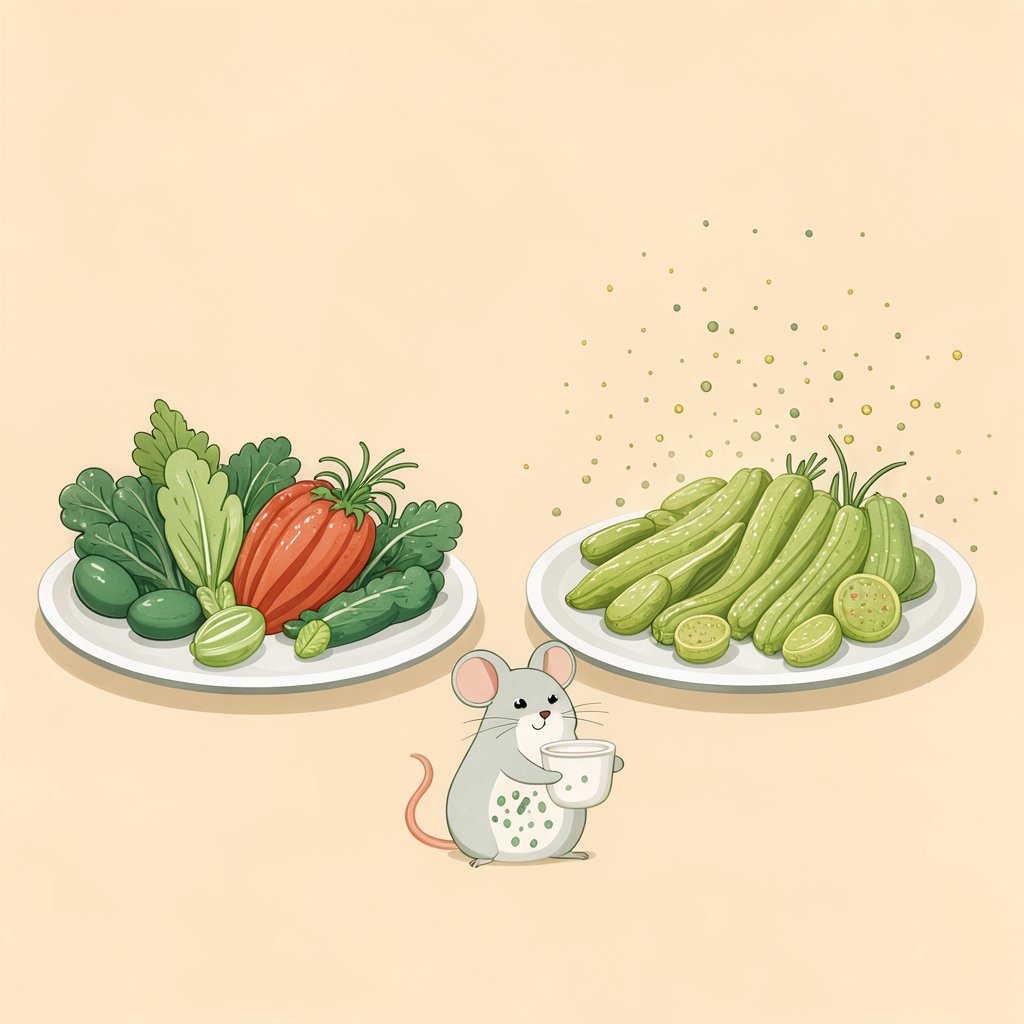
Then there is the verdict of the source itself, and its moderation is the point. Fermented food may be beneficial for the gut microflora — but, in the author’s words, nobody knows how it affects the organism as a whole[1]. We adopt that as the honest ceiling of food-side claims: supportive language about the gut, and no whole-body promises. Whole-body human outcomes for fermented foods remain an open evidence gap, and a probiotic comparison that claims otherwise is out-claiming its sources.
Fermented Foods vs Probiotic Capsules: The Honest Comparison
A comparison can only weigh what is actually known, so read this section as six criteria in prose, with every unknown marked. The probiotic capsules vs food question is settled below on live cultures, evidence tier, individual fit, preparation sensitivity, dose control, and cost. Where our research base supports a statement, it carries a footnote; where it holds nothing, the cell says so plainly.
On live cultures, the food side is documented: bacteria grow in the product during fermentation and enter the body within a pre-digested food matrix[1]. The capsule side offers a manufacturer-stated CFU number on a label — and our base contains no evidence about whether that number survives to your gut, so that cell stays an open evidence gap. On evidence tier, fermented foods bring one human volunteer study, animal kefir data, and centuries of dietary use[1]; capsules bring no capsule-specific studies in this base at all. A jar of kimchi shows its cultures’ work in the product itself; a capsule label shows a number.
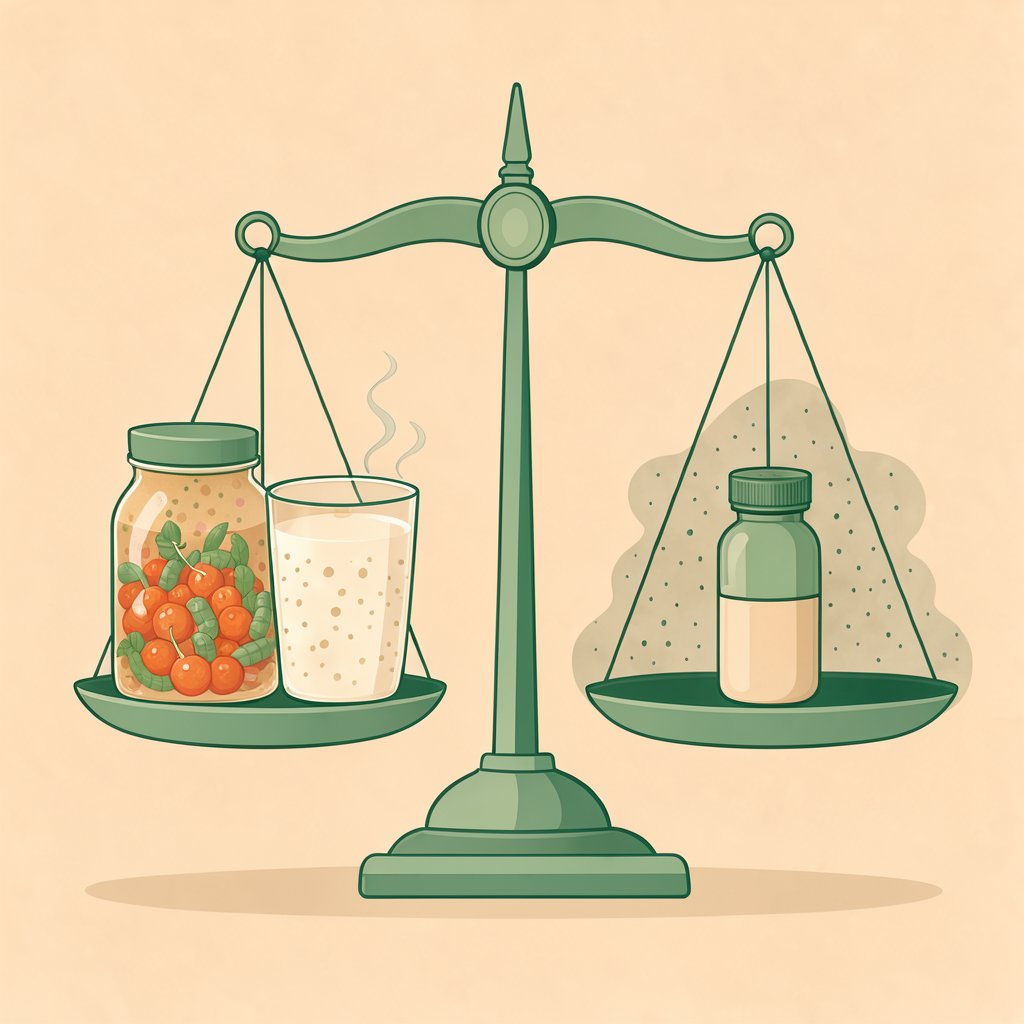
On individual fit, the books level the field: people differ in the composition of their gut microflora, and that difference strongly affects all processes, so any result — food or capsule — is personal[1]. Preparation is the quiet variable on both sides: the cooking and preparation method can change the activity of ingredients[1], which is why fermentation degree is a real, measurable factor, and why the chemical form of a supplement changes what you actually absorb[2].
Dose control and cost close the weighing honestly. Our base holds no serving-size or dosing data for fermented foods and no CFU dosing thresholds for capsules — a gap on both sides. It also holds no cost-per-serving analysis for either side, so we refuse to invent one. The takeaway is not that food wins and capsules lose; it is that the food side’s claims are traceable to sources, while the capsule side’s headline numbers are untestable from this base — a statement about evidence, not a verdict about products.
The Evidence Rubric: Six Checks Before You Trust a Probiotic Claim
Whether the claim is printed on a kimchi jar or a capsule bottle, the same six checks apply. They are compiled from the evidence standards our source books teach, and they take about a minute to run[1][2][3]. Each check below is one question, and what the books say about answering it.
1. The petri-dish check
Concentrated extracts and isolated compounds can show stunning results in a petri dish or in a lab mouse — and that does not mean the effect holds when real people eat them[1]. Ask of any claim where the supporting result came from: a dish, an animal, or humans. The further the evidence sits from real people eating real food, the larger the discount you should apply.
2. The your-microflora check
People differ in the composition of their gut microflora, and that difference strongly affects all processes[1]. A result measured in any group of humans is still an average over many different inner ecosystems. Treat every study — and every glowing testimonial — as information about someone else’s gut until you have reason to believe it maps to yours.
3. The preparation check
The cooking and preparation method can change the activity of ingredients[1]. Fermentation degree is exactly such a variable, as the bread experiment two sections below shows. Before comparing two products, ask whether the preparation that made them is even the same.
4. The form-and-bioavailability check
Form decides what you actually absorb. The B12 example from the supplement-selection literature: choose methylcobalamin or adenosylcobalamin, because the most common form, cyanocobalamin, has very low bioavailability[2]. Carry the same question to any capsule — which chemical form, which delivery, and what evidence that the form arrives where it must.
5. The forever-pill check
Open-ended supplementation deserves its own skepticism. Studies cited in the literature link ten years of uninterrupted vitamin B12 intake with a higher risk of certain cancers, and the authors’ protocol is the opposite of forever-pills: confirm a deficiency, address it, then re-test periodically[2]. They also avoid one-pill multivitamin complexes, which may contain what you do not lack[2].
6. The ceiling check
Concentrated doses have quantifiable ceilings, and “more is better” fails when it hits them. Selenium is the textbook case: a narrow safety margin, with selenosis appearing at blood levels above 100 mcg/dL and the Institute of Medicine setting the upper intake level at 400 mcg per day[3]. A food rarely lets you overshoot that dramatically; a concentrated capsule makes overshoot easy — respect the numbers.

Label Hype: What the EU ‘Superfood’ Ban and Iodized Bread Teach
Regulators have already fought one round of this battle, over food. The European Union banned the word “superfood” from packaging in 2007, on the logic that a hype label misleads even when it is not strictly false[1]. The United States took a different route: no blanket ban, but the FDA can act against demonstrably false information on a label[1]. Either way the lesson transfers — front-of-pack language is marketing until tested.
There is also a quiet-recipe-change precedent worth knowing. In the 1960s, iodine was added to commercial bread as a dough conditioner; a single slice carried the full 150 mcg RDA of iodine, and NIH articles later questioned the practice[3]. What sits inside a processed product — food or capsule — can change without fanfare, which is an argument for reading the actual label, every time, on both sides of the fermented foods vs probiotics debate.
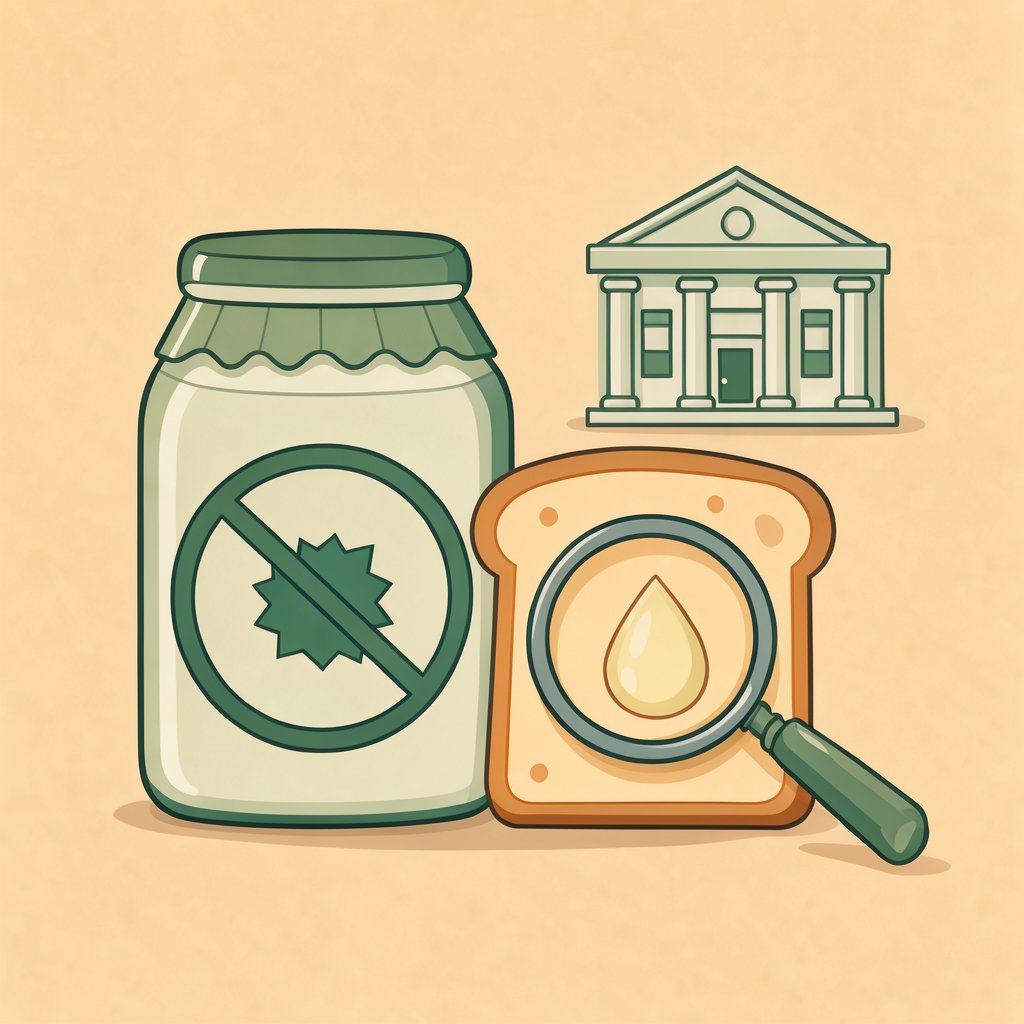
Apply both lessons to CFU-fronted capsule labels with the skepticism the EU applied to “superfood”. A jar of kimchi shows its cultures’ work in the product itself; a capsule label shows a number, and our research base carries no evidence that the number survives to your gut. That is an evidence-gap statement, not an anti-capsule verdict — run the claim through the rubric and ask the manufacturer the questions the label does not answer.
Tradition Counts but Isn’t Proof: Slow Bread vs the Chorleywood Loaf
Bread is where tradition and fermentation degree can be weighed against each other, because modern baking changed one without the other. Roughly 80% of all bread baked in the UK now uses the fast Chorleywood method — yeast plus chemical additives, hours instead of days[1]. In a telling experiment, fast-fermented bread caused more gas than bread from dough fermented for hours on natural yeast; longer fermentation delivers carbohydrates to the intestine in a prepared state, leaving less digestion work for the microflora[1]. Humanity has baked bread for over 10,000 years, while the technology changed radically only in the last fifty[1].
Tradition, though, is not automatically fermentation. Among the Hunza, women grind wheat, rye, oats, barley, corn, millet, peas, and lentils in stone mortars, then mix flour with water without any yeast and bake flatbreads that dry on the walls of the house — everything valuable from the grains stays in the bread, as the account puts it[4]. A venerable tradition of unleavened bread is a genuine counterpoint: age alone is not the argument.

The measurable variable is fermentation degree — how much pre-digestion happened before the food reached you. That is why slow-fermented foods earn their place on evidence rather than nostalgia, and why the words “ancient formula” on a capsule label prove exactly nothing. Traditional use deserves respect as traditional use; it still owes you the same six checks[1].
How to Start: A Food-First, Test-Then-Supplement Protocol
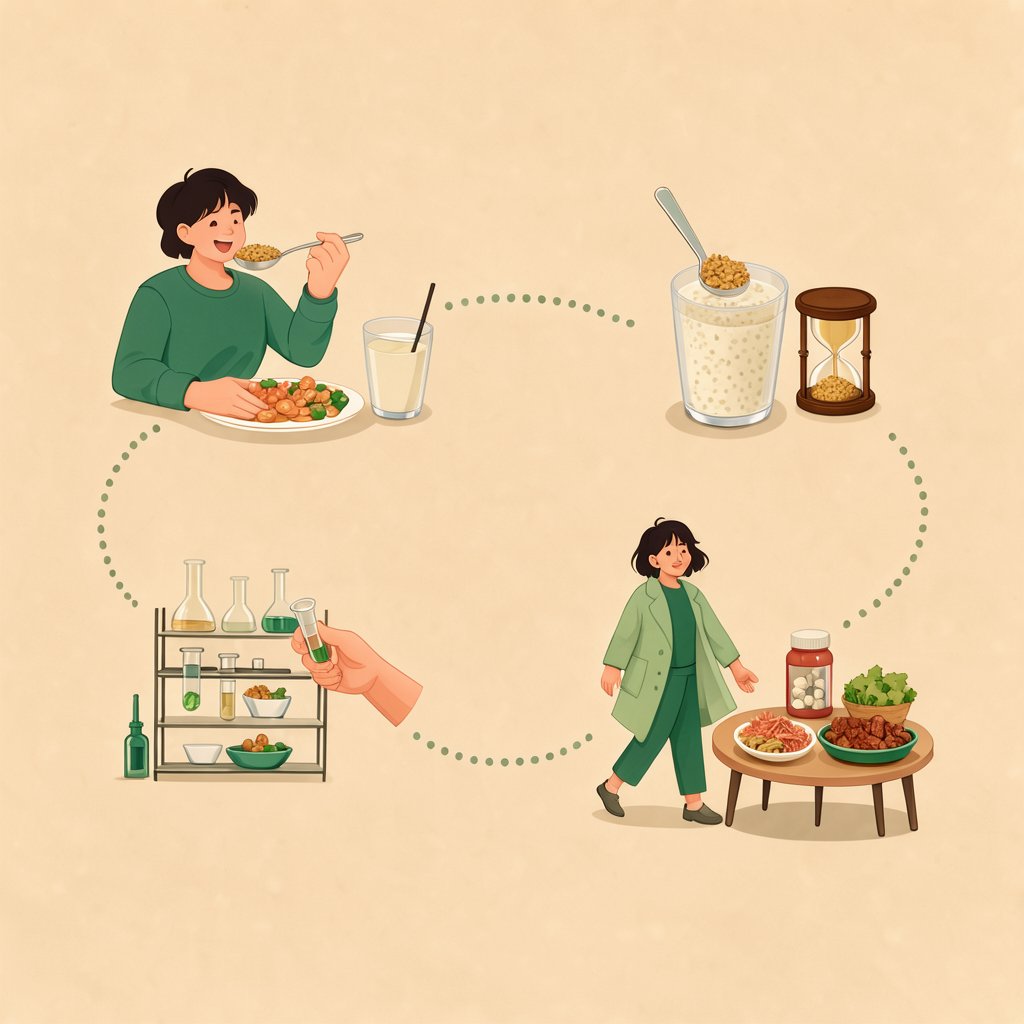
Here is the practical translation of everything above — four steps, each traceable to the base. The protocol is deliberately qualitative: our books contain no servings-per-day data for kimchi or kefir and no capsule dosing thresholds, so no numbers are invented here[1]. Treat it as a starting order of operations, not a prescription.
Step 1: Put food first
Make fermented foods the daily baseline before any bottle. Kimchi and kefir are where the documented mechanisms, the human iron finding, the animal kefir data, and centuries of Korean and Caucasian dietary use all converge[1]. Starting where the evidence actually sits is the cheapest risk-management tool in this whole comparison.
Step 2: Use kefir as your carrier
Kefir can carry other parts of a routine, not just stand alone. A real 60-day program from a supplement catalog prescribes fiber — 1 tbsp morning and evening, 30–40 minutes before meals — taken with a glass of juice or kefir, and lists restoring normal intestinal function and microflora among its stated goals[5]. The details worth borrowing are practical: a fermented milk drink slots into a daily routine as the vehicle, and the routine itself is time-boxed rather than open-ended.
Step 3: Test before you supplement
Before adding capsules, get markers checked. Good gut microorganisms produce B-group vitamins, and homocysteine serves as a marker of B6, B12, and B9 deficit — which in turn signals a poorly working gut microflora[2]. A blood panel converts a guess into a decision and gives you a baseline to compare against later.
Step 4: Fix, re-test, and don’t pill forever
If a confirmed deficiency exists, address it, then re-test periodically instead of defaulting to a lifelong regimen[2]. Skip one-pill multivitamin complexes, which may contain what you do not lack[2]. And if a probiotic capsule still appeals after the food-first months, run it through the six-check rubric above — and past your clinician before it passes your lips.
Safety: Who Should Ask a Doctor Before Starting Either
“Natural” is not the same as studied. The same source that documents fermentation’s benefits closes with the caution that nobody knows how fermented food affects the organism as a whole[1] — a moderation worth keeping in mind whenever any food is marketed as automatically harmless. Supplements, for their part, are doses rather than foods, and concentrated intakes carry the kind of quantifiable ceilings the selenium example made concrete[3]. Neither side of this comparison is risk-free by default.
Digestive status changes what works. For people with gastrointestinal diseases, sublingual B12 forms absorb best — a detail that shows how absorption depends on the health of the digestive tract itself[2]. If your gut is already compromised, the questions to bring to a clinician are practical ones: does a daily kefir or kimchi serving fit my condition, and does any capsule make sense alongside it?
One more honesty note, because this is a health-decision topic and our base is blunt about its limits. It contains no probiotic-specific contraindication data — nothing on histamine intolerance, small intestinal bacterial overgrowth, immunocompromised states, or low-FODMAP needs. Rather than invent warnings, we state the gap: if you are pregnant, immunosuppressed, or managing a digestive condition, make the conversation with your doctor the first step, not the last[1].

Frequently Asked Questions
Can fermented foods replace probiotic capsules?
Our research base cannot support a replacement verdict in either direction: it holds no probiotic-capsule product data at all, while the food side documents mechanism, one human iron study, animal kefir data, and a deliberately moderate verdict[1]. The practical answer is the article’s method — food first, then run any capsule claim through the six checks before paying for it.
Is kefir proven to improve gut bacteria?
In mice, at the animal level: kefir in the diet raised Lactobacillus and Bifidobacterium populations and reduced pathogenic bacteria[1]. In humans, the documented verdict stays moderate — fermented food may be beneficial for the gut microflora, while whole-body effects remain unknown[1]. “Proven” overstates what any source in our base claims.
Why did the EU ban the word ‘superfood’?
In 2007 the European Union prohibited the word “superfood” on packaging because hype labels can mislead even when individual claims are not strictly false[1]. The United States relies on a different mechanism: the FDA can act against demonstrably false information. The shared lesson — treat front-of-label language as marketing until tested — is the one this article applies to CFU counts.
Is slow-fermented bread easier to digest?
The documented experiment says it behaved that way: fast-fermented bread caused more gas than bread from dough fermented for hours on natural yeast, and longer fermentation delivers carbohydrates to the intestine in a prepared state, leaving less work for the microflora[1]. Since about 80% of UK bread is made by the fast method, the label worth reading is the one about fermentation time[1].
How long should you take a supplement?
The protocol from the supplement-selection literature: confirm a deficiency first, address it, and re-test periodically rather than supplementing indefinitely[2]. The caution behind it — cited studies link ten years of uninterrupted B12 intake with a higher risk of certain cancers, and one-pill complexes may contain what you never lacked[2]. For probiotic courses specifically, our base holds no duration data; that gap is real.
I have a digestive condition — where do I start?
With your clinician, before either side of this comparison. Gastrointestinal disease demonstrably changes absorption — sublingual B12 forms absorb best in that population[2] — and our base holds no probiotic-specific contraindication data to self-check against. For related food-side reading, browse our gut-health and traditional-diets cluster.
The fermented foods vs probiotic capsules debate, done honestly, ends where this article began: with evidence rather than enthusiasm. Fermented foods arrive with documented pre-digestion, one human iron finding, animal-level kefir data, and centuries of traditional use — plus a source-mandated ceiling of modest language about what any of it proves[1]. Probiotic capsules arrive with a number on a label that our 1,137-book base simply cannot verify, which is a statement about the evidence, not about the products. Start with the food, test before you supplement, run every claim through the six checks, and let the gaps stay visible.
Sources
- [1] G. Lawton — Hacking the Human Body (2022)
- [2] A. Smirnov & I. Kononenko — Markers of Aging (2022)
- [3] David Brownstein — Iodine: Why You Need It, Why You Can’t Live Without It, 5th Ed. (2014)
- [4] R. Todorova & Pl. Grigorov — Vitamin B17 the Cancer Killer (2014)
- [5] Ayurveda Plus — AminoGold Catalog
Where to go next: our gut-health and traditional-diets cluster collects the food-side guides that pair with this comparison. Readers building a wider wellness routine can read the Joint Genesis review and the Unlock Your Hip Flexors review, or jump straight to the current offers: Joint Genesis and Unlock Your Hip Flexors. For practice-based habits, browse the step-by-step wellness manuals, and see our FTC disclosure — we may earn a commission if you buy through links on this page.
How we researched this: built from a local library of 1,137 wellness books queried through an offline retrieval system, with no internet sources used at generation time. Every factual claim above carries a footnote to its book; claims the library could not support are labeled as evidence gaps rather than filled. See the editorial policy for how sources are selected and reviewed.
