
Educational content only — not medical advice. See our full Medical Disclaimer and Affiliate Disclosure below.
Search for the best acupressure mat in 2026 and nearly every result hands you the same silhouette: a ranked podium of product names, star ratings, and spike counts. This acupressure mat review takes a different route, because the evidence desk behind it could not verify a single one of those details. Before writing a word, we searched our local wellness library of 1,137 books from cover to cover for acupressure-mat product data. The search returned nothing: no spike counts, no mat dimensions, no materials, no brand names, and no mat-specific safety lists.
So instead of a borrowed podium, this acupressure mat guide hands you the buying lens the evidence actually supports. You will get the documented 4,600-year backstory of point pressure — a span derived from a ~2600 BC origin legend and attributed as legend, not archaeology — plus the three mechanisms sellers lean on, the trial standard that separates real proof from packaging, and the safety logic built into the mat’s very design. Along the way, every session-length number is labeled with its true origin, because none of them comes from a mat study. By the end, you will know exactly which questions to put to any manufacturer before checkout.
Key Takeaways
- No honest 2026 ranking can come from this desk: a corpus-wide search of 1,137 books found zero acupressure-mat product data — no spike counts, sizes, materials, brands, prices, or mat-specific contraindications.
- The three mechanisms mat marketing inherits — gate control, endorphin release, and placebo — remain unsettled even for needles, and mats have far less direct evidence than needles do.[1]
- The mat’s core design idea — many shallow blunt spikes instead of one deep needle — echoes the oldest self-use safety rule on record: try not to hit nerves, tendons, and large blood vessels.[1]
- Session-length anchors are borrowed from acupressure and relaxation manuals (a ~30-second point press, a 15–20 minute wind-down ceiling) and are labeled as such — no mat protocols exist in the base.[5][7]
- The working definition of the best mat: the manufacturer who answers every question in the final checklist — specs, materials, contraindications, and the named control behind any proof claim.
What an Acupressure Mat Is — and Why No 2026 Review Can Rank One Honestly
Strip away the packaging and the category is simple: an acupressure mat is a padded mat studded with hundreds of blunt spikes that you lie, sit, or stand on, usually sold with a smaller spiked pillow for the neck. That sentence is shopper’s framing, not library data — and the difference matters. It is the only product description in this article that carries no footnote, because nothing like it exists anywhere in the 1,137 books behind this guide.
Here is what the search actually looked like. The knowledge base was queried with five orthogonal searches — mechanisms, session protocols, specifications, contraindications, and history — then three targeted probes, and finally one corpus-wide sweep with every category filter removed. The sweep returned page after page of acupoint and meridian manuals, and not one line about spike mats: no Kuznetsov applicator, no bed-of-nails content, no named brands, no prices, no 2026 market data. The scout’s verdict on coverage was LOW: strong adjacent material on point pressure, zero buyer’s-guide data.
That absence is the review. A ranking compiled without product data would be fiction with a buy button, and this project does not publish fiction. What follows instead is everything the base does hold: a documented history of point pressure, the mechanisms sellers invoke, the evidence standard that judges them, the anatomy the spikes actually meet, honestly labeled dosage anchors, and — at the end — the exact spec, size, and safety questions a buyer must demand from any maker.
From a Flying Arrow to the Huangdi Neijing: 4,600 Years of Point Pressure
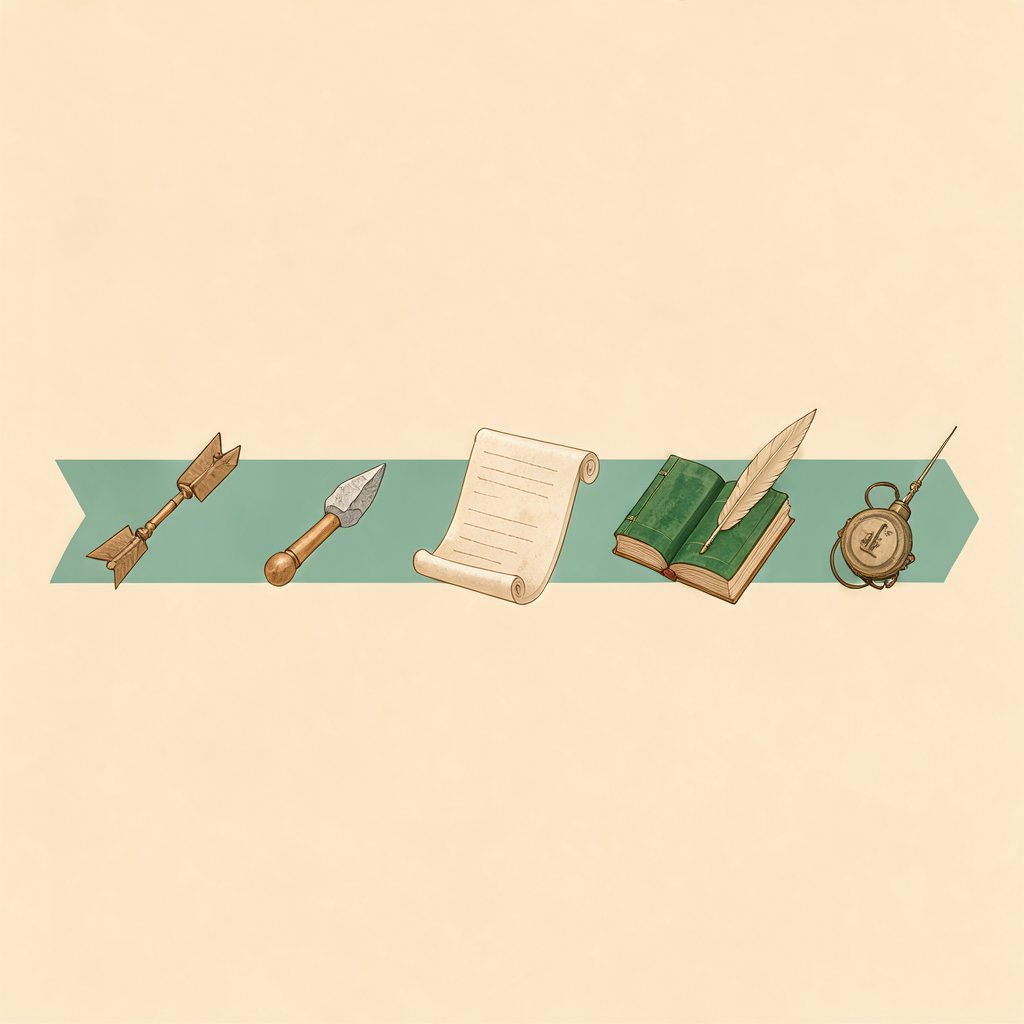
The tradition begins, by its own account, with an accident. A legend dated to roughly 2600 BC tells of a soldier wounded by an arrow who was then cured of a long-standing ailment — the accidental-discovery story of needle therapy that Chinese sources have repeated ever since.[1] Archaeology adds texture rather than proof: prehistoric graves contain fine stone tools presumed to be for needling, and one early interpretation held that the tools drove out disease-causing demons.[1] The lesson for a shopper arrives immediately: the founding date of this entire tradition is a story, not a dig report.
The first detailed description came centuries later. The Huangdi Neijing — the Yellow Emperor’s Classic of Internal Medicine, compiled as treatises after the 2nd century BC — laid out the map every acupressure product still borrows: qi energy circulating through meridians, disease defined as an imbalance or blockage of that flow, and needling of points along the meridians to restore balance.[1] Even the classical world never agreed on the details: schools split between 12 and 14 main meridians, subdivided yin and yang differently, and tied each meridian to a vital organ with internal and external courses, studded with hundreds of acupoints.[1]
Mat packaging that leans on ancient wisdom traces to exactly this literature — and to a founding date that is a legend. Knowing where the lineage claim comes from, and how old its paper trail really is, is the first skill in reading a spike-mat label. The second skill is watching what the West did with the idea next.
1683 to the 1970s: How the Needle Won and Lost the West
Europe met the method through a trading company. In 1683, Willem ten Rhijne — a physician of the Dutch East India Company — became the first European to describe the practice and coined the word acupuncture in his Latin treatise De Acupunctura.[1] His contemporary Engelbert Kaempfer carried home reports from Japan that included something even more surprising: ordinary people needling themselves, guided only by their own experience.[1] That observation becomes central to the safety story later in this guide.
The 19th century supplied the first Western theorist. Louis Berlioz — father of the composer — reported that needle therapy eased muscle pains and nervous disorders, theorized an electrical mechanism running through the nerves after Galvani’s experiments, and even proposed connecting needles to a battery to strengthen the effect.[1] Enthusiasm ran ahead of evidence for the next century and a half, exactly as it does on today’s product pages.
The reckoning arrived in the 1970s. After Nixon’s China visit, American doctors returned impressed by acupuncture anesthesia — until it emerged by the mid-1970s that surgery patients had actually received midazolam, droperidol, fentanyl, and local anesthetics, with the needles likely serving as a psychological decoy.[1] The American Society of Anesthesiologists issued a formal caution statement in 1973.[1] Point-therapy hype cycles, in other words, are more than three centuries old and well documented — and a 2026 mat claim deserves the same skepticism those anesthesiologists applied.
How Spike Mats Are Claimed to Work: Three Theories on Trial
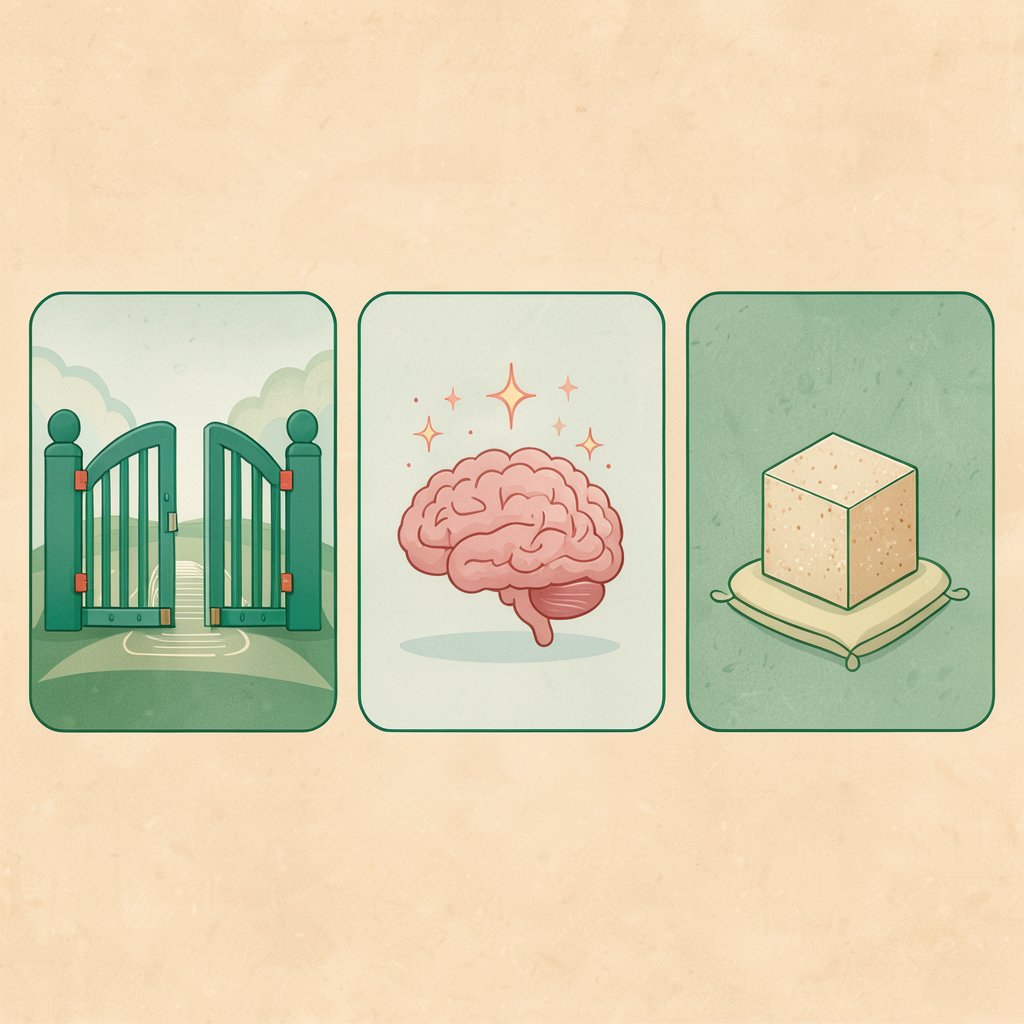
Every how-it-works paragraph on a spike-mat box descends from one of three theories — and all three are on trial for needles, not for mats. The first is gate control. In the mid-1960s, Ronald Melzack in Canada and Patrick Wall in the UK proposed that certain nerve fibers carrying skin impulses can close gates so that pain impulses are less likely to reach the brain; weak stimuli can suppress stronger pain from other sources, which is why rubbing a hurt spot helps.[1] Needle advocates claimed that the needle sensation closes these gates; skeptics answer that no reliable data confirms this for acupuncture.[1]
The second theory is chemistry. Some studies showed that point stimulation triggers the release of endorphins — the brain’s natural opioids — but skeptics doubted the quantity was enough for meaningful relief, and other studies found no endorphin link at all.[1] The third theory needs no mechanism: a separate line of research attributes the entire effect to placebo, the mind doing what the needles only appear to do.[1]
The source that documents all three — Singh and Ernst’s Trick or Treatment — closes with a verdict worth memorizing: both mechanistic theories were too speculative to convince medicine, and properly controlled trials became the standard.[1] That verdict was written about needles, the most-studied form of point therapy there is.
Mat marketing silently inherits all three explanations: pressure that closes gates, spikes that boost feel-good chemistry, a ritual that relaxes. The honest statement is shorter: none of the three is confirmed even for needles, and spike mats have far less direct evidence behind them than needles do. What the claims explain is the sales page, not your back.
The Sham-Needle Standard: How to Read a “Proven” Claim Like a Scientist
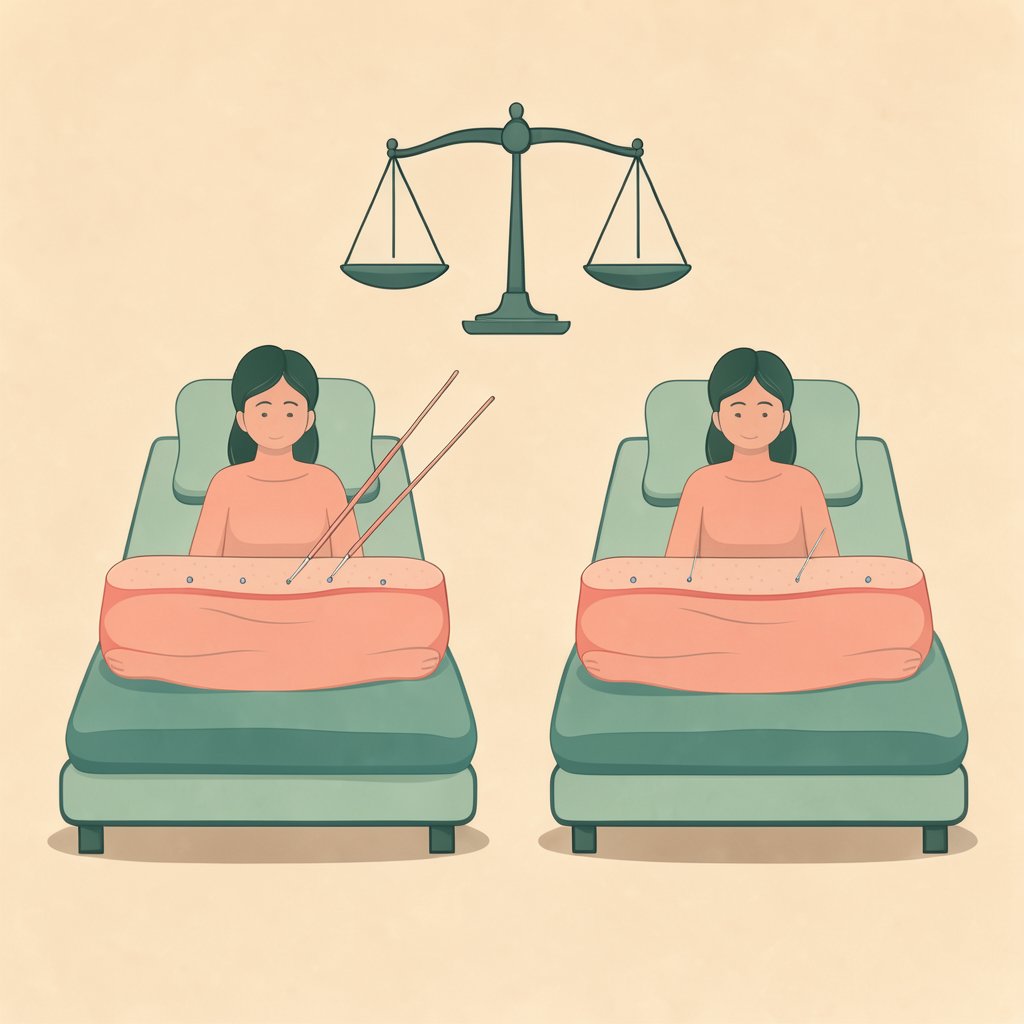
One evidence tool settles unsettled theories, and you can carry it onto any product page. The randomized placebo-controlled double-blind trial is described in the source literature as the highest possible standard of evidence.[1] For needle therapies, the placebo arm is sham — mock acupuncture defined as superficial pricks, or needles placed in wrong, non-point locations; in the 1990s, skeptics demanded large placebo-controlled acupuncture trials using exactly this design.[1]
The reading logic is the useful part. Both groups improve, because expectation alone produces real relief; whatever extra effect appears in the true-needles group is the real, specific effect of the treatment.[1] That single sentence turns you from a banner-reader into a reviewer.
Now the inference — labeled as this article’s inference, not a book fact. The sham dose, superficial pricks, is mechanically the closest thing in the trial literature to what a spike mat delivers: many shallow, skin-level contacts. So when a mat page announces a proof claim, only three questions matter: proven against what control, in what trial, published where. A claim without a named control is decoration, not evidence.
Hundreds of Shallow Spikes: The Oldest Self-Use Safety Rule on Record
Before any spec sheet, the mat’s core idea has a documented safety pedigree older than the United States. Engelbert Kaempfer, the German traveler-physician, reported from Japan that even ordinary people dared to use the needle, guided only by their own experience — and he preserved their rule: they just try not to hit nerves, tendons and large blood vessels.[1] This is the earliest self-use safety rule in the entire evidence base behind this guide.[1]
Here is the design logic — labeled as this article’s synthesis rather than a book’s claim. A mat replaces one point pressed deep by an expert with hundreds of blunt spikes that spread the load, so that no single point can reach a nerve, a tendon, or a large vessel. Shallow, distributed pressure is the hardware heir of the layman’s rule: the oldest documented safety idea in point therapy, rebuilt in plastic.
The boundary must be stated just as honestly. The library behind this review holds no spike counts, no densities, no spike heights, no mat thicknesses, and no materials data — so whether any specific 2026 mat implements this logic well cannot be judged from this desk. That question belongs to the manufacturer, and the final section turns it into a written demand.
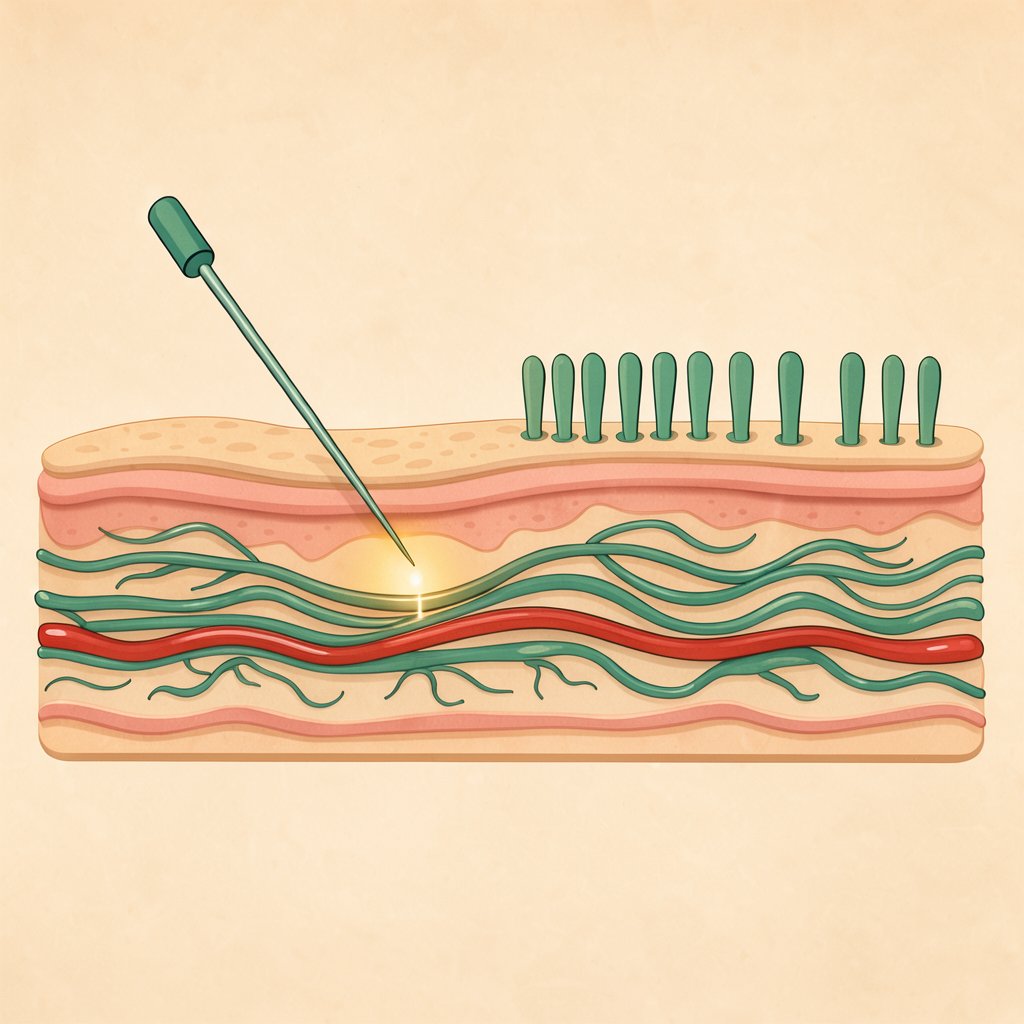
Under the Spikes: Acupoints vs Trigger Points
What do the spikes actually press? Two different maps live under the same skin, and marketing routinely conflates them. Trigger points — the knots a physical therapist hunts — are not the same as acupressure or acupuncture points; the trigger-point concept was developed inside Western myofascial medicine, not inherited from the meridian tradition.[2] Classical acupoints belong to the other map: Vashichkin’s Atlas of Healing Points catalogs a full point taxonomy, including yuan-source points located near each of the 12 meridians.[3]
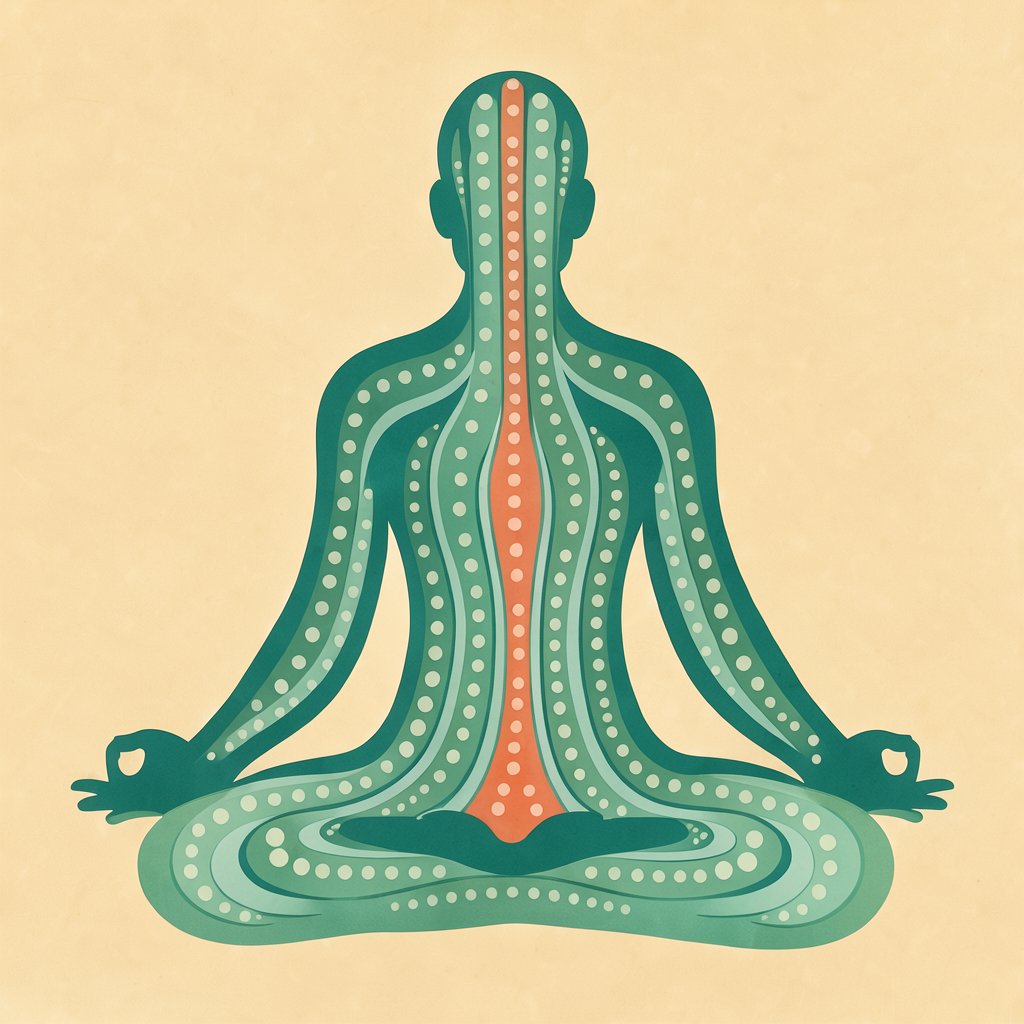
The lineage between that tradition and your living-room floor runs through self-massage. Yang Jwing-Ming presents tui na — push-grab — and dian xue, point pressing, as the traditional hands-on practices of the meridian qigong tradition.[4] A spike mat is a mechanical descendant of dian xue with the aiming removed: blanket pressure across a zone instead of a pressed point.
That is an honest design trade-off, not a defect — a mat cannot know which map applies to your back on a given evening. But it is also why the phrase stimulates your meridian points on packaging is a simplification. The mat presses skin; which map you believe that skin belongs to is a separate question.
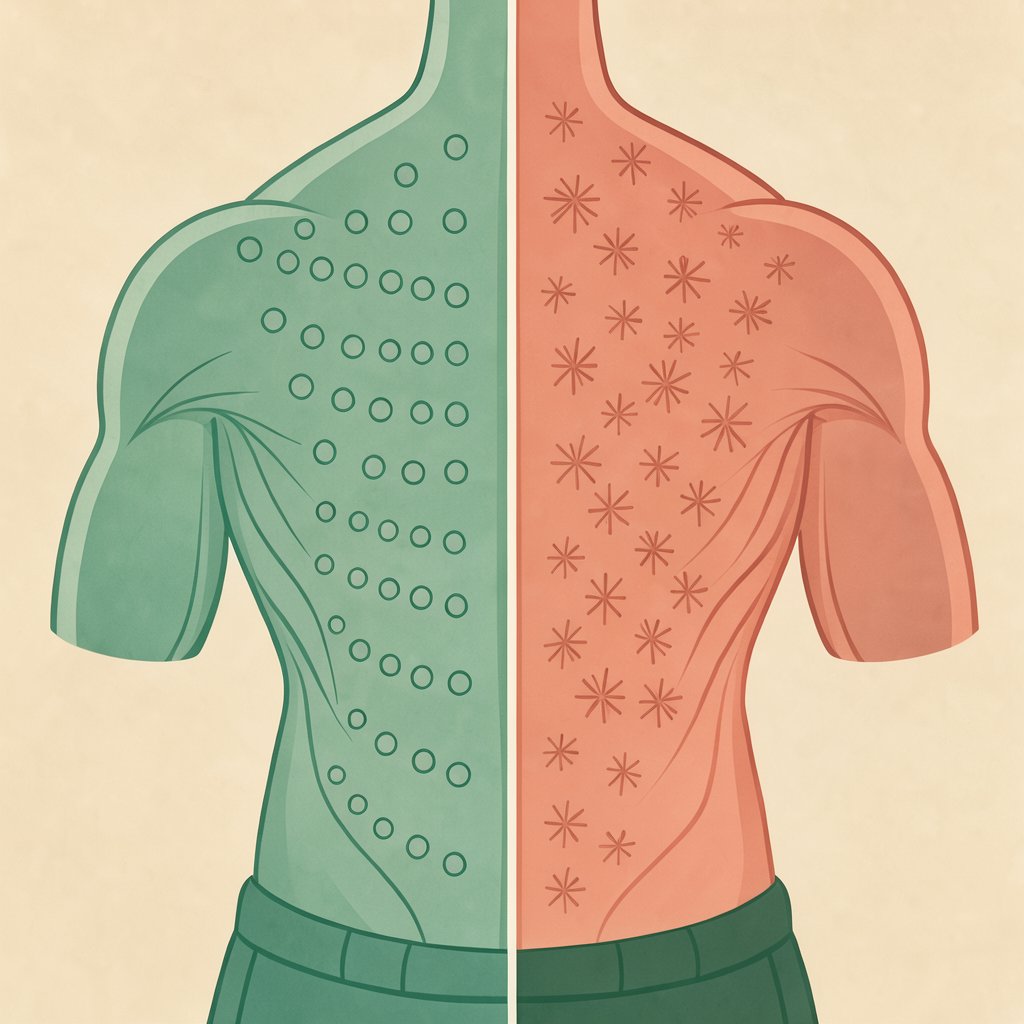
How Long on the Mat? Dosage Anchors Borrowed Honestly from Acupressure
The base holds no mat session protocols — no minutes-per-session trials, no progression schedules, no weekly frequency. Honest writers do not invent them. What follows borrows dosage anchors from acupressure and relaxation manuals, and labels every number with its true origin.
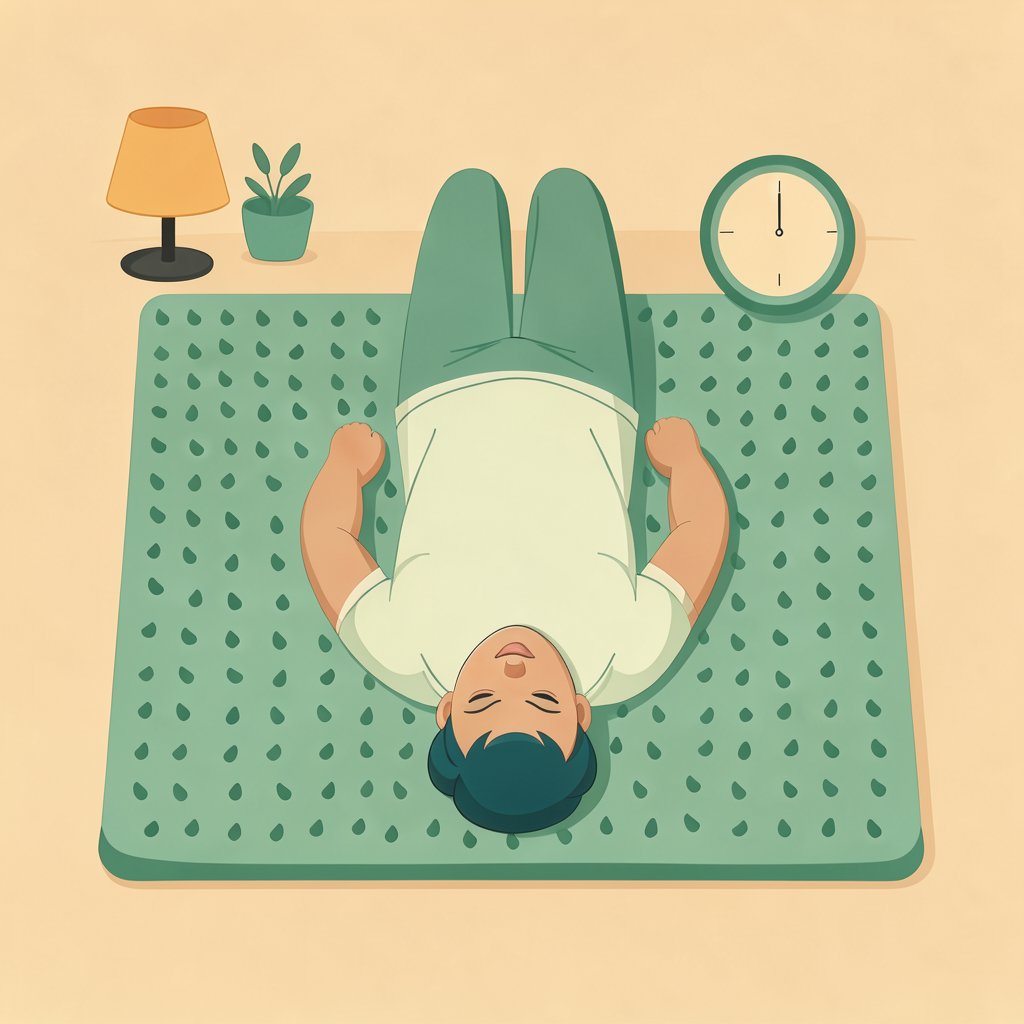
- Calibrate pressure before spikes. A practical acupressure manual presses a calming point as light massage for about 30 seconds, and demonstrates a leg-fatigue point pressed with middle force through the index finger — use that 30-second feel as your calibration of what point pressure is, before you add a mat to it.[5]
- Keep first lie-downs short. The only relaxation-ritual ceiling in the base comes from warm salt baths of 15–20 minutes, not from any mat trial — treat 15–20 minutes as the ceiling of a wind-down session and start several minutes below it.[7]
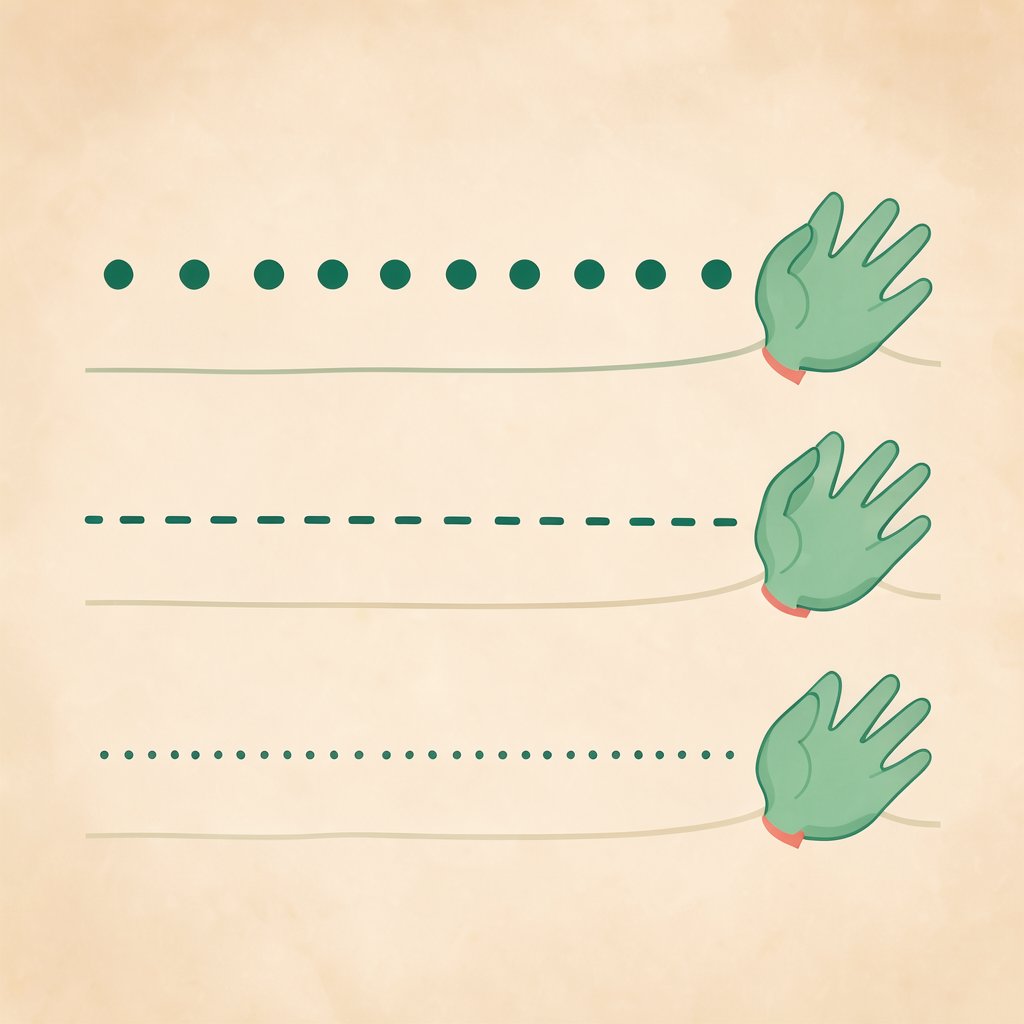
- Borrow rhythm vocabulary. A point-therapy manual frames dosage in rhythms — deep pressing up to 50 times per minute, light stroking 50–100, quick tapping 100–200 — and the safe mat analogues are the slowest of these: slow weight shifts and brief presses, never percussive effort.[6]
- Think in courses, not single sessions. Both the bath manual and a clinical reflexotherapy text structure practice as courses of 10–12 procedures, repeatable — so judge a mat over a course of evenings rather than one dramatic first try.[7][8]
- Screen yourself first. No mat-specific contraindication list exists in the base — skin conditions, blood thinners, diabetic skin, and pregnancy as it relates to mats are all absent from it — and the only pregnancy signal is that clinical reflexotherapy in pregnancy ran as supervised 10–12 day courses, so anyone pregnant or managing skin, blood, or nerve conditions asks a clinician before session one.[8]
None of these numbers is a mat dosage, and this article will not pretend otherwise. They are acupressure’s and relaxation practice’s numbers, transplanted with their labels attached. When a manufacturer finally publishes a real mat protocol, compare it against these anchors — and against your own comfort.
The 2026 Product Gap: Spikes, Size, and Safety Data You Must Demand Yourself
State the verified absences plainly. A corpus-wide, no-filter search across 1,137 books for mat content returned only acupoint and meridian manuals — no Kuznetsov applicator, no bed-of-nails content, no named brands, no prices. The reviews category itself holds no buyer’s-guide frameworks, no spike-density figures, no coverage dimensions, no materials data, and no 2026 market data; no mat-specific contraindication list exists anywhere in the base. And because this project forbids internet search at the writing desk, 2026 market facts cannot be sourced here at all — any best mats of 2026 ranking written from this desk would be fiction.
Convert every gap into a demand. Before checkout, put these six questions to the maker in writing:
- Published spike count and density — the actual geometry of the pressure field you are buying.
- Spike height and mat thickness — how shallow the design keeps the load, in the spirit of the oldest self-use rule on record.[1]
- Exact materials and care instructions — cover fabric, spike material, core padding, and how to clean them.
- A written contraindication list — skin conditions, blood thinners, diabetic skin, pregnancy, in the maker’s own words.
- The named control behind any proof claim — which trial design, which comparison group, published where.
- Course expectations — how many sessions and how long before a buyer can fairly judge the product.
This cluster has no acupressure-mat offers to review yet, so we track two adjacent self-care options with full editorial reviews — see our Joint Genesis review and our Unlock Your Hip Flexors review, or go straight to the current offers: Joint Genesis and Unlock Your Hip Flexors. Their spec sheets are vendor claims and are labeled as such on the review pages. Disclosure: we may earn a commission if you buy through links on this page; recommendations are our editorial opinion.
That is the honest definition of the winner this year. The best acupressure mat is the one whose manufacturer can answer every question this review taught you to ask — geometry, materials, contraindications, and the control behind the proof claim. Mats and rankings change every year; the questions outlive any list. Read any acupressure mat review, this one included, the way you have just learned to read a trial.

Frequently Asked Questions
What is an acupressure mat, and did any 2026 model win?
A padded mat studded with hundreds of blunt spikes that you lie on — described here in shopper’s terms, because the 1,137-book library behind this guide contains zero product data on mats: no specs, no brands, no prices. No model won, because no model could be verified. This article delivers the buying lens instead of a podium.
How is a spike mat claimed to work?
Marketing inherits three theories documented for needles: gate control, in which skin stimuli close the gates on pain signals (Melzack and Wall, mid-1960s); endorphin release, which studies show inconsistently; and plain placebo. None is confirmed even for needles, and spike mats have far less direct evidence than needles do. The claims explain the sales page, not your back.[1]
How long should a first session on the mat be?
No mat protocols exist in the evidence base, so the numbers are borrowed with their labels on. A calming point pressed as light massage for about 30 seconds calibrates what point pressure feels like first.[5] The 15–20 minute ceiling comes from relaxation-bath rituals, so start several minutes below it and think in repeatable courses of 10–12 sessions.[7]
Are acupressure mats safe for everyone?
No mat-specific contraindication list exists in the base — skin conditions, blood thinners, diabetic skin, and pregnancy as it relates to mats are simply absent from it. The only pregnancy signal is supervised clinical reflexotherapy, never unsupervised home use.[8] If you are pregnant or manage skin, blood, or nerve conditions, ask a clinician before a first session — not a checkout page.
Do mats press the same points acupuncturists use?
A mat presses zones, not points — it cannot aim. Under the skin sit two different maps: classical meridian acupoints and Western myofascial trigger points, and the two are not the same thing.[2] Blanket coverage is an honest design trade-off, which is why stimulates your meridian points on packaging is a simplification.[3]
What must I demand from a manufacturer before buying?
Six answers in writing: published spike count and density, spike height and mat thickness, exact materials with care instructions, a written contraindication list, the named control behind any proof claim, and realistic course expectations. The 2026 mat worth buying is the one whose maker answers all six without flinching. Silence on any item is your answer.
Sources
- [1] Singh S., Ernst E. — Trick or Treatment: Alternative Medicine on Trial (Russian edition, 2017) — the critical history carrying the arrow legend, the Huangdi Neijing, ten Rhijne, Kaempfer, Berlioz, the 1970s anesthesia episode, the three mechanism theories, and the sham-trial standard.
- [2] Davis K., Davis A. — Frozen Shoulder Syndrome (2023) — the myofascial source establishing that trigger points are a Western-medicine concept, distinct from acupressure and acupuncture points.
- [3] Vashichkin V. — Atlas of Healing Points (2020) — the meridian point taxonomy, including yuan-source points near each of the 12 meridians, behind the acupoint map described in this guide.
- [4] Yang Jwing-Ming — Meridian Qigong Exercises (2016) — the self-massage lineage naming tui na and dian xue as the traditional point-press practices a spike mat mechanically descends from.
- [5] Practical Guide to Acupoint Self-Massage (Acupressure) — author not stated in the source metadata — the manual supplying the 30-second light-massage press and the middle-force index-finger technique used here as pressure calibration.
- [6] Medvedev A., Medvedeva I. — 25 Magic Points (2008) — the dosage vocabulary of pressure rhythms: deep pressing up to 50 per minute, light stroking 50–100, quick tapping 100–200, borrowed only as rhythm framing.
- [7] Danikov N.I. — Healing Iodine (2016) — the relaxation-ritual anchor of 15–20 minute warm baths in 10–12 procedure courses, used strictly as a labeled ceiling analogy, never as mat data.
- [8] Reflexotherapy in Obstetrics and Gynecology — author not stated in the source metadata — the clinical text showing point therapy in pregnancy ran only as supervised 10–12 day courses, the base’s sole pregnancy signal.
Where to go next: for a hands-on point-press practice that a mat mechanically imitates, start with the tui na self-massage manual and the Zusanli (ST36) acupressure manual. If point-therapy shopping is your goal, our acupressure ear seeds buyer’s guide applies the same evidence-first lens to an adjacent product, and the head and neck tension guide shows what targeted point work looks like when you do the aiming yourself. Each page keeps the same rule as this one: traditional use framed as traditional use, and every number labeled with its source.
How we researched this: this guide is built from a local library of 1,137 wellness books, queried through an offline retrieval system with no internet sources, and every factual claim above was checked against the cited source passage before publication. Retrieval used the same embedding model and the same category filtering as the rest of this project, with relevance ranked on pure embedding similarity; where a fact could not be found — and for every product specification, it could not — the gap is stated as a gap. We do not rank products we cannot verify, and that is why this acupressure mat guide ends with questions to put to a manufacturer rather than a podium of spikes.
