
Educational content only — not medical advice. See our full Medical Disclaimer and Affiliate Disclosure below.
Key Takeaways
- Wu Xing is the classical Chinese five-phase system: Wood, Fire, Earth, Metal, and Water mapped onto seasons, organs, climates, flavors, colors, and emotions — one correspondence set that reads the whole year.[1]
- Each organ network faces its own season’s pathogen — the liver meets Wind in spring, the heart meets Heat in summer — which is the tradition’s explanation of seasonal vulnerability.[1]
- The dose is small: ten to fifteen minutes a day of element-appropriate practice, ideally in the 5-7 AM window, with a three-to-five-minute floor on hard days.[2][3]
- Deep internal work is not for everyone: the source books rule it out before eighteen and during pregnancy, and add cautions for chronic psychiatric conditions and severe heart disorders.[4][5]
- Modern TCM universities in China dropped five-element theory from study as metaphysical — honest context recorded by the tradition’s own textbook for Western physicians.[6]
It happens almost on schedule: the first week of a new season arrives and half your household starts sniffling. Traditional Chinese medicine (TCM) has both a name for the pattern and a map for it, and its seasonal wellness logic is unusually practical. The five elements (Wu Xing) system — Wood, Fire, Earth, Metal, Water — reads the year as five stretches of time, each with its own organ network, climate, emotion, and vulnerability, and it treats seasonal immunity as a matter of aligning daily habits with that calendar rather than fighting the weather.[1] This guide walks the whole year the way the tradition sees it: what the correspondence set says, why the model places your most exposed moments at the seams between seasons, and one small daily ritual for each of the five seasons.
Everything below comes from a local library of 1,137 wellness books — TCM textbooks, qigong manuals, and Daoist training guides — and nothing from internet search. Traditional claims stay traditional: where a book reports an outcome, we present it as the book’s claim, never as medicine. If you want a first practice to hang this calendar on, our Baduanjin — Eight Pieces of Brocade manual is a gentle place to start.
What Is Wu Xing? The Five Elements as a Resilience Calendar
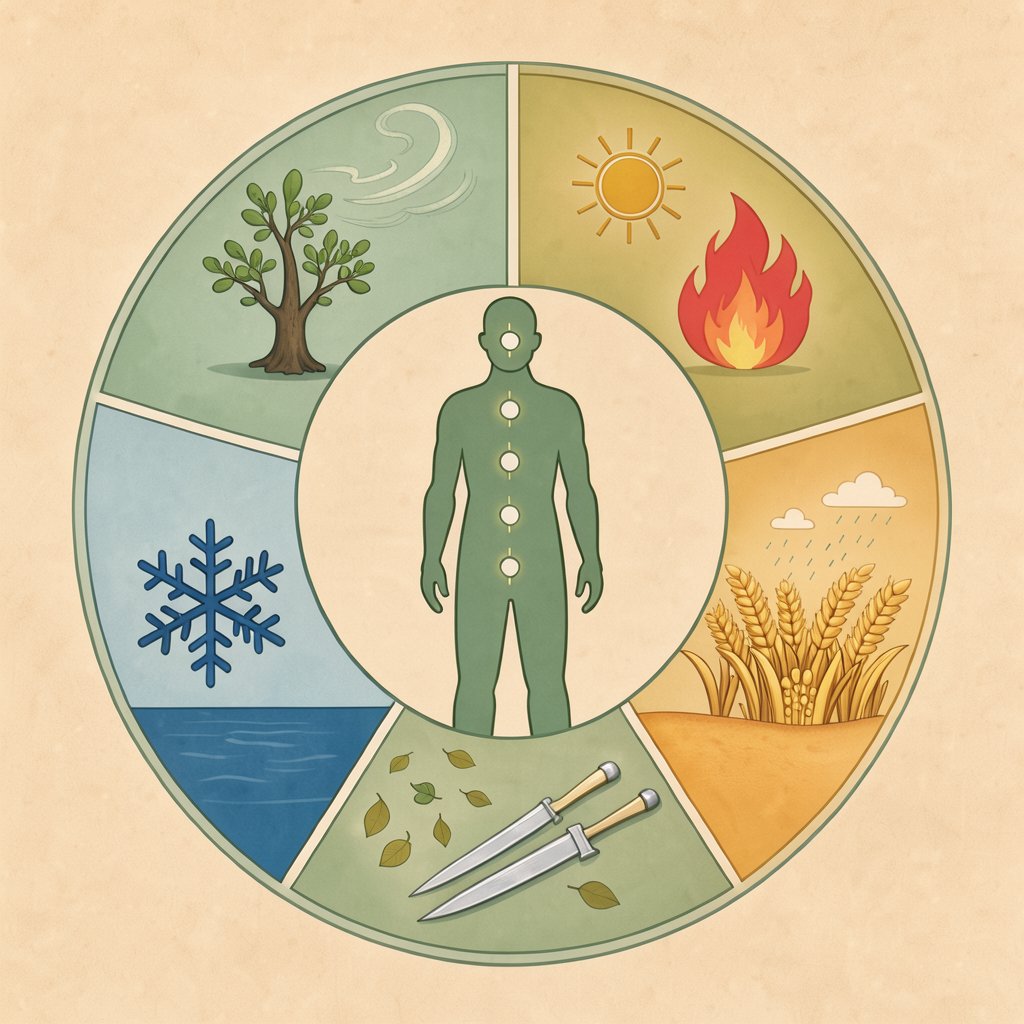
Wu Xing is the classical Chinese five-phase system: five process-symbols — Wood, Fire, Earth, Metal, and Water — used to map the year, the body, and the landscape onto a single grid.[1] Each phase owns a season, a direction, a climate, a flavor, a color, a grain, a pair of organs, and an emotional register. Read down the calendar, that grid becomes what this article calls a resilience calendar: a schedule of which organ network is exposed when, and what practice the tradition prescribes for that window.
The concept is old enough to have a paper trail. Zou Yan (350-270 BC) is often presented as the inventor of the five-element idea, and he applied it far beyond medicine — to history, geography, people, animals, and plants.[7] The theory matured in the Warring States period’s “hundred schools” atmosphere, and the Huangdi Internal Classic (Nei Jing) then systematized Yin-Yang and the five elements into medicine with an explicit correspondence between man and nature.[1] The classical timeline in Liang Liu’s textbook starts with the Huangdi Internal Classic in the 4th-1st centuries BC as the theory foundation, runs through the Classic on Medical Problems (Nan Jing) in the 1st century AD and the Treatise on Cold-Attack and Miscellaneous Diseases at the end of the 2nd century, and ends with Shennong’s Herbal Classic and its 365 classified herbs in the 1st-2nd centuries AD.[1]
The legendary dating is taller than the scholarly one. The Yellow Emperor Huang Di is traditionally dated 2697-2597 BC, and the Nei Jing Su Wen is attributed to him — but modern scholars believe the text was compiled much later.[8] Chapter 12 of the same classic even maps directions to the origins of methods: stone needles (bian shi) from the East, metals and jade, poisons and elixirs from the West, and storing and hiding from the North.[9] Whatever the exact dates, the through-line is stable: the human body was read as a small mirror of a larger seasonal world.
For daily practice, Yang, Jwing-Ming compresses the whole tradition into one first rule: you must live in harmony with the cycles of nature and avoid and prevent negative influences — in his words, this is the major target of qigong practice.[10] The cycles he names run from the familiar to the vast: daily, monthly, yearly, 12-year, and 60-year cycles.[11] This article works with the yearly one, because that is where seasonal wellness lives: five elements, five seasons, five small rituals.
The Master Correspondence Map: Elements, Seasons, Organs, and Climates
Everything the tradition says about seasonal practice hangs on one correspondence set, recorded in the TCM textbooks and repeated across the qigong literature.[1] Liang Liu’s Table 1.5 gives the full grid, and Schnorrenberger’s textbook for Western physicians confirms the same mapping of element to season, direction, climate, flavor, color, grain, organs, and emotion.[1][6] Here is the complete Wu Xing seasons map, one line per element:
- Wood — spring, East, Wind, sour flavor, green, wheat; liver and gallbladder; anger; a taut pulse.[1]
- Fire — summer, South, Heat, bitter flavor, red, foxtail millet; heart and small intestine; joy; a surging pulse.[1]
- Earth — late summer, center, Dampness, sweet flavor, yellow, sorghum; spleen and stomach; pensiveness and brooding.[1]
- Metal — autumn, West, Dryness, acrid flavor, white, rice; lung and large intestine; grief.[1]
- Water — winter, North, Cold, salty flavor, black, soybean; kidney and bladder; fear.[1]
Beinfield and Korngold’s Between Heaven and Earth frames the phases as processes rather than substances: five process types mapped onto five Organ Networks, five seasons, five climates, and five personality types, with the body following the seasonal arc of birth, growth, ripening, harvest, and decline.[12] The phases also relate to each other in four named ways: generation (Sheng), suppression (Ke), overgrowth (Cheng), and counteraction (Wu).[6] Liang Liu’s balance examples make the restraining relations concrete — Water restraining Fire, and Fire restraining Metal, meaning heart-Yang limits the lung.[1] Keep those two links in mind; they come back in summer and in winter.
The row of the map that matters most for immunity is the vulnerability rule: each zang organ is most susceptible to the evil Qi of its own season, so the liver suffers mostly from Wind diseases in spring, and the heart is the organ affected in summer.[1] The emotion column is read the same way — joy belongs to Fire, grief to Metal, fear to Water, worry and pensiveness to Earth, anger to Wood — a mapping repeated across independent sources.[7][1][6] In practical terms, the map tells you which door the season will knock on before it arrives.
Why Immunity Dips at Seasonal Seams: Qi Depth, Wind, and Wei Qi
The first mechanism is depth. In spring and summer, Yang Qi is emitted outward: Qi and blood circulate closer to the body surface, the skin loosens, and you sweat more.[3] In autumn and winter the current reverses — Yang Qi is stored, Qi and blood circulate deeper, and the skin becomes dense.[3] Li Ding’s textbook adds the punchline: sudden, abrupt weather changes exceed the body’s adaptive capacity and cause functional disorders — and a change of season is exactly such a change.[3]
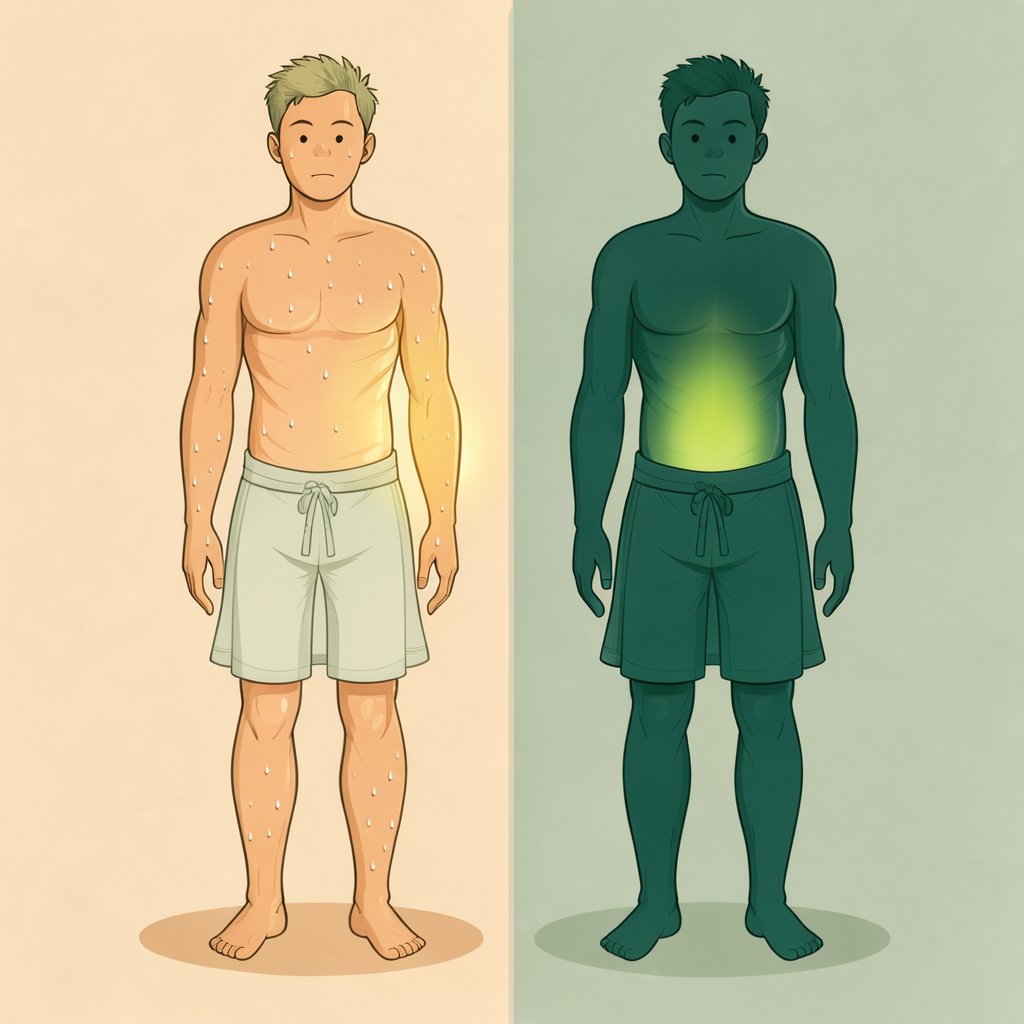
The second mechanism is the gatekeeper. Wei Qi — the tradition’s defensive energy — is described in Damo Mitchell’s The Four Dragons as a filtering system, and the gates it guards are named: if the filtering Wei Qi system is weak, we draw in toxins from the environment through the Gui Men gates.[13] The named pathogens are Wind-Heat, Wind-Cold, Damp, Cold, Heat, and Dryness, and they do not stop at the skin: they penetrate the three layers of the Pi Fu system, move down through the Jing Jin, and reach the meridians.[13] A weak filter plus a season in transition is the tradition’s plain arithmetic of falling ill.

Wind gets its own warning label. All pathogens may begin with Wind, Mitchell writes in Heavenly Streams — it is the most unpredictable pathogen, and Wind Cold and Wind Heat can transform into each other rapidly.[14] The same book lists the six external climatic energies of the year — Wind, Cold, Damp, Dryness, Heat, and Summer Heat — with each season leaning toward its dominant energy, a set that matches the textbook grid.[14][1]
The adaptation physiology behind the model is quotable too. In heat the body sweats to cool itself; in cold the pores close and fluid leaves as urine.[6] Schnorrenberger’s seasonal epidemiology for China puts temperature-related illness in spring, heatstroke, dysentery, and malaria in summer, and common colds in winter, while chronic Bi (rheumatic) conditions, asthma, and migraine react to abrupt weather change.[6] Yang’s prevention logic closes the loop: abnormal Qi circulation precedes physical organ damage, so the tradition corrects Qi even before there is any physical problem.[8]
Spring (Wood): The Liver, Wind, and Anger
Spring opens the calendar at its windiest gate. The liver and its partner organ, the gallbladder, govern the Wood phase, and the liver is the organ most susceptible to Wind diseases in spring.[1] Bian Zhichzhong’s spring self-diagnosis card fills in the rest of the row: morning hours, windy weather, the stage of birth and growth, a choleric temperament, anger and rage as the emotions, muscles and tendons as the tissues, eyes and tears as the sense register, and a greenish complexion when ill.[15] Wood force, the same card notes, manifests in the morning, in the East, in beginnings, in the freshness of wind, and in spring.[15]
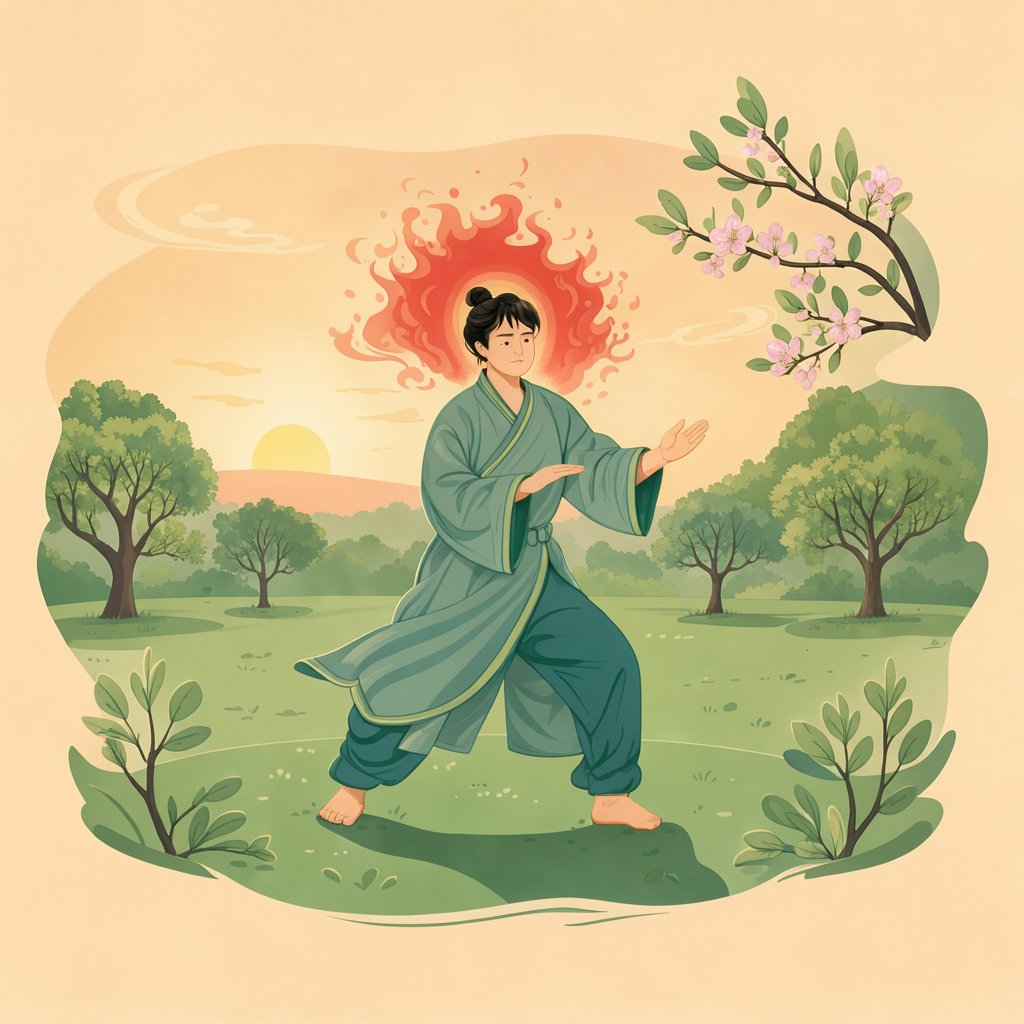
The spring ritual is movement, sized for real life. Bian’s prescription for strengthening the Wood element is direct: sport, karate, Taiji.[15] The dose comes from his Daoist gymnastics book: even ten to fifteen minutes per day of the exercises gives excellent results, some readers reported positive effects from just three to five minutes, and any one, two, or three parts of the set can be selected as needed.[2] Timing comes from Li Ding: the best hours for meridian qigong are 5-7 AM or early evening, when it is calmer and the air is fresher.[3] For scale, the traditional expectation was one to one-and-a-half hours of daily focused practice — which, as Khorev and Vilchinsky note, few of us can give — so minimal-time sets built on complexes like the 18 Forms Tai Chi Qigong, a session of under twenty minutes, exist precisely for modern calendars.[16]
Two liver-care notes round out the season. In Yang’s tradition the “Xu” sound calms the liver — his book ties the relaxation of the liver to pain relief — while drinking too much alcohol or eating too much deep-fried food strains the liver and disturbs liver-channel Qi circulation.[8] Spring, in other words, is the season the tradition spends managing friction: wind at the gate, anger in the register, and a liver that feels both. If you want a standing set that fits Bian’s Taiji prescription, our Ba Duan Jin beginners guide walks one from the first posture.
Summer (Fire): The Heart, Heat, and Joy
Summer puts the heart and small intestine at the gate, and the pathogen is the season itself: Heat, with Summer Heat named as the distinct sixth climatic energy of the high season.[1][14] The Fire row of the map reads summer, South, bitter flavor, red, foxtail millet, joy, and a surging pulse.[1] The adaptation physiology is the visible one — in heat the body sweats to cool itself[6] — and China’s seasonal epidemiology places heatstroke, dysentery, and malaria in these months.[6] Joy is the Fire emotion, the map’s reminder that each season carries an emotional register, not only a temperature.[1]
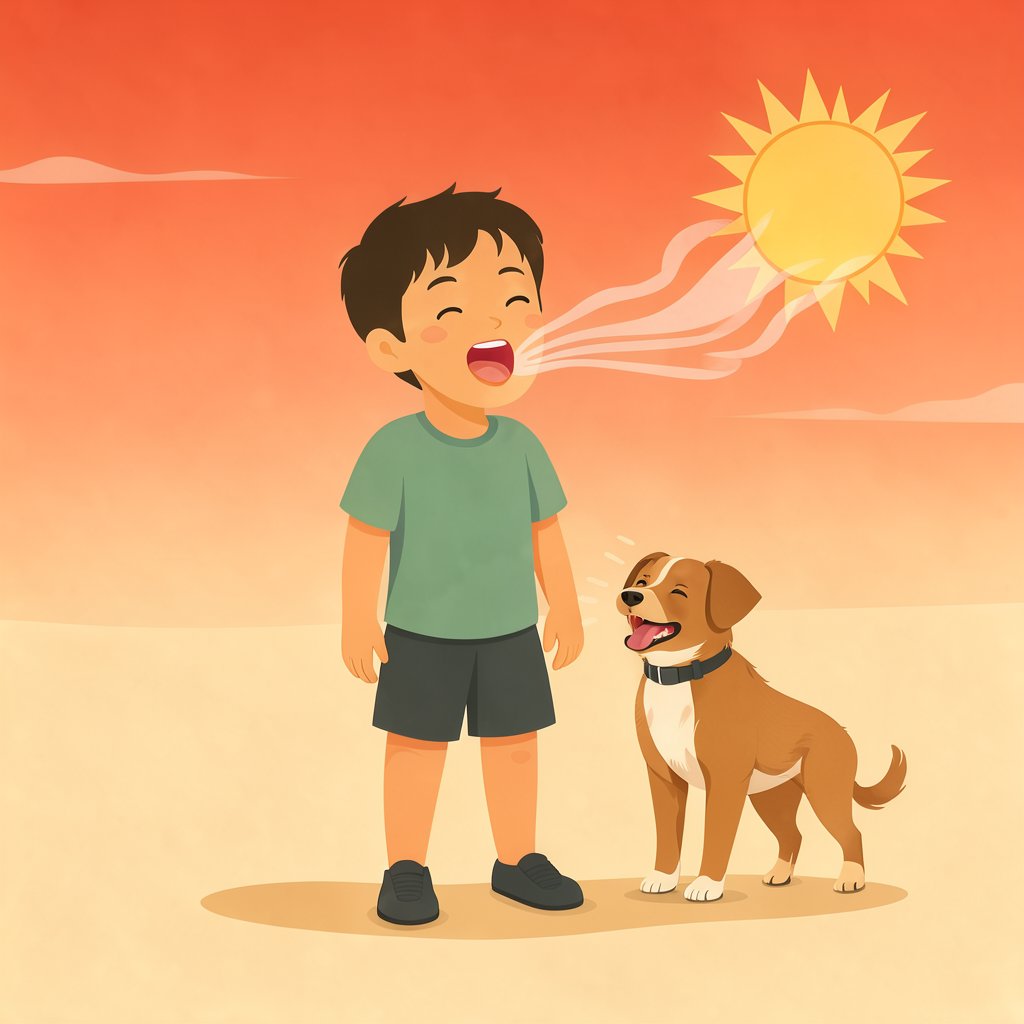
The summer ritual is breath with a sound attached, and it belongs to the tradition, not to medicine. Yang’s weather-specific sounds are practical: “Ha” is described as relieving fevers — exhale like a panting dog to dump heat — and “Hei” increases a person’s working strength.[8] These are traditional qigong breathing practices, not care for heat illness; heatstroke is a medical emergency. If counted breaths are new to you, our coherent breathing practice manual is the gentle companion.
One more line of the map does quiet work in summer: Fire restraining Metal — heart-Yang limiting the lung.[1] The heart at full blaze already leans on the lung’s rhythm, which is why the very next season belongs to the lung. High heat, in other words, hands the year toward its dry descent on its own.
Late Summer (Earth): The Spleen, Dampness, and Overthinking
Late summer is the season most Western readers have never heard of, and the map insists on it. Earth owns the center of the year: dampness, sweet flavor, yellow, sorghum, the spleen and stomach, and pensiveness or brooding — the same mapping in both Liang Liu’s table and Schnorrenberger’s textbook.[1][6] In Beinfield and Korngold’s process view, Earth is the ripening-harvest middle of the body’s arc of birth, growth, ripening, harvest, and decline — the pivot where the year turns inward.[12]
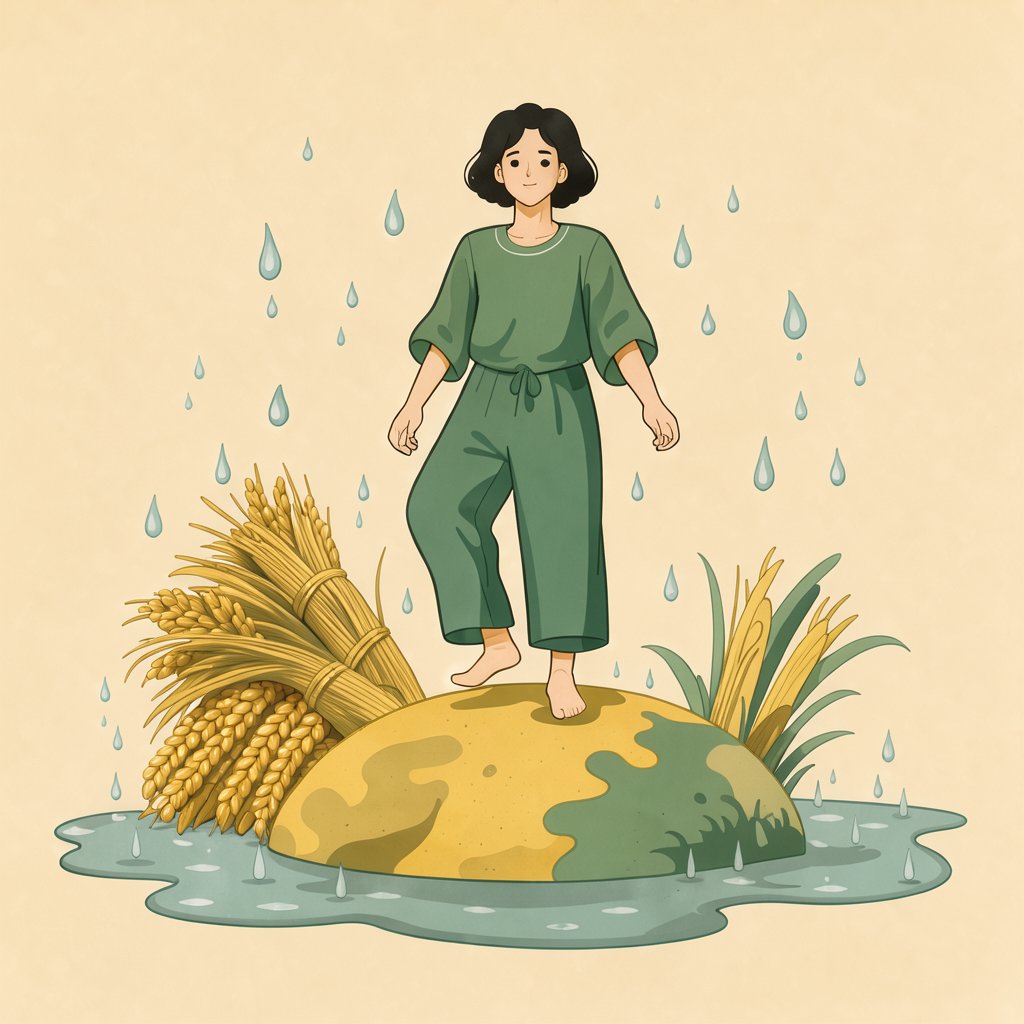
The Earth lesson is counterintuitive: restraint. Mitchell’s training rule states that it is difficult to reduce any excesses in an organ when it is in its season of dominance — and the book’s own example is that an excess of Stomach energy is difficult to reduce during late summer.[14] So the Earth ritual is gentle daily consistency rather than intensity, and Li Ding’s frequency guidance points the same way: elderly, seriously ill, or frail practitioners should practice less intensively, generally one to two sessions per day.[3] In the season of dampness and brooding, the tradition prescribes steady, unhurried repetition.
An honest note on food: herbs and special diets are named — alongside acupuncture and acupressure — among the main Qi-regulating treatments in Yang’s Tai Chi Qigong.[10] But our sources hold no per-season recipes or dosages, only the five-grains and five-flavors classification you saw in the map. We will not invent a late-summer meal plan the books do not give.
Autumn (Metal): The Lungs, Dryness, and Grief
Autumn belongs to the lung and large intestine: West, Dryness, acrid flavor, white, rice, and grief — an emotion mapping repeated across independent sources.[1][7] The seam mechanism from the previous section arrives here in full: Yang Qi is stored, Qi and blood circulate deeper, and the skin becomes dense as the whole system moves inward.[3] The field record tracks the turn — winter’s common colds begin their climb, and chronic Bi (rheumatic) conditions, asthma, and migraine react to abrupt weather change.[6]
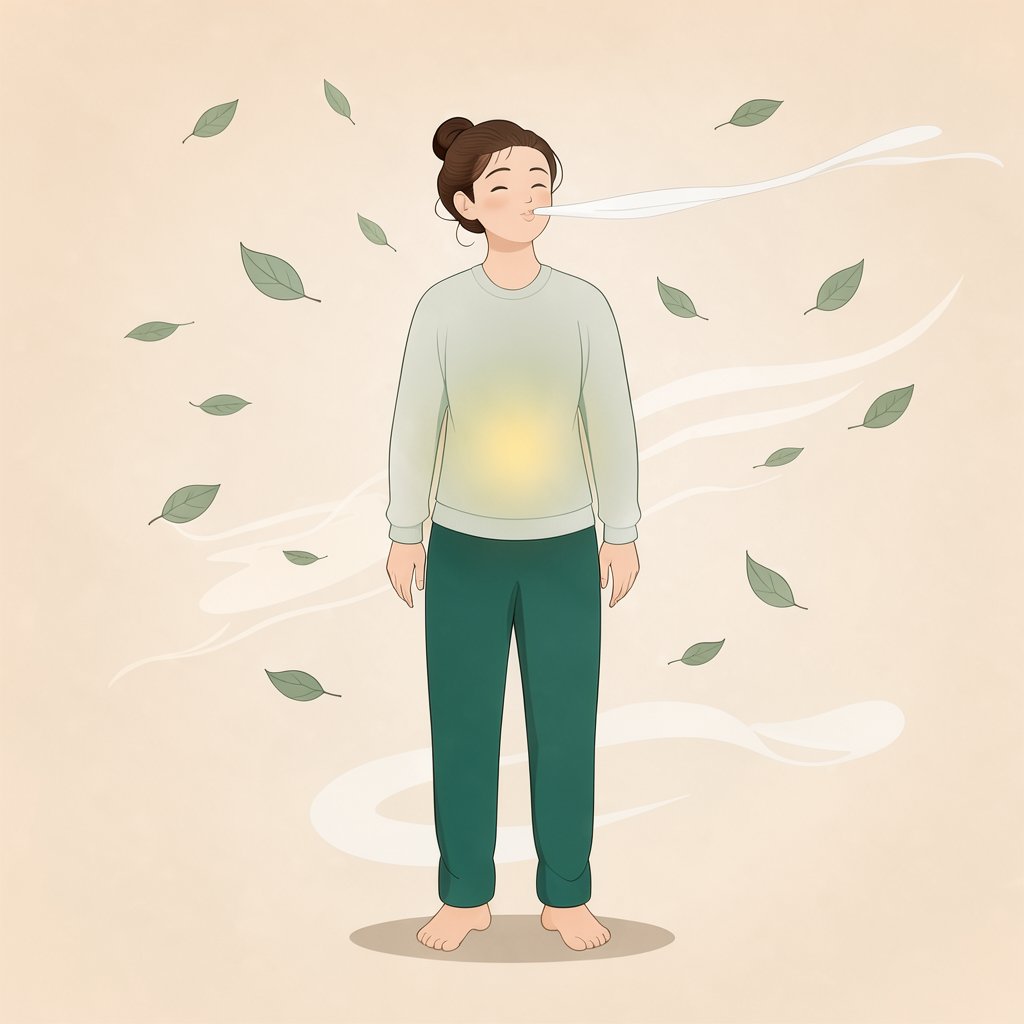
The cold-weather physiology is the mirror of summer’s: in cold the pores close and fluid leaves the body as urine.[6] The autumn ritual is Yang’s “Si” sound, used in combination with breathing deeply and keeping the limbs close to the body to help stay warm in cold weather.[8] It is the closest thing to a cold-weather self-care protocol in our sources — our retrieval surfaced no separate dressing protocol, and we will not pad that gap with invented layering advice. What the sources do say is that the surface thins in autumn, and the tradition answers with warmth kept close.
Winter (Water): The Kidneys, Cold, and Fear
Winter closes the cycle with the kidney and bladder: North, Cold, salty flavor, black, soybean, and fear.[1] The Ke-cycle balance example for this phase is Water restraining Fire.[1] Winter also carries the calendar’s strategic payoff, because of how the tradition schedules its training.
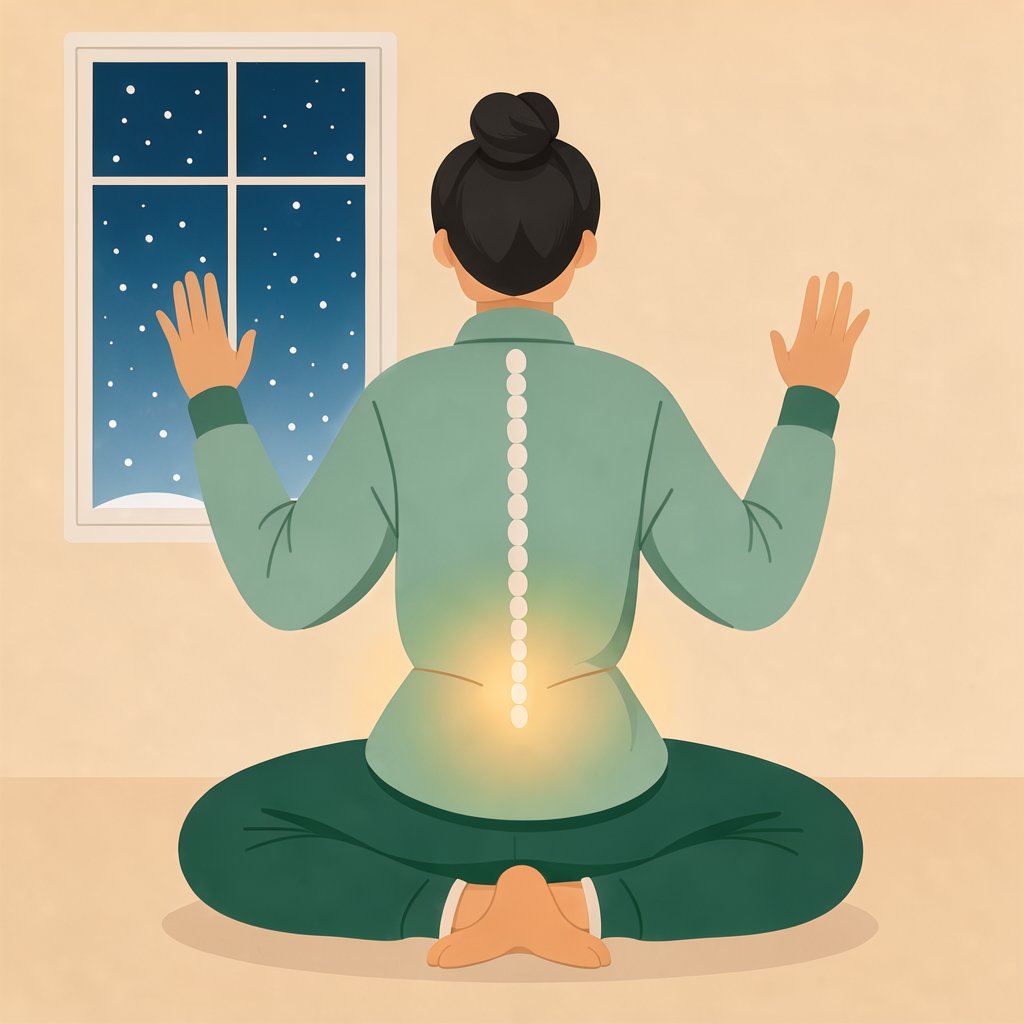
Each organ, Mitchell explains, has a season of dominance and a deficient season. It is more difficult to strengthen the energy of an organ when it is in its deficient season of the year, and difficult to reduce any excesses in an organ when it is in its season of dominance — his own examples: kidney deficiency is difficult to improve during spring, while an excess of Stomach energy is difficult to reduce during late summer.[14] The practical reading is that strengthening work for an organ belongs in its dominant season. Winter, the kidney’s season of dominance, is therefore the traditional window for kidney-strengthening practice — one reason winter qigong is quiet, slow, and internal.
Persistence matters more than volume. Some practitioners in Bian’s book reached positive effects with just three to five minutes of the Daoist exercises per day.[2] What regular practice is traditionally said to deliver is recorded by Li Ding — and it is a book claim, not a clinical result: after one month, relief of complaints such as headache, dizziness, insomnia, poor appetite, weakness, cough, palpitations, and chest tightness; after two months, symptoms significantly reduced or gone; after three months, claimed improvements in blood pressure, vision, brain and liver, kidney, and lung function, and blood oxygen level.[3] We quote that timeline as what the tradition reports, nothing more.
Who Should Not Do Deep Internal Practice — and What Modern TCM Left Behind
Before the calendar turns aspirational, the source books draw hard lines. Damo Mitchell’s safety teaching is consistent across four of his books on internal training, and it starts with age and pregnancy.[4][5] The short version: deep internal work — Nei Gong, Dan Tien concentration, energy circulation — is not for everyone, and the tradition itself says so plainly.
- Under 18: no deep internal work — the teenage emotional mind is still forming, and deep practice can disturb emotional development; basic external qigong, stretching, and breathing remain open.[5]
- Pregnancy: stop deep internal practice and Dan Tien concentration entirely — gentle stretching and physical breathing work only; the mother’s Jing enters the cycle needed for fetal development.[4]
- Chronic psychiatric conditions: especially with extreme high-low mood swings or on antipsychotic medication, the probability of “Qigong deviation” rises significantly.[4]
- Severe heart disorders: approach with caution — an error can hyperactivate heart Qi, a rare but real risk.[4]
The martial side of the tradition gets its own caution. Some practices build skill but damage health — Yang points to Iron Sand Palm, which builds striking power while harming the hands and the organ Qi circulation.[11] Skill and health, the old books insist, are not the same project.
The history deserves the same honesty. According to Schnorrenberger’s textbook, current TCM universities in China have dropped five-element theory from study, calling it metaphysical — Yin-Yang theory was kept.[6] Western science, for its part, currently has no hard-science physiology for Qi; Yang cites Benson’s relaxation-response research as partial support for the mental-calmness effects and leaves it there.[17] And no Western clinical trials on Wu Xing practice and immune markers appear anywhere in our sources — which is why this article describes a tradition instead of promising outcomes.

Frequently Asked Questions
What are the five elements and their seasons?
In the classical correspondence set: Wood with spring, Fire with summer, Earth with late summer, Metal with autumn, and Water with winter — each with its own direction, climate, flavor, color, grain, organ pair, and emotion.[1] The five seasons do not divide the year evenly; Earth’s late-summer phase is the short pivot at the year’s center. The practices that follow this map live in the Chinese wellness and qigong cluster.
Why do I get sick when the seasons change?
Qi and blood shift depth with the season — near the surface in the warm half of the year, deep in the cold half — and sudden weather changes exceed the body’s adaptive capacity.[3] Meanwhile Wind, the gateway pathogen, tests the Wei Qi filter while that shift is underway.[13][14] It is a traditional model, not a diagnosis. The day-sized version of this idea sits in our organ body clock guide.
How many minutes a day should I practice?
Bian’s Daoist gymnastics set the working dose at ten to fifteen minutes a day, with a three-to-five-minute floor that some readers reported as enough, and any one, two, or three parts of the set can be chosen.[2] Li Ding’s timing advice puts practice at 5-7 AM or early evening.[3] For a structured start, see our Ba Duan Jin beginners guide.
Which breathing sound goes with cold weather or heat?
Yang, Jwing-Ming’s traditional weather sounds: “Si” — deep breathing with the limbs held close to the body — for cold weather, “Ha” — exhaling like a panting dog — described in connection with fevers, and “Hei” for working strength.[8] They are breathing practices from the qigong tradition, not treatments for illness; real heat illness needs medical care. A gentle companion for counted breaths is our coherent breathing practice manual.
When is the best time to strengthen an organ?
In the organ’s season of dominance, according to Mitchell’s rule: strengthening is difficult in an organ’s deficient season, while reducing an excess is difficult in its dominant season.[14] Hence kidney work traditionally belongs to winter — the kidney’s dominant season — and the late-summer Earth phase calls for restraint rather than intensity. A structured set for that window: our Baduanjin manual.
How long before I notice benefits?
The only timeline in our sources is Li Ding’s traditional claim: relief of complaints like headache, insomnia, poor appetite, and cough after one month; symptoms significantly reduced or gone after two; and claimed improvements in measures like blood pressure and blood oxygen level after three.[3] It is what the book reports — not a clinical prediction, and individual experience varies. How we handle such book claims: our editorial policy.
Is Wu Xing accepted by modern medicine?
Not as science, and partly not even in China: Schnorrenberger’s textbook records that Chinese TCM universities dropped five-element theory from study as metaphysical, keeping Yin-Yang.[6] Western science has no hard-science physiology for Qi, though Benson’s relaxation-response research is cited as partial support for calmness effects.[17] Read this guide as traditional wellness education, not as medical advice. Full framing sits in our medical disclaimer.
Seasonal wellness in the TCM tradition turns out to be a scheduling problem: five elements immunity is less about fighting the season and more about knowing which organ is at the gate this month and practicing accordingly.[1] Pick your current season from the sections above, start with ten to fifteen minutes tomorrow morning, and let the calendar — not motivation — set the pace.[2] The Wu Xing seasons have kept this appointment for more than two thousand years; you only have to keep yours.
Sources
- [1] Liang Liu — Essentials of Chinese Medicine, Volumes 1-3 (2011) — the full five-phase correspondence set (Table 1.5), the classical texts timeline (Table 1.1), the organ-season vulnerability rule, and the restraining-cycle balance examples used throughout this guide.
- [2] Bian Zhichzhong — Daoist Health-Improving Gymnastics (Russian edition) — the minimum-effective-dose teaching: ten to fifteen minutes a day of the Daoist exercises, the three-to-five-minute floor some readers reported, and the rule that any one, two, or three parts of the set can be chosen.
- [3] Li Ding — Chinese Qigong (2003, Russian edition) — seasonal Qi distribution (near the surface in the warm half of the year, deep in the cold half), the 5-7 AM practice window, the gentler one-to-two-session frequency for elderly or ill practitioners, and the one-two-three-month outcome timeline.
- [4] Damo Mitchell — The Complete Guide to Daoist Nei Gong (2018, Russian edition) — the pregnancy, psychiatric-condition, and severe-heart-disorder cautions, and the warning that the probability of Qigong deviation rises for practitioners with extreme mood swings or on antipsychotic medication.
- [5] Damo Mitchell — Daoist Nei Gong: The Philosophical Art of Change (2011) — the under-eighteen rule: deep internal work is postponed while the teenage emotional mind is still forming, leaving basic external qigong, stretching, and breathing as the appropriate tools.
- [6] Carl Schnorrenberger — Textbook of Chinese Medicine for Western Physicians (Russian edition) — the independent confirmation of the correspondence set, the four inter-element relations (Sheng, Ke, Cheng, Wu), heat-and-cold adaptation physiology, seasonal epidemiology in China, and the note that Chinese TCM universities dropped five-element theory as metaphysical.
- [7] Scott Shaw — Qigong for Beginners (2006, Russian edition) — Zou Yan (350-270 BC) as the often-presented originator of the five-element concept applied to history, geography, people, animals, and plants, and the repeated emotion-element mapping.
- [8] Yang, Jwing-Ming — Qigong for Health and Martial Arts (1998) — the traditional Huang Di dates, the weather-specific breathing sounds (Si, Xu, Hei, Ha), the liver strain from alcohol and deep-fried food, and the prevention logic of correcting Qi before physical problems appear.
- [9] A.N. Akhmetsafin — Chinese Medicine (2007, Russian edition) — Huangdi Neijing chapter 12 mapping directions to the origins of methods: stone needles from the East, metals and jade, poisons and elixirs from the West, storing and hiding from the North.
- [10] Yang, Jwing-Ming — Tai Chi Qigong: The Internal Foundation of Tai Chi Chuan (2013) — the first rule of living in harmony with the cycles of nature as the major target of qigong practice, and herbs and special diets named among the main Qi-regulating treatments.
- [11] Yang, Jwing-Ming — Qigong Meditation: Embryonic Breathing (2003) — the cycles a practitioner aligns with (daily, monthly, yearly, 12-year, 60-year) and the martial caveat that skill-building practices such as Iron Sand Palm can damage the hands and organ Qi circulation.
- [12] Harriet Beinfield and Efrem Korngold — Between Heaven and Earth (1997, Russian edition) — the five phases as five process types mapped to Organ Networks, seasons, climates, and personality types, and the body’s seasonal arc of birth, growth, ripening, harvest, and decline.
- [13] Damo Mitchell — The Four Dragons (2014) — Wei Qi as a filtering system whose weakness lets environmental toxins through the Gui Men gates, and the pathogen penetration route through the three Pi Fu layers and the Jing Jin into the meridians.
- [14] Damo Mitchell — Heavenly Streams: Meridian Theory in Nei Gong (2013) — the six climatic energies, Wind as the gateway pathogen, the seasonal organ-strength table, and the training rule that strengthening belongs to the dominant season and reducing to the deficient one.
- [15] Bian Zhichzhong — Five Elements of Health: 25 Golden Chinese Exercises (2007, Russian edition) — the spring self-diagnosis card (morning, wind, anger, liver, gallbladder, eyes, greenish complexion) and the element-strengthening prescription of sport, karate, and Taiji.
- [16] V.N. Khorev and A.S. Vilchinsky — Qigong for Beginners (Russian edition) — the contrast between the traditional one-to-one-and-a-half-hour daily practice expectation that few can meet and the minimal-time answer built on the 18 Forms Tai Chi Qigong complex.
- [17] Yang, Jwing-Ming — The Root of Chinese Qigong: Secrets of Health, Longevity, and Enlightenment (1997) — the honesty frame that Western science has no hard-science physiology for Qi, with Benson’s relaxation-response research cited as partial support for the mental-calmness effects.
Where to go next: If the seasonal calendar inspires a standing practice, begin with the Baduanjin — Eight Pieces of Brocade manual or our Ba Duan Jin beginners guide, then contrast the paths in Qigong vs Meditation for stress. For a counted breath to attach to the summer and autumn sounds, the coherent breathing practice manual is the gentle companion. Everything qigong on the site lives in the Chinese wellness and qigong cluster.
How we researched this: This guide is built from a local library of 1,137 wellness books, queried through an offline retrieval system with no internet sources — TCM textbooks, qigong manuals, and Daoist training guides among them. Every factual claim in the text was checked against the cited source passages before publication. Where the sources held no data — per-season recipes, dressing protocols, Western clinical trials — we said so instead of filling the gap.
