
Educational content only — not medical advice. See our full Medical Disclaimer and Affiliate Disclosure below.
Key Takeaways
- Synovial fluid — the joint’s own lubricant — is produced and refreshed under movement load: joint mobility support starts with motion, not a bottle[1][3].
- Stillness is the quiet hazard: cartilage nutrition drops when joints sit still for hours[3].
- Supplements play a supporting role at best — the source literature finds no proof that chondroprotectors restore cartilage[1].
- Follow-along programs earn their price by packaging the habit: a timer, a sequence, a coach.
- Choose by your starting point — stiff-but-healthy, desk-bound, or recovering — and skip self-directed work during flare-ups[8].
Shopping for joint mobility support in 2026 means choosing between three very different products: free daily movement, supplement formulas, and paid follow-along programs. The classical rehabilitation and strength literature behind this guide is remarkably consistent about the order of operations — movement first, because synovial fluid, the joint’s own lubricant, is produced only under effort[1]. Everything else is judged by one question: does it help you move more, not less[3]? This is a buyer’s guide for education — it is not a substitute for care from a qualified healthcare provider; see our full disclaimer.
The comparison below stays practical about all three joint mobility support routes. For each option we summarize what the source books actually say, separate tradition from physiology, and name who it fits. Where a claim rests on a single author’s opinion rather than broad literature, we say so — that is exactly the line most joint-health marketing blurs[1].
Traditional view vs modern physiology
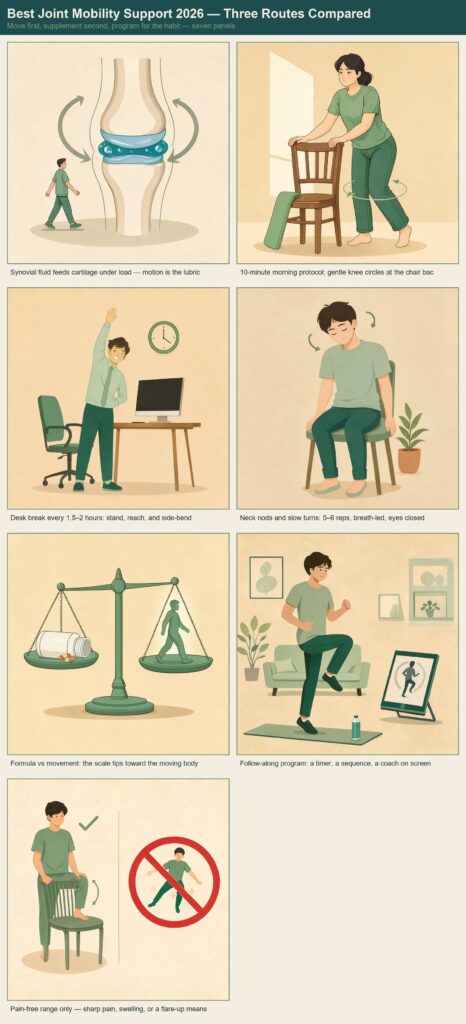
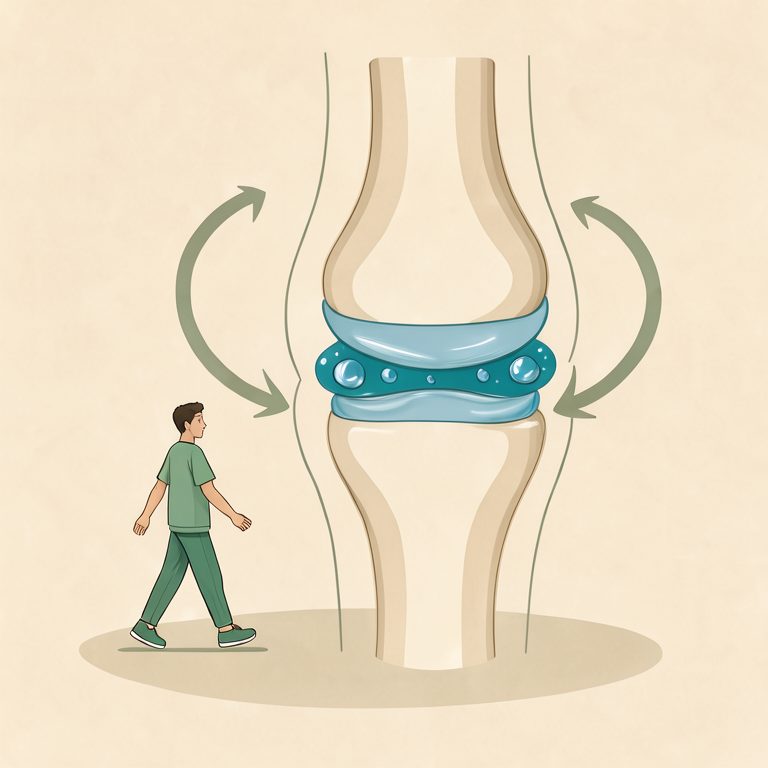
Traditional conditioning systems — from Chinese sinew-change sets to Russian morning calisthenics — put gentle, repeated joint circling at the front of practice, before any strength work[4]. Modern physiology explains why the tradition landed there. Inside each joint, the inner lining of the capsule secretes synovia, a viscous fluid that lubricates the sliding surfaces and nourishes the cartilage[5]. Demchenko’s formulation is blunt: “our own joint lubricant is produced only under effort; if we walk, run, move the knees — lubrication is produced”[1].
The same sources are blunt about the cost of stillness. Alekseev and Zavorotinskaya cite classic experiments: a week of immobilizing a healthy limb already triggers bone loss of roughly 0.3 g of calcium and 0.1 g of phosphorus per day — and until the cast comes off, supplements do not refill the deficit[10]. Shtipler and Regitnig-Tillian add the desk-side numbers: in extreme cases office workers walk only 230 to 980 feet (70–300 m) a day, and the least-active group in one Australian survey spent 21.8 hours a day in chairs, sofas, and beds[3]. Their clinical verdict: sedentary hips suffer from immobility, not overload[3].
Body weight changes the arithmetic twice. Extra weight presses mechanically on knee and hip cartilage, and fat tissue also releases inflammatory messengers (adipokines) that reach the joints through the joint fluid[3]. Strength work, by contrast, is described as joint protection: stronger muscles unload the cartilage, and muscle-derived myokines influence it favorably[3]. That is the physiology behind this guide’s buying rule — the best joint mobility support is whatever moves your joints through their full, pain-free range today[4].
Option 1 — Movement first (free)
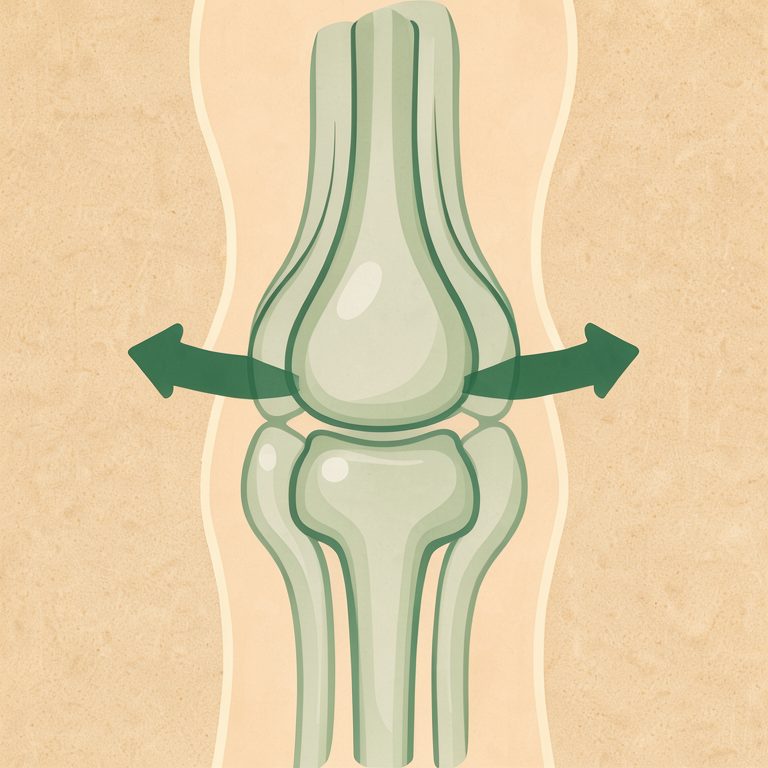
The free option is also the one the source literature ranks first. Therapeutic-exercise manuals progress from active range-of-motion work toward resisted movement, and treat retrained walking as a milestone of its own[2]. Tsatsouline’s key point for buyers: joint mobility is not muscle flexibility — a joint can be taken through its complete range with almost no stretch feeling, and rotating it through that full range is what smooths and lubricates the sliding surfaces[4]. You do not need to touch your toes; you need each hinge to visit every direction it still owns.
Morning is the traditional slot for joint mobility drills, and the physiology backs the timing. You feel “rusty” after stillness because proprioceptors — the body’s position sensors — have had no fresh input, so the nervous system tightens muscles as a precaution; movement wakes the sensors and the tightness drains[4]. Russian practice canonized this as zaryadka, the morning “recharge”, and Amosov’s classic sets ran to hundreds of repetitions — one hundred squats, one hundred side bends, fifty push-ups, one hundred forward bends[4]. You do not need those numbers; you need the daily slot.
Here is the 10-minute joint mobility protocol we recommend as the daily minimum, adapted from the therapeutic-gymnastics complexes. Every step stays in a pain-free range — where a step pinches, shrink the range rather than skipping the day.
- Warm the chain (30–40 seconds). Stand up and walk briskly around the room so the joints take load before range work — the published office complexes open exactly this way[6].
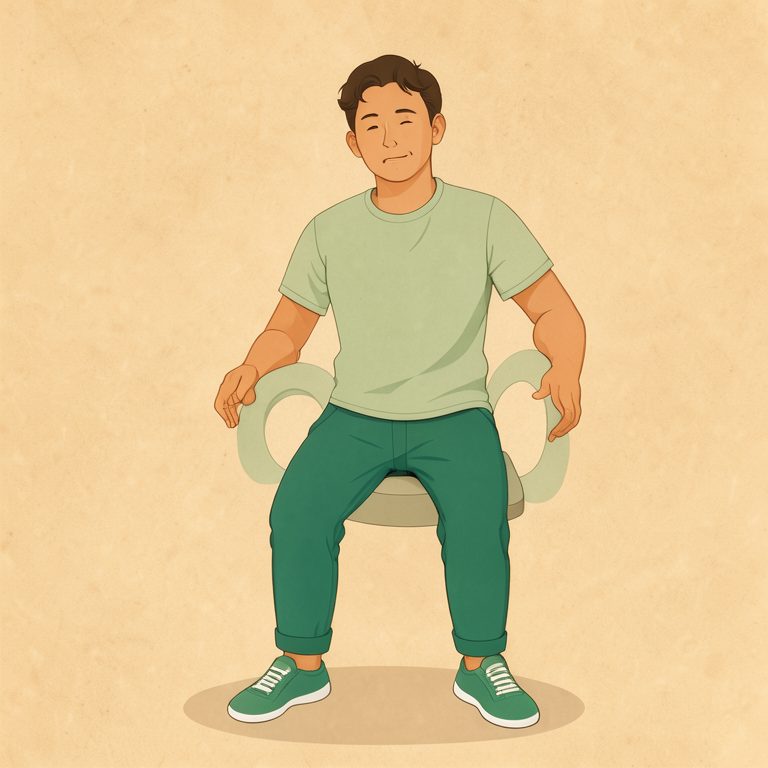
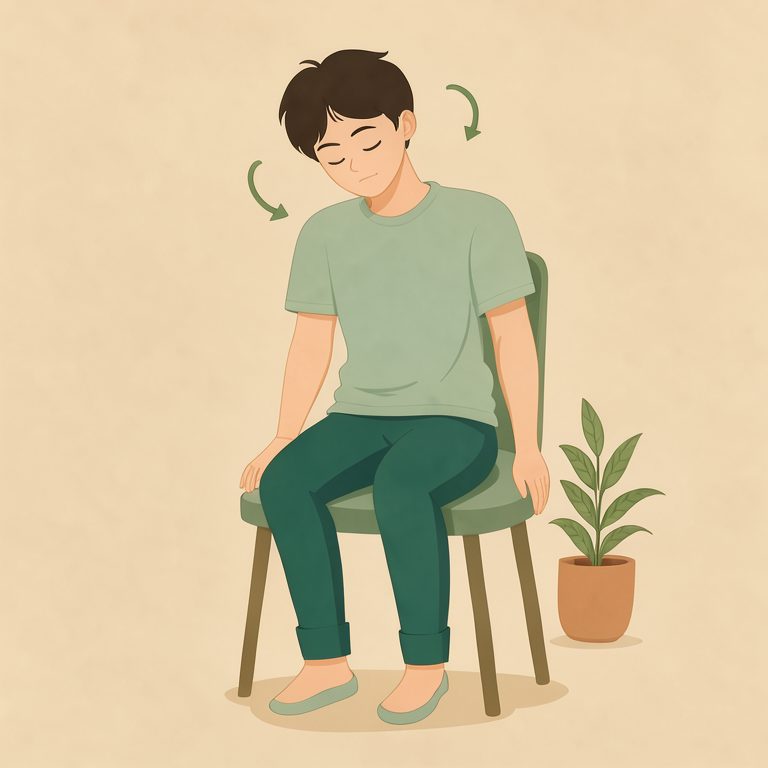
- Neck nods and slow turns. Sit or stand tall, drop the chin slightly and sway the head gently side to side, then close the eyes and turn the head slowly to one side on a deep inhale and back on a full exhale, repeating to the other side for five to six repetitions[6].
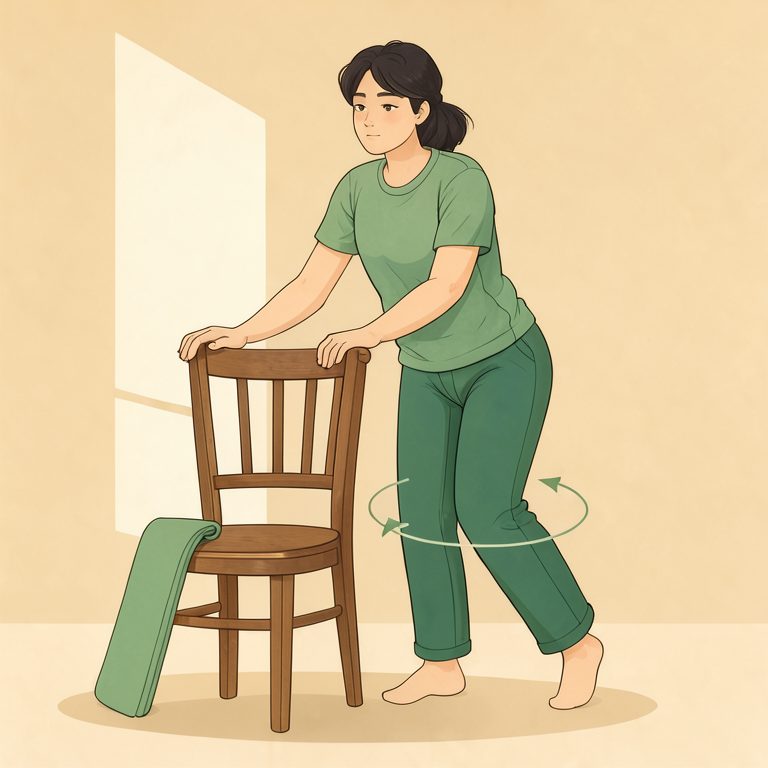
- Torso circles. With feet shoulder-width apart and hands on the waist, draw five slow circular trunk rotations to the right and five to the left, rest a beat, and repeat the pair three to four times[6].
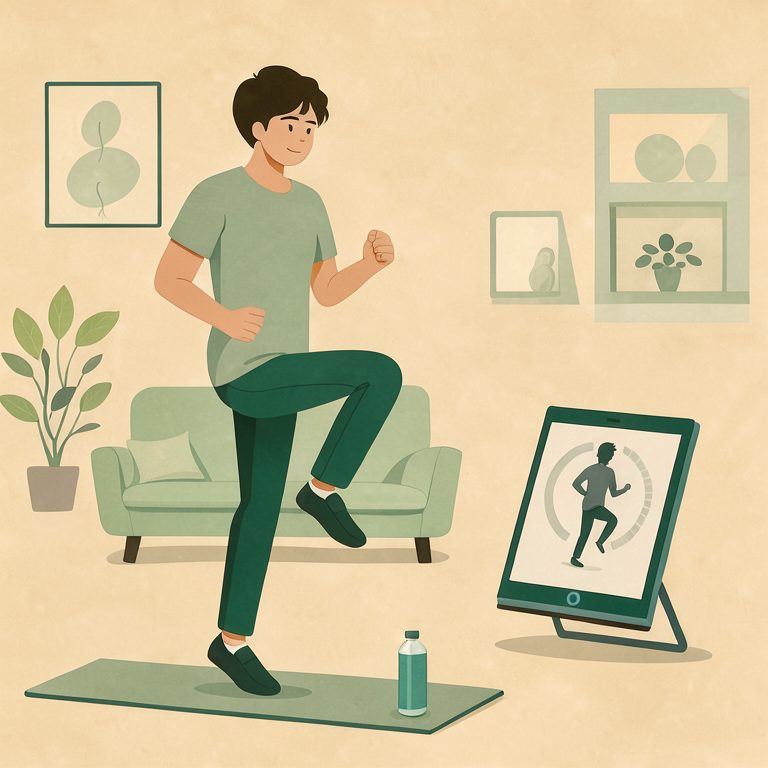
- High-knee march with breath. Arms bent at chest level, march in place for up to three minutes lifting the knees high, inhaling for four steps and exhaling for four steps[6].
- Swings and reset. Add free arm swings and easy leg swings — morning sets traditionally cover every limb joint, swings included[8] — then walk calmly for fifteen seconds and shake the limbs out[6].
Run the joint mobility protocol daily for ten to fifteen minutes, the classic morning-complex length in the source books[8]. Seated workers get a second lever: stand for a five-to-six-minute mobility break every hour and a half to two hours of sitting — three to four breaks across the workday[8]. One published office complex simply asks for three to fifteen minutes every two to three hours at the desk[6].

Option 2 — Joint supplements
Formulas built around hyaluronan, boswellia, glucosamine, and collagen are the most-purchased route to joint mobility support — and the one where the source literature is most sobering. Demchenko’s summary is direct: there is no proof that chondroprotectors restore cartilage tissue, though in his view glucosamine sulfate can be justified for its anti-inflammatory action without side effects[1]. Collagen fares somewhat better in the same review: the body’s own synthesis of this connective-tissue protein slows after age 30–40, the International Olympic Committee lists collagen supplements for athletes as prevention of joint-cartilage micro-injuries, and the encouraging results involve type-II collagen hydrolyzate taken for at least three months[1].
The same author supplies the caveat worth taping to the bottle: many positive collagen studies were initiated by supplement manufacturers with an obvious interest, and mainstream medicine does not yet class collagen as a medicine[1]. Arabuli’s critique is harsher — drinkable collagen is “a brilliant marketing move: do nothing, just drink”, and his calcium warning lands the same point: you can fill yourself with calcium preparations, but bones that life never asks to carry do not grow stronger, and the mineral settles anywhere but where it is needed[11]. Bubnovsky’s case files agree from the other direction: one of his menopausal patients took calcium preparations for years but did no strength gymnastics, and in his telling “calcium taken by mouth never reaches the bone if the muscles do not deliver it”[12]. Our buying stance follows the sources above: treat any formula as an optional add-on to movement, never a substitute for it.

None of these products is a joint mobility program in a bottle — they are convenience products, not rehabilitation, and labels vary widely in transparency. Our current comparison of reviewed formulas:
| Product | Rating | Best for | Price | Links |
|---|---|---|---|---|
 Joint Genesis — Daily Joint Comfort Formula |
★★★★★★★★★★4.4 | Adults 45+ with everyday joint stiffness who already move daily | See official page (bundle pricing varies) | Visit Site |
Comparison is editorial and independent; commissions never affect rankings.
Two products we have reviewed in depth: Joint Genesis, a hyaluronan-centered formula, and, for a movement-based alternative, Unlock Your Hip Flexors. Both reviews lay out the ingredient logic, the pricing tiers, and who each one actually fits.
Option 3 — Follow-along joint mobility programs
Programs work by externalizing the habit: a timer, a sequence, a coach who starts when you press play. That is genuinely valuable for readers who will not self-direct ten quiet minutes — Bubnovsky, of the kinesitherapy school, argues there are no pills that restore movement coordination and muscle strength, which makes structured exercise the actual tool[7]. His clinic even matches morning complexes to profession: one set for waiters and hairdressers on their feet all day, a different one for programmers and office staff whose long sitting stagnates the lower back and pelvic area[7].
A good program also covers what walking leaves out. Daily steps load joints in one repeated pattern, while a designed joint mobility routine takes each joint through circles, rotations, and swings it otherwise never visits — exactly the full-range work Tsatsouline credits with lubricating the sliding surfaces[4]. For desk-bound readers, a short daily hip-and-spine routine often beats a perfect supplement you forget to take. Compare our program review, or the formula review if you want the supplement side of the ledger.
How to choose
| Starting point | First move | Sensible add-on | Skip it if |
|---|---|---|---|
| Stiff but healthy | 10–15 min daily joint mobility complex[8] | A formula, only if it keeps you consistent | You keep skipping the daily slot |
| Desk-bound | Follow-along program + a stand-up break every 1.5–2 h[8] | A walking lunch | The routine causes pain |
| Recovering from injury or surgery | Physician or physiotherapist first[2] | Rehab done with a professional | Any self-directed loading |
The table compresses all three joint mobility support routes into one decision. Its logic is the source literature’s logic: movement is the base layer, supplements are optional garnish, and programs are packaging for the habit[1][4]. Start where you actually are, not where a sales page assumes you are.
Ready to act? Start with our mobility guides, or jump straight to the current joint formula offer (affiliate link — we may earn a commission at no extra cost to you). If swelling, sharp pain, or a fresh injury is in the picture, read the safety notes below before buying anything.
Safety notes
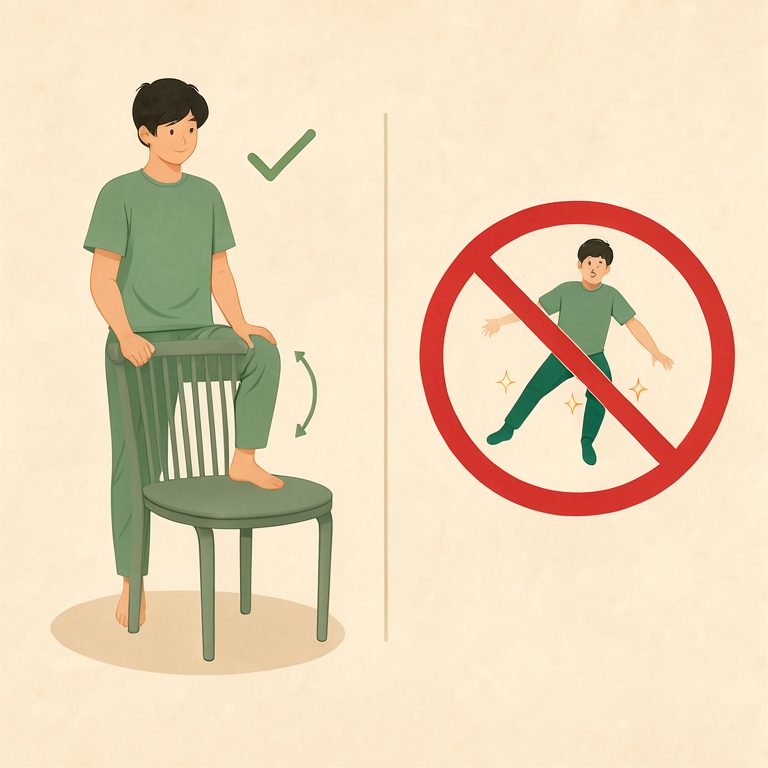
The one rule every joint mobility route shares: work in a gentle, pain-free range. Therapeutic-gymnastics manuals approach range of motion gradually rather than forcing it[2], and during acute flare-ups the classic guidance lists jumping, hopping, and running as loads to avoid[8]. Swimming is the traditional low-load alternative: water carries part of your body weight, movements come easier, stiffness drops, and joint range grows — in a heated indoor pool, and not during a flare-up[8].
After trauma the rules change completely. Blood inside a joint (hemarthrosis) after an injury needs professional attention — the clot interferes with smooth gliding, and repeatedly drawing fluid out of a joint raises infection risk, so this is a physician’s territory, not a buyer’s guide’s[1]. Readers recovering from injury or surgery should clear any routine — and any supplement — with their physician or physiotherapist first; nothing in this comparison is rehabilitation[2].
Stop any drill that produces sharp pain, swelling, or numbness, and have unexplained joint pain examined before spending money on any route. Morning stiffness that eases within a few minutes of movement is described as typical in the arthritis literature; stiffness that persists or worsens is a reason to see a doctor rather than to shop[9]. Supplements carry their own fine print — interactions, uneven quality between brands, and claims that outrun the evidence[1].
Frequently asked questions
What is the best joint mobility support for a beginner?
Free, daily movement first: a ten-to-fifteen-minute morning joint mobility complex of circles, swings, and easy marching in a pain-free range[8][6]. Add a supplement or a paid program only once the daily slot is actually happening. That order is the most consistent recommendation across our source library.
Can a supplement replace movement for joints?
No. The base literature finds no proof that chondroprotectors restore cartilage, and even the friendlier collagen evidence stacks on top of training rather than replacing it[1]. Shtipler’s team frames muscle work as joint protection and stillness as the hazard — a pill cannot imitate load[3].
How fast does a daily joint mobility routine start helping?
Loosening within the first minutes of movement is normal: waking the proprioceptors releases the protective tightness of stillness[4]. Habit-level change — easier stairs, quieter mornings — is a weeks-scale outcome of consistency, not of any single session. If you do use collagen, the reviewed evidence looks at three-month windows[1].
Are follow-along programs worth it if I already walk daily?
Walking is excellent load work, but it repeats one movement pattern. A joint mobility program adds the ranges walking never visits — circles, rotations, and swings through the full range that Tsatsouline credits with joint lubrication[4]. If you walk daily and feel no morning stiffness, save the money; if you creak, a program is the cheapest coach available.
When should I skip self-directed joint mobility work?
During acute flare-ups, while jumping, hopping, and running loads are contraindicated[8]; after trauma or surgery until a professional clears you; and whenever a drill produces sharp pain, swelling, or numbness. Blood in a joint after an injury is an urgent, professional matter[1]. When in doubt, an examination beats a purchase.
Sources
- [1] Demchenko V.S. — The Sea Is Knee-Deep (2024)
- [2] Unknown Author — Exercise Therapy and Massage (interactive manual)
- [3] Shtipler A., Regitnig-Tillian N. — Muscles: How Are You Doing (2020)
- [4] Tsatsouline P. — Super Joints (n.d.)
- [5] Dikul V. — Spine and Joints (2025)
- [6] Timofeeva S.A., Belicheva T.M. — Therapeutic Gymnastics: Health at Any Age (2015)
- [7] Bubnovsky S.M. — Headaches, or Why a Person Needs Shoulders (2011)
- [8] Malakhov G. — Beautiful Posture, Excellent Health (n.d.)
- [9] Peterson L. — Life Without Arthritis (2025)
- [10] Alekseev A.A., Zavorotinskaya N.V. — Osteochondrosis and Diseases of Ligaments, Joints, and Muscles (2008)
- [11] Arabuli Z.Sh. — Your Spine (2015)
- [12] Bubnovsky S.M. — The Whole Truth About Women’s Health (2015)
How we researched this
This guide is based on our local research library of 1,137 traditional wellness and rehabilitation books; no internet sources were used. Every factual claim above was checked against the cited book passages during drafting.
