
Educational content only — not medical advice. See our full Medical Disclaimer and Affiliate Disclosure below.
Key Takeaways
- Reishi (Ganoderma lucidum) — the classic “mushroom of immortality” — stands first among the “superior” substances of the Shennong herbal, ahead of ginseng[1].
- Ancient records say Chinese and Japanese emperors drank reishi tea and brews to replenish vitality and longevity[2].
- Lion’s mane appears in our sources mainly as a modern research strand — extracts studied as growth and myelination factors for nerve cells in vitro[1].
- Cordyceps (Cordyceps sinensis) is recorded as the “emperor” among traditional Chinese medicine’s most valued natural raw materials[1].
- Traditional forms in the record: dried slices, powder for drinks and dishes, capsules[2] — expectations belong to the tonic tradition, not to medical promises.
Functional mushrooms sit inside the wider adaptogen story: substances traditionally used to help the body stay resilient under load. This guide reports the traditional uses of functional mushrooms exactly as the classic mushroom and herbal literature of our library records them — three famous names, reishi, lion’s mane, and cordyceps — and, just as importantly, where the record stops. Prefer movement to tonics? Start with our Ba Duan Jin beginner’s guide.
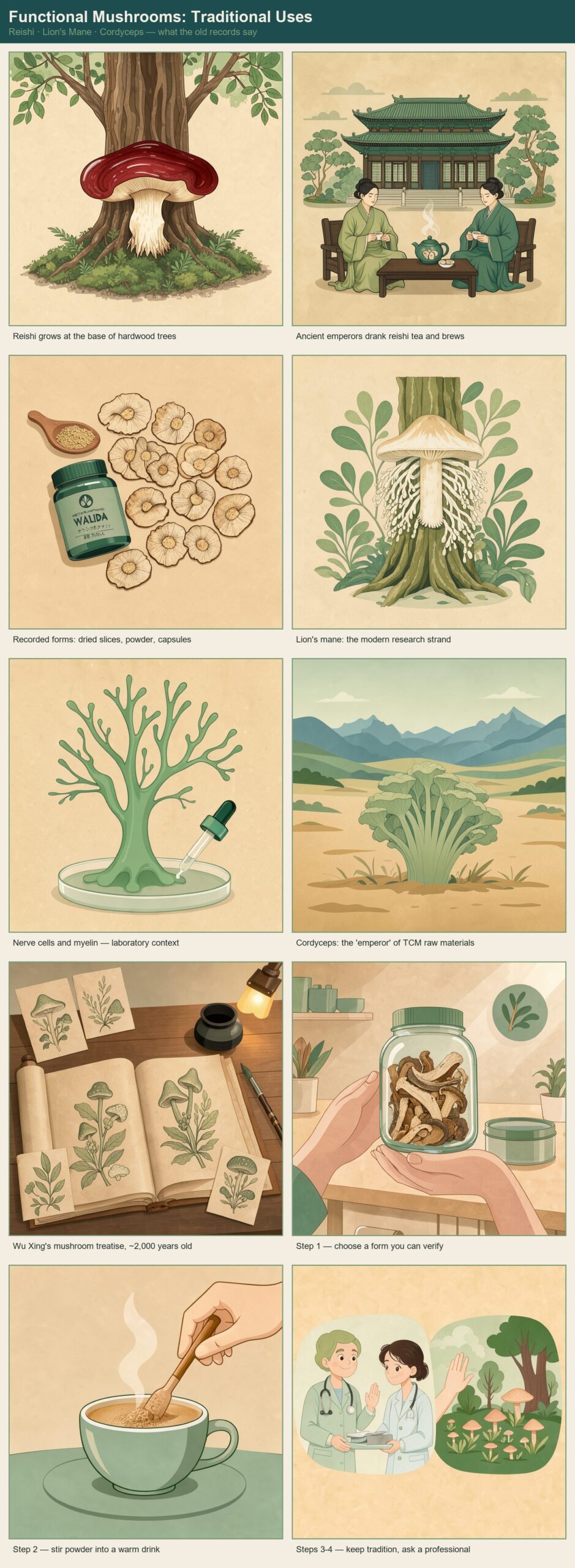
Traditional uses of functional mushrooms across the record
Traditional catalogs graded substances by role rather than by molecule. The Shennong herbal — passed down as the Japanese “Shinno Honsokyo” — sorts 365 herbs and mushrooms into 120 “superior” ones meant for preserving youth and prolonging longevity, 120 “middling” tonics, and 125 “fair” ones aimed at specific complaints[1]. Modern popular literature describes the same fruiting bodies in a chemical vocabulary: reishi alone is credited with roughly 400 biologically active components[2]. The adaptogen branch of the same tradition applies the comparable logic to plants — rhodiola preparations, “like representatives of the ginseng group, have adaptogenic properties” and are described as supporting work capacity[3], while the popular herb catalog describes rhodiola as having “the same adaptogenic properties as ginseng” — helping the body adapt to stress[2]. Two vocabularies, one shared subject — and neither turns a food or tonic into a medical promise.
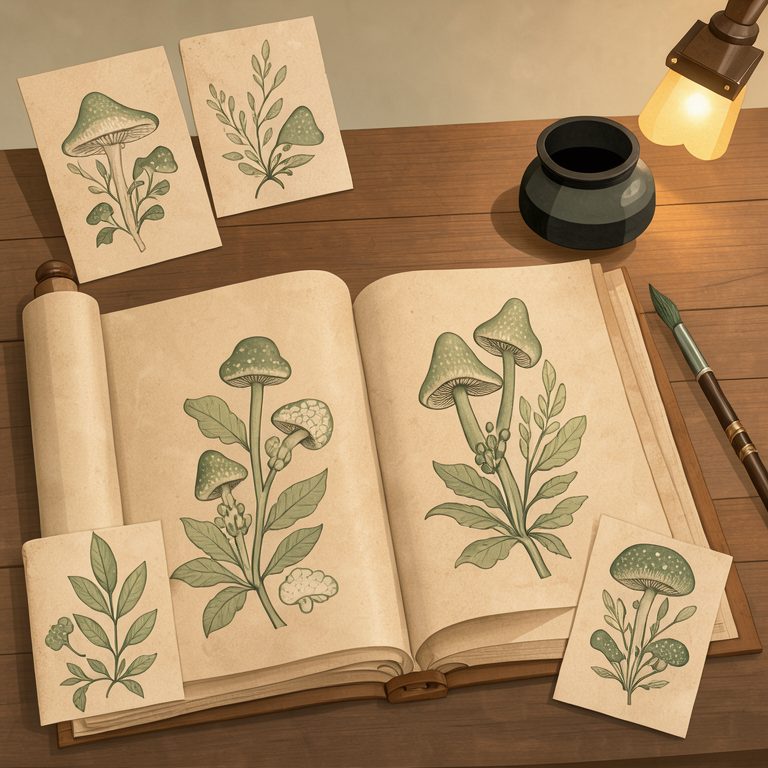
Reishi: the “mushroom of immortality”
Reishi (Ganoderma lucidum), also known as lingzhi, earns its nickname in the oldest sources. Its lacquered, dark-red, kidney-shaped cap grows at the base of hardwood trees, and in Asian countries it has been used in traditional practice for several thousand years; its properties are described in a Chinese medical treatise written about 2,000 years ago[2]. That ancient text reports that Chinese and Japanese emperors regularly drank tea and took brews made from reishi to replenish vitality and longevity[2].
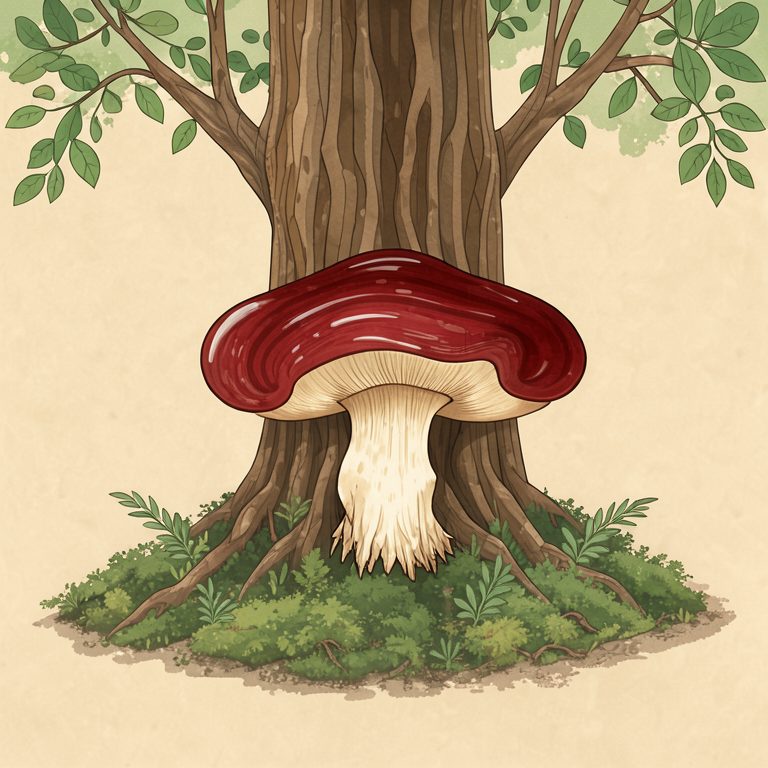
Scarcity shaped the legend. Wild reishi takes hold only on plum trunks and only under a fortunate set of conditions — Avicenna wrote in his Canon of Medical Science that “only 10 out of 1000 plum trees will host reishi” — so its preparations were once available only to the imperial family[1]. Across ancient and medieval Asia, prized fungi commanded silver: maitake sold for its weight in it, and the locations of wild stands were kept secret, handed down as inheritance or dowry[1].
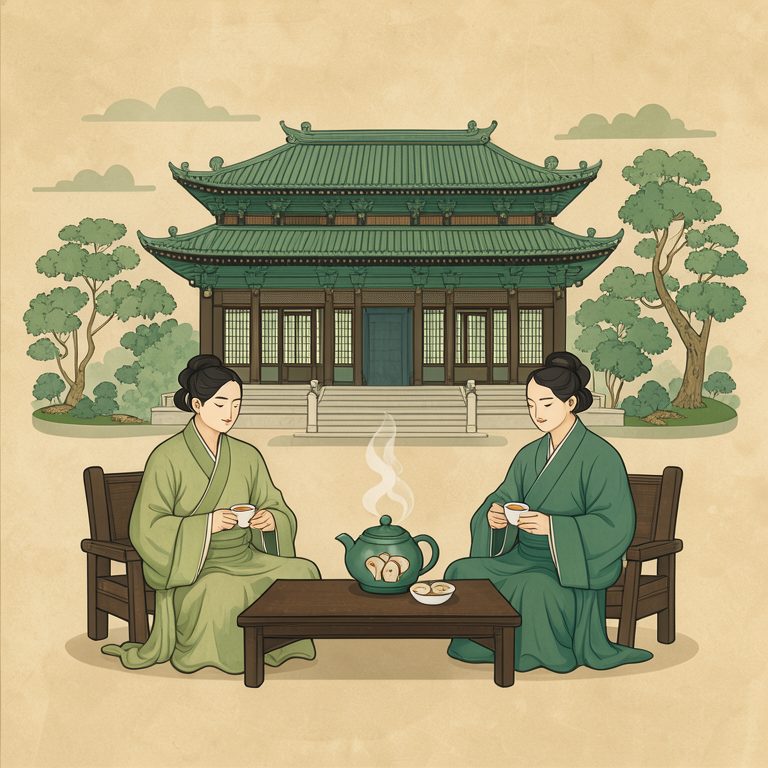
Where does the tradition stand in the reference record? First among the Shennong classic’s “superior” substances — ahead even of ginseng — and named “the mushroom of immortality” by that classic’s Japanese translator[1]. Modern popular writing reports active research interest: triterpene ganoderic acid from reishi has been studied for its effects on macrophages, natural killer cells, and T- and B-lymphocytes, and reishi components for their influence on histamine release from mast cells[2]. “Traditionally used as a vitality tonic” is the honest claim; everything beyond it is research context, not a promise.
Lion’s mane and cordyceps: what the record actually says
Lion’s mane — the research strand
Lion’s mane (Hericium erinaceus) is the name most often wrapped in modern folklore, so it is worth being precise about what our sources contain. The medicinal-mushroom encyclopedia notes a “neurotropic direction” in mycology and reports that extracts of Hericium erinaceus are used as growth and myelination factors — supporting formation of the myelin sheath — for nerve cells in vitro[1].
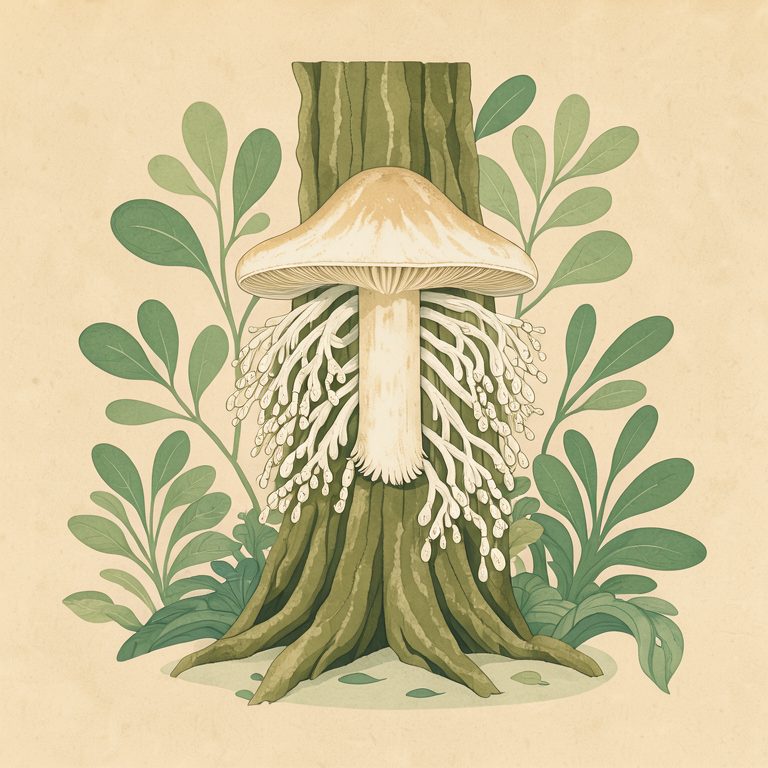
Two honesty notes. First, “in vitro” is a laboratory note, not a personal recommendation. Second, the very same passage people quote about memory and mood attributes those neurotropic uses to psilocin from Psilocybe mushrooms — a separate subject entirely — not to lion’s mane[1]. Popular articles blur that line routinely; this guide will not.
The wider traditional frame for cap mushrooms is humbler than the marketing. Wood-destroying bracket fungi and cap mushrooms are sources of bioantioxidants[1], and folk practice in the forest belt of Russia used cap mushrooms and puffballs mostly externally — ointments, infusions, compresses — as wound-supporting and hemostatic means and for rheumatic and joint discomfort, “more in a physiotherapeutic than a pharmacological sense”[1]. The bracket mushrooms of actual folk recipe books were chaga (Inonotus obliquus) and the larch bracket (Laricifomes officinalis)[1].
Cordyceps — the “emperor” of traditional raw materials
Of the three, cordyceps has the thinnest — and the most dignified — record in our sources. The Tibetan species Cordyceps sinensis, described in a roughly 2,000-year-old treatise by the ancient Chinese healer Wu Xing that catalogs more than 100 mushroom species of China and Japan, is still regarded as the recognized “emperor” among the most valuable natural medicinal raw materials of traditional Chinese medicine[1].
Wu Xing’s verdict on the whole kingdom is quotable: the healing properties of mushrooms are “much higher than those of medicinal herbs,” he wrote, calling shiitake the “mushroom-ginseng”[1]. Shiitake has been cultivated in China for at least 3,000 years, and Japan included it among nine national foods associated with health and longevity[1]. What our sources do not contain is a specific traditional preparation protocol for cordyceps — so this guide does not invent one.
Compared side by side — and how to approach preparations
| Mushroom | Traditional standing in our sources | Preparation forms recorded | Read the claim this way |
|---|---|---|---|
| Reishi (Ganoderma lucidum, lingzhi) | First among the “superior” substances of the Shennong herbal; “mushroom of immortality”; imperial tea and brews for vitality and longevity[1][2] | Dried slices, powder for dishes and drinks, capsules; modern practice includes coffee prepared with reishi[2][4] | Traditionally used as a vitality tonic — a traditional-use statement, not a medical claim |
| Lion’s mane (Hericium erinaceus) | Named in the modern neurotropic research strand of the encyclopedia[1] | No dedicated traditional recipe in our sources | Studied in vitro as a nerve-cell growth and myelination factor[1] — laboratory context only |
| Cordyceps (Cordyceps sinensis) | Recorded as the “emperor” of valued TCM natural raw materials[1] | No traditional preparation protocol in our sources | A status claim about the tradition — specific indications remain unverified here |
How to approach traditional preparations.
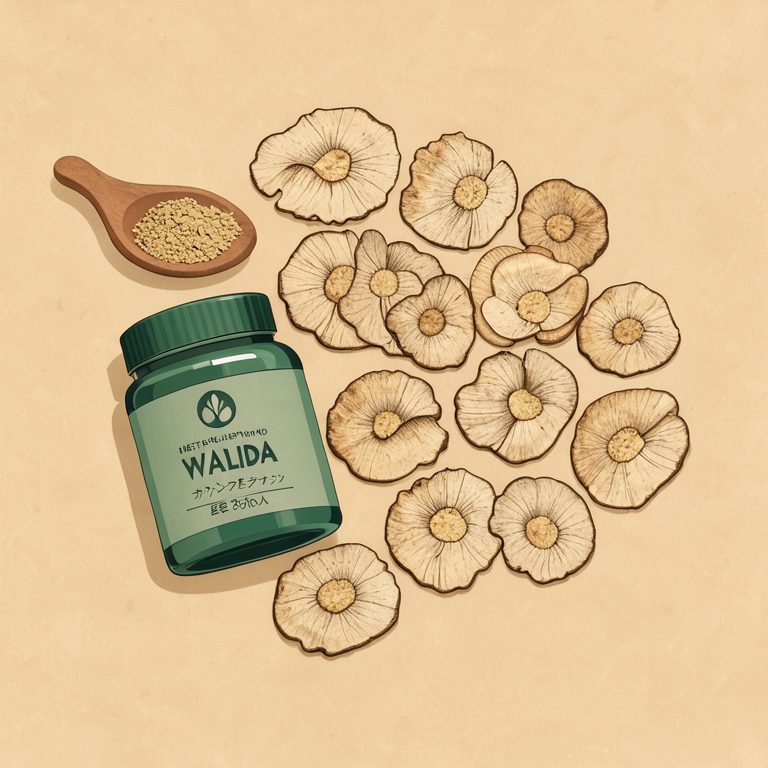
- Pick a form you can verify. The record lists practical options: dried reishi sliced into chips, ground powder for dishes, or capsules taken as a dietary supplement[2]. Choose one you can source transparently.
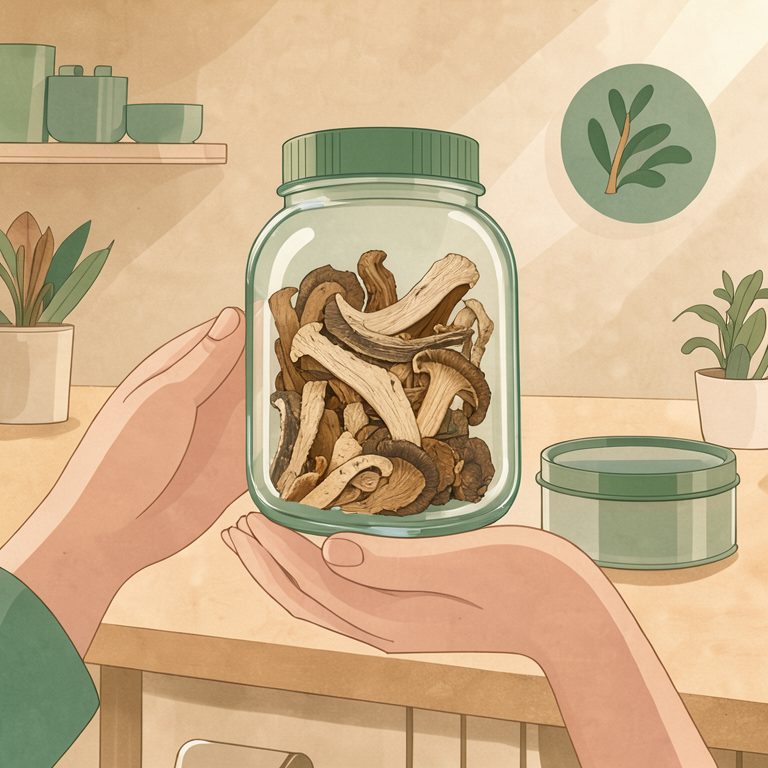
Step 1 — pick a form you can verify: dried slices, powder, or capsules - Start food-like. Stir powder into a warm drink or dish[2] — the record includes coffee prepared with reishi[4] — and mushroom powders can be blended into a mushroom latte[2].
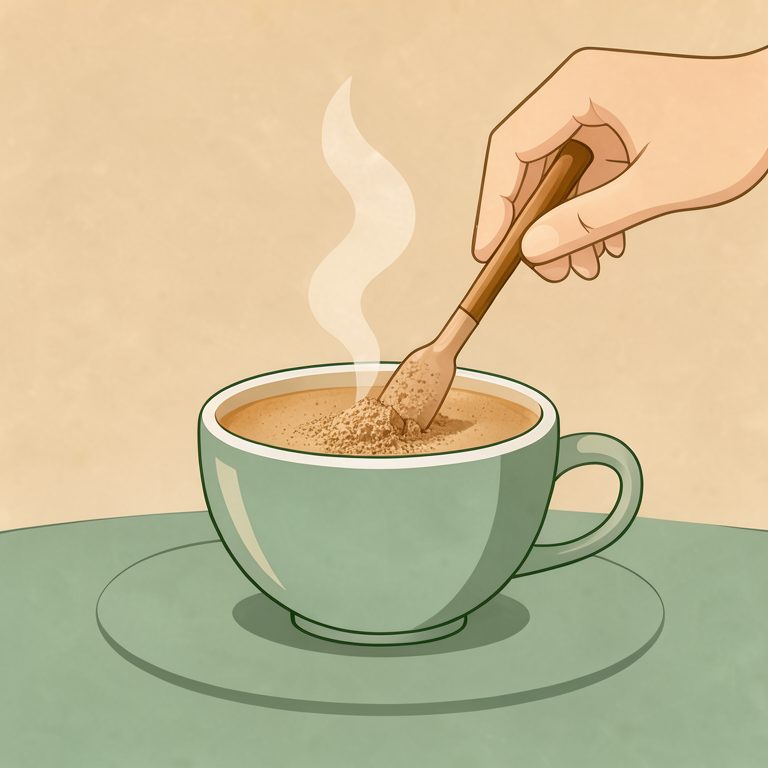
Step 2 — start food-like: stir powder into a warm drink or dish - Keep the traditional register. Read every label the way the old catalogs did: tonics for vitality and resilience, used steadily over time. If a product page starts talking like a pharmacy, its claims have outrun the tradition.
- Loop in a professional. Our sources give no dosing schedules for these mushrooms. If you take medication, are pregnant or nursing, or manage a chronic condition, ask a physician before adding anything. For hands-on self-care that stays within gentle manual pressure, see our Zusanli (ST36) acupressure guide.
Everyday joint comfort is a different track from tonics; if that is your actual goal, our editorial reviews of Joint Genesis and Unlock Your Hip Flexors lay out what each option does — and does not — offer.
Safety notes and scope
Mushroom identification is not a shortcut hobby: the same encyclopedia that catalogs medicinal species documents look-alike traps — the false death cap even comes in a white, nearly uncolored form that inexperienced foragers can confuse with a deadly poisonous amanita, and its English name records the resemblance to the death cap[1]. Prefer cultivated products from transparent suppliers over wild-harvesting. If you take medication, are pregnant or nursing, or manage a chronic condition, consult your physician before using mushroom supplements; the books behind this guide give no dosing schedules. This guide is educational; it is not intended to cure, treat, or prevent any disease.
Frequently asked questions
What are the traditional uses of reishi?
In the classic record, reishi (Ganoderma lucidum) stands first among the Shennong herbal’s “superior” substances — ahead even of ginseng[1] — and ancient texts report that Chinese and Japanese emperors drank reishi tea and brews to replenish vitality and longevity[2]. Those are traditional-use statements, not medical promises.
Does lion’s mane support memory?
Our sources keep that question narrow. Lion’s mane (Hericium erinaceus) extracts are recorded as growth and myelination factors for nerve cells in vitro[1]; the memory and mood language in the same encyclopedia is attributed to psilocin from Psilocybe mushrooms, not to lion’s mane[1]. In vitro is a laboratory note, not a personal recommendation.
How were functional mushrooms traditionally prepared?
The record lists dried reishi sliced into chips, ground powder for dishes and drinks, and capsules taken as a dietary supplement[2]; modern practice also prepares coffee with reishi[4] and blends mushroom powders into a latte[2]. The books behind this guide give no dosing schedules.
Sources
- [1] Vishnevskiy M. — Medicinal Mushrooms: Big Encyclopedia (2014)
- [2] Mercola J. — Herbs and Spices (2023)
- [3] Sokolov S.Ya., Zamotaev I.P. — Handbook of Medicinal Plants (1984)
- [4] Skachko B. — Coffee, Reishi, Aloe Vera and Your Health (2021)
How we researched this
This article is based on our local library of 1,137 traditional wellness books; no internet sources were used. Every statement above was checked against the cited source passages.
