
Educational content only — not medical advice. See our full Medical Disclaimer and Affiliate Disclosure below.
Shilajit, known throughout the source literature as mumie, is a black, mineral-rich resin that seeps from the rock faces of the Pamir, Tien-Shan, Altai, and Caucasus ranges. The books behind this guide — a 1989 Kyrgyzian laboratory booklet, a 2010 compendium on healing resins, and a 2009 expedition memoir — trace it from Aristotle and more than seventy ancient Eastern sources to Soviet-era laboratory analysis, and they include an honest admission: the science of its day never managed to standardize the resin. The same pages record the counterfeit wave that followed the substance’s 1980s boom. This article walks that full record without borrowing claims from anywhere else.
If you first met shilajit as a glossy supplement in a US store, the CIS literature offers a useful reset. Here the substance appears under its regional names — mumie, mumiyo, and the Kyrgyz Arkhar-Tash — and it comes with field observations, physical quality tests, and recorded dosing protocols rather than marketing language. Legends and laboratory data share the same pages, side by side with warnings about lead, counterfeits, and doses that ran past what tradition considered safe. Nothing here is medical advice; it is a careful reading of what three source books actually say.
Key Takeaways
- Mumie — the CIS name for the mountain resin sold internationally as shilajit — is a dark, dense, bitter mass of high-mountain origin; its recorded physical signature includes a specific gravity 1.5–2 times that of water and a saturated-beer-colored water solution[1].
- Seven materially different origin types share the name, from cadaver and lichen to bitumen and mineral; the fossilized-excrement type is recorded as the most widespread[2].
- The 1989 laboratory card gives buyers a physical checklist: bitter taste, partial melting at 385–392 F (196–200 C), pH 6.5–7.0 for a 1% solution, and full water solubility with a small residue[1].
- Recorded traditional dosing follows one grammar — 0.05–0.3 g unit doses at 1:20 dilution, 10–30 day courses, 5–20 day breaks — printed as folk-medicine records, never as recommendations[2][3].
- Raw material carries lead and cadmium, the Soviet Pharmacology Committee never licensed mumie as a drug, and no explicit contraindication list exists in the retrieved record — consult a physician before any use[1][2].
- What is mumie? The black resin, defined
- Tears of titans and sun priests: the legends
- The seven types of mumie and where it is found
- How mumie forms: voles, pika, and 10–12 years of freeze-thaw
- Inside the resin: what Soviet lab analysis found
- How to purify and quality-test mumie: the 1989 lab checklist
- How tradition dosed mumie: grams, dilutions, and courses
- Fakes, lead, and the drug that never was
- Safety and honest gaps
- Frequently asked questions
What Is Mumie? The Black Resin of the Mountains, Defined
Mumie is a dark, dense, resin-like mass that seeps from crevices and voids of high-mountain rock. It tastes bitter, weighs 1.5–2 times as much as water, dissolves in water down to a small residue, and colors the solution the shade of saturated beer; it softens in cold, humid air and hardens in dry air[1]. The 1989 laboratory booklet that printed this identification card examined Arkhar-Tash material from Kyrgyzia.
The naming is regional and worth getting straight from the start. Kyrgyz collectors call the substance Arkhar-Tash, and Kyrgyz families are recorded as keeping it for generations, used above all for bone fractures[1]. The legends gathered in the 2010 compendium Healing Resins call it tears of stone, or mountain tears — the black resin of rock cracks[2]. Ivan Neumyvakin, author of the 2009 memoir Mumie: Myths and Reality, personally harvested it in the Tien-Shan mountains in the 1940s[3].
One honesty note frames everything that follows. The word shilajit — the international market name familiar to American readers — appears nowhere in these books; they say mumie, mumiyo, or Arkhar-Tash[2]. This guide uses shilajit only as an editorial key for the same substance, and it follows the CIS record wherever it leads, including the places where that record stops short. Where modern supplement claims begin, this article says so plainly rather than filling the silence.
Tears of Titans and Sun Priests: The Legends of Mumie
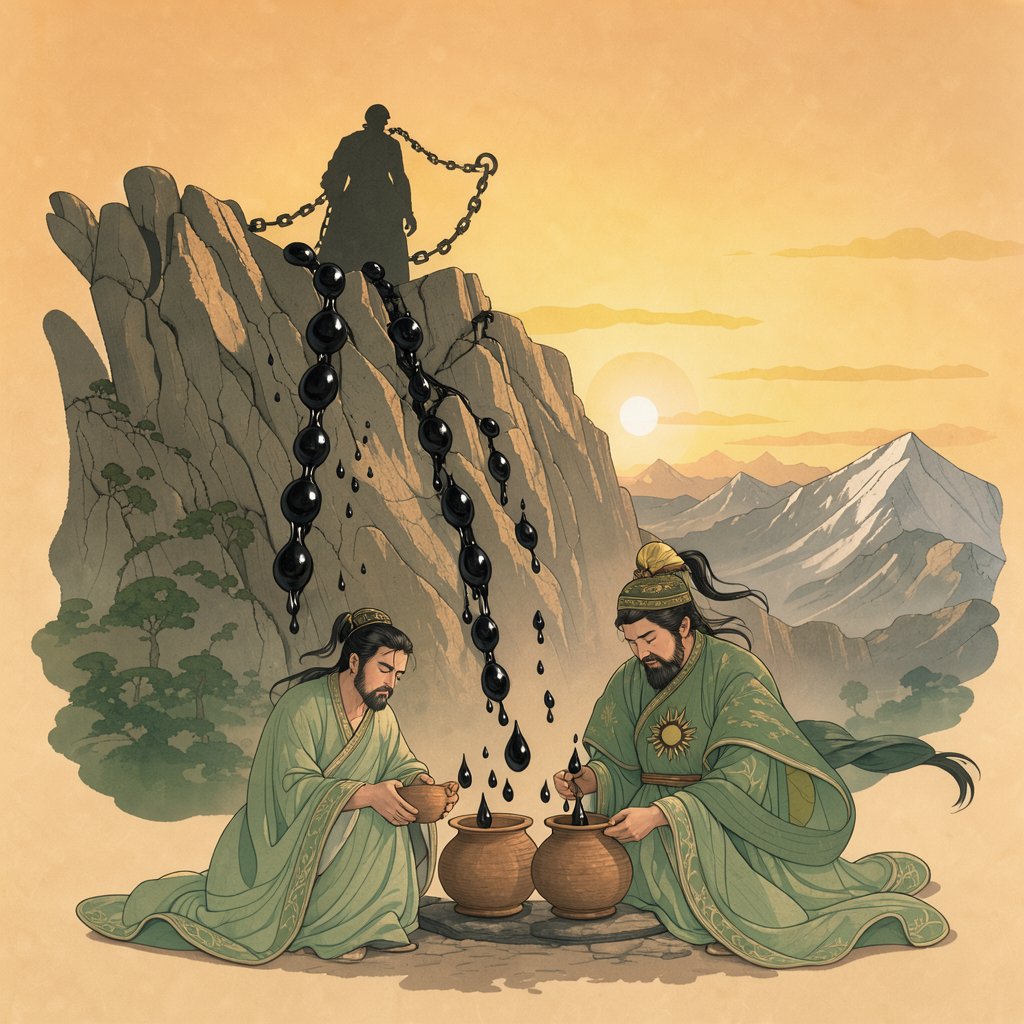
Every mining district wrapped mumie in myth, and the compendium collects four origin legends[2]. Persian tradition held that the resin could be collected only by priests of the sun god Mithra, who called it the child of earth and sun. A Tien-Shan legend attributes it to giants whose tears of stone petrified into the black resin, while the Caucasus version names the tears of the chained titan Prometheus. The Georgian variant is gentler: a king’s wounded goat recovered after finding black resin in rock cracks[2].
The written record is nearly as old as the legends. Aristotle mentioned mumie, and more than seventy ancient Eastern sources describe it as a medicine; one ancient saying preserved in the compendium runs, “Only mumie saves from death”[2]. Avicenna (Ibn Sina), in the Canon of Medicine, called the substance all-healing and endorsed it for bone fractures, dislocations, angina, bronchial asthma, ear suppuration and hearing loss, venomous snake bites, stomach ulcer, liver disease, strengthening the aged heart, and skin rejuvenation[2]. Alexander the Macedonian reportedly applied mountain tears to wounds after his Indian campaign[2].
The living tradition extends into recorded modern use, and it deserves the same careful framing. In India, centuries of traditional use list asthma, tuberculosis, chronic bronchitis, urolithiasis, dropsy, diabetes, parasitic skin diseases, and antiseptic applications, and Indian physicians quoted in the compendium still regard mumie as effective against diabetes — a traditional judgment, not a modern trial claim[2]. Burma’s record describes a strengthening, anti-tuberculosis remedy credited with promoting longevity[2]. These entries are historical uses as printed, none of them medical advice for today’s reader.
The Seven Types of Mumie and Where It Is Found
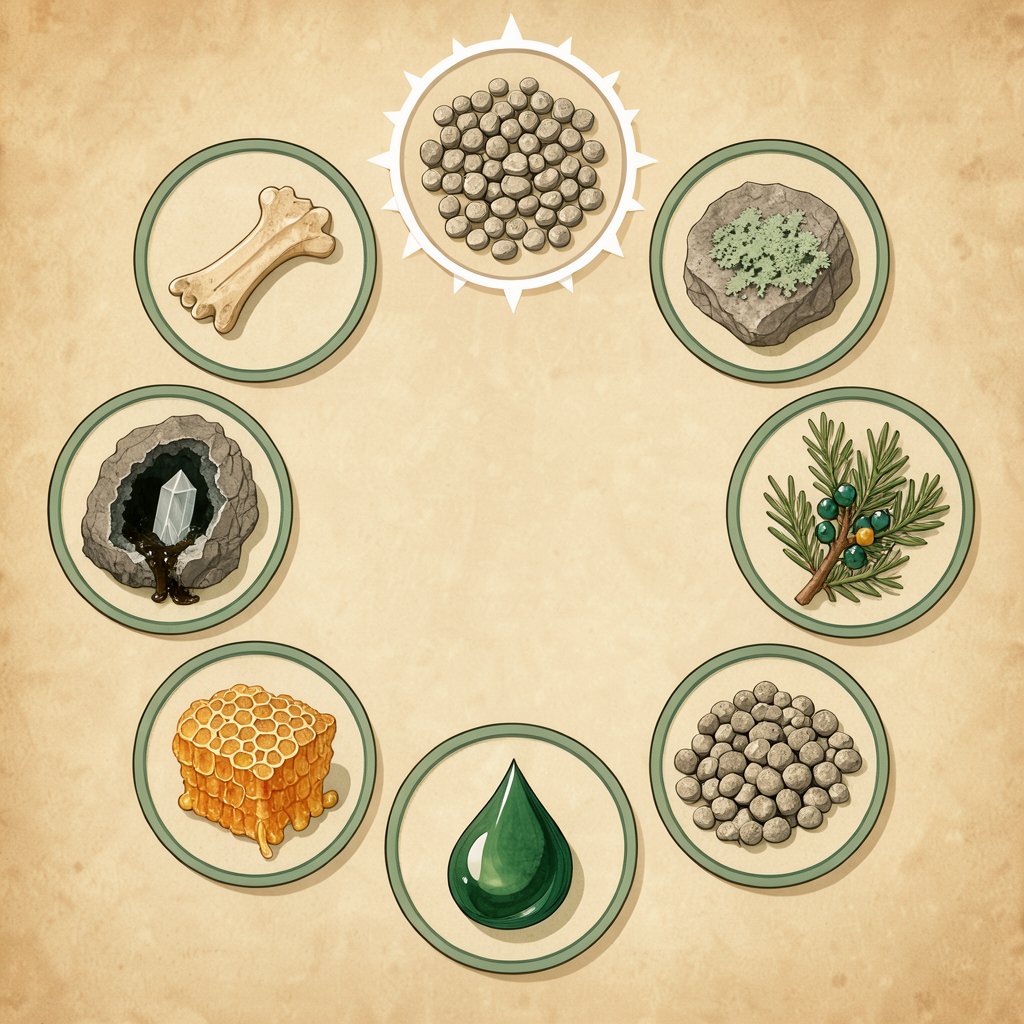
One name covers seven materially different substances, and the 2010 compendium sorts them by origin[2]. The sorting matters to any buyer: two resins sold under the same word can come from completely different raw materials, which is one root of the standardization failure described later in this guide. The types range from animal and plant residues to pure geology.
The deposits stretch across the entire high-mountain belt of the former USSR — the Pamir, Tien-Shan, Altai, Caucasus, Transbaikalia, and the Western and Eastern Sayan — and, remarkably, even Antarctica appears on the recorded deposit list[2]. Deposit origin is one of the variables that made the resin’s composition impossible to fix into a single formula[2]. Any of the seven types below can occur across this belt.
Cadaver mumie (trupnoe)
The first recorded type forms from the remains of animals in mountain rock voids[2]. The compendium lists it as a distinct origin with its own name, trupnoe. It anchors the taxonomy at the biological end of the scale.
Lichen mumie (lishaynikovoe)
The second type develops from lichen colonies on high-mountain rock[2]. The source names it among the seven without a separate formation narrative. Its presence shows how far the mumie umbrella stretches beyond animal and mineral origins.
Juniper mumie (archeve)
This type is a tree resin from the trunks and roots of juniper, spruce, and pine, recorded under the name archeve[2]. It is the clearest plant-origin entry in the taxonomy. Its listing confirms that not everything gathered under the mumie name is mineral.
Bitumen mumie (bitumnoe)
The bitumen type belongs to the geological, petroleum-lineage end of the family[2]. The same word appears again in the market record as a counterfeit surrogate — bitumen was sold as mumie during the boom years[2]. One substance thus sits on both sides of the authenticity question, a hint at how tangled the trade had become.
Excrement mumie (ekskrementalnoe)
The compendium records this as the most widespread type: fossilized excreta of small mountain animals, transformed by years of freeze-thaw biochemistry[2]. The formation narrative in the next section belongs to this type alone. Two independent Soviet sources take the origin story seriously enough to describe it — and to replicate it in a laboratory.
Honey-wax mumie (medovo-voskovoe)
This type is described as a polymerized product of wild bees[2]. Its inclusion extends the mumie umbrella from geology and animals to insects. The separate name, medovo-voskovoe, reflects a raw material nothing like the rock-void resins.
Mineral mumie (mineralnoe)
The mineral type is found high in rock voids inaccessible to animals or plants[2]. It is the purest geological entry in the list. For this type the retrieved record gives no formation story — a gap worth naming rather than papering over.
How Mumie Forms: Voles, Pika, and 10–12 Years of Freeze-Thaw
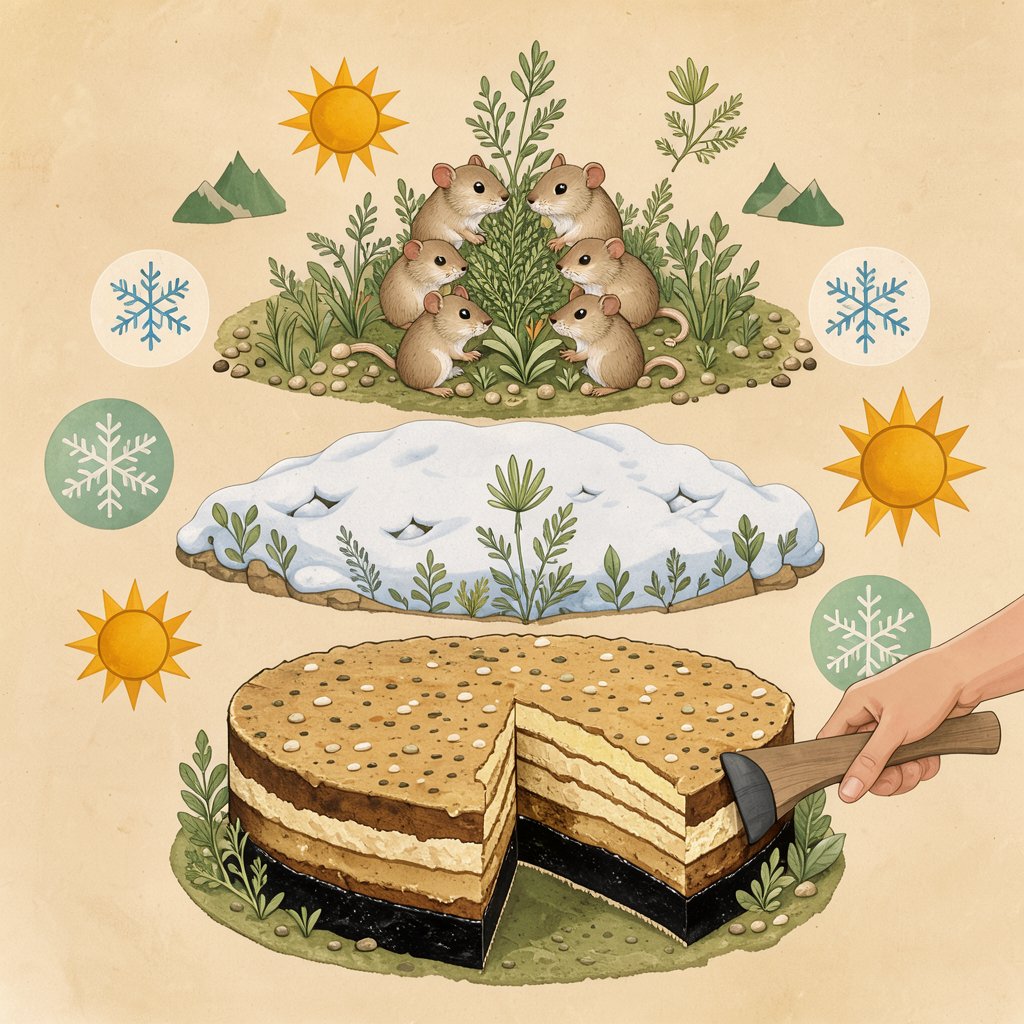
The formation story of the widespread type reads like folklore, yet two independent Soviet sources report it as field observation[3]. High-mountain silver voles and pika collect alpine meadow herbs into stacks from early spring to late autumn and leave their droppings around them. The semi-digested mass, saturated with digestive juices, then undergoes biochemical processing between summer heat up to 104 F (40 C) and winter frost down to −40 to −58 F (−40 to −50 C). After 10–12 years the mass acquires its characteristic viscosity and black color — mumie is ready[3].
Harvesting carried its own ethic. Cutters took only the lower black layer of the layered deposit and returned the next year, a practice the tradition calls milking the voles[3]. The 1989 laboratory team went further and tested the theory directly, obtaining mumie by boiling, filtering, and evaporating vole conglomerates — the origin claim survived laboratory replication for this material[1]. The retrieved record develops the narrative only for the excrement type; the other six types have no formation stories in these books.
State science eventually followed the resin up the mountain. In 1984 a government expedition to Kyrgyzia — with specialists from Leningrad, Sverdlovsk, Moscow, and Frunze — set out to settle what mumiyo actually is, led by twice-Hero-of-the-USSR cosmonaut P. R. Popovich with Neumyvakin as chief physician[3]. The expedition’s analysis reported that the substance contains practically all elements of the periodic table, along with enzymes, hormones, and other biologically active substances[3]. For a substance traders had judged by taste and flame for centuries, that was a new kind of sentence about it.
Inside the Resin: What Soviet Lab Analysis Found
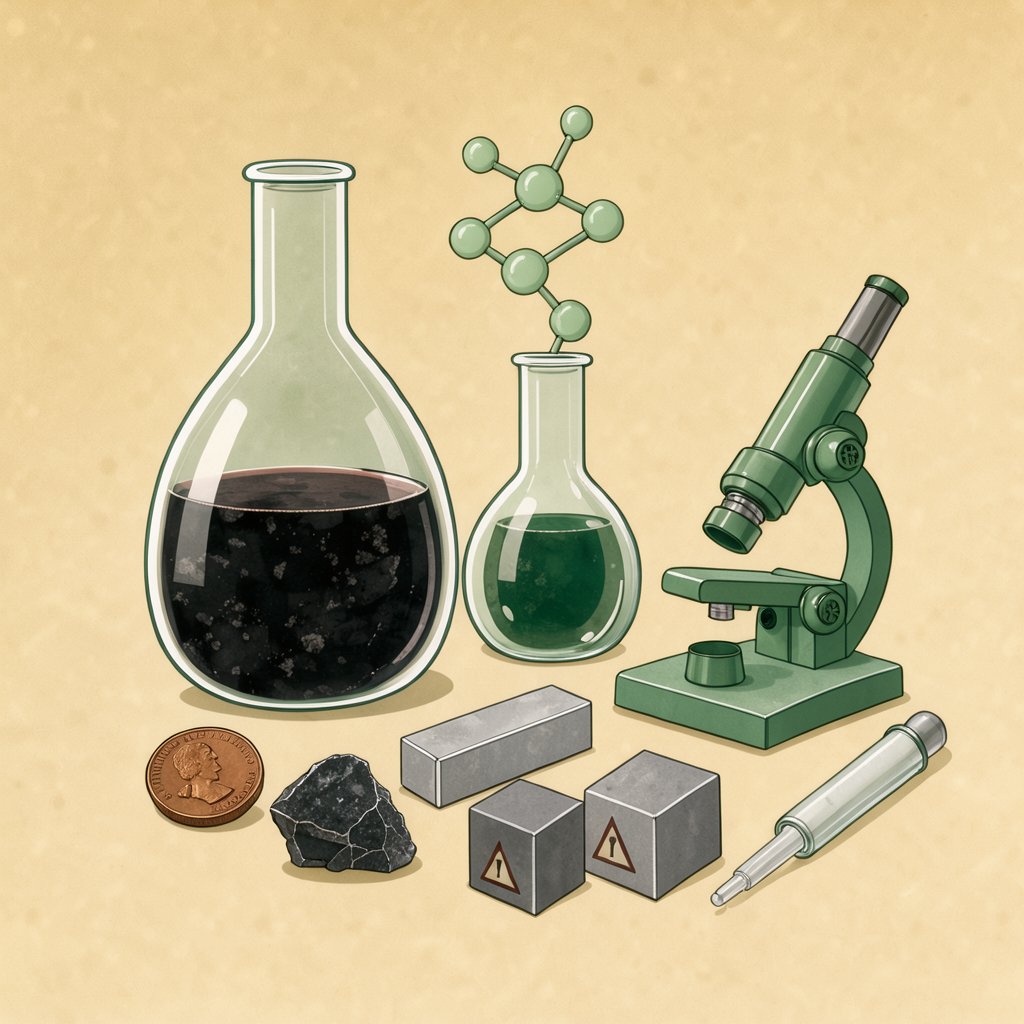
One 1989 booklet from Kyrgyzia holds the most complete elemental card published on Arkhar-Tash mumie[1]. Copper, manganese, and titanium were elevated in the tested samples, with strontium and chromium in some of them; the full detected list spans potassium, sodium, calcium, silicon, magnesium, cobalt, titanium, vanadium, barium, manganese, aluminum, iron, chromium, phosphorus, silver, nickel, molybdenum, and zirconium — and lead and cadmium, a safety fact this guide returns to below[1]. The booklet reads like a mass-spectrometry report turned into a field manual.
The organic side was quantified with equal care. Elemental analysis of the water extract recorded carbon 62.6%, hydrogen 5.16%, nitrogen 0.38% by the Kjeldahl method, and oxygen 31.86% by difference after dry decomposition at 1,652 F (900 C); carbonyl groups measured 19.4%, phenolic groups 2.25%, benzoic acid up to 5%, and chlorophylls up to 0.00312 mg%[1]. These are Soviet-era figures from one deposit’s material. The 2010 compendium adds the decisive context: composition varied by deposit and by processing technology[2].
Early bioactivity data came from dental and clinical observation. Mumie at concentrations of 5% and above proved bactericidal and bacteriostatic against streptococci, staphylococci, and proteus taken from gingival pockets, while at 0.31% and below it showed no antimicrobial properties at all[1]. Among treated patients, bacteria carrying aggression enzyme complexes dropped more than threefold compared with patients given antibiotics — tetracycline, penicillin, levomycetin — or aloe with vitamin B1[1]. A threshold that sharp is rare in the folk-medicine literature.
A clinic record accompanies the laboratory numbers. Professor B. G. Bazhanov’s clinic in Frunze administered mumie to 27 patients with stomach ulcer and chronic gastritis, and the booklet reports outcomes matching the positive results other authors had published[1]. The 2010 compendium summarizes the tradition’s systemic view as a beneficial influence on the blood, stomach, liver, and endocrine organs, together with powerful antibacterial action[2]. All of this is 1989 Soviet-era observation from a single clinic — no modern trials appear anywhere in these sources.
How to Purify and Quality-Test Mumie: The 1989 Lab Checklist
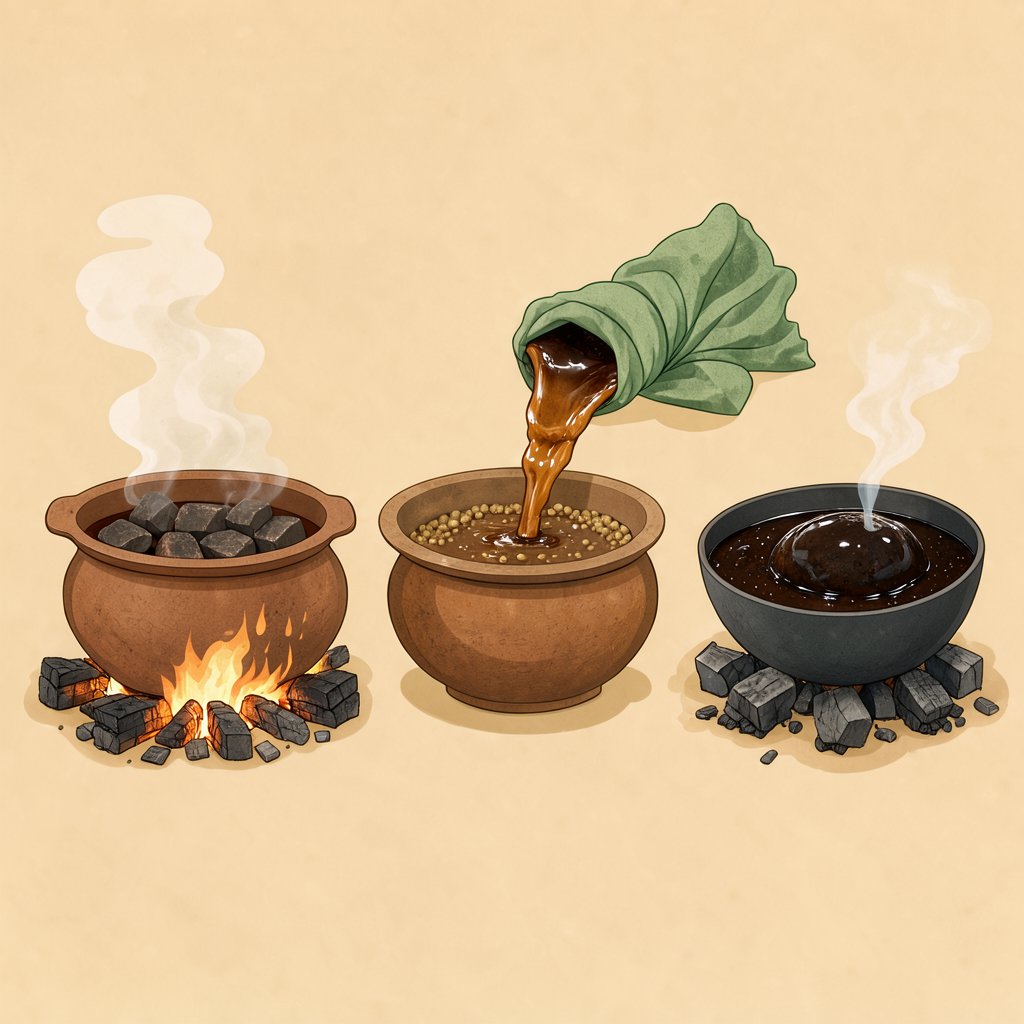
Before laboratories, mountain traders tested mumie with tongue, water, and flame; the 1989 booklet codified those instincts into numbers[1]. The purification steps below are printed in the source as laboratory documentation, not as a home protocol — the lead and cadmium findings make raw-resin self-processing a genuine caution point. Read them as the historical method that produced the purified material the quality card describes.
Step 1: Boil the raw conglomerate
The laboratory began by boiling the raw Arkhar-Tash conglomerate — the layered mass cut from the deposit[1]. Boiling separated the soluble resin fraction from grit and insoluble debris. The printed record gives no temperature or duration for this step, and improvising one is not advisable.
Step 2: Filter the boiled liquid
The second step was filtration of the boiled liquid, removing the suspended mineral and plant debris[1]. The booklet describes the operation in a single phrase, as a routine laboratory move. What survives the filter is the dissolved resin fraction in water.
Step 3: Evaporate to the dense mass
The final step evaporated the water layer down to a dense brown-black plastic mass — the purified resin of commerce[1]. The finished material softens in humid air and hardens in dry air, exactly as the identification card specifies. This endpoint is what the quality checklist below assumes.
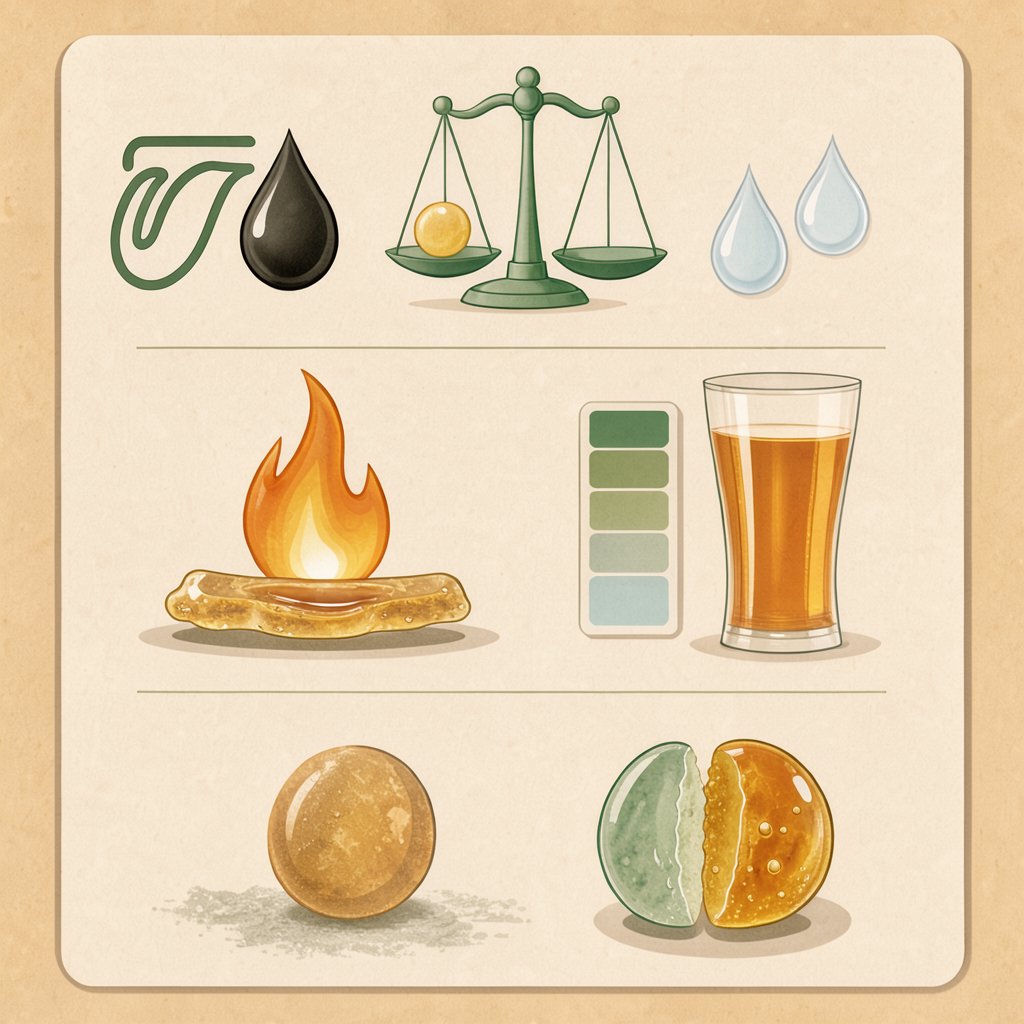
The physical quality card printed in the same booklet remains the most practical authenticity tool in the whole record, and it needs no laboratory[1]. Each check below reproduces a specification from the 1989 text. Together they form a field kit any buyer can run:
- Bitter taste — the resin is unmistakably bitter on the tongue[1].
- Density — specific gravity 1.5–2 times heavier than water[1].
- Melting behavior — partially melts at 385–392 F (196–200 C) and remains unchanged up to 572 F (300 C)[1].
- Acidity — a 1% water solution reads pH 6.5–7.0[1].
- Solubility — dissolves in water fully, leaving only a small residue[1].
- Solution color — the water solution is the color of saturated beer[1].
- Humidity response — softens in cold and humid air, hardens in dry air[1].
Passing the card tells you the resin matches genuine Arkhar-Tash-type material by the 1989 specification. It says nothing about purity from heavy metals, which sat in the same laboratory’s elemental tables[1]. The next question the record answers is how much of the resin tradition actually took.
How Tradition Dosed Mumie: Grams, Dilutions, and Courses
Across every recipe the 2010 compendium prints, one grammar repeats[2]. Unit doses run from 0.05 to 0.3 g; the dilution ratio is 1:20 with milk, honey, or fruit syrup; courses last 10–30 days with 5–20 day breaks between them; and the printed schedules repeat the courses two to four times. The three records below are reproduced as historical folk-medicine documentation — not recommendations — and the sources themselves pair every recipe with a physician-consult rule[3].
Recorded recipe 1: chronic colitis
The printed protocol lists 0.05 g twice a day orally, plus enemas with a 0.5–1% mumie solution at 30 mL, in 10-day courses repeated two to three times with 10–20 day breaks[2]. The alternative version prints 0.2 g in cherry or peach syrup at a 1:20 dilution, taken two to three times daily with the last dose before sleep, in three to four courses of 25 days with 10-day breaks[2]. Both variants stay inside the shared dose grammar.
Recorded recipe 2: peripheral blood support
The escalating scheme prints a 30-day course with a 10-day break, dosing three times daily[2]. The first 10 days use 0.2 g per dose; the next 10 days raise the dose to 0.3 g. The record does not spell out the remaining days of the 30-day course, and this guide does not invent them.
Recorded recipe 3: neuralgia and neurodermatitis rub
This topical record prints an 8–10% solution, alcohol-based preferred, rubbed into painful areas for 5–6 minutes across a 20-day course with a 10-day break[2]. Simultaneously, 0.2 g was taken orally with milk and honey at a 1:20 dilution, paired with light massage. External and internal dosing sit side by side in this single printed protocol.
Nasal applications round out the printed record. Drops of 1 g per 5 tablespoons of water appear for nasal complaints, with polyps additionally receiving 0.2 g once daily in the morning on an empty stomach, in a pattern of 5-day breaks[2]. For nosebleeds, the compendium prints 0.1 g with camphor oil at 1:5 to 1:8, instilled into each nostril at 0.2 g per dose, in a 25-day course with a 10-day break[2].
One instruction precedes every line of this section in the sources themselves. Neumyvakin’s front matter states it plainly: “This book is not a medical textbook; all recommendations must be used only after agreement with the treating physician”[3]. That rule applies with full force to the historical records above, and no dose in them should be read as guidance for self-treatment.

Fakes, Lead, and the Drug That Never Was: The Standardization Failure
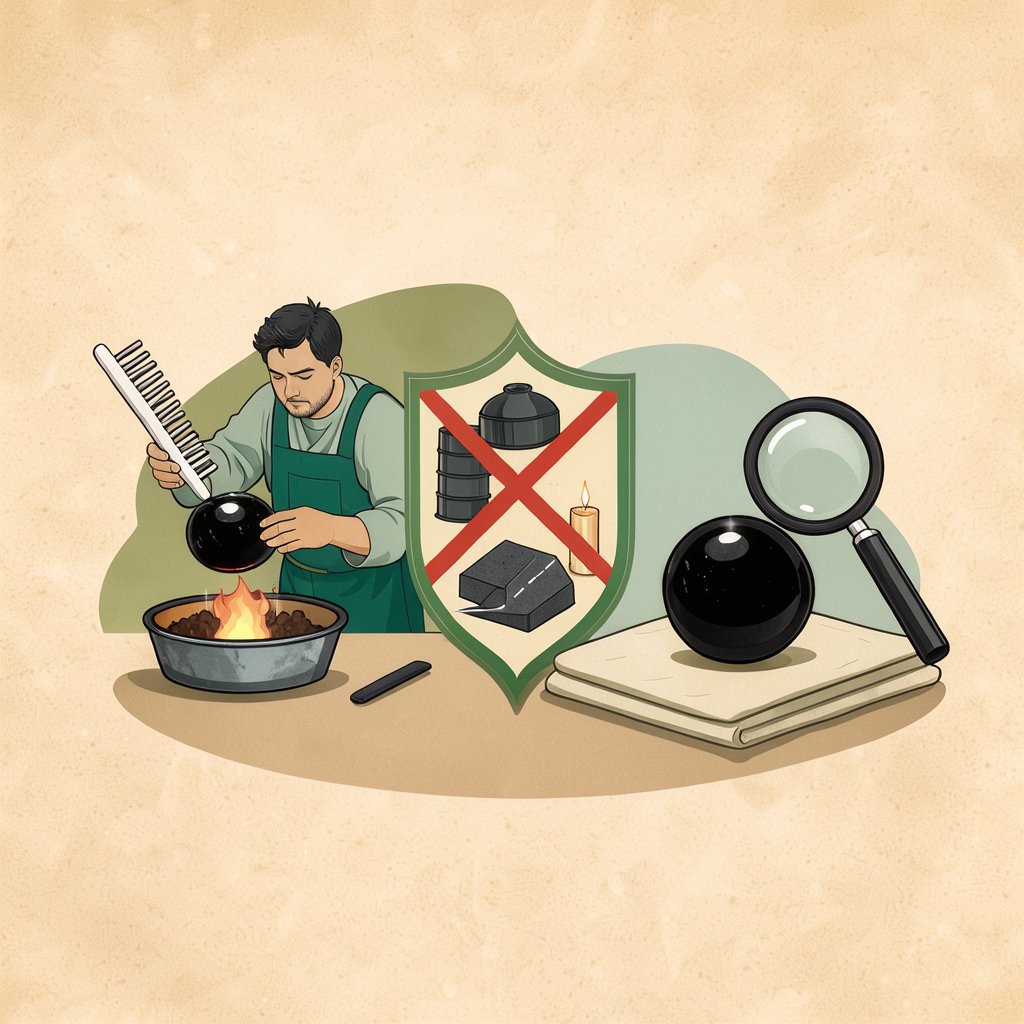
A substance science could not pin down was a counterfeiter’s dream, and the sources document exactly that decade. The 1980s boom had the sick and the healthy taking mumie alike, often exceeding the safe dose — the sources’ only ceiling language, with no number attached[2]. One seized counterfeit turned out to be melted plastic from a plastic comb; market surrogates included bitumen, hydron, asphalt, and thick plant extracts blended with beeswax[2].
The heavy-metals reality compounds the counterfeit problem. The 1989 elemental tables found lead and cadmium in the raw material itself, which makes purification and quality control safety-critical rather than cosmetic[1]. The two risks are independent: a substitute resin is simply fraudulent, while a genuine but carelessly processed resin can still carry its full metals burden.
The drug that never was is the institutional side of the same story. The Soviet Pharmacology Committee could not license mumie as a medicine: composition varied by deposit and processing technology, and no single chemical formula could be fixed[2]. The registry entry Altai purified mumie appeared only years later, alongside commercial forms such as Mumie+, Mumie-Vitas, Mumivit, and blends with potassium and magnesium, silicon, or iodine, calcium, and propolis[2].
A broader warning extends from the pharmacopoeia literature to every imported resin. The reference Herbal Medicines records that ethnic medicines are adulterated with heavy metals, toxic elements, and synthetic drugs[4]. That caution applies directly to the online shilajit trade, where jars cross borders with labels no laboratory has checked. It is the strongest buying argument in the entire record: demand tested material, and treat unverifiable purity claims as noise.
Safety and Honest Gaps: What These Sources Do Not Tell You
The strongest trust signal an article can send is naming what it cannot claim, so this section lists the gaps plainly. What the sources do insist on: Neumyvakin’s front matter declares the book is not a medical textbook and that all recommendations must be used only after agreement with the treating physician[3]. The raw material carries lead and cadmium[1]; the 1980s record shows doses exceeded and fakes spread[2]; and imported ethnic medicines face documented adulteration risks[4].
What the retrieved record does not contain matters just as much. No explicit contraindication list appears — pregnancy, hypertension, gout, and similar categories simply never surface in the retrieved chapters. No side-effect profile, no drug-interaction data, and no numeric safe-dose ceiling were found; the sources say only that boom-era users exceeded the safe dose[2]. An article that invented any of these lists would be writing fiction with a confident tone.
The scope limits run deeper still. The Ayurvedic textual lineage — the Charaka Samhita, the Sushruta Samhita, the rasayana category, and Himalayan gold-silver-copper-iron grading — is absent from these books, as is the shilajit spelling itself; India appears only through a general history paragraph[2]. No fulvic-acid or humic-acid science, no dibenzo-alpha-pyrones, no mitochondrial rationale, and no English-language trials on testosterone, altitude, or cognition appear anywhere in the retrieved material. Readers interested in modern supplement science should treat it as a different, non-overlapping body of evidence.

Frequently Asked Questions
What is mumie made of?
The compendium sorts mumie into seven origin types: cadaver, lichen, juniper, bitumen, excrement, honey-wax, and mineral, with the excrement type recorded as the most widespread[2]. The 1984 expedition’s analysis found practically all elements of the periodic table plus enzymes, hormones, and other biologically active substances[3]. For a wider look at traditional botanicals, see our guide to functional mushrooms and traditional uses.
Is mumie the same as shilajit?
The honest answer from this record: the CIS books use mumie, mumiyo, and the Kyrgyz Arkhar-Tash, and never discuss the Sanskrit name or Ayurvedic grading[2]. Shilajit is this article’s editorial international key for the same mountain resin, chosen for readers who know the market name. The books themselves make no naming claim beyond their own region. For how adaptogens are categorized today, see the adaptogens buyer’s guide.
How can you tell real mumie from fake?
The 1989 quality card gives the physical checks: bitter taste, specific gravity 1.5–2 times water, partial melting at 385–392 F (196–200 C), stability up to 572 F (300 C), pH 6.5–7.0 for a 1% solution, and a saturated-beer solution color[1]. The record also documents a seized fake of melted comb plastic and surrogates like bitumen and wax blends[2]. For choosing among modern products, start with the best adaptogen supplements guide.
How much mumie did tradition take?
The printed grammar is consistent across the recipes: unit doses of 0.05–0.3 g, dilution at 1:20 with milk, honey, or syrup, courses of 10–30 days, and breaks of 5–20 days, repeated two to four times[2]. These are folk-medicine records, not recommendations, and the sources pair them with a physician-consult rule[3]. Similar course discipline appears in our bedtime tea herbs guide.
Is mumie safe?
The retrieved record gives cautions, not clearance. Lead and cadmium sit in the raw material[1]; doses were exceeded during the 1980s boom[2]; imported ethnic medicines face documented adulteration[4]; and no contraindication list, side-effect profile, or drug-interaction data appear in the retrieved chapters. The sources’ own rule is agreement with a treating physician before any use[3]. For another carefully sourced herbal tradition, see the astragalus (huang-qi) guide.
Did science confirm mumie works?
Soviet-era science confirmed composition and laboratory activity, not efficacy by modern standards. The 1984 expedition analyzed the material[3]; the 1989 booklet recorded the antibacterial threshold and a 27-patient clinic observation in Frunze[1]; and the Pharmacology Committee still could not license mumie as a drug because no single formula could be fixed[2]. No modern trials appear in these sources — a caution shared in our chaga mushroom guide.
Read as a whole, the record describes mumie as a tested-before-taken substance: identified by taste, weight, flame, and solution color; harvested under a rule that protected the deposit; dosed by a strict gram-and-course grammar; and still left unlicensed by the science of its day. For anyone weighing shilajit resin today, that older discipline — verify the material, respect the dose, consult a physician — remains the most useful thing the mountain literature has to offer.
Sources
- [1] Altyshev A.A., Korchubekov B.K. — What We Know About Mumiyo (Chto my znaem o mumie) (1989)
- [2] Nilova D. — Healing Resins: Mumie, Propolis, Amber (Tselebnye smoly: Mumie, propolis, yantar) (2010)
- [3] Neumyvakin I.P. — Mumie: Myths and Reality (Mumie: Mify i realnost) (2009)
- [4] Herbal Medicines (Farmakopeya lekarstvennykh rasteniy) — pharmacopoeia reference on ethnic-medicine adulteration (no author rendered)
Where to go next: this guide is part of our adaptogens and herbal wisdom cluster. Continue with the traditions-informed adaptogens buyer’s guide, the chaga mushroom guide, and the best adaptogen supplements roundup for 2026. Each piece keeps the same rule: traditional framing, source footnotes, and no medical promises.
How we researched this: this article is built from a local library of 1,137 wellness books queried through an offline retrieval system, with no internet sources used at any step. Every factual claim above was checked against the cited passages of the three mumie books and the pharmacopoeia reference before writing. Where the library held no data — contraindications, fulvic-acid science, modern trials — the gap is stated as a gap.
