
Educational content only — not medical advice. See our full Medical Disclaimer and Affiliate Disclosure below.
Key Takeaways
- Reishi (Ganoderma lucidum) — called lingzhi in Chinese tradition and long known as the “mushroom of immortality” — has been used in Asia for several thousand years.[1]
- A Chinese medical treatise roughly 2,000 years old already described the mushroom’s properties; Chinese and Japanese emperors regularly drank reishi tea and reishi elixirs to replenish vitality and support longevity.[1]
- The mushroom carries about 400 biologically active components; the triterpene ganoderic acid is recorded as an activator of immune cells such as macrophages and natural killer cells.[1]
- A reishi evening tea ritual is about rhythm, not pharmacology: our sources record no sedative claims for the tea itself — the tradition is the point.
- Our library contains no reishi dosing schedules: follow product-label serving guidance, and try your first cups earlier in the day.[2]
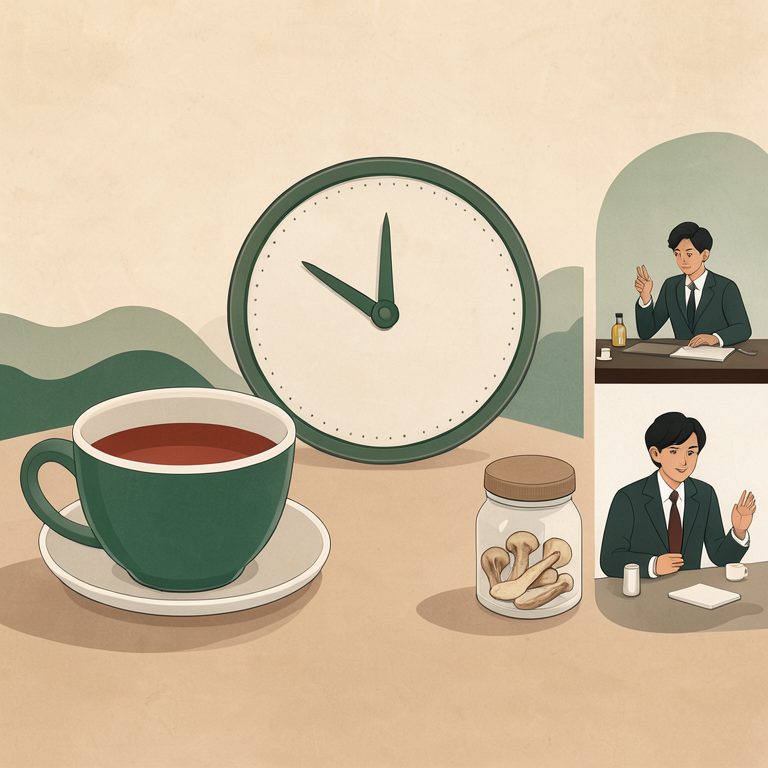
There is a reason the old Chinese and Japanese courts kept reishi close at hand: the emperors are recorded drinking its tea and elixirs for vitality and longevity.[1] A reishi evening tea ritual borrows that same idea — a fixed, unhurried pause that closes the day — without borrowing the medical promises the old texts never actually make. This guide walks through what our source literature records about the mushroom’s tradition, what a cup realistically tastes like, and a six-step evening practice you can keep with nothing but a pot, a cup, and twenty minutes. If ritual-style practices are new to you, the step-by-step guides in our manuals library are the easiest place to start.
What Is Reishi? The “Mushroom of Immortality”
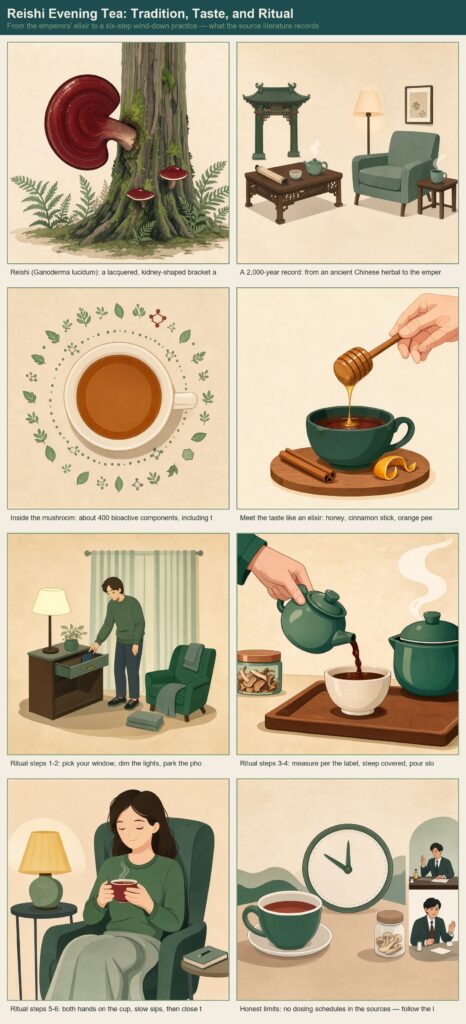
Reishi is the mushroom Ganoderma lucidum, known in Chinese tradition as lingzhi.[1] In the wild it grows at the base of hardwood trees, where it forms a dark-red, lacquered cap shaped like a kidney — a bracket fungus, not the soft-capped mushroom most kitchens know.[1] Asia has treasured it for several thousand years, and its properties were already described in a Chinese medical treatise composed roughly two thousand years ago.[1] That record is what earned reishi its famous title, the “mushroom of immortality” — a name from reverence and long use, not a modern marketing invention.[1]
From the Emperors’ Court to the Evening Cup
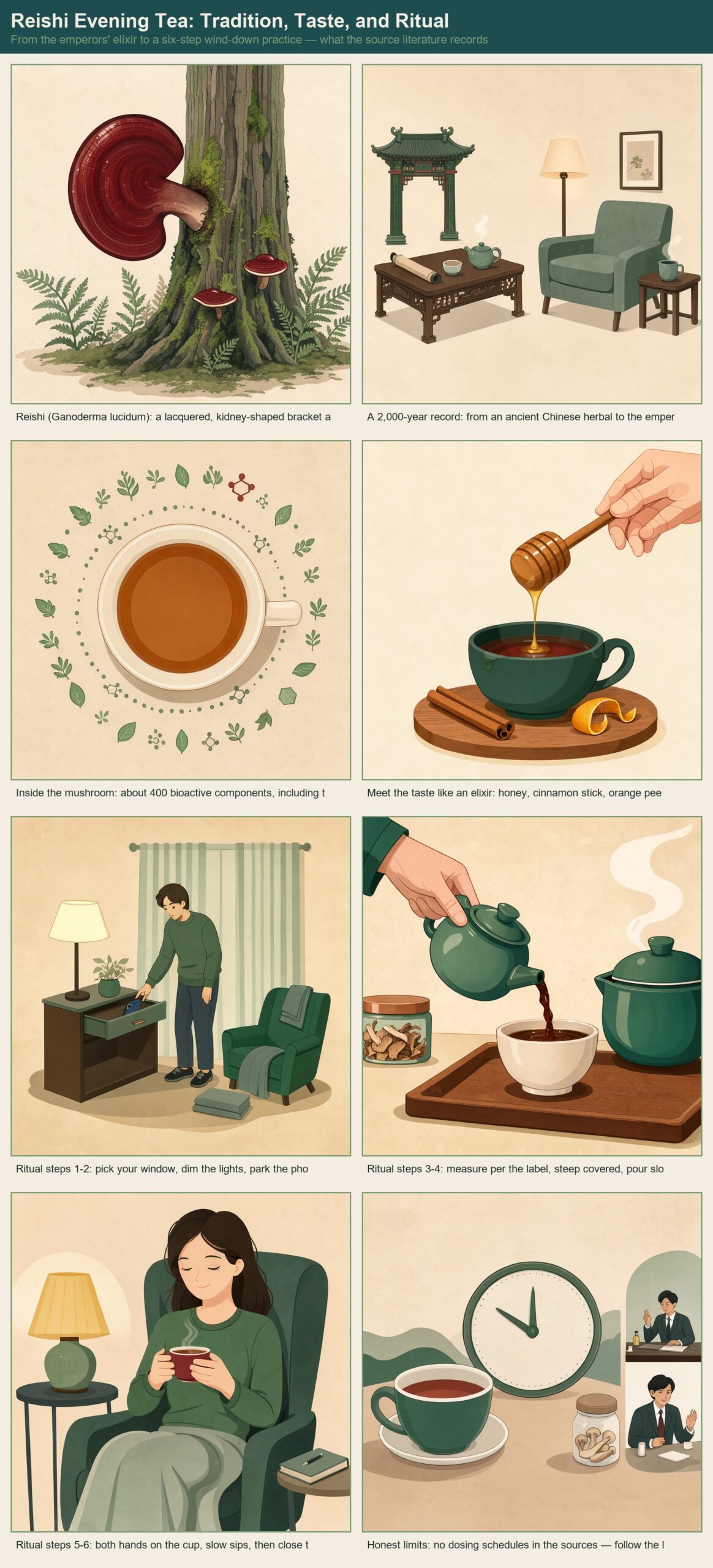
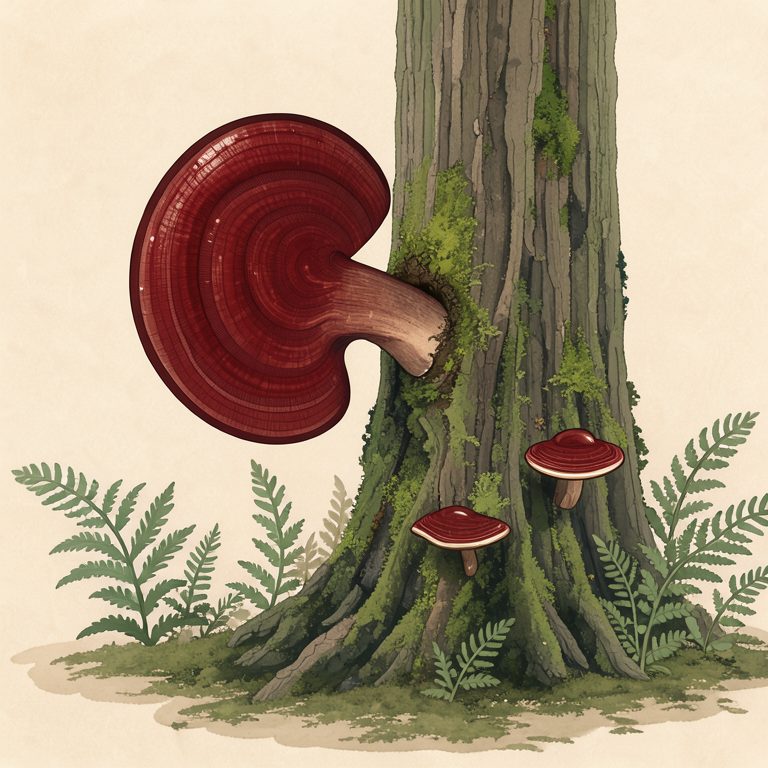
The same reference records that Chinese and Japanese emperors regularly drank reishi tea and took reishi elixirs to replenish vital forces and support longevity — a scheduled, repeated practice rather than an occasional remedy.[1] That is the thread a modern evening ritual picks up: a fixed time, a warm cup, a deliberate pause. Modern practitioner literature keeps the habit alive in different forms — one author in our library schedules reishi capsules one to two times a day in the first half of the day when readers are easing off coffee, and recommends preparing coffee blended with reishi for what he calls more appropriate nourishment of the nervous system.[2] The evening tonic has its own standing in the same herbal reference: Dr. Mercola describes keeping ashwagandha root powder on hand to blend with calming herbs such as chamomile and lavender for a nightly tonic.[1] Reishi evening tea simply takes the seat those tonics already warmed.
| Reishi at a glance | What the source literature records |
|---|---|
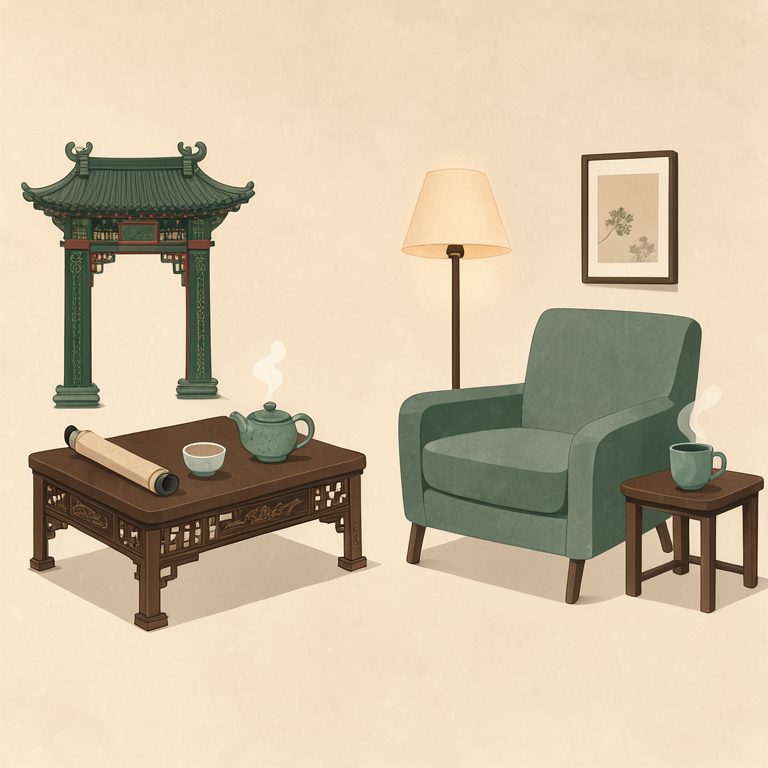
| Botanical name | Ganoderma lucidum[1] |
| Names in tradition | Lingzhi; “mushroom of immortality”[1] |
| Where it grows | Base of hardwood trees; dark-red lacquered, kidney-shaped cap[1] |
| Historical record | Several thousand years of use in Asia; a Chinese medical treatise about 2,000 years old[1] |
| Royal tea tradition | Chinese and Japanese emperors regularly drank reishi tea and elixirs for vitality and longevity[1] |
| Recorded composition | About 400 biologically active components, including the triterpene ganoderic acid[1] |
| Forms in modern practice | Teas and elixirs (traditional); capsules and coffee blends (modern practitioner use)[1][2] |
| Dosing schedules in our sources | None recorded — follow product-label serving guidance[1][2] |
Inside the Cup: What the Source Literature Records
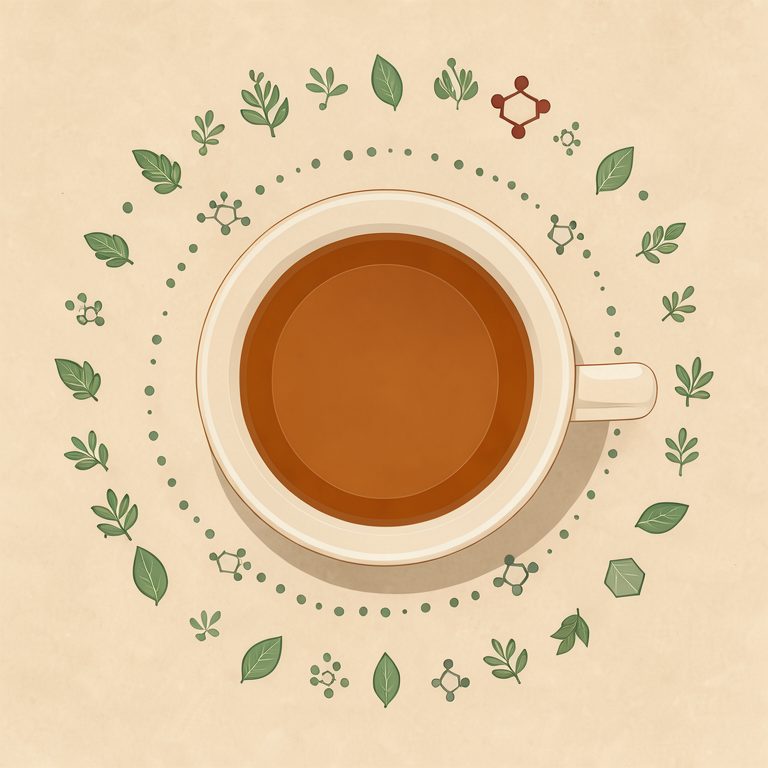
Mercola’s herbal encyclopedia counts roughly 400 biologically active components in reishi — a list so long the author declines to fit it into one entry.[1] Among them it singles out the triterpene ganoderic acid, describing it as an activator of immune cells: macrophages, natural killer cells, T-lymphocytes, and B-cells.[1] Read that exactly as written — a summary of what laboratory science has observed in and around the mushroom — and not as a promise of what one evening cup will do for you. Our sources make no outcome claims for home-brewed reishi tea, and this guide will not invent any.
Taste: What to Expect and How to Serve It
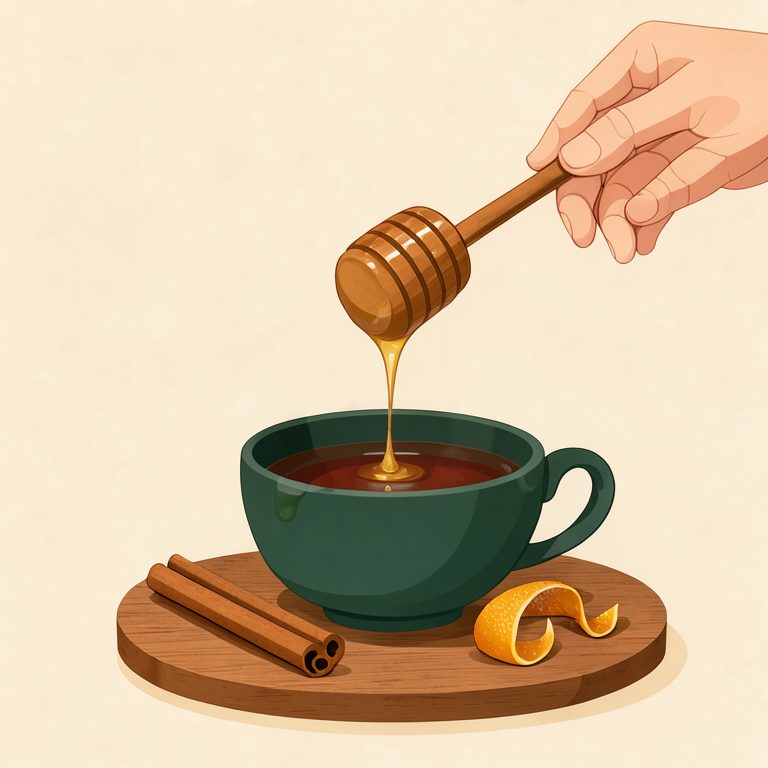
Honesty first: if you have never had a mushroom infusion, expect something closer to a dark, woody broth than to a fruit tea. That single expectation makes most first cups far easier to enjoy. The tradition itself met reishi with blending rather than masking — the old record speaks of both teas and elixirs at the emperors’ tables.[1] So build your cup the way an elixir is built: steep your reishi (slices, powder, or extract, per your product’s form), then try a spoon of honey, a cinnamon stick, or a curl of orange peel. Chamomile and lavender are the classic calming companions the same reference names for evening tonics, and they pair naturally here.[1] Serve it in a pre-warmed cup — a small touch that keeps the steep warm through a slow, unhurried ritual.
The Reishi Evening Tea Ritual: Six Steps to Close the Day
This protocol is editorial — a suggested rhythm, not a dosing schedule. Our sources record no reishi dosages, so every measurement below defers to your product’s label.
- Pick your window. Choose the same twenty minutes each evening — after dinner, before the last lights go out. Consistency of timing, not duration, is what makes a ritual hold.
- Set the scene. Dim the overheads, leave the phone in another room, and let one warm lamp carry the light.
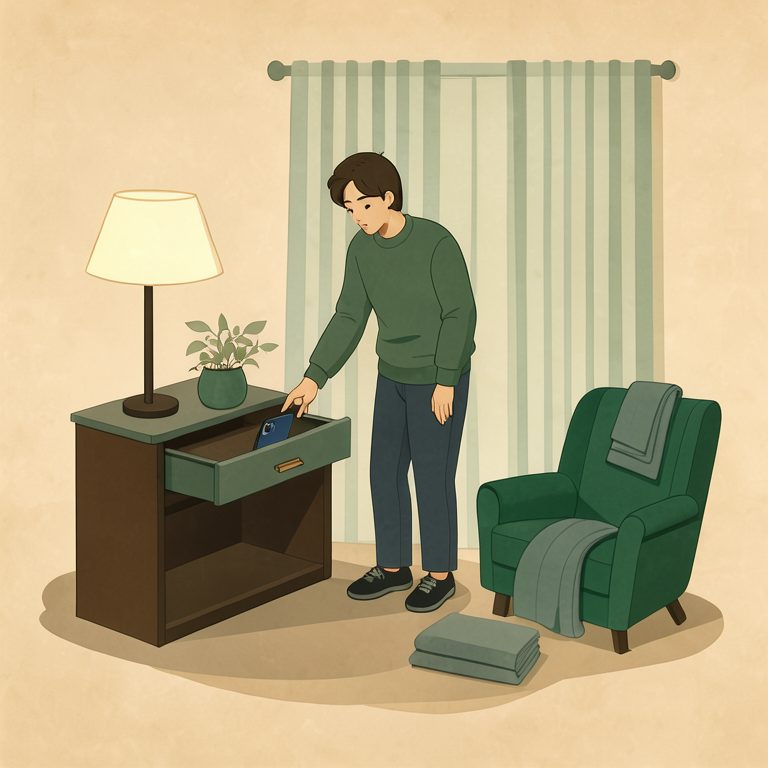
Steps 1–2 — pick your window, dim the lights, park the phone in another room. The emperors’ practice was scheduled and deliberate; yours can be too.[1]
- Prepare the tea. Measure your reishi exactly as your product label directs — dried slices, powder, or extract — and cover the pot while it steeps so the aroma stays in the cup, not the room.
- Pour with attention. Warm the cup first, then pour slowly and watch the color deepen.
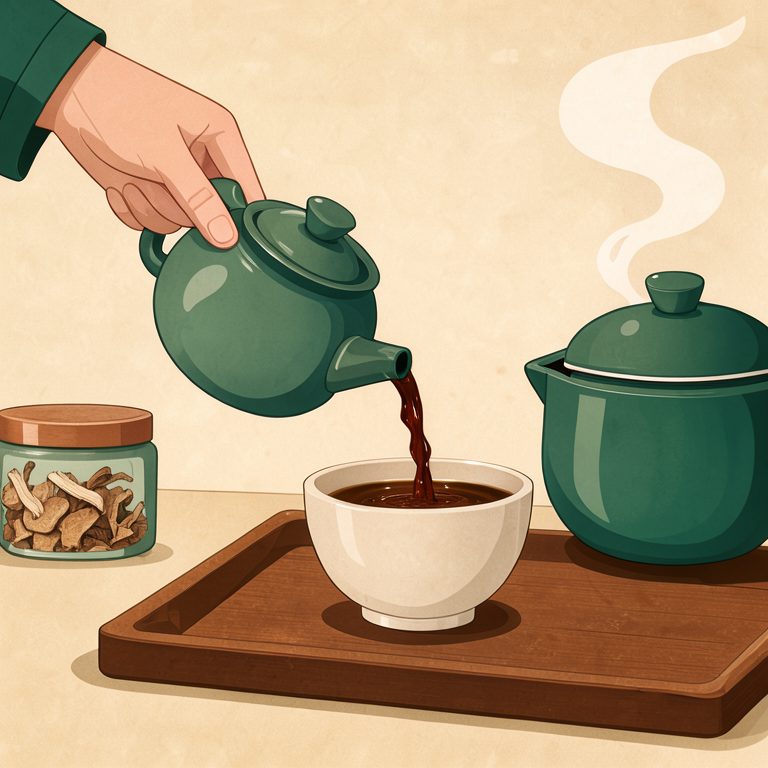
Steps 3–4 — measure per the label, steep covered, pour slowly into a warmed cup. Two minutes of pouring and watching is already a wind-down.
- Sip, don’t scroll. Sit, hold the cup with both hands, and give it fifteen to twenty unhurried minutes. If the flavor surprises you, adjust with honey or citrus at the next cup — the elixir tradition is on your side.[1]
- Close the loop. Three slow breaths or one line in a journal —

Steps 5–6 — both hands on the cup, slow sips, then close the day on purpose. then lower the lights and let the day end on purpose rather than by battery percentage.
A short mobility pause pairs beautifully with the steeping wait — readers exploring gentle evening movement often start with our Unlock Your Hip Flexors review, and those researching joint-friendly routines also read our Joint Genesis review.
Safety Notes and Honest Limits
Three honest guardrails before your first pot. First, timing: one practitioner reference in our library schedules reishi earlier in the day — capsules in the first half of the day for readers easing off coffee[2] — so trying your first cup earlier, then moving it to the evening once you know your response, is the cautious route. Second, dosing: our sources record no reishi dosing schedules[1][2]; follow the serving guidance on your product’s label and stay there. Third, scope: the evening slot is about ritual rhythm, not a documented sedative effect — our sources claim no sleep or relaxation outcomes for reishi tea, and neither does this guide. If you are pregnant or nursing, take medication, or manage a health condition, speak with a qualified healthcare professional before adding any herbal product. This article is educational; it is not intended to diagnose, cure, treat, or prevent any disease.
Frequently Asked Questions
Is reishi tea the same as lingzhi tea?
Yes — lingzhi is the Chinese name for the same mushroom, Ganoderma lucidum.[1] Any tea labeled lingzhi, reishi, or Ganoderma draws on the same tradition, including the “mushroom of immortality” title earned over several thousand years of recorded use in Asia.[1]
What does reishi evening tea taste like?
Expect a dark, woody, broth-like infusion rather than a sweet tea — reishi is a bracket fungus[1], and our sources describe its composition and royal history, not a delicate flavor. That is exactly why the elixir tradition blended it: honey, cinnamon, orange peel, or calming companions like chamomile and lavender turn the cup into something you look forward to.[1]
Can I drink reishi tea every evening?
Our library records no dosing schedules for reishi in any form, so frequency belongs on your product’s label, not in an article.[1][2] What you can fix is the ritual itself — same window, same steps, most evenings — because the repeated, deliberate pause is the part the tradition actually documented.[1]
Sources
- [1] Mercola J. — Herbs and Spices (2023), reishi entry and evening-tonic passage.
- [2] Skachko B. — Coffee, Reishi, Aloe Vera and Your Health (2021), coffee-withdrawal passage.
How we researched this
This article is based on our local library of 1,137 traditional wellness books; no internet sources were used. Every statement above was checked against the cited source passages.
