
Educational content only — not medical advice. See our full Medical Disclaimer and Affiliate Disclosure below.
Key Takeaways
- The TCM organ clock gives every major organ channel a two-hour peak window; the liver meridian holds the 1 to 3 AM shift, right after the gallbladder’s 11 PM to 1 AM watch[1].
- In the traditional lens, blocked liver qi is linked with anger, irritability and stress that has no outlet — a self-observation cue, never a diagnosis[2].
- Western habit mechanics hit the same hour: a nightcap rebounds mid-night, and caffeine’s roughly five-hour half-life can still echo at midnight[6][7].
- A gentle evening protocol — one fixed schedule, a 4 PM caffeine curfew, a light early dinner, screens off an hour before bed — protects the whole night[3][6].
- Repeated waking with snoring, witnessed breathing pauses or morning headaches is a doctor question, not a meridian question[12][13].
It is 2:04 AM, the house is dark, and your mind is suddenly wide awake — again. If you regularly wake between 1 and 3 AM, you already know the sequence: the ceiling, the clock, the racing thoughts, and the slow drift back toward sleep just before the alarm. You have abundant company — in a Gallup poll of 1,000 adults, one third said they wake in the middle of the night and cannot fall back asleep[6]. And whether your pattern is waking up at 3 AM sharp or a fuzzy two-something jolt, traditional Chinese medicine (TCM) has been interested in that exact stretch of night for a very long time. On the TCM organ clock, the hours from 1 to 3 AM belong to the liver meridian — the channel traditionally said to be at its peak of activity while you are busy staring at the ceiling[1].
This guide, updated November 10, 2026, walks through the whole picture in order. First, the 24-hour meridian timetable and where the liver shift sits on it; then what the tradition actually says about night waking in its window — and, just as important, what it does not say. After that come the plain Western mechanics of alcohol and caffeine that land on the same hour, a nine-step gentle evening protocol, and the red flags that turn repeated night waking into a doctor question. For the complete day-by-day map, see our companion guide to the Chinese organ body clock. Everything here is traditional knowledge and habit science for self-observation — not medical advice.
What Is the Liver Meridian in Traditional Chinese Medicine?
The liver meridian is one of the fourteen main channels of the TCM organ clock: a yin channel of the zhang class — the dense, storage organs — paired with the gallbladder and carrying fourteen classically described points, with its traditional peak of activity set at 1 to 3 AM[1]. The word the old texts use for a channel, jing, means river, road, or path — the same word used for a blood vessel[1].
What travels along it, in the traditional telling, is qi — vital energy — and the TCM liver itself holds a far bigger office than its Western anatomical namesake. The tradition assigns it the Wood element among the five zhang organs, alongside Heart-Fire, Spleen-Earth, Lungs-Metal and Kidneys-Water, and describes it as the yin “minister” of Wood, with the gallbladder as its yang partner[2][3]. It is said to govern the nervous system and the organism’s connection with the environment, to nourish tendons and muscles, and to answer for the eyes, balance and nails, while the channel itself is tied to blood regulation[2][3]. None of this is biomedical anatomy — it is an energetic model, and it is several thousand years old[1].
The documentary age of that model is the part newcomers find hardest to believe. The Huangdi Neijing — the Yellow Emperor’s Inner Canon, dated to around the third century BC — already precisely described meridian locations and the effects of their points, comparing the channels to the great rivers of China[1]. About 700 points are described in the tradition, some 150 in common use, each just 1 to 2 millimeters across[1]. A folk legend holds that scholars counted 367 points influencing the organs after a peasant’s stray hoe strike cured his headache, and for generations the knowledge passed orally — a master training one or two pupils over fifteen years, nothing written down[4]. The first herbal classic, the Shen Nong Ben Cao Jing, followed around the first century AD, ranking its herbs in three grades[16].
How Does the TCM Organ Clock Work? The 12-Meridian Timetable
Tradition never treats the 1 to 3 AM window in isolation — it is one shift in a 24-hour rota. The organ clock divides the day into twelve two-hour windows, one for each paired meridian, and qi is believed to pass from one channel to the next in a fixed daily sequence, like workers changing shifts[1]. Here is the full timetable as the sources give it, with each channel’s classical point count in brackets[1]:
- Lung — 3 to 5 AM [11 points]
- Large intestine — 5 to 7 AM [20]
- Stomach — 7 to 9 AM [45]
- Spleen-pancreas — 9 to 11 AM [21]
- Heart — 11 AM to 1 PM [9]
- Small intestine — 1 to 3 PM [19]
- Bladder — 3 to 5 PM [67]
- Kidney — 5 to 7 PM [27]
- Pericardium — 7 to 9 PM [9]
- Triple burner — 9 to 11 PM [23]
- Gallbladder — 11 PM to 1 AM [44]
- Liver — 1 to 3 AM [14]
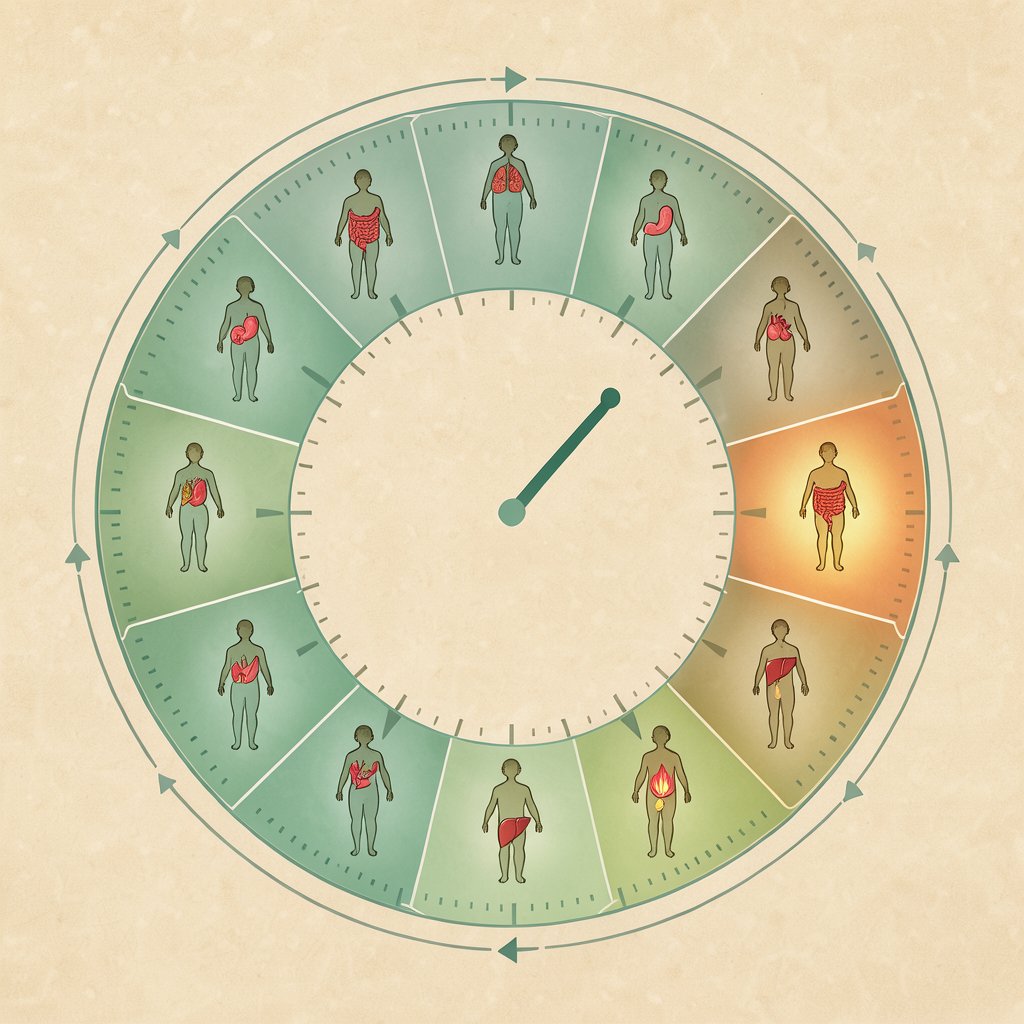
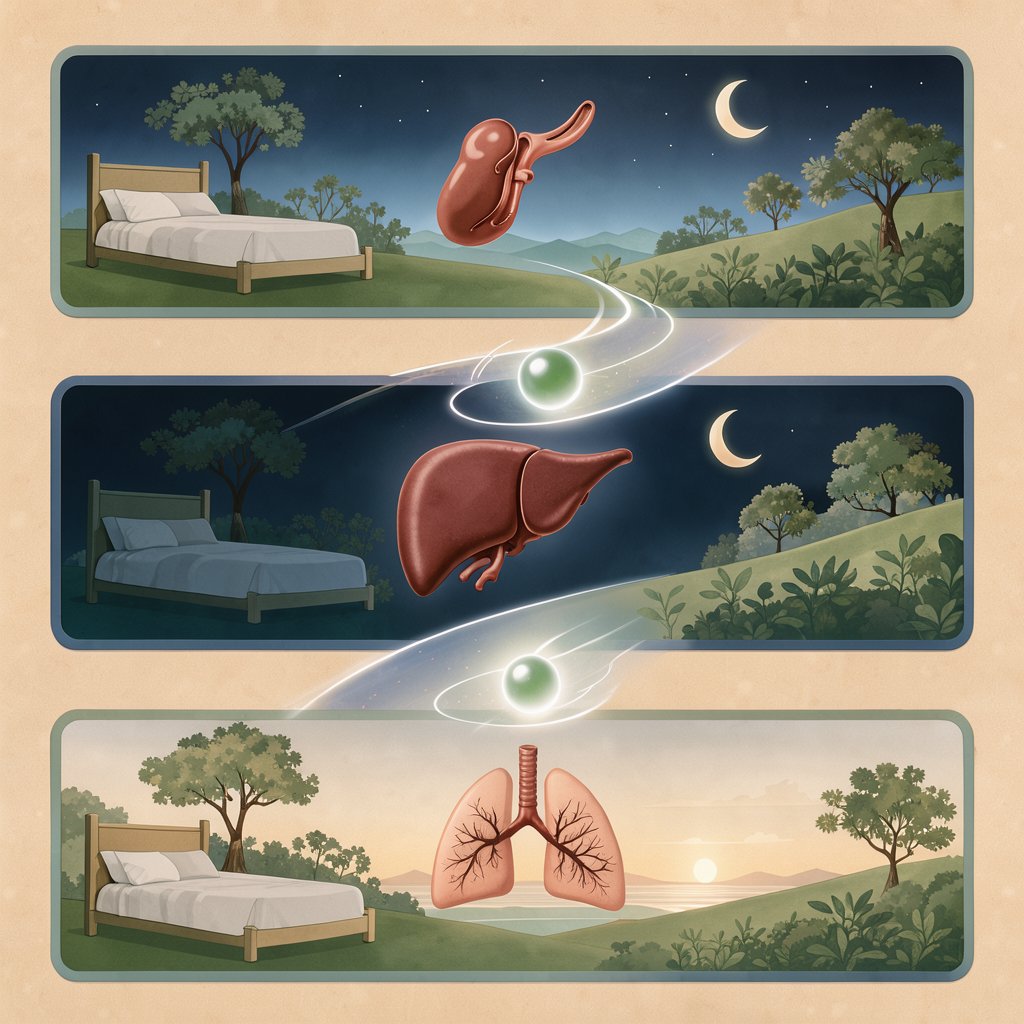
Two unpaired vessels ride the midlines and steer the two groups: the back-midline yang vessel with 28 points, on duty around the clock, and the front-midline yin vessel with 24[1]. The night relay is the part that matters here — the gallbladder holds the 11 PM to 1 AM watch, hands over to the liver at 1 AM, and the lung takes over at 3 AM as the cycle closes[1]. Gennady Malakhov, citing Chinese acupuncturists, states the same rhythm more broadly: the function of the liver and gallbladder is strongest from 11 PM to 3 AM — “the biological rhythm of the liver and gallbladder”[5]. The same source adds two seasonal notes from the tradition: liver function is said to peak in spring and weaken in autumn, and the sour taste of lemon juice is used to stimulate the liver[5].
What Does Waking at 1-3 AM Mean in the Traditional Lens?
Here is the part the tradition actually says — and, honestly, the part it does not. The core doctrine is emotional: “if a person shows anger, aggression, irritability and rage, the liver qi is blocked and has no normal outlet”[2]. In zhang-fu practice, emotions are diagnostic — organ problems are believed to surface in the psycho-emotional state — and TCM counts joy, fear and anger among its internal harmful influences, alongside external ones such as wind, cold and heat, and a third category of hard work and poor diet[2]. Disease, in this frame, arises when qi and blood stagnate; free circulation is called “the basis of life,” which is the founding rationale of qigong practice[2][15].
The tradition also maps energies, not just organs. Protective wei qi is said to guard the body’s surface; ancestral qi is inherited from your parents, and its exhaustion is read as aging; nutritive qi is built from air and food and circulates in the main meridians[2][15]. Essence, energy and spirit — jing, qi, shen — form the “three treasures” of the tradition[15]. Inside that framework, a sleep that breaks every night inside one organ’s window can be read as that window being disturbed by stagnant qi — and evening anger or unspent stress is precisely the kind of influence the tradition says blocks liver qi.
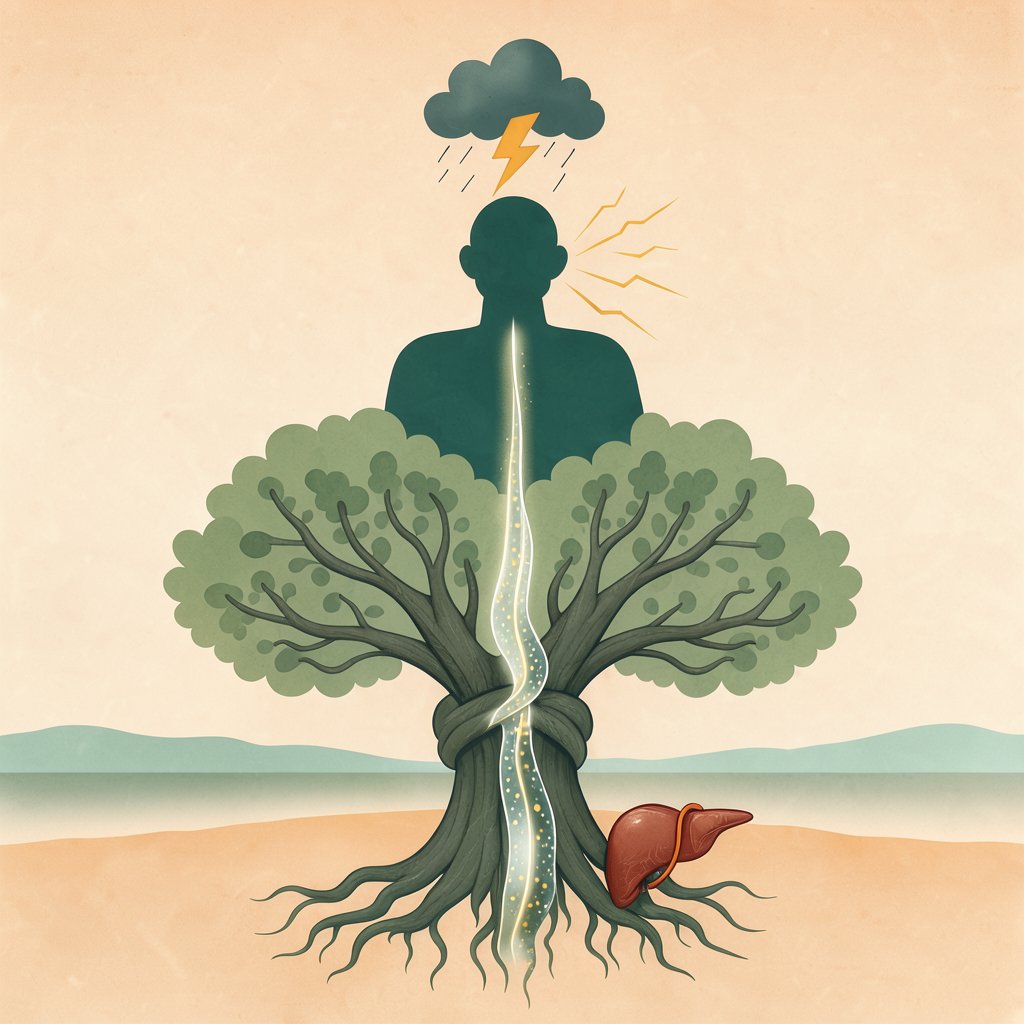
One honesty note before folk medicine hardens into an internet claim: none of our retrieved sources states verbatim that waking at 1 to 3 AM means the liver meridian is disturbed. That reading is assembled from two retrieved pieces — the clock table that gives the liver the 1 to 3 AM peak, and the anger-and-stagnation doctrine — and it is presented here exactly as what it is: a traditional lens for self-observation, not a diagnosis[1][2]. The same body of knowledge does carry one concrete body map worth knowing: liver and gallbladder complaints are traditionally said to refer pain to the right neck, shoulder and shoulder blade, following the channels[4].
Western Echoes: Why Alcohol and Caffeine Wake You Mid-Night
Whether or not you accept the meridian map, the same hour has plain pharmacology. Alcohol “depresses the nervous system but also disrupts sleep,” as a physicians’ advisory puts it — and “a few hours later, usually in the middle of the night, its action passes… and you wake up”[6]. The nightcap, in other words, is a documented mid-night-waking machine rather than a sleep aid. A 2024 sleep guide sharpens the picture: alcohol is a sedative-anesthetic — consciousness switches off, but sleep stays “interrupted and restless,” with REM strongly shortened[7].
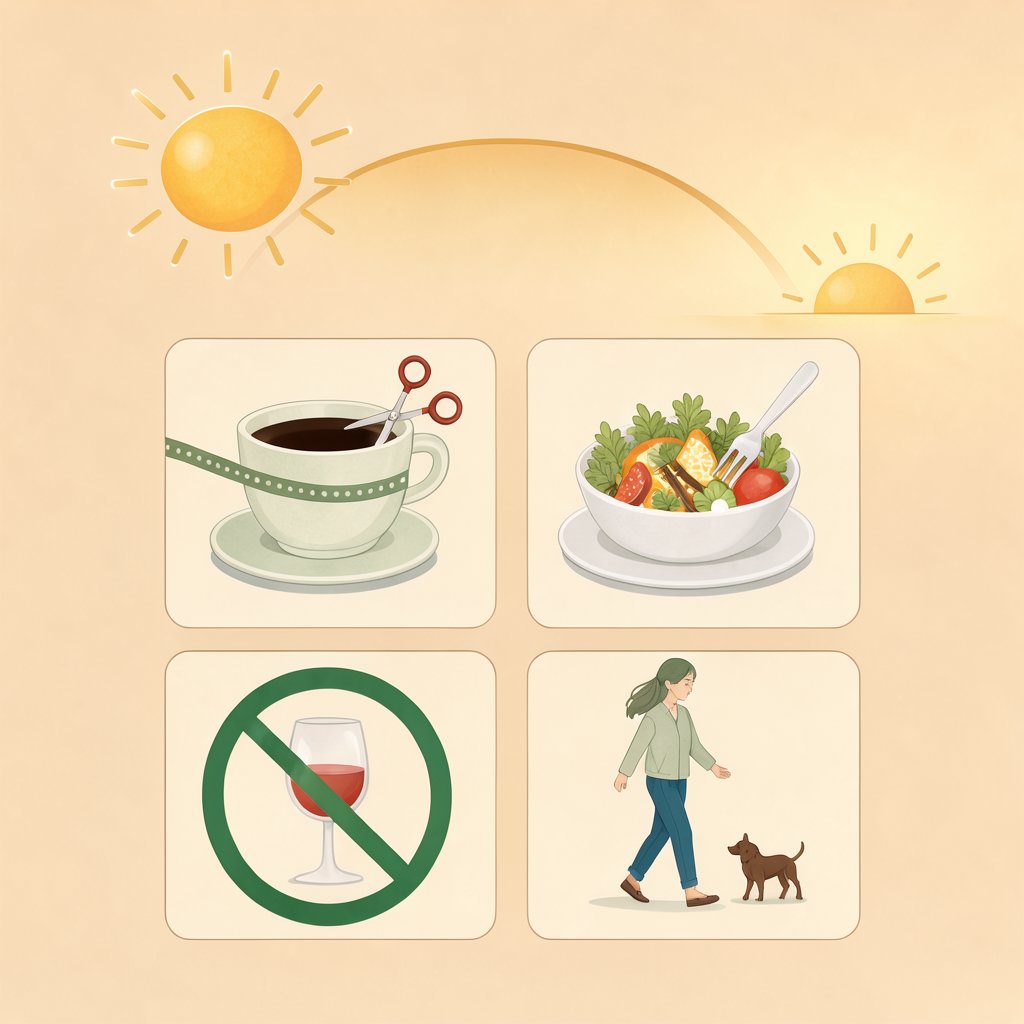
Caffeine works on a slower clock. Its half-life is roughly five hours, and about a quarter of a dose is still active ten hours later — a 2 PM coffee still acts at midnight like a quarter cup[7]. For a 10 PM bedtime, the same book’s advice is blunt: no coffee after breakfast[7]. The physicians’ advisory sets the everyday curfew at 4 PM — coffee, cola, and even chocolate[6].
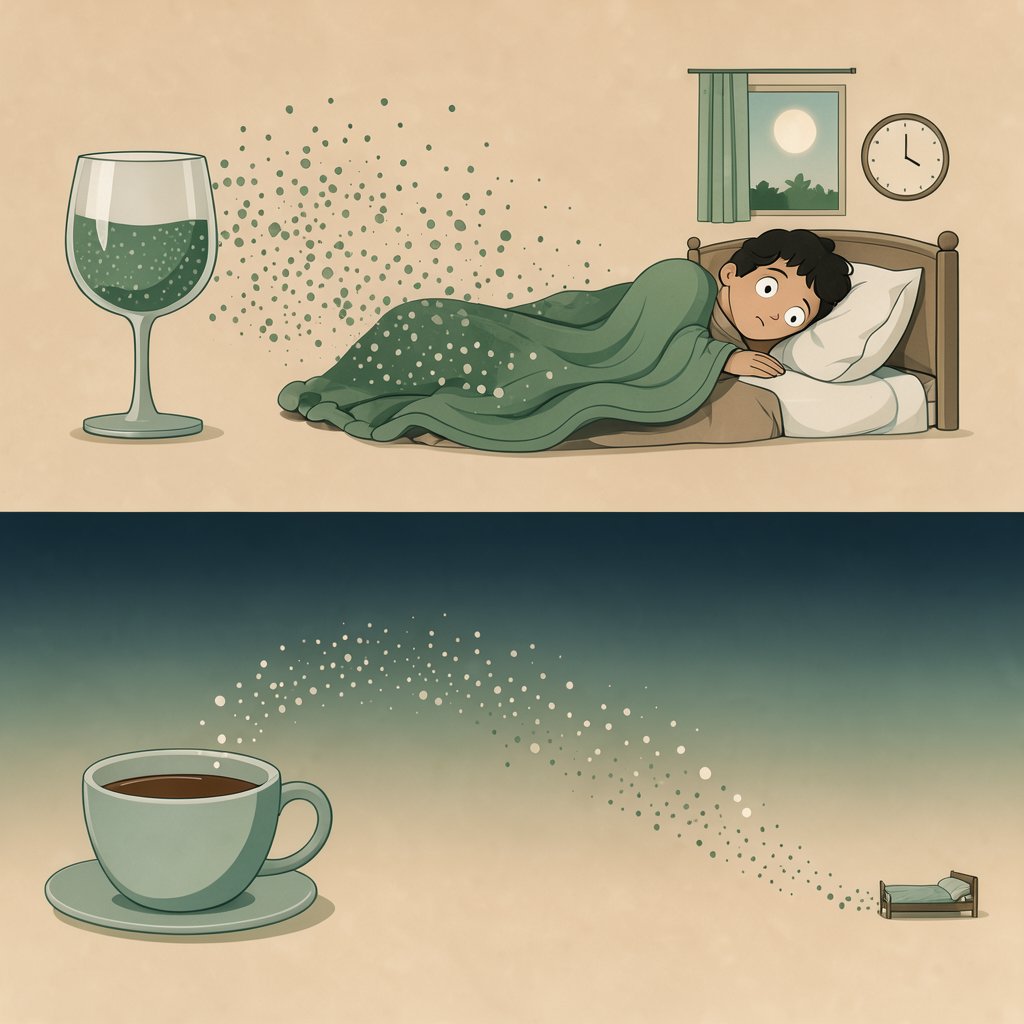
The takeaway is tradition-agnostic: you do not have to believe in meridians to take the 1 to 3 AM window seriously, because ordinary evening habits demonstrably move it. One honest limit belongs on the record as well — the Western material in our sources covers substance mechanics, meaning what alcohol and caffeine do to the night, not the full modern science of sleep architecture. We stay inside what the books document, and the habits below follow from it.
What Repeated Night Waking Does to You
A two-o’clock wake-up feels minor — until you stack up what the night shift costs. The scale is real: one third of 1,000 adults polled by Gallup wake mid-night and cannot fall back asleep, and insomnia already ranks among the top reasons people see a doctor, after colds, stomach upset and headaches[6]. There is no single adult norm for sleep: the average runs 7 to 8 hours, and some people genuinely function on 5[6].
The cost of shortchanging it is measurable even after one bad night. Amygdala reactivity — the brain’s alarm bell — rises by about 60 percent while prefrontal, self-control activity drops; fatigue-related crashes are compared to drunk driving, and chronic insufficiency is linked to anxiety and depression risk[7]. That is a brain running hot with the brakes cold, and it is the price of a single sleepless night — let alone a standing 2 AM appointment. Both the traditional instinct to protect the early night and these numbers point the same direction.
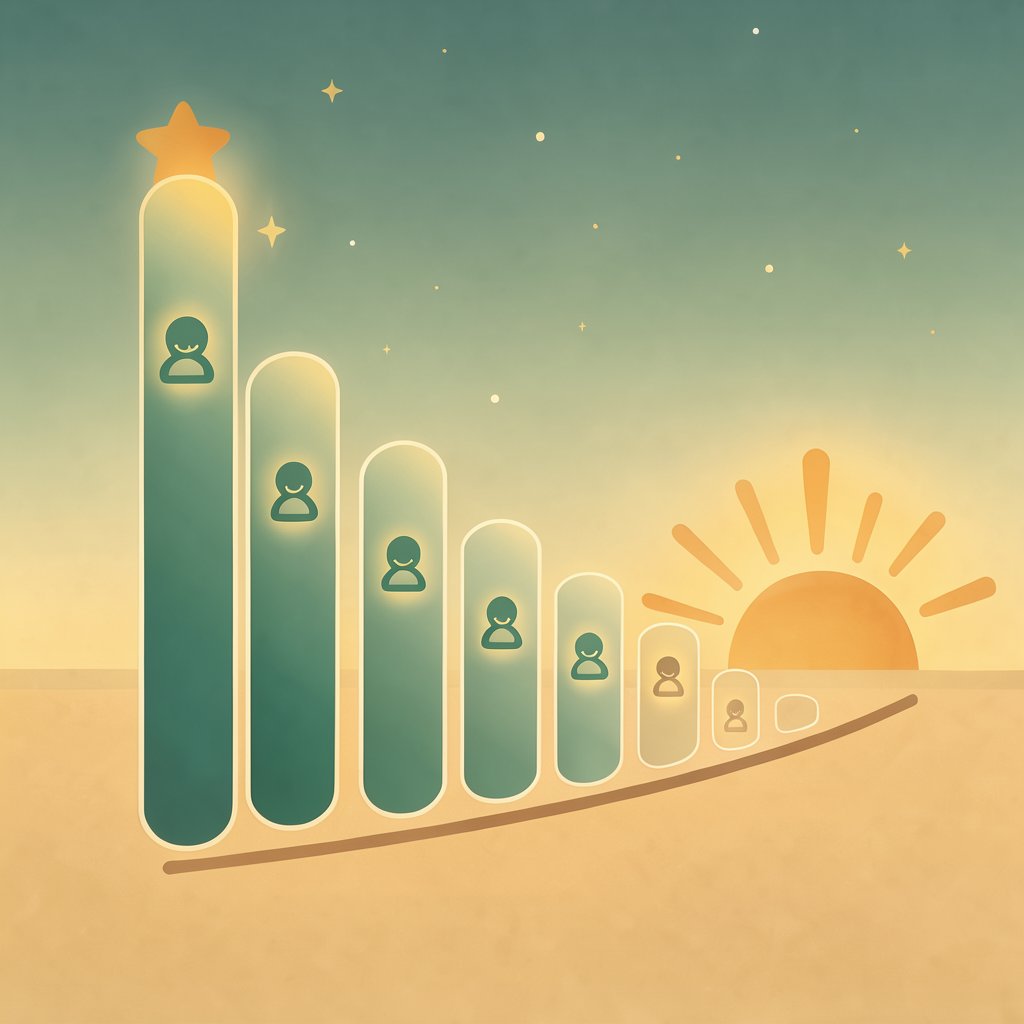
The tradition, for its part, prices the hours themselves. A 2011 practice book publishes an hour-value chart: an hour of sleep from 7 to 8 PM is valued at seven hours of rest, the value slides hour by hour — 11 PM to midnight is worth three, midnight to 1 AM two — until 1 to 2 AM is worth a single hour and 2 to 3 AM just thirty minutes[8]. The same book’s recommended recovery regime is sleep from 9 PM to 5 AM[8]. Read that as another traditional rhythm view rather than a clinical measurement — but tradition and pharmacology agree on the direction: the early night is the expensive real estate, and the small hours are where a late evening finally gets paid for.
Self-Check: Liver-Window Pattern, Apnea, or a Habit Loop?
Three very different stories can end at the same 2 AM ceiling light, so a short self-check is worth running before you blame an organ channel. The first bucket is the traditional-lens pattern: evenings full of anger, irritability and stress with no outlet — the very markers the tradition names for blocked liver qi[2] — usually wrapped in habits that independently wreck the night, such as a late heavy dinner, a nightcap, or caffeine after 4 PM[6][9]. If your evenings dissolve into work email and arguments, this pattern writes itself.
The second bucket is sleep apnea, and it is the one to rule out first. Its flags: family members report that you stop breathing in sleep; loud snoring; waking with choking; morning headache and dry mouth; frequent night-time urination; morning fatigue despite adequate hours; reduced memory and attention; and daytime sleepiness at wrong times[12][13]. The diagnostic threshold is breathing pauses of 10 seconds or longer occurring at least five times per hour of sleep — the obstructive type is typical in middle-aged overweight men, while the central type is linked to heart and nerve disease[12]. The cruel detail is that the arousals fragmenting your sleep are ones you mostly do not remember[13].
The third bucket is conditioned — psychophysiological — insomnia: the bed itself has become a wakefulness trigger, which is why these patients famously sleep fine away from home[12]. The way out, per the same source, is sleep hygiene plus behavioral therapy, with relaxation trained “to automatism” instead of sleeping pills[12]. Notice what all three buckets share: none of them is diagnosed by a clock, and the gentle protocol below helps every one of them.
The Gentle Evening Protocol, Steps 1-4: Daytime Decisions
The night is won in the daytime — four decisions made before dusk set up the whole 1 to 3 AM window. Each step below is a habit with a source behind it, not a rule to obey perfectly. Pick the two that sound most like your current evenings and start there.
Step 1 — Fix one schedule, seven days a week
Go to bed and rise at the same time daily, weekends included: fixed times are what anchor the circadian “inner clocks”[6]. If you are not asleep in 15 to 20 minutes, get up and do something pleasantly monotonous — a magazine article, knitting, not computer games or chores — and return only when sleepy[6]. A gentler variant from sleep researcher Dr. Merrill Mitler: after 15 minutes, simply stay in bed and let go[6]. For chronically fragmented nights there is sleep-window titration — fix a five-hour window and add 15 minutes per week only while you sleep through it, stopping the moment mid-night waking appears[6]. Keep daytime naps to 30 minutes or less[3].
Step 2 — Set a 4 PM caffeine curfew
Coffee, cola, and even chocolate stop at 4 PM, per the physicians’ advisory[6]. The arithmetic behind the curfew is unforgiving: with a half-life near five hours and a quarter of the dose still active at ten, an afternoon cup is still whispering at midnight[7]. If your bedtime is 10 PM or earlier and the waking stays stubborn, the 2024 sleep guide goes further — no coffee after breakfast[7].
Step 3 — Skip the nightcap
Alcohol is the documented rebound: it switches consciousness off, then wakes you “usually in the middle of the night” as it wears off, having already shortened REM and made the earlier hours restless[6][7]. The general stimulant rule from the insomnia-ritual literature is wider still: no coffee, nicotine, or alcohol within at least four hours of bed[3]. A warm caffeine-free drink is a fine stand-in for the ritual itself.
Step 4 — Eat light, and eat early
The Tibetan-style biorhythm schedule places a light dinner between 5 and 8 PM — fruit, a vegetable dish, sour milk, a warm herb broth — and nothing after[9]. An energy-practice source draws the same line at 8 PM: if hunger strikes later, only a light snack, and limit evening tea, coffee and alcohol for their tonic action[10]. The stated reason is mechanical rather than mystical: late heavy eating forces digestion into the night exactly while body temperature drops, producing unrefreshing sleep, morning stimulant cravings, and a vicious cycle[9].
The Gentle Evening Protocol, Steps 5-9: The Wind-Down
Now the last hour — the part of the protocol you can feel working. These five steps walk the nervous system down from the day’s final ledge toward the night shift. They are deliberately quiet; that is the point of them.
Step 5 — Screens off one hour before bed
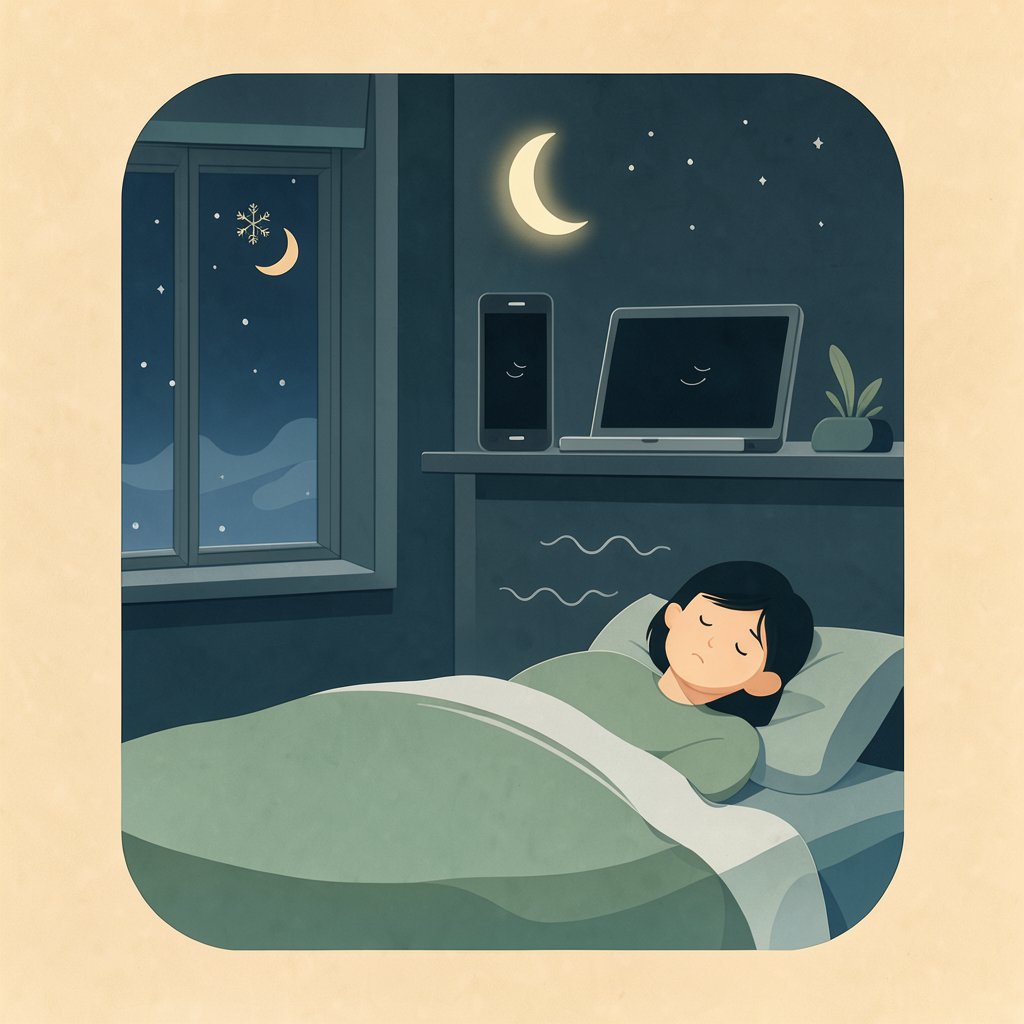
Screens go dark at least an hour before bed, and hard or stressful discussions move to at least two hours before[3]. The same ritual drops stressful evening occupations altogether — news and email included[3]. The bed itself is reserved for sleep and intimacy only, so the brain stops filing it as a workplace[6].
Step 6 — Hold a ten-minute worry session
One to two hours before bed, sit down for ten minutes with the day’s stresses: review them and plan tomorrow[6]. The technique “clears the mind” so that problems do not surface at lights-out — a scheduled landing pad for the exact thoughts that otherwise visit at 2 AM[6]. It sounds too simple to work; the physicians’ advisory is unmoved by that objection.
Step 7 — Make the room dark, quiet, and cool
The target bedroom is dark, quiet, and cool at 61 to 64°F (16 to 18°C)[3]. Cool is the operative word for the same reason a pre-bed walk works: gentle activity raises body temperature, and the subsequent fall promotes sleepiness[6]. That short walk, taken half an hour before bed, is the friendliest sleep aid the habit world offers[6].
Step 8 — Breathe yourself down
Right before sleep comes a breathing practice — “cardiac coherence” or plain abdominal breathing — or another relaxing pre-bed activity such as meditation or light reading[3]. The advisory list adds diaphragmatic breathing, guided pleasant imagery, progressive muscle relaxation, and yoga[6]. From Ayurveda — a parallel tradition, not TCM — comes the evening set our sources describe: calm, non-straining work after 6 PM, shavasana for 3 to 7 minutes with a body-scan relaxation, smooth breathing exercises or qigong, and daily static stretches[11].
Step 9 — Optional: the HT7 palm press
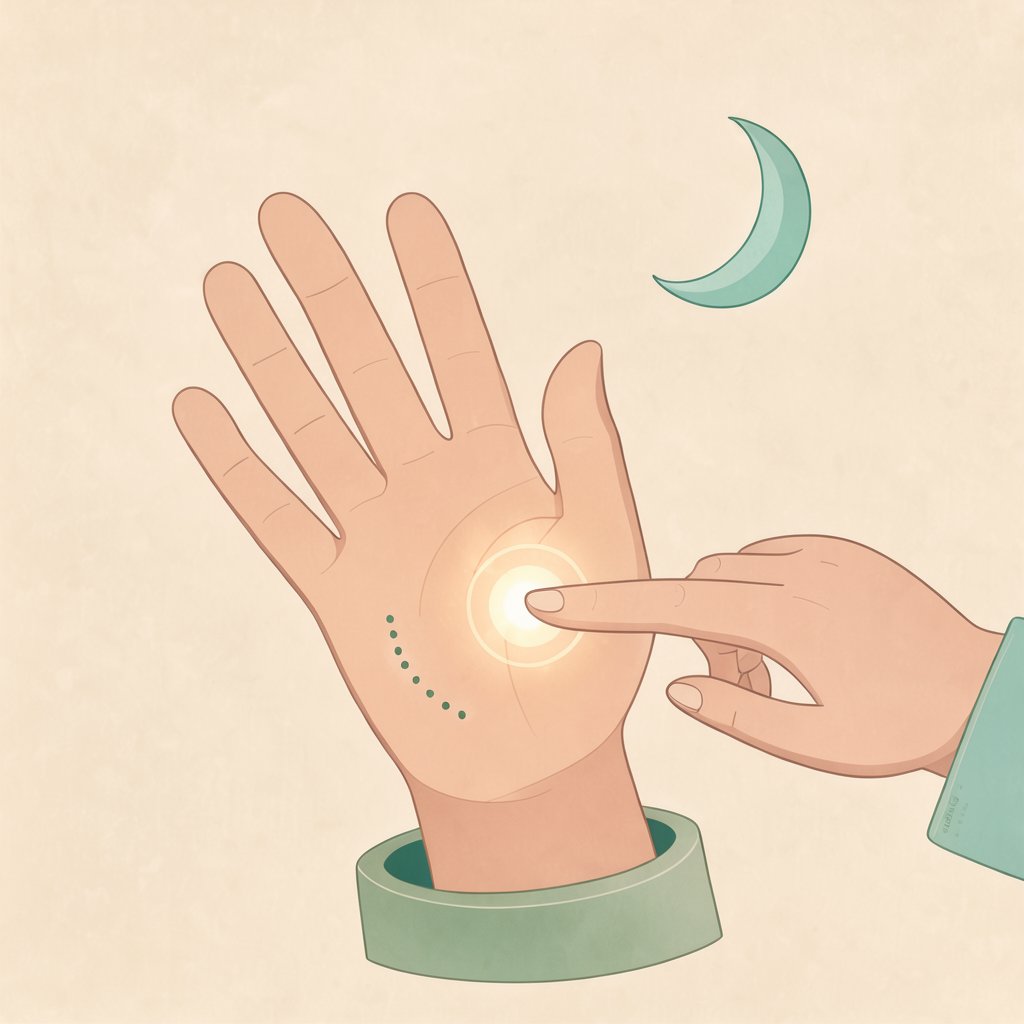
The one point-protocol in our sources is a palm routine, and it needs an honesty label first: HT7 is the Heart-7 point on the wrist crease — general insomnia wind-down work, not liver-meridian acupressure[3]. The sequence: rub the hands for 30 seconds; press HT7 with a fixed press on the exhale, releasing on the inhale, about ten presses per hand; “crawl” along the diaphragm reflex zone ten times per hand; hold a fixed press on the solar plexus zone five times per hand; rotate counterclockwise for two minutes per hand; finish with another 30-second rub[3]. The book cites a 2015 study in which palm reflexotherapy once a week for four weeks significantly improved sleep quality in insomnia patients and reduced fatigue and depression[3].
Safety: When Night Waking Is a Doctor Question
Gentle habits cover most nights — but not every repeated wake-up is a habits problem. The consensus rule is time-based: if you cannot fall asleep or sleep through the night for about a month, see a doctor, with the referral chain running from your primary physician to a sleep specialist, as the American Sleep Disorders Association frames it[6]. Sooner than a month — immediately, really — if any of the flags below are flying.
The apnea checklist, condensed: witnessed breathing pauses, loud snoring, choking awakenings, morning headache and dry mouth, frequent night-time urination, unrefreshing sleep despite adequate hours, and daytime sleepiness[12][13]. Stress has its own red-flag list warranting a specialist: chronic insomnia, uncontrollable anxiety, dizziness or fainting, a persistently rapid pulse, sweaty palms, limb or internal tremor, and chronic headache — especially when these are new and unexplained[12]. One more quiet saboteur belongs on the list: some prescribed drugs, asthma inhalers among them, disrupt sleep — ask the prescribing doctor about timing or substitution rather than enduring it[6].
Where sleep-disordered breathing is confirmed, the management directions in our sources run from position — not sleeping on the back — through weight loss, excluding alcohol and sedatives, and mask devices, with surgery a rare last resort[13]. Many people with apnea do not know they have it, and weight loss is the priority holistic recommendation[14]. Keep the frame straight through all of it: the liver clock is a lens, not a diagnosis — it tells you where to examine your habits, and when to hand the question to a doctor.
Frequently Asked Questions
What time is the liver meridian most active?
Between 1 and 3 AM, on the traditional organ clock — immediately after the gallbladder’s 11 PM to 1 AM window and just before the lung’s 3 to 5 AM watch[1]. A second source widens the rhythm: liver and gallbladder function is said to be strongest from 11 PM to 3 AM[5]. The full day-by-day map is in our guide to the Chinese organ body clock.
Is waking between 1 and 3 AM always about the liver?
No — it is a traditional lens, not a rule. The reading combines the clock’s liver window with the doctrine that anger and stress block liver qi, and no text we retrieved states it as a literal claim[1][2]. Habit mechanics and sleep apnea demonstrably hit the same hour, which is why the self-check above separates the three patterns before any tradition is applied.
Does a nightcap help sleep?
It trades the front of the night for the middle of it. Alcohol switches consciousness off quickly, but sleep stays “interrupted and restless” with REM strongly shortened — and as it wears off, “usually in the middle of the night,” you wake[6][7]. For a calmer entrance to the night, see our evening wind-down ritual.
When should I stop caffeine to protect the night?
At 4 PM for coffee, cola, and chocolate, per the physicians’ advisory — and earlier for a 10 PM bedtime, when “no coffee after breakfast” is the cleaner rule[6][7]. The half-life does the arguing: roughly five hours, with a quarter of a dose still active at ten[7]. Morning light steadies the same rhythm from the other side — our circadian light habits guide shows how.
Does the HT7 press work on the liver meridian?
No — HT7 is the Heart-7 point on the wrist crease, a general insomnia wind-down, and our sources tie no liver-channel point protocol to night waking[3]. The palm routine it belongs to is described in the book alongside a 2015 study: weekly sessions for four weeks improved sleep quality and reduced fatigue and depression[3]. For a fuller first practice, see the Zusanli (ST36) acupressure manual.
When is night waking a doctor question?
Two triggers: trouble falling or staying asleep for about a month, or any apnea flag — witnessed pauses of 10 seconds or longer at least five per hour, loud snoring, choking awakenings, morning headaches[6][12]. The referral chain starts with your primary physician, then a sleep specialist[6]. To sort the structured options meanwhile, our best sleep programs 2026 guide separates the legitimate from the loud.
If you wake between 1 and 3 AM tonight, you now hold the whole map: the liver meridian’s traditional window on the organ clock, the honest limits of that reading, the alcohol and caffeine mechanics that strike the same hour, and a nine-step evening protocol with its red flags. Use the tradition the way it asks to be used — as a lens on your habits, an invitation to move dinner earlier, drop the nightcap, and take the two-o’clock wake-up seriously without fearing it. The window is real, the habits are yours, and the night shift runs far smoother when the daytime sets it up.
Sources
- [1] Health Workshop: Eastern Healing Practices (2015) — the complete two-hour meridian timetable with point counts, the zhang and fu organ classes, both unpaired midline vessels, and the Huangdi Neijing history of the channel map.
- [2] 365 Golden Recipes of Ancient Healing Practices (2010) — the five-element assignment of the zhang organs, the anger and blocked-liver-qi doctrine, the three energies, and the three classes of harmful influence in traditional diagnosis.
- [3] Health Is in Your Hands (2025) — the Wood-element liver as yin minister, the evening insomnia rules with their cutoffs for screens, stimulants and stressful talk, and the HT7 palm protocol with its cited 2015 study.
- [4] Alla Tartak — The Golden Book-4, or Health Without Medicines — the folk legend of the counted points, the fifteen-year oral apprenticeship of one or two pupils, and the traditional right-neck-and-shoulder referral map for liver and gallbladder complaints.
- [5] Gennady Malakhov — Healing Powers, Vol. 1 — the 11 PM to 3 AM liver and gallbladder activity rhythm quoted from Chinese acupuncturists, the seasonal spring peak with the autumn low, and the sour-taste note.
- [6] Home Doctor: Advice from American Physicians (2007) — the Gallup night-waking figure, the 15-minute and 15-to-20-minute rules, sleep-window titration, the 4 PM caffeine curfew, the ten-minute worry session, and the one-month doctor rule.
- [7] John Dicey, Anita Carr — The Easy Way to Better Sleep (2024) — the caffeine half-life arithmetic, the mid-night alcohol rebound with shortened REM, and the amygdala reactivity finding after one sleepless night.
- [8] New Body, Stage 1 (2011) — the traditional hour-value-of-sleep chart that prices every sleeping hour, and its recommended 9 PM to 5 AM recovery regime, read here as a traditional rhythm view rather than a measurement.
- [9] Gennady Malakhov — Self-Help Manual of the 21st Century — the light 5 to 8 PM dinner window with its short list of evening foods, and the vicious cycle linking late heavy eating, unrefreshing sleep, and morning stimulants.
- [10] The Living Source of Energy — the rule against heavy food after 8 PM, the light-snack allowance, and the advice to limit evening tea, coffee and alcohol for their tonic action on night rest.
- [11] Oleg Torsunov — Daily Routine — the Ayurvedic evening wind-down set of calm work after 6 PM, shavasana with body scan, pranayama and static stretches, used here only as a labeled parallel tradition.
- [12] Lyudmila Berezhkova — How to Get Rid of Insomnia — the sleep-apnea warning list with its ten-second and five-per-hour diagnostic threshold, the stress red flags, and conditioned bedtime wakefulness that sleeps fine away from home.
- [13] O. Belokon — I Am a Woman (2019) — the oxygen-and-carbon-dioxide arousal mechanism that apnea patients do not remember, its symptom picture including night urination, and the management directions from sleeping position to mask devices.
- [14] The Tired Person (2015) — the observation that many people with sleep apnea do not know they have it, and weight loss named as the priority holistic recommendation for them.
- [15] Secrets and Methods of Life Extension (1991) — the jing-qi-shen “three treasures” doctrine and the qigong framing of illness as stagnation of qi and blood in the traditional view.
- [16] Men’s Health (2015) — the Shen Nong Ben Cao Jing first-herbal-classic dating with its three grades of herbs, used only as historical context for the documentary age of the tradition.
Where to go next: the Chinese organ body clock guide maps all twelve two-hour windows in depth. Our circadian light habits post covers the daylight half of the same rhythm, and the evening wind-down ritual expands steps 5 through 9 into a full ceremony. For the gentle night-practice side of this cluster, see acupressure points for deep sleep.
How we researched this: this article is built from a local library of 1,137 wellness books, queried through an offline retrieval system with no internet sources. Every factual statement above was checked against the cited book passages and carries a numbered footnote to its source. Traditional claims are presented as tradition, and Western habit claims stay inside what the retrieved sources document.
