
Educational content only — not medical advice. See our full Medical Disclaimer and Affiliate Disclosure below.
Key Takeaways
- Tai chi is not a rival to qigong: the classical texts describe taijiquan as itself a qigong practice, originally created as a martial art.[1]
- Qigong sessions converge at 15–20 minutes a day: the 18-form stays under 20 minutes, the Da Mo beginners set runs 15–20, the breathing track is 10 + 10.[11][6][12]
- A tai chi class is a months-scale curriculum: foundation first, then the 37 postures, with Small Circulation about three months away on 3 x 30-minute days.[5][6]
- Beginner error risk splits the paths: taiji qigong is the “automatic mode” with near-zero errors; skipped-ahead tai chi “builds up many bad habits” that later need correction.[11][5]
- Both paths share one safety rulebook: empty stomach, no alcohol, breathing only while agitated, 70–80% lung capacity.[6]
The qigong vs tai chi question is usually framed backwards. The manuals of both traditions are blunt about the family relationship: taijiquan, the art taught in tai chi classes, was originally created as a martial art and is itself described as a qigong practice, while taiji qigong, the short-form routines most beginners actually meet, is one style of martial qigong that “in the last fifty years … has been practiced mainly for health purposes rather than martial ones.”[1] So the honest version of the question is not which art is better. It is which commitment fits the calendar you actually have, and this guide audits both commitments number by number, straight from the practice manuals.
One caveat shapes every line below. Our source library of 1,137 wellness books, queried offline, contains no pricing, no app reviews, and no completion statistics for online programs versus live classes, so nothing here is a product comparison. What the books do document, in detail, is time cost, learning curve, error risk, and safety, which are the practice parameters any tai chi class vs online qigong decision ultimately rests on. Treat this as a qigong program comparison built on tradition rather than on marketing copy.
Qigong vs Tai Chi: One Root, Two Very Different Commitments
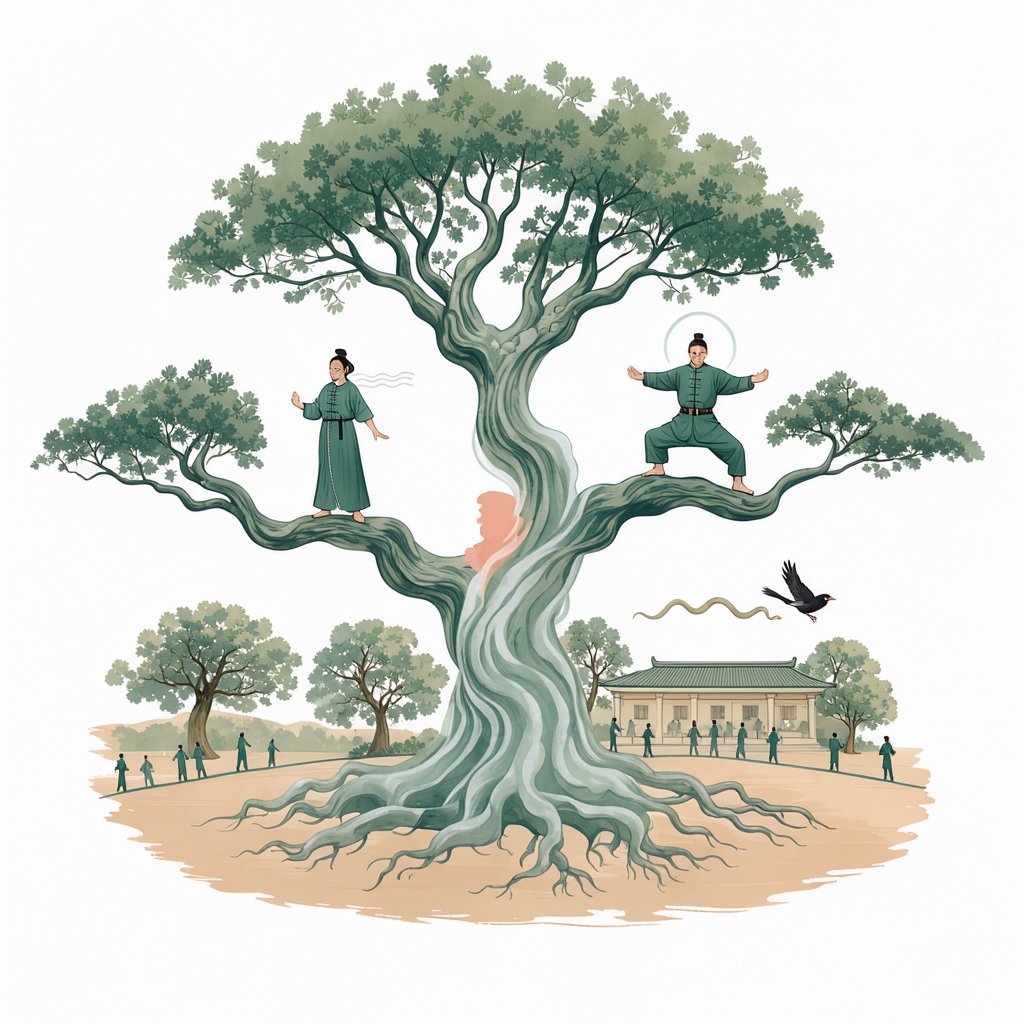
Start with the definition, because it dissolves the biggest misconception on day one. Taijiquan was originally created as a martial art, yet the classical texts classify it as a qigong practice: it balances yin and yang, trains both internal (nei dan) and external (wai dan) paths, and is said to build “guardian qi in the skin (yang) and the marrow qi in the bones (yin).”[1][2] Taiji qigong, in turn, is simply one style of martial qigong, and “in the last fifty years, taiji qigong has been practiced mainly for health purposes rather than martial ones.”[1] The two arts even share movements: push, crane spreads its wings, and wave hands in clouds all migrated from tai chi into qigong training sets.[1] You are not choosing between rivals; you are choosing between two branches of the same tree.
The family tree explains the difference in temperament. By the traditional account, which the source books themselves flag as legend in places, tai chi traces to Zhang San-Feng at Wudang, passes through Jiang Fa, and takes its modern shape with the Chen family at Chen Jia Gou in Henan province, where Chen Chang-Xing taught Yang Lu-Chan outside the clan.[1] Five family styles descend from that trunk: Yang, Sun, Wu (Hao), Wu, and Fu.[3][4] The Yang rewrite matters for everything that follows, because Yang Lu-Chan deliberately removed the hardest actions so that officials and older students could practice for health, a precedent this article returns to at the end.[3]
Today the qigong side of the family is practiced “in parks around the world as well as in community centres and village halls in the West,” split into medical, martial, spiritual, and religious streams, with “hundreds of different forms” in circulation.[10] That scale is exactly why a beginner needs an audit rather than a vibe: with hundreds of forms and at least five tai chi styles, the traditions themselves had to answer the fits-your-routine question long before anyone streamed a class. Their answers on time, sequencing, and correction are what the rest of this comparison uses.[10]
The 20-Minute Rule: What a Daily Qigong Session Really Costs
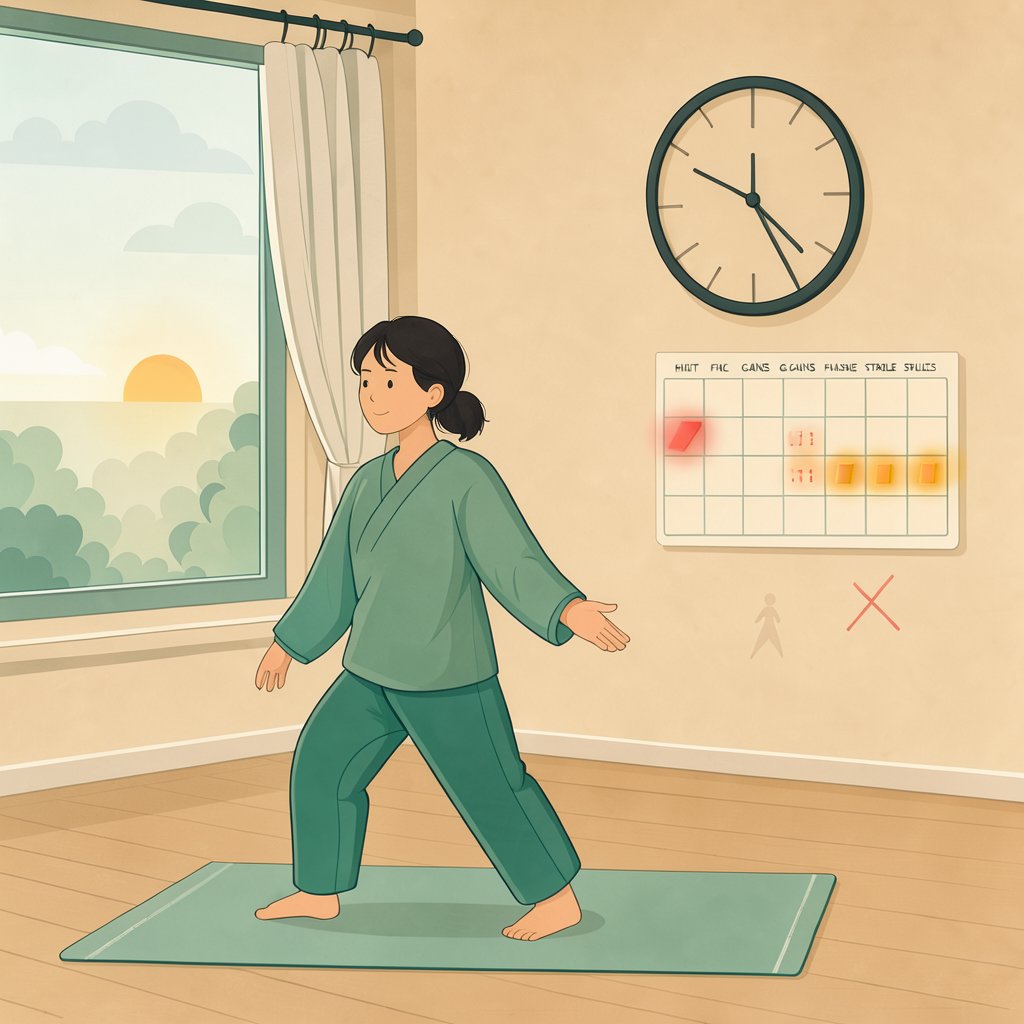
Ask the source books what a qigong program charges per day and they converge, independently, on the same figure. The 18-form taiji qigong complex “does not exceed 20 minutes” per session; the Da Mo Wai Dan set asks beginners for five forms at fifty repetitions each, again 15–20 minutes, with all twelve forms at twenty repetitions as an equal-time alternative; and the breathing-regulation track totals ten minutes in the morning plus ten in the evening.[11][6][12] Meridian qigong schedules run longer at 20 to 40 minutes, but even there the authors treat one 30-minute session after waking as the normal minimum.[13] The old benchmark of “an hour to an hour and a half daily, week after week, year after year” is dismissed by one manual’s own authors as “funny numbers from the traditional viewpoint.”[11]
The honest timeline is longer than the session. First wellbeing shifts arrive “after approximately one month” of daily practice; stable relief of old chronic complaints comes “not earlier than six months to a year”; and practicing occasionally, the same book warns, “is completely useless.”[11] Scheduling matters as much as duration: the best windows are 5–7 AM or early evening, with the body oriented north–south or toward the rising sun or moon, and “success depends above all on regularity.”[13] One documented preparation course for the Small Heavenly Circulation runs 20 minutes to an hour twice a day and only clears students for the deeper exercises “after 3-4 months.”[17] Twenty minutes is the entry ticket; daily is the non-negotiable.
The 37-Posture Path: What a Tai Chi Class Actually Asks of You
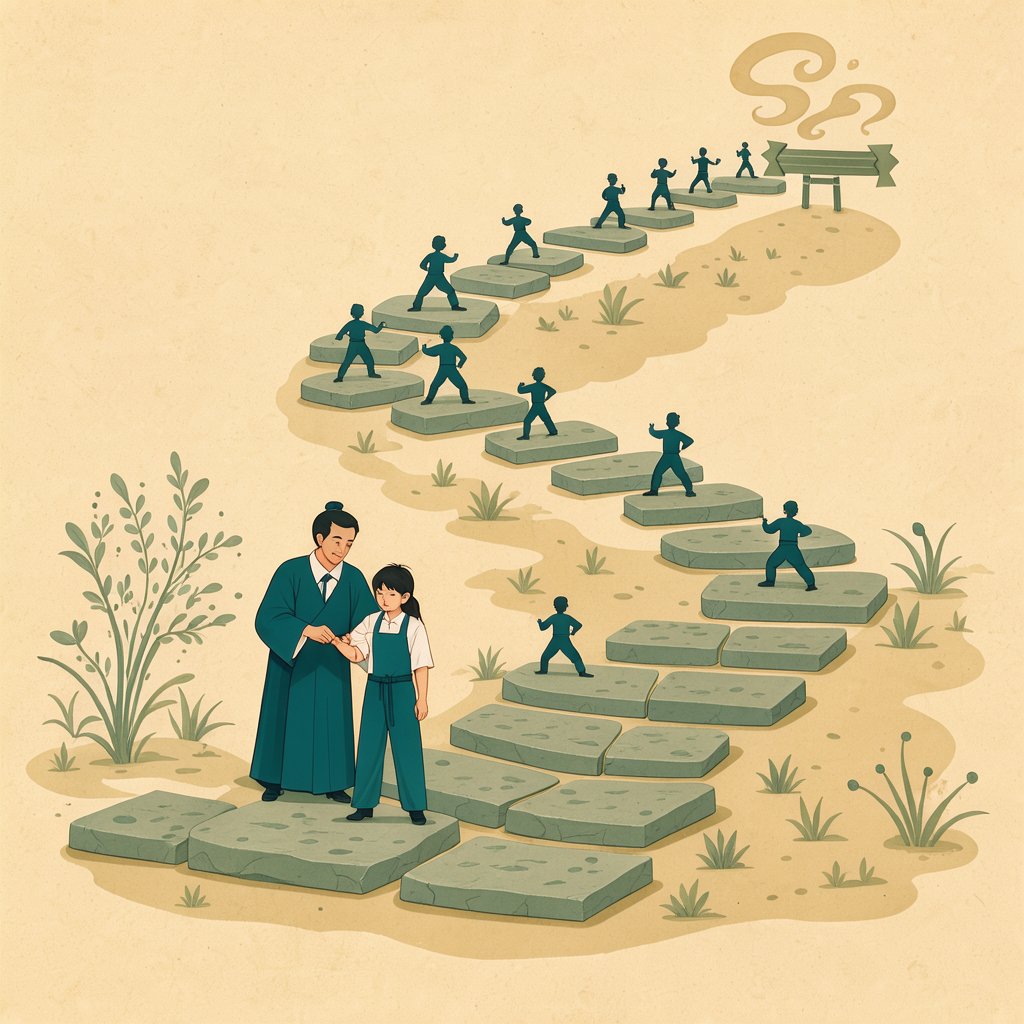
A tai chi class prices itself in a different currency: postures, foundations, and months of guided sequence. In the Wu style, “the main training of Taijiquan is the thirty-seven postures,” and before them comes Pan Jia, entwining the frame, because “the posture must be accurate, centered, upright, peaceful, and comfortable.”[5] The classical warning about sequence is the strongest argument for a teacher in the whole literature: skip ahead and you “waste the Gongfu,” because gaps “will build up many bad habits and it will take you a longer time … that will require correction over time.”[5] Slow movements are the pedagogical point, since they “allow you to think and understand” each transition.[5]
The timelines are equally concrete. The Small Circulation meditation sequence is described as achievable “in about three months” on a schedule of three 30-minute sittings a day; the complete Da Mo set takes about six months at one or two sessions per day; and the traditional student-teacher horizon is the longest of all, because “a master will spend three years to test a student.”[6][5] None of this is hidden fine print, it is the curriculum itself, and any class that cannot tell you where the foundation ends and the postures begin is not teaching from it.
Two honesty notes keep this section trustworthy. First, the form lengths verified in our sources are the 37 postures of the Wu style, the thirteen-posture old form, the simplified 24- and 48-posture forms, the 18-form taiji qigong, and the eight-piece brocade; the popular “108 moves” figure never appears in the retrieved texts and is not used here.[5][2][19] Second, the modern entry points are real and documented: the YMAA catalog lists Simplified Tai Chi Chuan: 24 & 48 Postures, Sunrise Tai Chi, Sunset Tai Chi, and Tai Chi Fit Over 50, published under Dr. Yang Jwing-Ming, who has trained in Chinese martial arts since 1961 and built more than 55 schools in 18 countries, 35-plus books, and 80-plus instructional videos.[2][19]
Qigong Program vs Tai Chi Class: The Side-by-Side Comparison
Here is the qigong program comparison in one view, with its limits stated plainly. Our library holds no data on prices, apps, video-library sizes, or completion rates for online programs versus live classes, so nothing below is a product claim; every line compares practice parameters that the classical sources actually document.[11][6] Read it as tradition-based guidance for choosing a format, then test it against your own week before you test it against a checkout page.
- Session length: qigong runs 15–20 minutes a day across four documented sets, while a tai chi class is a months-scale curriculum of guided sessions built around a foundation and the 37 postures.[11][6][5]
- Time to first results: roughly one month of daily qigong practice before first wellbeing shifts, versus about three months for the tai chi Small Circulation milestone on 3 x 30-minute meditation days.[11][6]
- Time to stable results: six months to a year for stable relief of chronic complaints in qigong, versus roughly six months to complete the Da Mo set at one or two sessions a day.[11][6]
- Beginner error risk: taiji qigong is the “automatic mode” of a camera, with error probability “reduced almost to zero,” while skipped-ahead tai chi “builds up many bad habits” that later require correction.[11][5]
- Instructor dependency: qigong is solo-maintainable once learned, and one documented 10-session course reached the qigong state by the fourth lesson with 15–20-minute maintenance sessions clearing accumulated stress; tai chi knowledge was passed orally under a three-year testing horizon.[14][5]
- Body positions: qigong works standing, sitting, or lying, and the sitting brocade is “good for people who are bedridden or cannot stand easily,” while tai chi form work is standing.[8]
One pattern hides in those six lines. Qigong front-loads its difficulty into discipline, meaning daily practice at a fixed hour, while tai chi distributes difficulty across months of correction, which is why the cheap-looking option stays cheap only if your week really holds the same twenty minutes every day.[13] The two profiles in the sections that follow turn each line of this comparison into a reader you can recognize.

Pick a Qigong Program If: The Automatic-Mode Case
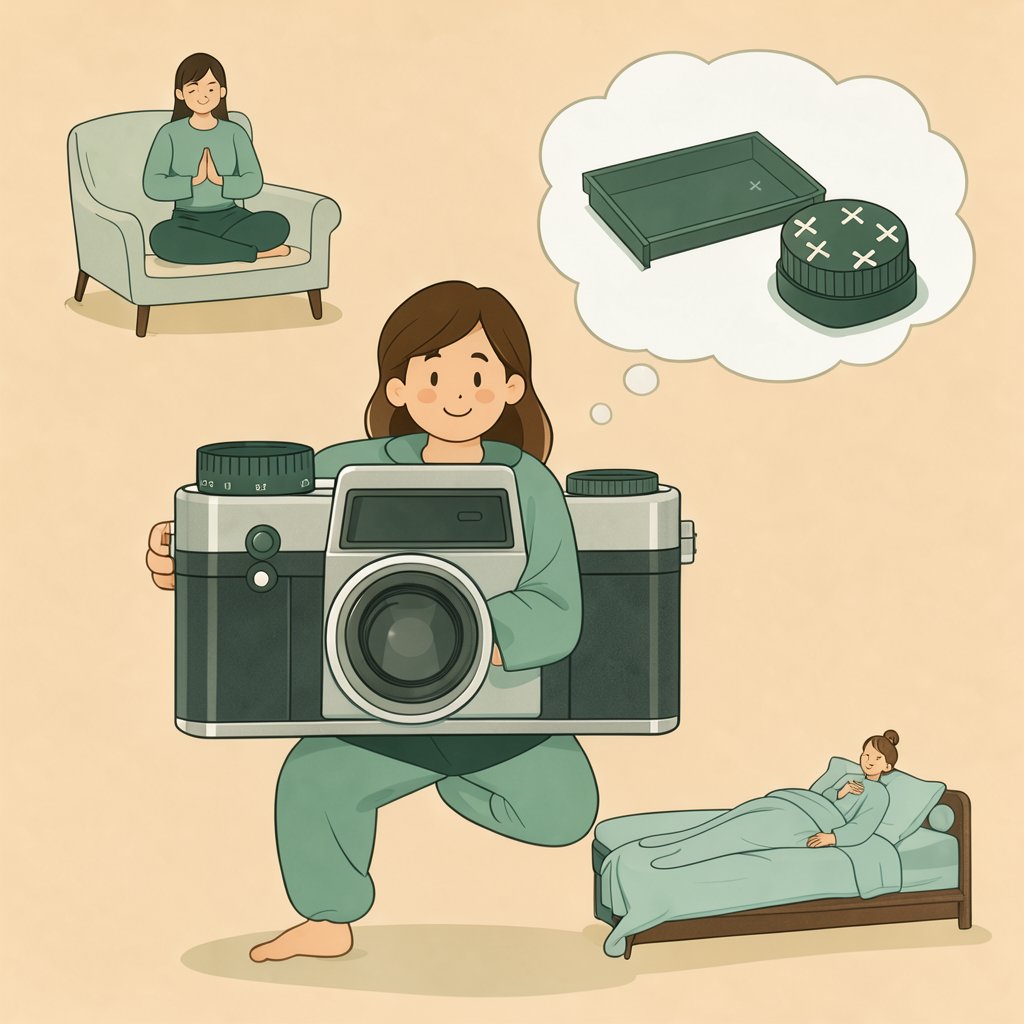
The source tradition has the friendliest possible metaphor for this path: taiji-qigong is the “automatic mode” of a camera, where “the probability of errors is reduced almost to zero, but creative possibilities are trimmed,” and the manual explicitly recommends it over plain qigong for novices.[11] That design choice is the entire case. If your days are unpredictable, your practice slot is small, or you simply want the smallest realistic on-ramp, the near-zero error rate is a feature rather than a compromise.
The books profile exactly who benefits. The time-poor get the documented 20-minute floor; older practitioners and anyone seriously ill are dosed at one or two 20–40-minute sessions a day rather than pushed harder; and the bedridden or those who cannot stand easily have a dedicated option, since the sitting Eight Pieces of Brocade is “a good way to wake up in the morning” and is practiced before noon.[13][8] Shorter repetition counts are explicitly allowed when time is limited, with one non-negotiable attached: “Do not, however, omit any of the exercises.”[8]
Two quality notes keep the easy path honest. A beginner following a bad manual “suffers for two or three months doing the wrong thing” before giving up, so program quality matters even here and structure beats random free content.[11] The movements themselves are invitingly concrete, with names like Lifting Water, Parting the Clouds, and Push the Wave that you can picture before your first session, which is why our Baduanjin, Eight Pieces of Brocade manual makes a natural companion.[11] A structured course is not wasted on this path either: in one documented 10-session teacher-led course, “the ability to enter the qigong state appeared from the fourth lesson,” and even 15–20-minute maintenance sessions proved “enough to get rid of accumulated stress.”[14]
Pick a Tai Chi Class If: The Correction Case
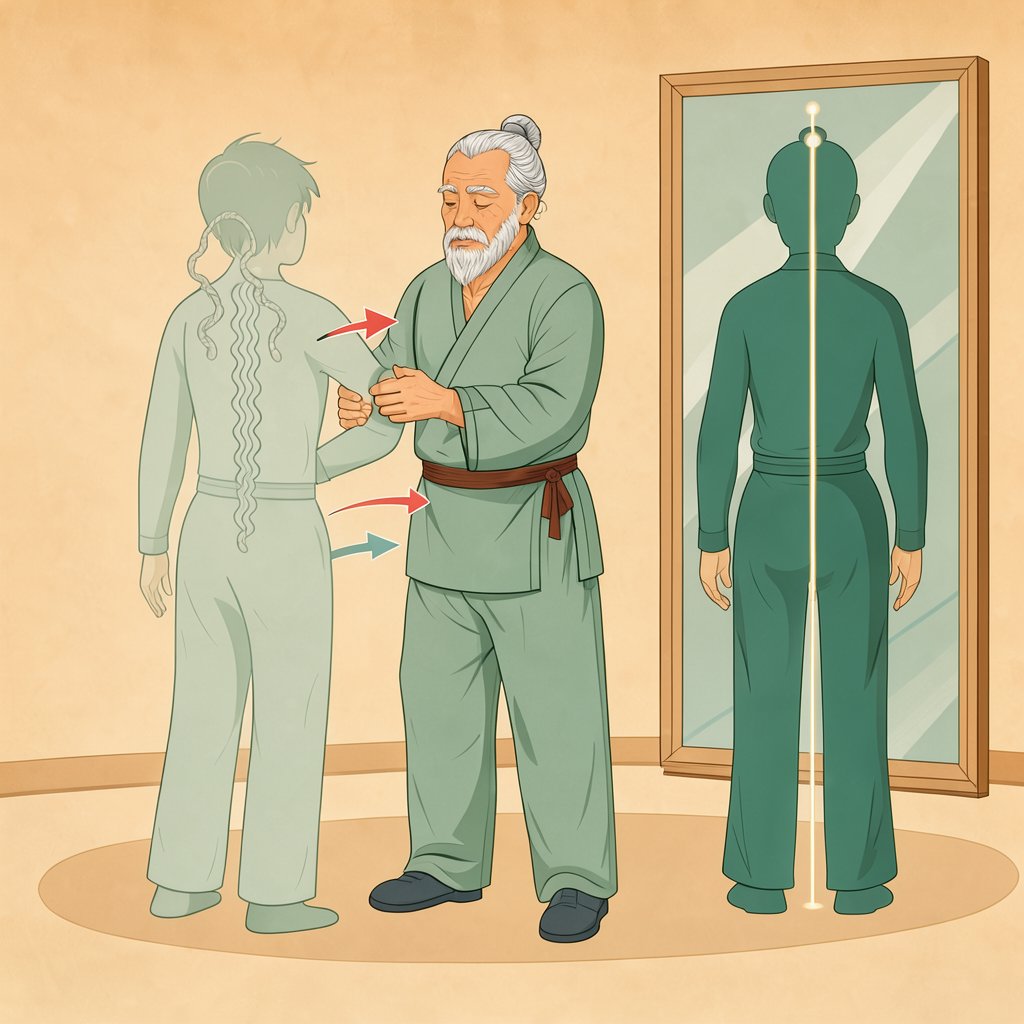
The class path exists for one measurable reason: your own eyes cannot watch your own back. The Wu-style curriculum warns that skipping ahead “will build up many bad habits and it will take you a longer time … that will require correction over time,” and bad habits here are not a character flaw but a documented cost of unsupervised sequence-jumping.[5] The posture standard explains why: “accurate, centered, upright, peaceful, and comfortable” is a checklist no mirror fully covers, and slow movements “allow you to think and understand” only if someone confirms that your thinking matches the form.[5]
The teaching culture behind that standard is older than any studio. Knowledge was passed orally to the loyal and consistent; the classics list eight kinds of students who “cannot be taught,” from the proud to the changeable; and “a master will spend three years to test a student” before deeper transmission, because “what you want to learn is not what you are capable of learning.”[3][5] Strip away the mysticism and a modern truth remains: correction is the product a class sells, and the tradition priced it in years.
There is a technique argument as well. Every movement must keep its purpose, elbows down for a push for example, because a purposeless movement “gives you no reason to lead the qi in any particular way,” and softness without tension is what “makes it easier for the practitioner to reach a calm, peaceful, meditative state.”[1] One honest limit bears repeating: our sources document instructor-led correction as the tradition defines it, with no data on modern class formats, schedules, or prices, so verify any specific studio against these classical criteria rather than the reverse.[1]
Your First Week on Either Path: How to Start Correctly
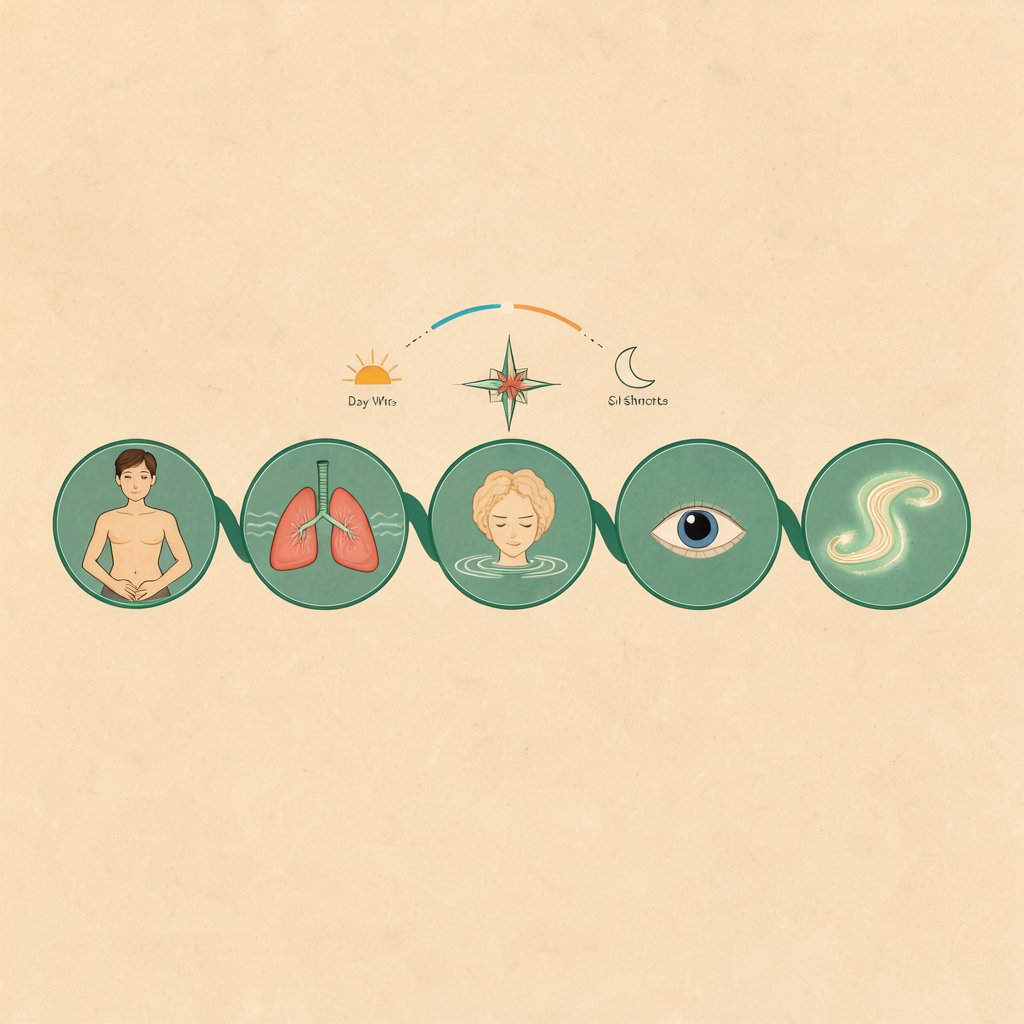
Both paths open with the same syllabus, which is convenient for a seven-day test. The five regulations, wu tiao, govern the body (tiao shen), the breath (tiao xi), the emotional mind (tiao xin), the yi, and the qi, and they are the shared curriculum of tai chi and qigong alike.[2][7][18] Week one is simply these five, taken in order at a fixed hour, and the four steps below run the sequence.
Step 1: fix the slot. Choose 5–7 AM or early evening as your window, because the meridian qigong schedules name these the best practice times. Orient the body north–south, parallel to Earth’s magnetic lines as the tradition describes, or toward the rising sun or moon. A slot you can repeat daily matters more than the perfect hour.[13]
Step 2: start the breathing track immediately. The regulation-of-breath course is prescribed “daily, ten minutes in the morning and ten in the evening,” before any complicated movement work. It is the one instruction both paths share from day one. Set two reminders and treat them as appointments.[12]
Step 3: sequence the breath correctly. First make breathing “calm, smooth, and peaceful,” and only then work toward “deep, slender, long, and soft.” Do not coordinate breath with movement until the movement set is mastered, with extending the limbs going with the exhale and withdrawing with the inhale. Rushing this order is the classic beginner detour.[8]
Step 4: enter through your path’s designed door. Qigong entrants begin the 18-form or the sitting brocade as a morning wake-up practice, before noon where the brocade is concerned. Tai chi entrants accept the Pan Jia foundation first and follow the learning order exactly, because that order is the curriculum’s insurance against bad habits. Whichever door you take, close the week with the rule that decides everything: daily-and-small beats occasional-and-long, because occasional practice is “completely useless.”[11][8][5]
Safety Rules Both Paths Share: Read Before You Practice
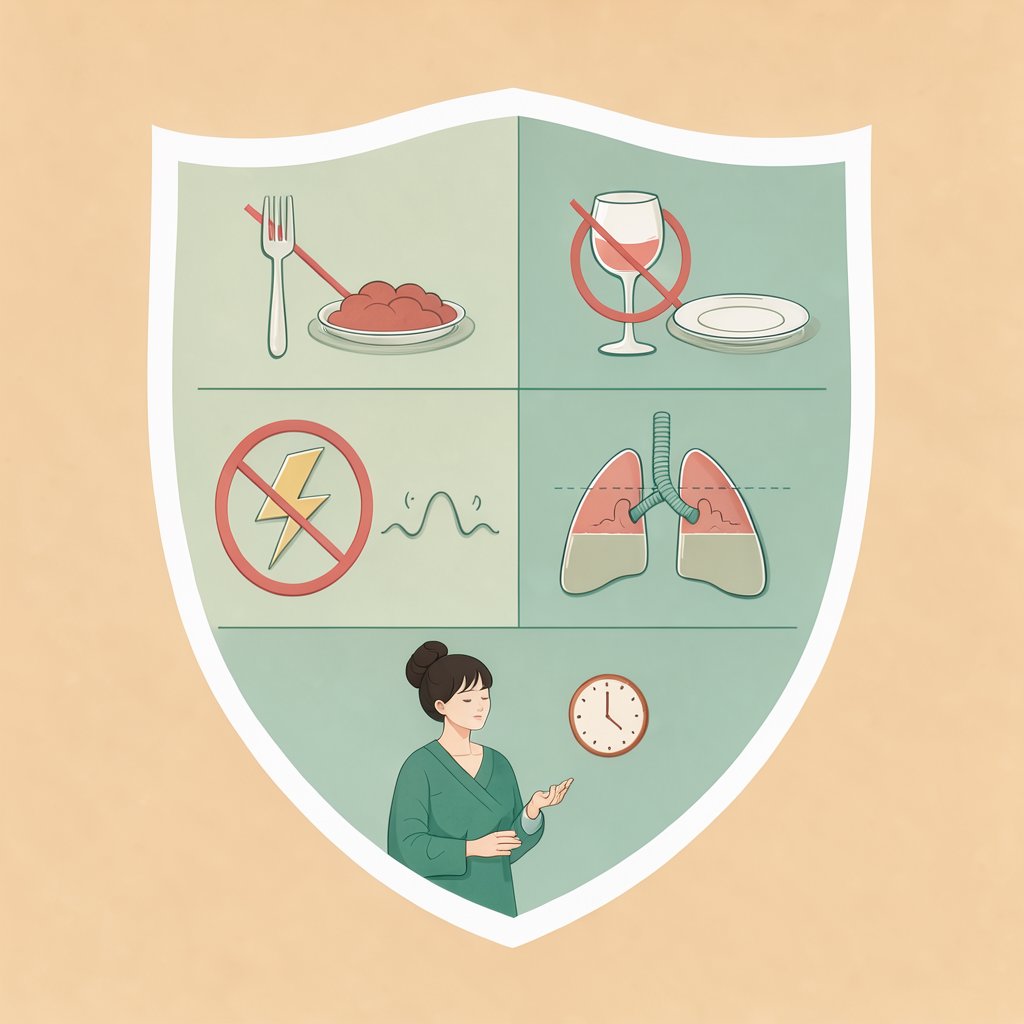
The stop-sign list is shared, and the classical sources wrote it down long before disclaimer pages existed. Do not practice when very hungry or too full, waiting at least 30 minutes and preferably an hour after eating; not within a day before or after sex; not when so tired that attention wanders; never after alcohol; and not when very worried.[6] The agitation rule has teeth: if you are emotionally agitated, do not attempt to circulate qi at all, and practice only deep relaxation breathing.[6]
Breath has a ceiling: inhale and exhale to only 70–80% of capacity, because full lungs tense the muscles and hinder oxygen.[6][8] Meditation hygiene completes the frame: no smoking, no drinking to excess, wash first but wait at least 15 minutes, loose clothing at the waist, and the tongue lightly touching the roof of the mouth, since too far forward invites sleepiness while too far back creates tension that obstructs qi flow.[6] None of these rules cares which art you chose, because both arts inherited them.
Instruction quality is itself a safety issue, and the tradition documents practice errors by name. Classical deviation syndromes, including “wandering fire,” obsessive imagery states, unstoppable spontaneous movements, and “inner qi does not stop,” have their own chapters in the practice literature, which is a strong argument for a qualified teacher or a well-built program over random videos.[15] One condition-specific cue: with arteriosclerosis, do not bend the head far forward in the sixth brocade piece.[16]
Scope, honestly stated. One source records a traditional list of “sixty-seven diseases” where qigong therapy was considered especially effective, in the same breath as the disclaimer that “Qigong is not a panacea,” and that list is a traditional record rather than a treatment promise; the full contraindication list was not retrievable for verification, so this article does not reproduce it.[14] The oldest mechanism texts draw the same line from the other side: qigong addresses imbalance at the qi-stagnation level, while once organs fail, specific medical treatment is required.[9] For anything diagnosed or acute, a clinician comes first and the practice comes after.
Simplified Is Not Watered Down: The Yang Style Precedent
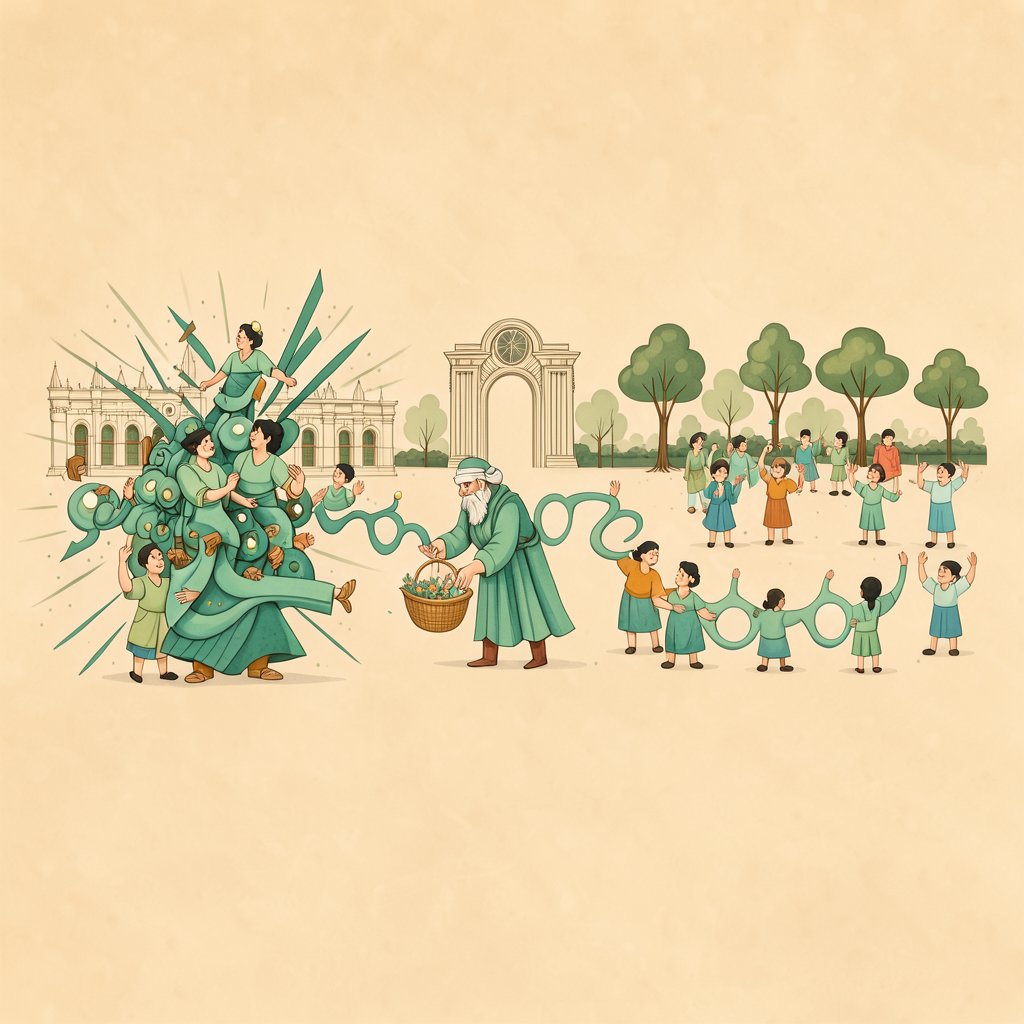
If a voice whispers that a simplified program is cheating, history answers it plainly. Yang Lu-Chan (1799–1872), a disciple of Chen Chang-Xing in Chen village, “revised Chen Style Taijiquan Old Posture and got rid of harder actions such as Jin’s emitting (Fa Jin), jumping, and the relatively more difficult movements,” precisely so that officials and older people could adopt the art for health.[3] Yang Cheng-Fu then revealed taijiquan to the general Chinese public in 1926 at the Nanking Central Guoshu Institute.[2] The most widely practiced tai chi style on earth began as a simplification for busy people, so today’s 24- and 48-posture short forms and 20-minute qigong programs continue a documented pattern rather than a modern sellout.[2]
The long view makes the pattern look even sturdier. The literature divides qigong history into four periods: pre-Han roots with the Yi Jing around 1122 BC, a religious-monastic era after Buddhism’s arrival around 58 AD, the martial era from the Liang dynasty (502–557 AD) to the fall of Qing in 1911, and the modern era of global mixing.[7] Every era re-packaged the same core practices for the students it actually had. Simplification, done honestly, is how these arts survived.
Which leaves the kicker, from Dr. Yang Jwing-Ming himself: “Ultimately, such comparisons of techniques are meaningless. It is the time, consistency, and quality of your practice that matters.”[2] Choose the branch your calendar can sustain, then honor the three variables that actually decide the outcome. The practical questions beginners type next are answered below.
Frequently Asked Questions
Which is better for a beginner with under 20 minutes a day?
On the documented numbers, qigong. The 18-form session stays at or under 20 minutes with near-zero “automatic mode” error risk, while a tai chi class is a months-scale curriculum that starts with a foundation and the 37 postures before anything else.[11][5] Twenty minutes daily fits the qigong path exactly and is only a down payment on the tai chi path. For a seated first week, open the Eight Pieces of Brocade manual.
How long until results show from qigong or tai chi?
The documented qigong timeline runs from first wellbeing shifts after about one month of daily practice to stable relief of chronic complaints at six months to a year, and occasional practice is called “completely useless.”[11] The tai chi milestones are comparable, with Small Circulation in about three months on 3 x 30-minute days and a full Da Mo set in roughly six months.[6] The stress-angle view is in our qigong vs meditation comparison.
Can I learn tai chi from an app or video alone?
Honest answer: our source library contains no product-format data, no app reviews, and no live-versus-video outcomes, so no evidence either way can be cited from it. What the books do say is that skipping ahead “will build up many bad habits … that will require correction over time,” and that knowledge was traditionally passed orally.[5][3] For judging courses by classical criteria, see the online tai chi course review.
I am older or cannot stand for long; is either path closed to me?
No. The sitting Eight Pieces of Brocade is “good for people who are bedridden or cannot stand easily,” older and seriously ill practitioners are dosed at one or two 20–40-minute sessions a day, and modern catalogs carry entries such as Tai Chi Fit Over 50.[8][13][19] The tradition was adapting for older students centuries before it was fashionable. The beginner brocade guide shows the seated route in.
Are qigong and tai chi safe to practice?
The shared rulebook is short and specific: not hungry or too full with a 30–60 minute wait, no alcohol, no practice while exhausted or agitated, breathing only then, and breath capped at 70–80% of capacity.[6] The tradition also documents deviation syndromes by name, and one source adds the plain disclaimer that “Qigong is not a panacea.”[15][14] The full stop-sign list sits in our medical disclaimer and safety notes.
Do I have to choose between qigong and tai chi?
No. The classical texts describe taijiquan as itself a qigong practice, and movements have always crossed between the two arts, so many students keep a short qigong set as the daily minimum and take tai chi classes when the calendar allows.[1] The verdict from the sources fits both paths: “It is the time, consistency, and quality of your practice that matters.”[2] A neutral daily floor is the coherent breathing practice.
Run the qigong vs tai chi decision through the classical numbers tonight and it collapses into two questions. Count your genuinely free minutes first: if twenty a day is what reality offers, the qigong path with its automatic mode and sitting options was designed for exactly that budget, and it bills its results in months rather than miracles.[11] Then judge your need for an outside eye, because if posture quality and the complete art are the goal, the class path’s correction culture is not overhead but the product itself.[5] Either way, the sentence to pin above your practice spot is the tradition’s own: time, consistency, and quality are what matter.[2]
Sources
- [1] Yang Jwing-Ming — Tai Chi Qigong: The Internal Foundation of Tai Chi Chuan (2013, YMAA)
- [2] Yang Jwing-Ming — Classical Yang Style: The Complete Long Form and Qigong (2010, YMAA)
- [3] Yang Jwing-Ming — Tai Chi Secrets of the Yang Style (2001, YMAA)
- [4] Yang Jwing-Ming — Tai Chi Secrets of the Wu & Li Styles (2020, YMAA)
- [5] Yang Jwing-Ming — Tai Chi Secrets of the Wu Style (2002, YMAA)
- [6] Yang Jwing-Ming — Qigong for Health and Martial Arts: Exercises and Meditation (1998)
- [7] Yang Jwing-Ming — The Root of Chinese Qigong: Secrets of Health, Longevity, Enlightenment (1997)
- [8] Yang Jwing-Ming — Eight Simple Qigong Exercises for Health: The Eight Pieces of Brocade (1997)
- [9] Yang Jwing-Ming — Qigong Meditation: Embryonic Breathing (2003)
- [10] Damo Mitchell — A Comprehensive Guide to Daoist Nei Gong (2018)
- [11] Qigong for Beginners: 18 Forms of Taiji Qigong (Russian edition) — the source database carries no author names for this edition, so it is cited by title and quoted from its retrieved practice chapters throughout this article
- [12] Qigong for Energy Accumulation: Small Circulation (Russian edition, 2009) — authors not stated in the source database
- [13] Chinese Qigong [Kitayskiy tsigun] (Russian edition, 2003) — a Russian-language manual whose author names are absent from the source database; its scheduling and dosing details are cited from the retrieved practice chapters
- [14] Chinese Spiritual Qigong Lianhua (Russian edition, 1994) — no authors stated in the database; the 10-session course report and the sixty-seven-condition traditional list are quoted from its retrieved pages
- [15] Qigong: History, Theory, Practice (Russian edition, 2004) — authors not stated in the database; the named deviation-syndrome chapters are cited from the book’s table of contents as retrieved
- [16] Military Eight Pieces of Brocade (Russian edition, 2013) — authors not stated in the database; the arteriosclerosis caution for the sixth piece is quoted from its retrieved practice notes
- [17] Qigong Gymnastics [Gimnastika tsigun] (Russian edition, 1992) — authors not stated in the source database
- [18] Foundations of Health Qigong (Russian edition, 2013) — authors not stated in the source database
- [19] Pain-Free Joints: 46 Simple Qigong Movements for Arthritis (2017, YMAA catalog) — author not stated in the source database
Where to go next: if the twenty-minute case won you over, start with the Eight Pieces of Brocade manual or the beginner brocade guide, and add standing work from the zhan zhuang standing manual when your legs ask for more. If you are weighing course formats, our online tai chi course review applies these same classical criteria to the modern market, and the qigong vs meditation comparison covers the still-practice alternative. Readers adding gentle mobility alongside either path have also reviewed Unlock Your Hip Flexors, with the current offer at the hip-flexors program page; we may earn a commission if you buy through links on this page, and the programs we link are not intended to cure, treat, or prevent any disease.
How we researched this: built from a local library of 1,137 wellness books queried through an offline retrieval system, with the open internet unused at any point. Every factual statement above carries a numbered citation to the book it came from, and Russian-language editions are cited by title because the source database holds no author names for them. Where a retrieved passage was incomplete, such as the contraindication list in one 1994 manual, the gap is stated in the text rather than filled.
