
Educational content only — not medical advice. See our full Medical Disclaimer and Affiliate Disclosure below.
Key Takeaways
- In the sleep programs vs sleep hygiene debate: a hygiene guide is a checklist of behaviors and conditions, a program is a scheduled protocol with fixed rules — the real difference is structure and follow-through, not vocabulary.[1][2]
- The source literature puts discipline and fixed timing first: going to bed and getting up at the same hours anchors the body’s internal clocks.[1][3]
- What a paid program mostly buys is adherence — the schedule does the reminding that a checklist leaves to you.[6][1]
- Where to invest depends on one honest question: do you already keep the basics and still drift? Run the free two-week trial below before paying for anything.
The sleep programs vs sleep hygiene debate starts with a single line: “Sleep is a natural physiological phenomenon, but it is also correct behavior,” a sleep psychologist tells the classic home-health compendium Home Doctor: Advice from American Physicians (2007).[1] If sleep is behavior, then the question is not whether a routine matters — it is how much scaffolding you should pay for to keep that routine in place.[1][2] Below we compare two routes — free sleep hygiene guides (checklists) and structured sleep programs (scheduled protocols) — using the sleep and rest-regime literature in our own library as the baseline. This is a buyer’s guide and educational content — it is not medical advice, and it is not intended to cure, treat, or prevent any disease.
Traditional view vs modern physiology
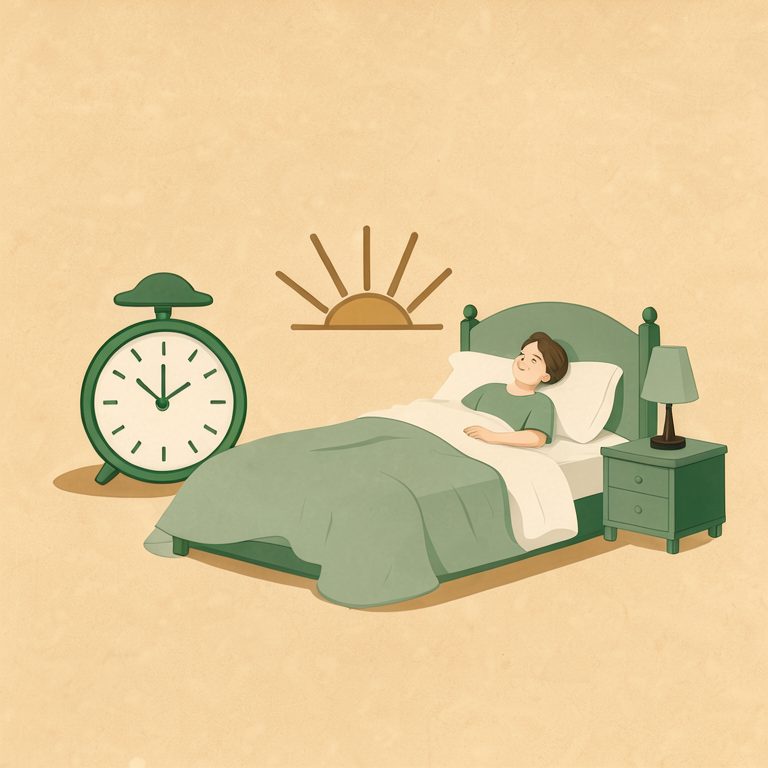
Traditional wellness literature is blunt about regimes. Budilov’s health manual (2009) presents the natural regime — regular sleep and waking — as one of the main laws of health, and argues that sleep at different hours of the day does not have equal restorative value; his book builds a whole weekly time-blocked day-plan around that idea.[3] A modern home-doctor reference (2007) says the same thing in physiological terms: going to bed at the same time every day helps you establish your own circadian system — the “internal clocks” that regulate most body functions — and it is equally important to get up at the same time every morning.[1] Rest-technology literature (Reif, 2014) adds one detail somnologists emphasize: morning rising sets the biorhythm for the entire day, and therefore for the full sleep of the following night.[4] The vocabulary differs; the direction is the same.
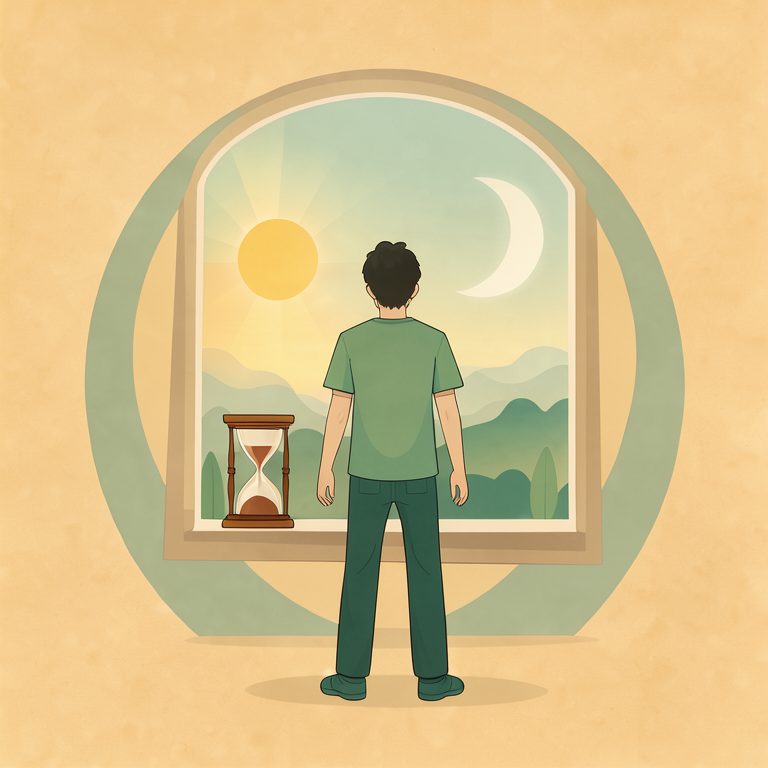
The adherence gap, meanwhile, is old news. As Konovalov notes in A Completely Different Medicine, the necessity of a sleep, work, and rest regime is so obvious that “many people do not consider it important and observe almost nothing from this list.”[6] That sentence is the quiet reason sleep programs sell: not new information — enforced execution.
What a sleep hygiene guide actually covers
A hygiene guide is a checklist. Read across the source literature, the checklist reliably contains four baseline habits — each one free, each one harder to keep than it looks:[1][2][3]
- Anchor your timing. Same bedtime window, same wake time, seven days a week. This is the habit the circadian literature treats as foundational.[1][3]
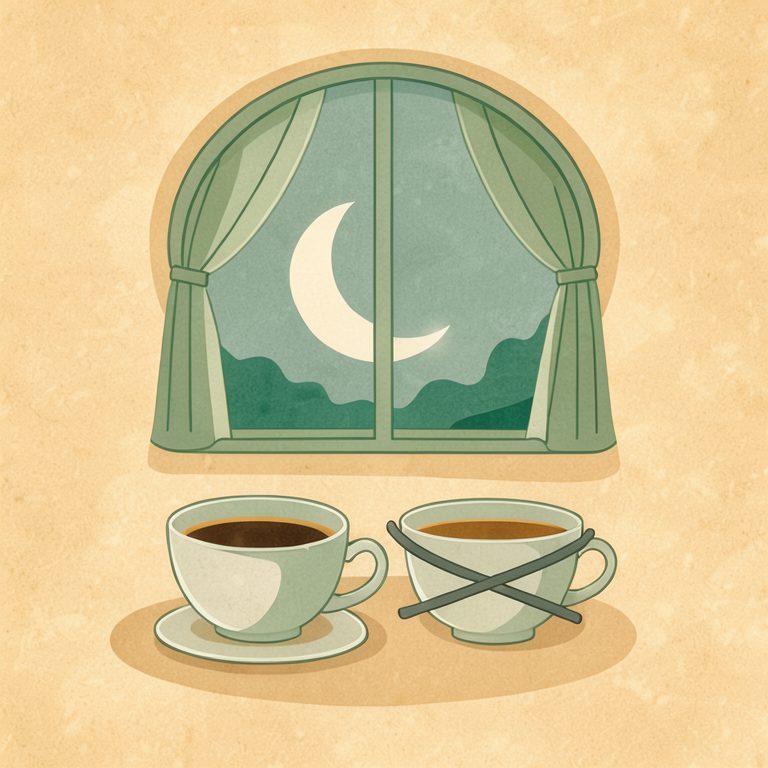
- Manage evening stimulants. Stimulants disrupt sleep two ways: they oppose the body’s natural sleep hormones when you need sleep, and their energy ups and downs disturb the brain processes behind falling asleep.[5] The same book maps the vicious cycles of insomnia — fatigue and stimulants, fatigue and anxiety, fatigue and stress feeding each other.[5]
- Pre-sleep relaxation, out of bed. Slow diaphragmatic breathing, muscle relaxation, or yoga are the tools the home-doctor reference highlights;[1] it warns that the harder you try to fall asleep, the worse it goes — the key to successful falling asleep is not trying too hard.[1]
- Keep daytime sleep out. Several sources treat daytime naps as counterproductive for night sleep regulation.[2][7]
Notice what the checklist does not include: a scheduler, a rules engine, or any feedback loop. Stress and anxiety are among the most common triggers that keep the brain too activated to settle,[8] and a checklist cannot restructure your evening for you. That is exactly where a program steps in.
What a structured sleep program adds
Structured programs borrow their backbone from behavioral sleep literature. The clearest example in our library is the sleep-restriction method (Berezhkova, How to Get Rid of Insomnia): prolonged time in bed leads to fragmented, anxious sleep with frequent awakenings, while less time in bed before sleep deepens it.[2] Its rules are arithmetic, not vibes — if you need about 7 hours of actual sleep, your time in bed is capped at about 7 hours 15 minutes; you get up at the same time every morning and subtract that window to find your bedtime; you never nap; and you keep pre-sleep time in bed to about 15 minutes, so the rest of the evening happens out of bed.[2]
Programs wrap such rules with two more layers the checklist lacks. First, cognitive tools: when insomnia has psychological roots, psychotherapy or autogenic training is used, and the relaxation techniques of autogenic training are described as very effective because they carry the body from rest into sleep.[2] Cognitive-behavioral approaches work the same way — breaking problems into smaller parts and interrupting negative cycles of thoughts and feelings, the method Roked describes for chronic fatigue syndrome.[7] Second, follow-through: a scheduled sequence with fixed wake times and checkable rules does the reminding. The home-doctor reference puts it as a comparison with dieting: you must keep working at it all the time — and results come to those who keep going.[1] That is what a follow-along format is for; it is the same logic we credit in movement programs such as Unlock Your Hip Flexors, where the sequence itself lowers the friction of starting.
Sleep programs vs sleep hygiene, side by side — and how to choose
| Dimension | Sleep hygiene guide | Structured sleep program |
|---|---|---|
| Format | A checklist of behaviors and pre-sleep rules | A scheduled protocol: fixed times, explicit rules, progression |
| What you actually do | Apply the checklist to your current nights | Run a schedule — wake time fixed, time-in-bed window computed[2] |
| Adherence support | Self-directed; the advice is widely known and widely skipped[6] | Externalized: the schedule and arithmetic do the reminding[1][2] |
| Feedback loop | Subjective (“did I sleep better?”) | Checkable rules (window vs. actual sleep; wake time held)[2] |
| Safety oversight | Rarely needed; self-run | Behavioral protocols are self-run; medication decisions belong to a physician[2] |
| Best for | Erratic schedules, occasional rough nights, zero budget | Basics already kept but still drifting; readers who want rules to follow |
| Where it falls short | Rarely fixes an erratic schedule by itself | Demands two-plus weeks of execution; not a treatment for insomnia |
Honest selection criteria before you spend anything:
- Start with the free layer. Discipline is the key to success whichever route you pick.[1] A paid program does not replace execution — if the free two-week trial below is not doable, a course will not be either.
- Pay for structure only when drift persists. If you keep the four baseline habits and your nights still wander, the scheduling and feedback layer is what a program adds.[2]
- Treat the body, too, if it interrupts your nights. For readers whose sleep is broken by daytime stiffness or joint discomfort, mobility work and joint-comfort options are a separate lever we have reviewed in depth: Joint Genesis (a daily joint-comfort formula) and Unlock Your Hip Flexors (a follow-along mobility routine). Ready-to-buy readers can jump to the current offers: Joint Genesis offer or hip-flexors program offer. We may earn a commission if you buy through links on this page; these products are not intended to cure, treat, or prevent any disease, and they are not sleep treatments.
- See a clinician first when red flags stack up. Insomnia can have stress and anxiety triggers, but also medical, pain, hormonal, and medication causes.[8] Sleeping pills are explicitly not a self-help layer: standard rules for doses and duration do not exist — the drug must be chosen individually by your physician, at the smallest effective dose and shortest course.[2]
A two-week structure trial, step by step
Run this free trial before deciding where to invest. It compresses the behavioral rules above into a two-week experiment — educational in nature, and not intended to cure, treat, or prevent any disease.
Safety notes and disclaimer
This article is educational content and not medical advice. The practices above are traditional and self-help behaviors — they are not intended to cure, treat, or prevent any disease, and they are not a treatment for insomnia or any sleep disorder. Do not start, stop, or change sleep medication on your own; as the source literature insists, sleeping-pill choice, dose, and duration are individual decisions for your treating physician.[2] If sleep problems persist for several weeks, involve pain, low mood, or daytime exhaustion, or coincide with medication changes — see a healthcare professional.

Frequently asked questions
What is the difference between a sleep program and a sleep hygiene guide?
A sleep hygiene guide is a checklist of behaviors and pre-sleep conditions; a sleep program is a scheduled protocol with fixed wake times, a computed time-in-bed window, and checkable rules.[1][2] The information overlaps — what a program adds is structure and follow-through, not new facts.[6][1]

Is a paid sleep program a treatment for insomnia?
No. The behavioral rules in this guide are self-help and educational — they are not a treatment for insomnia or any sleep disorder, and they are not intended to cure, treat, or prevent any disease. Medication decisions, including sleeping pills, their dose, and their duration, belong to your treating physician.[2]
How long should I run the free two-week structure trial before deciding?
Run the full two weeks: fix one wake time, let bedtime follow from the time-in-bed arithmetic, skip daytime naps, and keep pre-sleep time in bed to about 15 minutes.[2][4] Then compare your window arithmetic with your actual sleep — if the drift persists even with the basics kept, the scheduling layer is what a structured program adds.[2]
Sources
- [1] Home Doctor: Advice from American Physicians (Domashny doktor. Sovety amerikanskikh vrachey, 2007)
- [2] Lyudmila Berezhkova — How to Get Rid of Insomnia (Kak izbavitsya ot bessonnitsy)
- [3] S. A. Budilov — New Body, New Organs, New Cells (Novoe telo, novye organy, novye kletki, 2009)
- [4] I. Ye. Reif — Technology of Rest (Tekhnologiya otdykha, 2014)
- [5] Allen Carr and John Dicey — The Easy Way to Better Sleep (Legkiy sposob uluchshit son, 2024)
- [6] V. Konovalov — A Completely Different Medicine (Sovsem drugaya meditsina)
- [7] Soher Roked — The Tired Person (Chelovek ustavshiy, 2015)
- [8] L. Lyubavich — 260 Alcohol Tincture Recipes: A History of Healing Through the Ages (260 retseptov spirtovykh nastoek: istoriya istseleniya cherez veka, 2024)
How we researched this
This article is based entirely on our local library of 1,137 books, queried through an offline retrieval system — the open internet was not used at any point. Every factual statement above was checked against the source excerpts and carries a numbered citation to the book it was taken from.
