

Educational content only — not medical advice. See our full Medical Disclaimer and Affiliate Disclosure below.
Key Takeaways
- Stiff mornings have two explanations in the source literature: “resting” proprioceptors that stop getting new input overnight, and joints and spine that “stagnate” during sleep.[1][3]
- Traditional mobility routines (morning calisthenics, tai chi, u-shu) are daily, repetition-based and equipment-free;[1][10][11] modern programs add heart-rate dosing, staged safety screening and logged progression.[2][6][9]
- Use the comparison table and the 5-step choice protocol below to decide honestly — a paid program is optional support, never a replacement for daily movement.
- Safety first: screen the red flags before starting anything new.[6] This article is educational and is not medical advice.
Traditional mobility routines vs modern programs — that is the real decision if your mornings start with a body that feels like it needs an oil can. Traditional mobility routines are daily morning drills, tai chi forms and u-shu-style sets preserved in classic wellness literature;[1][10][11] modern programs are structured, dosed exercise-therapy and mobility courses with intensity targets and staged screening.[2][6][8] This comparison is written for readers who want honest selection criteria rather than a sales pitch: what each approach actually contains, where the traditional and modern physiology explanations converge, and when a paid program earns its price.

Why mornings feel stiff: two explanations that agree on the fix
The traditional account starts with the nervous system. Pavel Tsatsouline describes the familiar “Tin Man” feeling in Super Joints: you get “rusty” whenever your proprioceptors — the sensors that report body position and speed of movement — do not get any new input for a while.[1] When nothing happens, the nervous system is not sure what to expect and tightens up your muscles “just in case.”[1] Movement wakes up the proprioceptors, and the same chapter notes that mobility drills are ideally performed every morning to help get rid of stiffness.[1]
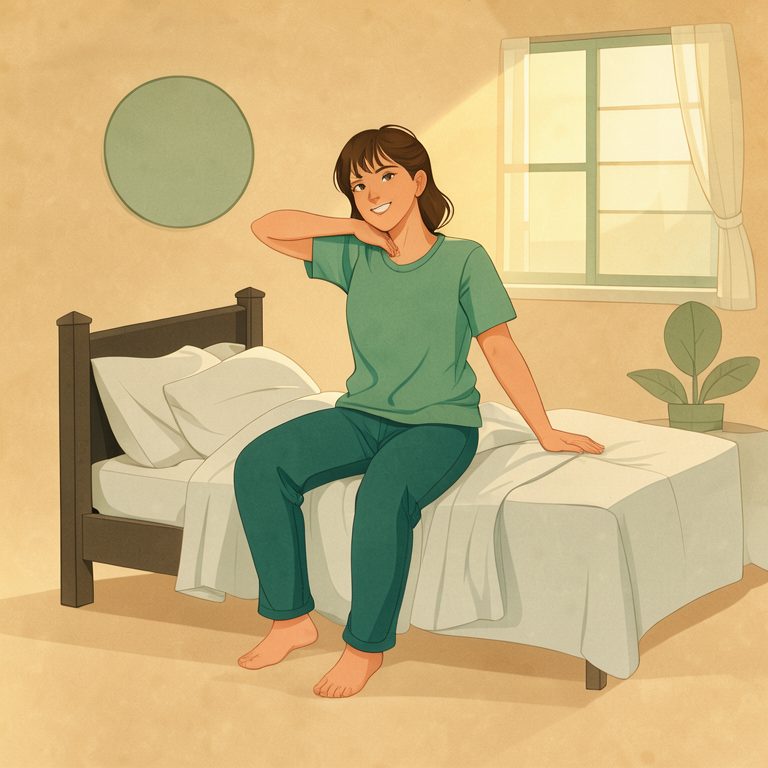
The modern kinesitherapy account reaches the same place from the tissues. In 1000 Answers on How to Restore Health, S. M. Bubnovsky advises warming up the joints of the lower limbs before loading work such as squats — even a short in-bed “gymnastics for the lazy” set — because the joints and spine have “stagnated overnight,” and the warm-up serves both muscles and vessels.[3] N. A. Belaya’s classical exercise-therapy textbook adds the physiology frame: muscle activity raises central-nervous-system tone through motor-visceral reflexes, and the method itself rests on a process of dosed training that develops the body’s adaptive capacity.[8]
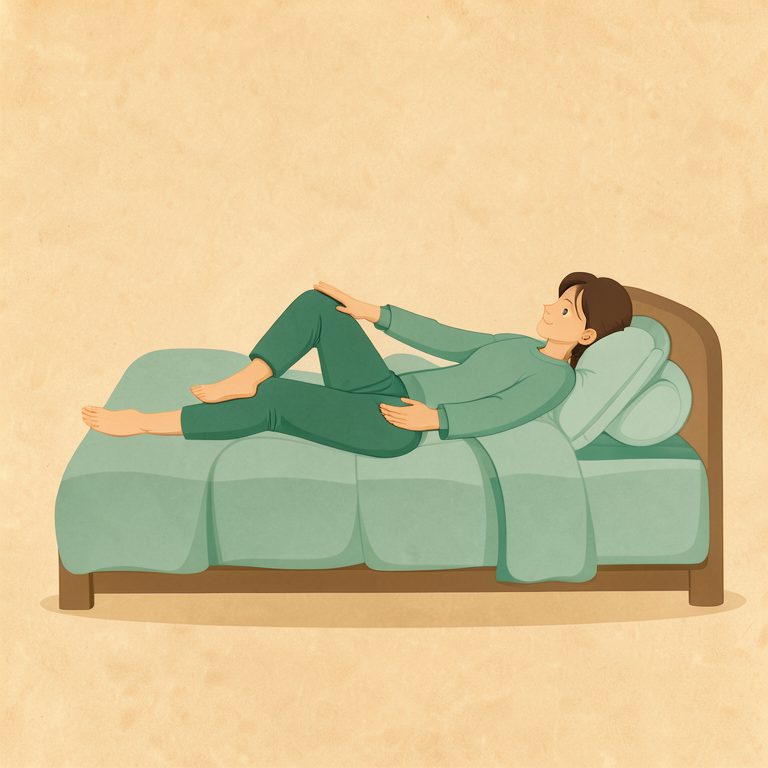
One more modern data point for the “why move at all” question: in Muscles, How Are You Doing?, Andreas Stippler and Norbert Regitnig-Tillian report that trained muscles that move regularly are associated with a 30–50% lower risk of hypertension, stimulate the growth of new capillaries, and release myokines — the authors’ framing of what daily movement does beyond joints.[7]
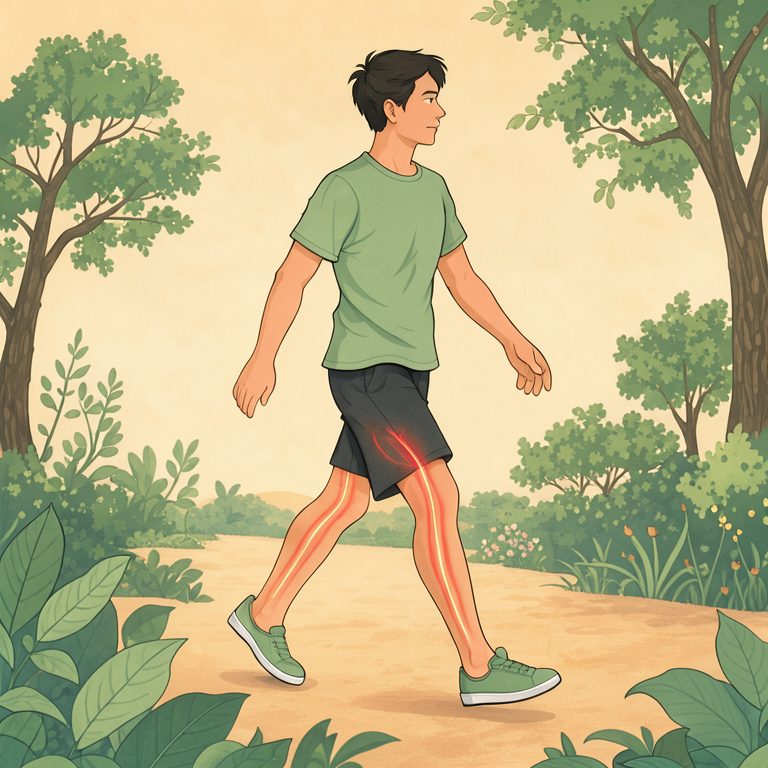
What traditional mobility routines actually look like
Traditional systems share a recognizable shape: a fixed daily set, performed on waking, coordinated with breathing, and closed with relaxation.[1][4][5][10]
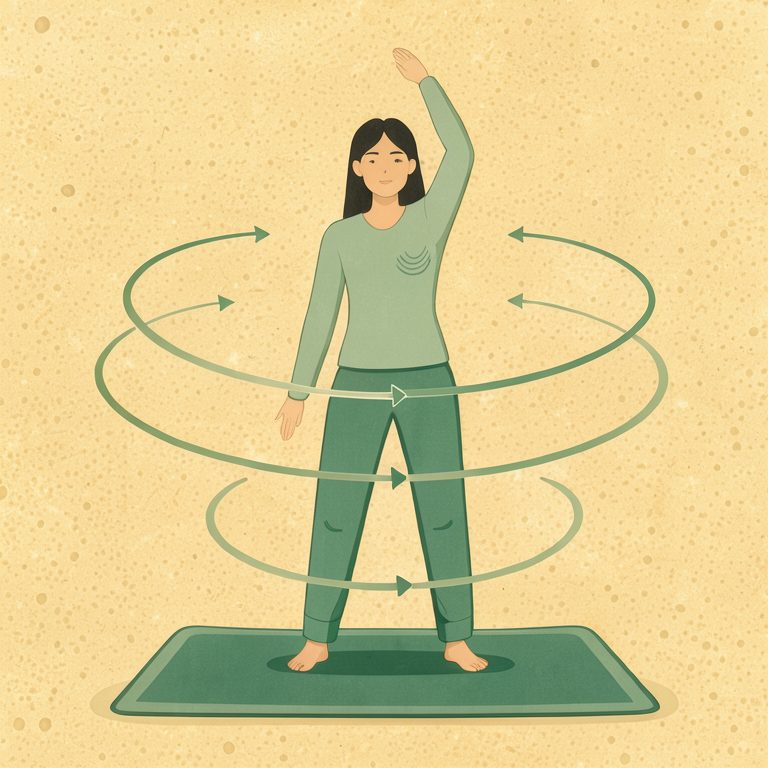
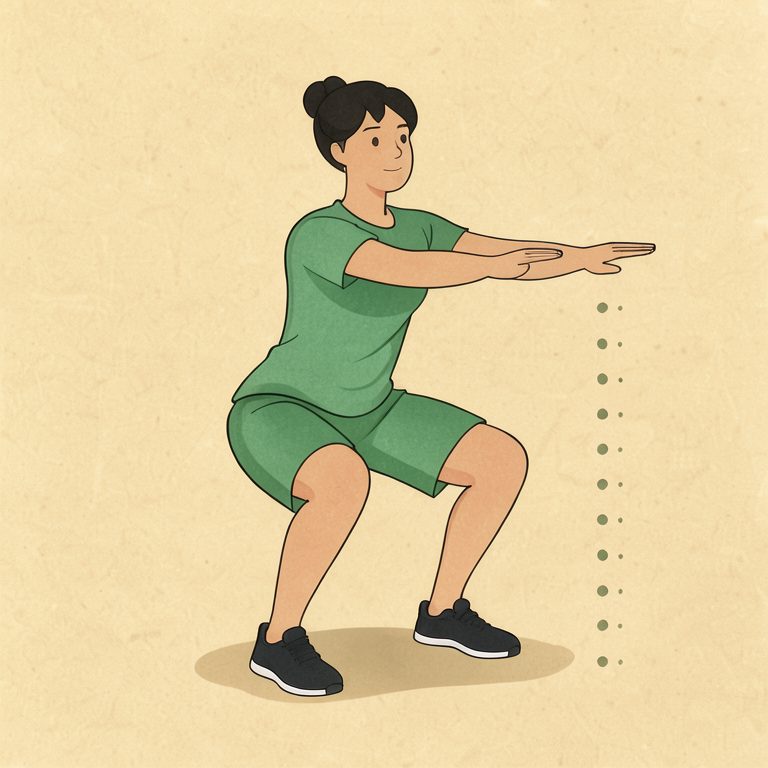
- Morning calisthenics (zaryadka). Tsatsouline notes that Amosov-style morning calisthenics are very popular in Russia, where they go by the name zaryadka — “a recharge.” The complex he reproduces is a 12-exercise, high-repetition bodyweight set, in source order: squats, side bends, push-ups, forward bends, straight-arm raises overhead, torso turns, Roman-chair sit-ups, one-legged jumps in place, elbow pulls, a shoulder stand (the ‘birch tree’), leg-and-hip raises, and stomach vacuums.[1]
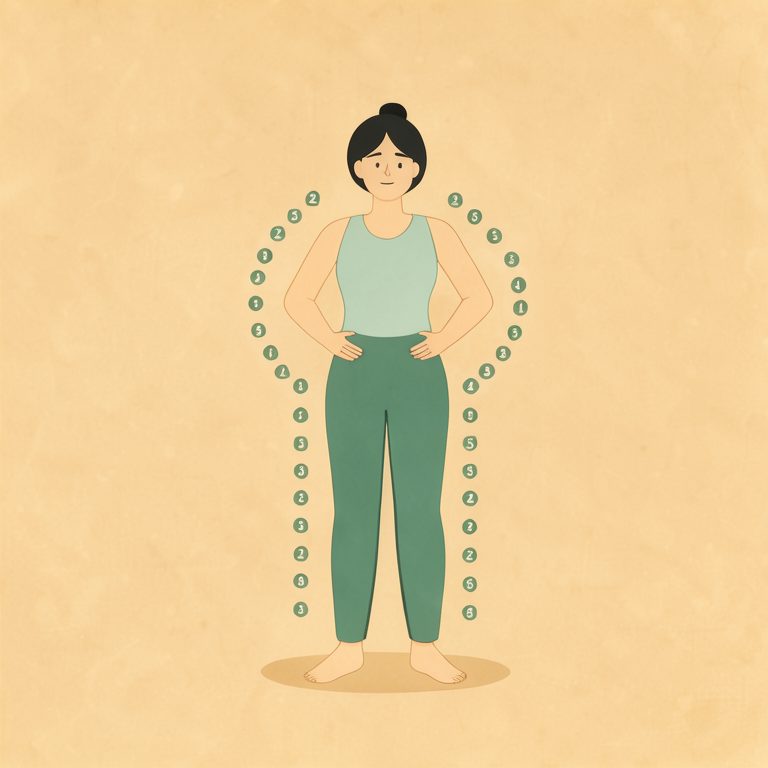
Morning calisthenics (zaryadka): a high-repetition bodyweight set - Toning morning gymnastics. Timofeeva and Belicheva’s Exercise Therapy: Health at Any Age opens with a twelve-movement toning sequence (the opening six: head tilts for 10 seconds, shoulder circles, forward bends, hip circles, elbow pulls, side bends held for 10 seconds) — with the instruction to repeat each exercise 5–6 times.[4]
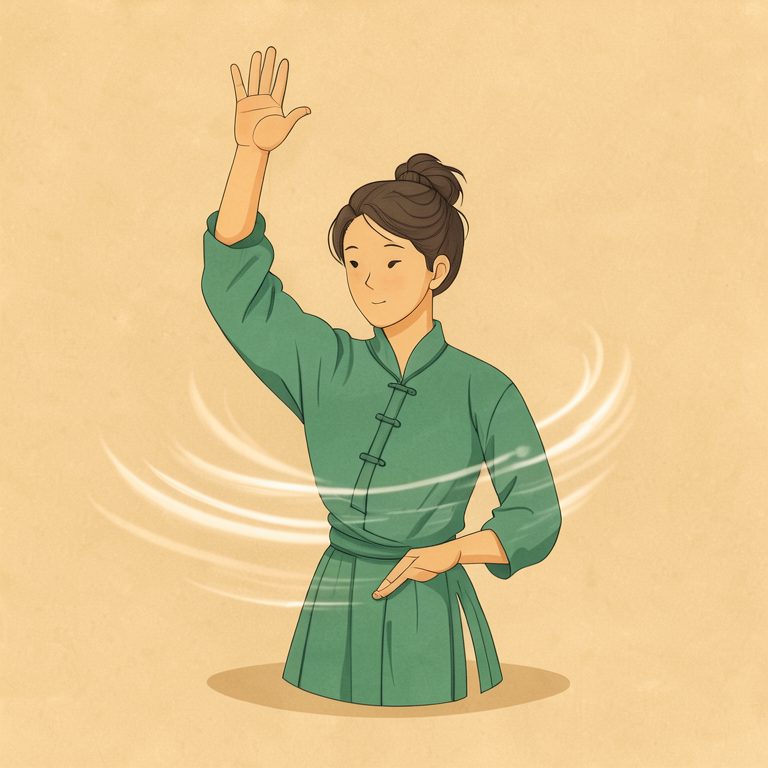
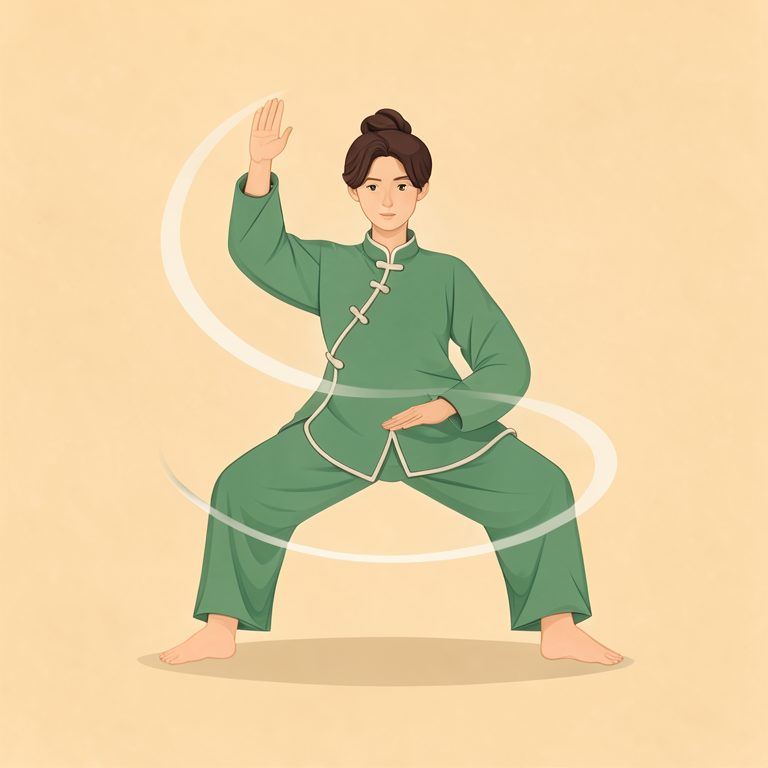
Toning morning gymnastics: repeat each movement 5–6 times - Tai chi. The tai chi tradition described in Taijiquan: The Art of Harmony and the Method of Prolonging Life is a system in which consciousness, breathing, and movement are coordinated, built from smooth spiral and arc-shaped movements linked one to another into a single chain.[10]
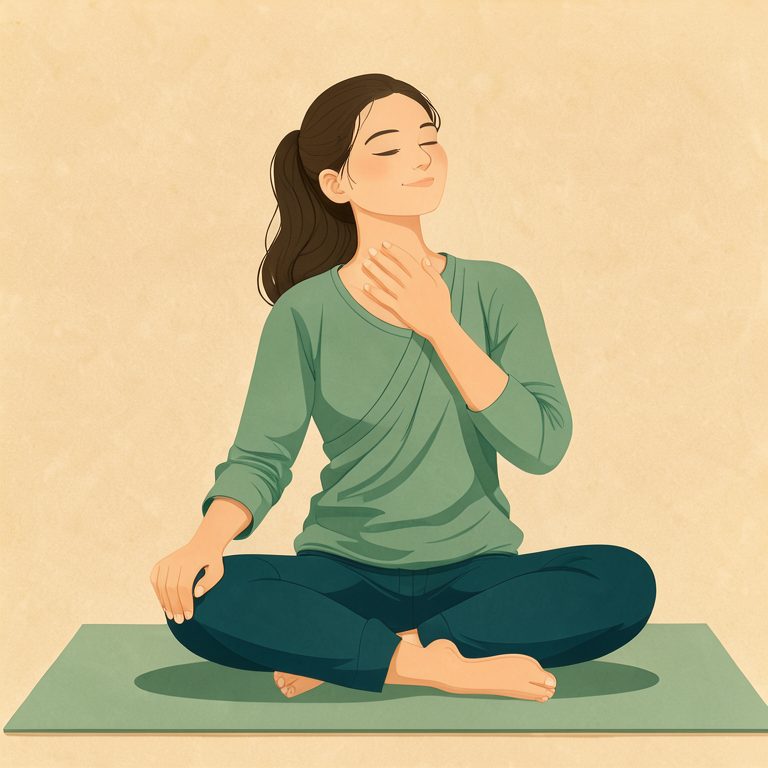
Tai chi: smooth spiral movements linked into one chain with the breath - U-shu (wushu). Popov, Sagoyan and Didenko describe the health-oriented branch of u-shu as a fusion of gymnastic complexes and breathing exercises that includes elements of acupressure — movement, breath and self-massage in one practice.[11]
U-shu: movement, breath and self-massage in a single practice - How traditional sessions close. V. D. Ovsyannikov’s breathing-gymnastics manual ends sessions with relaxation work of 2–3 minutes (shaking out relaxed arms and legs), then a calming walk of 5–7 minutes with a pulse re-check, and water procedures after — a simple built-in feedback loop.[5]

Close the session: relaxation, a calm walk, then a pulse re-check
What modern programs add
Modern structured programs do not invent new physiology — they add control systems around the same movement.
- Dose control. Bubnovsky’s Active Longevity describes measuring your resting pulse before exercising and estimating a maximal heart-rate ceiling with a Cooper-formula variant (men: 205 minus half your age; women: 220 minus your age) — for example, about 180 beats per minute for a 50-year-old man — so intensity has an explicit upper boundary.[2]

Dose control: resting pulse plus an explicit heart-rate ceiling - Staged safety screening. In Get Rid of Trigger Points, A. L. Pak lays out a three-stage check before starting exercises: first, symptoms that require a doctor’s exam (pain that began after trauma, more than three months on glucocorticoid hormones, pain with raised body temperature, a history of malignant tumor that needs oncologist clearance, pain with swelling, redness or local warmth, and — most urgently — urination or bowel-movement problems, perineal numbness, or severe weakness or paralysis in the legs or arms, which need a doctor’s visit preferably within 24 hours); second, diagnostic tests of the musculoskeletal system and peripheral nerves; third, a contraindications check.[6]

Staged safety screening before the first workout - Programming and logging. N. Barough’s Walking for Fitness notes that muscles and joints become less flexible with age, recommends stretching before and especially after activity, and calls regular stretching of even 10 minutes a day a good habit — a small, measurable dose rather than a heroic one.[9]
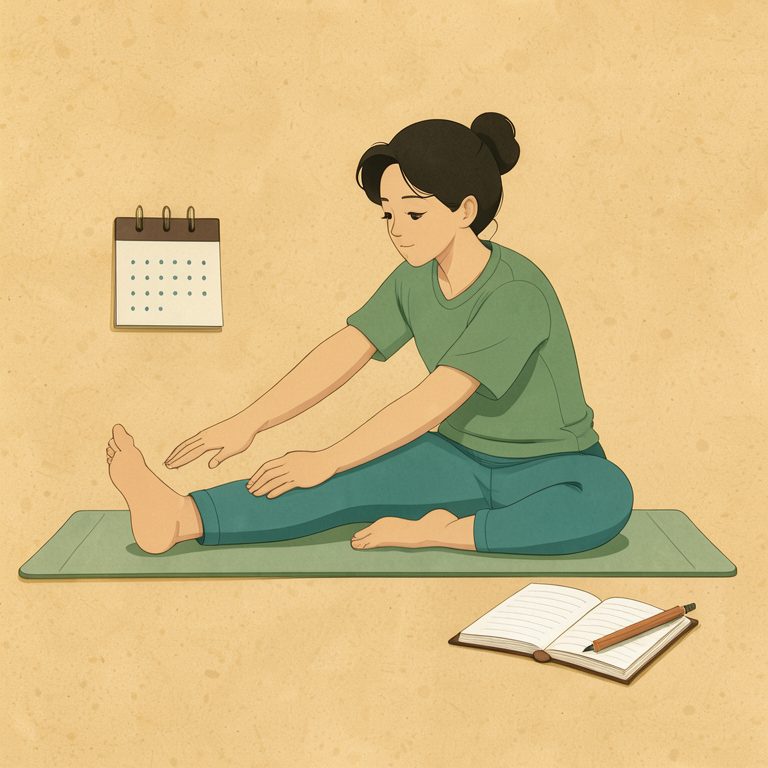
Programming and logging: a small measurable habit beats a heroic one - Individualization. Tsatsouline (reprinting V. I. Fillipovich) states that your age and sex dictate the choice of stretching exercises even more than your sports and activities, that flexibility development must be gradual, and that forcing flexibility can negatively affect joint strength and posture — strength and flexibility should be developed together.[1]
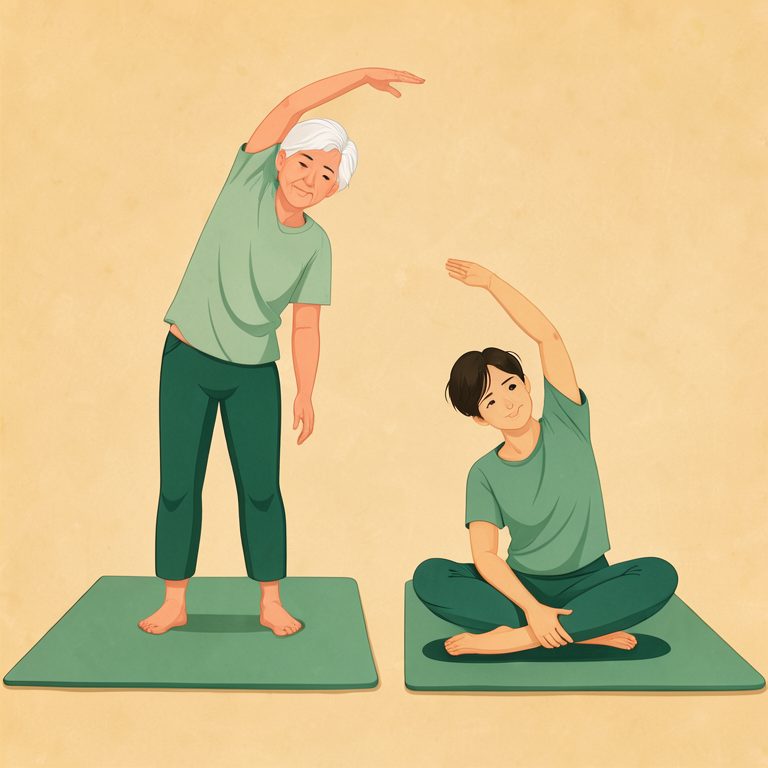
Individualize: age and sex guide the choice of exercises - Respect for the stretch reflex. The Relax into Stretch excerpt in Super Joints covers the dangers of physically stretching muscles and ligaments and how to work with — rather than against — the stretch reflex.[1]
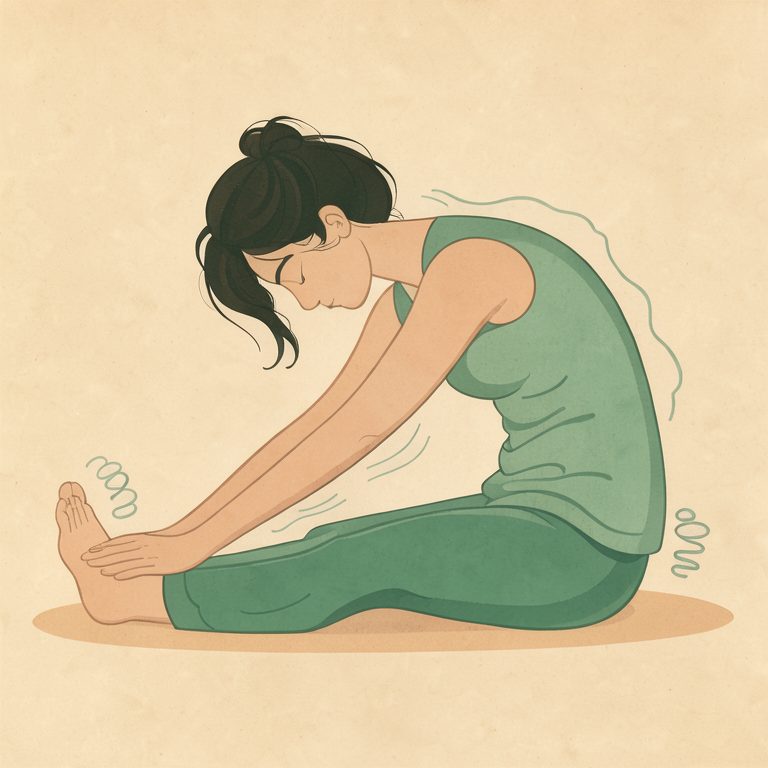
Respect the stretch reflex: relax into the stretch, never force it
Traditional mobility routines vs modern programs: comparison table
| Criterion | Traditional mobility routines | Modern structured programs |
|---|---|---|
| Core idea | Move the joints every morning: movement wakes up the proprioceptors and helps shake off stiffness[1] | Train under a dose: exercise therapy rests on dosed training that develops adaptive capacity[8] |
| Session shape | Fixed daily sets: toning gymnastics at 5–6 repetitions per exercise,[4] high-repetition Amosov-style calisthenics,[1] tai chi forms,[10] u-shu sequences[11] | Modules with progression and intensity targets — resting pulse plus a heart-rate ceiling[2] |
| Warm-up logic | Warm the joints first: short in-bed joint work before loading, for joints and spine that have “stagnated overnight”[3] | Screen first: three-stage diagnostics — red-flag symptoms, tests, contraindications[6] |
| Session finish | Relaxation work of 2–3 minutes (shaking out arms and legs), then a calming walk of 5–7 minutes with a pulse re-check[5]; calm-pace walking of 3 minutes at 40–50 steps per minute[8] | Structured cool-down: stretching before and especially after activity, a 10-minute daily stretching habit[9] |
| Safety approach | Do not force: relax into the movement[1] | Explicit red-flag lists and referral rules[6]; documented risks of forcing stretches and the stretch reflex[1] |
| Best fit (editorial) | Readers who want a free, self-guided daily ritual | Readers who want progression, tracking, and a defined path |
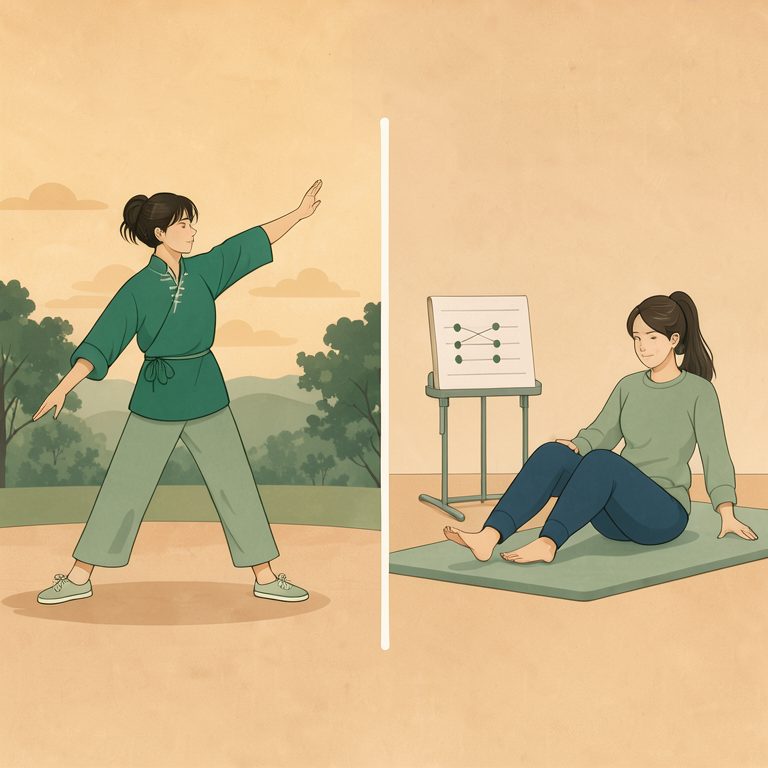
How to choose for stiff mornings: a 5-step protocol
- Screen the red flags first. Work through Pak’s three-stage check: pain that began after trauma, more than three months on glucocorticoid hormones, pain with raised body temperature, a malignant-tumor history (clear it with your oncologist), pain with swelling, redness or local warmth — and, most urgently, urination or bowel-movement problems, perineal numbness, or severe weakness or paralysis in the legs or arms, which need a doctor’s visit preferably within 24 hours. Any of these means a clinician’s exam before you start exercising.[6]

Step 1 — screen the red flags before you start exercising - Locate the constraint. If the problem is joints and spine feeling “stuck” straight after sleep, start where Bubnovsky starts: gentle joint warm-up work before any loading.[3] If the problem is general deconditioning, a full morning complex fits better.
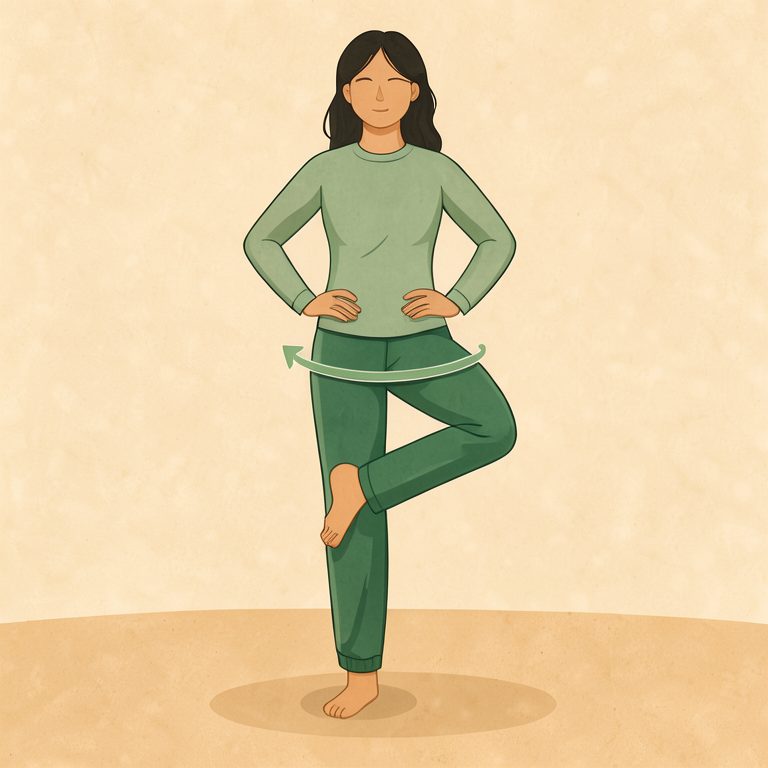
Step 2 — locate the constraint: joints first, or the whole set - Pick your family. Traditional (fixed daily sets, breathing, relaxation finish) or modern (dose targets, logs, progressions). Let age and sex guide the choice more than your sport or activity (Fillipovich in Super Joints).[1]

Step 3 — pick your family: traditional or modern - Dose it explicitly. Repetition targets — 5–6 repetitions per exercise in the toning-gymnastics model (Timofeeva and Belicheva)[4] — or pulse boundaries — resting pulse plus a Cooper-formula ceiling (Bubnovsky).[2] Keep flexibility development gradual; never force range (Fillipovich).[1]
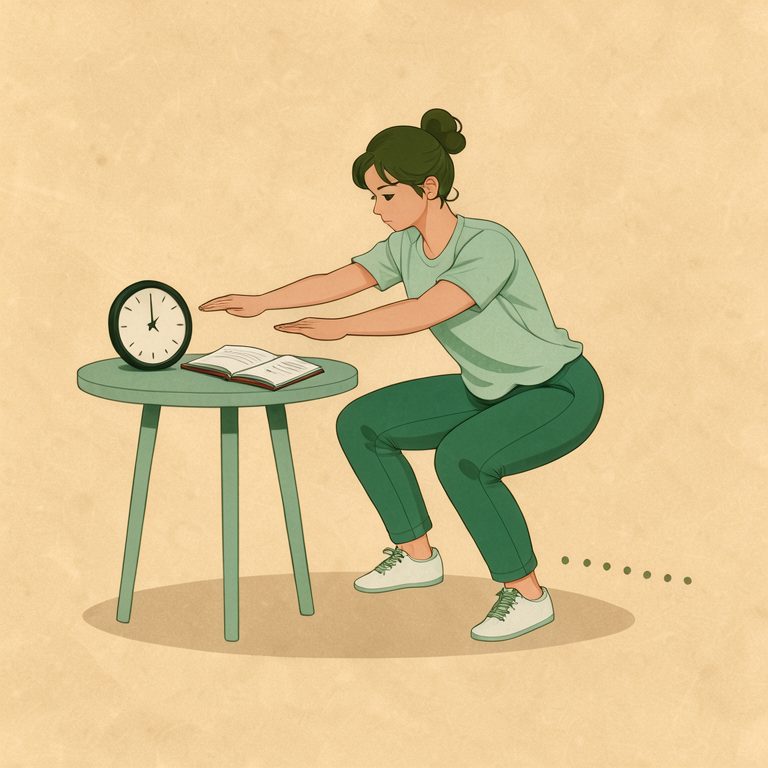
Step 4 — dose it explicitly: reps, time or pulse boundaries - Review on a two-week log. Finish sessions the traditional way — relaxation work of 2–3 minutes and then a calming walk of 5–7 minutes with a pulse re-check (Ovsyannikov)[5] — and track your morning stiffness trend before you buy or add anything.

Step 5 — review on a two-week log before you buy anything
Where the two paths converge: traditional vs modern physiology
Strip away the vocabulary and the two families describe the same mechanism. The traditional “recharge” idea — morning movement that wakes up the proprioceptors[1] — and the modern physiology of dosed training, motor-visceral reflexes, and adaptive capacity both point to daily, graded, low-load motion as the signal the body needs.[8] Breathing is coordinated with movement in the traditional systems (tai chi explicitly coordinates consciousness, breathing, and movement[10]), and classical exercise therapy likewise pairs breathing exercises with movement.[8] Flexibility declines with age in both muscle and joint tissue,[9] which is why both camps treat the daily habit — not the intensity of any single session — as the active ingredient.
Honest criteria for choosing a paid program
Free traditional routines remain the foundation; we publish two of them here at Healthy Lifestyle Habits: the Ba Duan Jin (Eight Pieces) manual and the Zusanli ST36 acupressure guide. A paid modern program earns its price only when it adds structure you would not build yourself. Our working criteria:
- No medical promises. Any program that promises to fix a diagnosed condition on its own disqualifies itself; movement programs traditionally used for general well-being may support how you feel, and honest vendors say exactly that.
- Visible safety screening. Look for the equivalent of Pak’s red-flag list before the first workout.[6]
- Explicit dose and progression logic. Repetitions, time, or pulse targets — not just “follow along.”
- Transparent refund policy and real contact channels.
- It complements daily movement — it does not replace it.

If you want structured follow-along work focused on the hip-flexor area, see our Unlock Your Hip Flexors review, or the vendor’s official page. If you are considering a joint-nutrition layer on top of your movement routine, see our Joint Genesis review or the official product page. We may earn a commission if you buy through links on this page (FTC disclosure). Ratings and opinions on our review pages are our editorial judgment.
Safety first
This article is not medical advice and is not intended to diagnose, cure, or treat any condition. The practices described — morning calisthenics, tai chi, u-shu, breathing gymnastics — are traditionally used for general well-being and may support how you move through the day, but they are not intended to replace individual medical care. Skip self-practice and see a qualified clinician if pain began after trauma, if you have taken glucocorticoid hormones for more than three months, if pain comes with raised body temperature, swelling, redness or local warmth, or if you have a history of malignant tumor (clear it with your oncologist first).[6] Most urgently, urination or bowel-movement problems, perineal numbness, or severe weakness or paralysis in the legs or arms call for a doctor’s visit preferably within 24 hours — this is the most urgent red flag in the screen described by A. L. Pak.[6] If anything here conflicts with your clinician’s guidance, follow your clinician.
Frequently Asked Questions
How do traditional mobility routines and modern programs differ for stiff mornings?
The difference is control systems, not physiology. Traditional sets are fixed daily routines performed on waking — repetition-based, breathing-coordinated and closed with relaxation work[1][4][5] — while modern programs wrap the same movement in dose targets such as resting pulse plus a heart-rate ceiling,[2] staged safety screening,[6] and a small measurable habit like 10 minutes of daily stretching.[9] Both families, in the source literature, point to the same active ingredient: daily, graded, low-load movement.[1][8]

When should I see a clinician before starting a morning mobility routine?
Screen the red flags first. In A. L. Pak’s pre-exercise check, a doctor’s exam comes before exercise when pain began after trauma, when you have taken glucocorticoid hormones for more than three months, when pain comes with raised body temperature, swelling, redness or local warmth, or with a malignant-tumor history that needs oncologist clearance.[6] The most urgent flag — urination or bowel-movement problems, perineal numbness, or severe weakness or paralysis in the legs or arms — calls for a doctor’s visit preferably within 24 hours.[6]
Is a paid mobility program worth it if traditional routines are free?
Free traditional routines remain the foundation; a paid program earns its price only when it adds structure you would not build yourself — visible safety screening,[6] explicit dose and progression logic,[2][9] and honest marketing that makes no medical promises. Treat it as a complement to daily movement, not a replacement for it, and run the two-week log from the protocol above before you buy.
Sources
- [1] Tsatsouline, Pavel — Super Joints (2001)
- [2] Bubnovsky, S. M. — Active Longevity, or How to Return Youth to Your Body (2015)
- [3] Bubnovsky, S. M. — 1000 Answers on How to Restore Health (2014)
- [4] Timofeeva, S. A., Belicheva, T. M. — Exercise Therapy: Health at Any Age (2015)
- [5] Ovsyannikov, V. D. — Breathing Gymnastics (1986)
- [6] Pak, A. L. — Get Rid of Trigger Points (2024)
- [7] Stippler, Andreas, Regitnig-Tillian, Norbert — Muscles, How Are You Doing? (2020)
- [8] Belaya, N. A. — Exercise Therapy and Massage (2001)
- [9] Barough, N. — Walking for Fitness (2017)
- [10] Wang Lin — Taijiquan: The Art of Harmony and the Method of Prolonging Life (n.d.)
- [11] Popov, G. V., Sagoyan, O. A., Didenko, V. V. — U-Shu: The Way to Health and Harmony (1989)
How we researched this
This article is based entirely on our local library of 1,137 books, queried through an offline retrieval system — the open internet was not used at any point. Every factual statement above was checked against the source excerpts and carries a numbered citation to the book it was taken from.
