
Educational content only — not medical advice. See our full Medical Disclaimer and Affiliate Disclosure below.
Walk into any supplement aisle in 2026 and the word adaptogen is everywhere — on mushroom coffees, rhodiola capsules, and multi-herb “stress” blends — yet most adaptogen supplements on the shelf tell you little about what is actually inside. This buyer’s guide takes the opposite approach: it starts from what the source traditions and reference handbooks document about adaptogenic plants, and turns that record into honest, testable selection criteria — without medical promises. If movement-based wellness is new to you, start with our Baduanjin — Eight Pieces of Brocade manual and treat any supplement as a small addition to practice, not a substitute for it.
Key Takeaways
- “Adaptogen” is a traditional-use umbrella: classic texts describe plants like ginseng and rhodiola as supports for the body’s adaptive responses[1] — not as remedies for named diseases.
- Quality is a manufacturing question: pharmacopoeial references demand limits for microbial contamination, pesticide residues, and toxic metals[6]. Ask what the manufacturer actually tests.
- The form decides the ritual: infusions, tinctures, powders, capsules, and extracts differ in preparation, shelf life, and dosing precision[8][7].
- Safety is individual: some adaptogens can raise blood pressure[1], some interact with medication[6], and centuries of traditional use do not by themselves settle the question.
What the source traditions mean by “adaptogen”
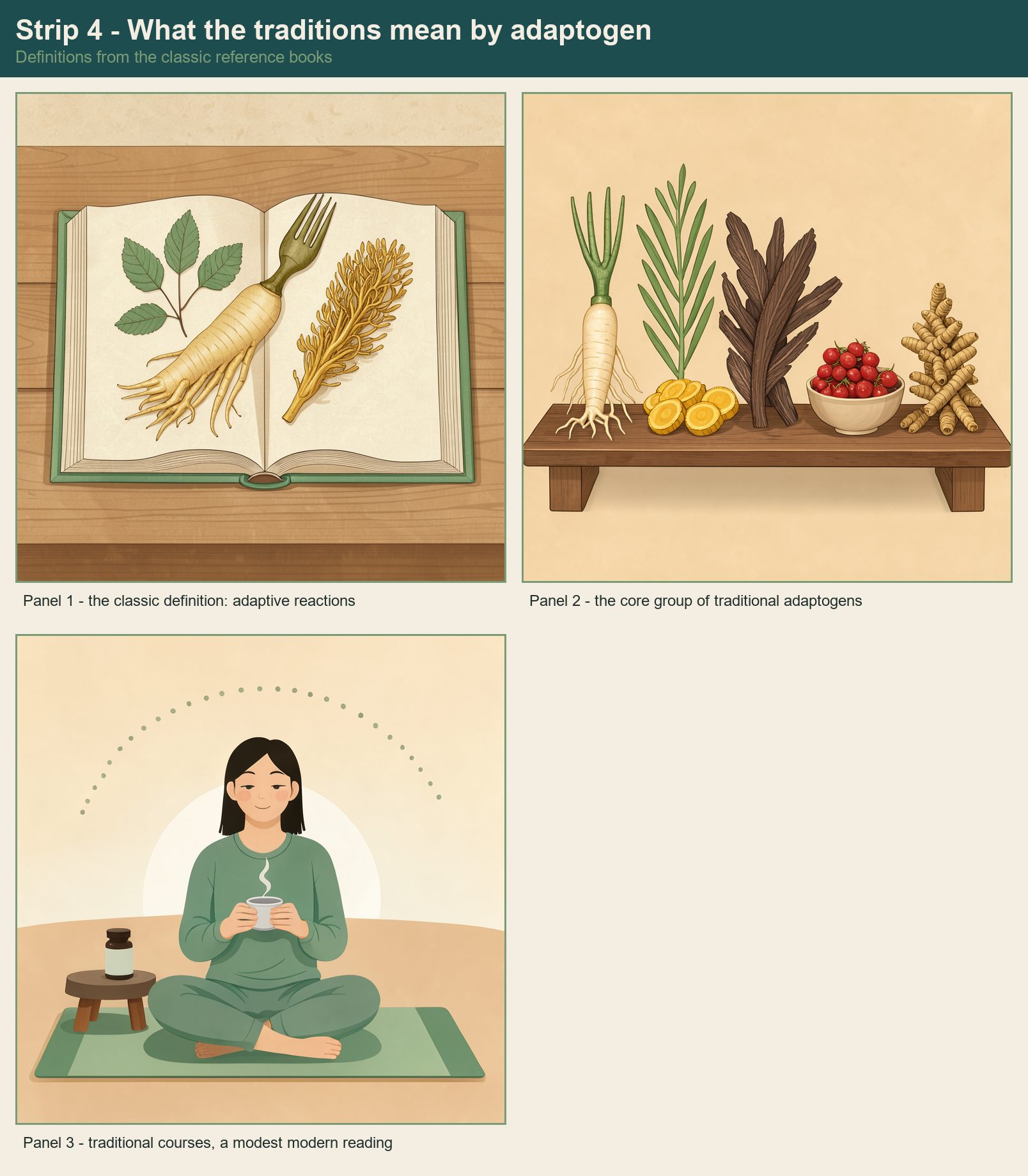
The classic pharmacology literature is explicit about the term. In Ginseng and Its Brothers (1979), ginseng is called an adaptogen — a preparation that improves the body’s so-called adaptive reactions and increases its protective forces[1]. The same source notes that resistance to adverse influences could rise already after a single dose, while being candid that the adaptogenic effect “is not universal” and only covers a fairly broad range of stresses[1]. A Chinese-medicine monograph frames the family more broadly: adaptogens are described as strengthening the resilience of a living organism in difficult or extreme conditions, used in folk medicine for many centuries as preventive tonics[2].
Practical herbal guides name the core group: ginseng, eleuthero (Eleutherococcus senticosus), leuzea, aralia, and Chinese schisandra[3]. Rhodiola — the “golden root” of the Siberian Altai — is documented in the same adaptogenic class as ginseng[4], and ashwagandha is the traditional Indian entry in the group[5].
Traditional vs. modern reading: the traditions document tonic, resilience-supporting use over long courses[1][2]. The honest modern carry-over is modest: such products may support your response to everyday stress and fatigue. They are not intended to cure, treat, or diagnose any disease, and nothing here replaces a clinician’s advice.
What quality looks like on the label
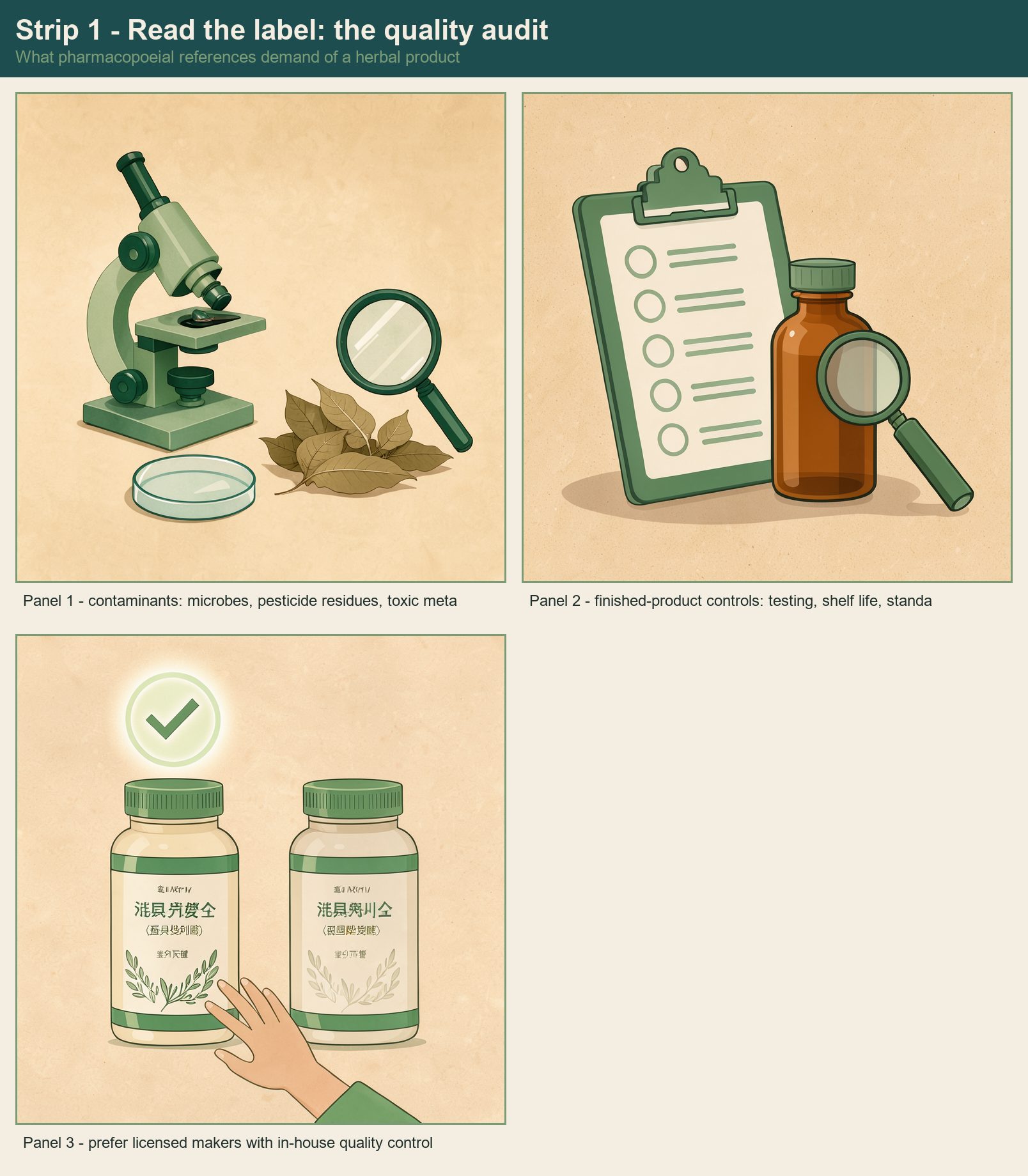
The pharmacopoeial reference Herbal Medicines (Barnes & Anderson) treats herbal quality as an analytical problem — and its checklist maps directly onto what to demand from a supplement brand[6]:
- Foreign organic matter: standards should limit the percentage of unwanted related plant parts in any herbal ingredient[6].
- Microbial contamination: bacteria and fungi are normally present on plant material and may increase with faulty growing, harvesting, storage, or processing. Levels of 102–108 colony-forming units per gram are described as not uncommon, and pathogens from Enterobacter to Streptococcus have been shown to contaminate herbal ingredients[6].
- Pesticide residues: cultivated herbs can carry chlorinated hydrocarbons, organophosphates, carbamates, or polychlorinated biphenyls; the European Pharmacopoeia sets mandatory limits for 34 potential pesticide residues[6].
- Fumigants: ethylene oxide is no longer permitted on herbal drugs in Europe[6].
- Toxic metals: lead, cadmium, mercury, thallium, and arsenic have all been documented as contaminants — limit tests are essential[6].
- Finished-product controls: chemical and chromatographic testing, manufacturer-established stability and shelf life, and capsule/tablet quality standards no lower than those for other pharmaceutical preparations[6].
Two honest conclusions follow. First, an unregulated remedy whose quality has not been assessed by a regulatory authority is a question mark for both safety and consistency — prefer products holding a product licence or traditional registration, or at least made by an established manufacturer with in-house quality control[6]. Second, natural raw material is never perfectly reproducible: growing conditions change every harvest, so each year’s crop is slightly different[7] — which is exactly why batch-level testing beats marketing copy.
Forms compared: infusion, tincture, powder, capsule, extract
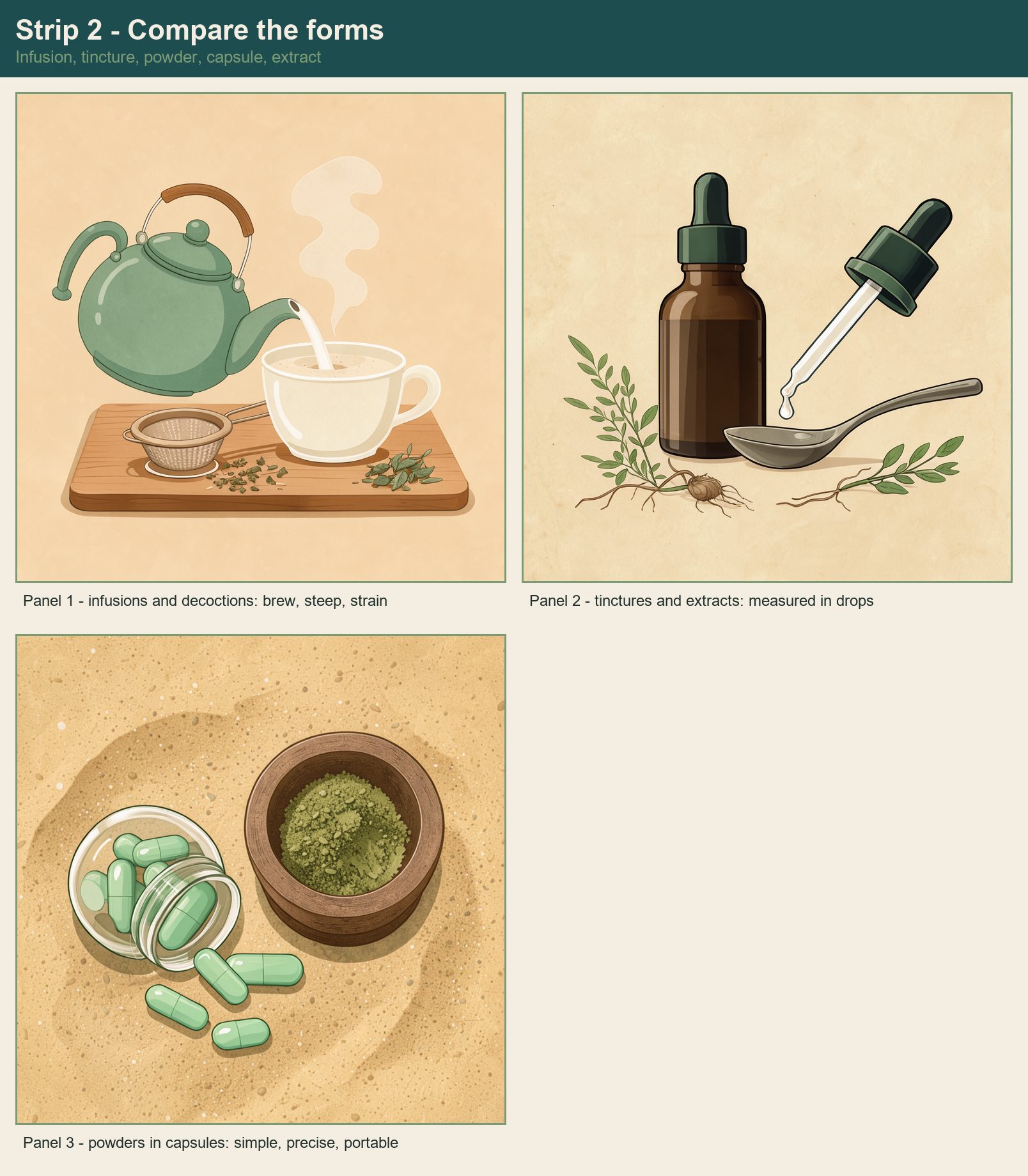
Traditional preparation manuals describe five practical forms. Knowing what each one is helps you compare like for like[8][7]:
| Form | How it is traditionally prepared | Handling notes | What to know as a buyer |
|---|---|---|---|
| Hot infusion | Raw material steeped in a measured dose of boiling water, 15 minutes in a covered water bath, then cooled 45 minutes and strained[8] | Kept in the refrigerator no more than 3–4 days; used cooled[8] | Fast ritual, short shelf life |
| Cold infusion | Chopped raw material steeped in boiled room-temperature water for about 8 hours[8] | Used cool; same 3–4 day fridge limit[8] | Delicate constituents, minimal heat |
| Decoction | Raw material simmered 20–30 minutes in a water bath, cooled 10 minutes, strained[8] | Refrigerator 3–4 days, shaken before use[8] | Hardier material, longer extraction |
| Tincture | Alcohol or alcohol–water extract: soak 7–10 days in the dark with periodic shaking, settle 2–3 weeks, filter[8] | Stored sealed, cool, and dark[4] | Long shelf life; doses measured in drops |
| Powder / capsules / tablets | Whole raw material ground to powder; modern makers fill it into gelatin capsules or press tablets[7] | Simplest to take; no preparation variables | Convenience can cost an order of magnitude more than loose raw material[7] |
| Extract (liquid, thick, dry) | Concentrated draw of the plant; liquid extracts are traditionally dosed by drops[8] | Shelf life longer than infusions and decoctions | Concentration varies by maker — check what the label states |
Two context notes from the same sources. Preparation is never neutral: when you brew or steep, part of the medicinal constituents changes, easily soluble compounds dissolve fast but also break down faster, and the result depends on water or alcohol quality, light, and storage[7]. And one folk heuristic worth knowing only as tradition: some old manuals size a herbal mixture at about one tablespoon per 44 lb (20 kg) of body weight[8] — a dosing philosophy, not medical advice.
How to choose adaptogen supplements: a step-by-step protocol
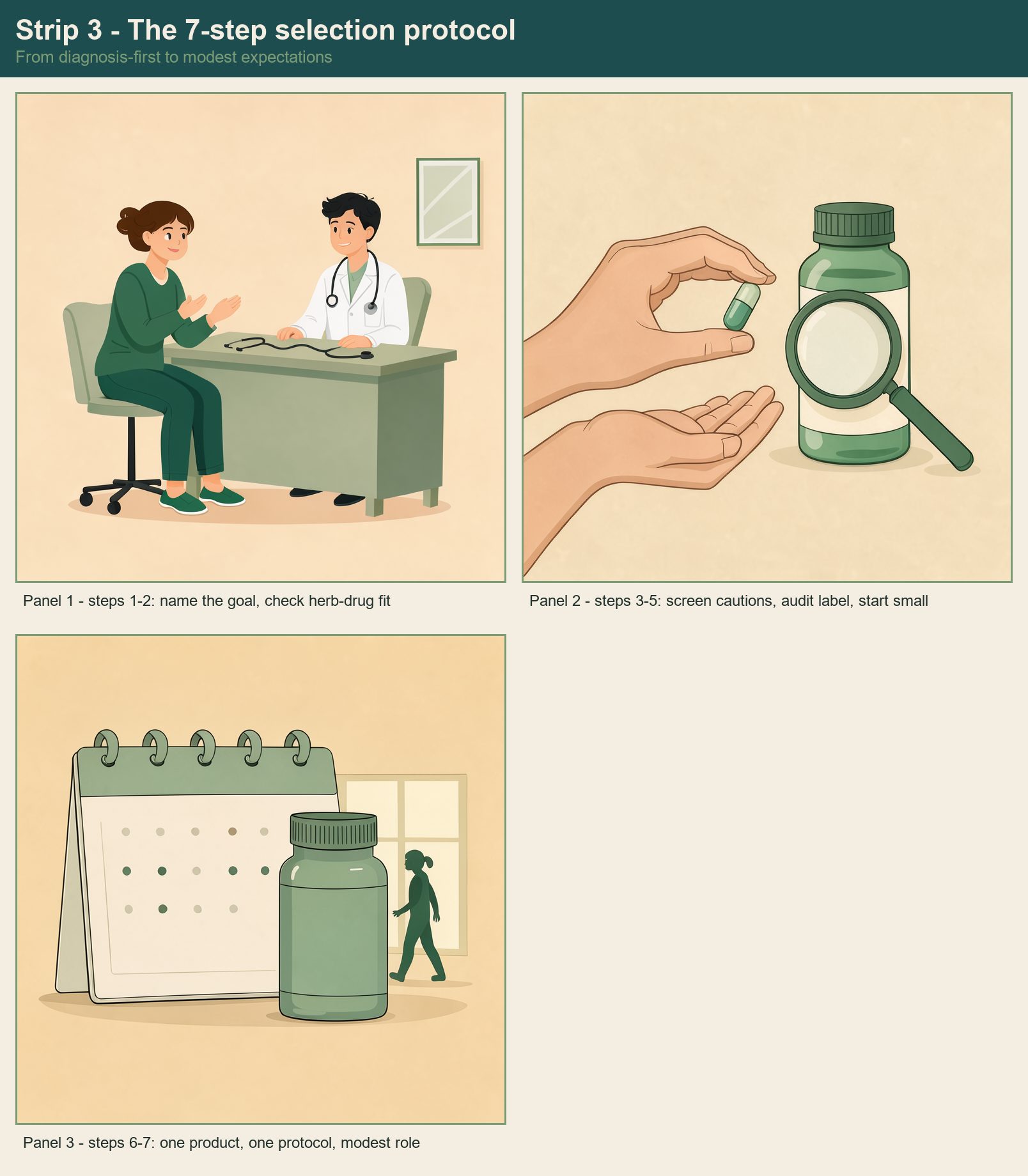
Run this seven-step check before spending money on any adaptogen product. It compiles the application rules from the herbal-practice literature into one buyer’s workflow[3][6][11]:
- Name the goal and get a diagnosis first. Traditional guides open with the same rule: when symptoms appear, see a clinician and get a proper examination before you self-prescribe anything[11].
- Check herb–drug compatibility. If you take medication, find out how it combines with herbal preparations — emerging evidence suggests herbal medicinal products may in some cases compromise the efficacy of conventional medicines, for example through herb–drug interactions[6].
- Screen the contraindications. Some plants are contraindicated in pregnancy, heart failure, raised or lowered blood pressure, and acute gastrointestinal conditions[3]; additional cautions apply for nursing women, children, and anyone recently after a stroke, infarction, or surgery[11].
- Audit the label like a quality file. Manufacturer identity, batch/lot number, contaminant testing (microbial, pesticides, metals), extract strength, expiry and storage, and whether the product holds a licence or traditional registration[6].
- Start with a minimal dose. Herbal guides recommend beginning with the smallest amount and increasing only if no adverse reactions appear[3].
- Commit to one product and one protocol. Observe the stated course and doses consistently[11] — switching products mid-course makes any judgment impossible.
- Keep the role modest. For anything serious, herbal remedies are an add-on to a doctor-prescribed regimen, never a replacement for qualified care[11].
Traditional profiles and a safety-first shortlist
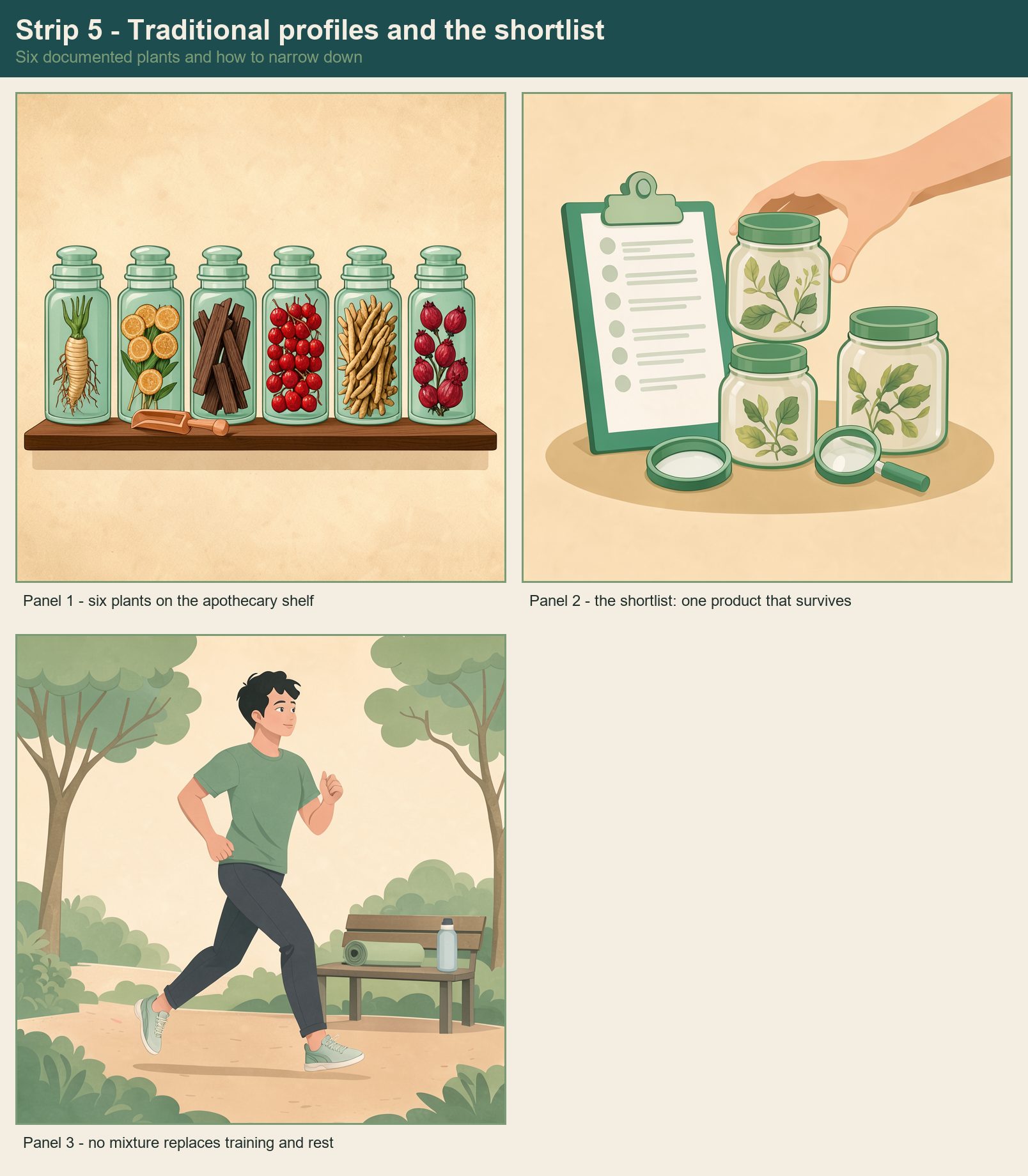
What the source books document about each plant — as traditional use, not as promises:
- Rhodiola (golden root): a Crassulaceae perennial of Western and Eastern Siberia and the Far East, harvested commercially in the Altai[4]. Documents describe preparations that increase the volume of physical work, especially against fatigue, and support mental work capacity and attention[4]; used for millennia for physical strength[5]. Traditional liquid extract: 5–25 drops three times daily 15–30 minutes before meals, courses of 10 days to 4 months[4].
- Ginseng: the reference adaptogen. Its root contains panaxosides (triterpene glycosides), saponins up to 20%, essential oil, vitamins C, B1, B2, and mineral salts; described as a powerful adaptogen that restores strength during overwork[9]. Classic preparations differ widely by extraction method and concentration[1] — and traditional texts say to take them only as a clinician directs (15–25 drops of tincture three times daily, or 0.15–0.3 g of powder or tablets three times daily before meals)[9].
- Eleuthero (Siberian ginseng): studied as an accessible, inexpensive ginseng substitute that on many parameters not only matches but exceeds it; its eleutherosides have no chemical resemblance to ginseng’s panaxosides (ginsenosides)[1]. The documented downside: it may raise blood pressure in some people and is traditionally not recommended with hypertensive disease[1].
- Schisandra (Chinese magnolia vine): its lignans — schizandrin and schizandrol — are credited with tonic, stimulating action on the nervous system; the tradition ranks it second only to ginseng in Eastern medicine[2], and Nanai and Udege hunters dried the berries for long hunting seasons against fatigue[1]. First recorded in a Chinese treatise about 2,500 years ago[2].
- Ashwagandha: a traditional Indian plant rich in flavonoids and withanolides (natural steroids), classed as an adaptogen that may help the body handle the effects of stress[5].
- Rose hip: an everyday tonic fruit with documented adaptogenic, general-strengthening action — traditionally used to support work capacity and resistance to adverse factors, especially during recovery periods[10]. Classic texts pair it with the “constitutional” adaptogens ginseng, aralia, zamaniha, eleuthero, leuzea, rhodiola, and schisandra[10]. Even so, the same author insists that even complex mixtures do not replace physical training, hardening, and active rest[10].
Safety & Disclaimer
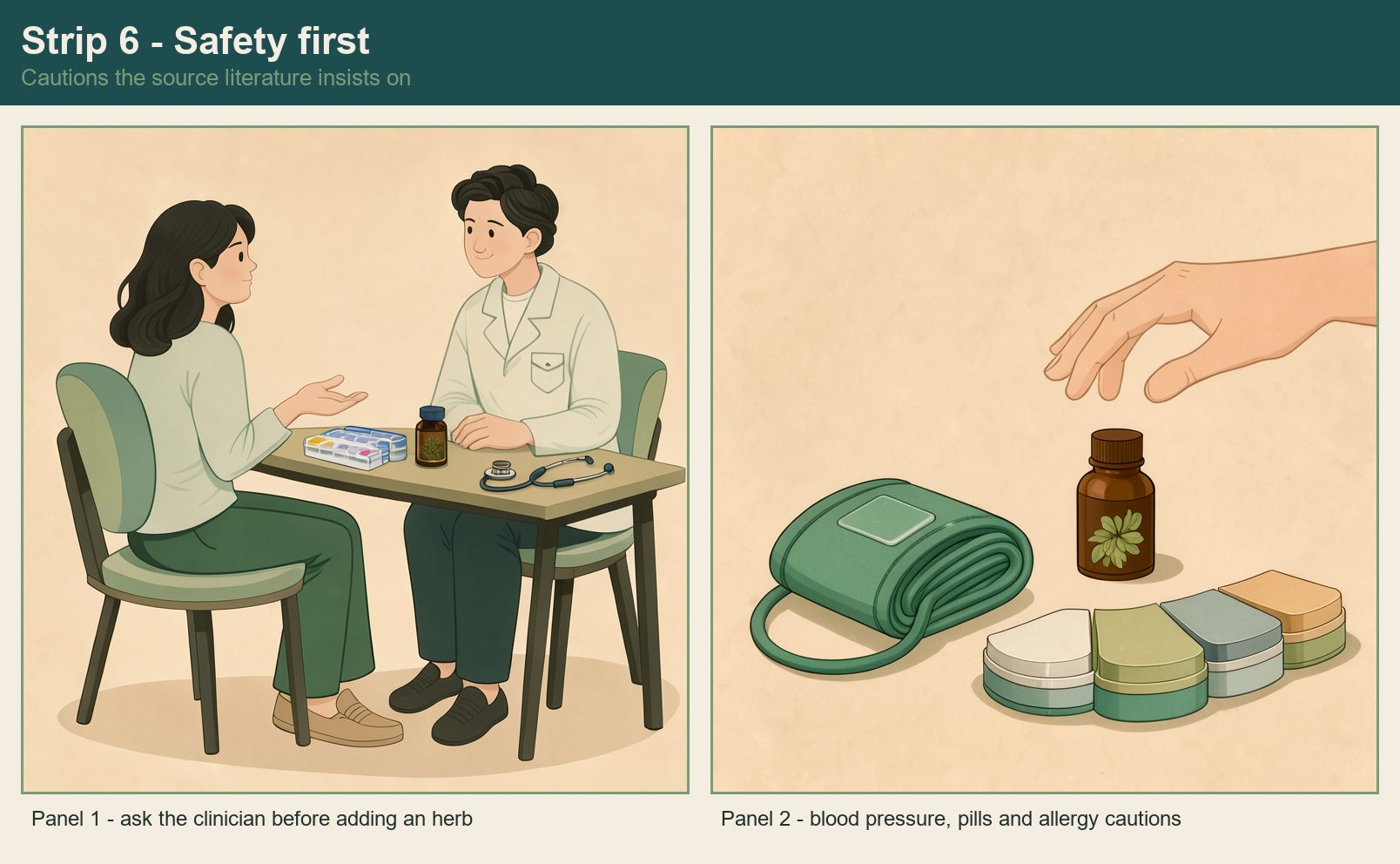
This guide is general information for choosing a product. It is not intended to cure, treat, or diagnose any disease. Specific cautions from the source literature: eleuthero preparations are traditionally not recommended for people with hypertension because they can raise blood pressure[1]; any herbal product can cause allergic reactions — start with a minimal dose[3]. Long traditional use is not a safety guarantee on its own: the pharmacopoeial literature warns that self-administered remedies may delay a patient seeking qualified advice or lead to abandoning conventional treatment, and that herbal products may in some cases compromise the efficacy of conventional medicines through herb–drug interactions[6]. One sober precedent: after cases of serious liver damage suspected to be associated with its consumption, kava (Piper methysticum) was prohibited in unlicensed herbal medicines in January 2003[6]. In pregnancy, while nursing, for children, and after recent stroke, infarction, or surgery, avoid herbal regimens without clinician supervision[11]. If you take prescription medication, ask your pharmacist or physician before adding any adaptogen[6].
Where the two offers we review fit
Two reviewed products live in this cluster as complementary options some readers weigh alongside a daily resilience routine — they are not adaptogen supplements:
- Joint Genesis — a daily supplement option marketed for everyday joint comfort; our Joint Genesis review examines its labeling and value. Movement practice remains the foundation.
- Unlock Your Hip Flexors — a targeted mobility routine that pairs naturally with standing practice such as our Zusanli (ST36) acupressure manual; details in the Unlock Your Hip Flexors review.

Disclosure: we may earn a commission if you buy through links on this page. Ratings and recommendations are our editorial opinion.
Bottom line: the best adaptogen supplement for you is the one whose label survives the quality audit, whose form matches your daily ritual, and whose cautions fit your health situation. Buy transparency — batch testing, clear extract strength, honest traditional framing — not promises.
Frequently asked questions
What is an adaptogen supplement?
In the classic pharmacology sense, an adaptogen is a preparation that improves the body’s so-called adaptive reactions and increases its protective forces — the reading applied to ginseng in Ginseng and Its Brothers (1979)[1]. In folk-medicine framing, adaptogens have long been used as preventive tonics to strengthen resilience in difficult conditions[2]. As products, they are traditional-use supplements — not intended to cure, treat, or diagnose any disease.
How do I check the quality of an adaptogen supplement?
Use the pharmacopoeial checklist as a label audit: foreign organic matter, microbial limits, pesticide residues, fumigants, toxic metals, and finished-product testing — plus whether the product holds a product licence or traditional registration[6]. Batch-level testing matters because natural raw material is never perfectly reproducible from harvest to harvest[7].
Can I take an adaptogen together with prescription medication?
Ask your pharmacist or physician first. Emerging evidence suggests herbal medicinal products may in some cases compromise the efficacy of conventional medicines, for example through herb–drug interactions[6], and traditional guides list pregnancy, heart failure, blood-pressure conditions, and acute gastrointestinal disease among the situations that call for extra caution[3].

Sources
- [1] Vostrikov L.A., Konstantinov A.A., Fruentov N.K. — Ginseng and Its Brothers (1979)
- [2] Litvinova T. — The Great Remedy of Chinese Emperors: Schisandra (2012)
- [3] Nikolaeva Yu. — Treating the Body with Herbs (2011)
- [4] Sokolov S.Ya., Zamotaev I.P. — Handbook of Medicinal Plants (1984)
- [5] Mercola J. — Herbs and Spices (2023)
- [6] Barnes J., Anderson L. — Herbal Medicines
- [7] Kochetkov V.L. — Medicinal Plants in Traditional Chinese Medicine (2002)
- [8] Aksenov A.P. — How to Treat 200 of the Most Common Diseases (2004)
- [9] Rabinovich A.M. — Medicinal Plants in the Garden Plot (1989)
- [10] Barnaulov O.D., Pospelova M.L. — Medicinal Properties of Fruits and Berries (2013)
- [11] Nesterova A. — Rose Hip, Hawthorn, and Viburnum in Cleansing and Restoring the Body (2011)
How we researched this
This article is based entirely on our local library of 1,137 books, queried through an offline retrieval system with no internet sources. Every claim in the text was checked against the cited source passages before publication.
