
Educational content only — not medical advice. See our full Medical Disclaimer and Affiliate Disclosure below.
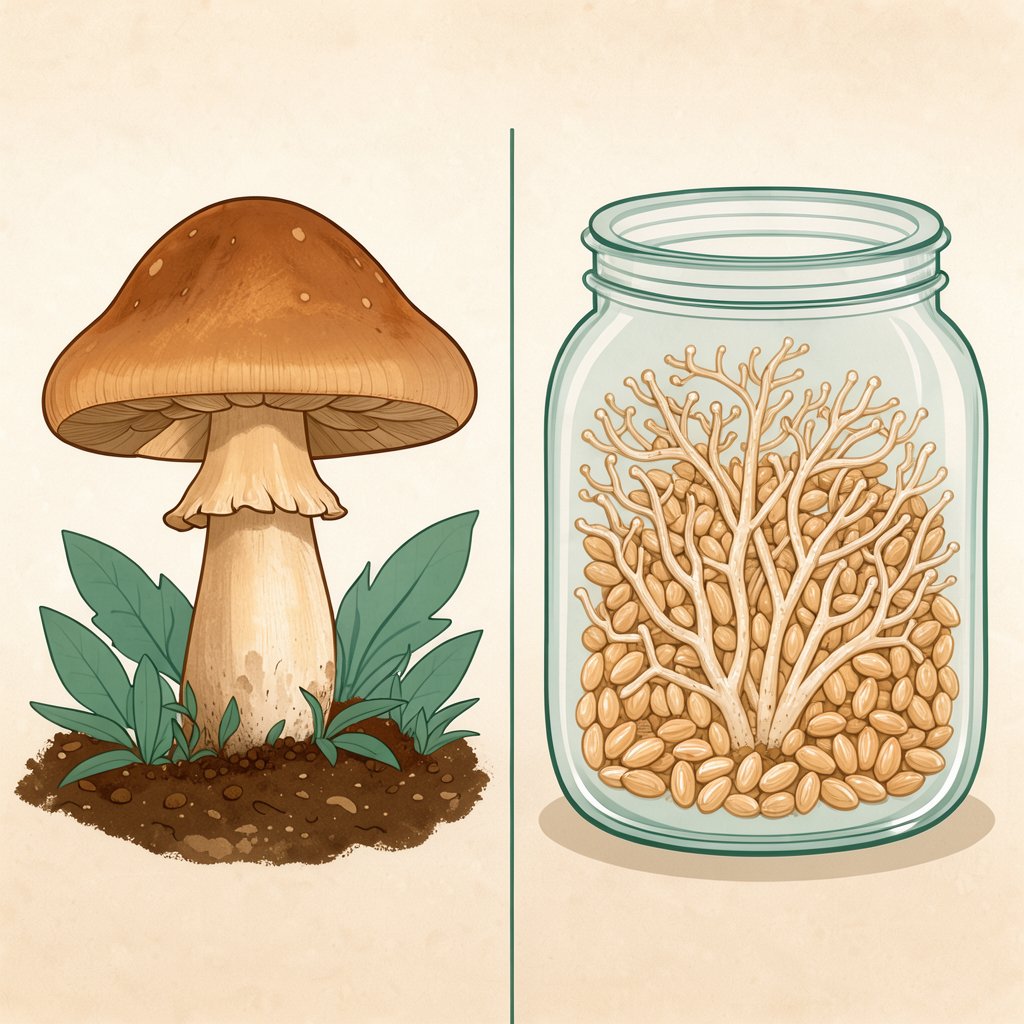
Search for the best mushroom immune supplements in 2026 and nearly every result hands you the same silhouette: a podium of brand names, star ratings, and capsule counts. This guide was written from a different evidence desk, one that cannot produce that podium: a local library of 1,137 wellness books, searched offline, in which no brand names, no prices, and no lab certificates exist. What the library holds instead is older and, for a shopper, more durable — the pharmacopeia record of which mushroom, which part of the mushroom, and which preparation the longest herbal traditions actually used.[1][2] That record answers the fruiting body vs mycelium question the only honest way it can be answered here: with documented tradition on one side and a plainly stated gap on the other.
Here is the route. First, what the word immune even means in mushroom chemistry — the polysaccharide class the encyclopedia treats as immunotherapeutic. Then where the potency lives inside a fruiting body, because not every gram of mushroom tissue is equal. Then the three best-documented forms — chaga, reishi, and turkey tail — ranked by the depth of their traditional paper trail rather than by marketing claims. Finally, a four-check standard you can hold against any 2026 label, plus the safety record, which for chaga at least is written down in unusual detail. Every fact carries a footnote, and every gap is called a gap.
Key Takeaways
- Immune-support reputation in mushrooms rests on one documented compound class: polysaccharides whose main component is 1-3-beta-D-glucans, acting through macrophage activation and increased T-cell activity.[1]
- The fruiting body is what tradition actually prepared, and potency inside it is not uniform: the encyclopedia places the highest concentration of active substances in the upper cap and the lower stem.[1]
- On mycelium-on-grain biomass our book base holds no evidence either way; the only mycelium on record is industrial — wood design material and enzymes.[1]
- Chaga carries the fullest protocol paper trail: a water infusion of 1 part raw material to 5 parts water at 122 °F (50 °C) steeped 48 hours, or a 1:10 tincture on 70% alcohol.[3][4]
- The best mushroom immune supplement is the one whose species, part, extraction, and dose you can actually verify — the same four checks this guide teaches you to demand.
What Makes a Mushroom Supplement “Immune” in the First Place?
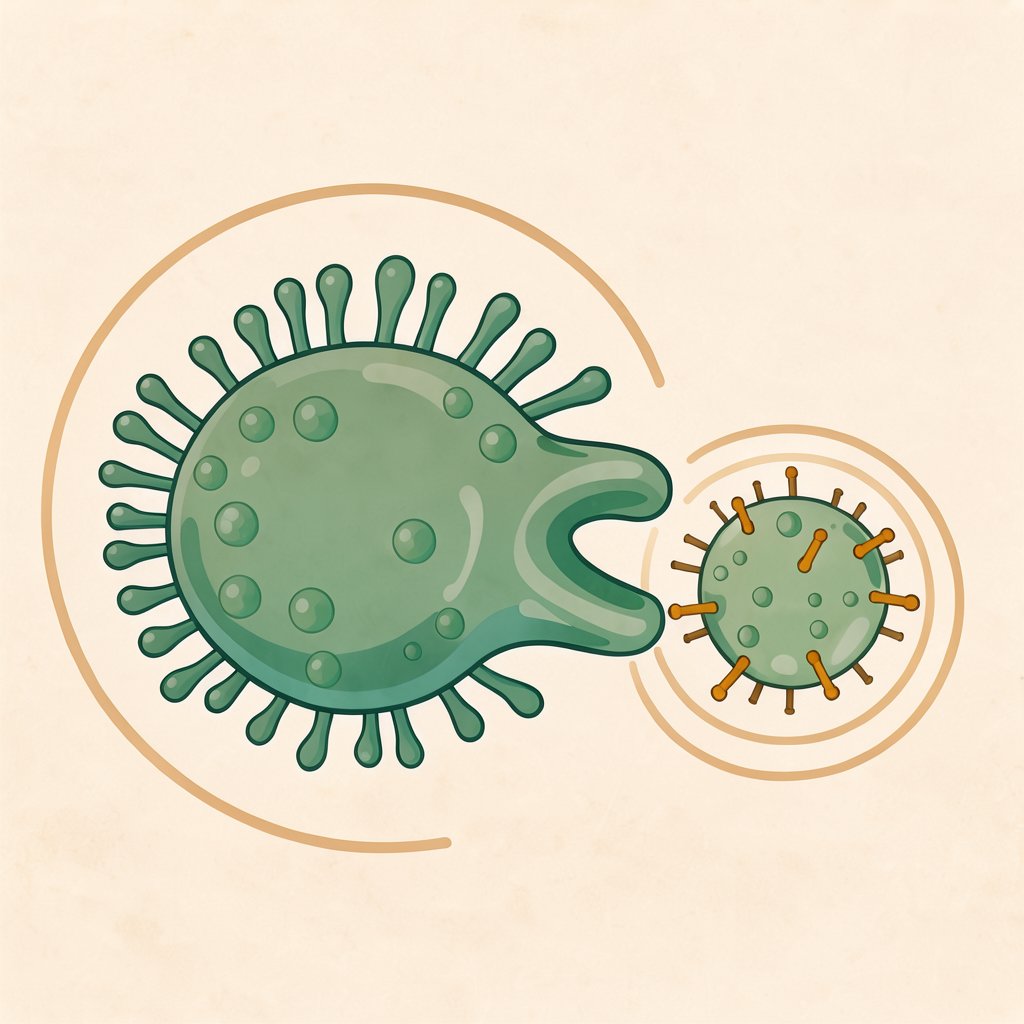
A mushroom immune supplement, in the strict sense used throughout this guide, is a preparation whose fruiting bodies deliver immunotherapeutic polysaccharides — long sugar-chain molecules whose main component is 1-3-beta-D-glucans. That definition comes from a medicinal-mushroom encyclopedia, not from a marketing department, and it is the yardstick every following section measures against.[1]
The encyclopedia sorts mushroom compounds with antitumor activity into two groups. The first group consists of direct cytotoxic agents: terpenoids, steroids, gamma-pyrones, cytotoxic phenols, and fatty acids. The second group is the immunotherapeutic one — mostly polysaccharides — and it occurs characteristically in mushrooms of the Polyporaceae, Tricholomataceae, and Agaricaceae families.[1] For a shopper this second group is the one that matters, because it is the reason a mushroom immune complex is marketed at all. Its documented mechanism chain runs through macrophage activation, increased T-cell activity, elevated serum factors, and reduced chemotherapy toxicity in the source’s framing.[1]
Two species preview how deep the record goes. Reishi (Ganoderma lucidum) is credited with about 400 biologically active components and a property list that runs from immunomodulating and anti-inflammatory to antioxidant and cardioprotective.[2] Turkey tail (Coriolus versicolor) is described as strengthening both the innate and the adaptive arms of the immune response.[2] Yet the compound class only matters if the jar contains the right tissue of the right mushroom, and that is precisely where modern labels turn vague and where tradition stays surprisingly specific.
Fruiting Body vs Mycelium: What 2,000 Years of Tradition Actually Used
Strip the 2026 debate down to its documented core and the traditional answer is one-sided. Reishi appears in a Chinese medical treatise roughly 2,000 years old under the name lingzhi — the mushroom of immortality — and Chinese and Japanese emperors are recorded drinking reishi tea and elixirs for vitality and longevity.[2] The tonic lineage around those court rituals is older still: the herbal tradition credits the legendary emperors Fu-xi with a reign of about 115 years, Shen-nung with about 140, and Huang-di with about 110.[6] Every preparation in that record was made from the fruiting body — the mushroom you can see and hold. Chaga, the northern entry in the same pharmacopeia, technically yields a sclerotium rather than a fruiting body, and tradition was just as particular about it: only the inner flesh was ever taken.[1]
Now the honest half of the answer. The fruiting body vs mycelium argument as it is fought today — mycelium-on-grain biomass, starch content, label claims — does not exist anywhere in this book base. The only mycelium on record in the encyclopedia is industrial: a material for wood design and a source of enzymes.[1] This guide will not invent industry claims in either direction. What it can say is that every immune compound cited here was documented from fruiting bodies and sclerotia, the parts tradition harvested, and that turkey tail’s traditional Chinese use — strengthening immunity, especially against cancer — belongs to the same fruiting-body practice.[2] A 2026 label selling mycelium biomass is therefore making a claim tradition never tested; verifying it is a laboratory-document question, not a heritage question.
Not All Mushroom Parts Are Equal: Where the Potency Lives
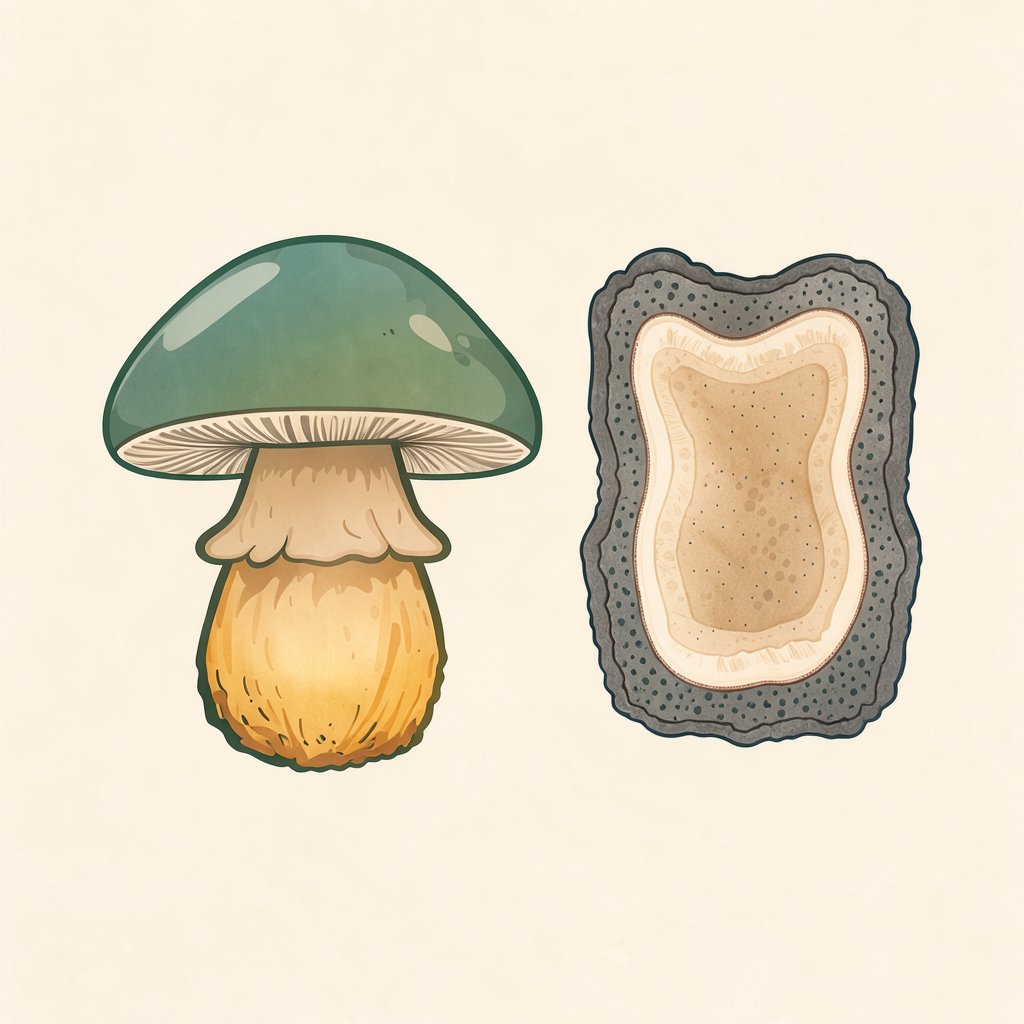
Here is the differentiator most shopping guides never mention: even inside a correctly identified fruiting body, potency is not spread evenly. The encyclopedia states it plainly — in cap mushrooms, the highest concentration of active substances sits in the upper part of the cap and the lower part of the stem.[1] The middle zones are not worthless, but they are not where the strength gathers, and a powder that mills the whole mushroom evenly dilutes the strongest tissue with the weakest.
Polypores follow a stricter rule. For fleshy polypores and chaga, only the inner flesh was traditionally used; the hard or leathery surface and the tubular layer underneath were discarded outright, and only small thin polypores were processed whole.[1] That is a sorting discipline rather than a superstition — the traditional equivalent of a concentration standard. A manufacturer who cannot say which part of the mushroom entered the extract cannot borrow the part-potency doctrine for the label.
Raw material also carries a safety-side variable. Fruiting bodies bioaccumulate chemical elements from their substrate, heavy metals included, which is why the field guide treats wild-harvested mushrooms as a quality question before it treats them as food or medicine.[5] The same guide shows how sharply tissue composition varies by species in plain nutrition: mushroom protein is described as exceeding all vegetables and approaching meat and fish, vitamin B1 concentrates in chanterelles and summer honey fungus, vitamin A in milk-mushrooms and chanterelles, vitamin D in porcini, and PP in oyster mushroom, with potassium, phosphorus, calcium, and iron as the mineral backbone.[5] Material that variable is a label that needs specifying.
The Tradition-Based Quality Checklist for Any Mushroom Product
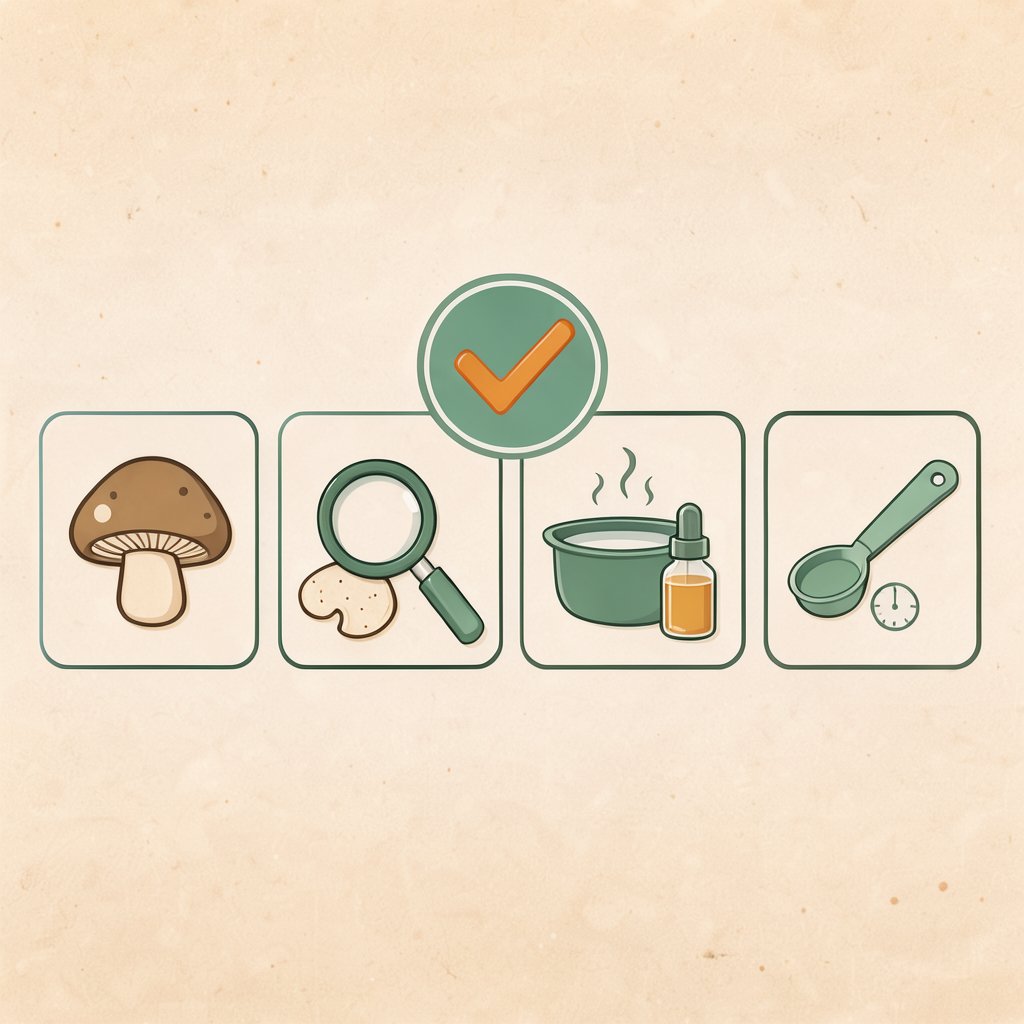
Everything the pharmacopeia record grades a mushroom product on compresses into four checks. None of them requires a chemistry degree; each of them requires the seller to answer a question, which is exactly what tradition demanded of its own herbalists.[1][3] Run them, in order, before spending money:
- Check the species. Does the label name a mushroom with documented immune compounds — the polysaccharide class of the first section? Chaga, reishi, and turkey tail carry the deepest paper trail in this base.
- Check the part. Was the fruiting body used, and which part of it? For chaga and fleshy polypores, tradition accepted only the inner flesh.[1]
- Check the extraction. Water at 122 °F (50 °C) and 70% alcohol pull different compound classes; general herbal practice adds that alcohol releases compounds water does not, such as essential oils, and that tinctures keep longer.[3][9] A label silent on solvent is silent on chemistry.
- Check the dose and course. Traditional protocols fixed glass, spoon, and drop counts with timing and course length — a verifiable concentration per dose. Invented ratios verify nothing.[3]
One honest boundary before the shopping starts. The modern spec vocabulary — beta-glucan percentages, extraction ratios like 1:1 or 10:1, third-party assay certificates — does not appear anywhere in these books, and this guide will not fabricate it. The nearest equivalent is the fixed monograph parameter set: one part raw material to five parts water, a temperature of 122 °F (50 °C), a steep of 48 hours.[3] That is the precision tradition wrote down, and it is the precision you are entitled to demand in prose from any seller. Value on this desk means concentration per dose you can trace — never a price table.
Best Form #1: Chaga, the Extraction Benchmark
Chaga takes the top slot for one transparent reason: it is the only species in this base with a complete preparation paper trail, from raw material to pharmacy shelf. If a manufacturer cannot tell you how its chaga was extracted, tradition can, in writing.[3] The home water-infusion protocol runs as follows.
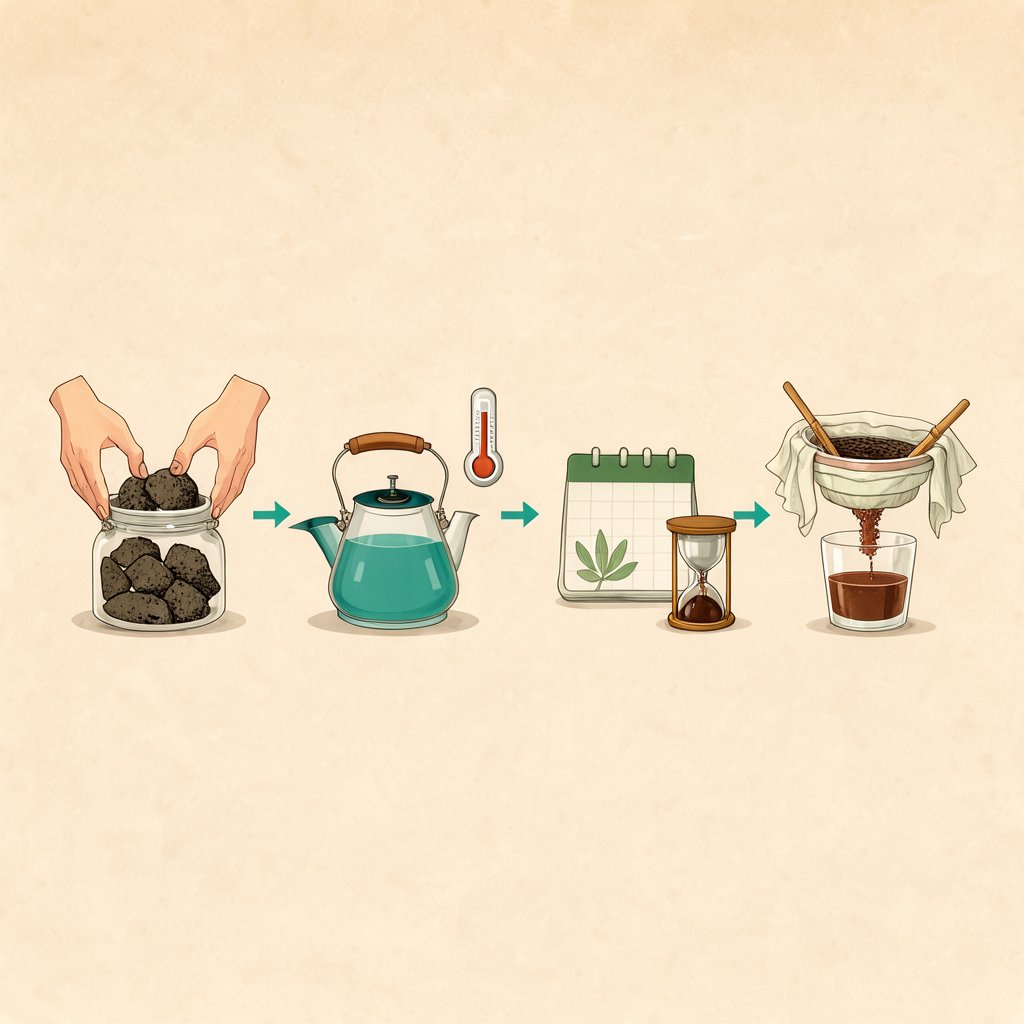
- Prepare the raw material. Rinse the pieces of sclerotium, then soak them in about 7 fl oz (200 ml) of water for 4–5 hours until softened; the soak both cleans the dense inner flesh and makes it workable for the next step.[3]
- Grate or mince. Reduce the softened chaga to small pieces or gratings, because the finer the cut, the more surface the water has to act on during the long steep.[3]
- Steep at 1:5 and 122 °F (50 °C). One part raw material to five parts water, held at 50 °C — deliberately warm, never boiling — for two full days, 48 hours, exactly as the monograph fixes it.[3]
- Strain and press. Pour the dark extract through several layers of gauze, press the material to recover the last of the liquid, and dilute the result back to the initial volume.[3]
- Dose and store. The monograph dose is one glass taken one to three times a day before meals, and the finished infusion keeps cool for a maximum of two days — a short shelf life that says something about what a fresh extract is.[3]
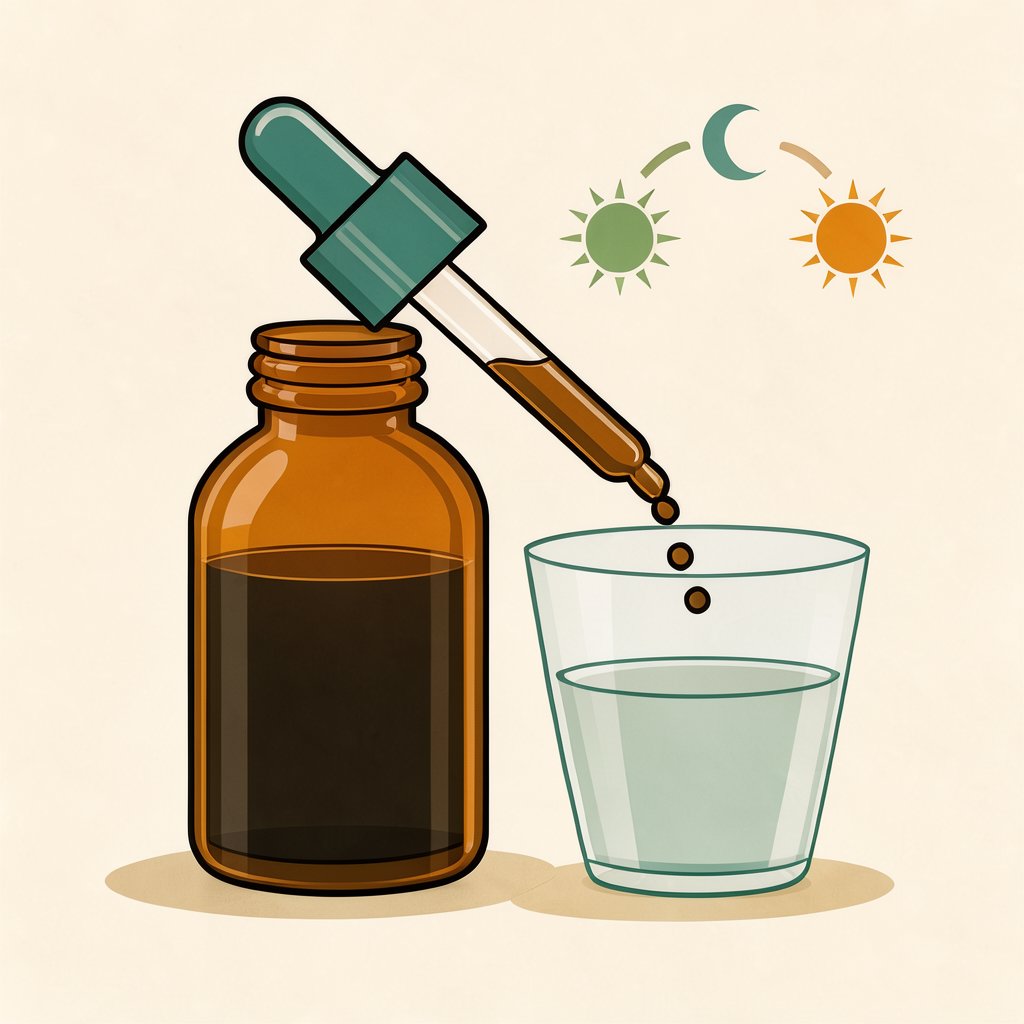
Alcohol gives chaga a second, longer-lived form. The natural-antibiotics reference fixes the tincture at 1 part powdered dried chaga to 10 parts 70% ethyl alcohol, steeped several days in a cool place and strained, dosed at 20 drops in a quarter glass of boiled water three times a day.[4] The two solvents are not rivals but a division of labor, and general herbal practice explains it: alcohol extracts compounds water does not release, and tinctures keep longer.[9] Tradition even blended the formats — a combined drink of 100 ml chaga infusion with an herbal infusion, taken three times a day before meals.[3]
The pharmacy tier existed long before the supplement aisle. Befungin is a thick, dark-brown extract prepared from chaga growths with cobalt salts added, described in the source as tonic and analgesic in action — a Soviet-era pharmacy drug, not a wellness startup.[3] The same monograph tradition records chaga tea as recommended in gastric and duodenal ulcer care and as improving cancer patients’ general condition while relieving nausea and pain; we report that exactly as the book frames it — an adjunct record, not a treatment promise.[3] For the species in depth, see our chaga mushroom guide.
Best Form #2: Reishi, the 400-Bioactive “Mushroom of Immortality”
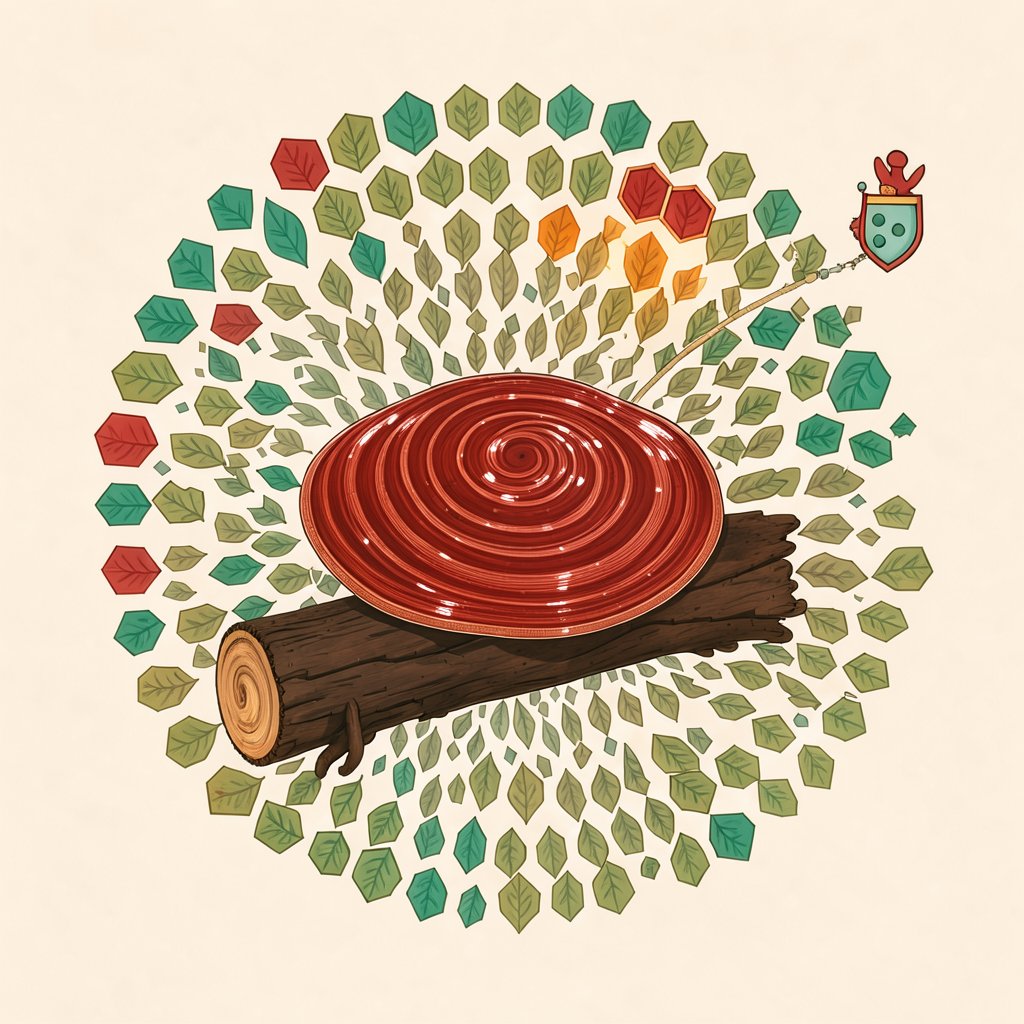
Where chaga is the extraction benchmark, reishi is the breadth benchmark. A single fruiting body of Ganoderma lucidum is credited with about 400 biologically active components, and the source’s property list reads like a pharmacy inventory: immunomodulating, anti-inflammatory, antitumor, antibacterial, antiviral, antifungal, antioxidant, hypotensive, antiallergic, and cardioprotective.[2] That breadth, recorded for the mushroom the emperors drank, is why reishi anchors so many modern mushroom immune complex formulas — the documented tradition sitting underneath the blend.
The most striking research findings deserve their exact framing. The source reports that reishi’s ganoderic acid destroys human lung carcinoma cell lines and suppresses tumor growth and proliferation, with a corresponding effect documented on inflammatory breast cancer cells — laboratory cell-line findings from the book’s survey, reported here as a research record and not as a claim about what a capsule does in a living body.[2] Two quieter findings may matter more to an everyday reader: reishi components are reported to inhibit histamine release from mast cells — the allergy-control angle — and to restore the balance between the two branches of the immune system.[2]
Format and dosing, honestly weighted. A popular-level source in the base documents reishi in drink format — coffees and daily drinks — which matches how the tradition actually took it.[7] What the base does not contain is a gram dosage for reishi in any form; the serving size on a 2026 label is therefore the manufacturer’s number, not tradition’s, and we leave it that way rather than inventing one. For the evening-ritual side of the species, see our reishi evening tea ritual.
Best Form #3: Turkey Tail, the Most-Studied Immune Polypore
When the criterion shifts from breadth to depth of documentation, turkey tail takes the slot: the source calls it the most-studied medicinal mushroom.[2] Behind that title stand two named, researched complexes — PSP (peptide-polysaccharide proteoglycans) and PSK (polysaccharide-K, known as krestin) — which is more specificity than most species ever receive; it gives a label something concrete to point to and a shopper something concrete to look up.[2]
The mechanism description is equally concrete. Turkey tail is reported to strengthen both the innate and the adaptive immune response, to increase immune-activating and antiviral cytokines, and to raise stem-cell-related regeneration markers.[2] The tradition line matches the science line: turkey tail was used in Traditional Chinese Medicine to strengthen immunity — especially, the source notes, against cancer — placing it in the same fruiting-body tonic lineage as reishi, inside the broader herbal tradition documented in the medicinal-plants literature of that pharmacopeia.[2][8] The honest gap repeats itself here: no gram dosage for turkey tail exists in this base, so treat any serving size as the seller’s own number.
Worth Knowing: Shiitake and Lion’s Mane in the Same Pharmacopeia
The encyclopedia’s supporting entries round out a shopper’s vocabulary. Shiitake fruiting bodies contain a substance with antimutagenic activity that blocks the formation of N-nitroso compounds — a narrow, specific property, and a fair reason the species keeps appearing in food-format blends.[1] Lion’s mane (Hericium erinaceus) works different territory altogether: its extracts are documented as nerve growth and myelination factors in vitro — a laboratory finding about nerves rather than a clinical claim about immunity, which is exactly why it does not displace the top three in a guide ranked by immune documentation.[1]
One genus-level note completes the picture. Xylotrophic — wood-rotting — polypores as a group are described as sources of bioantioxidants, with the antioxidant action linked to a humin-like complex.[1] Chaga, reishi, and turkey tail all sit inside that wood-rotting lineage, a tidy reminder that the pharmacopeia’s immune picks were not random: they are the documented corner of a documented family. One more entry for the honesty ledger: the base contains no dosing or safety data for shiitake or lion’s mane supplements, so on a modern label those numbers belong to the seller, not to the pharmacopeia.
How to Read a 2026 Label: What You Can and Cannot Verify
The industrial reality behind those jars is documented, and it is sobering in a useful way. The encyclopedia names the largest Chinese fungo-producer as the state corporation Zhejiang Fungi Pharmaceutical Co, on the market for almost three decades, and reports that all major modern Russian mushroom preparations were built on this company’s semi-finished products.[1] Contract manufacturers, the same source notes, will extract or lyophilize anything.[1] A supply chain that process-agnostic makes your questions legitimate: when the extractor can work with anything, the burden of specifying what — species, part, solvent, concentration — falls on the label and, honestly, on you.
So separate the verifiable from the unverifiable. What these sources can support on a modern label: a named species with documented compounds, a named part of the fruiting body, a named solvent, and a dose per serving traceable to a traditional protocol — with Befungin and commercial chaga syrup as the only named finished pharmacy forms in the base.[1][3] What no page of this base can verify: beta-glucan percentages, extraction ratios such as 1:1 or 10:1, third-party testing vocabulary, brand rankings, or price-value comparisons — none of that exists here, and this guide declines to fabricate it. Treat a spec claim you cannot trace the way a village herbalist would have treated an unlabeled jar: with a follow-up question.
Safety, Dosing Courses, and FAQ
Chaga is the one species in this base with a written contraindication record, so it sets the safety template. The syrup monograph lists diabetes mellitus and individual intolerance as contraindications, describes the preparation as non-toxic and non-addictive, and fixes the dose at one teaspoon three to four times a day with food, for adults and children over twelve.[3] The infusion monograph adds hypersensitivity as its contraindication, with allergic reactions listed as a possible side effect.[3]
Long use has one documented quirk worth knowing before a course begins: some patients develop increased excitability of the autonomic nervous system, which the monograph says disappears after dose reduction or discontinuation.[3] Course length, where tradition fixed it, was generous but bounded — the chaga and birch-bud tincture course ran one tablespoon three times a day, twenty minutes before meals, for three months, repeated only after a two-week break.[3] Freshness belongs to the protocol too: the infusion keeps for a maximum of two days cool.[3] For expectations, one adjacent general herbal note says vitamin-herb infusions start acting after at least ten days of intake.[10] The heavy-metal screen of the third section — buy raw material you can question — completes the safety layer.[5]
One gap, stated plainly: for reishi, turkey tail, shiitake, and lion’s mane, this base contains no contraindication lists at all. Their absence here is a property of the sources, not a clean bill of health. Bring the same four checks to those species, and bring your clinician into any decision that touches medication, pregnancy, or a managed condition.
This cluster has no mushroom-specific offers to review yet, so we track two adjacent self-care options with full editorial reviews — see our Joint Genesis review and our Unlock Your Hip Flexors review, or go straight to the current offers: Joint Genesis and Unlock Your Hip Flexors. Their spec sheets are vendor claims and are labeled as such on the review pages. Disclosure: we may earn a commission if you buy through links on this page; recommendations are our editorial opinion.
That closes the loop this guide opened. The best mushroom immune supplement of 2026 is not a brand on a podium — it is the product whose species carries documented immune compounds, whose label names the fruiting-body part, whose extraction has a solvent and a logic, and whose dose traces back to a protocol someone wrote down. Physicians of emperors and village herbalists graded mushrooms on exactly those four checks; hold the modern jar to the same standard. To build the wider routine, our functional mushrooms overview and the adaptogens buyer’s guide apply the same evidence-first lens to the neighboring shelves.
Frequently Asked Questions
Fruiting body or mycelium: which did tradition actually use?
Tradition used fruiting bodies — and for chaga, the inner flesh of the sclerotium. Reishi’s 2,000-year lingzhi record and turkey tail’s Chinese practice are both fruiting-body preparations.[2] On mycelium-on-grain biomass the sources are silent; the only mycelium on record is industrial — wood design material and enzymes — so treat that debate as a laboratory-document question.[1]
Is a water extraction or an alcohol tincture better?
Neither is universally better — they pull different compound classes. The chaga monograph fixes water at 1:5 and 122 °F (50 °C) for 48 hours, while the tincture protocol fixes 1:10 on 70% alcohol.[3][4] General herbal practice adds that alcohol releases compounds water does not and that tinctures keep longer.[9] Choose the format whose solvent the label actually names.
How long does a mushroom regimen take to show anything?
The only timeline anchor in this base is a general herbal note: vitamin-herb infusions start acting after at least ten days of intake.[10] Tradition’s own course lengths were longer and bounded — the chaga and birch-bud tincture ran three months, then a two-week break before repeating.[3] Judge a product across a full course, not one dramatic week.
Who should not take chaga preparations?
The written record is specific: the syrup monograph contraindicates diabetes mellitus and individual intolerance, and the infusion monograph contraindicates hypersensitivity, listing allergic reactions as a possible side effect.[3] Long use can raise excitability of the autonomic nervous system, which resolves on dose reduction or stopping.[3] With any managed condition, ask your clinician first.
How should a homemade chaga infusion be stored?
Cool, and for no more than two days — the monograph’s own limit, which makes small, fresh batches the traditional norm.[3] The full preparation chain, from the 4–5 hour soak to pressing through gauze, is walked step by step in our chaga mushroom guide.
What is Befungin?
A pharmacy-grade chaga extract: thick, dark brown, prepared from chaga growths with cobalt salts added, and described in the source as tonic and analgesic in action — a Soviet-era pharmacy drug rather than a modern supplement brand.[3] It is one of only two named finished forms in this base, alongside commercial chaga syrup.
Sources
- [1] M. V. Vishnevsky — Medicinal Mushrooms: The Great Encyclopedia (2014) — the core reference: the two compound families, the 1-3-beta-D-glucan class and its mechanism chain, the part-potency doctrine, the inner-flesh rule, the shiitake and lion’s mane entries, and the industrial supply record.
- [2] Joseph Mercola — Herbs and Spices (2023) — reishi’s survey of about 400 biologically active components and its property list, the ganoderic acid cell-line findings, the mast-cell histamine note, turkey tail’s PSP and PSK complexes, and the lingzhi tradition record.
- [3] Birch, Fir and the Chaga Fungus (2012) — author not stated in the source metadata — the chaga monograph tradition: infusion, syrup, and home protocols, Befungin, dosing courses, contraindications, and the two-day storage limit.
- [4] The Most Effective Natural Antibiotics (2010) — author not stated in the source metadata — the alcohol-tincture protocol of one part powdered dried chaga to ten parts seventy-percent ethyl alcohol, dosed in drops.
- [5] Edible, Poisonous, Medicinal and Cultivated Mushrooms of the Middle Zone of the European Part of Russia (2012) — author not stated in the source metadata — heavy-metal bioaccumulation in fruiting bodies and the species-by-species nutrition profile.
- [6] The Great Medicine of Chinese Emperors: Schisandra — Treatment and Cultivation (2012) — author not stated in the source metadata — the emperor longevity lore that frames the tonic tradition reishi belongs to.
- [7] Coffee, Reishi, Aloe Vera and Your Health (2021) — author not stated in the source metadata — the popular-level record of reishi in drink format, used in this guide for format context only.
- [8] Medicinal Plants in Traditional Chinese Medicine (2002) — author not stated in the source metadata — the general herbal background of the fruiting-body tonic tradition that reishi and turkey tail both sit within, cited here for context.
- [9] A home guide to vodka-based tinctures (2011) — author not stated in the source metadata — an adjacent source for the general herbal rationale that alcohol extracts compounds water does not release and that tinctures keep longer.
- [10] A chia-seeds nutrition guide (2015) — author not stated in the source metadata — an adjacent source for the single timeline note that vitamin-herb infusions start acting after at least ten days of intake.
Where to go next: for the species-by-species background, start with our functional mushrooms traditional uses overview and the chaga mushroom guide that expands this article’s benchmark species. If your interest is the broader tonic shelf, the adaptogens buyer’s guide applies the same four-check lens to herbal adaptogens, and our reishi supplements vs reishi tea comparison narrows the format question for one mushroom. Each page keeps the same rule as this one: traditional use framed as traditional use, and every number labeled with its source.
How we researched this: built from a local library of 1,137 wellness books, queried through an offline retrieval system with no internet sources; every factual claim above was checked against the cited source passage before publication. Where a fact could not be found — and for every brand, price, beta-glucan percentage, and extraction ratio, it could not — the gap is stated as a gap. We do not rank products we cannot verify.
