
Educational content only — not medical advice. See our full Medical Disclaimer and Affiliate Disclosure below.
Few roots in Chinese herbalism carry a longer paper trail than astragalus, the plant the classical tradition records under the name huang qi. Modern reference books count it among the 50 fundamental healing herbs of Chinese medicine and list it as an ingredient in more than 200 herbal formulas, a standing built across roughly 2,000 years of recorded use[1]. American shelves now sell the same root as capsules, powders, teas, and liquid extracts, almost always under a single Latin name, Astragalus membranaceus[1]. It is the root this guide calls the wei-qi herb — a label whose provenance the next paragraph pins down.
This guide follows the source books step by step: the history, the immune mechanics they report, the way traditionalists brew the root, and the honest edges of the record. One honesty note comes first — our title borrows the phrase wei qi as a “shield” shorthand for the protective role the sources describe, but the term appears nowhere in the consulted books, so it stays this guide’s editorial lens and nothing more. Every dose below keeps to its own species, every claim is traditional record as printed, and nothing here is medical advice or a promise of a health result.
Here is the map of this guide, section by section:
- What Is Huang Qi? Astragalus Root, Defined
- A 2,000-Year Paper Trail: From the Shen Nong Ben Cao Jing to Imperial Baths
- How Does Astragalus Work? The Immune ‘Shield’ Behind the Name
- The TCM Decoction: How Traditionalists Brew Huang Qi
- Know Your Species: A. membranaceus vs the Russian Astragalus Protocols
- The Soviet Apothecary Infusion: Water-Bath and Thermos Methods
- Folk Kitchen Protocols: Wine, Powders and the Milk-Honey Tonic
- Astragalus in Herb Blends: Kidney, Heart and Circulation Collections
- Safety, Cautions and What the Sources Don’t Say
- Frequently Asked Questions
Key Takeaways
- Huang qi (astragalus) is one of the 50 fundamental herbs of Chinese medicine, an ingredient in more than 200 classical formulas, first recorded in the Shen Nong Ben Cao Jing some 2,000 years ago[1].
- The recorded activity sits in the polysaccharide fraction: better innate-immunity signaling, growth of NK cells and macrophages, dendritic-cell maturation, and bidirectional cytokine tuning[1].
- The only TCM-style decoction in the sources simmers 6 g of huang-chi root inside a five-herb blend, reducing 500 mL of water to 200 mL, taken in three daily doses for a two-month course[3].
- Russian protocols belong to other species — chiefly A. dasyanthus — and doses are never transferred between species[4].
- No astragalus-specific contraindication list exists in the consulted sources; a suspected immunosuppressive action plus the general herbal rules are the whole caution record[1][11].
What Is Huang Qi? Astragalus Root, Defined
Astragalus is a large genus of legume-family plants (Fabaceae) whose root — and sometimes stems — Chinese herbalism has worked with to raise energy levels and strengthen immunity, with additional traditional records for anemia, allergy, fever, and gynecological complaints[1]. Supplements typically carry one species out of several thousand in the genus: Astragalus membranaceus, the root the Chinese tradition calls huang qi[1].
The chemistry, as the modern reference summarizes it, is broad: more than 200 chemical constituents have been found in the plant, with the isoflavonoids and polysaccharides held responsible for its recorded effects[1]. That polysaccharide fraction is where the immune story of the next section picks up. The same book also files astragalus into prestigious company — in its licorice chapter, licorice is called an adaptogen “along with astragalus and ginseng,” a plain statement that this root belongs to the adaptogen class beside the most famous roots in the tradition[1]. Readers who want that whole class at a glance will find it in our adaptogens buyer’s guide.
One botanical footnote keeps the rest of this guide honest. A Soviet homestead monograph counts about 1,600 astragalus species in the world and more than 800 growing in the former USSR alone — yet it records exactly one of them, A. dasyanthus, as holding medicinal value in that system[4]. Hold that split in mind: the Chinese and supplement species is one plant, and the Russian protocol record below belongs to its cousins.
A 2,000-Year Paper Trail: From the Shen Nong Ben Cao Jing to Imperial Baths
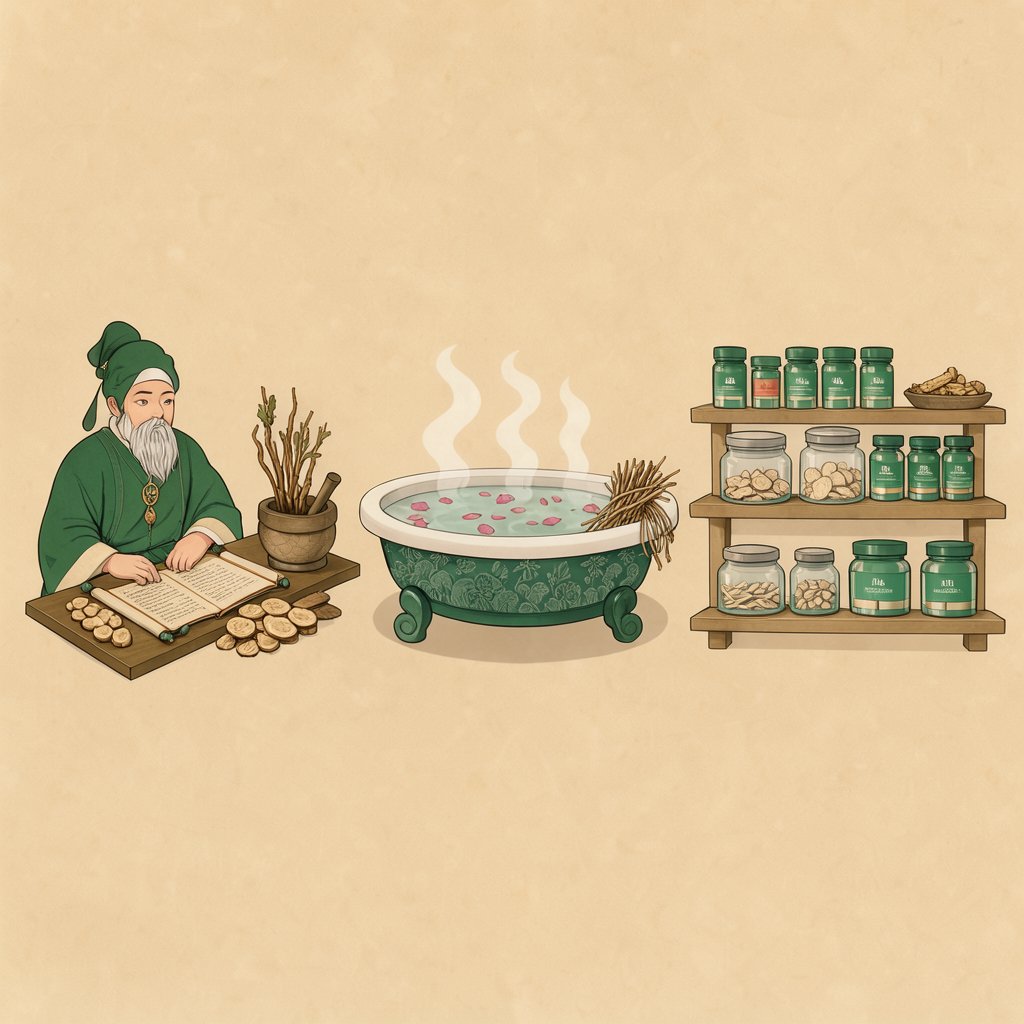
The documentation starts early and stays consistent. Huang qi is recorded in the Shen Nong Ben Cao Jing, the classical canon that appeared roughly 2,000 years ago in the Eastern Han empire, and the modern reference describes the root as one of the pillars of Chinese medicine for several thousand years[1]. The same source counts huang qi among the 50 fundamental healing herbs of the tradition and credits it as an ingredient in more than 200 Chinese herbal formulas[1]. For a single legume root, that is a remarkable share of the classical formulary.
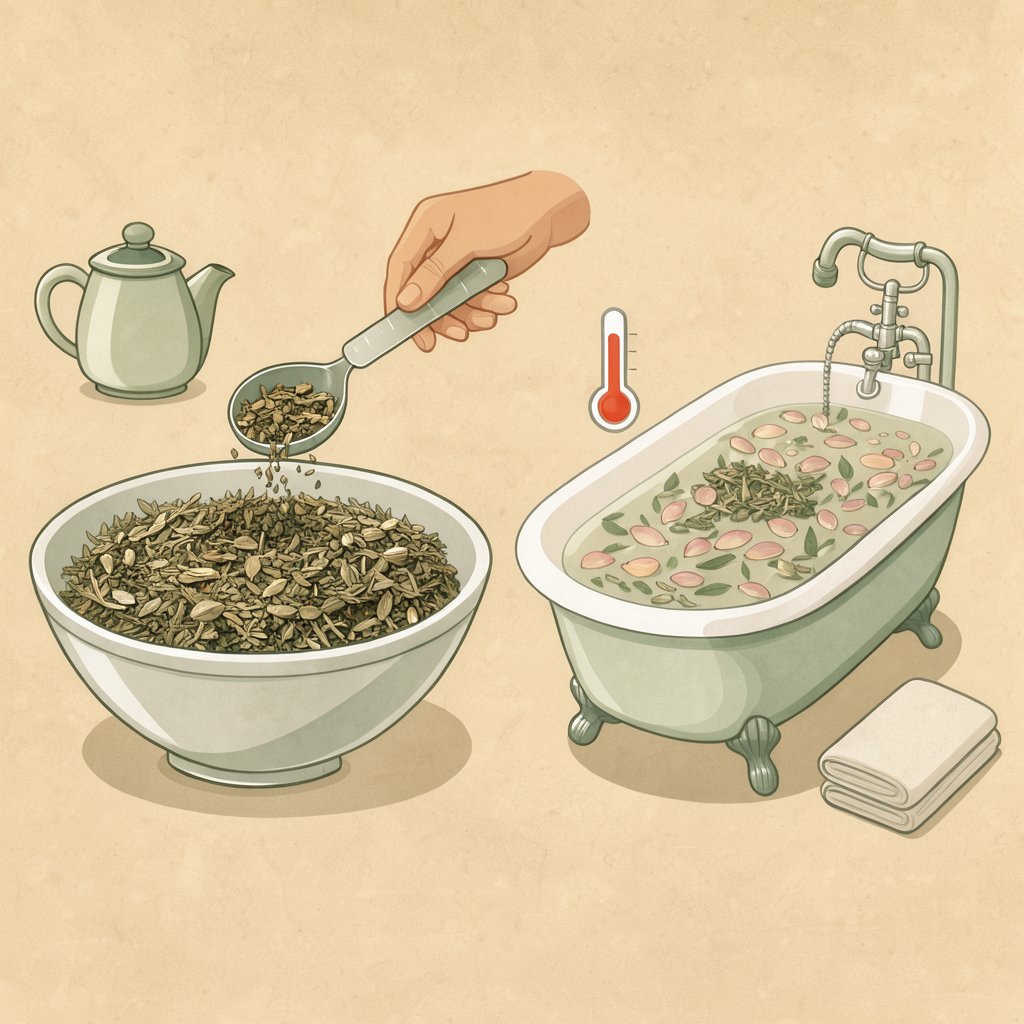
The record even reaches the imperial bathroom. A Chinese emperor-medicine book on schisandra describes imperial baths prepared with schisandra fruits, peach and Chinese-rose blossoms, and the roots of astragalus and ginseng — the two tonic roots steeped straight into the bath water[2]. That single sentence is everything the consulted sources say about the bath tradition: no quantities, no protocol, no follow-up. We note it as historical color and stop exactly where the record stops.
Why does the lineage matter to a modern reader? Because a root that appears in a Han-dynasty canon, in two hundred recorded formulas, and in imperial bathing customs was never a folk footnote — it was core inventory for two millennia of practice. The next section turns to what the modern books report about the root inside the body.
How Does Astragalus Work? The Immune ‘Shield’ Behind the Name
First, the honesty note promised in the introduction. The wei-qi “shield” framing is this article’s editorial overlay: the term itself appears nowhere in the consulted sources, and we do not put it in any book’s mouth. What the sources do record is concrete, cell-level mechanics, and that is all this section reports.
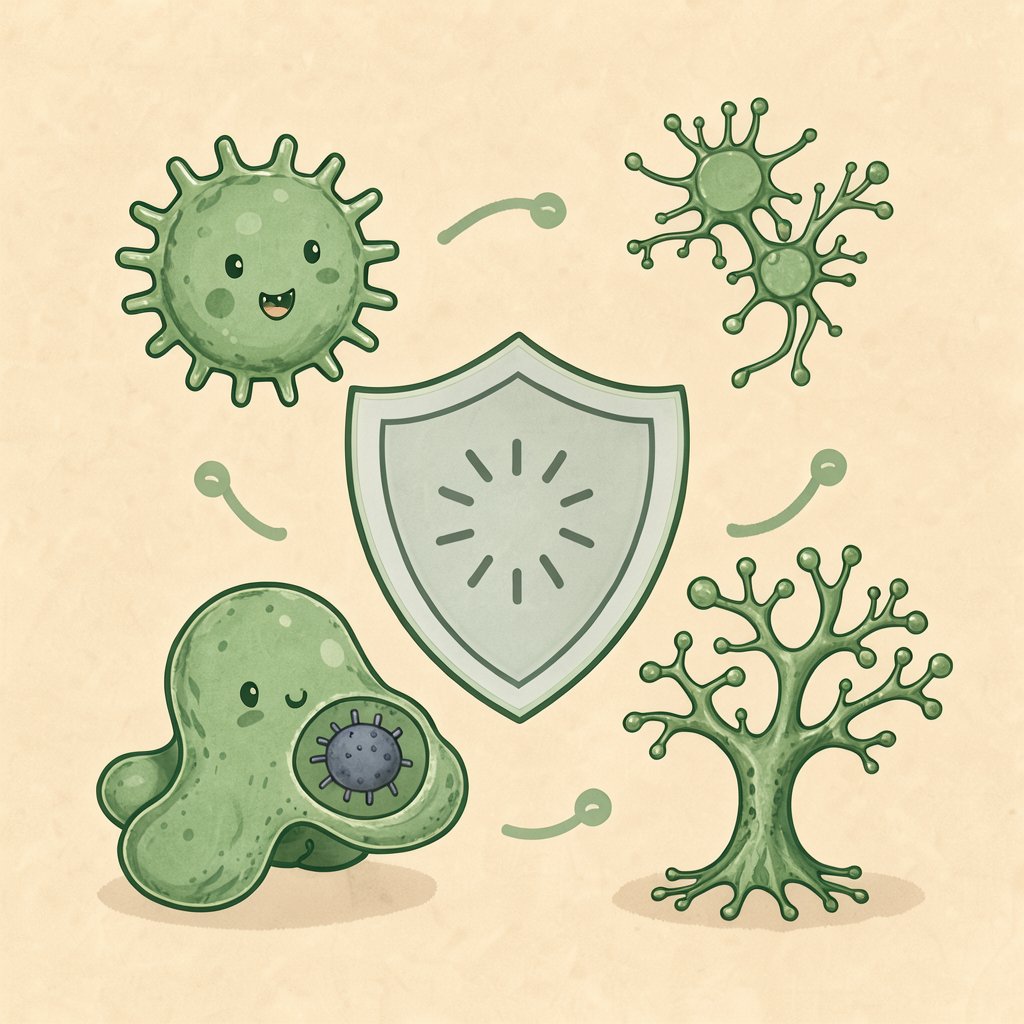
The modern reference attributes the activity to the polysaccharide fraction. Astragalus polysaccharides improve the signaling pathways of innate immunity, promote the growth of NK (natural killer) cells and macrophages, and help dendritic cells grow and reach maturity[1]. They also modulate cytokines — the book’s phrasing is that they raise the concentration of working cytokines while ordering the clearance of pro-inflammatory ones[1]. In plain terms, the recorded picture is a two-direction tuning of immune messengers, not a simple “more is better” story.
One clinical anchor supports the pattern, exactly as the book reports it: in a clinical study of metastatic cancer patients, one month of astragalus polysaccharide treatment significantly reduced symptom clusters (two or more co-occurring symptoms) and the activity of key pro-inflammatory cytokines[1]. The book gives no study identifiers, so we pass none along. The same source adds two carefully hedged population notes — astragalus “probably protects children from upper-respiratory infections” and “plays a key role in regulating the immune response in asthma”[1] — and that caution in the phrasing is a caution we keep too.
The same record holds one bidirectional flag worth quoting early: there is a suspicion that astragalus exerts an immunosuppressive action and could be usable in certain autoimmune diseases[1]. For a reader with an autoimmune condition, that is a caution signal rather than an invitation, and Section 9 returns to it in full. For readers building broader seasonal-defense habits without herbs, our wu wei seasonal immunity guide covers the movement side of that tradition.
The TCM Decoction: How Traditionalists Brew Huang Qi
Chinese herbalism most often met huang qi in a pot, not a capsule. The consulted collection holds exactly one TCM-style decoction protocol that includes huang-chi, recorded in Yuri Konstantinov’s Chia Seeds: A Unique Natural Medicine (2015) in the book’s diabetes chapter[3]. It is a five-herb simmer with a strict reduction, and every number below is printed as the source gives it.
Step 1: Weigh the five-herb blend
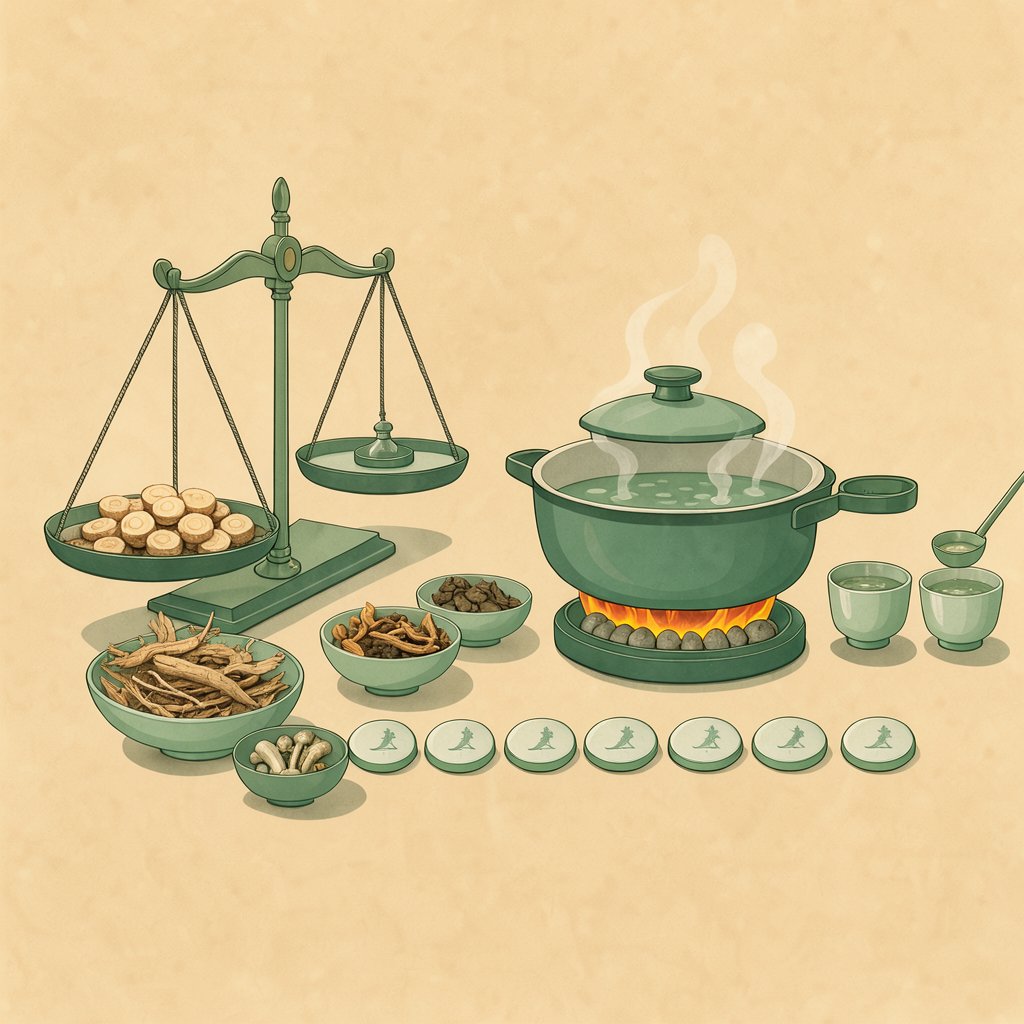
The printed formula runs: astragalus huang-chi root 6 g (about 0.2 oz), dioscorea (batat rhizome) 15 g (about 0.5 oz), poria 12 g (about 0.4 oz), codonopsis (tang-shen) 25 g (about 0.9 oz), and atractylodes 12 g (about 0.4 oz)[3]. As printed, the blend also includes three chia seeds — an honest artifact of the source being a chia book[3]. Notice that huang-chi carries the smallest root weight in the formula: the blend is built around tonic teammates, not around astragalus alone.
Step 2: Simmer 500 mL down to 200 mL
The blend is boiled in 500 mL of water (about 2 cups) and reduced to 200 mL of finished decoction — a 60 percent reduction that concentrates the roots[3]. This slow reduction is the signature move of the decoction style, and it separates a true TCM-style pot from a quick tea. The source prints the two volumes and nothing between them, so we do too.
Step 3: Divide the day’s decoction and set the course
The finished 200 mL is taken in three divided doses through the day, which makes the daily dose 200 mL total, and the printed course runs two months[3]. Three small cups of a concentrated decoction, every day, for eight weeks — that is the shape of the traditional commitment. Compare it honestly against your own routine before borrowing anything from it.
Modern shelves shortcut all of that. The same reference that documents the classical record lists today’s forms — capsules, powders, teas, and liquid extracts — plus whole sliced astragalus root sold explicitly for rich broths, with a broth recipe at pages 104-105 of the book[1]. Honesty checkpoint: that recipe’s text was never retrieved in our extraction, so no quantities or steps from it exist in this guide, and we refuse to reconstruct them. If simmering tonic roots into broth appeals to you, our Chinese herbal bone broths guide covers that kitchen from its own sources.
A dose protocol for a two-month course is exactly where caution belongs. Traditional record is not a prescription, and a clinician who knows your situation should clear any herbal course before you begin one.
Know Your Species: A. membranaceus vs the Russian Astragalus Protocols
Before any Russian recipe in this guide gets borrowed, one check comes first: the Latin name on the label. The TCM and supplement species is Astragalus membranaceus, and Konstantinov’s huang-chi is that same Chinese root[1][3]. Every protocol in the next three sections, by contrast, belongs to other species of the genus — chiefly A. dasyanthus — and doses are never transferable between them.
The Soviet monograph makes the split official for its own tradition. Of the more than 800 astragalus species that grew in the USSR (1,600 worldwide), exactly one — A. dasyanthus — was counted as holding medicinal value, with the herb harvested at mass flowering before fruit set[4]. Its chemistry is documented in two Soviet-era references: a polysaccharide complex, salts of glycyrrhizinic acid, organic acids, triterpene saponins, and flavonoids[4], with the wild-plants monograph adding glycyrrhizin and ascorbic acid to the list[5].
The neighboring species carry their own protocols, and their numbers stay theirs. A. glycyphyllus is brewed as a 1:10 infusion (one part herb to ten parts water), taken at 1 tablespoon three to four times a day for a two-to-three-week course, with its book recording that it “stops or eases heart pain in angina patients” and that its leaves and flowers carry vitamin C up to 700 mg percent[6]. A. danicus appears as a herb infusion recorded for edema, and A. penduliflorus as a root decoction its source calls a strong diuretic — the full doses for both live in Danikov’s guide, and none of them migrate into this article’s Chinese sections[7].
The Soviet Apothecary Infusion: Water-Bath and Thermos Methods
Where the Chinese pot reduces, the Soviet pharmacy infused gently. The official pharmacopoeia method for A. dasyanthus is a water-bath infusion, printed in the homestead monograph with laboratory precision[4]. Two practical variants — a tea-style cup and a thermos steep — round out the record[5][3].
Protocol 1, Step 1: Measure the herb
The official infusion starts with 10 g of dried A. dasyanthus herb — two tablespoons — per 200 mL glass (about 7 fl oz) of boiling water[4]. The raw material is the flowering herb gathered at mass flowering, not the root, which matters for both chemistry and dose. Precision at this step is the whole point of an officinal method.
Protocol 1, Step 2: Water bath, cool, strain, top up
The glass stands in a water bath for 15 minutes, then cools, then is strained[4]. The monograph then has the volume restored to the full 200 mL mark before any dosing — a printed step, not an option[4]. The result is a clear infusion at the volume the printed dose relies on.
Protocol 1, Step 3: Dose as printed
The stated dose is 2-3 tablespoons, two to three times a day[4]. The monograph’s listed indications read today as a historical register — early-stage hypertension; chronic circulatory insufficiency of grade I-II with a tendency to coronary-vessel spasm; early-stage acute glomerulonephritis; cardiovascular insufficiency — and we reprint them strictly as a record of what Soviet medicine once listed, never as recommendations[4].
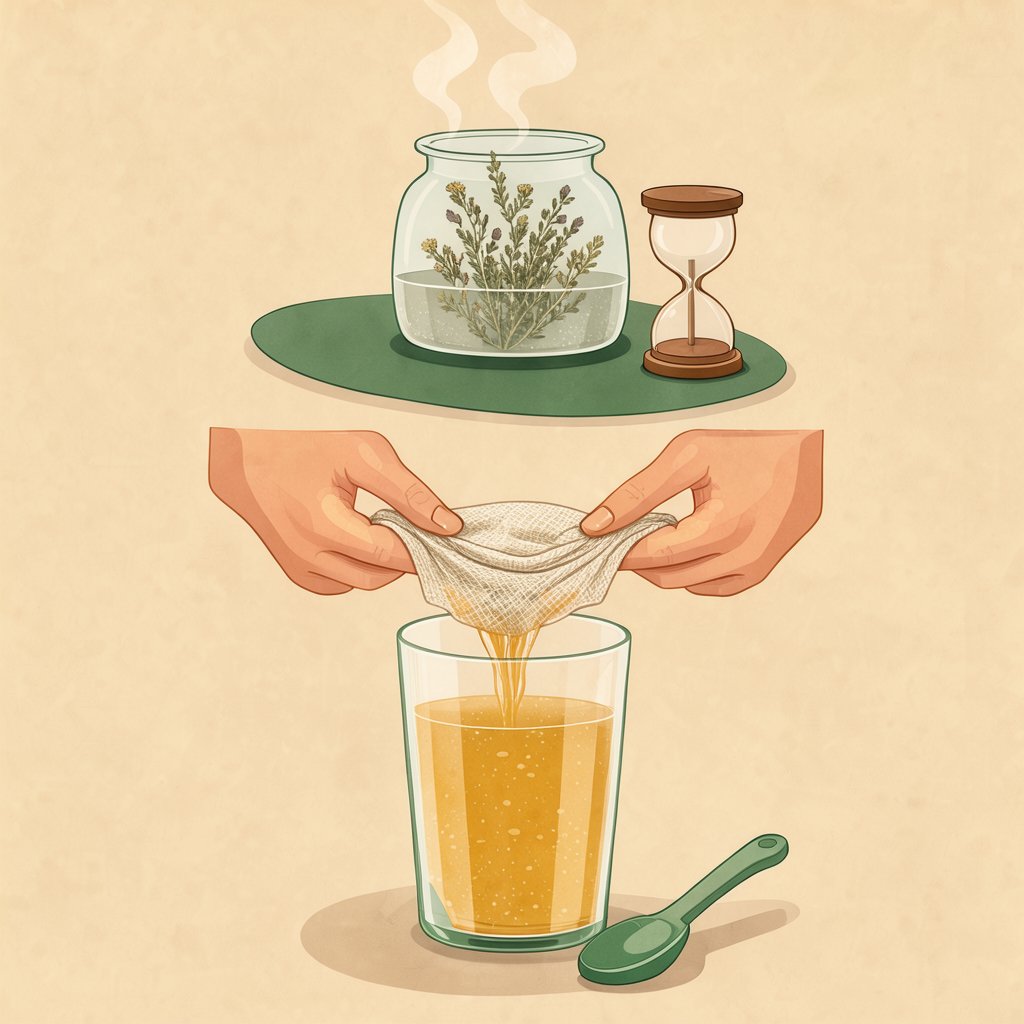
The tea-style variant simplifies the same herb: 1 tablespoon per glass of boiling water, drunk at 1-2 tablespoons three to four times a day, recorded for hypertension and angina[5]. The same wild-plants reference notes folk uses running to the kidneys, edema, and skin complaints[5]. Same plant, same standing rule: species first, dose second.
Protocol 2, Step 1: Load the thermos and steep
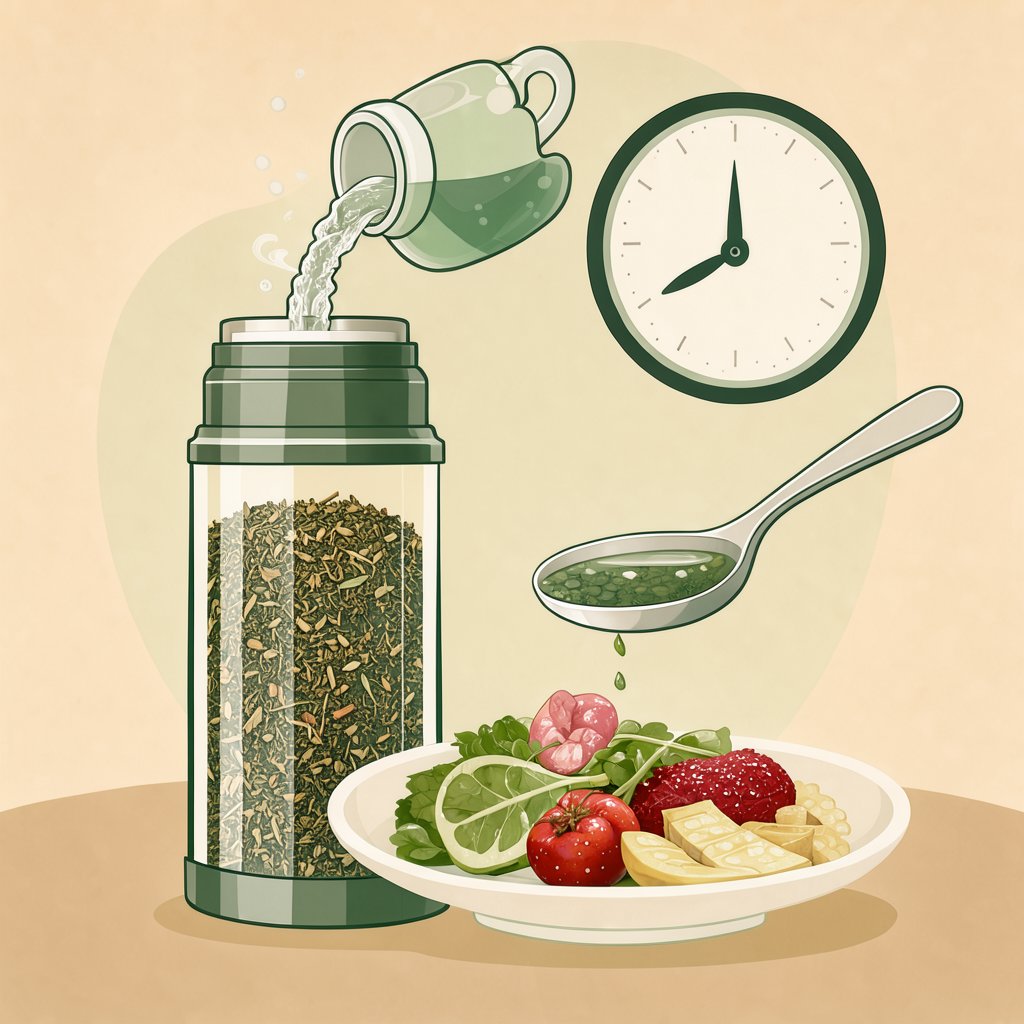
Konstantinov’s thermos method puts 1 tablespoon of dried A. dasyanthus herb into a vacuum flask, pours one glass of boiling water over it, seals it, and leaves it to steep for four hours before straining[3]. The thermos replaces the water bath with sustained gentle heat. Four hours of sealed steep does the extraction work a simmer would otherwise do.
Protocol 2, Step 2: One spoonful before meals
The printed dose is 1 tablespoon three times a day, 30 minutes before meals[3]. The book credits this infusion with raising interferon production, lowering blood pressure, and calming, vasodilating, diuretic action — its claims, reprinted as its claims, no stronger[3]. A simpler covered infusion from the same book skips even the thermos: 4 tablespoons of herb per glass of boiling water, covered for 15-20 minutes, taken at 1 tablespoon three to six times a day[3].
Folk Kitchen Protocols: Wine, Powders and the Milk-Honey Tonic
Where the apothecary stopped, the village kitchen took over. E. Donetskaya’s multivolume household formulary records six folk protocols for A. dasyanthus, every one built from pantry staples — wine, powder, vodka, milk, honey[8]. They are quoted below exactly as printed, as the source’s own folk record and not as recommendations, and the species rule from the previous section applies to every dose.
The insomnia wine decoction
Five tablespoons of herb go into 0.5 L (about 2 cups) of Kagor or port and simmer 15-20 minutes on low heat; the pot is then wrapped warm for an hour and filtered[8]. The printed dose is 50 mL (about 1.7 fl oz) at bedtime, with convalescents taking a third of a glass before lunch and dinner instead[8]. Wine as the solvent is the defining folk move of this protocol.
The liver-support powder course
The formulary’s powder protocol is bare simplicity: one quarter of a teaspoon of dried herb three times a day, an hour and a half before meals, unchased by water[8]. The course runs 45 days, breaks for 10 days, then repeats, and the same powder is recorded externally as a wound dusting[8]. The timing before meals is what separates this from casual seasoning.
The “rejuvenating” tincture
Two hundred grams of fresh herb macerate in 0.5 L of vodka or 50-percent alcohol — one day in the light, six days in the dark, then filtered[8]. The dose is 1 teaspoon on an empty stomach 30 minutes before breakfast, plus 1 teaspoon at night, and one portion equals one course[8]. The quote marks around “rejuvenating” are the source’s own framing, and we keep them firmly in place.
The edema powder course
A second powder protocol runs smaller and more frequent: 0.5-1 g of herb powder five times a day, 30 minutes before meals, sipped down with warm water[8]. The course is three weeks, and for cardiac edema the source pairs the powder with honey[8]. Five doses a day is the most demanding schedule anywhere in this record.
The milk-honey tonic
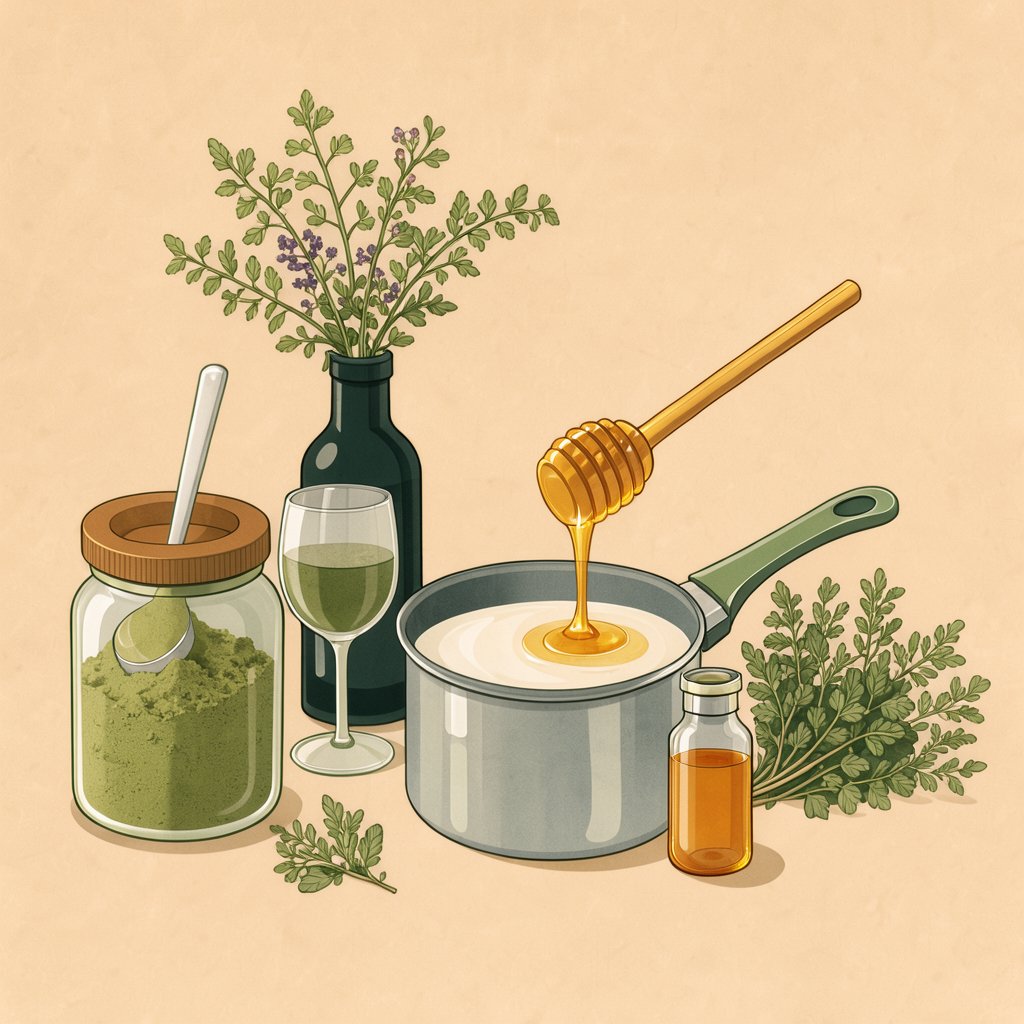
The centerpiece of the folk shelf is a 70-day tonic: 30 g of herb simmer 30 minutes in 0.5 L of milk without boiling, 400 mL (about 1.7 cups) of honey join for 10 more minutes, and the finished tonic is taken at 25 mL four times a day, every four hours[8]. The source frames it as general-strengthening, and we reprint that framing as tradition, full stop. Nothing in a 70-day folk course should ever be self-prescribed.
The sixth protocol is external: fresh leaves bruised to release their juice — or steamed dried herb wrapped in gauze — applied as a compress and changed twice a day[8]. It is the gentlest item on the folk shelf and still belongs to the same species. If herbal evening rituals are your interest, our bedtime tea herbs guide stays on the calmer end of that cupboard.
Astragalus in Herb Blends: Kidney, Heart and Circulation Collections
Russian herbalism rarely left this herb alone: it measured astragalus in parts inside multi-plant collections. I.P. Neumyvakin’s Birch (2006) is the clearest example — A. dasyanthus at 2 parts in blends recorded for nephritis and pyelonephritis, 5 parts in a urolithiasis collection, and 2 parts in an anemia blend for kidney patients[9]. The nephritis blend brews 2-3 tablespoons of the mixed herbs per 0.5 L of boiling water, stands for an hour, and is drunk at 0.3 of a glass six to eight times a day — a striking dosing cadence for kidney care[9].
The same author adds a bath protocol to the record: 100 g (about 3.5 oz) of the herbal blend per bath at 91-97 °F (33-36 °C) for 10-15 minutes[9]. Yu. Nikolaeva’s collection work goes heavier still, placing astragalus at 10 parts — the lead position — in a blend recorded for varicose dermatitis, brewed at 2 tablespoons per 400 mL, boiled 5 minutes, and taken at 100 mL four times a day[10]. Parts, not grams, are the shared language of both records.
The most atmospheric source in this section is a memoir. Anatoly Lobazov’s Thirty-Three Years Living with Diabetes records roughly twenty-herb blends in which one part equals 25 g (about 0.9 oz), with astragalus in the mix[12]. His two-stage brew runs: roots boil 15-20 minutes, the rest of the mix joins for 2-3 minutes, the pot steeps overnight 8-10 hours, then takes a 3-minute morning re-boil — drunk at 100-150 g three times a day across a 30-day course[12]. The overnight steep is the memoir’s signature move; nothing else in the record uses it.
Kharchenko’s wild-plants monograph rounds the section out: the root decoction is recorded as an expectorant and for general weakness and heart-function disorder in the elderly, the infusion for skin diseases, and folk uses running to rheumatism, scrofula, and nervous conditions[5]. One honesty note closes the mixing bowl — the full companion-herb lists of these blends are not in the retrieved extracts, so this guide names no partner herbs it cannot source. Distrust any page that invents them for you.
Safety, Cautions and What the Sources Don’t Say
A 2,000-year reputation is not a contraindication list, and honesty requires saying plainly what the record holds. The one astragalus-specific caution in the consulted books is the bidirectional one quoted earlier: there is a suspicion that astragalus exerts an immunosuppressive action and could be usable in certain autoimmune diseases[1]. For a reader living with an autoimmune condition, that is a question to take to a physician — not a self-directed experiment in either direction.
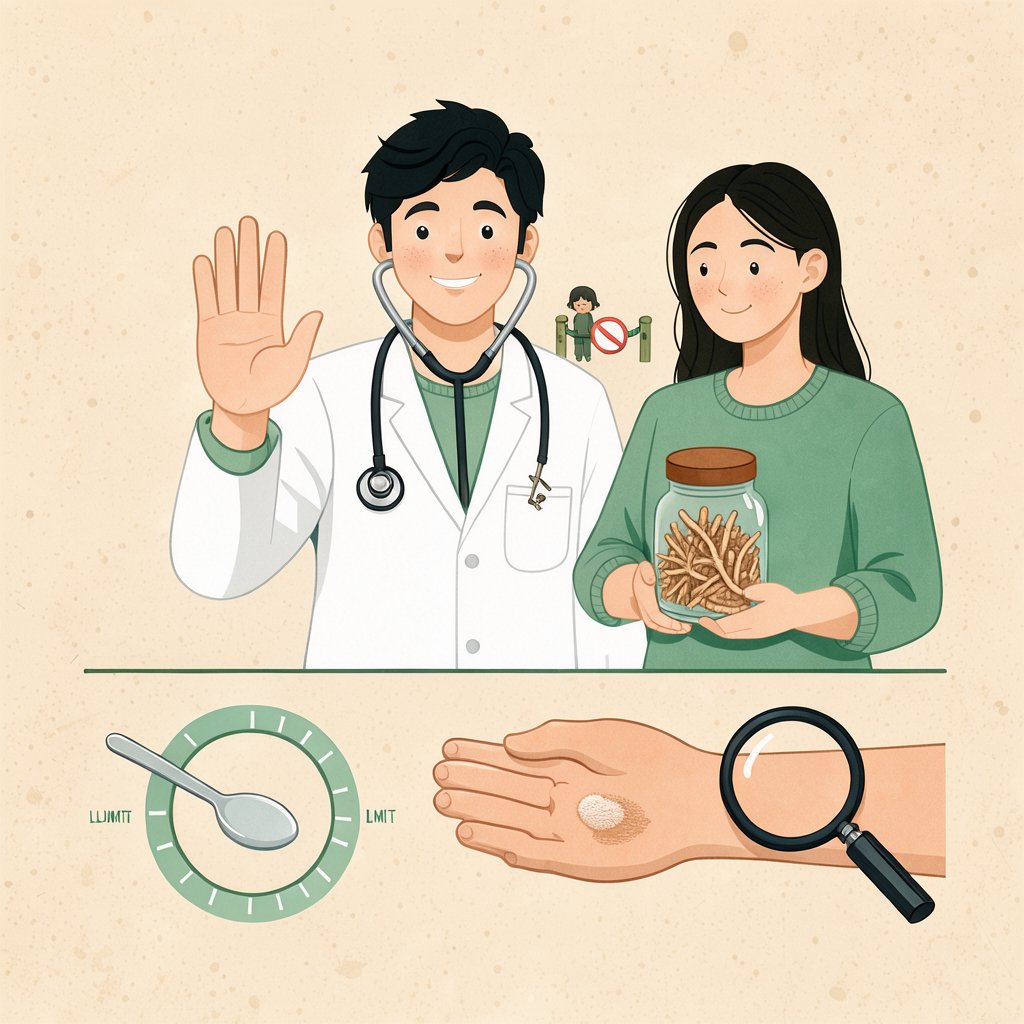
The general phytotherapy rules quoted in the discovery record are blunt: see a doctor first, never exceed stated doses, do an allergy test before working with any new herb, and keep herbal regimens away from children under 16[11]. One Soviet-era reference adds an indirect overdose signal by listing emetic properties among the herb’s actions — a reminder that “more” and “better” do not share an address in herbal practice[5]. Our adaptogens buyer’s guide carries these same rules into product selection.
Now the absences, stated as absences. No astragalus-specific contraindication list exists anywhere in the consulted base. No modern standardized-extract dosing in milligrams per day, and no drug-interaction data either. The wei-qi concept is absent from these sources and is never put in any book’s mouth here. The broth recipe in the modern reference is confirmed to exist at pages 104-105, but its text was never retrieved, so it does not appear in this guide. Where the record is silent, we stay silent — and we never borrow warnings from other herbs to fill the gap.
Frequently Asked Questions
What is huang qi?
Huang qi is the Chinese tradition’s name for astragalus — the root, and sometimes stems, used in Chinese medicine to raise energy levels and strengthen immunity[1]. It counts among the 50 fundamental healing herbs, appears in more than 200 Chinese herbal formulas, and enters the written record in the Shen Nong Ben Cao Jing roughly 2,000 years ago[1]. Supplements typically carry Astragalus membranaceus — see our adaptogens and herbal wisdom category for the wider cluster.
Is astragalus an adaptogen?
Yes, by explicit statement of the modern reference: in its licorice chapter, licorice is called an adaptogen “along with astragalus and ginseng,” filing this root into the same class as the tradition’s most famous tonics[1]. That is a class membership, not a promise — adaptogen here means exactly the traditional framing the books record. For shopping criteria, read our adaptogens buyer’s guide.
How do traditionalists brew huang qi?
The one TCM-style protocol in the consulted sources simmers a five-herb blend with 6 g of huang-chi root, reducing 500 mL of water to 200 mL of decoction, drunk in three divided doses for a two-month course[3]. Whole sliced root also goes into rich broths per the modern reference — our Chinese herbal bone broths guide covers that kitchen.
What is the Soviet official infusion?
The official Soviet method for A. dasyanthus steeps 10 g of herb — two tablespoons — in a 200 mL glass of boiling water in a water bath for 15 minutes, then cools, strains, and tops back up to 200 mL[4]. The printed dose is 2-3 tablespoons two to three times a day. For a gentler start, our bedtime tea herbs guide is the softer shelf.
Which species do the Russian protocols use?
Not the supplement species. The Russian record belongs to A. dasyanthus — the one species the Soviet monograph counted as medicinal out of more than 800 in the USSR — plus neighbors such as A. glycyphyllus, A. danicus, and A. penduliflorus, each with its own numbers[4][6][7]. Doses never swap between species — see our functional mushrooms overview for the same rule applied shelf-wide.
Who should be careful with astragalus?
The record flags a suspected immunosuppressive action relevant to autoimmune conditions; the general herbal rules add doctor first, never exceed stated doses, allergy-test any new herb, and no herbal regimens for children under 16[1][11]. No astragalus-specific contraindication list exists in these sources. Start with our adaptogens buyer’s guide for a safety-first product audit.
What forms does astragalus come in?
The modern reference lists capsules, powders, teas, and liquid extracts, plus whole sliced astragalus root sold for rich broths[1]. Form follows ritual: a capsule skips the reduction pot entirely, while a sliced root demands it. For two eastern traditions compared on that exact question, read our reishi supplements vs reishi tea comparison.
Read as a whole, the record gives astragalus root a rare double character: a canonical Chinese tonic with a 2,000-year file, and a working herb with precise, species-specific brewing numbers in the Russian apothecary tradition. This guide kept the two apart on purpose — the history, the reported mechanics, the decoction pot, the water bath, the folk kitchen, and the honest edges where the sources go quiet. Right species, printed dose, clinician first: that is the whole tradition in one sentence.
Sources
- [1] Joseph Mercola — Herbs and Spices (2023); its astragalus chapter supplied the TCM status, the Shen Nong Ben Cao Jing lineage, the plant chemistry, the immune-cell mechanics, and the modern product forms recorded here.
- [2] T. Litvinova — The Great Medicine of Chinese Emperors. Schisandra (2012).
- [3] Yuri Konstantinov — Chia Seeds: A Unique Natural Medicine (2015); the source of the only TCM-style huang-chi decoction protocol in the collection, recorded in the book’s diabetes chapter, plus the thermos and covered infusions.
- [4] A.M. Rabinovich — Medicinal Plants on the Homestead Plot (1989); the Soviet homestead monograph behind the official A. dasyanthus infusion, its listed indications, and the botanical scale note on the genus.
- [5] N.S. Kharchenko et al. — Wild Medicinal, Cereal and Garden Plants and Their Use (1988).
- [6] K.V. Dobrokhotova, A.A. Pisarev — Healing Plants Around Us (1980).
- [7] N.I. Danikov — Big Home Medical Guide (2015).
- [8] E. Donetskaya — Plants in Household, Medicine and Cosmetics (2015-2018, multivolume); the folk formulary recording the wine decoction, both powder courses, the vodka tincture, the milk-honey tonic, and the fresh-leaf compress exactly as printed above.
- [9] I.P. Neumyvakin — Birch (2006).
- [10] Yu. Nikolaeva — Birch, Fir and Chaga Mushroom (2012).
- [11] Nikolaeva Yu. — general phytotherapy safety rules (2011 edition).
- [12] Anatoly Lobazov — Thirty-Three Years Living with Diabetes (herbal memoir); a first-person record of multi-herb brewing in parts, whose overnight steep, re-boil method, and 30-day course are quoted here as the author lived them.
Where to go next: if this root earned your curiosity, the natural stops in our silo are the adaptogens buyer’s guide for the modern shelf, the rhodiola stress guide for a fellow adaptogen with its own recorded story, and the functional mushrooms overview for the wider eastern tradition. Each follows the same rule this one did — facts from the sources, gaps named as gaps.
How we researched this: built from a local library of 1,137 wellness books queried through an offline retrieval system, with no internet sources used at generation time. Every factual claim above was checked against its cited source passage, and where a passage did not exist — a contraindication list, a milligram dose, a broth recipe — the gap is stated as a gap. Traditional-use statements are reported as tradition, never as medical advice.
