
Educational content only — not medical advice. See our full Medical Disclaimer and Affiliate Disclosure below.
Key Takeaways
- Chaga is the sterile conk (sclerotium) of the tinder fungus Inonotus obliquus, and the sources recognize only one raw material: conks from living birches — alder and rowan conks are not used medicinally[1][6].
- The traditional preparation is a cold-extract discipline: one part ground chaga to five parts water, never hotter than 122 F (50 C), infused for 48 hours[3][5][2].
- Folk dosing spoke in glasses — one to three a day before meals — while the 1959 Soviet monograph set a clinical anchor of 1 g of dry substance per day that it warned should not be excessively exceeded[2][1].
- The listed cautions are hypersensitivity, individual intolerance, and diabetes for the sweetened syrup form; the sources hold no drug-interaction or pregnancy data at all — a gap, not a clearance[2].
The chaga mushroom leads a double life. A black, cracked crust on birch trunks across the Russian North, it entered the folk record of the Urals and Siberia generations ago, then crossed into official clinic medicine when the Soviet Ministry of Health approved a chaga preparation on November 26, 1955[1]. This guide reconstructs chaga traditional use from the sources themselves: what six books actually document about identity, preparation, doses, and limits — and where they stay silent.
The method is deliberately narrow. Every claim below comes from our offline library — a 1959 Soviet clinical monograph, two Russian herbal-practice manuals, a Soviet wild-plants handbook, a medicinal-mushroom encyclopedia, and a modern popular monograph on birch and chaga. Where the books disagree, both numbers stay on the page. Where they say nothing, we say so instead of filling the gap.
What Is Chaga Mushroom? The Birch Conk Explained
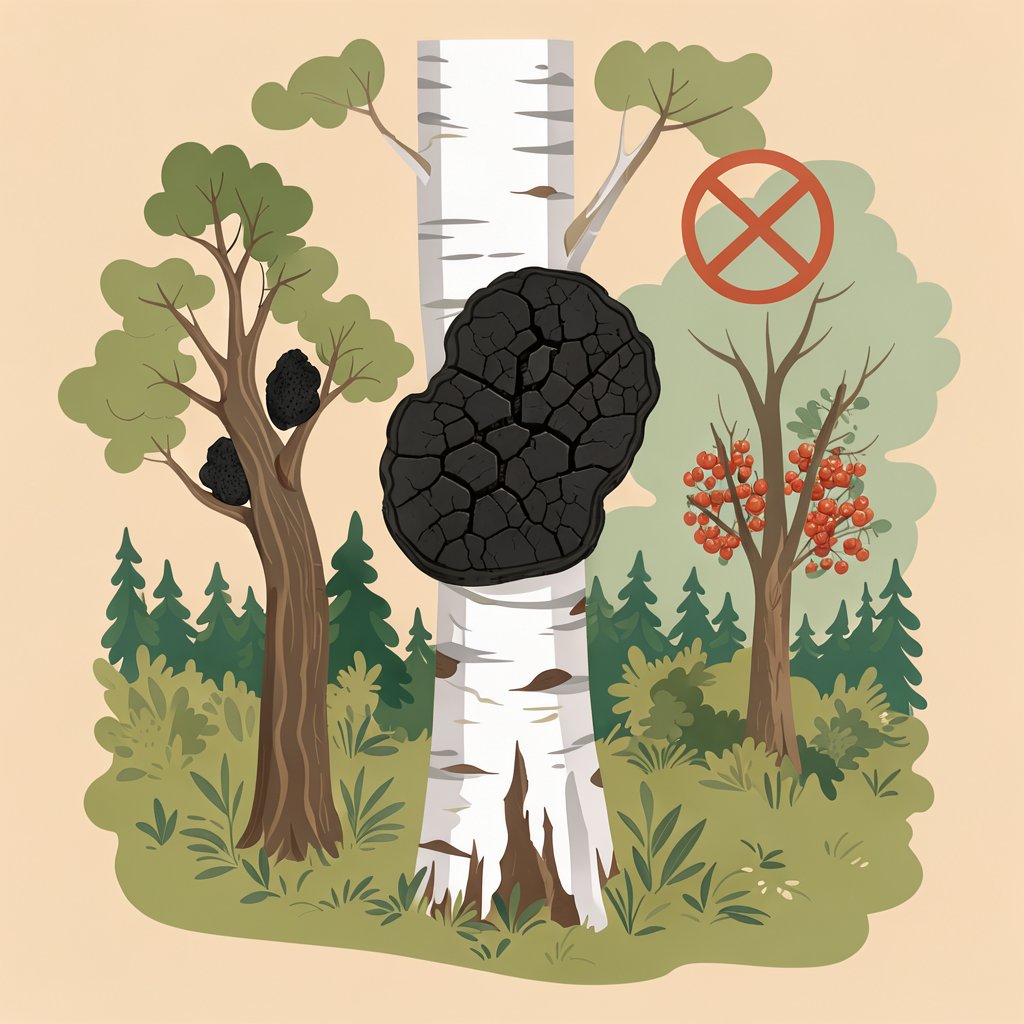
On a living birch, the chaga mushroom does not look like a mushroom at all. It is a hard, black, cracked mass wedged into the bark — no cap, no gills, no spore-bearing surface. The 1959 monograph edited by Bulatov, Berezina, and Yakimova identifies it precisely: chaga is the sterile conk (sclerotial) form of the tinder fungus Inonotus obliquus, a sterile form the editors describe as rarely encountered in nature[1]. Because the conk never produces the typical fruiting body, the medicinal raw material of the whole tradition is, in essence, a water extract of that dense sterile mycelium mass[1].
Chaga is the sterile sclerotial conk of Inonotus obliquus, a parasitic fungus that grows on the trunks of living trees in cold northern forests. It is not a typical fruiting body: the tradition’s raw material is a water extract of the sterile mycelium mass, drawn from the conk without boiling — and, per the herbal sources, only when the host tree is a birch[1][6].
That host-tree rule is where the sources draw their first boundary. The fungus also grows on alder and rowan, but Pirogov’s herbal oncology reference is blunt: only birch chaga is used medicinally, and conks from other host trees are not counted as the medicinal material[6]. The identity question, in other words, is settled on the trunk — which raises the next one: what does this birch-fed sterile mass actually contain? The sources answer with a specific chemistry, and it is not the one most blog posts repeat.
How Does Chaga Work? Chromogens, Birch Lignin and Beta-Glucans
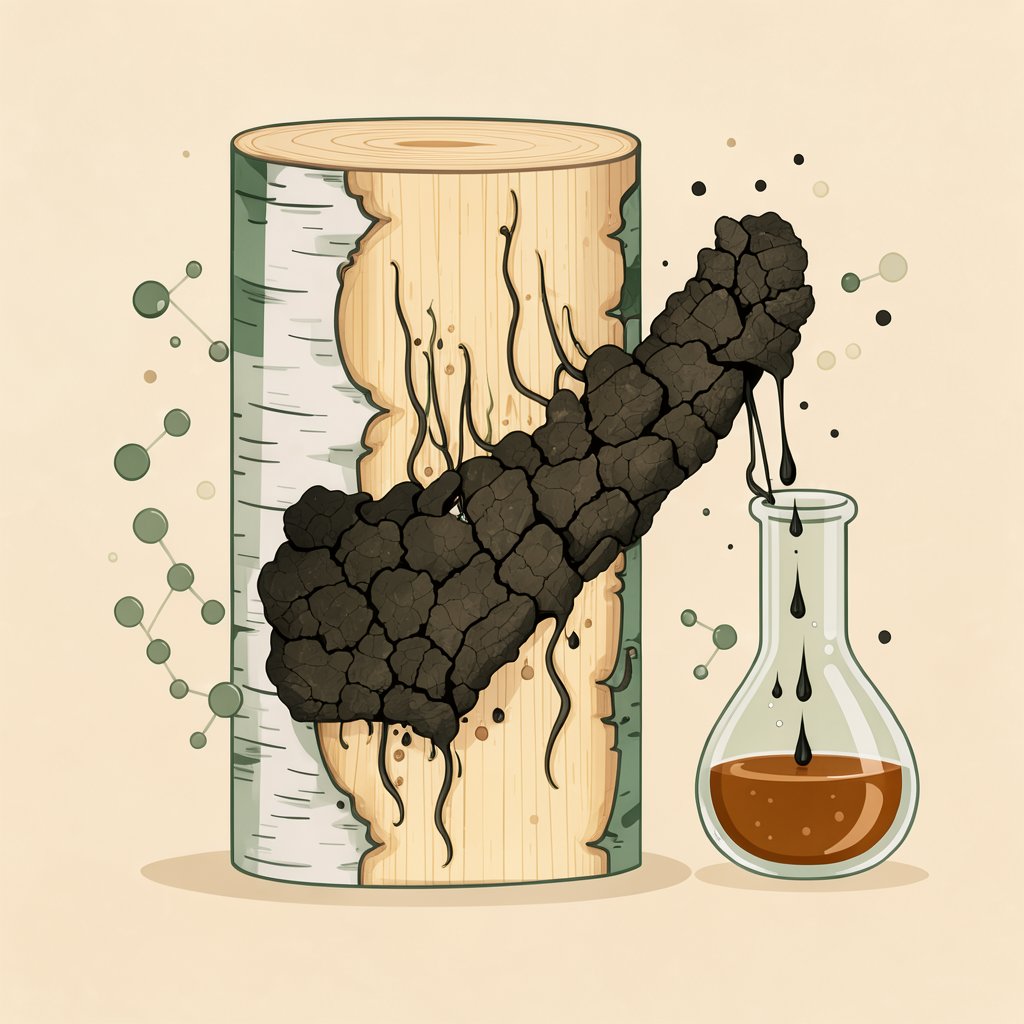
Ask the 1959 monograph what makes chaga biologically active and it answers with one family of compounds: chromogens. These are water-soluble, intensely colored complexes formed from phenolic aldehydes, polyphenols, oxyphenolcarboxylic acids, and their quinones — and the monograph emphasizes that they are absent from the fruiting bodies of other polypores[1]. Their origin is equally specific: the pigment complex is built from birch lignin destroyed by the fungus, which is why the host tree matters to the chemistry and not just to the label[1].
A modern preparation declared the full inventory: water-soluble chromogens and pigments, sterols, pterins, phenolic and polyphenolic compounds with their quinones, humin-like “chaga acid,” organic acids, polysaccharides, vitamin C, and trace elements including silicon, iron, aluminum, calcium, copper, potassium, and manganese[2]. Nikolaeva’s monograph also records a practical boundary of that chemistry: chaga has comparatively low penetrating ability, which is why it also appears in topical compound creams — with sea-buckthorn oil among the companions — for skin and joint conditions[2].
One chapter of the chemistry is honestly borrowed. The beta-glucan story — 1,3-beta-D-glucans as the main polysaccharide component of medicinal mushrooms, immune activity framed through macrophage activation and T-cell activity, reduced chemotherapy toxicity, carcinogen blocking, and the cholesterol-lowering activity seen in many polypores — comes from Vishnevsky’s medicinal-mushroom encyclopedia and describes the family, not chaga specifically[4]. This guide keeps that framing: it is background about the class of fungi, and the sources never claim it as chaga-proven mechanism. Notably, the base contains no betulinic-acid or melanin mechanism passages at all — the sources speak of chromogens, polyphenols, and polysaccharides instead.
From Russian Herbals to the 1955 Soviet Approval
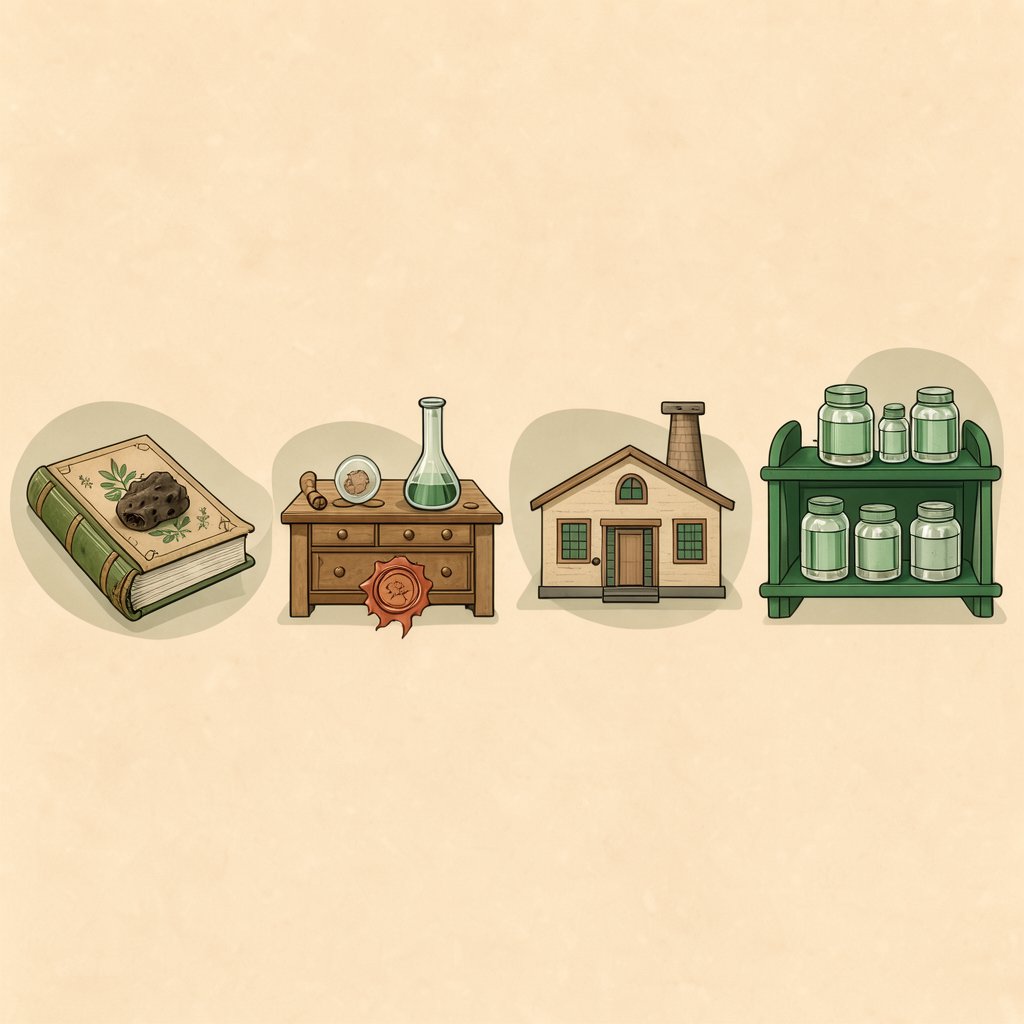
The documented lineage starts in households, not institutions. The 1959 monograph records folk use of chaga across the Urals, Siberia, and other northern and central regions of Russia, mainly for gastrointestinal diseases and in some cases alongside cancer illness[1].
The written trail is just as traceable. The same monograph follows those mentions into nineteenth-century Russian herbals and handbooks, citing the names G. S. Vinogradov and A. I. Kytmanov among the early recorders[1]. Nikolaeva’s monograph reaches further back still, noting that the medicinal use of birch and chaga is described in the works of the medieval physician Abu Ali ibn-Sina — Avicenna[2].
Then the record turns institutional. On November 26, 1955, the Pharmacological Committee of the USSR Ministry of Health approved the chaga preparation; pilot batches were produced the same year at Leningrad Chemical-Pharmaceutical Plant No. 1[1]. The formulation carried a period-specific addition: cobalt microdoses, added as an anti-anemia factor because of cobalt’s role in the gut synthesis of vitamin B12[1].
The monograph’s own framing matters for how to read it. It presents chaga as folk-medicine experience validated by Soviet pharmacology — the approval is the bridge between the Ural kitchen and the clinic[1]. Two cautions follow from that. It is a historical document, not modern dosing guidance, and it certifies one specific pharmaceutical preparation rather than every black conk on a health-food shelf. What the clinic kept from the folk protocol, though, is telling — starting with a temperature ceiling.
The 50-Degree Rule: Traditional Chaga Infusion, Step by Step
This is the heart of the tradition, and it is where the sources are strongest: three independent books — Akhmedov’s Odolen-Trava (1999), Kharchenko’s wild-plants manual (1988), and Nikolaeva’s birch monograph (2012) — converge on the same numbers for the classic Russian infusion[3][5][2]. The protocol below follows their shared sequence.
Step 1: Soak, Soften, and Grind the Raw Conk
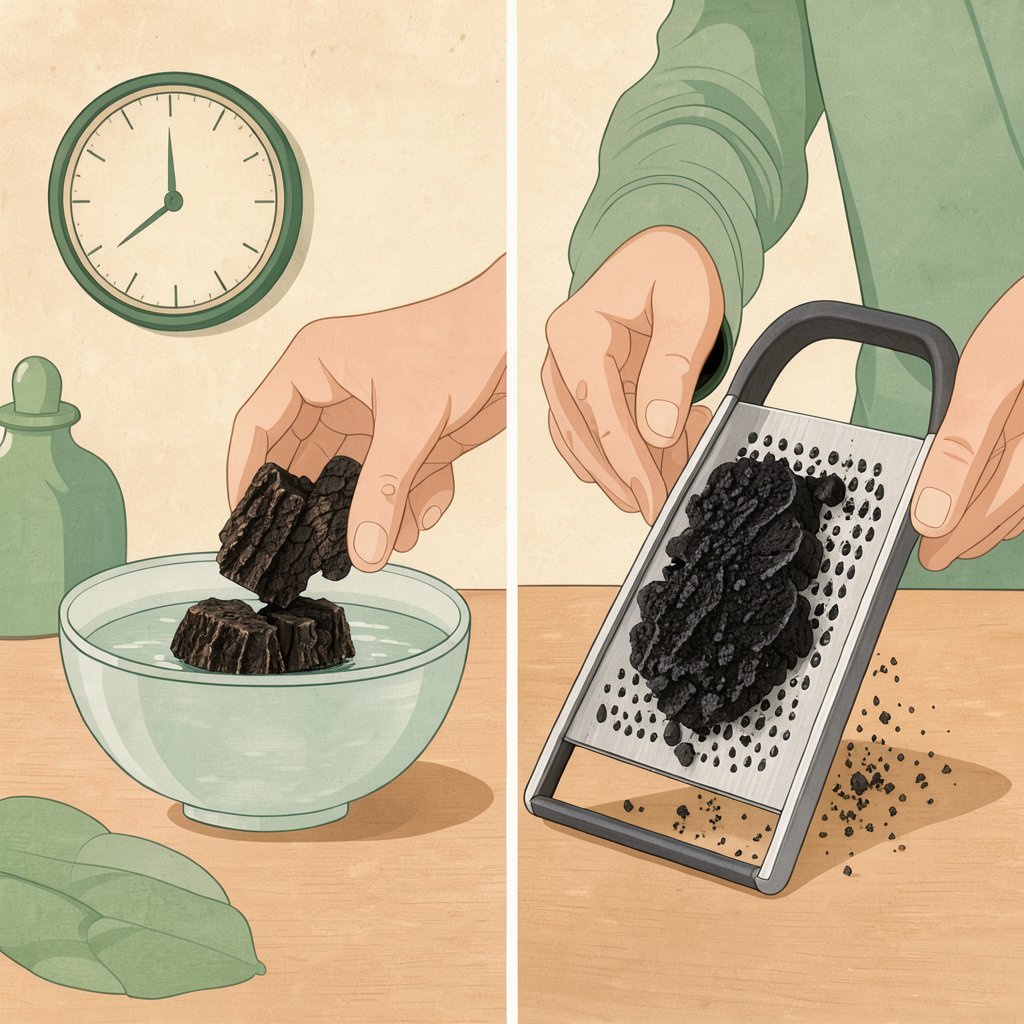
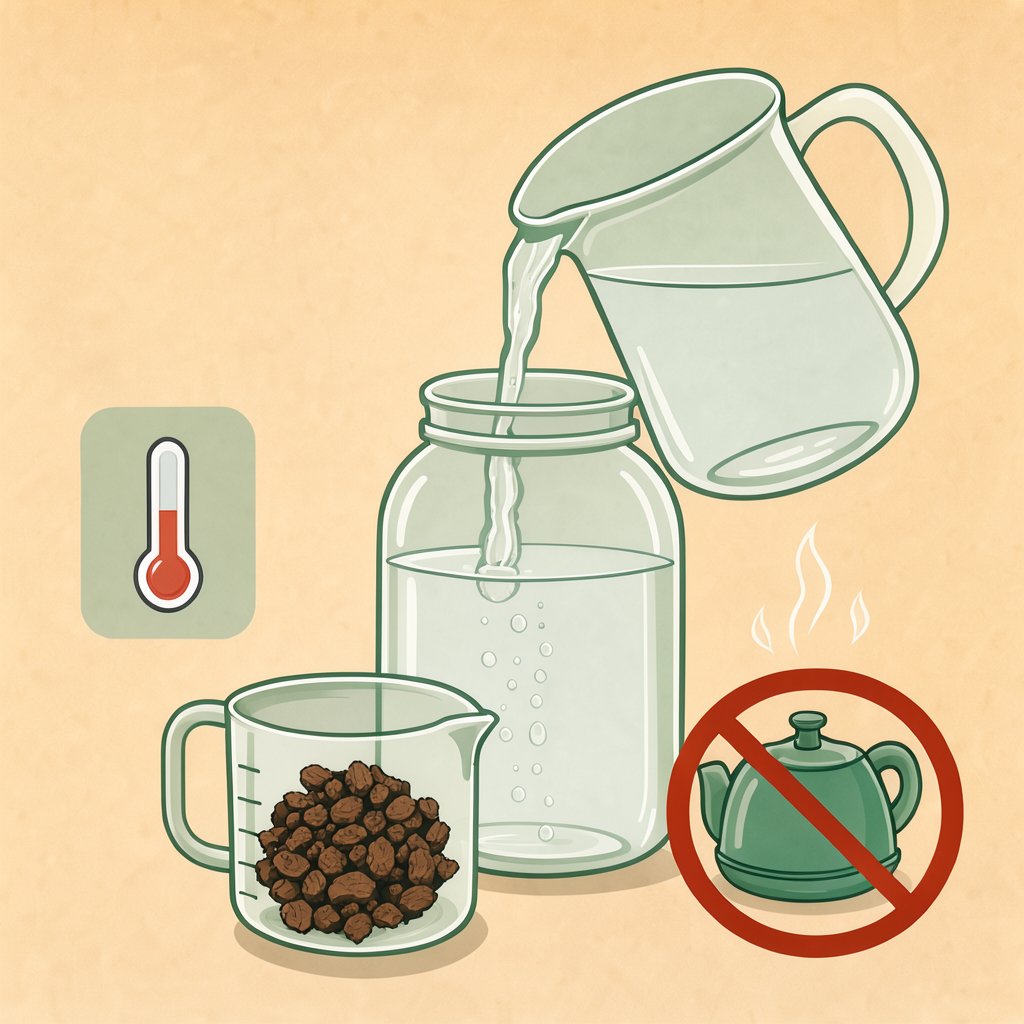
The dried conk is too hard to grind as sold, so the tradition begins with a cold bath: soften the dried chaga in cold boiled water for four to six hours, or soak fresh chunks for four to five hours, until the mass yields to a grater[5][3]. The soaking water is kept rather than poured out — the final step calls for it. Once softened, the chaga is grated or ground to expose as much surface as possible.
Step 2: Measure One Part Chaga to Five Parts Water
The extraction ratio is fixed: one part ground chaga to five parts water. Akhmedov spells it in kitchen units — one cup of chaga to five cups of water — and also records a concentrate option at two parts chaga to five parts water for a stronger draw[3]. The 1:5 version is the ratio the rest of this section follows; the 2:5 concentrate remains the same source’s stronger option.
Step 3: Keep the Water at or Below 122 F (50 C)
This is the rule the section is named for. All three preparation sources state the same ceiling: the water must not be hotter than 122 F (50 C)[3][5][2]. Akhmedov is the bluntest — chaga does not tolerate boiling, and above 50 C it significantly loses activity[3]. In practice that means boiling the kettle first and letting the water cool to lukewarm before it ever touches the chaga.
Step 4: Infuse for 48 Hours
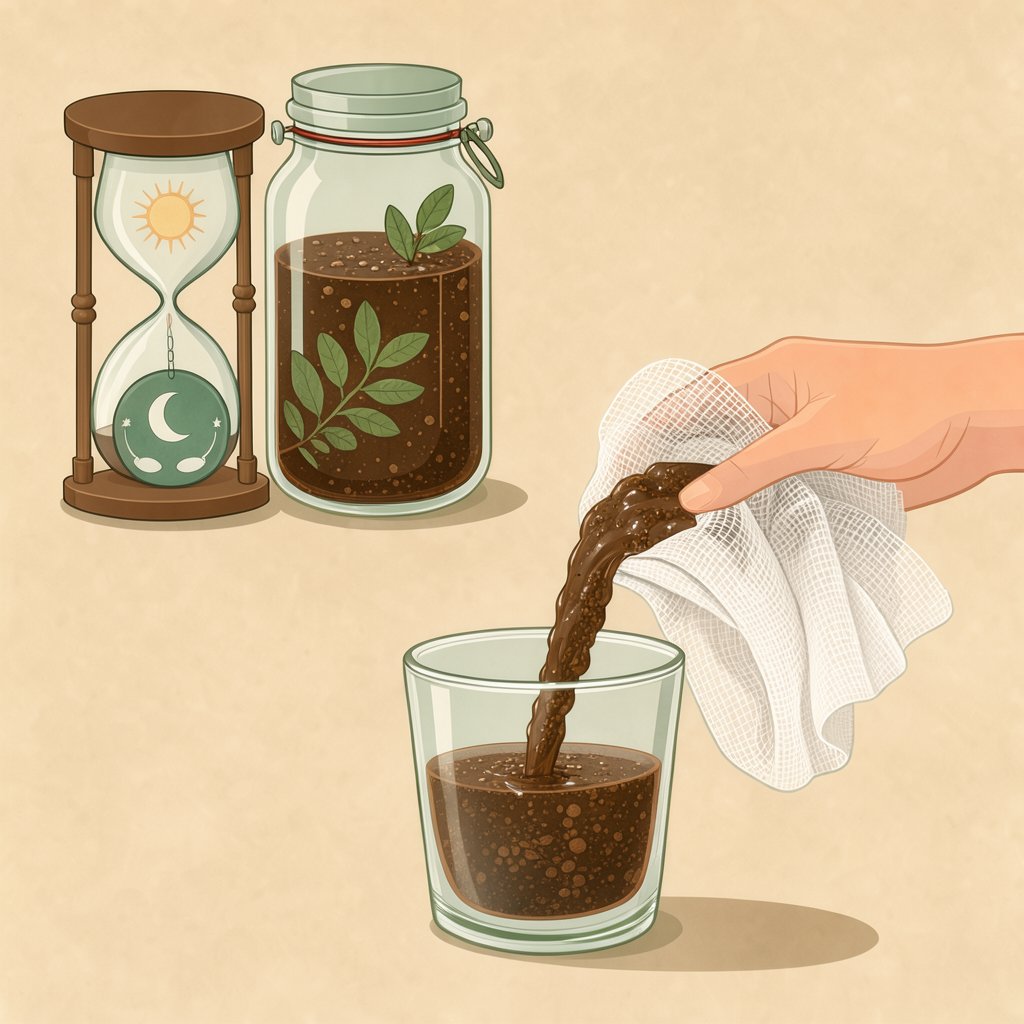
Patience is the active ingredient in the second half of the protocol. The lukewarm extraction infuses for 48 hours — two full days — before it is touched again[3][5][2]. The long, cool steep is what pulls the water-soluble chromogen complex out of the ground conk, and it is the direct opposite of the quick boiling-water method most casual chaga tea instructions suggest.
Step 5: Strain Through Gauze, Squeeze, and Dilute Back
When the two days are up, the infusion is strained through several layers of gauze rather than a coarse sieve[3]. The spent mass is not discarded until it has been squeezed dry, and the liquid is then diluted back to its original volume with the reserved soaking water from Step 1[3][2]. Nothing soluble is wasted; the tradition treats the conk as an expensive raw material.
Step 6: Store Cool and Use It Quickly
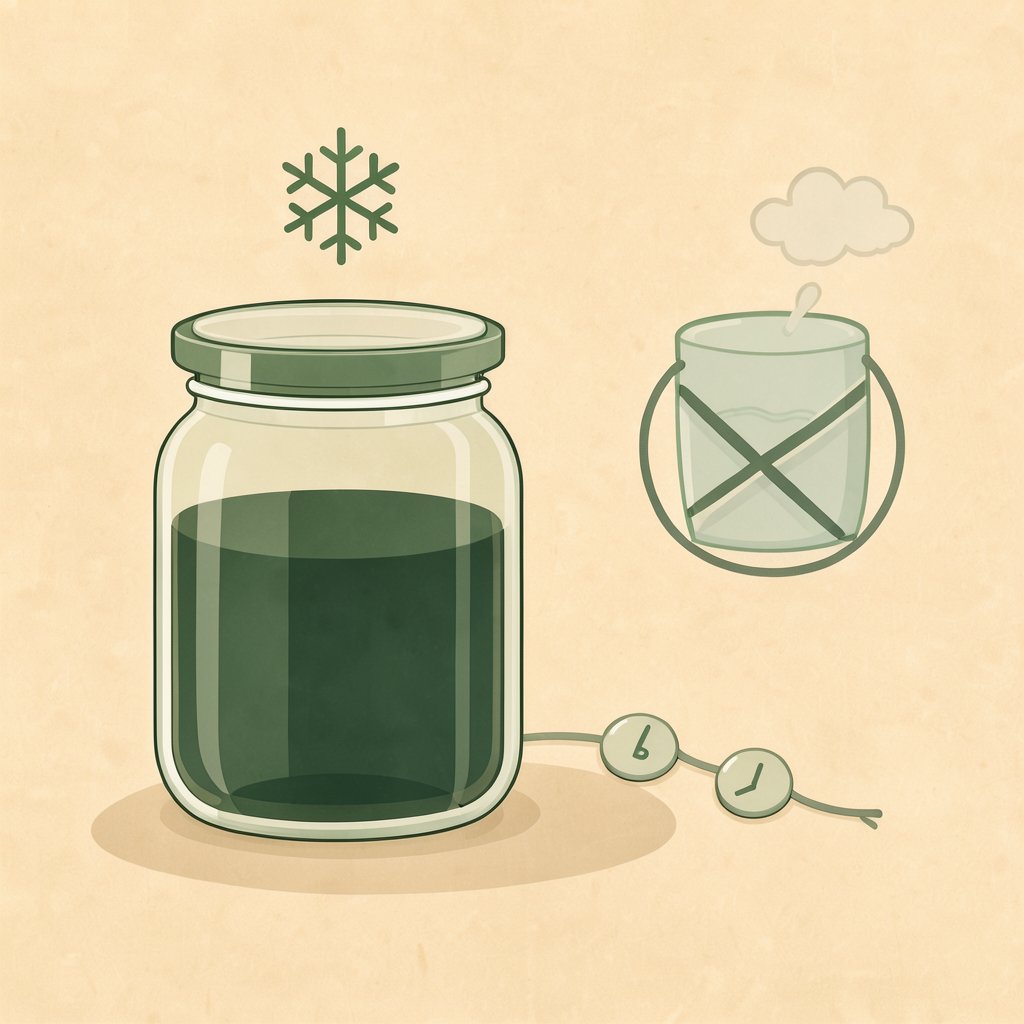
The finished infusion is a fresh product with a short clock. Nikolaeva caps storage at two days in a cool place; Kharchenko’s manual allows three to four days[2][5]. The practical reading the sources share: make it in small batches matched to the days of use, not in bulk. Beyond the kitchen jar, Nikolaeva lists the modern commercial forms — capsules, tincture, concentrate for solution, dried raw material, syrup, chaga tea bags, and cream-balm — the same tradition repackaged, with label dosing of its own[2].
How Much Chaga Did the Sources Recommend? Doses and Courses
The folk sources dose in a unit every household owns: the glass. Nikolaeva’s monograph gives one glass of infusion one to three times a day before meals[2]. Kharchenko’s wild-plants manual sets three glasses a day, taken thirty minutes before meals[5]. Akhmedov’s practice manual goes further for its compound recipe — at least three glasses a day, split into fractional portions through the day[3]. The numbers differ; the unit and the timing before meals do not.
Course lengths vary by preparation and author, and the spread is worth seeing whole. Nikolaeva records an extract course of six to eight weeks; Kharchenko’s infusion therapy runs three to five months; Akhmedov’s compound recipe sets a minimum of two to three weeks and a maximum of two to three months[2][5][3]. The shared assumption is that chaga belongs to courses, not to indefinite daily use.
For the commercial forms, Nikolaeva preserves the label dosing of her day: adults and children over twelve take one to two capsules two to three times a day with meals; the concentrate is prepared as three teaspoons in 150 mL of warm water, then one tablespoon three times a day thirty minutes before meals; the syrup is one teaspoon three to four times a day with food[2]. One entry in Akhmedov’s manual stays strictly inside its own frame: for pelvic tumors, his practice added nightly warm microclysters of 5–100 mL of the same infusion[3]. It is recorded here as documentation of what one source prescribed in a clinical context — not as a home recommendation.
Why Soviet Clinicians Capped Chaga at 1 Gram a Day
The folk record speaks in glasses; the clinic answered in grams. The 1959 monograph reports an experimentally found and clinically confirmed dose for the chaga preparation: 1 g of dry substance per day, roughly 20 mg per kilogram of body weight — and states that this dose should not be excessively exceeded, to avoid a depressing effect on heart trophism[1]. It is the clearest ceiling anywhere in the sources.
The reason for the cap is a dose-response shape the animal and clinical experiments described. At moderate doses the preparation raised cardiac tone; at large doses it depressed heart activity and autonomic tone; at too-large doses the animal experiments recorded central-nervous-system paralysis[1]. The same experiments established the preparation as non-toxic up to 1 g of dry substance per kilogram of animal weight — a wide margin, but not an invitation[1].
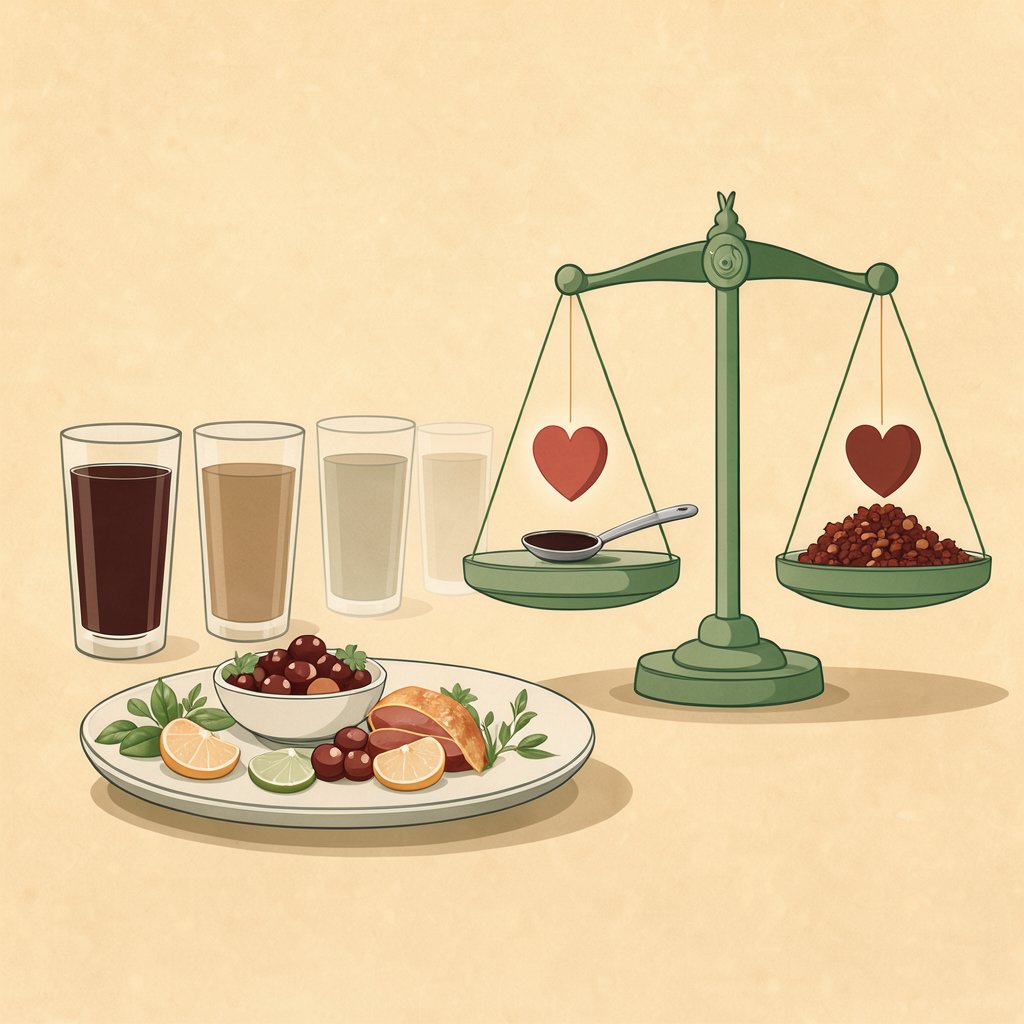
How to read this today: as a historical document with its own limits. A 1959 Soviet ceiling is not modern dosing advice, and no reader should scale it to themselves from a blog post. What it does establish — uniquely well in this record — is that the tradition itself never treated chaga as a more-is-better herb. A ceiling on dose is one boundary; the sources also name who should not start at all.
Chaga Safety: Contraindications and Side Effects in the Sources
The chaga-specific cautions in this record come from Nikolaeva’s monograph, and the list is short. The contraindications are hypersensitivity to the raw material and individual intolerance to components; the diabetes caution is attached to one form only — the sweetened syrup[2]. The listed side effect is allergic reactions[2]. On long use, some patients showed increased excitability of the autonomic nervous system, which disappeared when the dose was reduced or the preparation withdrawn[2].
The overdose line runs back to the gram ceiling: excessive doses are the ones that depressed heart activity in the 1959 experiments, which is exactly why the monograph warned against exceeding its dose[1]. Combined with the autonomic-excitability report, the pattern the sources describe is consistent — the risks named are dose- and duration-shaped, not random.
What the sources do not say matters just as much. Despite a targeted search, this record contains no blood-thinner or anticoagulant interaction data, no pregnancy contraindication, no autoimmune precautions, and no kidney-stone or oxalate warnings for chaga. Those absences are stated here as absences — they are not a green light. Absence of a documented warning is a data gap, and anyone taking medication, pregnant, or managing a chronic condition should ask a clinician before adding any herbal preparation. Borrowing cautions from other herbs would be as dishonest as inventing benefits.
Harvesting Rules and the Traditional Chaga Diet
The herbalist’s premise is that chaga medicine is decided on the tree, not in the kitchen. Akhmedov’s rule is categorical: conks from fallen, long-dead trees are hardly medicinal even when they are dried correctly, so raw material is taken only from living birches[3]. The point compounds the birch-only identity rule from the first section — the tradition wants a living host and a living tree, and a perfect kitchen protocol cannot rescue dead raw material.
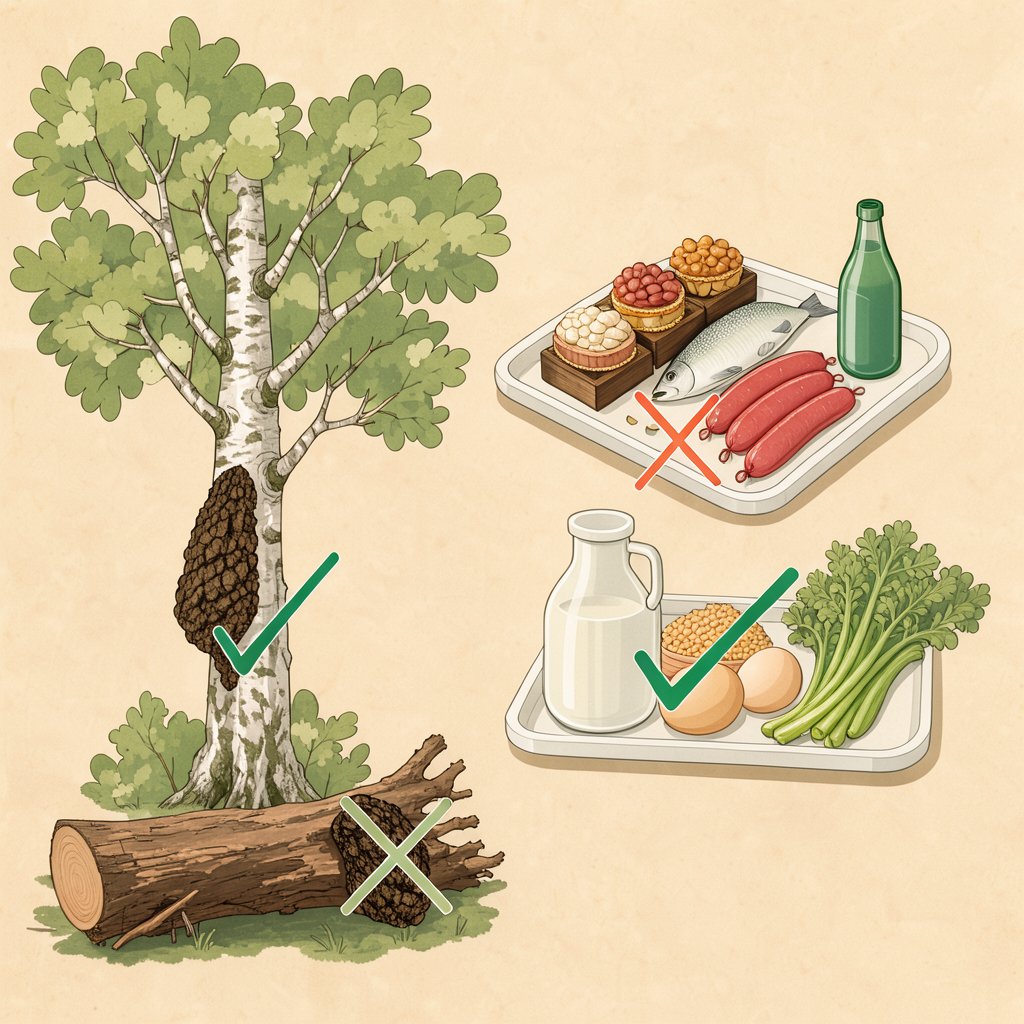
The same manual prescribes a full diet framework around a course of treatment, recorded here as the tradition’s own discipline rather than modern nutrition advice[3]. The avoid list is long and specific:
- sugar, jam, honey, candy, and ice cream
- herring, smoked foods, and animal fat
- hot spices and alcohol
- vitamins A and B1, and grapes
The favor list is equally specific, and reads like a northern farmhouse table:
- dairy, especially sour milk, plus cheese
- fish, veal, and chicken, with eggs
- buckwheat, legumes, rice, and oats
- vegetables, led by garlic, carrots, beets, and cabbage
Whatever a modern reader makes of the food lists, they document something real about how the tradition was practiced: chaga was never a standalone pill. It came wrapped in a regimen — harvest rules, kitchen rules, a table, and a course length. Even with all of that in place, questions remain that these sources never touch, and pretending otherwise would undo the point of citing them.
What the Sources Don’t Say: Honest Gaps
A reader arriving from modern chaga marketing might expect this guide to quote Chinese classics. It cannot, honestly. The consulted base contains no chaga passage from TCM sources at all — no Shen Nong Ben Cao Jing entry, no “monarch of medicinal mushrooms” claim — because the retrieved Chinese-medicine book carried no chaga content[1][2]. What the sources document is the Russian and Siberian line, plus one Avicenna mention. The Chinese half of the internet’s chaga story is simply absent from this record.
The gaps continue through the mechanism layer. There are no betulinic-acid passages and no melanin mechanism passages anywhere in the retrieved material — the sources speak of chromogens, polyphenols, and polysaccharides instead[1]. There are no modern clinical-trial numbers, no ORAC scores, no antioxidant quantification of any kind. And despite a targeted query, there is no Khanty or wider Siberian ethnographic material beyond the general folk-use geography.
The final gap is the most practical one: no drug-interaction data exists in these sources — no anticoagulant statements, nothing to check against a prescription list[2]. This section is deliberately unglamorous, and it is the credibility anchor of the whole guide. A tradition-based article that only repeats the flattering half of its sources is marketing; this one refuses to decorate the silence. What remains is the set of practical questions the sources do answer directly.
Frequently Asked Questions
Can you boil chaga?
No. Every preparation source in this guide sets the same ceiling: water no hotter than 122 F (50 C). Akhmedov states it flatly — chaga does not tolerate boiling, and above 50 C it significantly loses activity[3]. Boil the kettle, let the water cool to lukewarm, then pour. The wider mushroom record sits in our functional mushrooms traditional uses guide.
What is the traditional chaga infusion ratio?
One part ground chaga to five parts water — Akhmedov’s cup-per-cup phrasing — with a concentrate option at two parts to five[3]. The water stays at or below 122 F (50 C), the jar infuses for 48 hours, and the mass is then strained through layered gauze, squeezed, and diluted back with the soaking water[3][5][2]. The cluster lives in our adaptogens and herbal wisdom hub.
How much chaga infusion per day?
The folk sources dose by the glass: one glass one to three times a day before meals[2]; three glasses a day, thirty minutes before meals[5]; at least three glasses in fractional portions[3]. The 1959 monograph set the clinical anchor — 1 g of dry substance per day, about 20 mg per kilogram[1]. Label-side reading is covered in our adaptogens buyer’s guide.
How long does the chaga infusion keep?
Not long. Nikolaeva caps it at two days in a cool place[2]; Kharchenko’s manual allows three to four days[5]. Both treat the infusion as a fresh product rather than a pantry staple, which points to small batches matched to the days of use. The same fresh-first logic shapes our reishi evening tea ritual.
Who should avoid chaga according to these sources?
The listed contraindications are hypersensitivity to the raw material and individual intolerance to components; the diabetes caution applies to the sweetened syrup form only[2]. Side effects listed are allergic reactions, and long use can raise autonomic excitability, reversible on dose reduction or withdrawal[2]. No interaction or pregnancy data exist in these sources — a gap, not a clearance. Safety-noted practice guides sit in our manuals library.
Is alder or rowan chaga medicinal?
No. The fungus grows on alder and rowan too, but the herbal source is explicit that only birch chaga is used medicinally[6]. The rule pairs with the harvest standard — conks from fallen, long-dead trees are hardly medicinal even when dried correctly, so the tradition draws material only from living birches[3]. Identity is unpacked in our functional mushrooms traditional uses guide.
When was chaga officially approved?
On November 26, 1955, when the Pharmacological Committee of the USSR Ministry of Health approved the chaga preparation, with pilot batches produced the same year at Leningrad Chemical-Pharmaceutical Plant No. 1 and cobalt microdoses added as an anti-anemia factor[1]. The 1959 monograph frames that approval as folk experience validated by pharmacology. Today’s label-side questions are covered in our adaptogens buyer’s guide.
Read as a whole, the record is unusually convergent: a sterile birch conk, water that never passes 122 F (50 C), a two-day wait, a glass before meals, and a gram-scale ceiling drawn by clinicians in 1959. That is chaga traditional use as its own sources document it — nothing borrowed, nothing promised. If you brew your first chaga infusion, start from the step-by-step protocol above and let the sources’ own limits do the guarding.
Sources
- [1] Bulatov P.K., Berezina M.P., Yakimova P.A. (eds.) — Chaga and Its Medicinal Use in Stage IV Cancer (1959) — the Soviet clinical monograph behind the identity of the sterile conk, the chromogen chemistry, the 1 g per day dose anchor, and the November 26, 1955 approval history cited throughout this guide.
- [2] Nikolaeva Yu. — Birch, Fir and the Chaga Mushroom (2012) — the modern Russian monograph supplying the declared composition, the commercial forms and their label dosing, the two-day storage limit, and the chaga-specific contraindications and side effects.
- [3] Akhmedov Rim Bilalovich — Odolen-Trava (1999) — the folk-practice manual with the cup-per-cup 1:5 ratio, the never-boil 50 C quote, the living-birch harvest rule, the fractional glass dosing, and the traditional diet during a course.
- [4] Vishnevsky M. — Medicinal Mushrooms. The Great Encyclopedia (2014) — the category-general beta-glucan and mushroom immunology background, framed in this article as family context rather than chaga-specific evidence.
- [5] Kharchenko N.S. et al. — Wild Medicinal, Cereal and Garden Plants and Their Uses (1988) — the Soviet wild-plants manual with the home infusion protocol, the three-glasses dosing anchor, the three-to-five-month course length, and the storage allowance.
- [6] Pirogov Ilya — Herbal Treatment of Oncological Diseases — the source of the birch-only identity rule, recording that alder and rowan conks are not used medicinally.
Where to go next: the adaptogens and herbal wisdom hub gathers the whole mushroom and herb cluster in one place. The functional mushrooms traditional uses guide sets chaga beside its mushroom neighbors, and the traditions-informed adaptogens buyer’s guide turns the same source-first method into label criteria. Step-by-step practice protocols live in the manuals library.
How we researched this: built from a local library of 1,137 wellness books queried through an offline retrieval system, with no internet sources used at any step. Every factual claim was checked against the cited passages of the six books listed above before publication. The Russian-language originals were rendered into English for this article.
